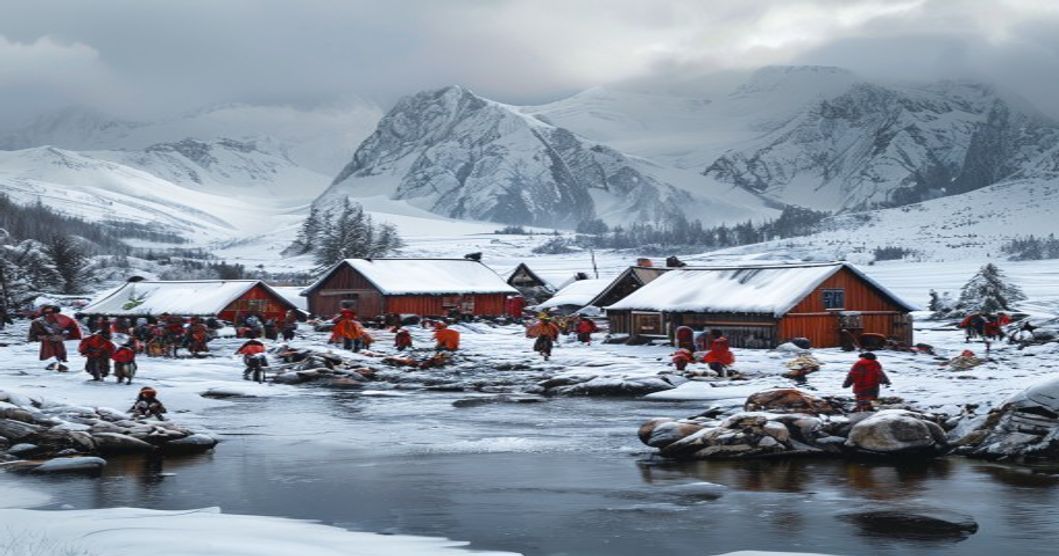
Exploring the Rich Heritage of Arctic Indigenous Communities: Historical Foundations
The Arctic environment has supported continuous human presence for over four millennia, with archaeological evidence tracing settlement patterns across the circumpolar north to the late Pleistocene epoch. Early inhabitants adapted to post-glacial climate fluctuations through specialized lithic technologies and seasonal migration cycles that optimized access to caribou herds, marine mammals, and migratory bird populations. The Dorset tradition, spanning approximately 500 BCE to 1200 CE, emerged as a distinct cultural complex characterized by finely crafted harpoon heads, snow goggles, and insulated dwellings that enabled prolonged winter residence. Following the Dorset decline, the Thule culture expanded rapidly from Alaska into Greenland and Svalbard between 800 and 1500 CE, introducing bowhead whale hunting strategies, umiak watercraft, and dog sled networks that transformed subsistence economies across the region. Paleolithic populations utilized standardized toolkits across thousands of kilometers, indicating shared technological knowledge transfer rather than isolated development. Radiocarbon dating from sites like Independence I in northern Greenland confirms human occupation by 2500 BCE, while coastal shell middens document sustained marine resource exploitation spanning multiple millennia.
- Kinship-Based Governance: Pre-colonial Arctic societies organized resources through extended family units rather than centralized political systems. Elders mediated territorial disputes while distributing hunting yields according to customary law and seasonal quotas.
- Ecological Knowledge Transmission: Oral traditions functioned as dynamic historical archives, encoding generational observations of ice formation, auroral patterns, and animal behavior into mnemonic chants and narrative cycles that guided navigation and survival strategies.
- Interregional Exchange Networks: Archaeological sites reveal copper deposits from the Great Lakes region, glass beads from European trade routes, and Siberian obsidian within Arctic settlements, demonstrating sophisticated long-distance barter systems that predated modern commerce and facilitated cultural diffusion.
Shamanic practices formed the spiritual core of these historical communities, with practitioners interpreting weather anomalies and migration disruptions through ritual drumming and trance states. These cosmological frameworks directly influenced seasonal planning and resource allocation. Linguistic divergence across Inuit-Yupik-Unangan, Sámi, Nenets, Chukotko-Kamchatkan, and Aleut language families occurred gradually as isolated groups adapted to microclimates and ecological niches. Each dialect preserved unique terminology for snow conditions, glacial formations, and marine currents that reflected centuries of environmental observation. Historical continuity persists through contemporary land claims, traditional ecological monitoring programs, and intergenerational skill transfer mechanisms that maintain ancestral relationships with the landscape.
Prehistoric Settlements and Early Migration Routes Across the Bering Land Bridge
The Bering Land Bridge, scientifically designated as Beringia, functioned as a critical terrestrial corridor during the Last Glacial Maximum when global sea levels dropped by approximately 120 meters due to massive ice sheet accumulation. This exposed continental shelf connected northeastern Siberia with northwestern Alaska, creating an expansive steppe-tundra ecosystem that supported diverse megafauna and provided a viable pathway for human movement. Geological stratigraphy and radiocarbon dating indicate that sustained habitation in this region occurred between 25,000 and 14,000 years ago, coinciding with periods of relative climatic stability amid broader glacial fluctuations.
Migration patterns across Beringia were not linear but rather dynamic, shaped by ice sheet barriers, coastal accessibility, and resource distribution. Early populations likely utilized both inland ice-free corridors and Pacific coast routes, with the latter gaining prominence through recent paleoceanographic modeling. Genetic sequencing of Indigenous American genomes reveals founder events approximately 20,000 to 18,000 years ago, followed by rapid southward expansion once glacial retreat opened navigable passages. Archaeological excavations have uncovered stone tools, hearth remnants, and faunal remains that confirm prolonged settlement rather than transient passage.
- Bluefish Caves (Yukon): Yields butchered mammoth and horse bones dating to 24,000 years ago, challenging earlier timelines for human presence in North America.
- Old Crow Basin (Yukon): Contains bifacial points and modified lithics that demonstrate technological adaptation to subarctic conditions.
- Upward Sun River (Alaska): Reveals an early family burial site with distinct genetic markers linking Siberian and ancestral American populations.
- Devil’s Gate Cave (Siberia): Provides stratified occupation layers showing seasonal mobility patterns consistent with migration logistics.
Paleoclimate proxies, including ice core records and pollen analysis, illustrate how vegetation shifts from grassland to shrub tundra influenced settlement density and subsistence strategies. Communities adapted through specialized hunting technologies, portable shelter systems, and seasonal resource tracking. The eventual drowning of Beringia by rising seas around 10,500 years ago isolated these populations, triggering regional diversification and the development of distinct cultural traditions across the Americas. This geological transition marks a pivotal moment in human dispersal history, documented through interdisciplinary convergence of archaeology, genomics, and Earth science.
Generational Knowledge Transfer and Oral Tradition Frameworks
Arctic indigenous knowledge systems operate through highly structured pedagogical frameworks that prioritize experiential learning over abstract instruction. Elders function as institutional archives, encoding survival metrics, ecological indicators, and seasonal calendars within narrative architectures. These narratives are not merely cultural artifacts; they serve as functional data storage mechanisms. Weather forecasting, ice stability assessment, caribou migration tracking, and marine hunting windows are systematically preserved through rhythmic chanting, call-and-response patterns, and repetitive storytelling cycles. The acoustic properties of these oral forms enhance long-term memory retention in environments where written documentation historically faced material and logistical constraints.
Apprenticeship begins before formal instruction. Children absorb practical competencies through proximity to subsistence activities. Skin stretching techniques, snow block measurement, harpoon calibration, and wind direction interpretation require tactile reinforcement. Mentorship follows strict cultural protocols that dictate when questions may be asked and which topics remain restricted to specific age groups or ceremonial contexts. Knowledge acquisition demands physical participation; theoretical understanding remains secondary until demonstrated through successful field application.
- Mnemonic Encoding: Melodic cadence and rhythmic repetition transform complex environmental data into unforgettable auditory sequences that survive multiple generations without written records.
- Age-Graded Access: Restricted knowledge categories prevent premature exposure, ensuring psychological and ecological readiness before advanced hunting or navigation techniques are disclosed.
- Reciprocal Fieldwork: Learners document seasonal shifts alongside elders, cross-referencing historical narratives with contemporary ice conditions, vegetation markers, and animal behavior patterns.
Seasonal camps and community gatherings function as intentional learning ecosystems. During winter halting periods, elders reconstruct historical events, map unfamiliar territories, and calibrate modern practices against ancestral benchmarks. The Sámi yoik tradition, Inuit sila concept, and Yupik ecological calendars demonstrate how spiritual cosmologies intersect with empirical observation. Each framework treats environmental changes as continuous feedback loops rather than isolated events.
Modern climate disruption challenges these transmission models because rapid glacial retreat and altered animal behavior invalidate centuries-old predictive indicators. Revitalization initiatives now pair audio-visual documentation with traditional mentorship, yet the foundational philosophy remains unchanged. Knowledge retains value only when verified through direct environmental interaction. Community-led curriculum design ensures that pedagogical continuity survives institutional shifts while maintaining ecological accuracy.
Cultural Practices and Environmental Adaptation Strategies
Arctic Indigenous communities have engineered survival systems that harmonize daily routines with extreme climatic cycles. Traditional hunting protocols enforce strict seasonal boundaries, allowing reindeer caribou populations and marine mammals to complete natural breeding windows. Elders preserve ecological intelligence through generational storytelling, decoding ice density variations, atmospheric pressure shifts, and animal migration corridors without relying on written documentation. These knowledge networks depend on continuous environmental monitoring, where frost formations indicate safe traversal paths and avian flight patterns forecast impending storms.
Architectural designs prioritize thermal regulation using locally sourced materials. Inuit snow structures compress crystalline layers to trap metabolic heat, while Sami woven shelters incorporate layered hides and adjustable airflow vents to stabilize interior temperatures during prolonged cold snaps. Garments manufactured from caribou fur utilize hollow hair fibers that generate insulating microclimates, delivering moisture management capabilities that surpass conventional synthetic textiles. Food preservation methods like rapid freeze-drying and anaerobic fermentation inside pressurized sealskin containers eliminate spoilage risks during polar darkness, securing caloric intake throughout winter months.
- Sustainable Resource Allocation: Harvesting follows reciprocal exchange principles, requiring gratitude ceremonies that reinforce ecological equilibrium and prevent overexploitation.
- Climate Monitoring Integration: Modern conservation frameworks merge ancestral observation techniques with satellite telemetry, enhancing wildlife tracking precision and permafrost degradation forecasting.
- Knowledge Transmission Programs: Community-led educational initiatives combine scientific methodologies with land-based apprenticeships, ensuring adaptive strategies remain viable across demographic shifts.
Current resilience planning actively restores traditional land management practices to stabilize ground temperatures and mitigate invasive species expansion. Indigenous fire regimes, historically applied at low intensity, now support controlled vegetation cycling while preserving soil microbiomes. Research institutions increasingly validate these methodologies through peer-reviewed ecological studies, confirming their efficiency in carbon sequestration and biodiversity maintenance. The continuous application of ancestral adaptation frameworks provides measurable benchmarks for contemporary climate mitigation strategies across northern latitudes.
Sustainable Subsistence Methods in Extreme Polar Conditions
Arctic Indigenous communities maintain subsistence systems calibrated to extreme thermal gradients, seasonal light cycles, and fragile tundra ecosystems. Traditional hunting strategies rely on generational observation of animal migration patterns, sea ice thickness, and atmospheric pressure shifts. Hunters utilize handcrafted tools fashioned from bone, antler, and whalebone to harvest ringed seals, walruses, caribou, and Arctic char with minimal ecological disruption. The practice operates within a rotational framework that prevents overharvesting and allows wildlife populations to regenerate naturally across vast geographic ranges.
Food preservation in polar environments demands precise technical knowledge. Communities employ fermentation, air-drying, and natural freezing to extend shelf life without synthetic additives. Seal blubber renders into high-calorie oil rich in omega-3 fatty acids, while frozen fish undergoes controlled thawing to maintain cellular structure. Fermented walrus meat delivers essential vitamins during months when fresh produce remains inaccessible. These methods preserve nutritional integrity while aligning with carrying capacity limits of the surrounding habitat.
- Seasonal Resource Tracking: Communities monitor ice formation, snow depth, and animal behavior to time harvests accurately.
- Ethical Harvest Protocols: Traditional rules dictate portion allocation, prayer rituals, and waste reduction to honor the organism and maintain ecological reciprocity.
- Cross-Generational Knowledge Transfer: Elders teach navigation, skin preparation, and ice reading through direct field instruction rather than theoretical manuals.
Craftsmanship remains central to operational success. Caribou antler and whalebone are shaped into precise cutting edges that require minimal maintenance in subzero temperatures, reducing material waste and extending tool longevity across multiple hunting seasons. Modern subsistence operations increasingly integrate GPS tracking and satellite meteorology with ancestral forecasting techniques. This hybrid approach improves route safety while preserving cultural continuity. Community-managed hunting cooperatives enforce quotas that reflect contemporary wildlife monitoring data alongside historical yield records. Field teams now utilize non-invasive population surveys to adjust harvest windows dynamically, ensuring long-term resource availability for future generations while honoring centuries-old ecological ethics.
Traditional Housing Construction and Seasonal Resource Management
Arctic indigenous builders engineered structures through precise material selection and geometric precision rather than reliance on modern fasteners. The Inuit qarmaq utilized layered sod, whalebone ribs, and driftwood to create insulated dwellings that withstood wind velocities exceeding one hundred kilometers per hour. Coastal groups constructed semi-subterranean longhouses using massive timber frames covered in packed earth and thick layers of marine grasses, while inland populations assembled portable tupiq tents from stretched caribou or seal hides lashed to flexible wooden poles. Each architectural form responded directly to microclimatic conditions and available biomass. Snow houses demonstrated exceptional thermal regulation; compacted ice crystals trapped air pockets that maintained interior temperatures near zero degrees Celsius despite external readings dropping below minus forty. Builders carved ventilation apices above sleeping platforms to circulate stale air without creating drafts that would compromise structural integrity.
- Subsurface Storage Systems: Communities excavated insulated caches into permafrost layers to preserve raw meat, rendered blubber, and plant fibers. These subterranean vaults maintained consistent humidity levels that prevented freeze-thaw degradation during transitional months.
- Ice Road Networks: Seasonal movement relied on engineered travel corridors frozen across coastal waters and lake surfaces. Trackers monitored thermal shifts and wind patterns to determine optimal crossing points, reducing transport energy expenditure for sled loads carrying processed hides and dried fish.
- Tidal Resource Calibration: Coastal harvesting operations synchronized with lunar cycles and water temperature gradients. Seal breathing holes remained active through winter because geothermal vents prevented complete ice sealing, allowing predictable hunting windows without exhausting animal populations.
Spatial organization followed strict ecological accounting rather than arbitrary settlement patterns. Winter camps positioned themselves downwind from known game corridors while maintaining proximity to freshwater melt sources. Summer encampments shifted toward river deltas where spawning runs concentrated protein supplies, with temporary structures designed for rapid dismantling and complete material recovery. Resource allocation required generational memory of wind direction shifts, snow density variations, and crust formation timelines. Builders measured timber durability by bark texture and ring spacing, selecting only straight-grained poles that resisted splitting during repeated assembly cycles. Storage architectures incorporated elevated platforms to separate provisions from ground moisture, utilizing natural airflow to accelerate drying without exposing materials to precipitation. This calibrated approach sustained population stability across millennia through continuous environmental feedback loops rather than static land use strategies.
Linguistic Diversity and Expressive Arts of Arctic Peoples
Arctic indigenous languages operate across three primary genealogical branches, each encoding distinct environmental taxonomies. Inuit-Yupik-Unangan tongues utilize polysynthetic morphology where single words integrate nouns, verbs, and directional suffixes to describe precise spatial relationships relative to ice formations, water currents, and animal migrations. Uralic languages such as Sámi dialects maintain complex case systems that differentiate between reindeer grazing zones, fishing grounds, and seasonal travel routes. Chukotko-Kamchatkan families preserve archaic phonological patterns that document historical contact with Siberian traders and coastal ecosystems.
These linguistic frameworks function as operational manuals for survival, where terminology for snow density, wind direction, and ice thickness contains dozens of specialized descriptors absent in non-indigenous vocabularies. Oral transmission mechanisms replace written records through structured narrative cycles performed during winter gatherings. Elders employ mnemonic devices, rhythmic pacing, and tonal modulation to ensure accurate recall of genealogical lines, resource locations, and ecological warnings. The repetition of ancestral stories serves pedagogical purposes, training younger generations in risk assessment, ethical harvesting protocols, and community dispute resolution.
- Material arts develop through direct interaction with available biomes. Carving traditions utilize mammoth ivory, walrus tusk, and driftwood to construct tools that double as narrative canvases.
- Mask production incorporates carved wood, antler, and sinew to represent animal spirits, weather deities, and ancestral guides during ceremonial performances.
- Textile craftsmanship employs reindeer hair, wool, and natural pigments from lichen and berries. Pattern geometry encodes territorial boundaries, clan affiliations, and seasonal calendar markers.
- Vocal practices feature overtone singing techniques where performers manipulate vocal tract resonance to replicate glacial acoustics, avian calls, and wind patterns across tundra landscapes.
Percussion instruments constructed
Preservation of Endangered Dialects and Speech Patterns
The linguistic landscape of Arctic Indigenous communities represents a complex tapestry of dialects and speech patterns shaped by centuries of environmental adaptation and cultural exchange. Languages such as Inuktitut, Sámi variants, Chukchi, and Yupik belong to distinct language families that evolved in isolation due to extreme climatic conditions and vast geographical distances. Each dialect encodes specialized ecological knowledge, including ice formation stages, animal migration routes, and traditional navigation techniques that modern science is only beginning to validate. The erosion of these speech patterns threatens not only cultural identity but also irreplaceable environmental data that could inform climate resilience strategies worldwide.
Contemporary preservation efforts prioritize community sovereignty over external academic extraction. Indigenous-led language nests immerse children in native speech from early childhood, while mobile documentation projects enable elders to record oral histories directly into cloud-based archives accessible only to designated tribal members. Digital dictionaries and phonetic training modules have been developed collaboratively by linguists and community councils to ensure accurate representation of tonal nuances and consonant gradation unique to Arctic languages. These tools bypass colonial archival models that historically treated Indigenous speech as static artifacts rather than living systems.
Sustained revitalization requires addressing structural barriers alongside linguistic ones. Urban migration fragments speaker networks, while standardized national curricula rarely allocate instructional hours for minority dialects. Successful programs counter these trends by integrating language practice into vocational training, land-based learning, and digital media production. Key preservation strategies include:
- Intergenerational mentorship frameworks that pair fluent elders with youth through structured immersion camps.
- Community-controlled digital repositories utilizing encrypted storage to protect sacred vocabulary from commercial exploitation.
- Policy advocacy networks securing official recognition for dialect usage in local governance, healthcare, and judicial proceedings.
When youth create podcasts, subtitles for regional broadcasts, or interactive storytelling platforms in their heritage tongue, they transform preservation from academic exercise into daily cultural infrastructure. This approach aligns with UNESCO’s framework for sustainable linguistic diversity, which recognizes that language survival depends on functional utility within modern socioeconomic contexts rather than museum-style conservation alone.
Symbolic Carving, Textile Weaving, and Ceremonial Music
The visual language of Arctic Indigenous cultures relies heavily on symbolic carving, a practice that transforms raw materials into enduring records of survival, cosmology, and social structure. Carvers work with soapstone, walrus ivory, reindeer antler, and driftwood, each medium carrying specific ecological and spiritual weight. Motifs such as spirals, intersecting lines, and stylized animal forms are not decorative afterthoughts; they encode navigational knowledge, hunting strategies, and clan lineages. Inuit artisans often carve qalipit that mediate between the human realm and animal spirits, ensuring successful expeditions. Yup’ik carvers integrate double-curved designs that represent the interconnectedness of land, sea, and sky, while Sámi craftsmen emboss antler with geometric patterns that denote seasonal migration routes. The act of carving itself functions as a pedagogical tool, passed through apprenticeship rather than formal instruction, preserving technical precision alongside mythic narratives.
Textile production operates parallel to carving as another primary vessel of cultural memory. Arctic weavers and sewers utilize caribou hide, sealskin, reindeer fur, and later, traded wool, processing them through scraping, tanning, and twine-making techniques that withstand extreme temperatures. Garments like parkas, mittens, and boots are constructed using double-needle stitching and strategic paneling to maximize insulation while allowing mobility. Decorative elements—beadwork, dyed threads, and appliqué patterns—serve as identifiers of regional origin, marital status, and ceremonial role. Certain border motifs function as mnemonic devices, mapping trade routes or recording generational events. The transmission of textile knowledge occurs through collaborative workshops where elders demonstrate tension control, needle manipulation, and material selection, ensuring that functional garments simultaneously operate as wearable archives.
- Ceremonial music anchors community cohesion through rhythmic frame drumming, vocal polyphony, and wind instrument performance. Drums crafted from caribou hide stretched over wooden hoops provide foundational beats for storytelling sequences that recount creation myths and ecological observations.
- Vocal techniques such as throat singing utilize simultaneous overtone production to mimic environmental sounds, including wind patterns, animal calls, and glacial movements, blurring the boundary between performer and landscape.
- Ritual contexts dictate musical structure, with specific melodies reserved for solstice gatherings, initiation rites, and healing ceremonies. Instrument materials are sourced sustainably, and each component undergoes purification protocols before assembly, reinforcing the reciprocal relationship between sound production and territorial stewardship.
Contemporary Pressures on Arctic Indigenous Territories
Arctic Indigenous territories face compounding environmental and geopolitical stressors that directly threaten subsistence economies, land tenure rights, and intergenerational knowledge systems. Rapid permafrost degradation undermines settlement stability across Sápmi and Inuit Nunangat, forcing costly infrastructure relocation while simultaneously altering hydrological networks critical to caribou migration and fish spawning cycles. Warmer ocean temperatures shift beluga and narwhal distribution patterns, compounding challenges for coastal hunting communities that rely on precise ice thickness data passed through oral tradition.
Industrial resource extraction accelerates as melting sea ice opens previously inaccessible mineral deposits and hydrocarbon reserves. Seismic airgun surveys disrupt marine mammal communication channels, while heavy drilling equipment contaminates groundwater aquifers with diesel particulates and heavy metals. Mining operations fragment lichen pastures essential for reindeer herding, creating permanent barriers that force pastoral routes into ecologically fragile zones.
- Geopolitical realignment drives transnational infrastructure corridors that bypass local consent protocols, prioritizing global shipping efficiency over territorial sovereignty.
- National resource policies frequently override customary land tenure systems, creating jurisdictional fragmentation that complicates environmental impact assessments and benefit-sharing agreements.
- Digital globalization introduces cultural homogenization pressures, as algorithmic content distribution marginalizes indigenous languages and accelerates youth migration to urban centers.
Legal recognition of land claims remains inconsistent across Arctic states, with implementation gaps in UNDRIP frameworks leaving communities vulnerable to corporate litigation and administrative delays. Co-management agreements often lack binding enforcement mechanisms, allowing regulatory agencies to prioritize extraction permits over ecological monitoring requirements. Community-led adaptation initiatives rely heavily on short-term grants rather than sustainable funding streams, limiting long-term capacity building. Indigenous governance structures continue developing hybrid knowledge systems that integrate satellite remote sensing with traditional ecological indicators, yet systemic barriers restrict access to decision-making tables where territorial jurisdiction and environmental licensing are determined.
Ecosystem Disruption and Shifts in Traditional Hunting Grounds
Permafrost degradation and accelerated sea ice melt fundamentally alter the structural integrity of Arctic landscapes. Indigenous hunters who navigate by generations-old route markers now face unpredictable terrain. Stable winter ice that once supported safe travel to coastal seal haul-outs fractures prematurely in spring, increasing accident rates and limiting hunting windows. Thawing ground generates slush
Policy Frameworks Supporting Land Rights and Cultural Autonomy
International instruments form the foundational architecture for Arctic Indigenous land claims. The United Nations Declaration on the Rights of Indigenous Peoples establishes free, prior, and informed consent as a non-negotiable standard for resource extraction and territorial development. ILO Convention No. 169 operates as the binding legal instrument in signatory states, mandating legislative recognition of customary land tenure systems. National implementations diverge significantly across jurisdictions. Canada’s modern treaty process and comprehensive land claims agreements transfer title and management authority to Inuit and First Nations corporations while establishing revenue-sharing mechanisms. Norway, Sweden, and Finland recognize Saami parliaments with advisory powers over reindeer husbandry zones and cultural subsidies. Alaska operates under the Alaska Native Claims Settlement Act, which extinguished aboriginal title in exchange for corporate land grants and per capita dividends, though ongoing litigation continues to challenge resource extraction permits near traditional harvesting grounds.
Effective frameworks integrate three operational pillars. First, co-management boards allocate decision-making power between government agencies and Indigenous representatives regarding wildlife populations, environmental monitoring, and infrastructure planning. Second, legal recognition of indigenous knowledge systems transforms oral histories and seasonal migration patterns into admissible evidence during land dispute proceedings. Third, mandatory impact assessment protocols require developers to fund independent cultural heritage surveys before project approval.
- Statutory recognition of traditional place names on official maps and navigation charts
- Guaranteed funding streams for immersion language programs and community-driven curriculum development
- Legal standing provisions that permit Indigenous nations to initiate litigation against federal or provincial entities
- Transparent revenue allocation models that direct resource royalties toward housing, healthcare, and infrastructure maintenance
Implementation gaps persist when statutory language lacks enforcement mechanisms. Climate adaptation policies increasingly intersect with territorial governance as shifting ice conditions force renegotiation of hunting boundaries and fishing quotas. Digital sovereignty initiatives now address data ownership, requiring tech firms to secure community consent before deploying environmental sensors or mapping technologies across ancestral territories. Contemporary framework design prioritizes adaptive management structures that respond to ecological volatility while preserving jurisdictional control over cultural preservation strategies.
Responsible Engagement with Arctic Indigenous Heritage
Engaging with Arctic Indigenous heritage demands a framework grounded in ethical protocols, community sovereignty, and long-term reciprocity. Cultural assets spanning oral traditions, subsistence practices, textile arts, and ecological knowledge systems remain deeply intertwined with living communities rather than existing as static historical artifacts. Professionals operating in this space must prioritize direct consultation with Indigenous governance structures before initiating documentation, research, or public programming. Free, prior, and informed consent operates as a non-negotiable baseline, ensuring that communities retain full authority over how their narratives, sacred sites, and traditional knowledge are represented or utilized.
Benefit-sharing mechanisms must be transparent and legally structured to prevent extractive practices. Revenue generated from cultural exhibitions, documentary projects, or commercial applications of traditional designs should flow directly into community-controlled funds that support language revitalization, youth education, and infrastructure development. Intellectual property frameworks adapted to Indigenous contexts—such as Traditional Knowledge Labels and local access protocols—provide critical protection against misappropriation while allowing controlled sharing strictly on the community’s terms.
- Community-Led Curation: Exhibitions and digital archives require co-authorship with Indigenous knowledge holders to ensure accurate contextualization and prevent decontextualized representation.
- Eco-Cultural Stewardship: Heritage preservation extends beyond artifacts to encompass seasonal migration routes, hunting grounds, and climate-adaptive practices that sustain cultural continuity.
- Capacity Building: Funding technical training in digital archiving, heritage management, and legal advocacy equips communities to independently safeguard their cultural assets against external exploitation.
Documentation methodologies must align with Indigenous data sovereignty principles. Metadata standards should incorporate community-defined access levels, distinguishing between publicly shareable resources and restricted knowledge reserved for specific lineages or ceremonial contexts. Collaborative research agreements need explicit clauses governing future use, reproduction rights, and the right to withdraw materials if cultural protocols change. Field researchers and institutional partners must undergo rigorous cultural competency training that addresses historical trauma, avoids deficit framing, and recognizes Indigenous epistemologies as complete scientific systems rather than supplementary folklore.
Sustainable engagement also requires adapting to shifting environmental conditions that directly impact cultural practices. Sea ice variability, permafrost thaw, and altered wildlife patterns necessitate adaptive heritage strategies that protect both material collections and intangible knowledge networks. Institutions funding Arctic projects should establish multi-year partnerships rather than short-term extraction cycles, ensuring continuity in community-led governance and long-term cultural resilience.
Community-Driven Tourism Models and Ethical Visitor Guidelines
Community-led tourism frameworks transform visitor engagement from resource extraction to structured partnership. Indigenous Arctic groups manage operations through cooperatives, family-owned lodges, and cultural centers that retain full control over itinerary design, pricing structures, and guest capacity limits. Revenue distribution follows transparent legal agreements ensuring direct financial benefits reach elders councils, youth apprenticeship programs, and critical infrastructure maintenance. Traditional knowledge integration operates at the core of these initiatives, with certified guides trained in local navigation techniques, microclimate forecasting, subsistence harvesting protocols, and oral history transmission. This approach eliminates middleman dependency while preserving authentic cultural expression.
Ethical visitation requires structured behavioral parameters enforced through pre-arrival compliance systems. Travelers must complete mandatory orientation modules covering land rights acknowledgment, wildlife interaction boundaries, and photography consent regulations. Group sizes remain strictly capped to prevent habitat degradation and social friction during peak migration periods. All activities depend on seasonal availability and community approval cycles rather than commercial demand peaks. Visitors adhere to extended leave-no-trace standards that include digital footprint management, where drone operations, satellite communication logs, and live-streaming require explicit written permission from local governance councils.
- Cultural Protocol Compliance: Guests must follow designated walking routes, avoid filming sacred sites without verbal consent, and participate in seasonal feast traditions only when invited by host families.
- Environmental Stewardship: Waste transport follows strict carry-in-carry-out mandates. Fuel-powered equipment requires dual containment systems to prevent permafrost contamination.
- Economic Transparency: Tour operators publish quarterly revenue distribution reports. Minimum 60 percent of gross earnings must remain within settlement boundaries for local procurement and service wages.
Operational accountability relies on independent third-party audits and continuous community feedback loops. Evaluators monitor economic leakage rates, ecological impact metrics, and cultural commodification risks annually. Indigenous advisory boards retain absolute veto authority over new tourism ventures that conflict with seasonal hunting calendars, sacred site protection zones, or language revitalization initiatives. Educational components form the primary visitor requirement, ensuring guests depart with verified understanding of Arctic sovereignty frameworks, climate vulnerability patterns, and historical resilience strategies.
Sustainable measurement models track success through community-defined indicators rather than occupancy rates or revenue expansion. Key performance metrics include youth retention in traditional crafts, reduction in external supply dependencies, and documented improvements in local well-being outcomes linked to cultural continuity. Partner operators must demonstrate long-term commitment through multi-year service contracts, priority hiring from nearby settlements, and direct investment in renewable energy microgrids supporting remote locations.
Funding Digital Archives, Language Programs, and Youth Education
Financial infrastructure forms the backbone of heritage preservation across Arctic Indigenous regions. Government agencies, private cultural foundations, and international grant networks direct substantial capital toward digitizing oral histories, mapping ancestral territories, and safeguarding endangered dialects. These allocations bypass traditional bureaucratic delays by establishing direct community trusts, ensuring that every allocated dollar remains within local governance structures. The transition from analog to digital repositories requires specialized capture equipment, secure cloud storage architecture, and ongoing technical maintenance, all of which demand sustained multi-year funding cycles rather than short-term project grants.
Language revitalization initiatives operate through targeted scholarship pools and curriculum development contracts. Funding bodies prioritize community-led pedagogical models where Elders serve as primary instructors alongside certified linguists and data archivists. These programs secure resources for immersive winter camps, mobile learning applications, and standardized orthographic documentation. Grants also cover the production of bilingual educational materials, ensuring that foundational texts meet both academic publishing standards and strict cultural authenticity requirements. The financial architecture behind these efforts explicitly ties resource distribution to measurable fluency outcomes and intergenerational knowledge transfer metrics.
- Digital preservation grants allocate funds for high-resolution scanning of traditional crafts, audio restoration of ceremonial recordings, and geospatial mapping of ancestral hunting routes.
- Language funding structures support teacher stipends, software licensing for dialect input keyboards, and community translation workshops that standardize regional spelling systems.
- Youth education budgets finance university tuition waivers, research fellowships in indigenous studies, and technology labs equipped with satellite communication tools for remote learning.
Strategic capital deployment extends far beyond initial setup costs. Long-term sustainability requires endowment models that generate consistent annual returns for program maintenance, equipment upgrades, and trainer compensation. International cultural heritage organizations increasingly mandate co-funding requirements, forcing local institutions to develop hybrid financing strategies that blend public grants with private philanthropy and community cooperative revenues. This financial diversification protects programs against policy shifts and economic volatility while maintaining operational independence.
Youth engagement frameworks receive dedicated funding streams designed to bridge traditional knowledge acquisition with contemporary skill development. Scholarships target STEM and digital media disciplines, recognizing that technical proficiency directly amplifies heritage preservation capacity. Training budgets cover data management certification, documentary filmmaking equipment, and web development courses tailored for indigenous digital sovereignty. Mentorship networks are financially supported through travel allowances, ensuring that urban youth maintain direct contact with remote community knowledge keepers.
The intersection of these funding pillars creates a self-reinforcing preservation ecosystem. Digitized archives supply authentic source material for language curricula. Fluency outcomes validate educational program effectiveness, triggering continued grant renewals. Youth participants transition into grant management roles, establishing professional pipelines that keep financial oversight within indigenous governance frameworks. This structural alignment transforms temporary project funding into permanent institutional capacity, securing cultural continuity across generations while maintaining operational resilience against external policy fluctuations.
“`html
Frequently Asked Questions
What is Exploring the Rich Heritage of Arctic Indigenous Communities?
Exploring the Rich Heritage of Arctic Indigenous Communities refers to the study, appreciation, and preservation of the unique cultural traditions, languages, knowledge systems, and historical narratives of the peoples who have inhabited the Arctic region for thousands of years. This includes the Inuit, Sami, Yupik, Chukchi, Nenets, and other indigenous groups whose deep connection to the frozen landscape has shaped their distinctive way of life, art, storytelling, and sustainable survival practices.
Key facts about Exploring the Rich Heritage of Arctic Indigenous Communities
Arctic indigenous peoples number over four million across eight countries, speaking more than 40 distinct languages. They possess intricate traditional ecological knowledge (TEK) that has allowed them to thrive in extreme conditions for millennia. Their cultural heritage includes renowned oral traditions, drum dances, jewelry craftsmanship using bone and antler, and world-renowned art forms such as Inuit sculpture. Today, many communities face challenges from climate change, which is rapidly altering their ancestral lands and threatens the continuation of their traditional ways of life.
“`