The Foundations of Sami Nomadic Legacy
The Sami nomadic legacy represents one of the most resilient indigenous survival systems developed across the Eurasian Arctic. For millennia, the Sami people have adapted to extreme subarctic conditions through a deeply integrated relationship with reindeer herding, seasonal migration, and precise ecological observation. This cultural framework did not emerge spontaneously but evolved through continuous environmental feedback, where survival depended on mastering microclimates, animal behavior, and tundra ecosystems.
Reindeer Herding as the Economic Backbone
At the core of the Sami subsistence model lies reindeer herding, a practice that transformed from localized hunting to semi-nomadic pastoralism during the late medieval period. Reindeer provided meat, milk, hide for clothing and shelter, antler for tools, and sinew for thread. The herds functioned as living capital, requiring constant monitoring of grazing patterns, calving grounds, and predator avoidance strategies. Herders developed specialized sled designs, lasso techniques, and auditory signals to manage large populations across snow-covered terrain.
Seasonal Migration Patterns Across the Tundra
Sami communities followed strictly codified migration routes dictated by seasonal forage availability and weather cycles. Winter ranges prioritized sheltered valleys with accessible lichen pastures, while summer movements targeted coastal or mountainous zones to escape insect swarms and access nutrient-rich vegetation. These transhumant paths spanned hundreds of kilometers across modern-day Norway, Sweden, Finland, and Russia, requiring intimate knowledge of river crossings, avalanche-prone slopes, and frozen lake stability.
Mastering Arctic Survival Techniques
Arctic survival for the Sami was not a matter of endurance alone but of calculated adaptation. Every aspect of daily life incorporated thermal regulation, resource efficiency, and predictive environmental reading.
Shelter Construction and Thermal Efficiency
The traditional Sami lavvu (or goahti) exemplifies passive cooling and heating engineering. Constructed from wooden poles lashed in a conical framework, the structure was insulated with reindeer hides, birch bark, sod, or moss depending on regional availability. The central fire pit provided radiant heat while smoke escaped through an adjustable top opening, creating natural convection currents that regulated interior temperature. In extreme cold, snow walls were erected around the base to block wind chill and trap thermal mass.
Navigation Without Modern Instruments
Prior to cartographic standardization, Sami herders navigated the Arctic using celestial markers, wind patterns, and geomorphological cues. The position of the sun relative to mountain ridges dictated seasonal movement timing, while the aurora borealis served as both a weather indicator and spiritual guide. Experienced trackers read snow crust formations, tree growth anomalies on windward slopes, and reindeer track density to determine safe passage across featureless plateaus.
Food Preservation and Nutritional Adaptation
Arctic nutrition relied on fermentation, drying, smoking, and freezing techniques that maximized caloric retention. Reindeer meat was sliced thin and air-dried into suovas, while milk was cultured into sour cream or churned into butter for long-term storage. Bone marrow provided essential fats during winter months when fresh vegetation was inaccessible. Traditional diets maintained high protein and fat ratios, preventing scurvy through lichen consumption and raw organ meat intake rich in vitamin C.
Cultural Practices and Ecological Knowledge
The Sami worldview embedded survival within a framework of reciprocity rather than exploitation. Knowledge transmission occurred through hands-on apprenticeship, song, and ritual practice, ensuring that ecological literacy remained intergenerational.
Traditional Clothing and Material Innovation
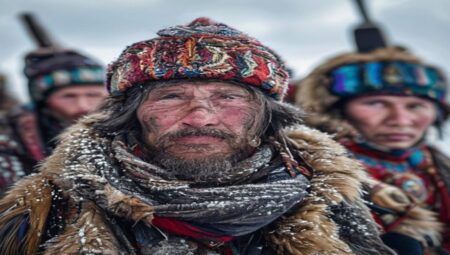
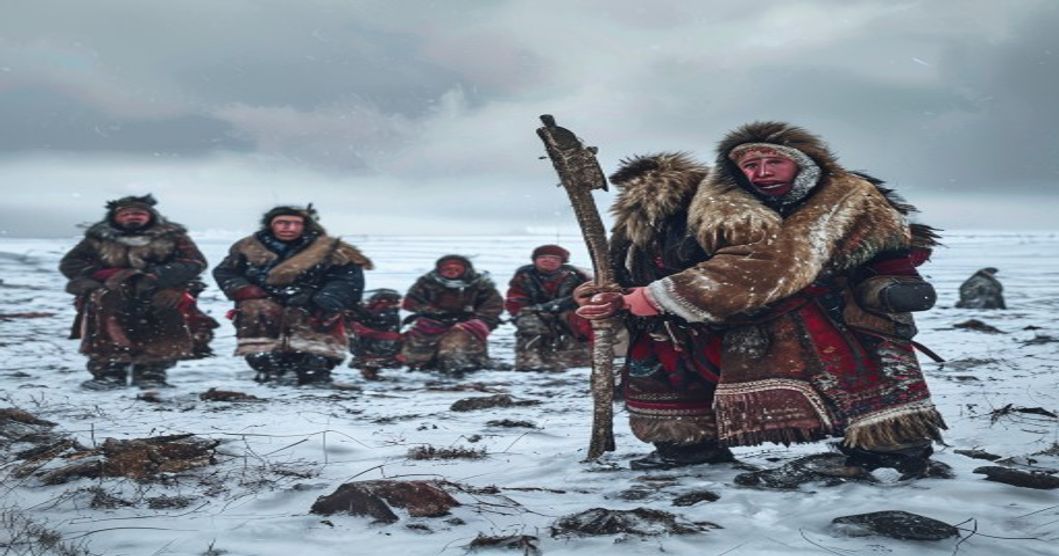
Sami garments utilized dual-layer reindeer fur construction with the hair facing outward for water shedding and the fleece lining inward for insulation. The distinctive gákti featured color-coded embroidery patterns that signaled clan affiliation, marital status, and regional origin. Boots incorporated layered leather soles with insulating grass or dried moss inserts, while mittens were cut from single pieces of hide to eliminate thermal bridges at the seams.
Spiritual Connection to the Landscape
Sami cosmology recognized sacred sites as focal points of spiritual energy where offerings were made for hunting success and herd fertility. Drum ceremonies mapped cosmic and terrestrial realms through symbolic imagery carved into animal bones or wood. This metaphysical framework reinforced sustainable resource use, as overharvesting was believed to disrupt ecological balance and invite communal misfortune.
Oral Tradition and Generational Transmission
Yoik performances functioned as mnemonic devices encoding topographical data, migration timelines, and survival protocols. Unlike narrative songs, yoiks mimic natural sounds and landscape features, allowing herders to recall specific terrain characteristics through auditory association. This oral archive operated as a decentralized survival database, adaptable to rapid environmental shifts without written documentation.
Contemporary Challenges and Enduring Legacy
Modern pressures have tested the resilience of Sami nomadic practices, yet adaptive strategies continue to preserve core survival knowledge while integrating contemporary tools.
Climate Change and Shifting Migration Routes
Rising temperatures have destabilized traditional freeze-thaw cycles, creating ice layers that prevent
Adapting to the Arctic: Sami People and Extreme Cold Weather
The Sami inhabit Fennoscandia across Norway, Sweden, Finland, and Russia’s Kola Peninsula. Their survival relies on precise environmental calibration. Cold tolerance emerges from generational knowledge, not biological mutation. Every practice optimizes heat retention and resource efficiency.
Geographic Range and Historical Settlement Patterns
Territories span subarctic taiga to coastal fjords. Historical routes followed reindeer migration corridors across transboundary pastures. Winter camps positioned near frozen waterways enabled ice travel. Settlements shifted seasonally to avoid overgrazing zones. Modern borders fractured traditional grazing networks.
Physiological and Behavioral Cold Adaptation
Acclimatization triggers vasodilation in extremities during active labor. Shivering thresholds drop through chronic cold exposure. Sleep patterns align with circadian light deprivation. Behavioral protocols prioritize minimizing sweat during exertion. Moisture management prevents rapid conductive heat loss.
Traditional Reindeer Herding and Winter Logistics
Herds require continuous movement across snow crusts. Sleds distribute weight to prevent sinkhole collapse in deep drifts. Calves survive initial weeks under maternal insulated udder pockets. Herders track snow depth variations using wooden gauges. Winter migrations follow predefined ice corridor networks.
Insulation Materials: Fur, Leather, and Layering Techniques
Reindeer leg fur traps air through reversed hair orientation. Caribou antler bone frames provide structural rigidity without thermal bridging. Layering sequences prioritize wicking base layers over bulky outer shells. Lichen-lined mittens prevent frostbite during prolonged tool handling. Textile density exceeds modern synthetic equivalents.
Dwelling Structures: Lavvu, Goahti, and Thermal Efficiency
Conical frames utilize spruce pole tension distribution for wind resistance. Birch bark roofing sheds precipitation while allowing vapor diffusion. Central hearths create convection columns that draw smoke through apex vents. Moss insulation layers fill structural gaps without moisture retention. Interior temperatures stabilize above freezing during blizzards.
Arctic Nutrition: Preserved Meats, Fats, and Foraging
Fermented reindeer liver delivers concentrated vitamin A without spoilage. Rendered fat stores provide caloric density during metabolic strain. Cloudberry extraction targets late-summer lipid accumulation. Lichen bread fermentation breaks down complex carbohydrates for rapid digestion. Dietary protocols prevent protein poisoning through balanced macronutrient ratios.
Climate Resilience and Modern Environmental Pressures
Thawing permafrost destabilizes traditional grazing topography. Ice thickness variations disrupt safe crossing routes. Shifting vegetation zones force unnatural herd migrations. Commercial logging fragments critical calving habitats. Policy restrictions limit autonomous land management. Adaptive strategies now integrate satellite telemetry tracking with ancestral navigation.
Frequently Asked Questions
What is Sami People and Extreme Cold Weather?
The Sámi people are an indigenous Finno-Ugric ethnic group inhabiting Sápmi, which encompasses parts of northern Finland, Sweden, Norway, and the Kola Peninsula of Russia. Their traditional lifestyle is deeply intertwined with the extreme cold weather of the Arctic region, relying on reindeer herding, hunting, and fishing to survive sub-zero temperatures and long polar nights.
Key facts about Sami People and Extreme Cold Weather
The Sámi have developed unique cultural adaptations to extreme cold, including specialized reindeer-skin clothing, snow houses (goahti), and traditional knowledge of weather patterns. They inhabit one of the most northerly living indigenous groups in the world, where winter temperatures frequently drop below -30°C (-22°F), and daylight hours vary drastically between summer and winter.