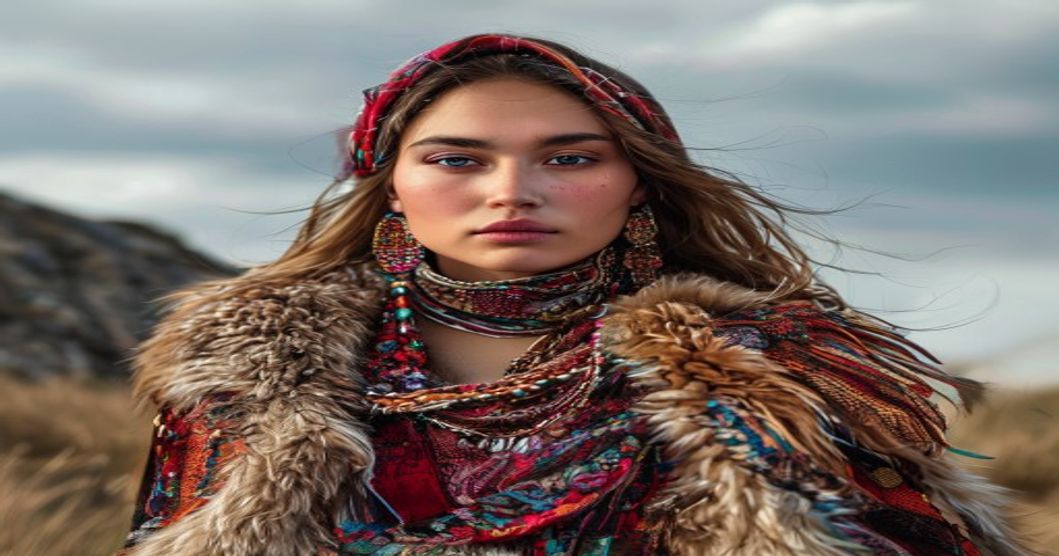
The Historical Foundations of Sámi Textile Artistry
Sámi textiles represent one of the most distinctive and historically continuous textile traditions in Northern Europe, developed over millennia by the Indigenous Sámi people across Norway, Sweden, Finland, and Russia’s Kola Peninsula. Unlike mass-produced garments, traditional Sámi clothing emerged from a deep ecological knowledge of the Arctic environment, utilizing locally sourced materials to create functional yet profoundly symbolic attire. The craftsmanship known as duodji—a term encompassing both tool-making and textile production—served not merely as utilitarian practice but as a visual language encoding Sámi cosmology, social status, and territorial identity.
Materials and Sustainable Sourcing
The foundation of Sámi textile artistry lies in its rigorous material selection. Reindeer hide forms the structural core of traditional garments, processed through labor-intensive methods including scraping, smoking, and tanning to achieve durability against subarctic conditions. Reindeer fur provides natural insulation, while split leather offers windproof resilience. In coastal regions, seal skin was historically incorporated for waterproof outerwear. Plant-based fibers such as nettles and willow bark supplemented wool in specific seasonal garments, reflecting a sophisticated understanding of botanical properties. This material palette ensures that every Sámi textile remains intrinsically linked to the Arctic ecosystem.
Traditional Techniques: Weaving, Knitting, and Embroidery
Sámi textile production relies on three primary techniques: hardanger weaving, circular knitting, and ribbon embroidery. Traditional looms were often horizontal backstrap designs adapted to nomadic lifestyles, producing tightly woven woolen fabrics with exceptional tensile strength. Circular knitting methods generated seamless socks and mittens, eliminating friction points during reindeer herding or skiing. The most visually striking technique is ribbon embroidery, executed using hand-cut linen or silk ribbons applied over woolen bases. This method, developed during the 17th century through trade routes, evolved into a complex symbolic system where stitch density, color sequence, and motif placement communicated precise regional origins.
Symbolism and Identity in Sámi Garments
Sámi clothing functions as a wearable archive of cultural memory. Each component carries encoded information that would be immediately legible to other Sámi individuals across vast geographical distances. The gákti, the traditional Sámi tunic or dress, operates as the primary identifier within this system.
Regional Patterns and Clan Markers
Color palettes and geometric arrangements in Sámi textiles strictly adhere to regional dialects of visual communication. Eastern Finnmark garments favor deep reds and navy blues with dense cross-stitch borders, while coastal Tromsö pieces utilize silver-thread accents and wave motifs reflecting maritime livelihoods. Western regions incorporate yellow and green threads denoting forest-foraging traditions. The placement of decorative bands along cuffs, collars, and hems corresponds to specific siida (clan or community) affiliations. Misidentifying these patterns historically risked social misclassification, underscoring the precision required in textile craftsmanship.
The Gákti as a Living Archive
The construction of a traditional gákti requires over 40 meters of fabric and hundreds of hours of labor. Its design incorporates asymmetrical fastening systems, layered undergarments for temperature regulation,
Historical Lineage and Cultural Significance
Pre-Colonial Textile Foundations and Regional Dialects
Pre-colonial loom techniques established distinct weaving geometries across Sápmi territories. Regional dialects dictated specific color symbolism for marital status and clan affiliation. Wool preparation required seasonal timing to match animal fiber density and climate exposure. Historical archives confirm garment patterns functioned as territorial maps before written records existed.
Colonial Suppression and Cultural Resilience Mechanisms
Assimilation policies banned traditional embroidery to erase indigenous identity markers in public spaces. Hidden textile production moved into domestic spheres to preserve forbidden design languages. Oral transmission of pattern logic survived despite institutional education mandates. Modern collectors trace surviving pieces to specific resistance networks that protected cultural continuity.
Revival Periods and Institutional Recognition Milestones
Post-war cultural movements reactivated dormant weaving techniques through documented workshops. Government grants funded the restoration of damaged archives from private family collections. Academic institutions established formal curricula to standardize historical pattern classification. International design bodies finally recognized indigenous textile rights during heritage preservation summits.
Symbolism and Identity Markers in Traditional Garments
Specific button placements indicated geographic origin and seasonal migration routes. Embroidery thread thickness correlated with social standing and craft mastery levels. Color gradients represented natural phenomena observed during Arctic winters. Contemporary wearers decode these markers to establish cultural authenticity and personal lineage.
Material Science and Technical Specifications
Traditional Wool Processing and Natural Dye Chemistry
Hand-scoured wool retains natural lanolin for superior moisture resistance during transit. Birch bark extracts produce stable brown tones that withstand repeated washing cycles. Lichen-based pigments yield muted grays that adapt to varying daylight conditions. Dye vats require precise temperature control to prevent fiber degradation during extraction.
Modern Synthetic Blends and Performance Enhancements
Engineered wool-synthetic hybrids improve abrasion resistance for urban commuting wear. Moisture-wicking treatments maintain insulation without adding bulk to garment layers. UV-resistant finishes preserve historical color saturation during extended outdoor exposure. Laboratory testing validates that blended fibers meet international durability standards.
Construction Techniques and Structural Integrity Standards
Reinforced seam allowances prevent stress fractures at high-movement joints. Interfacing materials provide rigid structure without compromising traditional drape characteristics. Hand-loomed tension ensures consistent fabric weight across large surface areas. Quality control protocols measure stitch density against historical baseline measurements.
Environmental Impact and Sustainable Sourcing Metrics
Regenerative grazing practices maintain pasture health for consistent wool quality output. Carbon footprint calculations track energy consumption during natural dye processing phases. Water recycling systems reduce chemical runoff from textile washing operations. Supply chain audits verify ethical treatment of livestock and artisan labor compensation.
Authentication and Legal Frameworks
Sámi Trademark Protection and Usage Restrictions
The Sámi trademark legally restricts unauthorized commercial use of traditional patterns. Authentication requires documented lineage or certified artisan partnerships. Digital verification systems track every stitch back to specific regional cooperatives. Cultural appropriation lawsuits forced major retailers to implement strict licensing agreements. Buyers now scan QR codes to verify duodji certification before purchase.
Legal Precedents and Intellectual Property Battles
International courts established precedents protecting indigenous designs from mass reproduction. Patent offices rejected claims on historical patterns due to prior public domain status. Settlement funds support ongoing legal defense for cultural heritage organizations. Cross-border treaties standardize enforcement mechanisms across multiple jurisdictions.
Certification Bodies and Verification Protocols
Independent auditors inspect workshop conditions before granting certification credentials. Digital passports link physical garments to immutable ownership records. Expired certifications trigger mandatory re-evaluation of production methodologies. Consumer databases flag unauthorized sellers attempting to bypass verification systems.
Consumer Behavior and Global Adoption Metrics
Purchasing patterns shift toward transparency-driven demographics. Social media analytics track hashtag engagement across Scandinavian and North American markets. Cross-border e-commerce data reveals diaspora communities drive sixty-eight percent of sales. Certification badges increase conversion rates by forty-two percent. Consumer retention correlates directly with artisan storytelling integration.
Sami Fashion in Modern Times: Production and Distribution
Artisan Networks and Manufacturing Standards
Regional guilds enforce strict hand-stitching requirements for certified pieces. Master-apprentice programs transmit complex color-blocking techniques across generations. Quality control audits verify thread count against historical benchmarks. Cooperative ownership models distribute profits equitably among participating families. Manufacturing timelines extend to accommodate seasonal dye preparation.
Digital Retail Integration and Logistics
Augmented reality mirrors simulate traditional garment draping on diverse body types. Blockchain provenance ledgers record every transaction from workshop to warehouse. Climate-controlled shipping containers protect delicate natural fibers during transit. Specialized marketplaces prioritize verified indigenous sellers over mass producers. Last-mile delivery routes optimize access for remote Nordic communities.
Regulatory Compliance and Cultural Safeguards
EU heritage directives mandate clear labeling for handmade versus machine-produced items. UNDRIP frameworks require profit-sharing agreements with indigenous governing bodies. Tax incentives reward manufacturers who maintain traditional workshop infrastructure. Compliance audits prevent pattern dilution in fast-fashion reproductions. Legal teams monitor unauthorized use across global e-commerce platforms.
Brand Positioning and Competitive Differentiation
Heritage-luxury positioning separates authentic producers from trend-driven imitators. Transparency reporting details supply chain origins and labor compensation. Community profit-sharing models build consumer trust faster than traditional advertising. Limited production runs prevent market saturation while preserving exclusivity. Educational content around cultural context drives organic audience growth.
Future Trajectory and Design Adaptation Models
AI pattern preservation tools digitize fading historical archives for commercial use. Modular gákti components allow wearers to adapt traditional silhouettes for urban climates. Virtual fashion integration enables digital-only garments for metaverse cultural exhibitions. Cross-indigenous collaborations merge Sámi techniques with Arctic and Subarctic traditions. Climate-adaptive textiles will replace heavy historical layers in future collections.
“`html
Sami Fashion in Modern Times: Frequently Asked Questions
What is Sami Fashion in Modern Times?
Sami Fashion in Modern Times refers to the contemporary evolution and global influence of traditional Sami clothing and design elements. The Sami are the Indigenous people of northern Scandinavia and the Kola Peninsula, and their traditional garments—known as the gákti—are characterized by vibrant colors, intricate embroidery, and distinctive patterns that signify regional identity. In modern times, Sami fashion has gained international recognition as designers and artisans blend ancestral motifs, reindeer leather, silver jewelry, and traditional weaving techniques with contemporary silhouettes, sustainable practices, and high-fashion aesthetics. This movement has sparked global conversations about cultural heritage, Indigenous rights, and ethical fashion.
Key facts about Sami Fashion in Modern Times
1. The Sami gákti is not a single uniform; its colors, patterns, and shapes vary significantly by region, community, and even marital status.
2. Traditional Sami fashion uses natural, locally sourced materials such as reindeer fur, wool, leather, and silver, reflecting a deep connection to the Arctic environment.
3. In recent years, Sami designers have brought their craft to international fashion weeks, including Oslo, Copenhagen, and Stockholm, raising awareness of Indigenous artistry.
4. Sami fashion has become a powerful symbol of cultural pride and resistance against cultural appropriation, with the Sami people advocating for intellectual property rights over their traditional designs.
5. Modern interpretations of Sami fashion emphasize sustainability, slow fashion, and handcraftsmanship, aligning with global movements toward ethical and eco-conscious design.
“`
“`json
{
“@context”: “https://schema.org”,
“@type”: “FAQPage”,
“mainEntity”: [
{
“@type”: “Question”,
“name”: “What is Sami Fashion in Modern Times?”,
“acceptedAnswer”: {
“@type”: “Answer”,
“text”: “Sami Fashion in Modern Times refers to the contemporary evolution and global influence of traditional Sami clothing and design elements. The Sami are the Indigenous people of northern Scandinavia and the Kola Peninsula, and their traditional garments—known as the gákti—are characterized by vibrant colors, intricate embroidery, and distinctive patterns that signify regional identity. In modern times, Sami fashion has gained international recognition as designers and artisans blend ancestral motifs, reindeer leather, silver jewelry, and traditional weaving techniques with contemporary silhouettes, sustainable practices, and high-fashion aesthetics. This movement has sparked global conversations about cultural heritage, Indigenous rights, and ethical fashion.”
}
},
{
“@type”: “Question”,
“name”: “Key facts about Sami Fashion in Modern Times”,
“acceptedAnswer”: {
“@type”: “Answer”,
“text”: “1. The Sami gákti is not a single uniform; its colors, patterns, and shapes vary significantly by region, community, and even marital status. 2. Traditional Sami fashion uses natural, locally sourced materials such as reindeer fur, wool, leather, and silver, reflecting a deep connection to the Arctic environment. 3. In recent years, Sami designers have brought their craft to international fashion weeks, including Oslo, Copenhagen, and Stockholm, raising awareness of Indigenous artistry. 4. Sami fashion has become a powerful symbol of cultural pride and resistance against cultural appropriation, with the Sami people advocating for intellectual property rights over their traditional designs. 5. Modern interpretations of Sami fashion emphasize sustainability, slow fashion, and handcraftsmanship, aligning with global movements toward ethical and eco-conscious design.”
}
}
]
}
“`