Medieval History of the Sami People
Pre-Medieval Settlement Patterns and Early Migration
The Sami ancestry traces back to post-glacial recolonization of Fennoscandia. Migrants followed the coastal corridor northward along the Barents Sea. Simultaneously, groups moved inland through taiga routes toward the Scandinavian Mountains. Genetic studies confirm continuous habitation dating back over six millennia.
Subsistence Economies and Seasonal Adaptation
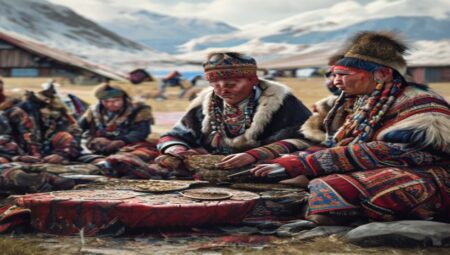
Communities maintained a multi-resource economy balancing maritime and terrestrial activities. Coastal groups harvested seals, whales, and migratory fish stocks. Inland populations tracked wild reindeer herds across tundra zones. Seasonal migration patterns optimized resource extraction while minimizing ecological strain.
Trade Networks and External Economic Integration
Merchants exchanged reindeer antlers for Scandinavian iron tools. Fur pelts moved southward through established riverine routes. Woolen textiles and driven nails served as standardized currency equivalents. Trading hubs emerged at strategic fjord inlets and mountain passes.
Religious Beliefs and Shamanic Traditions
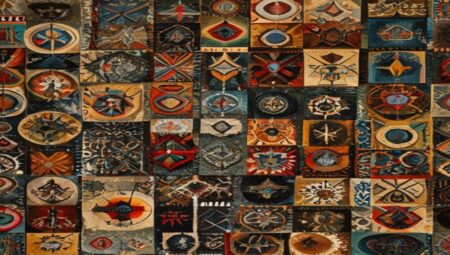
Spiritual practice centered on noaidi practitioners who mediated between human and spirit realms. Drum rituals utilized painted hide surfaces for divination and healing ceremonies. Rock art sites document cosmological symbols and mythological narratives. Sacred sites required strict ritual protocols to prevent ecological imbalance.
Territorial Boundaries and Political Organization
Communities operated under clan-based governance without centralized state structures. Tribal boundaries shifted dynamically based on resource availability and intergroup alliances. Marriage alliances facilitated territorial expansion and resource access. Conflict resolution relied on customary law rather than formal judicial institutions.
Norse Contact and Early Christianization Pressures
Missionary expeditions arrived alongside royal taxation collectors. Bishops from Hamar and Oslo demanded ecclesiastical compliance. Local authorities enforced forced conversion through ecclesiastical taxation. Communities adopted syncretic practices to maintain traditional rites covertly.
Archaeological Evidence from Medieval Sami Sites
Excavations reveal concentrated reindeer bone assemblages near ancient camps. Artifacts show early copper trade goods alongside indigenous stone tools. Dwelling pits demonstrate insulated construction adapted to subarctic climates. Radiocarbon dating aligns occupation phases with climate fluctuations.
Resource Competition and External Authority Expansion
Royal decrees issued crown land grants to foreign settlers. Mining operations disrupted traditional migration corridors. Logging concessions altered forest reindeer habitats. Land rights erosion accelerated through bureaucratic documentation.
Historical Continuity and Transition to the Early Modern Period
Traditional adaptation strategies ensured cultural survival under pressure. Linguistic continuity preserved distinct dialects across isolated valleys. Communities accelerated pastoral reindeer herding to secure food supplies. Oral transmission maintained legal and spiritual frameworks.
Frequently Asked Questions
What is Medieval History of the Sami People?
The medieval history of the Sami people refers to the period spanning roughly from the 5th to the 15th century, encompassing their traditional semi-nomadic lifestyle, cultural and spiritual practices, economic activities, and early interactions with neighboring Scandinavian, Finnic, and Slavic populations during the European Middle Ages.
Key facts about Medieval History of the Sami People
Key facts include their adaptation to Arctic and sub-Arctic environments through reindeer herding, fishing, and hunting; the central role of noaidi (shamanic) spiritual practices; extensive trade networks with Norse and Russian merchants for furs and antlers; the gradual Christianization process beginning in the 12th century; and the early imposition of tribute and taxation systems by expanding Scandinavian monarchies.