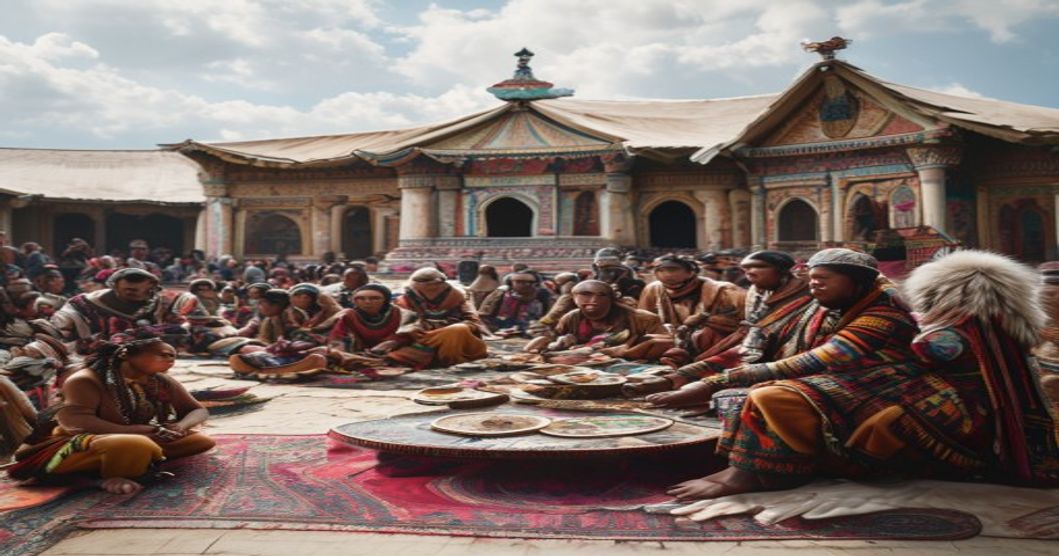
Sami Culture in International Museums: Global Collections Overview
Major cultural institutions across Europe and North America hold extensive repositories of Sámi material heritage, reflecting decades of ethnographic collecting, academic research, and cross-border cultural exchange. National museums in Oslo, Stockholm, and Helsinki form the core of these holdings, each preserving tens of thousands of objects acquired during the late nineteenth and early twentieth centuries. These collections encompass traditional duodji craftsmanship, reindeer husbandry equipment, ceremonial drums, textile artifacts, and audio recordings of joik vocal traditions. The concentration of Sámi materials in Scandinavian institutions stems from historical expeditionary campaigns, missionary documentation efforts, and state-sponsored ethnographic surveys that systematically recorded Indigenous lifeways across Fennoscandia.
International museums outside the Sápmi region have also accumulated significant holdings through academic partnerships, private donations, and colonial-era exchanges. The American Museum of Natural History in New York, the Pitt Rivers Museum in Oxford, and the Musée du Quai Branly in Paris maintain curated segments dedicated to Sámi cosmology, subsistence strategies, and artistic expression. These institutions frequently collaborate on temporary exhibitions that travel across continents, enabling broader public engagement with Sámi heritage while highlighting the geographic dispersion of related artifacts.
- Provenance Research: Contemporary museums prioritize archival investigations to trace acquisition dates, donor records, and original community contexts. Many institutions now employ digital provenance databases linked to Indigenous knowledge systems and cross-reference colonial expedition logs with contemporary Sámi oral histories.
- Repatriation & Co-Curation: Legal frameworks in Norway, Sweden, and Finland have accelerated the return of sacred objects and ancestral remains. Museums increasingly adopt shared governance models where Sámi curators and elders guide interpretation, display protocols, and preservation standards, shifting authority from institutional control to community stewardship.
- Digital Access & Virtual Collections: High-resolution 3D modeling, IIIF-compliant image servers, and multilingual metadata portals allow researchers worldwide to examine Sámi textiles, tools, and ritual objects without physical transit. Collaborative digital archives now bridge institutional boundaries while respecting cultural sensitivity protocols and indigenous data sovereignty guidelines.
The global dispersion of Sámi collections continues to evolve alongside shifting museological ethics. Academic networks, Indigenous research institutes, and international heritage organizations coordinate digitization initiatives that standardize cataloging practices across borders. Museum professionals now recognize that preserving Sámi culture requires more than physical storage; it demands active community participation, transparent acquisition histories, and adaptive interpretation frameworks that reflect contemporary Sámi identity rather than static ethnographic snapshots.
Major Institutions Housing Sami Artifacts
The global custodianship of Sami material culture spans several major ethnographic institutions, each holding distinct collections shaped by historical acquisition practices, academic expeditions, and institutional exchanges. The Nordic Museum in Stockholm maintains one of the most comprehensive assemblages outside traditional Sami territories, featuring late nineteenth-century du ndrur, ceremonial gákti textiles, and reindeer-herding apparatus documented during Sweden’s early ethnographic surveys. These objects transitioned from anthropological classification tools to central references for contemporary cultural revival initiatives.
In Germany, the Ethnological Museum of Berlin preserves approximately twelve hundred Sami-related items, primarily sourced from early twentieth-century academic fieldwork and colonial-era exchanges. The collection emphasizes ritual objects, including reconstructed sacred stones and drum fragments, alongside utilitarian tools that illustrate regional variations across Finnmark, Troms, and Lapland. Berlin’s curatorial department now collaborates with Sami research networks to implement community-driven cataloging standards.
The Musée du Quai Branly in Paris holds a smaller but historically significant assemblage originating from French Arctic expeditions and private collector donations during the late 1800s. These pieces include embroidered wool garments and bone-carved hunting implements that demonstrate cross-regional trade networks between Sami communities and European museums.
- Nordic Museum (Stockholm): Core holdings of traditional Sami dress, drum collections, and archival photography from the 1880 to 1920 period.
- Ethnological Museum of Berlin: Extensive ritual and daily-use objects with documented provenance tracking early German scientific expeditions.
- Musée du Quai Branly (Paris): Curated fragments highlighting nineteenth-century collector interactions and material exchanges across Northern Europe.
- American Museum of Natural History (New York): Field-collected Sami artifacts acquired through transatlantic academic partnerships, now undergoing digital repatriation protocols.
Contemporary museum practices prioritize ethical stewardship over static display. Institutions are implementing joint curatorial frameworks with Sami cultural authorities, ensuring artifact interpretation reflects indigenous knowledge systems rather than colonial taxonomies. Digital archives and high-resolution 3D modeling now provide remote access to these holdings, supporting academic research and youth education programs across Scandinavia and North America.
Geographic Distribution of Nordic and Eurasian Collections
The geographic concentration of Sámi cultural materials across Nordic institutions reflects centuries of cross-border migration, colonial acquisition practices, and academic prioritization. Norway, Sweden, and Finland host the most comprehensive repositories, with major holdings anchored in Tromsø University Museum, the Sami Culture Center Siida in Rovaniemi, and the Swedish National Museum’s ethnographic division. These facilities preserve thousands of artifacts spanning reindeer husbandry tools, traditional duodji textiles, drum instruments, and oral history archives. The proximity to Sápmi—the transnational homeland of the Sámi people—directly correlates with collection depth, as regional museums benefit from continuous community collaboration and field documentation.
Eastward expansion into Eurasian territories reveals a distinct acquisition trajectory shaped by imperial expeditions and Soviet-era ethnographic campaigns. The Russian State Ethnographic Museum in Saint Petersburg and the Kola Science Center’s Arctic branch maintain significant Sámi-related archives, particularly from the Kola Peninsula and Murmansk Oblast. These collections often emphasize linguistic manuscripts, religious conversion records, and archaeological finds from Bronze Age to medieval periods. Academic institutions such as Umeå University’s Department of Archaeology and Indigenous Studies coordinate cross-regional data sharing, enabling synchronized cataloging efforts that bridge Scandinavian and Eurasian holdings.
- Primary Nordic Hubs: Tromsø, Rovaniemi, Oslo National Museum, Uppsala University’s Ethnographic Collection
- Eurasian Research Nodes: Saint Petersburg State Ethnographic Museum, Petrozavodsk Cultural Heritage Institute, Murmansk Arctic Museum
- Cross-Border Initiatives: Sámi Museum Network digitization projects, Nordic Council cultural preservation grants, joint repatriation frameworks
Distribution patterns continue evolving through institutional partnerships and digital archival networks. Museums prioritize high-resolution 3D scanning, multilingual metadata tagging, and community-led curation to ensure accurate representation. The geographic spread of these collections remains strategically aligned with historical Sámi settlement zones, enabling scholars to trace material culture diffusion across tundra, taiga, and coastal ecosystems. Collaborative conservation protocols now mandate shared stewardship models, ensuring that institutional access aligns directly with Indigenous research priorities and heritage sovereignty standards.
Historical Acquisition Patterns and Colonial Contexts
The collection of Sámi material culture by European institutions emerged from intersecting scientific, political, and economic forces during the eighteenth and nineteenth centuries. As Scandinavian states consolidated territorial control over Sápmi, ethnographic museums in Stockholm, Copenhagen, Berlin, and Oslo systematically documented indigenous artifacts through state-funded expeditions, missionary networks, and private traders. These acquisitions rarely operated under equitable exchange frameworks. Many objects entered museum vaults through barter systems that leveraged economic dependency, while others were obtained during periods of forced relocation or cultural suppression policies aimed at assimilation.
- State-Sponsored Ethnography: Government-backed researchers prioritized the documentation of reindeer herding gear, duodji crafts, and ritual instruments as evidence of a static indigenous past, aligning artifacts with emerging nationalist narratives.
- Provenance Ambiguity: Museum catalogs frequently list items as purchased or donated without recording the conditions of transfer, original owners, or whether transactions occurred under duress or financial necessity.
- Scientific Colonialism: Anthropologists classified Sámi objects through a lens of cultural hierarchy, treating them as relics of a vanishing race rather than living heritage. This framing justified preservation in metropolitan institutions over community stewardship.
The colonial dimension extends beyond geographic boundaries. Northern European nation-states utilized artifact collection to construct unified national identities while marginalizing Sámi political sovereignty. Museums displayed items as neutral scientific specimens, obscuring the power imbalances inherent in their acquisition. Contemporary provenance research reveals that many textiles, antler carvings, and drum artifacts were transferred during periods of taxation mandates, land dispossession, or missionary conversion campaigns. These historical patterns establish a clear lineage between colonial administration and modern museum holdings.
Current institutional audits focus on reconstructing transaction histories, identifying coercive acquisition contexts, and establishing legal pathways for repatriation. The shift from extraction-based collecting to collaborative stewardship reflects a broader reckoning with how indigenous cultural heritage was integrated into European national narratives. Understanding these historical mechanisms remains essential for accurate provenance documentation and ethical collection management.
Curatorial Approaches to Sami Heritage Abroad
International institutions managing Sámi collections have undergone a fundamental paradigm shift in recent decades. Curatorial strategies now prioritize ethical stewardship over static preservation, moving away from colonial-era taxidermy displays that treated indigenous material culture as anthropological specimens. Modern frameworks emphasize collaborative exhibition design, where Sámi knowledge holders serve as co-authors rather than reference sources. Provenance research has become a mandatory step in cataloging artifacts, with institutions actively tracing acquisition histories to identify items obtained through unequal power dynamics or historical dispossession.
- Collaborative Authorship: Sámi curators and elders co-design exhibition narratives, ensuring accurate representation of seasonal migration patterns, reindeer husbandry cycles, and joik vocal traditions.
- Provenance Verification: Archives are systematically audited to document acquisition contexts, with institutions establishing transparent access protocols for descendants and research communities.
- Adaptive Conservation: Traditional organic materials require modified climate controls, as standard museum humidity levels accelerate degradation of bone, antler, and textile components unique to Sámi craftsmanship.
Many museums now implement dynamic interpretation models that separate object display from cultural context. Text panels and digital media explicitly acknowledge the living nature of Sámi traditions, contrasting archival records with contemporary artistic expressions. Repatriation protocols have also intensified, with institutions establishing formal partnerships to return sacred items, reindeer bone artifacts, and historical photographs to Sámi communities across Norway, Sweden, Finland, and Russia. Digital surrogates frequently replace physical loans during cultural exchanges, reducing logistical strain while maintaining scholarly access.
Curatorial training programs now integrate decolonial methodologies and indigenous epistemologies as core competencies. Exhibition design avoids chronological isolation of artifacts, instead grouping items by thematic continuity. Institutions increasingly utilize participatory archiving, where community members digitize oral histories, map ancestral landscapes, and verify iconographic details within digital repositories. This approach transforms static collections into evolving knowledge ecosystems. Professional networks now mandate transparency in indigenous acquisition records, pushing curators to document consent processes and negotiate shared ownership models. The result is a curatorial environment that treats Sámi heritage not as a finished historical record, but as an active dialogue between archival preservation and contemporary cultural continuity.
Ethical Display Practices and Indigenous Collaboration
Museums holding Sami artifacts have historically operated within colonial acquisition frameworks that treated living cultural heritage as static objects rather than dynamic expressions of an ongoing societal continuum. Ethical display practices now require a fundamental restructuring of curatorial authority, shifting decision-making power directly to Sámi communities who possess the generational knowledge necessary for accurate contextualization.
Contemporary institutional protocols mandate formal consultation with regional Sámi parliaments and traditional knowledge holders before any artifact is loaned, exhibited, or digitized. This collaboration extends beyond advisory roles into co-curation agreements where Sámi scholars jointly design exhibition narratives, select interpretive materials, and determine access levels for culturally sensitive items. Restriction frameworks frequently apply to sacred regalia, reindeer husbandry tools with spiritual significance, and historical photographs of Indigenous individuals who retain ancestral rights over their image.
- Consent-Driven Provenance Verification: Institutions conduct exhaustive archival research tracing every item back to its original context, prioritizing restorative repatriation when documentation reveals coercive or unconsented transfers.
- Cultural Competency Certification: Curatorial staff undergo mandatory training in Sámi epistemologies, language fundamentals, and contemporary Indigenous rights law to prevent inadvertent misrepresentation during public programming.
- Dynamic Labeling Systems: Exhibition texts incorporate multilingual descriptions developed alongside Sámi linguists, ensuring terminology reflects current community preferences rather than outdated ethnographic classifications.
Digital repatriation initiatives complement physical exchanges by creating secure, community-controlled archives that preserve intangible heritage elements such as joik melodies, duodji craftsmanship techniques, and oral histories. International museum networks increasingly adopt the CARE Principles for Indigenous Data Governance, which prioritize collective benefit, authority to control, responsibility, and ethics over extractive research models. These frameworks ensure that educational materials derived from Sami collections generate direct funding streams for language revitalization programs and youth mentorship initiatives within homelands.
Long-term institutional partnerships demonstrate measurable improvements in visitor comprehension when Sámi narrators lead guided tours or produce audio commentary in native dialects. This approach eliminates anthropological distancing, transforms static displays into living dialogues, and establishes reproducible standards for cultural heritage institutions worldwide seeking to dismantle historical asymmetries in artifact stewardship.
Language Integration and Oral History Preservation
International museums addressing Sami heritage have shifted from static artifact displays to dynamic linguistic frameworks. Curators now prioritize native terminology alongside standardized exhibit labels, ensuring that reindeer husbandry, seasonal migration patterns, and traditional craftsmanship retain their original semantic depth. Bilingual plaques featuring Northern, Lule, Southern, and Inari Sami scripts appear frequently in major institutions across Scandinavia and North America. These multilingual interventions prevent cultural dilution by anchoring objects to their precise geographic and linguistic origins.
Audio documentation forms the backbone of oral history initiatives within these collections. Museums collaborate with indigenous knowledge keepers to digitize decades of field recordings, radio broadcasts, and community storytelling sessions. Archivists apply metadata standards that tag each recording by speaker lineage, dialect region, and ecological context. This granular cataloging allows researchers to trace phonetic variations across generations while preserving narrative techniques unique to each Sami group. Digital repositories now offer interactive listening stations where visitors access raw audio alongside transcribed texts and contextual annotations.
Institutional partnerships with Sami parliaments and cultural centers dictate acquisition policies for spoken material. Curators avoid extracting narratives from their ceremonial or seasonal frameworks, instead embedding recordings within broader ecological and historical timelines. Exhibition design incorporates directional soundscapes that replicate forest environments, allowing visitors to experience hunting calls, duodji crafting techniques, and joik melodies in spatially accurate arrangements. Conservation protocols treat audio media with the same urgency as parchment manuscripts, utilizing lossless storage formats and redundant server networks to prevent data degradation.
Educational programming extends beyond passive listening. Museums develop phonetic workshops where linguists demonstrate consonant gradation and vowel harmony specific to each dialect. Participants record comparative samples that feed directly into open-access linguistic databases. These initiatives transform museum archives from closed repositories into living research hubs, ensuring that Sami oral traditions remain active components of contemporary cultural practice rather than historical artifacts.
Balancing Academic Research with Cultural Sensitivity
Academic inquiry into Sami heritage within international museum collections demands a fundamental restructuring of traditional research methodologies. Historical cataloging practices frequently treated artifacts as isolated objects, stripping them from their contextual frameworks and living traditions. Contemporary scholarship must replace extractive documentation with structured collaboration. Researchers now operate under explicit protocols that recognize the Sámi as sovereign knowledge holders rather than passive subjects. This shift requires rigorous adherence to data sovereignty principles, particularly when handling sacred regalia, reindeer husbandry records, or oral history recordings archived in foreign institutions.
Methodological adaptation begins with pre-fieldwork engagement. Academic teams must establish formal consultation agreements before accessing collections. These agreements define usage boundaries, specify appropriate citation formats that honor living practitioners, and outline reciprocal knowledge exchange requirements. Institutions implementing dynamic consent frameworks allow Sámi communities to revise access permissions as cultural contexts evolve. Provenance audits become ongoing processes rather than static publications, requiring continuous verification with regional Sámi parliaments and local heritage organizations.
- Co-curation mandates: Curatorial decisions regarding display narratives require joint approval from designated Sámi cultural authorities. Exhibition text must undergo linguistic review to prevent misrepresentation of terminology related to duodji craftsmanship or seasonal migration patterns.
- Digital repatriation pathways: High-resolution documentation and 3D scanning projects prioritize creating accessible archives for source communities before public dissemination. Metadata schemas incorporate Indigenous classification systems alongside standard museum taxonomies.
- Academic citation standards: Scholarly publications must credit oral knowledge holders, community elders, and Sámi research networks using recognized honorifics and collective attribution models rather than anonymous sourcing.
Institutional policy revisions directly influence research viability. Museums with established Sámi advisory boards demonstrate measurable improvements in collection accessibility and scholarly accuracy. These governance structures mitigate legal complications surrounding the 1970 UNESCO Convention while aligning with the United Nations Declaration on the Rights of Indigenous Peoples. Academic institutions partnering with these frameworks gain enhanced access to restricted archives, verified oral testimonies, and interdisciplinary research opportunities that bridge anthropology, material science, and Indigenous law.
The integration of cultural protocols strengthens academic rigor rather than constraining it. Researchers who prioritize relationship-based methodologies produce more reliable provenance data, reduce interpretive bias, and generate publications with higher citation impact across heritage studies. Future scholarship must treat cultural sensitivity as a foundational research parameter, ensuring that international museum collections serve as platforms for Sámi self-representation rather than external interpretation.
Visitor Guide to Viewing Sami Culture in International Museums
Encountering Sami heritage outside Scandinavia requires strategic planning and cultural awareness. Major institutions in London, Berlin, Paris, and New York regularly rotate displays of Sápmi artifacts, but permanent collections remain sparse. Verify exhibition schedules through official museum portals before departure. Focus on venues with documented partnerships with Sami curators or the Sámediggi council to ensure authentic representation rather than colonial-era ethnographic displays.
When navigating dedicated galleries, prioritize contextual understanding over visual impact. Traditional duodji handicrafts, reindeer leather footwear, and hand-woven gákti garments carry specific regional meanings that often escape casual observation. Audio guides frequently omit dialectal variations in joik recordings; request transcripts from museum education desks to grasp lyrical references tied to seasonal migration routes. Avoid flash photography near organic materials such as birch bark, antler carvings, and aged textiles. UV exposure accelerates degradation of culturally significant objects.
- Arrive during weekday mornings to experience fewer crowds near interactive replicas of lavvu tents and duodji demonstration stations.
- Request multilingual glossaries that distinguish between Northern, Lule, and Southern Sami terminology for everyday objects.
- Check institutional websites for digital archives featuring digitized joik collections, which often accompany physical exhibitions with higher resolution audio samples.
- Prioritize museums displaying provenance documentation alongside each artifact to trace acquisition histories and repatriation status.
Engage directly with resident educators during guided walkthroughs. Question specific display choices regarding sacred reindeer skulls, shamanic drums, or historical trade agreements. Many institutions host quarterly workshops where Sami artisans demonstrate traditional dyeing techniques using lichens and birch bark. Reserve seats through official cultural programming portals, as these sessions typically fill within forty-eight hours of announcement. Verify accessibility routes in advance, particularly for museums located in historic buildings with limited elevator infrastructure.
Support ethical curation by purchasing publications authored by Sami historians or contemporary artists rather than third-party souvenir replicas. Cross-reference exhibit labels with peer-reviewed academic journals published by the Sámi University of Applied Sciences. Track institutional websites monitoring ongoing restitution negotiations, as artifact loans frequently shift in response to diplomatic agreements between host museums and Nordic indigenous governance bodies.
Permanent Galleries vs Rotating Exhibitions
Permanent galleries dedicated to Sami culture establish a foundational presence within major international institutions, offering visitors consistent access to historical artifacts, traditional craftsmanship, and ancestral narratives. These spaces typically house duodji tools, reindeer-herding equipment, ceremonial garments, and archival photographs that trace centuries of adaptation across Fennoscandia. The structural permanence allows museums to develop comprehensive educational programming, including multilingual audio guides, academic research archives, and teacher resource kits. However, static displays often struggle to capture the living evolution of Sami traditions. Without regular content updates, permanent installations risk presenting cultural practices as historical artifacts rather than contemporary expressions of identity.
Rotating exhibitions address this limitation by introducing curated themes that reflect current developments within Sami communities. These temporary presentations frequently emerge from direct collaborations with indigenous curators, cultural advisors, and community elders. Recent touring shows have highlighted joik vocal traditions, land rights activism, contemporary Sami art installations, and the intersection of traditional livelihoods with modern climate policies. The temporary nature of these displays generates sustained media coverage and drives measurable audience engagement spikes. Institutions report higher demographic diversity among visitors when exhibitions address timely socio-political themes rather than static historical overviews.
- Content Longevity: Permanent collections require comprehensive conservation protocols for organic materials like reindeer leather, bone, and antler, while rotating shows utilize climate-controlled temporary environments optimized for short-term display cycles.
- Curatorial Agility: Temporary exhibitions enable rapid response to emerging research, community priorities, and contemporary artistic movements. Permanent galleries demand extensive revision timelines to maintain scholarly accuracy without disrupting visitor flow.
- Funding Structures: Rotating programs often rely on grant cycles, corporate sponsorships, and ticketed preview events that create immediate revenue streams. Permanent installations depend on institutional endowments, government cultural allocations, and membership dues for sustained operation.
Museum directors increasingly implement hybrid models that combine anchored permanent collections with quarterly rotating programs. This strategy preserves core historical narratives while introducing specialized topics such as Sami linguistic revitalization, digital archiving initiatives, and cross-border indigenous cooperation. Visitor retention studies indicate that institutions maintaining both formats achieve stronger academic credibility and broader public outreach. The integration of community-led interpretation alongside established ethnographic frameworks transforms static museum spaces into active cultural dialogue platforms.
Digital Archives and Virtual Museum Access
International heritage institutions have systematically digitized Sámi material culture to preserve fragile artifacts, standardize cross-border research access, and mitigate physical handling risks. Major repositories including the Sámi Museum Siida’s digital collection, Uppsala University’s cultural history archives, and the British Museum’s online database now host tens of thousands of high-resolution artifacts, ranging from intricately carved reindeer antler tools to ceremonial drums and woven textile fragments. These digitization workflows follow museum informatics standards such as CIDOC CRM and Dublin Core, enabling seamless data exchange across European and North American cultural networks.
Virtual access infrastructure relies on advanced imaging protocols to capture surface topography and dye composition without physical contact. Multispectral photography reveals faded pigment layers in historical garments, while structured light scanning generates millimeter-accurate 3D models of duodji craftsmanship. Collaborative platforms maintained by Nordic heritage consortia aggregate records from Sweden, Norway, Finland, and Russia, allowing researchers to trace migration patterns, trade routes, and stylistic evolution through unified query interfaces.
- Community-Led Metadata Architecture: Digitization projects increasingly require Sámi knowledge holders to validate catalog entries, ensuring accurate terminology, contextual descriptions, and culturally sensitive restrictions on sacred or historically contested objects.
- Dialect-Specific Indexing: Digital catalogs integrate Northern Sámi, Lule Sámi, Inari Sámi, and Southern Sámi lexicons alongside Scandinavian and Finnish descriptors, preserving linguistic nuance in artifact classification and search algorithms.
- Tiered Access Protocols: Institutions implement role-based visibility systems that restrict certain recordings or ritual items to authenticated researchers while maintaining open access for general educational materials and publicly curated exhibitions.
Digital surrogates directly address preservation constraints. Historical Sámi leatherwork, silk-thread embroidery, and birch-bark containers degrade rapidly under variable humidity, UV exposure, and repeated transportation. Virtual replicas eliminate physical loan dependencies, reducing insurance costs and handling-related deterioration. Open-access networks like the National Library of Norway’s digital archive and the Europeanana federated portal remove financial barriers, enabling independent scholars to conduct comparative analyses across institutional collections.
Technical development now focuses on integrating computational pattern recognition for traditional weaving motifs and automated speech processing for joik recordings. These tools assist human curators by identifying regional stylistic variations and mapping phonetic shifts in oral histories. Ongoing policy refinement aligns digital representation with the CARE principles for Indigenous data governance, guaranteeing that virtual access frameworks remain accountable to Sámi communities, protect intellectual property rights, and sustain long-term cultural continuity.
Educational Programs and Workshop Schedules
Museum-led educational initiatives for Sami heritage operate through structured knowledge transfer frameworks, community-verified instruction, and material culture immersion. Institutions across Scandinavia and Northern Europe align their programming with academic terms, seasonal cultural markers, and indigenous governance schedules. Workshop cycles typically follow a biweekly cadence during university semesters, with intensive residencies concentrated during spring and autumn periods that correspond to traditional Sami ecological calendars. Participants engage in duodji craft production, reindeer hide processing, joik vocal methodology, and historical textile restoration under direct supervision of certified cultural practitioners.
- Curriculum Mapping: Programs integrate directly with national secondary education standards for anthropology, art history, and indigenous studies. University modules incorporate archival cross-referencing, oral history transcription, and conservation documentation protocols.
- Scheduling Architecture: Core sessions run on fixed monthly rotations. Extended workshops synchronize with academic research cycles and funding disbursement periods. Hybrid delivery models provide digitized lecture repositories, virtual artifact examination interfaces, and asynchronous skill assessments.
- Facilitator Validation: Instructors undergo community credentialing through Sami parliamentary advisory boards. Programs require documented partnership agreements to ensure ethical knowledge circulation and accurate technical representation.
- Registration & Logistics: Enrollment opens ninety days before session commencement. Instructional materials distribute through secure institutional networks. Accessibility provisions include tactile object handling stations, multilingual technical glossaries, and adaptive crafting equipment.
Competency tracking utilizes portfolio development, practical technique evaluation, and reflective field documentation. Museums coordinate with regional education authorities to embed modules into credit-bearing coursework. Research departments leverage workshop outputs for conservation training, catalog refinement, and comparative pedagogy analysis. Scheduling remains adaptive to accommodate reindeer migration timelines, indigenous ceremonial requirements, and institutional grant cycles.
Preservation, Repatriation, and Future Directions
The conservation of Sami cultural heritage within international museum collections demands specialized methodologies that address both material fragility and contextual integrity. Traditional Sami artifacts, including duodji handicrafts, drum instruments, and reindeer-hide garments, require climate-controlled environments with strict humidity regulation to prevent fiber degradation and metal corrosion. Modern preservation protocols now integrate non-invasive imaging techniques, such as multispectral analysis and 3D surface scanning, to document intricate embroidery patterns and tool wear without handling original objects. Museums have increasingly shifted from static display models to dynamic conservation labs where curators collaborate with Sami elders and technical conservators to establish care guidelines rooted in indigenous knowledge systems.
- Ethical repatriation frameworks are reshaping institutional policies through bilateral agreements, legal restitution claims, and community-led verification processes. The Norwegian government’s 2019 cultural heritage initiative established a formal pathway for returning sacred Sami items to indigenous councils, setting a precedent for Scandinavian institutions.
- Digital repatriation has emerged as a complementary strategy, where high-resolution archives, audio recordings, and interactive databases are shared with Sami Sámi universities and cultural centers. This approach maintains physical artifacts in their current locations while restoring narrative authority to source communities.
- Co-curation models now require permanent Sami representation on acquisition committees, ensuring that exhibition narratives reflect contemporary indigenous perspectives rather than historical colonial interpretations.
Future institutional trajectories prioritize decentralized heritage management and algorithmic transparency in collection databases. Museums are adopting FAIR data principles to enable cross-border research while embedding Indigenous Data Sovereignty protocols that restrict unauthorized commercial or academic exploitation. Emerging partnerships between European museums and Sámi Parliament networks focus on developing shared stewardship agreements, where loan durations, access rights, and interpretive control are negotiated annually through binding memoranda. Educational programming will increasingly utilize augmented reality reconstructions of historic reindeer migration routes alongside artifact displays, creating immersive learning environments that connect material culture to living Sámi traditions. Policy revisions within ICOM and UNESCO frameworks continue to accelerate institutional accountability, mandating transparent provenance research and mandatory community consultation before any new acquisition involving culturally sensitive Sami objects.
Contemporary Debates on Artifact Return
The restitution of Sami cultural heritage remains one of the most complex ethical and legal frontiers in global museum practice. International institutions across Europe and North America hold tens of thousands of Sami artifacts collected during the late nineteenth and early twentieth centuries, a period defined by colonial ethnography and scientific classification. Contemporary debates center on dismantling these historical acquisition frameworks and establishing transparent restitution pathways. Provenance research has become the foundational step, requiring museums to audit collection catalogs, cross-reference archival records, and engage living Sámi communities who often possess oral histories contradicting official museum documentation.
Legal mechanisms frequently stall restitution efforts. National cultural property laws in countries like Germany, Sweden, and Finland often classify historically acquired items as state assets, creating statutory barriers that override moral obligations. Conversely, the United Nations Declaration on the Rights of Indigenous Peoples provides a binding international standard demanding free, prior, and informed consent for the handling of indigenous cultural materials. Museums face mounting pressure to align institutional policies with these standards while navigating domestic legislation that lacks explicit repatriation mandates.
Institutional resistance manifests through multiple channels. Some institutions argue that preservation conditions in source communities are inadequate, though independent conservation assessments consistently demonstrate that Sámi-led stewardship programs meet or exceed international archival standards. Others invoke the universal museum concept, a framework increasingly criticized as a continuation of colonial extraction logic. Contemporary restitution models now prioritize co-curation over unilateral decision-making. Collaborative exhibitions, shared authority agreements, and digitization initiatives serve as transitional mechanisms while formal repatriation protocols develop.
- Fragmented legal jurisdictions across Sápmi regions that complicate unified negotiation strategies
- Lack of standardized provenance documentation for pre-1950 acquisitions requiring specialized archival forensics
- Tension between academic access requirements and indigenous spiritual restrictions regarding sacred regalia and ceremonial objects
- Funding disparities that limit Sámi organizations’ capacity to sustain long-term legal and diplomatic campaigns
The trajectory of artifact return increasingly depends on institutional willingness to treat repatriation not as a loss of collection value but as a correction of historical power imbalances. Museums that integrate Sámi advisory boards into acquisitions committees, adopt dynamic loan agreements, and publicly disclose provenance findings demonstrate measurable progress toward ethical stewardship. The debate continues to evolve beyond physical object transfer, expanding into data sovereignty, intellectual property rights, and the digital repatriation of ethnographic records held in Western archival networks.
Funding Models for Arctic Cultural Institutions
Arctic cultural institutions operating within Sámi territories navigate a complex financial ecosystem shaped by geographical isolation, cross-border administrative frameworks, and specialized heritage preservation mandates. Public sector financing remains the primary structural foundation, with national governments in Norway, Sweden, Finland, and Russia historically allocating direct subsidies through cultural ministries and regional development agencies. The Sámi Parliaments function as critical funding conduits, distributing targeted grants for language revitalization, traditional craft documentation, and mobile exhibition circuits that reach dispersed northern communities. These institutional allocations typically require rigorous compliance with indigenous consultation protocols and strict adherence to repatriation guidelines established under UNESCO frameworks.
- National cultural ministries provide baseline operational subsidies tied to annual performance metrics
- Regional development funds finance infrastructure upgrades in remote municipal libraries and heritage centers
- Sámi parliamentary allocations prioritize community-led archival digitization and intergenerational knowledge transfer programs
- Nordic cultural cooperation bodies distribute competitive grants for cross-border Sámi museum collaborations
Private financing mechanisms operate alongside public subsidies but demand strategic alignment with institutional missions. Major European foundations such as the Nordic Culture Fund and the Arcus Foundation allocate targeted grants for indigenous heritage documentation, while corporate sponsorships require careful navigation of cultural sensitivity standards to avoid commodification of sacred artifacts. International heritage organizations like ICOM and the World Monuments Fund occasionally provide emergency conservation grants for deteriorating wooden stave structures or traditional duodji collections. Institutions diversifying revenue streams increasingly implement hybrid financial architectures that combine grant-dependent programming with controlled commercial activities.
Sustainable revenue generation relies on structured membership networks, institutional licensing agreements for academic publications, and carefully regulated heritage tourism partnerships that direct a fixed percentage of ticket revenues back to archival preservation. Digital subscription platforms offering virtual access to digitized Sámi oral history archives have emerged as viable long-term income sources, particularly when integrated with university research consortiums. Financial sustainability in Arctic museum contexts ultimately depends on transparent allocation frameworks, independent audit mechanisms for grant utilization, and continuous stakeholder engagement with indigenous governing bodies to ensure funding structures remain culturally responsive and operationally resilient.
Next Generation Documentation Technologies
The integration of next-generation documentation technologies has fundamentally transformed how international museums approach the preservation and dissemination of Sami cultural heritage. Traditional archival methods, reliant on physical cataloging and two-dimensional photography, now yield to multidimensional data capture systems. LiDAR scanning and high-resolution photogrammetry enable museum conservators to record duodji artifacts, ceremonial regalia, and historical reindeer husbandry equipment with sub-millimeter precision. These spatial datasets create immutable digital twins that withstand environmental degradation and unauthorized reproduction.
- AI-assisted transcription platforms process decades of oral history recordings and handwritten field notes, applying natural language models trained on North Sámi, Inari Sámi, and Skolt Sámi dialects to generate searchable, time-stamped transcripts.
- Multispectral imaging reveals faded ink, hidden textile patterns, and pigment layers in historical Sami manuscripts, uncovering previously inaccessible ethnographic details without physical contact.
- Blockchain-based provenance ledgers track artifact movement across institutional boundaries, supporting transparent repatriation workflows and aligning with CARE principles for Indigenous data governance.
Museum institutions deploy interoperable metadata frameworks such as CIDOC CRM and IIIF to bridge archival silos. These standards ensure that digitized Sami collections remain accessible to researchers, cultural practitioners, and descendant communities regardless of the hosting platform. Digital preservation protocols follow the OAIS reference model, implementing format migration strategies and checksum verification to counter technological obsolescence. The technical infrastructure requires continuous funding, specialized training in heritage informatics, and collaborative governance models that prioritize Sami knowledge holders as co-authors rather than passive subjects.
Technical implementation demands strict adherence to ethical data stewardship, ensuring that sensitive ritual objects and sacred audio archives remain accessible only through tiered authentication systems controlled by participating Sámi communities. Future documentation pipelines will increasingly utilize federated learning architectures, allowing museums to train contextual AI models without centralizing Indigenous datasets. This decentralized approach minimizes data extraction risks while maximizing scholarly utility across global cultural heritage networks.
Frequently Asked Questions
What is Sami Culture in International Museums?
The presence of Sami culture in international museums refers to the collection, preservation, and exhibition of artifacts, art, and historical materials related to the indigenous Sami people across various global institutions. These museums often showcase traditional crafts like duodji (handicrafts), reindeer herding tools, joik music recordings, and contemporary Sami art, aiming to educate visitors about Sami history, resilience, and cultural heritage beyond Scandinavia.
Key facts about Sami Culture in International Museums
Key facts include: many collections were acquired during colonial or ethnographic expeditions in the 19th and early 20th centuries; institutions like the Musée du Quai Branly (France), the Smithsonian (USA), and various European ethnographic museums hold significant Sami archives; recent efforts focus on repatriation, collaborative curation with Sami communities, and digital accessibility; and these collections play a vital role in preserving Sami language, textile patterns (like Gákti), and spiritual traditions globally.