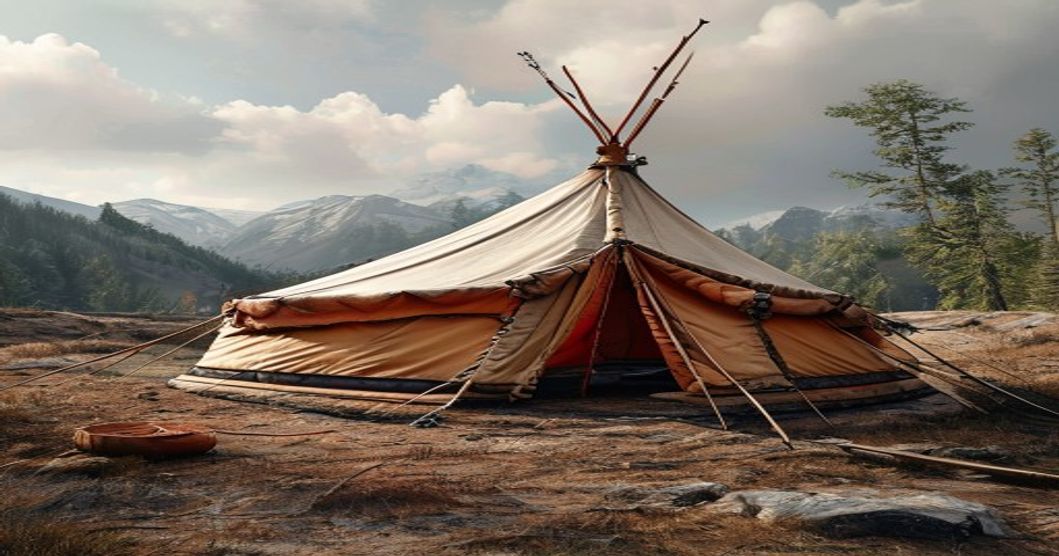
Historical Origins of the Sami Lavvu Tent
The Sami lavvu tent traces its lineage to the indigenous Sámi communities inhabiting the northern reaches of Scandinavia, encompassing parts of present-day Norway, Sweden, Finland, and Russia’s Kola Peninsula. For centuries, this conical dwelling served as the foundational shelter for a highly mobile reindeer-herding culture that adapted to extreme subarctic environments. Unlike permanent structures, the lavvu was engineered for rapid deployment and dismantling, aligning with seasonal migration patterns dictated by pasture availability and calving cycles.
Archaeological evidence and oral histories indicate that early lavvu constructions evolved from pit dwellings and snow shelters into freestanding pole frameworks during the medieval period. The design facilitated communal living for extended families while maintaining mobility across rugged terrain. Historical trade records from the 16th century document the exchange of Sámi reindeer hides for woven textiles, which gradually supplemented animal skins in tent coverings.
Traditional Construction and Materials
Authentic lavvu architecture relies on a precisely calculated tripod or multi-pole framework, traditionally fashioned from birch or pine saplings harvested during winter when wood is denser and less prone to warping. The central poles intersect at the apex, creating a self-supporting conical shell that distributes structural load evenly. Historically, coverings consisted of cured reindeer hides stitched together with sinew, later transitioning to heavy-duty canvas and waxed cotton in the late 19th century.
Rope lashings, crafted from braided birch bark or reindeer antler fiber, secure the framework without metal fasteners. The absence of rigid joints allows the structure to flex under high winds, preventing catastrophic failure. A strategically positioned smoke hole at the apex enables continuous airflow while retaining heat, a critical engineering solution for indoor combustion heating.
Key Architectural and Functional Features
The Sami lavvu tent exhibits several defining characteristics that optimize performance in polar climates. Its geometric conical profile minimizes wind resistance by allowing airflow to deflect around the surface rather than impacting a flat wall. The internal diameter typically ranges from four to six meters, accommodating a central hearth surrounded by insulated sleeping platforms lined with reindeer pelts.
Thermal efficiency is achieved through layered insulation strategies. The outer shell blocks precipitation and drafts, while the inner hide or canvas lining reduces radiative heat loss. Smoke circulation patterns create a thermal gradient that keeps the floor warmer than the ceiling, preventing condensation buildup on sleeping areas. Modern engineering analyses confirm that properly tensioned lavvu structures withstand wind speeds exceeding one hundred kilometers per hour without supplementary anchoring.
Climate Adaptation and Engineering Principles
Arctic weather demands shelters that balance insulation with moisture management. The lavvu addresses this through a dual-ventilation system: the primary smoke hole at the apex and secondary air inlets near the base. This cross-ventilation prevents carbon monoxide accumulation while maintaining internal humidity levels suitable for human occupancy. Snow accumulation on the roof actually enhances insulation, as packed snow acts as a natural thermal barrier when properly compacted.
The structural tensioning method employs a combination of guy lines and ground stakes made from hardened wood or bone. These elements work synergistically to stabilize the frame against lateral forces. Contemporary material science has validated that the original Sámi design incorporates principles later formalized in geodesic dome engineering, particularly in load distribution and aerodynamic stability.
Contemporary Applications and Modern Uses
In the 21st century, the Sami lavvu tent has transitioned from a necessity of survival to a specialized architectural solution across multiple sectors. Cultural institutions and Sámi heritage centers utilize authentic lavvu constructions for educational programming, ensuring traditional knotting, hide-tanning, and pole-setting techniques remain viable crafts.
The outdoor recreation industry has adopted modified lavvu designs for high-altitude camping and expedition bases. Manufacturers now produce hybrid versions using ripstop nylon, silicone-coated fabrics, and aluminum poles to reduce weight while preserving the original ventilation and structural geometry. These adaptations are particularly valued in mountaineering and polar exploration where reliability outweighs portability constraints.
Cultural Revival and Artisan Crafting
A growing movement of Sámi artisans and European tent makers has revived historical fabrication methods, creating limited-edition lavvu tents that prioritize material authenticity over mass production. These workshops employ traditional braiding patterns, natural dyes derived from lichens and berries, and hand-stitched hide panels that require seasonal curing periods.
Eco-tourism operators increasingly integrate lavvu structures into sustainable lodging networks. The design’s low environmental footprint stems from its modular components, which require no concrete foundations or permanent site alteration. When decommissioned, all materials remain biodegradable or recyclable, aligning with contemporary circular economy principles in the hospitality sector.
Frequently Asked Questions: Sami Lavvu Tent: History and Uses
What is Sami Lavvu Tent: History and Uses?
The Sami Lavvu is a traditional conical tent used by the indigenous Sami people of Scandinavia. Historically, it served as a portable dwelling for reindeer herders, offering quick assembly, excellent wind resistance, and effective heat retention from a central fire. Today, it is primarily used for cultural preservation, outdoor tourism, and as a living symbol of Sami heritage and identity.
Key facts about Sami Lavvu Tent: History and Uses
Key facts include: a conical frame made of wooden poles, traditional coverings of reindeer hides or heavy-duty canvas, a central open fire for cooking and heating, rapid setup time of under 30 minutes, historical usage spanning centuries across northern Scandinavia, and modern adaptations for eco-tourism and cultural education. It remains a vital component of Sami material culture and sustainable Arctic living practices.