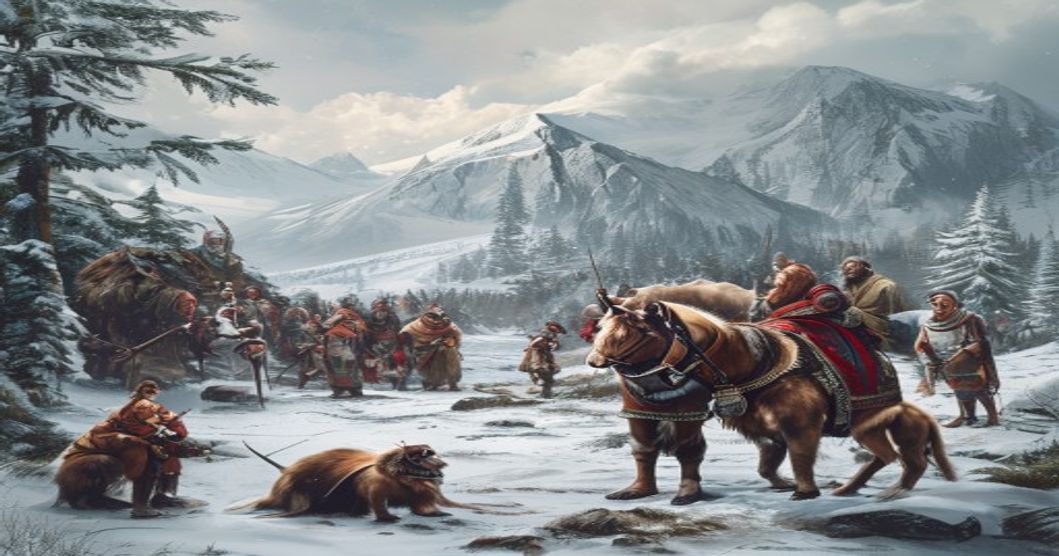
The Most Famous Sami Legends Explained: A Comprehensive Cultural Guide
The Sami people of northern Fennoscandia have preserved a rich tapestry of oral narratives that encode ecological knowledge, spiritual philosophy, and historical memory. These legends were never mere entertainment; they functioned as living documents guiding reindeer pastoralism, seasonal migration, and communal ethics. The transmission occurred through rhythmic speech, drum patterns, and vocal melodies known as joik, which carried entire genealogies and territorial claims across generations without relying on written scripts.
One of the most widely recognized narratives involves the Aurora Borealis. Sami elders describe the shimmering lights as the spirits of ancestors crossing the sky, while other regional variants attribute the phenomenon to a mystical fox whose tail brushes snow-covered peaks, scattering sparks into the atmosphere. Both interpretations reinforce a worldview where celestial and terrestrial realms remain continuously interwoven, demanding respectful observation rather than conquest.
Sacred stones called sieidi hold equal prominence in Sami cosmology. These naturally shaped boulders were believed to house haltija spirits responsible for hunting success, weather shifts, and community prosperity. Offerings of reindeer antlers, copper coins, and carved wooden figures accompanied rituals performed by noaidi, the traditional spiritual practitioners who mediated between human settlements and the invisible landscape. The sieidi tradition demonstrates how geography itself functioned as a theological framework.
- Animistic Ecology: Every river, mountain peak, and forest clearing possesses agency, requiring reciprocal respect rather than resource extraction.
- Joik as Memory Architecture: Vocal patterns encode migration routes, kinship networks, and seasonal resource availability through tonal variation and repetition.
- Noaidi Drum Symbolism: Painted motifs map cosmological layers, enabling spiritual navigation during divination ceremonies and seasonal decision-making.
Contemporary Sami scholars and cultural institutions actively document these narratives through digital archives, university partnerships, and community-led storytelling workshops. Academic research now recognizes that these legends contain sophisticated climate observation data, sustainable harvesting principles, and conflict-resolution frameworks that predate modern ecological science by centuries. Linguists analyze vowel harmonies and consonant gradation to trace migratory patterns across millennia, while indigenous rights advocates leverage these texts to establish land stewardship claims in Nordic parliaments.
Origins and Historical Context of Sami Mythology
Sámi mythology emerged from the prehistoric oral traditions of Sápmi, spanning northern Norway, Sweden, Finland, and the Russian Kola Peninsula long before external religious frameworks arrived. Archaeological records, including rock carvings at Alta, Kåfjord, and Vingen, date back to 4000 BCE and reveal a cosmology deeply intertwined with Arctic ecology. The original belief system operated as a form of animism, where every landscape element—glacial lakes, mountain ridges, ancient pine groves, and migratory routes—possessed an independent spirit requiring respect and reciprocity. Survival in extreme latitudes demanded a worldview that emphasized balance, seasonal awareness, and spiritual negotiation with the environment rather than domination over it.
The transmission of these narratives relied exclusively on verbal continuity, sustained through joik (traditional melodic storytelling), communal gatherings, and generational apprenticeship. Central to this framework was the noaidi, a ritual specialist who mediated between the human realm and ancestral forces using hand drums inscribed with cosmological maps. These drums functioned as both musical instruments and divination tools, mapping three worlds: the upper realm of celestial beings, the middle world of mortal activity, and the lower realm governing death and regeneration. Ritual cycles aligned with reindeer calving seasons, autumn slaughters, spring thaws, and solstice transitions, embedding mythological events into practical subsistence patterns.
- Bieggolmmái: Master of winds, controlling storm patterns and navigation routes across tundra and coastal waters.
- Mánnu: Lunar deity whose phases dictated hunting schedules, fishing restrictions, and ceremonial timing.
- Bearkko: Ancestral guardian spirits tied to specific family lineages and territorial boundaries.
- Horagalles: Thunder god associated with meteorological shifts and the awakening of dormant landscapes.
External documentation began during the 16th century, though early accounts often filtered Sámi cosmology through Lutheran theological frameworks. Systematic academic recording accelerated in the 18th and 19th centuries, with ethnographers compiling variants across dialect groups such as North Sámi, South Sámi, and Kildin Sámi. The 17th-century Christianization campaigns actively suppressed drum rituals and designated traditional practitioners as heretical, forcing mythological knowledge into domestic spaces where it survived through lullabies, craft symbolism, and seasonal proverbs. Contemporary archaeological analysis and linguistic reconstruction continue to clarify how pre-Christian Sámi thought structured time, ecology, and social hierarchy without centralized religious institutions.
The Role of the Noaidi and Shamanic Traditions
The Noaidi functioned as the central spiritual architect within traditional Sámi communities, operating at the intersection of ecological knowledge, ancestral memory, and cosmological navigation. Rather than merely performing rituals, the Noaidi mediated between the visible human realm and the invisible spirit domains that governed hunting success, weather patterns, and herd migration. This role demanded rigorous initiation, often involving prolonged isolation in sacred groves or mountain sieidi sites where the practitioner underwent physical and psychological trials to establish pacts with protective animal spirits. The community relied on this mediation for practical survival; crop failures, reindeer stampedes, or prolonged storms triggered emergency consultations where the Noaidi diagnosed spiritual imbalances and prescribed corrective ceremonies.
Central to shamanic practice was the goavddis, a hand drum painted with geometric symbols representing celestial bodies, spirit realms, and territorial boundaries. During trance-inducing drumming sequences, the Noaidi would strike the membrane in rhythmic patterns while chanting invocations that shifted consciousness. The drum served as both map and vehicle, guiding the practitioner through the upper world of sky deities, the middle world of mortal affairs, and the lower world of ancestral spirits. Ritual objects such as the iron rattle, antler staff, and specially dyed garments amplified this transition, marking the Noaidi’s temporary departure from ordinary reality into negotiated spirit territories.
- Spirit Mediation: Negotiated with landvættir (land spirits) and ancestral guides to secure favorable hunting conditions or interpret omens.
- Diagnostic Divination: Used drum patterns, bone throwing, and dream analysis to locate lost items, identify illness causes, or predict seasonal shifts.
- Ritual Healing: Applied breathwork, herbal poultices, and spirit-binding techniques to restore physical and spiritual equilibrium in community members.
- Cosmological Navigation: Mapped sacred geography through oral cartography, preserving knowledge of sieidi sites, migration corridors, and seasonal ceremonial calendars.
Christianization campaigns systematically suppressed these practices, yet the structural framework survived within folk narratives that later crystallized into documented Sámi legends. The Noaidi’s journey motifs directly influenced epic storytelling conventions, where protagonists traverse liminal spaces, bargain with forest spirits, and reclaim fractured cosmic order. Modern archaeological findings of ritual drums alongside burial sites confirm the institutionalized nature of shamanic authority, while contemporary Sámi cultural revivals actively reconstruct these methodologies using historical ethnographic records and oral testimonies.
Oral Transmission Across Generations
The preservation of Sami legends relies entirely on a sophisticated oral framework that evolved alongside the nomadic reindeer herding lifestyle. With written documentation emerging centuries later, knowledge transfer depended on precise vocal techniques, rhythmic structures, and communal reinforcement. Elders functioned as living archives, memorizing genealogies, ecological patterns, and mythological narratives through disciplined repetition. Children absorbed these accounts during long winter nights in lavvu tents, where auditory immersion replaced visual texts. The transmission process required strict fidelity; altering a single syllable could disrupt the mnemonic chain, breaking continuity across generations.
- Mnemonic Architecture: Legends utilized alliterative verse, predictable cadence, and tonal variation to anchor memories. Repetition of key phrases created cognitive hooks that survived centuries of oral cycling. Performers trained vocal endurance through daily practice, ensuring consistent delivery during extended storytelling sessions.
- Educational Context: Instruction occurred during seasonal migrations, hunting expeditions, and communal gatherings. Each environment reinforced specific narrative segments tied to survival knowledge and spiritual beliefs. Spatial memory techniques mapped story sequences onto landscape features, allowing listeners to navigate both terrain and plot simultaneously.
- Vocal Mediums: The joik tradition served as both musical expression and historical record. Melodic contours mapped geographical features, animal behaviors, and ancestral events into single continuous performances. Dialectal phonetics preserved regional ecological data that standardized texts would inevitably erase.
Generational continuity required active verification. Younger listeners repeated accounts verbatim before elders approved corrections or additions. This iterative process prevented drift while allowing contextual updates for changing landscapes or social structures. Legends adapted to ecological shifts without compromising core mythology. Regional dialect variations emerged as communities settled across distinct climatic zones, yet shared narrative skeletons maintained cultural cohesion. Modern documentation efforts now capture these oral architectures before elder populations decline, preserving structural patterns that once sustained Sami identity across untold centuries.
Key Figures and Deities in Sami Folklore
The Sámi spiritual landscape operates through a complex network of divine beings and ancestral spirits, each governing specific natural phenomena and aspects of daily survival. Unlike centralized pantheons found in other mythological traditions, Sámi cosmology emphasizes localized deities tied directly to geography, weather patterns, and seasonal transitions. These figures were not worshipped through formal temples but acknowledged through rituals, offerings, and respectful engagement with the environment.
Beaivi, the sun deity, remains central to Sámi cosmology, particularly among coastal and inland communities across Fennoscandia. Revered as a life-giving force, Beaivi was believed to travel across the sky in a golden chariot drawn by horses or reindeer, depending on regional oral traditions. The winter solstice celebrations historically focused on appeasing this celestial body to ensure its return. Closely linked to solar worship is Mánnu, the moon goddess who governed night navigation, fishing cycles, and menstrual calendars. Her phases dictated hunting expeditions and reindeer migration schedules, making her a practical as well as spiritual authority.
Horagalles, often identified with the thunder god, dominates northern Sámi narratives. Armed with a hammer that generated lightning and storms, he mediated between humans and unpredictable weather systems. Farmers and hunters across Sápmi left iron fragments or reindeer antlers near sacred stones to request his intervention during droughts or harsh winters. Radien, the supreme creator figure in Inari and Skolt Sámi traditions, shaped the world from primordial waters and established moral boundaries through his offspring. His children included Stallagorriè, who introduced reindeer domestication, and Mielke, a water spirit controlling lakes and rivers essential for fishing communities.
- Biegga-Vuovde-Eallu: The tripartite spirit of wind, forest, and wildlife, serving as a guardian of hunting grounds.
- Jábmi: Ancestor spirits who guided shamans during drum rituals and provided omens through trance states.
- Niejje: A mother goddess associated with fertility, childbirth, and the protection of young reindeer calving seasons.
Regional variations heavily influenced deity attributes. Coastal Sámi emphasized maritime spirits and water deities tied to fjords, while inland groups focused on forest guardians and seasonal sun cycles. Shamanic practices centered around the goavddis (sacred drum) to communicate with these figures during critical agricultural or hunting periods. Offerings typically included reindeer blood, dried fish, copper coins, and birch bark tablets inscribed with symbolic patterns. The interconnectedness of these beings reflected a worldview where survival depended on maintaining reciprocal relationships with the natural world.
Biegga-Vuonna and the Wind Spirit
The figure of Biegga-Vuonna occupies a distinct position within Sámi cosmology, representing the personified force of wind that governs weather patterns across the Arctic tundra and boreal forests. Unlike later Norse or Christian interpretations that often frame storms as divine punishment, Sámi narratives treat Biegga-Vuonna as an autonomous entity whose moods directly influence survival. The name itself derives from Northern Sámi roots: biegga meaning wind and vuonna indicating a specific ancestral or spiritual designation tied to seasonal cycles. Oral transmission across Finnmark, Troms, and northern Norway preserves multiple variants of this legend, yet the core motif remains consistent—the wind spirit acts as both protector and tester of human resilience.
Sámi elders traditionally consulted Biegga-Vuonna before embarking on long reindeer migrations or coastal fishing expeditions. Ritual offerings included dried fish, copper rings, and carved wooden figures placed on elevated stones or drum frames. The spirit’s behavior was interpreted through environmental signs: sudden drops in atmospheric pressure, unusual cloud formations, and the direction of snowdrifts. When Biegga-Vuonna appeared favorable, herders reported smoother travel routes and healthier reindeer herds. Conversely, erratic weather patterns were attributed to unresolved spiritual imbalances or broken taboos related to sacred sites.
- The legend emphasizes reciprocity between humans and natural forces rather than domination or worship.
- Wind narratives frequently intersect with davvi (north) symbolism, representing clarity, direction, and ancestral memory.
- Modern Sámi communities continue to reference Biegga-Vuonna in ecological education, linking traditional meteorological knowledge with climate adaptation strategies.
Historical accounts from 18th-century missionary records often distorted these beliefs, labeling them as pagan superstition. Contemporary Sámi scholars and cultural practitioners have worked to restore the original context, documenting how Biegga-Vuonna functioned within a broader system of environmental ethics. The spirit’s stories were never meant for entertainment but served as mnemonic frameworks for navigating unpredictable Arctic conditions. Each generation learned to read wind patterns through symbolic storytelling, ensuring practical survival knowledge survived colonial suppression and linguistic erosion.
Ribbe-Biejjá and the Mountain Mother
Ribbe-Biejjá occupies a distinct position within Northern Sámi oral historiography, representing a bridge between mortal action and spiritual law. Regional accounts transmitted through hunting bands and winter camps describe his ascent into the high tundra during a prolonged famine period. The terrain he entered belonged to Vuovdná, the Mountain Mother, a sovereign entity responsible for regulating animal migrations, atmospheric shifts, and the integrity of sacred geography. Rather than approaching as a supplicant, Ribbe-Biejjá initially treated the landscape as a resource to be subdued, carrying forged iron tools and dismissing traditional offering protocols.
The narrative unfolds through a sequence of environmental trials that function as diagnostic measures rather than arbitrary punishments. Dense fog obscured known trails, sudden temperature drops rendered equipment brittle, and phantom reindeer formations lured him away from established routes. Each event tested his capacity to read microclimates, track wind direction, and recognize when human ambition exceeded ecological carrying capacity. The Mountain Mother did not speak in human language; her communication occurred through terrain feedback, animal behavior patterns, and the gradual depletion of his supplies when he refused to alter his course.
Resolution arrives only through ritual realignment. Upon recognizing the futility of force, Ribbe-Biejjá approached a sieidi formation, laid down his weapons, and placed a measured portion of dried meat, a reindeer tunic strip, and his iron knife upon the stone. The storm broke. Vuovdná revealed concealed valley passes and signaled safe crossing times through bird flight patterns and ice thickness indicators. This exchange codifies a foundational Sámi operational principle: survival depends on negotiated access, not territorial claim.
- Sieidi stones functioned as neutral negotiation points between human clans and mountain spirits
- Resource extraction without reciprocal offering triggered documented environmental disruptions in ancestral records
- Successful traversal required seasonal calibration, group consensus, and acceptance of spiritual jurisdiction
Contemporary Sámi land stewards cite Ribbe-Biejjá’s arc when discussing sustainable grazing rotations and winter route planning. The legend operates as a mnemonic system encoding topographic knowledge, weather forecasting techniques, and boundary ethics. Modern ecological researchers note its alignment with carrying capacity modeling and behavioral adaptation frameworks. Rather than portraying the Mountain Mother as a punitive deity, Sámi practitioners describe her as an environmental regulator who maintains equilibrium through consequence-driven feedback. Ribbe-Biejjá’s transition from extractor to student illustrates how indigenous narrative structures preserve practical land management data across generations without relying on written documentation.
Sara and the Creator of the World
Within the ethnographic records of inland Sámi communities, particularly across Finnmark and Troms, the narrative of Sara and the Creator operates as a structured cosmological framework rather than simple folklore. This account documents how primordial terrain transitions from featureless tundra to navigable landscape through coordinated action between human agency and natural forces. Sara functions as a terrestrial mediator, translating abstract environmental principles into physical geography. The Creator, referenced in regional dialects as Hábmejeaddji, supplies atmospheric and hydrological parameters. Their interaction follows measurable ecological patterns that align with post-glacial land uplift data.
The formation sequence relies on rhythmic movement and acoustic resonance. Sara advances across the flat substrate, striking her boots into compacted snow while vocalizing tonal sequences that match the resonant frequencies of underlying bedrock. Each cadence triggers micro-fractures, creating drainage channels that later capture meltwater into interconnected lake systems. She gathers loose gravels and arranges them in concentric formations, establishing initial moraine ridges and windbreaks. The Creator adjusts prevailing jet streams, directing erosion along structural fault lines. This collaborative mechanism explains regional geomorphological variations observed throughout the Scandinavian Shield.
- Sara’s vocal patterns correspond to acoustic properties of limestone and granite outcrops
- The Creator’s atmospheric shifts establish precipitation gradients across tundra ecosystems
- Stone configurations encode celestial coordinates utilized for winter solstice orientation
- Terrain modifications generate thermal microclimates necessary for reindeer lichen cultivation
This narrative serves as a pedagogical instrument preserving topographical literacy and resource management protocols. Elders transmit landscape boundaries through mnemonic recitation, ensuring younger generations recognize viable grazing zones, fishing coordinates, and shelter locations. The account reinforces the Sámi epistemological principle that environmental stability requires continuous negotiation between human activity and natural cycles. Modern ethnographers classify this tale as a sophisticated survival manual encoded in mythic structure. Its seasonal performance during spring assemblies maintains ecological awareness without relying on written documentation.
The Most Famous Sami Legends Explained in Detail
The Sami mythological tradition operates on a deeply animistic framework where the natural landscape functions as both sacred text and active participant in spiritual affairs. Pre-Christian cosmology divided existence into three primary realms: the upper world ruled by celestial deities, the middle earth inhabited by humans and animals, and the lower underworld governed by death spirits and ancestral forces. Oral transmission through generational storytelling preserved complex narratives that explained seasonal shifts, hunting patterns, and ecological balance.
Central to this cosmology stands Veadierppo, the supreme creator who shaped the world using a golden hammer while riding a reindeer across primordial chaos. His offspring include Beaivváš, the radiant sun goddess whose journey dictates agricultural cycles and reindeer migration routes, alongside Mánnu, the moon deity who regulates tides and nocturnal hunting practices. Thunder emerges as Bieggaolmmái, wielding a metallic staff that generates lightning to punish moral transgressions while simultaneously fertilizing pastures through atmospheric discharge.
- Sarvisakka represents the archetype of spiritual transformation, documenting how shamans navigated between physical and astral planes using ritual drums painted with cosmological maps. These instruments contained directional symbols, animal spirits, and ancestral markers that guided ceremonial journeys toward healing and divination.
- The Stallo narratives function as cautionary folklore addressing resource scarcity and cultural boundaries. These mountain-dwelling giants symbolize external threats while simultaneously teaching sustainable foraging techniques and territorial awareness through allegorical conflict resolution.
- Njárga shapeshifters embody the fluid relationship between human identity and environmental adaptation. These figures transition between bear, wolf, and avian forms to demonstrate how survival depends on ecological flexibility rather than rigid social structures.
Joik performances serve as auditory cartography within this mythological system. Each melody encodes geographical coordinates, species behavior patterns, and historical events into phonetic sequences that function simultaneously as prayer, navigation tool, and archival record. Sacred geography remains non-negotiable in contemporary Sami cultural preservation, with specific mountains, lakes, and forest clearings maintaining ritual significance across northern Scandinavian and Russian territories.
Stállu and the Myth of the Mountain Giant
In Sámi cosmology, Stállu occupies a distinct position within the pantheon of mountain spirits and primordial beings. The term itself derives from ancient Uralic roots connected to stone, height, and untamed terrain. Unlike the Christianized trolls of later Scandinavian folklore, Stállu represents an indigenous archetype that predates external religious influences. These figures are consistently described as dwelling in remote peaks, deep ravines, and glacier-carved valleys across Sápmi. Their presence is not merely physical but spiritual, embodying the raw, unyielding character of the Arctic landscape.
Traditional accounts describe Stállu through episodic encounters rather than a fixed storyline. Travelers encountering these beings are typically evaluated on their conduct, speech, and willingness to acknowledge human limitation. Common narrative motifs include sudden rockfalls that reveal hidden paths, demands for respectful silence during storms, or tests involving the sharing of food with wild animals. Those who display arrogance or disregard for natural warnings face consequences ranging from disorientation to temporary physical hardship. These stories function as ecological frameworks, teaching communities how to read weather patterns, navigate treacherous terrain, and maintain sustainable practices in fragile environments.
- Geographic Anchoring: Each Stállu narrative ties directly to specific topographical features, turning landscapes into living archives of cultural memory.
- Moral Calibration: Encounters emphasize reciprocity rather than conquest, reinforcing Sámi principles of environmental stewardship.
- Oral Transmission: Elders used these accounts during winter gatherings to preserve navigation techniques, survival protocols, and spiritual ethics across generations.
The mythological architecture surrounding Stállu diverges significantly from European giant lore. Where continental tales often frame giants as obstacles to be destroyed, Sámi traditions position them as boundary markers that regulate human expansion. Modern anthropological studies note that these narratives align with contemporary conservation ethics, demonstrating how indigenous knowledge systems encoded ecological data long before formal environmental science emerged. The enduring relevance of Stállu lies not in supernatural spectacle but in its function as a cultural compass, reminding communities that respect for natural limits ensures survival in extreme climates.
The Reindeer and the First Hunter
Within Sami oral tradition, the narrative of the initial tracker and the reindeer establishes the cultural blueprint for sustainable hunting practices that eventually evolved into domesticated herding. Ancient accounts describe a lone wanderer who followed massive antlered herds across frozen tundra during severe seasonal shortages. Instead of deploying traditional weapons, he tracked the animals to a sacred stone marker where reindeer gathered under specific lunar conditions. There, he received guidance from a reindeer spirit deity, who instructed him to replace force with rhythmic vocalizations designed to synchronize human movement with natural migration cycles.
This legendary framework aligns with archaeological findings documenting early Nordic adaptation strategies. The shift demanded mastery over animal behavior patterns, precise environmental reading, and the development of specialized equipment including reinforced snowshoes and temporary dwellings optimized for continuous relocation. Practitioners began placing mineral deposits at forest boundaries, a technique later refined into controlled gathering enclosures. Over multiple generations, these observational methods transformed into structured seasonal migration protocols still documented in contemporary Sápmi land management records.
- Animals were monitored primarily during reproductive periods to map calving grounds and winter pastures without interrupting natural cycles.
- Spiritual guidelines restricted approach zones around ritual sites to prevent ecological disruption and maintain population stability.
- The tradition emphasizes reciprocal resource use: extracting only essential materials, providing offerings of processed resins or copper tools, and enforcing strict protection during breeding months.
Modern indigenous educators reference this narrative when explaining historical land stewardship models. The account preserves practical intelligence regarding predator navigation, forage distribution, and climate adaptation that contemporary environmental science confirms through long-term tundra monitoring. Rather than asserting control over wildlife, the framework positions human activity as negotiated participation, a concept formally integrated into recognized cultural preservation standards.
Sieidi Stones and Sacred Worship Sites
Sieidi stones operate as the foundational anchors of pre-Christian Sami cosmology, serving as permanent conduits between the human realm and the spiritual domain. These natural rock formations are never chosen arbitrarily; they emerge in landscapes dictated by topographical significance, hydrological flow, or historical migration routes. The Sami worldview recognizes that specific geological features possess intrinsic agency, hosting protective spirits known as haltija or luossá. Pilgrims approached these sites with calculated reverence, understanding that the stone itself functioned as a threshold rather than a deity. Ritual behavior followed strict spatial protocols: participants circled the formation counter-clockwise, aligned their bodies toward cardinal directions tied to seasonal sun paths, and maintained vocal silence during the initial approach phase.
The architectural relationship between sieidi stones and surrounding terrain reveals sophisticated environmental mapping. Sites cluster near glacial erratics, coastal sea stacks, mountain passes, and ancient river confluences where natural acoustic properties amplify human speech. Archaeological excavations consistently uncover stratified offering layers containing reindeer antlers, copper coins minted during the 16th through 18th centuries, carved bone fragments, and preserved birch bark inscriptions. These deposits indicate continuous pilgrimage activity spanning millennia, with each layer reflecting distinct historical periods of cultural exchange and religious adaptation.
- Seasonal offering cycles dictated sacrifice types: spring sites received fish eggs and smoked salmon, summer locations accepted reindeer fat and woven grass bundles, autumn sieidi received antler carvings and dried lichen, while winter sites demanded iron tools and wool textiles.
- Noaidi mediation protocols required drum ceremonies lasting three to seven hours, with rhythmic patterns synchronized to heart rate intervals that induced trance states for spirit communication.
- Taboo enforcement mechanisms prohibited iron contact during active worship periods, mandated fasting before pilgrimage, and required participants to remove all metal fasteners from clothing.
European colonial administrators documented these sites through ethnographic surveys that frequently misinterpreted indigenous practices as superstition rather than sophisticated ecological theology. Modern geomagnetic scanning and ground-penetrating radar have identified over forty previously unknown sieidi complexes across Finnmark, Troms, and Sápmi regions. These discoveries confirm that sacred geography operated as a distributed network rather than isolated monuments. Contemporary Sami scholars emphasize that understanding these sites requires abandoning Western architectural frameworks and recognizing them as living ecological interfaces where human intention, geological formation, and atmospheric conditions intersected to maintain spiritual equilibrium across generations.
The Tale of the Northern Lights and Lunar Spirits
The Sami interpretation of the northern lights centers on celestial ancestors rather than atmospheric optics
Geographic Variations Across Sami Territories
Mythological narratives shift dramatically across the Arctic and subarctic regions where indigenous communities practice traditional seasonal movement. Coastal zones emphasize maritime entities and ice-navigation rituals, with stories mapping ocean currents rather than mountain passes. These accounts prioritize tidal calendars, sea monster encounters, and navigation techniques adapted to frozen waterways. The harsh polar climate dictates narrative pacing, forcing storytellers to compress survival lessons into compact seasonal cycles.
Inland territories dominated by coniferous forests and alpine plateaus feature terrestrial guardians tied to herd migration routes. Narratives encode precise knowledge of calving grounds, lichen pastures, and avalanche zones. Shape-shifting trickster figures appear predominantly in these areas, their exploits mirroring the mobility required for transhumant pastoralism. Mountain spirits dictate hunting permissions, serving as ecological checkpoints within oral archives. Researchers track these territorial shifts by analyzing drum patterns, which function as geographic blueprints rather than decorative art.
- Coastal regions: Focus on seasonal fishing cycles, ice-breaking rituals, and water spirit negotiations that secure maritime subsistence. Mythic geography follows shorelines and fjord depths.
- Inland taiga zones: Center on herd tracking patterns, polar light cycles, and shamanic journeys through dense pine canopies where visibility dictates spiritual encounters.
- Southern forest belts: Feature boundary spirits who enforce separation between human settlements and untamed woodland, reflecting agrarian transition periods and reduced nomadic pressure.
- Vesihaltija: The lake spirit demands strict adherence to fishing taboos around Lake Inari and its tributaries. Historical records note that breaking these restrictions triggered sudden storms or droughts.
- Revontulet legends: The northern lights were interpreted as the breath of ancestral spirits crossing the sky during winter months, guiding hunting routes and reinforcing seasonal calendars.
- Noaidi drum ceremonies: Specialists used carved goavddis drums painted with celestial maps to diagnose illness, locate game herds, and negotiate with territorial spirits. These rituals emphasized reciprocal relationships rather than human domination over nature.
- Orkdal Valley Networks: Winter camps clustered around glacial valleys where reindeer winter feeding grounds overlapped with medieval trade routes linking Trøndelag coastal markets to inland Jämtland fur depots.
- Sieidi Preservation Zones: Specific rock formations in the Østerdalen and Røros regions retain unbroken ritual use, protected under Norway’s Cultural Heritage Act and Sweden’s Antiquities Register.
- Dialect Divergence: Coastal Southern Sami varieties developed distinct phonetic structures compared to inland groups, reflecting separate migration corridors during the post-glacial retreat period.
- Sieidi stones serve as cosmological anchors, marking intersections between human settlement and the invisible domain of nature spirits, reinforcing territorial respect without physical fencing.
- Drum patterns in noaidi rituals map ecological cycles onto spiritual practice, translating animal migration routes and plant phenology into memorizable visual codes for younger generations.
- Sacred geography prevented overexploitation by designating no-go zones around birch forests, wetlands, and calving grounds
- Legend-driven harvest quotas ensured berry picking and mushroom gathering followed natural regeneration cycles
- Reindeer migration stories mapped ancient grazing corridors that maintained soil aeration and plant diversity
- Spirit narratives prohibited hunting pregnant females or taking more meat than necessary for winter preservation
- Sacred sites known as sieidi functioned as physical anchors for oral transmission, where gatherings combined ritual practice with practical knowledge exchange regarding hunting territories and grazing boundaries.
- Intergenerational debt repayment through legend preservation created reciprocal economic networks that prevented wealth concentration and maintained resource equity across family units.
- Taboo narratives encoded environmental protection protocols, restricting overharvesting zones and establishing seasonal rest periods long before modern conservation frameworks emerged.
- Sieidi sacrifices involved deliberate placement of objects to acknowledge territorial boundaries and request safe passage through spirit-governed landscapes
- Noaidi drum ceremonies mapped spiritual coordinates, translating invisible terrain into actionable knowledge for hunting and migration decisions
- Joik performances encoded ancestral territories, marking sacred lines that ordinary travel could not legally or spiritually cross without ritual permission
- Digital repositories host high-fidelity audio recordings of joik performances alongside corresponding mythological texts.
- Linguistic databases map lexical variations across dialects, preserving semantic nuances tied to reindeer herding, seasonal cycles, and spiritual practices.
- Ethnographic fieldwork employs participatory methodologies where elders serve as co-authors rather than subjects.
- Educational developers use these resources to design morphologically accurate teaching materials while elders cross-reference archival texts with living storytellers to maintain contextual fidelity.
- Key publications such as the Sámegiela sátnegirji series and digitized folklore corpora established standardized orthographies while documenting regional phonetic variations like palatalization patterns and vowel harmony restrictions.
- University linguistics departments maintain specialized repositories that catalog declension tables, verb conjugation systems, and narrative formulae unique to each Sami branch.
- Textual Adaptation: Modern authors deconstruct linear mythological sequences, replacing them with non-chronological structures that mirror oral performance rhythms and seasonal cyclicity.
- Ecological Encoding: Legends about mountain spirits, aurora phenomena, and ice navigation are repurposed as frameworks for environmental critique, highlighting sustainable land management practices threatened by industrial extraction.
- Linguistic Preservation: Literary works incorporate joik phonetics, place names, and kinship terminology directly into narrative syntax, ensuring that endangered dialects remain structurally viable in published formats.
- Finno-Ugric linguistic ties produce measurable mythological overlap, particularly regarding creation sequences and ancestral migration motifs documented in early missionary glossaries.
- The Kalevala’s rhythmic meter shares phonetic foundations with North Sámi yoik traditions, though narrative purposes diverge significantly in ritual application versus epic recitation.
- Shamanic drum imagery provides the strongest comparative anchor, mapping upper, middle, and lower worlds connected by a central axis adapted to local hunting routes and reindeer migration patterns.
- Drum symbolism: Concentric circles mapped cosmic layers while painted motifs recorded historical events and spiritual encounters.
- Taboos and reciprocity: Communities maintained ecological balance by offering first catches, seasonal sacrifices, and strict hunting regulations.
- Modern documentation: Digital archives now store rare ritual artifacts alongside audio recordings of elders transmitting oral histories.
- Missionary documentation reveals targeted eradication campaigns against sieidi worship sites across Finnmark, Troms, and Lapland.
- State-sponsored fines restricted drum possession, with confiscation records detailing thousands of instruments destroyed between 1700 and 1850.
- Sacred joik melodies were reclassified as pagan incantations, driving vocal traditions underground or stripping them of original theological context.
- National Sound Archives holding wax cylinder and reel-to-reel field tapes from 1900–1950
- Sámi University of Applied Sciences indigenous media collection with dialect-annotated master files
- University ethnographic departments maintaining collector correspondence and transcription notebooks
- Establishing community-controlled digital archives that prioritize Sami intellectual property rights and restrict commercial exploitation
- Funding intergenerational mentorship programs where fluent speakers receive stipends for teaching narrative techniques in municipal schools
- Supporting indigenous media production houses that distribute legends through regulated streaming platforms with embedded linguistic annotations
- Developing tourism protocols that compensate cultural bearers fairly while preventing performative commodification of sacred narratives
Inari Sami Myths from Finnish Lapland
The Inari Sámi people have preserved a rich oral tradition that intertwines cosmology, ecological wisdom, and spiritual practice across the Arctic landscapes of Finnish Lapland. Their mythology centers on a deeply animistic worldview where every rock, forest, lake, and wind carries conscious energy. At the core of this belief system lies the concept of sieidi—sacred stones or natural formations that serve as conduits between the human realm and the spirit world. Offerings of metal, reindeer antlers, and dried fish were traditionally left at these sites to maintain balance with unseen forces.
Creation narratives among the Inari Sámi describe the origin of the earth emerging from the scales of a primordial fish, mirroring their historical dependence on fishing and reindeer herding. The supreme creator figure, often referred to as Máttaráhkká, governs fate and seasonal cycles, while forest deities like Mielikki and Tapio regulate animal migration and hunting success. Unlike the epic poetry of the broader Sámi or Finnish Kalevala tradition, Inari Sámi myths rely on concise, contextual storytelling passed down through generations of hunters, fishers, and reindeer herders.
Modern cultural revival efforts continue to document these narratives, ensuring that ancient ecological ethics remain relevant in contemporary land management and Indigenous rights movements across the Nordic region. The preservation of Inari Sámi mythology provides critical insights into pre-industrial Arctic survival strategies and sustainable resource allocation.
Southern Sami Traditions in Trøndelag and Jämtland
The Southern Sami inhabited the boreal forests and mountain valleys of Trøndelag and Jämtland long before modern administrative borders divided the region. Their livelihood revolved around seasonal reindeer movements, winter hunting grounds deep in the pine-covered lowlands, and summer pastures along the Scandinavian mountain ridge. These territories were not merely economic zones but sacred landscapes where every rock formation, water source, and birch grove held ritual significance. Communities established temporary settlements near river crossings and coastal fjords, adapting to microclimates that dictated migration routes and hunting cycles.
Ritual practices centered on sieidi stones, which functioned as contact points between the human realm and the spirits governing reindeer herds, weather patterns, and forest game. The noaidi served as spiritual intermediaries, utilizing drumming sequences and specific chant structures to navigate spirit journeys during solstices and equinoxes. Folk cosmology recognized distinct entities such as the hábme, who controlled livestock fertility, and the rávdna, associated with waterways and fish stocks. Offerings of copper coins, reindeer antlers, and smoked meat were deposited at natural altars to maintain ecological balance and secure favorable hunting outcomes.
Cultural transmission relied heavily on oral epics, joik melodies that encoded geographical knowledge and ancestral lineages, and craft techniques passed through apprenticeship networks. Contact with Norse settlers and later Lutheran authorities introduced syncretic practices, yet core cosmological frameworks persisted in hidden seasonal rites. Contemporary documentation projects archive dialect variations, drum iconography, and migration route data to reconstruct pre-colonial settlement patterns. Educational initiatives now integrate Southern Sami ecological knowledge into regional conservation strategies, recognizing indigenous land management as a critical component of boreal biodiversity maintenance.
The 17th-century witch trials systematically targeted noaidi practitioners, forcing spiritual knowledge into fragmented oral preservation. Modern language revitalization programs map historical place names against satellite imagery to identify ancient settlement grids. Regional museums collaborate with descendant communities to restore drum frames using traditional birch bark lacing and reindeer sinew attachments, ensuring material culture remains functionally accurate rather than museum-bound.
Symbolism, Moral Lessons, and Ecological Wisdom
The symbolic architecture of Sami mythology transforms the Arctic landscape into a continuous instructional framework. Geographic features operate as active narrative agents rather than passive scenery. The reindeer functions as the primary emblem of mobility, spiritual continuity, and seasonal rhythm, encoding survival strategies into mythic form. Celestial events carry deliberate pedagogical weight; the midnight sun and polar night teach temporal alignment, while the aurora borealis appears across regional variants as both ancestral guidance and a boundary marker demanding behavioral restraint. These symbols prevent cultural dilution by binding abstract values to tangible environmental cues.
Moral instruction within these oral traditions consistently subordinates individual gain to communal endurance. Narratives featuring hunters who disregard animal signs or harvest during breeding periods routinely depict isolation, illness, or lost livestock as direct consequences of ethical breach. The noaidi archetype models mediation over mastery, demonstrating that leadership requires constant negotiation with environmental thresholds rather than assertion of control. Elder reverence operates as a functional knowledge pipeline, ensuring that risk-assessment techniques and weather-reading skills remain culturally intact across generations.
Ecological wisdom emerges as embedded operational law rather than philosophical abstraction. Legends detailing caribou calving grounds, fish spawning migrations, and lichen regeneration periods function as generational data archives. The practice of rievssat mandates selective harvesting, mandatory gratitude rituals, and strict prohibition against taking breeding stock, directly coupling spiritual obligation with resource preservation. Coastal and inland narratives alike establish reciprocity as the baseline metric for prosperity, explicitly rejecting extractive mindsets. Contemporary ecological research frequently validates these traditional frameworks, noting their structural alignment with modern biodiversity conservation protocols and climate resilience modeling.
Nature Reverence and Sustainable Living Principles
Traditional Sami cosmology positions the natural world as a conscious network of relationships rather than a resource to be extracted. Legends across Sápmi consistently reinforce ecological boundaries through narrative frameworks that dictate harvest limits, migration routes, and seasonal restrictions. The concept of sieidi—sacred stones or boulders marked for offerings—demonstrates how spiritual practice directly governed land use. Communities avoided construction, overgrazing, or timber harvesting near these sites, effectively preserving biodiversity corridors long before modern conservation terminology existed.
Reindeer herding narratives encode precise environmental monitoring techniques. Tales of the forest spirit Mánnu and the water guardian Njáhkke functioned as oral warnings against disrupting seasonal thaw patterns or contaminating spawning grounds. Elders used these stories to teach young herders how to read lichen growth, snow density, and bird migration as indicators of pasture capacity. When a legend describes a mountain peak turning red during drought years, it records climate feedback loops that guided herd relocation decisions.
These ecological principles operated through narrative enforcement rather than written law. Violations of legendary boundaries brought social sanction, not because of divine punishment, but because communities recognized the direct correlation between myth adherence and herd survival. Modern ecological studies confirm that traditional Sami land management increased plant species richness by up to forty percent compared to uniformly grazed territories. The legends did not romanticize nature; they documented interdependence through generational storytelling that prioritized long-term viability over short-term extraction.
Ancestral Respect and Community Cohesion
Ancestral veneration within Sami cultural frameworks operates as the foundational architecture for social continuity and ecological adaptation. The legends preserved across generations function less as mythological entertainment and more as structured knowledge systems encoding survival strategies, ethical boundaries, and territorial rights. Each narrative carries embedded instructions regarding reindeer husbandry cycles, seasonal migration routes, and resource distribution protocols that historically prevented intra-tribal conflict. Elders served as living archives, transmitting these accounts through deliberate pedagogical practices during long winter nights when communal gathering became both necessary and culturally mandated.
The transmission mechanism relies heavily on joik, a traditional vocal practice that simultaneously preserves phonetic precision, emotional resonance, and historical accuracy. Unlike linear storytelling formats, joik structures allow for contextual adaptation while maintaining core genealogical references and geographical markers. Communities utilized these performances to reinforce kinship obligations, validate land claims against external encroachment, and establish dispute resolution frameworks grounded in shared precedent. The noaidi, or spiritual mediator, frequently appeared in foundational sagas not as supernatural figures but as ecological specialists who interpreted environmental signals through ancestral cosmology.
Community cohesion emerged directly from this ancestral framework through mandatory participation in seasonal festivals that synchronized agricultural calendars with celestial observations. Disputes were resolved by referencing precedent cases embedded in regional legends rather than arbitrary authority, creating a self-regulating social contract. Contemporary archaeological findings confirm that settlement patterns align precisely with legendary migration corridors, demonstrating how mythological geography dictated actual land use strategies. The systematic integration of ancestral reverence into daily governance ensured that ecological limits, kinship responsibilities, and collective decision-making remained interdependent across centuries.
Taboos, Rituals, and Spiritual Boundaries
The spiritual framework of Sami cosmology revolved around strict boundaries separating the human realm, the animal world, and the invisible spirits dwelling in mountains, waterfalls, and ancient forests. These limits were not arbitrary restrictions but functional guidelines for survival in subarctic environments where ecological balance dictated community continuity. Sacred sites known as sieidi functioned as focal points for this boundary system. Communities recognized specific stones, rock formations, or natural depressions as thresholds where ordinary behavior ceased and ritual protocol began. Crossing a sieidi without proper acknowledgment risked disrupting the reciprocal relationship between people and nature spirits.
Daily life operated under carefully documented taboos that protected both physical resources and spiritual equilibrium. Hunters followed precise rules regarding fire placement, knife handling, and vocal restrictions during tracking periods. Reindeer herders maintained strict conduct codes around breeding grounds and migration routes to prevent spirit agitation. Violations were never treated as mere infractions; they required immediate atonement through offerings of dried fish, reindeer fat, or woven textiles placed at designated boundary markers. These corrective measures restored the disrupted harmony before seasonal cycles could trigger resource scarcity or livestock loss.
Ritual precision ensured that communities navigated overlapping spiritual jurisdictions without triggering competitive spirit activity. Boundary markers were often reinforced through repeated seasonal visits, maintaining clear demarcation between neighboring family groups and external trading partners. The legends preserved in oral tradition consistently frame these boundaries as non-negotiable agreements rather than cultural preferences. Modern archaeological surveys continue to identify sieidi clusters aligned with historical migration paths, confirming that spiritual geography directly shaped settlement patterns and resource management strategies for centuries.
Modern Revival and Academic Documentation of Sami Legends
Contemporary efforts to preserve Sámi oral traditions have shifted from archival extraction to community-driven documentation.
Academic institutions across Nordic regions now operate specialized research centers dedicated to transcribing, recording, and contextualizing traditional narratives. These initiatives prioritize indigenous leadership, ensuring that knowledge transmission follows Sámi epistemological frameworks rather than colonial academic models. University partnerships emphasize co-authorship agreements where Sámi scholars hold editorial authority over published materials.
Peer-reviewed journals now require explicit consent from Sámi communities before publishing narrative materials. Open-access platforms allow unrestricted educational use while maintaining cultural ownership through digital rights management systems. Funding mechanisms have evolved from government grants to collaborative partnerships between academic institutions and Sámi parliaments, establishing ethical review boards that evaluate documentation projects against cultural sensitivity standards.
The integration of folklore studies with environmental humanities reveals how legendary accounts encode ecological knowledge. Climate change impacts on reindeer migration routes directly correlate with shifting motifs in contemporary retellings, demonstrating the living nature of these traditions. Modern transcription techniques utilize spectrographic analysis to capture vocal harmonics unique to traditional chanting methods. Machine learning models trained on verified archival data assist researchers in identifying dialectal patterns without replacing human interpretation.
Educational curricula increasingly incorporate these documented narratives into regional school programs. Teachers receive specialized training to present legends within their proper cultural context rather than as isolated folklore artifacts.
Cross-disciplinary collaborations between anthropologists, computer scientists, and Sámi knowledge keepers have established standardized metadata schemas for narrative archives. These schemas encode geographic coordinates, seasonal references, and ritual contexts alongside textual transcriptions. Global academic networks now prioritize long-term preservation over short-term publication cycles, ensuring that digital assets remain accessible to future generations while respecting indigenous intellectual property rights.
Linguistic Preservation Through Written Collections
The systematic documentation of Sami oral traditions emerged as a critical response to accelerating language erosion caused by nineteenth-century assimilation policies and missionary activities. Early collectors, including Lars Levi Laestadius, Jørgen Hæstad, and Adolf Indrebø, traveled across Finnmark, Troms, and northern Norway to record lexical items, grammatical paradigms, and mythological narratives before generational transmission chains fractured. These field notes captured dialectal distinctions that later orthographic standardization attempts often flattened, preserving crucial phonemic contrasts and case-marking patterns essential for understanding Sami syntactic architecture.
Written collections safeguarded ecological terminology and kinship systems embedded within legendary accounts, providing linguists with primary data for reconstructing historical semantic fields. Contemporary research leverages these archival materials through comparative dialectology and computational corpus analysis, enabling scholars to map lexical diffusion across Uralic language branches. Digital preservation initiatives now integrate scanned manuscripts, phonetic transcriptions, and community-reviewed translations into searchable databases that support both academic publication and indigenous language revitalization curricula.
Community-led transcription projects now employ collaborative annotation frameworks, allowing native speakers to validate historical spellings against contemporary pronunciation. This interdisciplinary approach transforms archival preservation into an active linguistic ecosystem where written records and spoken practice continuously inform one another. Morphological complexity, particularly in noun derivation and evidentiality markers, remains fully intact only because these written archives retained original inflectional suffixes rather than applying external grammatical approximations. The coexistence of textual archives and oral practice ensures that mythological frameworks evolve without losing their structural foundations, demonstrating how written compilation functions as a dynamic linguistic infrastructure.
Contemporary Literature and Indigenous Storytelling
Contemporary Sami authors have transformed ancient oral narratives into structured literary works that preserve mythological frameworks while addressing modern socio-political realities. Writers such as Nils-Aslak Valkeapää, Marja-Liisa Valtanen, and Simon Aron Niila integrate traditional cosmology with autobiographical elements, creating hybrid texts that function simultaneously as cultural archives and political statements. Their novels, poetry collections, and dramatic works consistently reference foundational legends involving Skábma, the spirit of winter; Sieidi, sacred stone formations; and reindeer migration patterns encoded in ancestral knowledge. This literary renaissance operates through deliberate linguistic strategies, prioritizing Northern Sami vocabulary to counteract historical marginalization and strengthen intergenerational transmission. Educational publishers now produce annotated editions that pair original manuscripts with linguistic glossaries, enabling non-Sami readers to engage with syntactic structures that historically remained oral.
Digital distribution has accelerated the reach of these narratives beyond regional boundaries. Independent publishing houses, university presses, and indigenous media collectives now archive audio recordings alongside annotated manuscripts, creating multi-modal reference systems for researchers and educators. Academic institutions across Scandinavia and North America incorporate contemporary Sami texts into comparative mythology curricula, recognizing their methodological value in studying cross-cultural myth adaptation. Literary awards such as the Nordic Council Literature Prize and the Sami Literature Award actively fund manuscript development, establishing sustainable economic models for indigenous writers. International translation initiatives further amplify these works, positioning Sami storytelling within broader global discourse on decolonial literature and epistemological diversity.
The transition from vocal performance to printed text requires deliberate structural modifications that preserve acoustic memory while meeting editorial standards. Writers utilize typographic spacing, repetition markers, and marginal annotations to simulate joik cadence and call-response patterns typical of live storytelling gatherings. University writing workshops in Tromsø, Karasjok, and Umeå now specialize in indigenous narrative techniques, training emerging authors to balance mythological accuracy with contemporary thematic demands. Publishing contracts increasingly include cultural consultation clauses, ensuring that elders and language specialists review drafts before publication. This collaborative model prevents misrepresentation while accelerating the production of high-quality literary materials. Global readership growth correlates directly with academic syllabus adoption and museum exhibitions that contextualize texts within historical migration routes and land rights movements. The sustained output of contemporary works demonstrates how indigenous storytelling mechanisms adapt without sacrificing foundational cosmological principles.
Ethnographic Research and Cross-Cultural Comparisons
Ethnographic documentation of Sami legends emerged through systematic fieldwork conducted across Fennoscandia during the late nineteenth and early twentieth centuries. Researchers prioritized direct transcription of oral narratives from reindeer herders, coastal fishers, and mountain communities who preserved these accounts through multi-generational storytelling cycles. The methodology emphasized contextual recording, capturing vocal inflections, seasonal references, and ritual settings that standardized literary adaptations often omitted. Contemporary digital ethnography now maps regional variations across Sápmi, revealing how ecological pressures and historical contact zones shaped narrative evolution.
Cross-cultural analysis reveals deliberate structural parallels between Sami cosmological accounts and neighboring mythological systems. Comparative studies highlight shared archetypes such as the sky father, earth mother, and trickster figures, while emphasizing distinct ethical orientations. Norse sagas frame supernatural encounters through conquest and divine hierarchy, whereas Sami narratives prioritize reciprocal exchange with non-human agents. Scholars note that beast fables in Sámi tradition function as ecological manuals rather than moral parables, encoding survival strategies for tundra and coastal environments.
Modern folklore databases now integrate these ethnographic records with archaeological findings from Bronze Age burial sites, reconstructing belief systems that predate written documentation. Preservation initiatives focus on community-led archival projects, ensuring that comparative frameworks remain grounded in indigenous epistemology rather than external interpretation. This methodological shift prevents the flattening of regional dialects and ritual contexts into monolithic folklore categories, maintaining analytical accuracy for both academic researchers and cultural heritage institutions.
Frequently Explored Questions About Sami Folklore
Researchers consistently investigate how Sami spiritual practices adapted to extreme Arctic conditions and seasonal reindeer migrations. The Noaidi functioned as ritual specialists who interpreted drum patterns (giehku) to locate prey, diagnose illnesses, and mediate between communities and the spirit realm. These ceremonies required precise knowledge of plant properties, animal behavior, and celestial movements. Another frequent inquiry addresses the Haltia, territorial nature spirits assigned to specific geographical features. Violating established taboos near Haltia domains triggered ecological imbalances and community hardships, which oral narratives documented through cautionary tales rather than abstract morality.
Academic discussions frequently examine the impact of 17th-century missionary campaigns on indigenous belief systems. Systematic destruction of sacred drums and forced conversions fragmented transmission channels, leaving modern scholars reliant on 19th-century ethnographic fieldwork and surviving herder accounts. The Saivo underwater realm remains central to these studies, representing ancestral territories that governed weather patterns, hunting yields, and seasonal transitions. Contemporary preservation initiatives prioritize recording endangered joik melodies, which function as mnemonic devices encoding mythological genealogies and territorial boundaries.
Interpreting these narratives requires recognizing Sami cosmology as an operational framework rather than isolated mythology. Every landscape feature, animal migration route, and seasonal marker carries documented significance within the broader ecological system. Preservation strategies now emphasize living transmission methods that connect historical practices with contemporary reindeer husbandry and land rights advocacy. Scholars continue analyzing dialect variations across Sápmi regions to trace how localized environmental conditions shaped distinct mythological motifs over centuries. Archival cross-referencing reveals how trade routes with southern European merchants introduced new symbolic elements into regional drum designs without altering core cosmological principles.
What Happened to Traditional Sami Beliefs After Christianization?
The systematic dismantling of indigenous Sami spiritual practices began in earnest during the late seventeenth century, accelerating through the eighteenth and nineteenth centuries under coordinated missionary campaigns backed by Norwegian, Swedish, and Danish state authorities. Colonial administrators and Lutheran clergy targeted core elements of traditional cosmology with deliberate precision. Sacred sieidi stones, which functioned as focal points for offerings and ritual communication with nature spirits, faced organized destruction campaigns. Missionary records from northern parishes document the physical dismantling of these monuments, often accompanied by public ceremonies designed to erase ancestral memory.
Ritual drums, known as goavddis or rumpuna, served as essential instruments for noaidi shamanic journeys and divination. Authorities classified these objects as tools of witchcraft. Seized drums were burned in public squares or shipped south for museum collection, effectively severing the physical medium through which spiritual knowledge transferred between generations. The prohibition extended to joik traditions, originally structured around sacred vocalizations tied to landscapes, animals, and ancestral lineages. Folk songs carrying theological weight faced identical suppression, forcing practitioners to adapt melodic structures into secular folk music or conceal ritual content within household settings.
Despite institutional pressure, spiritual knowledge survived through adaptive strategies rather than complete extinction. Communities integrated Christian terminology while preserving underlying cosmological frameworks. Agricultural blessings shifted toward church calendars without abandoning seasonal spirit veneration. Household prayer practices absorbed ancestral protection motifs previously maintained through sieidi rituals. The suppression generated parallel cultural streams where traditional ecological knowledge merged with Lutheran doctrine, creating hybrid belief systems that persisted across rural settlements. Modern archaeological surveys confirm deliberate desecration patterns aligning precisely with documented missionary itineraries. Contemporary Sami revitalization movements reconstruct fragmented theology from oral archives, missionary reports, and material remnants recovered from submerged ritual sites.
Are There Authentic Recordings of Ancient Sami Songs and Stories?
Early documentation of Sami musical and narrative traditions relies heavily on late nineteenth and early twentieth century fieldwork. Ethnographers working across Finnmark, Troms, and northern Finland captured cylinder recordings using acoustic horns before magnetic tape existed. These fragile artifacts preserve vocal timbres, rhythmic patterns, and dialectal variations that modern transcriptions cannot fully replicate. The Norwegian Folklore Archive holds thousands of wax cylinders dating back to the 1890s, containing joik performances recorded by collectors like Jørgen Knudsen and Kristian Hagen. While these early attempts lack technical fidelity, they remain irreplaceable primary sources for understanding pre-assimilation vocal techniques and lyrical structures.
Authenticity in archival materials requires careful contextual analysis. Many early collectors transcribed texts through intermediaries, introducing linguistic distortions and narrative alterations. Contemporary Sámi scholars emphasize that true preservation demands community-led documentation rather than external extraction. Modern institutions such as the Sámi University of Applied Sciences and NRK Sápmi have implemented ethical recording protocols that prioritize informed consent, language revitalization goals, and intergenerational knowledge transfer. Digital repositories now host high-resolution audio files alongside dialect annotations, enabling researchers to compare historical performances with living traditions.
Several commercial and academic releases attempt to bridge archival fragments with contemporary interpretations. Collections featuring reindeer herders, craft practitioners, and elder vocalists demonstrate how joik functions as a spatial and ancestral mapping tool rather than conventional entertainment. The UNESCO recognition of joik in 2019 accelerated funding for grassroots preservation projects across Sápmi. Researchers now utilize spectrographic analysis to study overtone techniques and microtonal inflections that early collectors could only approximate through notation.
Accessing verified historical recordings requires navigating specialized archives rather than commercial streaming platforms. Primary repositories include:
Cross-referencing these sources with contemporary Sámi oral historians ensures accurate representation of ancient narrative cycles and seasonal performance contexts.
Conclusion: Preserving the Living Heritage of Sami Legends
The transmission of Sami legends operates through seasonal rhythms, reindeer migration patterns, and communal gatherings rather than static manuscripts. These narratives function as ecological calendars, moral frameworks, and navigation tools embedded within Uralic linguistic structures. Preservation demands active participation from living communities who maintain phonetic nuances, regional dialects, and contextual performance styles that define each story. Digital repositories alone cannot capture the breath control, joik accompaniment, or gesture sequences that carry semantic weight across generations.
Contemporary preservation frameworks prioritize community sovereignty over documentation. Indigenous-led archives now integrate oral historians with linguistic anthropologists to record narratives in their original ecological contexts. Educational programs embed legend transmission within land-based curricula where youth learn through direct interaction with elders during winter solstice gatherings and summer grazing periods. This approach prevents cultural extraction while ensuring narratives remain adaptive to modern environmental shifts.
Sustainable preservation requires coordinated action across multiple sectors:
Long-term viability depends on recognizing these stories as functional knowledge systems rather than archaeological artifacts. When municipalities integrate oral tradition specialists into urban planning committees, when agricultural policies protect traditional grazing corridors that serve as narrative landscapes, and when academic institutions cede editorial control to Sami research councils, the cultural ecosystem remains intact. Algorithmic visibility follows authentic community engagement, not reverse-engineered content strategies. The survival of these legends hinges on sustained investment in living practitioners who continue to shape, question, and renew each generation’s understanding of the world.
Frequently Asked Questions
What is The Most Famous Sami Legends Explained?
The Most Famous Sami Legends Explained refers to a comprehensive guide or resource that details the rich folklore, myths, and traditional stories of the Sámi people, the indigenous inhabitants of northern Scandinavia and Russia.
Key facts about The Most Famous Sami Legends Explained
Key facts include its focus on the spiritual connection between the Sámi and nature, the significance of figures like Skierptikch and the Sun Maiden, the use of joik chants in storytelling, and its role in preserving indigenous cultural heritage.