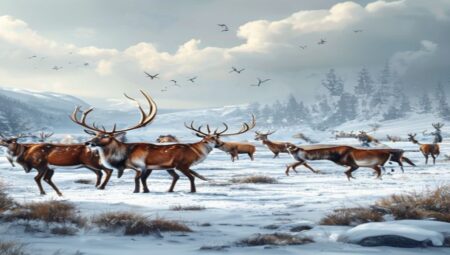
Why Reindeer Remain Central to Sami Identity
Reindeer have sustained the Sami people across Fennoscandia for millennia, functioning as far more than livestock. They represent a living archive of Arctic survival, woven into language, spirituality, and social organization. Traditional knowledge systems dictate seasonal migration routes that align with lichen growth cycles, snow conditions, and calf birthing periods. These patterns emerge from centuries of empirical observation passed through oral tradition and hands-on practice. Each reindeer herd operates as a mobile ecosystem manager, shaping tundra vegetation through selective grazing and nutrient distribution. This ecological feedback loop maintains biodiversity while ensuring forage availability for subsequent generations.
Economic autonomy remains tightly coupled with reindeer husbandry. Legal frameworks in Norway, Sweden, and Finland recognize exclusive herding rights within designated siida districts, granting the Sami a rare form of land-use authority in Northern Europe. Revenue streams derive from meat sales, antler crafts, dairy products, and regulated culling programs, all governed by cooperative governance models that prioritize herd health over short-term profit. When state policies threaten grazing corridors with mining concessions or renewable energy installations, resistance movements mobilize around reindeer welfare as a direct proxy for territorial sovereignty.
Cultural continuity manifests through ritual, craftsmanship, and linguistic preservation. The Sami lexicon contains dozens of precise terms describing reindeer behavior, coat conditions, and age classes—vocabulary that rapidly erodes when herding ceases. Drum ceremonies, joik vocalizations, and duodji woodwork frequently center on reindeer motifs, reinforcing communal bonds during harsh winters. Youth apprenticeships under master herders ensure practical skills survive modernization pressures. Climate instability now forces adaptive strategies: altered migration timing, supplemental feeding protocols, and cross-border coordination between neighboring siida groups. The reindeer does not merely belong to the Sami; it co-constitutes their identity, anchoring historical memory while demanding continuous innovation to persist in a rapidly shifting Arctic landscape.
Historical Foundations of Pastoral Livelihoods in Fennoscandia
The pastoral economies of Fennoscandia emerged from a precise alignment of ecological constraints and cultural adaptation across boreal forests, subarctic tundra, and coastal archipelagos. Long before modern border demarcations, indigenous communities utilized reindeer as the primary mobile resource, transforming seasonal migrations into a sustainable livelihood framework. Archaeological evidence indicates that reindeer domestication in northern Scandinavia and Sápmi began during the Iron Age, evolving from opportunistic hunting toward controlled herding by the early medieval period. This transition required sophisticated knowledge of animal behavior, terrain navigation, and pasture ecology, all optimized for short growing seasons and harsh winter conditions.
- Seasonal transhumance routes followed natural corridors between coastal summer grazing grounds and inland forested winter pastures, maximizing nutritional availability across altitudinal gradients.
- Pre-colonial trade networks exchanged cured reindeer meat, antler tools, and woven textiles with agrarian settlements, establishing economic interdependence that persisted through Viking Age expansions and medieval state formation.
- Digital mapping of historical migration patterns reveals consistent utilization of specific ridges, river valleys, and lichen-rich pine forests, demonstrating centuries of accumulated environmental data transmitted through oral traditions and practical governance.
The consolidation of pastoral livelihoods accelerated during the late Middle Ages when neighboring kingdoms imposed taxation systems that inadvertently reinforced reindeer-based economies. Communities adapted by standardizing herd management techniques, developing specialized sled construction methods, and refining slaughter protocols to preserve meat quality across long winter journeys. These practices were not merely economic necessities but structured knowledge systems governing land allocation, kinship obligations, and resource distribution. Even as external authorities attempted to regulate grazing rights and impose fixed boundaries, the fundamental reliance on reindeer mobility remained intact, proving resilient through climate fluctuations, political restructuring, and industrial encroachment.
Modern historical analysis confirms that contemporary Sámi pastoral practices retain direct continuity with these medieval operational frameworks. The geographic distribution of winter pastures near dense boreal forests, summer grazing in open tundra zones, and the strategic use of reindeer for transport across snow-covered terrain reflect a livelihood model refined over eight centuries. This endurance stems from continuous adaptation rather than static tradition, allowing pastoral communities to maintain economic viability while preserving ecological balance in one of Europe’s most climatically demanding regions.
Economic Adaptation and Market Integration Over Time
The historical trajectory of Sami reindeer herding demonstrates a continuous negotiation between subsistence practices and external economic forces. During the eighteenth and nineteenth centuries, traditional barter networks gradually shifted toward cash-based transactions as European state expansion imposed taxation systems and territorial boundaries. Reindeer meat, antlers, and hides became commodities in regional markets, prompting herders to develop early supply chains that connected remote pastures with urban centers in Norway, Sweden, and Finland. This commercialization required logistical innovations, including seasonal migration routes optimized for transport efficiency and the establishment of cooperative slaughter facilities.
The twentieth century introduced industrial demand and state regulation, fundamentally altering market integration patterns. Government quotas, veterinary controls, and pasture management laws forced herding communities to formalize operations while preserving core ecological knowledge. Simultaneously, global interest in indigenous products created niche markets for free-range venison, antler-based supplements, and traditional duodji crafts. Modern cooperatives now leverage digital platforms to bypass intermediaries, directly connecting consumers with certified reindeer products that carry geographical indication labels. These value-chain adaptations have stabilized income streams while reducing vulnerability to fluctuating commodity prices.
- Diversified revenue models combine herding with eco-tourism operations, cultural workshops, and sustainable forestry initiatives across Nordic territories.
- Cross-border trade agreements facilitate livestock movement across administrative boundaries that historically fragmented Sami grazing lands.
- Revenue from reindeer-derived products funds language revitalization programs, legal defense against infrastructure projects, and youth entrepreneurship grants.
Climate volatility and land-use conflicts continue to test economic stability, yet market integration has simultaneously provided tools for advocacy. The commercial viability of reindeer herding functions as both an economic engine and a mechanism for cultural continuity, ensuring that market participation reinforces indigenous sovereignty rather than eroding traditional knowledge systems.
Cultural Narratives and Spiritual Connections to Herds
The bond between the Sami people and reindeer operates as a foundational pillar of indigenous cosmology rather than a purely economic arrangement. Ancient yoik melodies encode ecological observations alongside spiritual symbolism, treating each animal as a recognized kin with distinct agency. These vocal traditions function as living archives, preserving seasonal migration patterns, grazing ethics, and intergenerational memory without relying on written documentation. Reindeer occupy sacred territory within Sami worldview, frequently linked to celestial cycles and the upper realm where sunlight dictates survival rhythms.
Ritual practices surrounding herd management emphasize reciprocal responsibility rather than domination. Herders interpret reindeer behavior as direct environmental feedback, reading snow density, lichen availability, and wind direction through centuries of refined observation. Traditional protocols require respectful acknowledgment of animal spirits before slaughter, ensuring that resource extraction remains balanced with ecological limits. This stewardship model rejects industrial extraction logic in favor of continuity rooted in ancestral knowledge. The herd serves as a cultural compass, guiding community decisions regarding land use, settlement patterns, and seasonal labor distribution across the Arctic tundra.
- Spiritual Ecology: Reindeer embody the intersection of physical survival and metaphysical balance, requiring herders to maintain ethical equilibrium with natural systems.
- Ancestral Knowledge Transmission: Yoik chants and oral genealogies preserve grazing corridors and sacred geography that official cadastral maps frequently overlook.
- Ritual Calendar Integration: Herding cycles align with solstice markers, aurora events, and traditional festivals that reinforce communal cohesion and territorial awareness.
- Cultural Resilience Mechanism: Persistent reindeer husbandry practices sustain indigenous language use, craft traditions, and autonomous governance against external regulatory pressures.
Contemporary preservation efforts prioritize community-led mapping initiatives that overlay traditional spiritual sites with active grazing zones. These documentation projects protect both biological corridors and sacred geography from infrastructure expansion and commercial land claims. The reindeer remains indispensable to Sami identity because it sustains linguistic heritage, ritual calendars, and ethical frameworks that define autonomous Arctic life. Reducing the animal to livestock erases centuries of adaptive knowledge and severs the relational continuity that keeps indigenous culture intact across shifting environmental conditions.
Language, Symbolism, and Seasonal Rhythms in Sami Cosmology
The Sami languages encode a granular understanding of reindeer biology, behavior, and terrain that standard vocabulary cannot replicate. Over two hundred distinct terms describe antler development, gait, coat texture, and movement across snow or tundra. This lexical precision functions as a living archive of survival knowledge. When a herder uses a specific word to identify a calf born during the spring thaw or an elder tracking a distant herd by silhouette, the language itself becomes a navigational tool. The grammatical structure mirrors relational thinking, where reindeer are never classified as livestock but as kin within a shared ecological network.
Reindeer occupy a mythic space in Sami cosmology that extends beyond economic utility. Traditional narratives position the animal as a bridge between the visible world and the invisible realm of spirits. The antlers are interpreted as cosmic maps, their branching patterns mirroring constellations used for seasonal navigation across frozen watersheds. Shamans historically incorporated reindeer bone and horn into ritual objects, viewing them as conduits for communication with ancestral forces. This symbolic framework transforms herding into a sacred practice, where every decision regarding pasture rotation or herd separation aligns with ecological ethics rather than industrial efficiency.
- The annual migration cycle operates as the heartbeat of Sami cosmology.
- Light and darkness dictate spiritual and practical rhythms, with the midnight sun marking periods of intense communal labor and polar night framing seasons of introspection and storytelling.
- Yoik traditions encode these transitions, embedding reindeer behavior into melodic patterns that teach younger generations how to read wind shifts, ice thickness, and animal stress signals.
The cosmology does not separate time from landscape; instead, it treats both as interdependent variables. Herders who follow these rhythms maintain a continuous dialogue with the environment, ensuring that cultural transmission remains anchored in observable natural phenomena rather than abstract doctrine. This linguistic and symbolic architecture directly sustains Sami identity amid external pressures. When land rights are contested or grazing routes are restricted, the loss is measured not only in economic terms but in the erosion of cosmological coherence. The language preserves ecological memory, symbolism provides ethical grounding, and seasonal rhythms offer a framework for resilience. Together, they form an integrated system where reindeer herding functions as cultural continuity, spiritual practice, and political assertion simultaneously.
Artisanal Traditions and Material Culture Derived from Reindeer
The reindeer supplies the structural foundation for Sami craft systems, converting ecological necessity into a highly specialized material culture governed by seasonal harvesting cycles and precise technical protocols. Hide, antler, bone, and sinew function as categorized resources rather than interchangeable raw inputs. Traditional hide preparation requires fleshing, scraping, and tanning with brain emulsions or birch bark infusions to produce suotna leather that resists moisture and abrasion. Antler processing follows strict grain-direction rules, yielding knife handles, weaving needles, and decorative plates where geometric carvings encode clan lineage, migration routes, and ecological knowledge.
- Reindeer sinew operates as natural cordage for lacing duodji tools and stitching layered clothing without metallic fasteners, maintaining flexibility across temperature fluctuations.
- Bone fragments are calibrated into toggle hooks, arrow points, and fishing weights through cold-hammering and abrasive polishing techniques that preserve material tensile strength.
- Antler bases supply primary stock for gákti buttons and belt plates, where symmetrical carving patterns communicate regional affiliation rather than decorative abstraction.
Material processing functions as a continuous knowledge transmission mechanism. Artisans measure hide thickness against ambient humidity to determine tanning duration, then monitor smoke density from birch or reindeer fat fires to achieve water-resistant finishes. Carving sequences follow hierarchical tool progressions: roughing blades remove bulk material, while fine-edged chisels establish the angular symmetry characteristic of Sami duodji design. These techniques demand tactile calibration that digital manufacturing cannot replicate, preserving micro-skills transmitted through apprenticeship cycles rather than written manuals.
Historical trade networks expanded reindeer-derived goods beyond subsistence boundaries. Antler combs, carved harness fittings, and dyed leather satchels circulated along Baltic coast routes, establishing economic interdependence with neighboring regions while reinforcing craft identity. Contemporary makers maintain strict material sourcing protocols, harvesting only from managed herds under seasonal restrictions to prevent ecological depletion. The persistence of these practices demonstrates how reindeer exploitation remains calibrated between cultural preservation and sustainable resource management, ensuring artisanal continuity without compromising herd viability.
Ecosystem Stewardship and Landscape Management Practices
The symbiotic relationship between Sami reindeer herders and Arctic ecosystems functions as a continuous ecological negotiation rather than mere resource extraction. Traditional pastoralism operates through generational knowledge of terrain, weather patterns, and animal behavior, creating a dynamic land management system that prioritizes long-term environmental balance over short-term yield.
Reindeer movement dictates landscape utilization across vast tundra and boreal zones. Herders guide seasonal migrations to prevent overgrazing, allowing critical lichen beds to recover during winter resting periods. This rotational grazing model maintains soil structure, reduces permafrost degradation, and supports diverse understory flora. Water source protection remains equally vital; herders actively monitor thaw cycles and wetland stability to prevent erosion along migration corridors while preserving natural hydrological flows.
- Seasonal Grazing Rotation: Controlled herd distribution prevents lichen depletion while promoting nutrient cycling across fragmented microhabitats and preventing soil compaction.
- Terrain Navigation Protocols: Knowledge of wind exposure, snow depth, and predator territory minimizes animal stress and reduces unnecessary ground disturbance in fragile alpine zones.
- Wetland & River Corridor Maintenance: Strategic crossing points and buffer zones preserve aquatic ecosystems during high-traffic migration windows while protecting riparian vegetation.
- Snowpack Aeration Techniques: Natural hoof pressure fractures wind slabs, enabling controlled moisture release that sustains spring grazing forage and supports moss community recovery.
These practices generate measurable ecological benefits. Reindeer hooves aerate compacted snow, facilitating moisture penetration during spring thaw. Their selective feeding stimulates lichen regeneration and prevents woody shrub encroachment in sensitive tundra regions. The resulting habitat heterogeneity supports avian nesting grounds, insect populations, and small mammal networks that form the foundation of northern food webs.
Cultural continuity and ecological stewardship remain inseparable within Sami communities. Land management decisions incorporate intergenerational observation data, modern satellite monitoring, and legal frameworks protecting indigenous pastoral rights. This integrated approach demonstrates how reindeer herding functions as active landscape maintenance, preserving Arctic biodiversity while sustaining a livelihood that defines Sami identity across Scandinavia and the Kola Peninsula.
Grazing Dynamics and Boreal Forest Ecology
Reindeer grazing fundamentally shapes boreal forest ecosystems through selective foraging behavior and continuous soil disturbance. Their antler-based digging reveals cryptogamic crusts during winter months, accelerating lichen and moss turnover rates while altering microhabitat availability for invertebrate communities. This behavioral pattern suppresses woody shrub encroachment, maintaining open canopy structures that support ground-nesting avian species and light-demanding understory flora.
The seasonal migration corridors follow ancient topographical gradients where snow depth, wind exposure, and vegetation density converge. These pathways function as natural aerators; repeated trampling compacts snowpacks into protective ice layers that regulate temperature fluctuations for overwintering plants. Simultaneously, dung deposition introduces nitrogen-fixing bacteria directly into depleted soil matrices, accelerating organic decomposition in nutrient-poor boreal zones. The reindeer’s specialized digestive physiology complements this dynamic. Their multi-chambered stomachs host symbiotic microbes capable of breaking down silica-rich lichens and conifer needles, converting low-quality biomass into high-energy tissue while returning partially processed matter to the forest floor.
Ecological resilience emerges from the feedback loop between ungulate behavior and forest succession patterns. Key mechanisms include:
- Soil Aeration: Hoof action increases water infiltration rates during spring thaws, reducing surface erosion along migration routes.
- Nutrient Redistribution: Mobile mineral cycling across landscape gradients prevents localized depletion and supports patchy vegetation mosaics.
- Fire Mitigation: Continuous browsing reduces fine fuel accumulation, naturally lowering wildfire intensity in adjacent boreal stands.
- Canopy Regulation: Targeted grazing pressure maintains dwarf birch and crowberry patches that buffer against climate-driven ecological shifts.
Sami pastoralists interpret these ecological signals through generations of observational data. Grazing pressure thresholds determine pasture carrying capacity, with herd movements calibrated to prevent lichen depletion cycles that require decades to recover. Modern rangeland management integrates satellite vegetation indices with traditional knowledge to map optimal grazing windows. This continuous interaction sustains botanical diversity while embedding pastoral practices within the forest’s physiological rhythm rather than opposing it.
Legal Frameworks and Territorial Sovereignty Debates
Reindeer herding rights among the Sami people operate within a complex intersection of national legislation and international indigenous law. Nordic states have constructed specialized legal architectures that recognize pastoralism as a distinct economic activity, yet these frameworks frequently collide with state sovereignty claims over land and resources. The core tension emerges from how governments delineate grazing territories versus how traditional siida networks function across natural landscapes without political borders.
Norway’s Reindeer Herding Act establishes exclusive herding districts where registered Sami households maintain priority rights to graze livestock. Sweden follows a parallel system through the Reindeer Herding Act of 1971, while Finland’s Lapp Codex historically granted customary grazing privileges before being repealed in 1990. Each jurisdiction requires strict registration, limiting participation to verified herders and creating internal stratification within Sami communities. International instruments like ILO Convention 169 and the United Nations Declaration on the Rights of Indigenous Peoples reinforce collective land tenure, yet ratification gaps and domestic implementation remain inconsistent across the region.
- Territorial Disputes: State-owned forests and mountains are frequently leased for mining or wind energy projects without herder consent, triggering legal challenges under constitutional property clauses.
- Cross-Border Mobility: Traditional migration corridors cross Norwegian-Swedish-Finnish borders, but national licensing systems fragment movement patterns and reduce pasture accessibility.
- Judicial Precedents: The European Court of Human Rights has ruled that state failure to consult Sami communities on resource extraction violates Article 8 and 10 of the convention, yet enforcement remains uneven.
Legal recognition does not automatically translate into operational control. Grazing permits require annual renewal, pasture fees apply to state lands, and environmental regulations restrict seasonal movements. These administrative layers force herders to navigate bureaucratic thresholds that prioritize conservation or industrial development over ecological continuity. Sovereignty debates intensify when national security zones restrict access to northern territories, effectively severing historical ties between families and ancestral pastures. The persistence of reindeer husbandry depends on maintaining legal exemptions that acknowledge pastoralism as a non-negotiable component of Sami self-determination.
Land Tenure Rights and Cross-Border Herding Regulations
Historical land tenure frameworks established across Nordic territories consistently prioritize state resource extraction over indigenous grazing rights. Sámi reindeer husbandry districts function within complex legal overlaps where national property laws intersect with customary usage patterns. Norway’s Finnmark Act transfers administrative control to the Finnmark Estate, yet seasonal migration corridors regularly conflict with commercial forestry concessions and wind energy developments. Sweden operates a parallel system where state-owned forests directly overlap Sami administrative zones, mandating consultation under ILO Convention 169, though operational enforcement remains fragmented.
Cross-border herding requires synchronized pasture management across political boundaries that rarely align with historical migration routes. The Trilateral Agreement on Reindeer Husbandry coordinates vaccination schedules, veterinary oversight, and seasonal movement permits between Norway, Sweden, and Finland. Herders must comply with divergent licensing requirements, herd quotas, and environmental impact assessments when relocating livestock internationally. Misaligned national definitions of grazing land frequently trigger compensation disputes over pasture degradation and restricted access zones.
- National land registries routinely exclude traditional winter pastures from protected status, exposing them to industrial zoning
- Transboundary herding protocols demand synchronized veterinary inspections and digital traceability systems that strain community resources
- Scandinavian court rulings increasingly acknowledge historical grazing rights, yet administrative implementation lags behind constitutional recognition
Regulatory fragmentation directly compromises herd viability. When winter grazing zones face development restrictions or summer pastures encounter infrastructure barriers, herd populations contract to match available territory. Economic sustainability depends on maintaining contiguous pasture networks that span multiple administrative regions. Contemporary land use policies continue testing the boundaries between indigenous autonomy and state resource management.
Industry Expansion versus Indigenous Resource Access
Industrial development across the Arctic and subarctic zones frequently intersects with traditional reindeer grazing territories, creating direct competition for land use. Mining operations, road networks, wind farms, and logging concessions fragment continuous pastures that herds rely upon for seasonal migration. Lichen, the primary winter feed source, grows extremely slowly and requires undisturbed ground conditions. Heavy machinery compacts soil, disrupts snowpack insulation, and alters microclimates essential for lichen survival. When infrastructure divides grazing zones, reindeer adjust their routes or abandon them entirely, forcing herders to invest additional time and capital into relocation efforts.
Legal recognition of Sami land rights varies significantly across Norway, Sweden, Finland, and Russia. Even where co-management frameworks exist, industrial projects often proceed under national development mandates that prioritize economic output over cultural preservation. Environmental impact assessments sometimes fail to account for cumulative effects or long-term ecological thresholds specific to reindeer husbandry. Consultation processes may occur late in the approval stage, limiting meaningful negotiation. The resulting friction manifests in restricted access to sacred sites, disrupted calving grounds, and increased vulnerability to predation due to altered landscape dynamics.
Reindeer herding is not merely an economic activity but a knowledge system transmitted across generations. It dictates seasonal calendars, linguistic precision, governance structures, and spiritual practices. When industrial expansion encroaches upon these territories, the loss extends beyond pasture quality. Traditional ecological knowledge loses its practical application, weakening community cohesion and intergenerational transmission. Sustainable land management requires integrated planning that treats grazing corridors as irreplaceable ecological and cultural infrastructure rather than vacant spaces awaiting development. Protecting access to these landscapes ensures both biodiversity conservation and the continuity of a living heritage that has shaped northern societies for millennia.
Contemporary Challenges Facing Reindeer Husbandry
The sustainability of reindeer husbandry now hinges on intersecting environmental, legal, and economic pressures that directly strain the Sami relationship with their herds. Climate volatility has fundamentally altered Arctic ecosystems, producing frequent rain-on-snow events that freeze forage beneath impenetrable ice sheets. These conditions trigger mass starvation during winter months, forcing herders to supplement feed or relocate entire pastures across shifting vegetation zones. Traditional migration corridors, once predictable, now face fragmentation from expanded logging operations and mineral extraction permits that bypass indigenous land consultation requirements. Soil degradation from heavy machinery use along established routes further reduces pasture recovery rates between seasonal rotations.
- Infrastructure encroachment: High-voltage power lines, railways, and wind farms dissect grazing territories, disrupting seasonal movement patterns and increasing stress on both animals and handlers. Audio pollution from construction phases alters reindeer flight responses, leading to scattered herd formations that complicate tracking.
- Regulatory bottlenecks: Quota systems designed to prevent overgrazing often conflict with demographic growth among Sami families, creating generational barriers to herd ownership and limiting adaptive management strategies. Licensing restrictions tied to fixed geographical zones ignore the ecological reality of shifting climate boundaries.
- Predator dynamics: Recovering wolf and brown bear populations have intensified livestock losses. While compensation frameworks exist, bureaucratic delays and strict certification requirements frequently leave herders financially vulnerable during peak predation seasons. Coexistence programs struggle to balance conservation targets with livelihood protection.
Economic viability compounds these ecological strains. Fuel prices, veterinary supplies, and snowmobile maintenance costs continue to outpace government grants, pushing smaller operations toward consolidation. Market fluctuations for reindeer meat and antler products offer limited profit margins compared to industrial agriculture elsewhere in Scandinavia. Despite these pressures, the sector persists because reindeer husbandry functions as more than an economic activity; it operates as a living archive of Sami ecological knowledge, language preservation, and intergenerational governance. Each challenge encountered requires adaptive responses rooted in centuries-old observational practices, modified through modern satellite tracking, weather forecasting, and cooperative land-use negotiations. The resilience of this system depends on policy frameworks that recognize pastoral mobility as an ecological asset rather than a regulatory obstacle.
Economic Pressures and Demographic Shifts in Herding Communities
Reindeer herding functions within a tightly regulated economic environment where operational viability depends on navigating intersecting financial pressures. Climate volatility directly impacts lichen pasture regeneration, reducing winter forage availability and forcing herders to purchase supplemental feed at premium prices. Cross-border trade restrictions between Norway, Sweden, and Finland complicate seasonal migration patterns, increasing administrative overhead and delaying livestock movement during critical feeding windows. Infrastructure expansion, including mining concessions and wind farm developments, permanently alters grazing topography, fragmenting historic corridors and raising fuel expenditures for alternative routing. Subsidy structures tied to strict herd quotas often penalize sustainable population growth, while global commodity markets treat reindeer meat as a niche export subject to fluctuating demand curves and currency volatility.
Demographic realignment compounds these financial constraints. Youth migration toward urban educational hubs accelerates workforce depletion in pastoral zones, leaving an aging demographic responsible for daily herd management. The traditional knowledge
Strategies for Sustaining Reindeer-Based Heritage
Preserving reindeer-based heritage requires coordinated interventions that address ecological limits, legal recognition, and economic viability simultaneously. Sámi communities manage grazing territories through seasonal migration patterns that have evolved over centuries. Modern pressures demand systematic land-use planning that respects traditional route networks while integrating contemporary conservation science. Territorial mapping initiatives combine GPS tracking data with oral historical records to establish legally binding grazing zones. These spatial frameworks prevent encroachment from mining, forestry, and infrastructure projects that fragment critical habitats.
Intergenerational knowledge transfer forms the operational backbone of cultural continuity. Youth participation programs pair experienced herders with younger community members through structured apprenticeships. Digital documentation platforms record seasonal practices, veterinary techniques, and linguistic terminology specific to reindeer husbandry. Educational curricula in northern municipalities incorporate practical herding modules alongside academic subjects. This dual approach ensures technical competence and cultural fluency develop concurrently.
- Legal advocacy: Secure statutory recognition of customary grazing rights through national legislation and international indigenous frameworks.
- Climate adaptation protocols: Implement early warning systems for freeze-thaw cycles that disrupt lichen availability and alter migration timing.
- Economic diversification: Develop certified reindeer-derived product lines with transparent supply chains to capture fair value at market level.
- Youth engagement: Establish herding cooperatives operated by emerging generations with access to startup capital and mentorship networks.
- Ecological monitoring: Deploy community-led vegetation surveys and population tracking to adjust herd sizes according to carrying capacity thresholds.
Economic sustainability depends on moving beyond subsistence models toward controlled commercialization. Cooperative marketing structures enable herders to negotiate directly with processors, eliminating intermediary markup. Certification programs verify ethical sourcing and cultural authenticity, creating premium market positioning. Revenue from regulated tourism experiences funds infrastructure upgrades for winter camps and veterinary facilities. These financial mechanisms reduce dependency on state subsidies while maintaining operational autonomy.
Policy alignment across municipal, national, and supranational levels determines long-term viability. Indigenous representatives must hold voting seats on land-use councils and environmental impact assessment boards. Funding allocation requires transparent auditing to ensure resources reach grassroots herding operations rather than administrative overhead. Continuous evaluation metrics track herd health indicators, language retention rates, and youth participation levels. Adaptive management frameworks allow strategy adjustments based on real-time ecological and socioeconomic data.
Technology Adoption and Youth-Led Revitalization Initiatives
Modern reindeer management across Sápmi increasingly relies on precise geospatial tools and real-time data systems that bridge centuries-old herding practices with contemporary environmental monitoring. Young Sámi practitioners integrate GPS collars, satellite imagery, and drone surveys to track herd migration routes, monitor pasture conditions, and predict weather-related disruptions. These digital workflows reduce manual labor while enhancing decision-making accuracy during critical seasonal transitions. Data collected through mobile applications is often shared across community networks, enabling collaborative resource allocation and faster responses to grazing conflicts or territorial encroachments. Real-time telemetry now replaces traditional snow depth measurements, allowing herders to adjust routes before frost seals the tundra.
Youth-driven digital campaigns have simultaneously transformed cultural preservation efforts. Interactive platforms hosted by Sámi universities and grassroots collectives now archive oral histories, traditional crafting techniques, and winter survival knowledge directly linked to reindeer husbandry. Social media channels operated by young herders document daily routines, seasonal slaughtering rituals, and the legal battles surrounding land rights, reaching global audiences while reinforcing internal community cohesion. Digital storytelling projects utilize augmented reality to reconstruct historical migration corridors, allowing younger generations to visualize ancestral routes that remain legally contested today. Data sovereignty frameworks ensure all recorded materials remain under indigenous control rather than external institutional ownership.
Academic institutions in northern Norway, Sweden, and Finland have responded by embedding Sámi ecological knowledge into STEM curricula. Field laboratories equip students with soil sensors, snow depth scanners, and livestock health trackers specifically calibrated for subarctic conditions. These programs emphasize sustainable yield calculations, veterinary telemedicine, and carbon sink mapping across reindeer grazing lands. The resulting workforce enters agricultural cooperatives, environmental agencies, and indigenous technology firms, ensuring that economic development aligns with cultural continuity. Rural retention rates improve when technical training directly supports herding livelihoods rather than displacing traditional knowledge systems. Intergenerational mentorship models pair elder herders with software developers to co-create tools that respect seasonal calendars and spiritual protocols.
Frequently Asked Questions
What is Why Reindeer Remain Central to Sami Identity?
For the Sami people, reindeer are not merely livestock but integral to their cultural survival, economic independence, and spiritual worldview. They provide food, clothing, shelter, and tools, while also featuring prominently in traditional folklore, rituals, and seasonal migration patterns that have persisted for millennia.
Key facts about Why Reindeer Remain Central to Sami Identity
Key facts include: reindeer herding has been practiced by the Sami for over 3,000 years; it forms the backbone of their traditional economy and food sovereignty; reindeer antlers and hides are used in ceremonial and daily crafts; seasonal migrations follow ancient routes tied to Sami cosmology; and modern legal recognition of Sami reindeer herding rights remains a vital cultural and political issue today.