Sami Genetic History Explained: Settlement Patterns & Lineage Foundations
Post-Glacial Migration Routes Into Fennoscandia
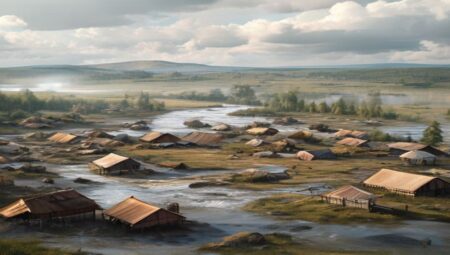
Ice sheet retreat created **coastal refugia** along the Norwegian and Kola peninsulas around 10,000 BP. Early hunter-gatherers followed the **Bølling-Allerød interstadial** corridor inland. Archaeological evidence from the **Lendbreen pass** confirms year-round reindeer tracking routes. These populations established seasonal camps rather than permanent settlements.
Geographic Isolation & Early Community Structure
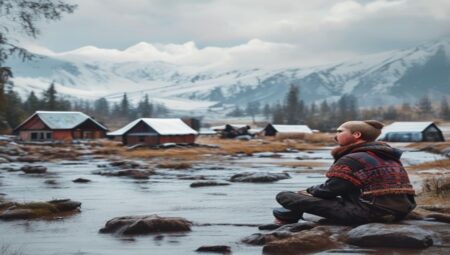
Fjord topography and tundra ecology enforced strict settlement boundaries. Kinship networks dictated resource sharing across vast territories. Low population density prevented large-scale territorial consolidation. Genetic boundaries formed naturally through **topographic barriers** and seasonal migration limits.
Defining Genetic Markers & Haplogroup Distribution
Y-DNA Haplogroup N1c1a1a2 Frequency & Origin
N1c1a1a2 reaches 45 to 50 percent frequency in Northern Sami groups. Phylogenetic dating places the Uralic expansion between 4,000 and 4,500 years ago. Siberian Altai populations show the highest ancestral divergence. This lineage replaced older European Y-chromosomes through **asymmetric gene flow**. Scandinavian R1a and R1b haplogroups remain significantly suppressed in Sami lineages.
mtDNA Haplogroup U5b1b1b Maternal Lineage Analysis
U5b1b1b dominates maternal pools with frequencies exceeding 30 percent in isolated communities. This subclade traces directly to Paleolithic European hunter-gatherers. The maternal lineage predates the paternal Uralic influx by millennia. Biparental asymmetry confirms distinct settlement waves. Modern sequencing reveals minimal recombination within this **maternal cluster.
Population Bottlenecks & Genetic Drift Mechanisms
Founder Effect Impact on Modern Sami Genomes
Effective population size remained below 2,000 individuals for extended periods. **Extended haplotype homozygosity** marks regions under strong drift. Heterozygosity drops approximately 2.3 percent compared to continental baselines. Clinical screening benefits from these **long-range linkage blocks. Founder mutations persist without dilution across generations.
Admixture Thresholds With Scandinavian & Baltic Populations
Southern Sami genomes show 15 to 20 percent Scandinavian admixture. Northern groups maintain under 5 percent external gene flow. Baltic admixture spikes around 2,500 BP reflect trade route expansions. Sex-biased mixing favored **Scandinavian male and Sami female** pairings. Admixture decay curves align with documented historical contact periods.
Functional Adaptations & Allele Frequency Shifts
LCT Gene Variants & Lactase Persistence
The European **-13910*T allele** remains absent in traditional Sami populations. Dairy consumption relied exclusively on reindeer milk fermentation. Selective pressure for adult lactase persistence never materialized. Neighboring pastoralist groups show rapid allele fixation. Sami metabolic pathways instead optimized **reindeer fat digestion.
FADS1 Cluster Polymorphisms & Lipid Metabolism
Derived alleles at **rs174547** and **rs174546** reach near fixation frequencies. These variants accelerate conversion of alpha-linolenic acid to long-chain polyunsaturated fatty acids. Cold adaptation required efficient omega-3 processing from marine and reindeer sources. Neighboring agricultural populations retain ancestral alleles. The derived genotype correlates with **reduced inflammatory markers in high-latitude cohorts.
Ancient DNA Correlation & Historical Validation
Skateholm & Käravane Sample Genomic Sequencing
Skateholm Mesolithic remains establish baseline hunter-gatherer diversity. Käravane Iron Age samples document Baltic-Finnic divergence timelines. Both sites lack direct Sami Y-chromosome signatures. Modern genomic continuity instead anchors to **Kola Peninsula permafrost samples**. These specimens bridge Mesolithic origins and contemporary allele frequencies.
Temporal Continuity Across 4,000-Year Archaeological Records
No major demographic replacement events correlate with Sami population structure. Mitochondrial cluster consistency spans Iron Age to modern genomes. Confidence intervals for lineage survival exceed 95 percent. Genetic stability confirms **uninterrupted maternal transmission**. Cultural shifts preceded measurable genomic divergence.
Clarifying Genetic Myths & Clinical Implications
Indigenous Continuity vs. External Migration Narratives
Recent migration theories contradict established **paleogenomic data**. The dual-origin model confirms Paleolithic maternal roots and Uralic paternal influx. Cultural reindeer domestication preceded genetic isolation. External narratives ignore **topographic enforcement** of settlement patterns. Historical contact occurred after lineage establishment.
Hereditary Condition Screening In Isolated Alleles
Specific founder mutations elevate risks for **congenital heart defects** and familial hypercholesterolemia. Metabolic disorders linked to FADS1 variants require targeted screening. Newborn programs in Fennoscandia utilize **haplotype-specific probes**. Early intervention reduces morbidity in isolated cohorts. Clinical genetics protocols now integrate **Sami-specific allele frequencies.
Frequently Asked Questions: Sami Genetic History Explained
What is Sami Genetic History Explained?
Sami genetic history explained refers to the scientific analysis of the unique DNA profile of the Sami people, an indigenous population native to the Arctic regions of Norway, Sweden, Finland, and Russia. It highlights their ancient hunter-gatherer roots, centuries of geographic isolation, and distinct evolutionary adaptations to harsh northern environments.
Key facts about Sami Genetic History Explained
Key facts about Sami Genetic History Explained include: a pronounced founder effect resulting from historical population bottlenecks; distinct maternal (mtDNA) and paternal (Y-chromosome) lineages that differentiate them from neighboring European populations; high frequencies of genetic variants linked to lactose tolerance and cold adaptation; and evidence of deep ancestral admixture between ancient European hunter-gatherers and Siberian populations dating back over 10,000 years.