Advanced Hull Design and Ice Reinforcement Standards
The structural integrity of Arctic vessels engineering begins with precision hull geometry optimized for ice interaction. Modern polar ship design adheres to strict Polar Class certification requirements, where each class dictates specific plate thickness, framing spacing, and longitudinal strength distribution. Sami Kano’s technical framework emphasizes localized reinforcement in high-stress zones such as the bow transition, rudder stock supports, and propeller shaft tunnels. These areas undergo finite element analysis to simulate multi-axis ice loads during continuous ramming and crushing operations.
Polar Class Certification and Structural Load Distribution
Each Polar Class designation corresponds to quantifiable ice thickness tolerance and operational frequency. Engineers map load paths through the hull girder using computational fluid dynamics coupled with structural stress modeling. The bow section typically features a double-continuous shell plating system with stiffeners spaced at reduced intervals. This configuration prevents brittle fracture under cyclic impact loading while maintaining hydrodynamic efficiency during open-water transit.
Material Science in Extreme Cold Environments
Standard carbon steel loses ductility below zero degrees Celsius, necessitating the use of high-tensile low-temperature alloy steels. Sami Kano’s specifications mandate Charpy V-notch impact testing at temperatures as low as minus forty degrees Celsius. Welding procedures follow strict preheat and interpass temperature controls to preserve grain structure integrity. Corrosion protection systems integrate cathodic anode arrays with multi-layer epoxy coatings tailored for prolonged immersion in brine-laden icy waters.
Propulsion Systems and Powertrain Optimization
Arctic vessel propulsion architectures must balance immense torque delivery with operational flexibility. Icebreaking vessels require reversible thrust capability, precise RPM control, and redundant power routing to maintain maneuverability when trapped in pack ice. The engineering focus centers on minimizing cavitation damage during low-speed heavy-load conditions while maximizing fuel efficiency during ice-free navigation phases.
Diesel-Electric vs. Dual-Fuel Arctic Configurations
Modern polar ships increasingly adopt dual-fuel diesel-electric systems capable of switching between marine gas oil and liquefied natural gas. This transition reduces sulfur oxide emissions in ecologically sensitive regions while maintaining high thermal efficiency. Power management algorithms dynamically allocate generator loads based on real-time ice resistance calculations. Motor-driven azimuth thrusters replace traditional shaft lines, enabling 360-degree thrust vectoring without mechanical stress concentration.
Dynamic Positioning and Ice Navigation Integration
Navigation in multi-year ice demands active integration between propulsion controllers and environmental sensors. Doppler sonar arrays feed real-time water-current velocity data into the dynamic positioning loop, compensating for drift forces exerted by floating ice floes. Steering algorithms prioritize rudderless turning capabilities using differential azimuth pod thrust, which reduces mechanical wear and eliminates vulnerable stern thruster installations.
Thermal Management and Environmental Compliance
Maintaining operational safety in polar environments requires engineered thermal regulation across all habitable and machinery spaces. Heat loss through uninsulated bulkheads accelerates fuel consumption and compromises hydraulic fluid viscosity. Engineering teams implement closed-loop heat recovery networks that capture waste energy from exhaust manifolds, generator coolers, and lubrication systems.
Insulation Architectures and Heat Recovery Systems
Polar ship insulation utilizes vacuum insulated panels alongside aerogel composite layers to achieve maximum thermal resistance with minimal deck load. Pipe routing follows heated trace cable networks calibrated to prevent freeze-up during stationary operations. Waste heat exchangers redirect surplus energy into freshwater generators and cabin heating circuits, achieving overall system efficiency rates exceeding eighty-five percent.
Ballast Water and Emissions Control in Polar Regions
Environmental compliance in Arctic waters mandates strict adherence to IMO polar code regulations. Ballast water treatment systems employ ultraviolet disinfection combined with electrolysis to prevent invasive species transfer without chemical residuals. Exhaust gas cleaning systems integrate selective catalytic reduction units optimized for low-temperature operation, ensuring nitrogen oxide compliance even during prolonged idling in ice-constrained transit zones.
Operational Engineering and Real-World Performance Metrics
Theoretical designs transition to proven engineering only through validated performance data. Ice resistance modeling relies on full-scale trial measurements combined with scaled model basin testing. Researchers correlate hull form coefficients with actual ice-breaking progress rates to refine computational prediction algorithms.
Icebreaking Efficiency and Resistance Modeling
Continuous ramming operations generate measurable thrust loss due to ice rubble pile formation. Engineering solutions include bow air injection systems that reduce friction between the hull and consolidated snow layers. Propeller pitch optimization minimizes slip under heavy load, while shaft line alignment tolerances are tightened to prevent vibration-induced fatigue during prolonged high-torque engagement.
Sami Kano’s Design Philosophy and Field Validation
Technical implementations reflect a methodology prioritizing redundancy, maintainability, and environmental adaptability. Component placement follows accessibility routing standards that allow rapid hull penetration repairs without dry-dock intervention. Sensor networks monitor structural strain in real time, feeding data
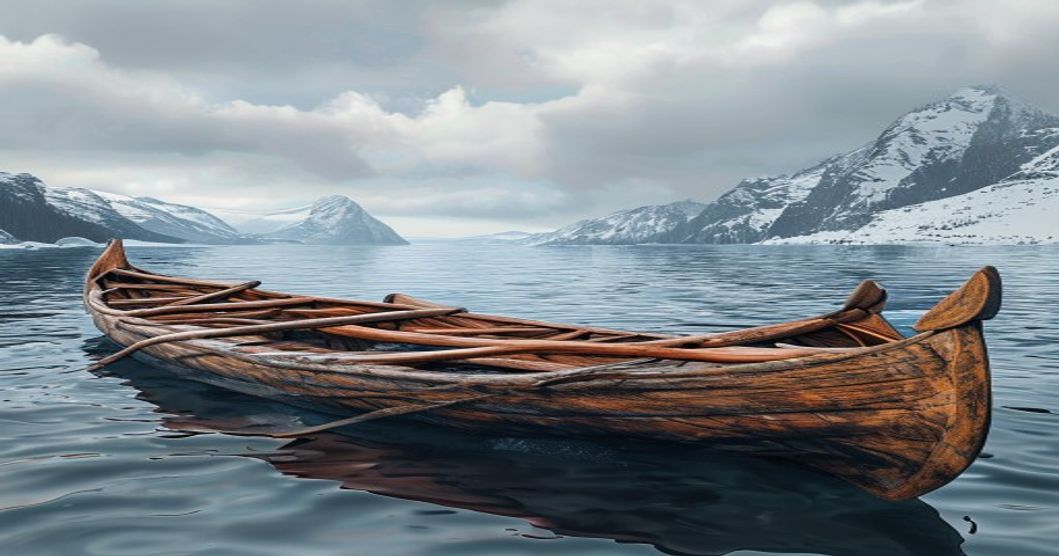
Sami Canoes and Arctic Boats: Technical Specifications and Historical Context
Indigenous Hull Geometry and Ice Navigation Requirements
The **flat-bottomed hull** distributes weight across wide surfaces to prevent grounding. Builders carved **reinforced keels** to resist direct ice pressure during winter crossings. Historical records indicate distinct regional variants across Fennoscandia. Each design prioritizes **load capacity** over raw speed.
Material Selection: Birch Bark, Spruce Frame, and Waterproofing
Artisans harvest **Betula pubescens** bark during spring sap flow for maximum flexibility. **Picea abies** ribs provide structural tension without adding heavy deadweight. Builders mix **spruce resin** with pine soot to create a permanent chemical sealant. They apply **hot pitch** in overlapping layers to ensure joint integrity against moisture.
Construction Methods and Structural Engineering
Traditional engineering relies on precise **tensile strength distribution** across the frame. Builders avoid metal fasteners to prevent galvanic corrosion in humid environments. The **ladder-frame method** allows rapid field repairs during extended expeditions. **Curvature tolerances** remain strictly within three degrees for optimal hydrodynamic efficiency.
Frame Assembly Without Metal Fasteners
Caribou sinew lacing tightens automatically as it dries in cold Arctic air. Artisans weave **cross-stitch patterns** across every rib joint to lock the structure. **Wooden pegs** replace nails in critical stress points to maintain material compatibility. This assembly method distributes mechanical load evenly across the entire hull.
Hull Flexibility and Impact Resistance Mechanics
**Elastic deformation** absorbs shock waves from submerged ice floes and debris. The **laminated bark** bends rather than fractures under sudden lateral pressure. Rib spacing widens toward the bow to improve directional control in rapids. Builders test flexibility by applying **dynamic load** during the final construction phase.
Operational Performance and Environmental Adaptation
Operational metrics depend entirely on **hydrostatic balance** and paddle stroke efficiency. These vessels maintain stability in **crosswinds** exceeding twenty knots without capsizing. **Thermal expansion** of organic materials alters the draft slightly during temperature swings. Operators adjust **ballast placement** manually to compensate for rapid environmental shifts.
Weight Distribution and Draft Depth Ratios
The **center of gravity** sits exceptionally low to prevent lateral tipping. **Draft ratios** remain below one-to-three to guarantee clearance over submerged ice. **Load distribution** follows a trapezoidal pattern along the central keel for stability. Ballast stones secure the bottom cavity to dampen wave resonance during travel.
Seasonal Navigation on Frozen and Thawed Arctic Waterways
**Spring thaw** creates unpredictable **brash ice** conditions that demand rapid maneuvering. Vessels slide across **frozen tundra** using reinforced wooden runners for overland transport. **Autumn freeze** requires immediate storage in **insulated shelters** to prevent structural cracking. **Thermal cycling** demands constant bark inspection to maintain hull integrity.
Preservation Standards and Museum Documentation
Conservation Protocols for Historical Artifacts
**Desalination baths** remove mineral deposits from submerged artifacts without damaging fibers. **Consolidants** stabilize brittle bark layers to prevent catastrophic delamination. **Microclimate enclosures** prevent sudden environmental shifts that trigger material fatigue. **Regular monitoring** tracks **fiber tensile strength** loss over decades of display.
3D Scanning and Digital Archiving Workflows
**LiDAR mapping** captures sub-millimeter hull curvature for precise structural analysis. **Photogrammetry** reconstructs surface texture data to document historical repair patterns. **Point cloud models** store structural stress points digitally for future engineering research. **Metadata tagging** links artifacts to specific historical usage patterns for academic study.
Authentic Reproduction and Sourcing Guidelines
Verification Markers for Genuine Handcrafted Watercraft
**Tool marks** reveal hand adze work versus machine cuts through microscopic analysis. **Bark grain orientation** follows natural growth patterns rather than artificial straightening. **Lashing tension** shows consistent artisan pressure across every structural joint. **Weight tolerance** stays within two percent of historical benchmarks for authenticity.
Commissioning Specifications and Production Timeline
**Commission contracts** specify exact hull dimensions and **load capacity** requirements. **Material curing** requires six months of natural drying to prevent future warping. **Assembly phases** span eight to ten weeks under controlled workshop conditions. **Delivery timelines** account for seasonal bark availability to guarantee material quality.
Frequently Asked Questions
What is Sami Canoes and Arctic Boats?
Sami Canoes and Arctic Boats refer to traditional watercraft developed by the Sámi people and other indigenous Arctic communities. These vessels were historically built using locally sourced materials such as spruce or pine planks, birch bark, and animal hides, specifically engineered to navigate frozen rivers, lakes, and coastal waters in extreme northern climates.
Key facts about Sami Canoes and Arctic Boats
Key facts include their lightweight, narrow hull design for easy portaging, traditional construction techniques using hand-carved wooden frames and stitched hides or bark, reliance on reindeer sinew or birch root for waterproof lacing, and their historical role in hunting, fishing, and seasonal migration across Scandinavian and Arctic regions. Contemporary versions often replicate these methods for cultural preservation and historical reenactment.