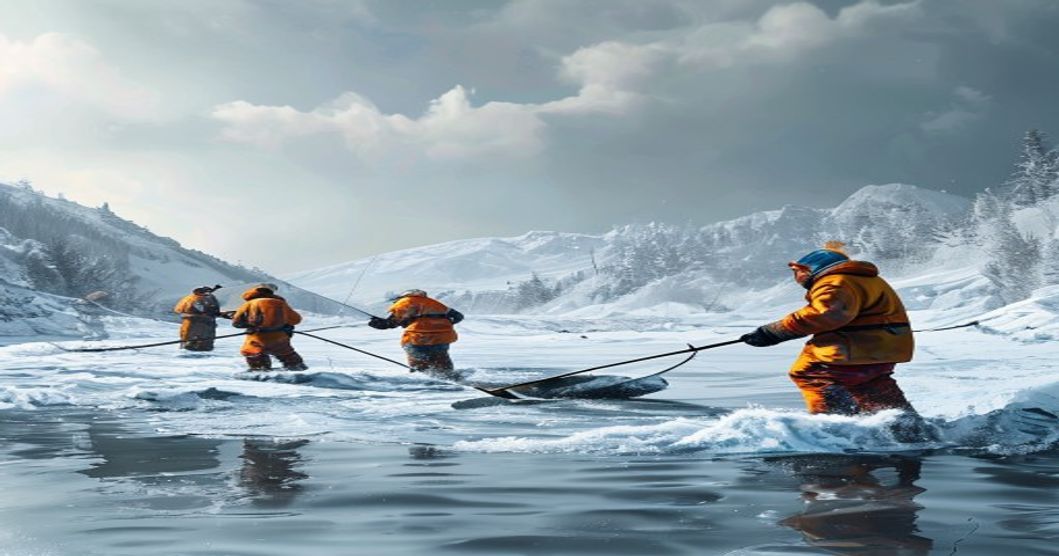
Sami Ice Fishing Traditions: Historical Foundations
Prehistoric Fishing Methods in Sápmi
Archaeological sites across northern Fennoscandia reveal bone hooks and hollowed reindeer antler spears dating to the Mesolithic period. Hunters carved driftwood floats and woven nettle fiber meshes to capture Arctic char beneath frozen lakes. These artifacts demonstrate a systematic approach to winter procurement long before modern gear existed. Researchers analyze stratified sediment cores to track fishing intensity shifts during the Little Ice Age.
Winter Survival and Resource Allocation
Communities stored dried luossa and fermented whitefish in birch bark containers for extreme freeze periods. Sled logistics moved caught fish across frozen rivers to centralized storage pits. Kinship networks distributed protein reserves based on age, hunting success, and seasonal snow depth. Thermal regulation of storage sites relied on permafrost layer mapping and windbreak construction techniques.
Core Techniques and Equipment
Manual Ice Drilling and Bait Selection
Fishermen wielded iron-tipped augers to create circular boreholes precisely aligned with underwater current channels. Reinforced reindeer sinew lines replaced synthetic fibers to maintain flexibility in subzero temperatures. Minced crustacean segments and live leeches attracted Arctic char and burbot more effectively than artificial lures. Anglers monitored water clarity through drilled holes to adjust bait depth dynamically.
Net Deployment and Retrieval Mechanics
Woven net meshes featured graduated pore sizes to retain target species while releasing undersized fish. Buoys crafted from hollowed goose feathers floated net edges above the ice surface for visibility. Retrieval pulleys utilized carved wood bearings to reduce friction during heavy load extraction. Crews synchronized lifting rhythms to prevent mesh tangling during rapid retrieval through narrow boreholes.
Community Structure and Knowledge Systems
Elder-Led Training Protocols
Master fishers demonstrated borehole spacing algorithms and sound wave interpretation techniques during winter camps. Apprentice evaluations measured success through net yield consistency and error reduction rates over three consecutive seasons. Oral transmission preserved navigation waypoints and weather pattern recognition skills across generations. Practical assessments replaced theoretical instruction to ensure field readiness.
Division of Labor During Ice Seasons
Drilling teams maintained borehole access while net crews managed line tension and catch sorting. Elder navigators read ice crystal formations to predict safe travel corridors and danger zones. Youth assistants processed catches using traditional scraping tools and smokehouse ventilation management. Resource tracking relied on wooden tally sticks and color-coded rope markers for inventory accuracy.
Environmental Monitoring and Practice
Ice Thickness Assessment and Risk Management
Hand auger sampling provided real-time density measurements before full team deployment. Thermal imaging of snow-ice interfaces revealed hidden pressure ridge vulnerabilities and thaw channels. Risk thresholds established minimum forty centimeter safety standards for pedestrian access and sixty centimeter limits for sled transport. Emergency extraction protocols included ice rescue loops and thermal blanket distribution procedures.
Climate Impact on Traditional Fishing Windows
Unpredictable freeze cycles shortened viable fishing periods by three weeks compared to mid-century baselines. Early snowmelt events triggered premature ice breakup and compromised storage pit integrity. Species migration shifts moved Arctic char populations toward deeper thermal refuges, altering historical catch locations. Adaptive calendar adjustments synchronized fishing schedules with real-time hydrological data rather than fixed astronomical dates.
Preservation and Modern Adaptation
Indigenous Documentation Programs
Sámi Duodji institutions archived handcrafted tools and catch processing methodologies in climate-controlled repositories. Multimedia ethnographic records captured dialect-specific terminology and technique demonstrations from surviving practitioners. Digital mapping projects overlay historical fishing grounds with modern hydrological surveys to identify protected zones. Intergenerational workshops prioritize tool restoration and knot-tying mastery for cultural continuity.
Regulatory Frameworks and Cultural Protection
Regional fishing councils enforce quota exemptions for subsistence harvesters operating within traditional Sápmi boundaries. Environmental impact assessments require cultural heritage consultations before infrastructure expansion near historic borehole sites. Legal recognition statutes protect customary fishing rights against commercial overharvesting pressures. Cross-border cooperation agreements standardize monitoring protocols across Norwegian, Swedish, and Finnish jurisdictions.
Frequently Asked Questions
What is Sami Ice Fishing Traditions?
Sami ice fishing traditions refer to the ancestral winter fishing practices of the Indigenous Sami people across Scandinavia and Russia. Historically conducted on frozen lakes and rivers, this method involved drilling holes through the ice and using specialized hooks, lines, and nets to catch fish like Arctic char and trout, providing a vital food source during harsh winters.
Key facts about Sami Ice Fishing Traditions
Key facts include the use of traditional tools like bone or wooden hooks, the cultural significance of sharing the catch within the community, the adaptation to extreme Arctic conditions, and the ongoing revival of these practices as part of cultural heritage preservation and sustainable tourism in Sami territories today.