Understanding Sami Culture Through the Four Arctic Seasons
The Sami people’s relationship with the Arctic landscape operates on a strict ecological rhythm dictated by four distinct seasonal phases. Rather than treating time as linear, traditional Sami cosmology views each period as a functional cycle governing reindeer movement, resource extraction, and communal labor. This cyclical framework structures survival strategies across Sápmi, where environmental shifts demand precise adaptation rather than fixed agricultural calendars.
Spring initiates the annual transition from isolation to mobility. As snow recedes along coastal fjords and inland plateaus, herders relocate winter camps toward calving grounds. The thawing tundra triggers intensive duodji production, where artisans shape birch wood into sled runners and carve reindeer antler tools. Wildlife returns to previously frozen wetlands, supporting early-stage fishing operations that supplement reindeer meat during the lean months.
Summer extends daylight across continuous twilight conditions, enabling nonstop logistical coordination. Reindeer disperse into highland pastures to escape insect pressure while foraging on nutrient-dense lichens and grasses. Communities establish temporary settlement sites near productive berry zones, focusing on cloudberries, blueberries, and crowberries. The extended photoperiod facilitates large-scale processing of catch and harvests, while cultural transmission occurs through joik performances and drum-based divination rituals practiced at seasonal gathering points.
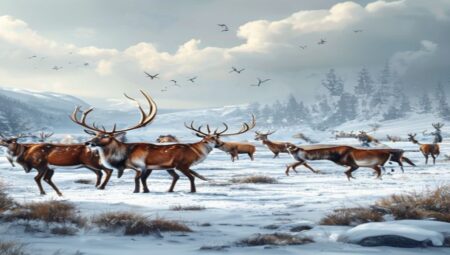
Autumn marks the critical migration window toward southern lowlands. Herders track temperature drops and snowfall patterns to guide reindeer across established corridors. The skavdnjádus slaughter season follows immediately, with strict adherence to traditional butchery protocols that minimize waste. Meat undergoes wind-drying or smoking in specially constructed wooden racks, while hides are prepared for gákti tailoring and drum construction. This phase demands synchronized decision-making across family units to optimize grazing pressure on regenerating pastures.
Winter imposes the most rigorous environmental constraints. Polar night conditions reduce visibility to artificial light sources, requiring navigational expertise through star patterns, wind-carved snow drifts, and reindeer tracking signs. Herding relies on insulated footwear, lightweight skis, and curved reindeer-drawn sleds designed for deep powder traversal. Spiritual practices intensify during this period, with fire ceremonies and animal offering rituals reinforcing the reciprocal relationship between human activity and ecosystem balance. Each seasonal shift operates as an independent operational module, collectively sustaining a cultural system calibrated to Arctic extremes.
The Role of Seasonal Cycles in Traditional Sami Life
The traditional Sami existence is fundamentally synchronized with Arctic photoperiod shifts and thermal gradients, transforming environmental fluctuations into precise cultural and economic coordinates. Seasonal transitions do not merely alter the terrain; they reorganize settlement patterns, dietary composition, craft production cycles, and ritual observances across generations.
- Spring: Thawing snowpack triggers the movement from inland winter pastures toward coastal or riverine grazing zones. Calving season demands continuous herd tracking, with herders utilizing pulk sleds and working dogs for rapid traversal across unstable ice and saturated tundra. This phase establishes early food reserves through wild plant harvesting, bird egg collection, and spring fish runs before summer abundance arrives.
- Summer: Extended daylight enables intensive pasture distribution across highland plateaus where reindeer disperse to avoid tick saturation while consuming lichen, grasses, and willow foliage. Communities conduct salmon and char net fishing, harvest birch bark for basketry, and process antler and hide into structural housing materials. The absence of extreme cold facilitates extended outdoor workshops where drum crafting, joik transmission, and tool forging occur without thermal constraints.
- Autumn: Rapid temperature drops force herd redirection toward sheltered boreal valleys. Annual roundups require coordinated movement across hundreds of kilometers, culminating in selective slaughter for winter meat preservation. Smoking chambers, wind-drying racks, and fat-rendering pits are prepared using inherited techniques that prevent spoilage without mechanical refrigeration. Antler carving and layered fur garment assembly commence simultaneously to prepare for subzero exposure.
- Winter: Continuous darkness and deep snow accumulation dictate navigation along established ice corridors and wind-scoured ridges. Microclimate reading, snow depth variation analysis, and animal track interpretation replace modern navigation instruments. Hearth-centered gatherings reinforce communal cohesion through narrative preservation, drum divination, and seasonal offerings at sacred landscape markers. Storage infrastructure relies on natural insulation methods while reindeer milk processing yields concentrated dairy products that sustain caloric requirements during prolonged darkness.
This cyclical framework operates as a self-regulating ecological management system. Resource allocation follows strict rotational grazing protocols that prevent overbrowsing and maintain lichen bed viability across decades. Weather forecasting depends on observable indicators such as cloud formation patterns, wind direction shifts, and herd movement behavior rather than external instrumentation. Spiritual practices remain anchored to territorial features, with seasonal festivals aligning astronomical events, reproduction cycles, and pasture boundaries into a unified indigenous calendar.
How Arctic Climate Shapes Indigenous Traditions
The Arctic climate operates as an absolute framework for Sami livelihoods, dictating survival strategies, spiritual practices, and communal rhythms across generations. Extreme temperature fluctuations, prolonged darkness during polar nights, and months of continuous daylight fundamentally rewire cultural priorities. Reindeer herding, the cornerstone of traditional Sami economy, relies on precise climatic reading. Snow depth determines pasture accessibility, while ice thickness dictates safe migration routes. These environmental markers are not merely navigational tools; they form the foundation of oral knowledge systems passed through generations of elders. Meteorological shifts directly influence reindeer grazing patterns, forcing herders to adjust camp locations weekly based on wind drift and crust formation.
Clothing and shelter reflect direct adaptation to thermal stress. Traditional garb utilizes reindeer leather with distinct winter and summer weaves, layered to trap insulating air while allowing moisture escape. Lavvu tents employ birch poles and canvas covers designed to withstand wind shear exceeding sixty miles per hour. Fire placement within these structures follows strict geometric principles that maximize heat distribution without compromising structural integrity. Snow walls constructed around winter dwellings provide additional thermal mass, stabilizing interior temperatures despite external drops below minus forty degrees Celsius.
- Spiritual connections to landscape emerge from climate dependency. The northern lights, solar radiation patterns, and auroral activity historically guided seasonal transitions rather than calendar dates.
- Drum ceremonies map celestial movements against topographical features, creating living astronomical records. Winter solstice rituals focus on light restoration through controlled burning of dried lichen, while summer festivals celebrate midnight sun navigation techniques used for centuries.
Resource management protocols develop directly from climatic volatility. Hunting territories rotate based on reindeer migration corridors shaped by snow compaction rates. Fishing sites shift according to ice formation timing and water temperature gradients. These adaptive strategies prevent ecosystem overload while maintaining cultural continuity across rapidly changing environmental conditions. Knowledge transmission occurs through hands-on field instruction, ensuring each generation internalizes microclimate indicators that modern instruments often overlook. Historical climate records embedded in Sami place names reveal centuries of microclimate observation, providing modern researchers with longitudinal data on permafrost stability and vegetation shifts.
Winter Survival and Spiritual Practices in Sami Communities
The Sami people have developed highly specialized survival strategies over centuries of inhabiting the Arctic tundra and boreal forests. Winter conditions demand extreme adaptation, from thermal regulation to food security. Traditional winter garments utilize layered reindeer fur and goatskin, engineered to trap air while repelling moisture. The distinctive boots feature reindeer leg bones inserted into the soles, providing traction on ice and snow. Shelter construction relies on the lavvu or tupik, structures insulated with birch bark, moss, and compacted turf, maintaining internal temperatures well above freezing despite external extremes.
Food preservation techniques form the backbone of winter sustenance. Reindeer meat undergoes controlled smoking and wind-drying, while lichen is processed through boiling to remove usnic acid before consumption. Fermentation methods preserve fish and game for months without refrigeration. Navigation across frozen landscapes depends on reading snow drift patterns, tracking animal trails, and interpreting wind direction. Dog sleds and reindeer skis enable efficient travel over vast distances when temperatures drop below minus thirty degrees Celsius.
Spiritual practices remain deeply intertwined with daily survival activities. Sacred sites known as sieidi stones mark locations where offerings are placed to maintain balance between human communities and the natural world. The goavddis, a ritual drum crafted from reindeer skin stretched over birch wood, serves as a tool for divination, healing ceremonies, and seasonal transitions. Drum patterns map spiritual territories, guide reindeer migrations, and communicate with forest deities such as Beronášši, the guardian of mountains, and Mánnu, the moon deity who governs winter nights.
- Thermal Layering Systems: Reindeer fur vests worn next to skin regulate body temperature through natural moisture-wicking properties and air pocket retention.
- Sacred Offerings: Bones, tobacco, and dried fish are placed at sieidi sites to honor animal spirits before hunting expeditions and migration routes.
- Ritual Drum Mapping: Painted symbols on the goavddis surface correspond to geographical features, spiritual realms, and seasonal ecological cycles.
- Communal Food Distribution: Winter reserves are shared according to kinship networks, ensuring vulnerable members receive sustenance during severe blizzards.
Contemporary Sami communities maintain these practices through intergenerational knowledge transfer and cultural revitalization programs. Climate shifts disrupt traditional snow conditions and reindeer grazing patterns, prompting adaptive modifications while preserving core spiritual frameworks. The integration of practical survival methods with cosmological beliefs demonstrates a cohesive ecological philosophy that prioritizes reciprocity, continuous environmental observation, and long-term stewardship.
Reindeer Herding During the Long Polar Night
The polar night transforms the Arctic landscape into a canvas of twilight and deep darkness, yet Sami reindeer herders maintain an unbroken rhythm through centuries of adapted knowledge. During this period, daylight fades for weeks, forcing herders to rely on moon phases, star positions, and subtle shifts in wind direction to navigate frozen tundra. The reindeer themselves adjust their metabolism and movement patterns, digging through hard snow crusts with their hooves to access lichen pastures beneath the surface. Herders monitor these excavation sites closely, understanding that reindeer conserve energy by selecting paths where wind has naturally cleared snow drifts.
- Snow layer analysis: Experienced herders read ice layers and frost wedges to predict reindeer movement corridors before they appear on the horizon.
- Vocal communication techniques: Distinct whistles, low calls, and rhythmic drumming guide scattered herds across featureless terrain without relying on visual signals.
- Lunar tracking: Herding routes shift daily according to moon illumination, maximizing visibility during the brief windows of twilight.
- Sled navigation protocols: Traditional wooden sleds are loaded with emergency supplies, firewood, and fur-lined shelters to sustain teams during unexpected whiteout conditions.
Community coordination intensifies during these months. Multiple families operate within a single siida herding district, sharing weather updates and pasture assessments through established communication networks. Elders transmit generational wisdom about ice stability, predator activity, and reindeer calving predictions long before the first spring thaw. The herders wear layered wool garments and reindeer fur boots designed to repel wind while allowing sweat evaporation during exertion. Fire management remains critical; portable hearths are carried to provide warmth, melt snow for drinking water, and signal locations to other team members navigating through blizzards.
Survival depends on precise timing rather than speed. Herders move slowly, allowing reindeer to maintain their natural gait across uneven ice sheets. Rapid movement triggers panic responses that scatter the herd into deep powder zones where escape becomes nearly impossible. The absence of sunlight does not halt ecological processes; it merely shifts them underground and beneath the snowpack. Reindeer continue browsing, herders continue monitoring, and the cultural transmission of Arctic survival knowledge continues uninterrupted through direct observation and hands-on practice.
Ice Fishing and Snow Shelter Construction Techniques
Traditional Sami ice fishing relies on precise seasonal timing and specialized tools adapted to extreme Arctic conditions. Fishers typically locate stable ice thickness of at least thirty centimeters before drilling circular openings using a manual ice auger or a heavy iron axe. The bait consists primarily of dried reindeer blood mixed with barley flour, which creates a strong scent trail in frigid waters. Lines are crafted from braided horsehair or sinew, weighted with carved bone sinkers and tipped with hooks forged from steel scrap or antler. Fishermen monitor water temperature shifts and daylight duration to determine optimal catch windows, often targeting Arctic char and whitefish during late winter when ice stability peaks.
Snow shelter construction demands meticulous layering techniques to withstand temperatures below forty degrees Celsius. The framework begins with a circular base of interlocking snow blocks, compacted through controlled stomping rather than mechanical force. Interior walls are smoothed with wooden spatulas made from birch branches, reducing wind turbulence and preventing heat loss through rough surfaces. A ventilation shaft carved near the ceiling allows carbon dioxide to escape while maintaining thermal equilibrium. Reindeer hides line the sleeping platform, providing insulation from conductive snow contact, while a central fire pit sits on a raised gravel bed to prevent melting the floor structure.
- Structural Reinforcement: Cross-bracing with dried willow poles distributes snow load across the entire dome, preventing collapse during heavy storms.
- Snow Compaction Method: Each layer must be left to settle for two hours before adding the next, allowing crystalline bonds to form naturally.
- Thermal Regulation: Breathable wool blankets cover entry flaps, creating an airlock system that retains warmth without suffocation risks.
These techniques reflect centuries of observational learning tied to reindeer migration patterns. Ice thickness measurements were historically recorded using carved wooden tally sticks, while shelter orientation followed wind direction data transmitted orally across generations. Modern adaptations maintain the core principles but incorporate lightweight carbon fiber augers and synthetic insulation layers for extended field operations.
Joik Music and Shamanic Rituals in Deep Winter
During the polar night, when daylight vanishes for weeks and temperatures plunge below thirty degrees Celsius, Sami spiritual practices reach their most intense phase. Joik music functions as a sonic bridge between the physical world and the invisible spirit realm. Unlike Western musical structures, a joik does not describe its subject; it embodies it. A skilled practitioner alters vocal timbre, pitch, and rhythm to mirror the movement of reindeer herds, the stillness of frozen lakes, or the presence of specific ancestors. This vocal technique relies on circular breathing and microtonal inflections that create a trance-inducing resonance. The sound waves carry intention rather than narrative, allowing listeners to experience the landscape as a living entity.
Shamanic ceremonies led by the Noaidi coincide with these prolonged darkness periods. The goavddis drum, crafted from reindeer hide and marked with symbolic pigments, serves as both cosmological map and portal. Each painted circle represents a distinct realm: upper worlds for celestial deities, middle grounds for human activity, and lower depths for underworld spirits and deceased ancestors. Rhythmic beating induces altered states where the shaman navigates these territories to retrieve lost souls, forecast migration patterns, or negotiate with forest guardians. The drum’s surface acts as a topographical guide, with lines indicating travel routes between spiritual zones.
- Vocalizations during rituals incorporate animal calls and wind frequencies to harmonize with natural elements
- Drum patterns follow mathematical sequences that align with lunar cycles and seasonal transitions
- Participants maintain silence for days preceding ceremonies to preserve spiritual sensitivity
- Firelight amplifies acoustic properties, allowing low-frequency vibrations to travel across frozen terrain
Survival in deep winter depends on maintaining balance between human activity and environmental forces. Joik performances and shamanic interventions address this equilibrium by acknowledging territorial spirits, honoring deceased hunters, and reinforcing communal bonds. The practice requires rigorous training spanning years, where apprentices learn to read weather signs, interpret drum falls, and control respiratory patterns for extended vocal endurance. Modern archaeological findings confirm that these traditions predate Scandinavian religious influence by centuries, demonstrating a sophisticated understanding of Arctic acoustics and ecological psychology.
Spring Renewal and Reindeer Migration Patterns
As winter ice yields to thawing tundra, the Sámi seasonal calendar shifts toward one of its most critical ecological windows. Spring does not arrive uniformly across Sápmi; it progresses from coastal lowlands to highland plateaus, dictating the precise timing of reindeer movement. The return of migratory herds depends on snowpack depth, ground temperature thresholds, and the recovery of primary forage. Reindeer instinctively track these environmental cues, moving from sheltered winter valleys toward exposed coastal or mountain calving grounds where predator pressure remains lower and vegetation emerges earlier.
The migration route follows ancient corridors shaped by centuries of animal behavior and topographical constraints. Herders monitor ice thickness on rivers, wind-scoured ridges, and lichen recovery rates to determine safe passage. When the first green shoots appear, the siida system activates coordinated grazing rotations. Calving grounds become temporary focal points where females give birth in late May or early June. The timing aligns with peak nutritional demand; newborn calves require immediate access to nutrient-dense forage while mothers recover from winter weight loss.
- Snowmelt progression dictates movement speed and route selection across fragmented terrain.
- Lichen regeneration cycles influence pasture rotation intervals within the siida management framework.
- Calving ground elevation determines exposure to early snowfalls and predator visibility.
- Traditional tracking markers such as stone cairns and birch bark signs guide herd movement across unmarked landscapes.
Sámi herding knowledge integrates phenological observation with generational memory. Elders interpret bird migration patterns, wind direction shifts, and soil moisture levels to predict pasture readiness. Modern GPS collars supplement but rarely replace acoustic signals, reindeer calls, and terrain reading skills passed through apprenticeship. The spring transition requires precise herd splitting, gender-based grouping, and temporary camp establishment near reliable water sources. Contemporary climate variability disrupts historical synchrony between vegetation emergence and migration windows, forcing adaptive adjustments in route planning and pasture allocation while preserving core ecological literacy.
Traditional Food Preservation and Early Harvest Methods
The Sami people have historically synchronized their harvesting cycles with the brief Arctic growing season, relying on precise environmental indicators rather than fixed calendars. Early harvests began as soon as permafrost thawed sufficiently to allow root vegetable cultivation in sheltered river valleys and coastal plains. Berries such as crowberries and cloudberries were gathered during peak ripeness, often within narrow three-day windows when sugar content and medicinal compounds reached optimal levels. Reindeer herders timed their first slaughter after autumn migrations, ensuring meat was processed before deep winter temperatures stabilized.
Preservation techniques evolved to counteract rapid spoilage in fluctuating subzero climates. Traditional methods prioritized longevity without refrigeration, leveraging natural desiccation, microbial fermentation, and thermal processing. Each approach required specific humidity control, airflow management, and seasonal timing that passed through generational oral transmission.
- Air Drying (Kuáhkán): Reindeer meat and cod were suspended on wooden racks in shaded, ventilated shelters. Low humidity and consistent wind flow removed moisture while preventing insect contamination.
- Anaerobic Fermentation: Roots and berries were packed into birch bark containers or reindeer stomach bladders. Lactic acid bacteria developed naturally, preserving nutrients and creating stable pH environments that inhibited spoilage organisms.
- Natural Freezing & Snow Storage: Meat and fish were buried in insulated pits lined with moss and covered with compacted snow. Temperatures remained near minus fifteen degrees Celsius year-round, maintaining cellular integrity without excessive ice crystal damage.
- Smoke Curing: Coniferous wood smoldering below meat racks deposited phenolic compounds that acted as natural antimicrobial agents while adding flavor stability during long winter months.
These preservation systems functioned as ecological calendars, dictating community movement patterns and resource allocation. Knowledge of microclimate variations, soil composition, and animal behavior directly influenced harvest timing. Modern Sami households still reference these techniques when adapting to climate shifts that disrupt traditional berry yields and reindeer grazing cycles. The methods remain scientifically valid, demonstrating how indigenous Arctic food security strategies align with contemporary cold-chain alternatives.
Community Gatherings and Seasonal Festival Origins
The historical framework of Sámi community gatherings emerged directly from the operational demands of Arctic subsistence cycles rather than purely ceremonial intent. Early assemblies functioned as essential logistical nodes where reindeer herders coordinated seasonal migrations across grazing territories, fishermen synchronized coastal catch periods, and traders exchanged furs, tallow, and iron tools at established market sites like Karesuando or Karasjok. These pragmatic meetings gradually accumulated cultural weight as families consolidated during natural pauses in labor-intensive work, transforming utilitarian convergence points into sustained social institutions.
- Winter solstice gatherings centered on sky observation rituals that tracked the return of light, incorporating pre-Christian sun symbolism and communal feasting to reinforce clan alliances before spring migration preparations.
- Spring assemblies aligned with reindeer calving seasons and fish spawning runs, functioning as coordination hubs for herd management while preserving ecological knowledge through oral transmission between generations.
- Summer midnight sun festivals historically marked critical hunting windows and berry harvesting periods, where extended daylight hours enabled continuous food processing and craft production across family units.
- Autumn gatherings coordinated the annual reindeer slaughter and winter supply distribution, operating as economic checkpoints where meat preservation techniques and trade negotiations determined community survival through harsh conditions.
Modern seasonal festivals retain these structural foundations while integrating documented historical layers. Pre-Christian practices involving joik vocalizations and drum divination merged with Lutheran missionary influences during the eighteenth century, creating hybrid observances that gradually shed overtly religious elements to emphasize cultural continuity. The twentieth-century indigenous rights movement catalyzed formal festival organization, transforming scattered local traditions into coordinated events like Guovssuhat winter celebrations and Sámi National Day commemorations. Contemporary gatherings maintain core functional elements: duodji craft exhibitions document traditional tool-making methods, preserved food displays demonstrate historical preservation techniques using cloudberry, reindeer meat, and lingonberry, while structured storytelling sessions preserve genealogical records and ecological observation data that historically guided migration routes.
These assemblies operate as living archives where seasonal agricultural rhythms dictate programming rather than arbitrary calendar dates. Festival organizers coordinate events around established reindeer husbandry schedules, traditional fishing windows, and documented historical gathering sites to maintain authenticity. The structural continuity between subsistence-driven meetings and modern cultural festivals demonstrates how Arctic indigenous communities preserve operational knowledge through repeated seasonal practice rather than static documentation.
Summer Light and Outdoor Livelihood Strategies
The continuous daylight during the Arctic summer fundamentally restructures Sami economic activities and resource management. Reindeer herders shift from winter enclosures to expansive duottar plateaus where lichen regrowth supports herd recovery. Extended photoperiods enable precise monitoring of calf movements, predator activity, and pasture conditions without reliance on artificial illumination. Herding teams coordinate grazing rotations across multiple terrain types, leveraging natural light to track reindeer behavior patterns that indicate stress or seasonal migration readiness.
Parallel livelihood strategies emerge alongside pastoral work. Salmon and trout harvesting intensifies as rivers reach peak flow and fish populations concentrate in shallow spawning zones. Traditional net placements and rod techniques are adjusted to accommodate twilight-free fishing windows, maximizing daily catch while preserving stock sustainability. Gathering operations target nutrient-dense resources that mature exclusively under prolonged solar exposure. Cloudberries (lakka), bilberries, and bog cotton develop optimal sugar and fiber content during this period, requiring immediate processing to prevent spoilage.
Material preparation accelerates under uninterrupted daylight. Leather curing, antler carving, and tool fabrication follow compressed timelines, allowing artisans to complete complex workflows that would require multiple days in darker seasons. Community knowledge transfer occurs through extended work sessions where elders demonstrate hide stretching methods, lichen preservation techniques, and navigation markers tied to midday sun positions. These practices maintain ecological balance while ensuring material reserves for autumn and winter cycles.
- Reindeer Health Management: Continuous observation enables early detection of parasites, injuries, or nutritional deficits during the critical post-calving recovery phase.
- Pasture Rotation Protocols: Herders map lichen regeneration zones using solar angle references and terrain drainage patterns to prevent overgrazing.
- Resource Preservation Timelines: Berry harvesting and processing occur within strict daylight windows, utilizing traditional smoking and fermentation methods that require precise temperature control.
Infrastructure adaptation reflects this temporal shift. Temporary lavvu structures position entrances away from prevailing winds while maximizing interior light distribution. Storage pits utilize frozen ground remnants from winter alongside summer heat insulation to maintain optimal preservation conditions. Navigation relies on celestial markers and landscape features visible only under constant illumination, ensuring accurate route planning across vast, unmarked territories. Water crossing strategies are timed to exploit low-current periods during extended daylight hours, reducing equipment loss and maintaining herd momentum across glacial melt channels.
Midnight Sun Fishing and Berries Foraging Practices
The Arctic midnight sun fundamentally restructures daily rhythms, converting continuous daylight into a precise operational window for Sami subsistence activities. During this period, river systems experience maximum thermal exchange and glacial meltwater influx, creating ideal conditions for traditional fishing operations. Historically, Sami fishers deploy fine-mesh drift nets woven from cured reindeer sinew or spruce root fiber, targeting Arctic char, trout, and whitefish migrating into shallow gravel beds. The absence of darkness allows continuous gear monitoring, enabling immediate retrieval during temperature fluctuations that trigger fish behavior shifts. Catch processing follows strict environmental protocols: fish are gutted immediately on stone slabs, rinsed in cold stream water, and suspended on birch-wood racks for air-drying or cold-smoked over dried fish oil fires to preserve protein integrity without modern refrigeration.
- Hydrological Timing: Net placement aligns with natural current eddies and upstream snowmelt cycles rather than fixed schedules, maximizing catch efficiency while preventing net entanglement in moving debris.
- Tool Fabrication: Hand-forged bone hooks from reindeer antler pair with braided hemp or sinew lines, reducing aquatic habitat disruption and allowing selective harvesting of mature specimens.
- Storage Architecture: Elevated wooden drying frames incorporate ventilated roofs to prevent moisture accumulation, ensuring winter preservation without mold contamination in humid coastal zones.
Berry foraging operates on compressed phenological windows when summer soil warmth peaks and permafrost retreats completely. Crowberries, cloudberries, bilberries, and lingonberries ripen within a narrow three-week period, requiring precise navigation across tundra plateaus and mountain slopes. Foragers utilize historical camp locations, bird migration corridors, and lichen growth patterns to locate productive zones without overexploiting single areas. Harvesting employs hand-woven willow baskets with reinforced handles that prevent fruit compression during transport. Each species delivers targeted nutritional functions: cloudberries supply concentrated vitamin C and essential fatty acids for immune maintenance, while bilberries provide anthocyanins that counteract prolonged daylight-induced ocular fatigue.
Both practices demonstrate systematic resource management embedded in intergenerational knowledge transfer. Communities enforce rotational harvesting zones across waterways and shrublands, allowing aquatic spawning cycles and root systems to regenerate naturally. Contemporary Sami practitioners integrate these traditional calendars with modern climate tracking, mapping berry abundance against historical temperature records to adapt to shifting growing seasons. The midnight sun period functions as a critical ecological interface where ancestral techniques directly inform sustainable yield calculations, maintaining food sovereignty across changing Arctic environments.
Boat Building and Coastal Navigation Techniques
Traditional Sami vessel construction evolved through direct observation of Arctic marine conditions, prioritizing structural resilience over decorative elements. Artisans selected timber from coastal drift zones and inland birch stands, steam-bending planks to achieve optimal hull curvature. The clinker-built framework allowed controlled flexion during heavy swells, while reinforced keel sections prevented rudder damage against submerged ice floes. Seasonal modifications dictated design parameters: spring vessels featured extended prow bows for breaking thin ice along hunting grounds, summer craft incorporated shallow-draft keels for navigating tidal estuaries during fish migration, autumn designs utilized wider beam configurations to stabilize loads during reindeer transport across coastal straits, and winter boats required insulated deck covers and reinforced lashings to maintain rigidity in subzero temperatures.
- Material Sourcing: Whisker wood from mountain roots provided natural flexibility for frame ribs, while treated reindeer hide formed watertight seams between overlapping planks.
- Fastening Techniques: Iron rivets hammered through pre-drilled channels created flexible joints that absorbed wave impact without fracturing timber connections.
- Hull Treatment: Pine resin mixtures applied during autumn preparation prevented wood swelling during spring thaw cycles.
Coastal navigation relied on accumulated environmental indicators rather than mechanical instruments. Mariners interpreted water surface texture to detect underwater topography, noting how wind-driven ripples changed pattern over sandbars versus deep channels. Avian behavior served as reliable geographic markers; gull flight trajectories indicated freshwater springs along distant shores, while tern diving patterns revealed fish concentrations near rocky outcrops. Seasonal route planning incorporated tidal calculations derived from lunar observation, with navigators recording current velocity shifts against fixed coastal landmarks carved into stone tablets.
- Weather Reading: Barometric pressure changes manifested through cloud formation speed and bird migration altitude, allowing route adjustments before storm systems arrived.
- Directional Guidance: Astronomical positioning utilized Polaris during summer months, transitioning to solar shadow tracking on calm winter days when celestial visibility diminished.
- Depth Measurement: Lead lines weighted with tallow marked sediment types, helping vessels avoid grounding in shifting fjord entrances during seasonal water level fluctuations.
These maritime practices established sustainable resource management frameworks that aligned vessel deployment cycles with ecological availability. Mastery of construction and navigation protocols reduced expedition failures during critical hunting windows, reinforcing intergenerational knowledge transfer through practical demonstration rather than theoretical instruction. The technical precision embedded in each hull design and navigational decision reflects centuries of adaptive problem-solving within Arctic coastal ecosystems.
Youth Education and Oral History Transmission in Summer Camps
Summer camps function as structured pedagogical environments where intergenerational knowledge transfer operates through immersive, practice-based learning. Elders design seasonal curricula that align Arctic summer conditions with traditional skill acquisition, prioritizing hands-on instruction over theoretical lecturing.
- Duodji workshops require master craftsmen to provide precise verbal guidance while participants carve leather and shape reindeer antler tools. These sessions simultaneously teach dialect-specific terminology for materials, geometric patterns, and clan migration routes.
- Language immersion protocols mandate Northern Sami communication throughout daily routines, reinforcing vocabulary linked to seasonal weather shifts, plant identification, and animal behavior tracking without translation aids.
- Narrative instruction occurs during extended daylight hours, with elders demonstrating land navigation techniques using sun position, wind direction, and historical cairns rather than digital mapping devices.
Youth researchers document these exchanges through audio recordings and photographic logs, creating community-owned archives that supplement oral memory systems. Camp directors integrate reindeer husbandry cycles into daily schedules, allowing teenagers to participate in calving observations, veterinary care basics, and meat preservation methods passed down through direct demonstration. Educational frameworks emphasize ecological reciprocity, teaching participants how traditional grazing routes maintain tundra biodiversity while preventing soil degradation.
Assessment methodologies focus on observable skill acquisition and contextual understanding rather than written examinations. Camp environments eliminate digital distractions, forcing reliance on auditory memory and tactile learning techniques that mirror historical transmission models. Local municipalities collaborate with indigenous education boards to standardize competency metrics that measure dialect retention, craft proficiency, and historical comprehension across regional teaching cohorts.
Autumn Preparation and Resource Management Systems
The onset of autumn in northern Fennoscandia triggers a highly coordinated phase of ecological adaptation within Sámi pastoral communities. As temperatures drop and daylight hours shorten, herders execute precise migration routes from summer highland pastures to winter lowland forests. This seasonal movement relies on generational knowledge of terrain stability, lichen availability, and predator activity patterns. Reindeer are sorted by family ownership, branded calves are separated for winter grazing, and weakened animals are culled to optimize herd weight before snow cover immobilizes the trails.
- Meat preservation follows traditional freeze-drying methods where reindeer carcasses are suspended in ventilated drying huts. The subarctic air naturally dehydrates the tissue while preserving protein integrity, resulting in muohttagi, a lightweight staple that sustains households through months of limited mobility.
- Rendered fat extraction occurs simultaneously. Separated reindeer tallow is heated in copper vessels and filtered through linen cloth before being stored in cured leather containers. This lipid reserve serves dual purposes: caloric supplementation during extreme cold snaps and raw material for goavddis used in cooking and hide conditioning.
- Fish processing intensifies along frozen riverbanks. Arctic char and trout are split open, salted, and laid on birch barks to cure. The combination of mineral-rich spring water and low ambient humidity prevents bacterial growth while concentrating essential nutrients required for winter metabolism.
Infrastructure maintenance occupies equal priority. Winter dwellings require structural reinforcement before heavy snowfall arrives. Rope lashings are replaced with fresh reindeer sinew, which tightens as it dries. Thatched roof layers receive additional pine boughs to improve insulation and shed precipitation effectively. Tools undergo systematic sharpening and oiling using rendered fat mixed with birch tar, creating a moisture-resistant coating that extends blade longevity across decades of use.
Knowledge transfer operates through practical demonstration rather than formal instruction. Elders guide younger herders in reading wind direction for smoke management during meat smoking, interpreting ice thickness before crossing frozen waterways, and identifying early signs of reindeer herd stress through behavioral shifts. This continuous feedback loop ensures resource allocation aligns with microclimatic fluctuations, maintaining ecological balance while securing caloric surplus for the forthcoming polar night.
Preparing for Winter Storage and Meat Curing Processes
The Sami approach to winter food preservation stems directly from the unforgiving Arctic climate, where temperatures regularly drop below forty degrees Celsius and daylight shrinks to mere hours. Successful preparation requires meticulous planning that begins months before the first snowfall. Reindeer remains the cornerstone of this system, chosen for its lean composition and high fat content, both critical for sustained energy during prolonged cold spells. Hunters track herd movements through late autumn, selecting animals that have built sufficient reserves. The butchering process follows strict traditional protocols: carcasses are field-dressed immediately to prevent bacterial growth, then quartered into manageable sections optimized for airflow and weight distribution.
Curing relies on natural environmental conditions rather than artificial preservation methods. Meat hangs in ventilated sheds or is suspended from wooden racks where subzero temperatures and persistent winds draw moisture from the surface. Traditional practitioners monitor humidity levels daily, adjusting placement to prevent mold while ensuring even dehydration. Smoking introduces additional layers of protection and flavor, using carefully selected birch branches and dried reindeer dung as fuel. These materials burn slowly and produce a clean smoke that penetrates the tissue without imparting harsh chemical notes. Salt application follows precise ratios, drawn from historically harvested coastal deposits or traded inland supplies.
- Selection criteria: Only mature reindeer with intact hide and minimal fat oxidation qualify for long-term storage.
- Airflow management: Sheds are oriented to catch prevailing westerly winds, ensuring consistent moisture extraction.
- Storage architecture: Elevated wooden platforms prevent ground contact and deter rodent access during the freezing months.
- Seasonal timing: Processing aligns with the first hard frost, which naturally inhibits pathogen proliferation before spring thaw arrives.
This preservation system reflects centuries of ecological observation and intergenerational knowledge transfer. Elder hunters teach younger generations how to read ice formation on meat surfaces as an indicator of drying progress, while experienced women manage the curing racks and adjust smoking intensity based on weather shifts. Modern adaptations include insulated storage containers and temperature loggers, yet the core principles remain unchanged. The resulting preserved provisions sustain families through the darkest months, enabling continued herding operations, fishing expeditions, and craft production without reliance on external supply chains.
Mapping Migration Routes Before the First Frost
Reindeer migration patterns are not arbitrary; they follow precise ecological corridors that must be established before the first frost transforms the tundra into an impassable landscape. Sami herders rely on a sophisticated understanding of microclimates, snow accumulation rates, and lichen availability to determine viable winter pastures. The initial assessment occurs during late autumn when wind-scoured ridges remain visible beneath early snowfall, revealing hidden water sources and sheltered valleys. Herders evaluate terrain stability, predator activity zones, and historical grazing pressure to prevent overutilization of sensitive ecosystems.
Traditional route mapping depends on generational knowledge transmitted through direct land observation rather than written documents. Elders teach younger herders to recognize subtle indicators such as moss density, tree line shifts, and the behavior of migratory birds like ptarmigan and geese. These biological markers signal changes in ground temperature and snow hardness long before visible weather patterns emerge. The first frost acts as a critical deadline because subsequent freeze-thaw cycles create ice crusts that block reindeer from accessing surface lichen, forcing animals to expend excessive energy digging through permafrost layers.
Key factors guiding pre-winter corridor selection include:
- Wind exposure patterns on northern slopes versus leeward southern ridges
- Distribution of Cladonia species, the primary winter forage source
- Historical river crossing points that remain navigable during thaw periods
- Avoidance zones near wolf territories and established predator trails
Modern herding operations integrate this ancestral cartography with contemporary technology. Global positioning systems and drone surveys verify traditional pathways while monitoring real-time vegetation health and soil moisture levels. Despite digital tools, the core decision-making process remains rooted in empirical observation. Herders adjust migration corridors annually based on shifting climate patterns, ensuring that reindeer groups reach elevated grazing zones before heavy snowfall isolates lowland areas. This adaptive strategy preserves both herd vitality and long-term rangeland sustainability across Scandinavian Lapland.
Traditional Weather Reading and Animal Behavior Observation
The Sámi have developed a highly refined system of environmental forecasting that relies on direct observation of atmospheric shifts and wildlife indicators. Weather prediction in the Arctic does not depend on instruments but on reading micro-climatic signals across tundra, taiga, and coastal zones. Experienced herders track cloud density, wind direction changes, and snow surface texture to anticipate storms or clear spells. A sudden drop in barometric pressure often manifests as a hardening of the wind crust, while low-hanging stratus clouds near mountain ridges signal incoming precipitation. The color gradient along the horizon at dawn provides reliable data: a sharp red band indicates dry high-pressure systems, whereas a diffuse grey smear suggests moisture accumulation and imminent snowfall.
- Reindeer behavior serves as a primary meteorological barometer. During autumn, herds shift grazing patterns toward sheltered valleys when wind speeds increase beyond safe thresholds for calf survival.
- Aurora borealis intensity and structure correlate with geomagnetic activity that often precedes polar low-pressure systems. A tightly wound, bright curtain usually indicates stable conditions, while a fragmented, rapidly shifting display warns of atmospheric turbulence.
- Fox tracks and ptarmigan plumage reveal ground temperature fluctuations. Vulpine routes change direction when thaw cycles create ice layers that block access to subnivean prey, prompting Sámi hunters to adjust trap placements accordingly.
Seasonal transitions demand constant recalibration of these observational methods. In spring, the cracking sound of lake ice and the vertical flight patterns of geese indicate structural weakening of snowpacks. Summer midnight sun disrupts traditional diurnal cues, forcing reliance on insect swarm density and lichen moisture levels to gauge approaching fronts. Autumn brings rapid temperature drops, making animal vocalizations critical. Wolf howl frequency increases before blizzards, while reindeer snorting patterns expose wind direction beneath falling snow. Winter observation shifts to ice thickness assessment through auditory testing and the behavior of Arctic char near breathing holes. These practices remain embedded in Sámi ecological knowledge, functioning as a continuous feedback loop between human movement and environmental response.
Sustainable Tourism and Ethical Seasonal Travel Guidelines
The Arctic environment demands a calculated approach to visitor management, particularly when indigenous livelihoods intersect with seasonal tourism influxes. Sami communities maintain ancestral territories that function as active economic and cultural hubs rather than static exhibition spaces. Unregulated travel disrupts reindeer migration corridors, damages lichen pastures, and strains local infrastructure during peak seasons. Responsible engagement requires recognizing that land access is governed by traditional use rights and municipal zoning protocols specific to Sápmi regions.
- Prioritize certified local operators who employ Sami guides and adhere to reindeer herding calendars. These professionals map safe passage routes that avoid critical calving grounds and winter grazing zones.
- Adjust travel windows seasonally. Summer visitors should limit off-road vehicle usage on tundra soils, which recover slowly from tire tracks. Winter travelers must follow established snowmobile trails to prevent compaction of snowpacks essential for reindeer foraging.
- Support community-owned enterprises directly through accommodation bookings, craft purchases, and guided cultural exchanges that compensate knowledge holders fairly without commodifying sacred practices.
- Implement zero-impact waste protocols. Arctic ecosystems lack decomposition cycles capable of processing synthetic materials. Pack out all non-biodegradable items and use designated sanitation facilities in remote camps.
Ethical seasonal travel extends beyond environmental preservation to include data sovereignty and intellectual property protections. Traditional ecological knowledge shared during guided experiences remains the exclusive property of participating families and clans. Visitors should refrain from recording audio, photographing ceremonial objects, or publishing GPS coordinates of culturally significant sites without explicit written consent. Regulatory frameworks in Norway, Sweden, Finland, and Russia increasingly require tourism operators to submit environmental impact assessments before issuing seasonal permits. Travelers who verify these credentials contribute to a market that rewards accountability over volume.
Long-term viability depends on balancing visitor numbers with carrying capacity thresholds established by Sami parliaments and regional conservation authorities. Seasonal adjustments in accommodation pricing, guided group size limits, and mandatory environmental briefings create economic incentives for sustainable behavior. When tourism revenue directly funds reindeer herd management programs, language revitalization initiatives, and climate resilience projects, the industry transforms from an extractive force into a collaborative stewardship model.
Practical Guide to Experiencing Sami Heritage Year Round
Experiencing Sami heritage across the Arctic calendar requires precise timing and seasonal awareness. Each period offers distinct cultural practices, ecological rhythms, and accessible activities that differ dramatically from standard tourism models. Planning demands attention to reindeer migration routes, daylight variations, and local community schedules.
- Spring (April–May): Focus on the calving season near Karasjok and Kautokeino. Reindeer herders open controlled viewing areas. Bring insulated layers for sub-zero mornings. Photography restrictions apply near active lambing zones to avoid disturbing animals.
- Summer (June–August): Midnight sun enables extended cultural programming. Visit the Sami Museum of Northern Europe in Tromsø or the Sámi Parliament buildings in Karasjok. Book boat excursions to ancient rock carvings at Alta during low tide windows. Summer festivals feature traditional duodji markets and competitive stone-skipping.
- Autumn (September–October): The reindeer slaughter period (guovssahas) marks community gatherings. Non-participants can observe designated cultural demonstration sites. Berry picking remains regulated; use private land permits where available. Lichen harvesting requires knowledge of sustainable collection methods.
- Winter (November–March): Polar darkness creates optimal conditions for northern lights tracking and snowshoe trails. Join guided joik performances in lavvu tents near Røros or Enontekiö. Ice road crossings demand certified guides. Winter clothing must meet arctic-grade windproof standards.
Practical logistics dictate successful heritage immersion. Reserve accommodations six months ahead during peak festival periods. Contact local Sami cultural centers directly rather than relying on third-party tour operators. Always verify reindeer herding zone boundaries through official municipal maps to prevent trespassing. Purchase duodji crafts exclusively from certified artisan cooperatives to ensure authentic craftsmanship and fair compensation. Learn basic Sámi greetings to facilitate respectful interactions during community events. Weather shifts occur rapidly across tundra landscapes; carry satellite communication devices when venturing beyond paved routes. Cultural participation requires adherence to local guidelines regarding photography, drone usage, and sacred site proximity. Cross-border travel between Norway, Sweden, and Finland demands coordinated permits for reindeer trail access. Winter guide certifications must include avalanche safety and arctic survival credentials.
Essential gear includes moisture-wicking base layers, insulated reindeer hide boots, and polarized sunglasses for glacier reflection. Digital reservation platforms like Visit Finnmark or Sápmi Travel provide verified operator lists. Festival calendars shift annually; confirm dates through municipal cultural offices before departure. Photography permits cost approximately 50 to 120 euros per zone and require GPS coordinates for emergency response coordination. Traditional food tasting events mandate dietary restriction declarations in advance due to limited kitchen capacity in remote lodges. Language barriers resolve quickly with translated duodji catalogs and QR-coded craft histories available at visitor centers.
Best Time to Visit Each Season for Cultural Immersion
Timing your visit aligns directly with the Sami calendar, which operates independently of the Gregorian system and revolves around reindeer movement, ecological cycles, and ancestral rituals. Each season demands a different approach to cultural engagement, and understanding these rhythms prevents superficial tourism while enabling meaningful participation.
- Spring (April to May): The calving period transforms highland pastures into active communal hubs. Herders converge to brand calves, assist with birthing, and repair fencing across vast territories. Visitors can join guided tracking expeditions that teach terrain navigation, animal welfare practices, and the origins of traditional Sami veterinary knowledge. Late spring also marks the preparation for national celebrations, offering insight into textile dyeing using lichens and berries.
- Summer (June to July): Continuous daylight shifts daily routines toward craftsmanship and performance. Traditional duodji workshops in Tromsø, Finnmark, or Inari focus on knife forging, birch bark weaving, and antler carving under natural light conditions. Evening gatherings feature joik competitions and storytelling sessions that preserve oral history. Festival circuits activate during this window, particularly around the Sami National Day preparations, where gákti tailoring and silver jewelry smithing become accessible to observers.
- Autumn (September to October): The slaughter season initiates a structured period of resource management. Communities process reindeer meat using preservation techniques that have sustained Arctic populations for millennia. Visitors participating in regulated cultural programs learn about selective harvesting, hide tanning, and the ethical frameworks governing livestock stewardship. Wool spinning circles and traditional cooking demonstrations highlight how seasonal abundance translates into long-term food security.
- Winter (December to February): Polar nights reorient cultural focus toward indoor craftsmanship, spiritual practices, and snow-based mobility. Ice fishing expeditions, reindeer sled training, and snowshoe carving require direct mentorship from experienced guides. Cultural centers host winter markets where artisans demonstrate brass buckles, woven belts, and traditional drum construction. Solstice periods coincide with ancestral commemorations, offering structured opportunities to observe ritual fire ceremonies and seasonal blessing practices.
Booking through indigenous-led tourism operators ensures access to restricted cultural zones and guarantees that interactions support reindeer herding cooperatives rather than commercial entertainment venues. Seasonal passes, guided ecological tours, and workshop reservations should be secured months in advance due to limited infrastructure in remote Arctic municipalities. Cross-referencing local Sámediggi event calendars provides real-time updates on community gatherings, ensuring visitors align their schedules with authentic cultural milestones rather than tourist-centric programming.
Essential Gear and Safety Protocols for Arctic Travel
Surviving the Arctic requires meticulous preparation and equipment engineered for extreme cold, wind, and rapidly shifting conditions. The foundational principle remains proper layering: a moisture-wicking merino wool base layer, an insulating mid-layer of fleece or down, and a windproof, waterproof outer shell with fully taped seams. Footwear demands equal attention; insulated boots rated to minus forty Celsius must be paired with gaiters to prevent snow ingress and fur-lined insoles for critical ground insulation. Eye protection is non-negotiable—polarized goggles with UV400 rating prevent snow blindness during prolonged exposure to reflective surfaces.
- Navigational Redundancy: Rely on multiple systems. A satellite messenger paired with a magnetic compass and topographic maps ensures route continuity when GPS signals fail under heavy cloud cover or intense auroral activity.
- Thermal & Emergency Supplies: Carry chemical hand warmers, a compact bivy sack rated for arctic conditions, and high-calorie emergency rations. Hypothermia can onset within minutes during wind chill events exceeding thirty knots.
- Communication Protocols: Establish daily check-in windows with a ground contact. File detailed itineraries with local authorities or indigenous ranger stations. Maintain a specialized first aid kit featuring blister care, electrolyte tablets, and rapid frostbite rewarming sleeves.
Ice traversal demands rigorous verification using an ice axe or probing rod to measure thickness before crossing frozen waterways. Safe thresholds require a minimum of thirty centimeters for foot traffic and ninety centimeters for vehicle movement. Always maintain visual contact with companions, enforce strict turnaround times regardless of destination proximity, and monitor barometric pressure drops as early indicators of sudden whiteout storms. Navigating traditional reindeer pastures requires yielding to livestock trails and avoiding restricted ceremonial zones. This approach minimizes environmental disruption while guaranteeing safer passage through historically managed landscapes.
Supporting Local Artisans and Authentic Craft Markets
The economic backbone of Sámi cultural preservation rests heavily on the direct patronage of local artisans. Authentic duodji, recognized under UNESCO guidelines, requires years of technical mastery passed through generational mentorship. Purchasing directly from creators in reindeer herding districts ensures revenue circulates within indigenous economies rather than leaking into mass-production supply chains. Seasonal craft markets operate on strict ecological calendars; spring fairs focus on antler carving and birch root weaving, while autumn gatherings emphasize reindeer leather processing before winter insulation needs arise.
Vetting market authenticity demands specific verification methods. Genuine Sámi handicrafts carry official duodji labels that track material origin and maker identity. Consumers should prioritize cooperatives like Árbbediehtu or regionally registered Sámi craft associations over generic tourism shops. These organizations enforce strict quality standards and guarantee fair profit margins for creators. The seasonal rhythm dictates product availability; winter markets feature intricate reindeer fur textiles and bone needles, whereas summer festivals highlight bright wool patterns rooted in traditional gákti dress codes.
- Label Verification: Check for the official Sámi Duodji certification stamp, which documents the artisan’s region and material sourcing compliance.
- Seasonal Alignment: Purchase antler tools during spring migration periods when fresh materials are processed, and acquire leather goods in early autumn before freeze-up halts tanning operations.
- Direct Transaction Channels: Utilize registered Sámi tourism platforms that link buyers directly to workshop owners, eliminating retail markups that typically consume sixty percent of final pricing.
- Pattern Authenticity: Demand documentation of traditional motifs like the sun cross or reindeer antler geometry, which encode historical migration routes and clan territories.
Economic sustainability hinges on bypassing intermediaries who dilute both cultural value and financial return. Direct transactions at established fairs such as the Sámi Art Market in Karasjok or the winter craft exhibitions in Inari connect buyers with master craftsmen who explain tool usage, material sourcing, and symbolic motifs. This transparency educates purchasers about the ecological constraints governing reindeer migration routes and forest foraging limits. Supporting these networks funds apprenticeship programs that counteract cultural erosion while maintaining traditional dyeing techniques using lichen, berries, and mineral pigments.
“`html
Frequently Asked Questions About Sami Culture Through the Four Arctic Seasons
What is Sami Culture Through the Four Arctic Seasons?
Sami Culture Through the Four Arctic Seasons refers to the rich and deeply connected way the indigenous Sami people of Sápmi (spanning northern Norway, Sweden, Finland, and Russia’s Kola Peninsula) live, work, and celebrate in harmony with the dramatic seasonal changes of the high Arctic. Each season brings unique traditions, livelihoods, and ceremonies—from reindeer herding migrations in spring, midnight sun festivals in summer, the vibrant autumn aurora celebrations, to the magical winter world of snow, ice fishing, and the legendary Northern Lights.
Key facts about Sami Culture Through the Four Arctic Seasons
- Spring (Giđđa): Reindeer herders guide their animals from winter pastures to calving grounds; the Sami celebrate Jåhkåmåhkke Day honoring their cultural hero and national identity.
- Summer (Geasse): The midnight sun enables continuous outdoor activities, including traditional duodji (handicrafts) making, fishing for Arctic char, and gathering wild berries and herbs.
- Autumn (Čakča): Reindeer are rounded up and marked for the winter; communities gather to prepare dried reindeer meat (sáhkku) and celebrate with traditional joik singing and drum dances.
- Winter (Dálvi): The Arctic darkness brings the Northern Lights, snow sculpting, dog-sledding, ice fishing on frozen lakes, and storytelling around reindeer-hide fires—core elements of Sami spiritual life.
- Sami culture is recognized by UNESCO as an intangible cultural heritage emphasizing their sustainable relationship with Arctic nature across all four seasons.
“`