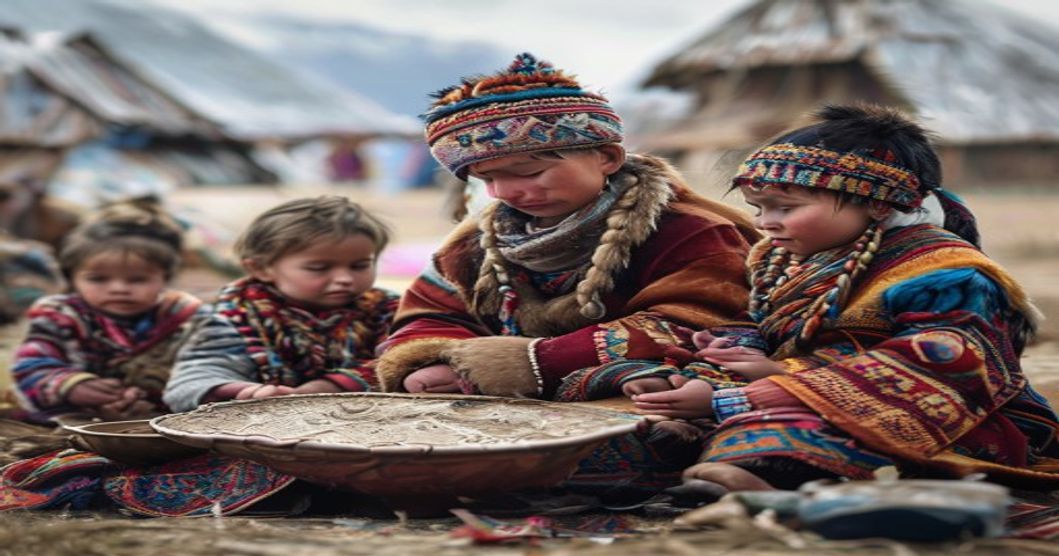
Raising Children in Traditional Sami Society: Cultural Foundations
Traditional Sami child-rearing practices emerged from a deeply interconnected ecological and social framework where survival depended on collective responsibility and environmental attunement. Children were not raised in isolation but integrated into the siida, the traditional communal unit responsible for reindeer management, hunting, and seasonal migration. From infancy, youngsters observed adult activities through direct participation rather than structured instruction. Knowledge transmission occurred via imitation, storytelling, and hands-on apprenticeship under multiple caregivers, including grandparents, aunts, uncles, and fellow herders. This distributed parenting model ensured that children acquired practical survival skills alongside cultural values without relying on formal educational institutions.
Language functioned as the primary vessel for cultural continuity. Sami dialects were spoken exclusively within domestic and communal spaces, reinforcing linguistic identity against external assimilation pressures. Elders utilized joik not merely as entertainment but as mnemonic devices that encoded ecological data, genealogical lineages, and ethical guidelines. Children learned to read weather patterns, animal behavior, and terrain shifts through guided observation during reindeer roundups and fishing expeditions. Autonomy was actively cultivated; toddlers were permitted to explore the landscape within sightlines, building self-reliance and risk assessment capabilities long before modern childhood paradigms emerged.
Spiritual ecology shaped disciplinary approaches. Punitive measures were largely absent because behavior was corrected through contextual feedback tied to natural consequences. A child who ignored signs of approaching storms or mishandled tools faced immediate practical outcomes that reinforced caution without verbal reprimand. Gender expectations historically dictated task allocation but rarely limited intellectual development; both boys and girls mastered navigation, craft production, and resource management according to seasonal demands rather than rigid hierarchies. This adaptive upbringing produced individuals capable of rapid environmental calibration and social negotiation, ensuring community resilience across generations.
The pedagogical environment operated through reciprocal labor and ecological literacy rather than abstract instruction. Children participated in skin processing, tool forging, and net mending alongside adults, developing fine motor control and material science intuition through repetition. Decision-making authority was delegated early; adolescents managed personal sled loads, negotiated trade terms with neighboring groups, and resolved peer conflicts using established customary law. This structured independence prevented learned helplessness while embedding respect for collective welfare. The absence of compulsory schooling allowed cognitive development to align with biological readiness and seasonal availability, creating a self-regulating system that optimized human capital for Arctic survival.
Kinship Networks and Community Childcare Models
Traditional Sami social organization relied heavily on intricate kinship networks that functioned as the primary framework for child-rearing and resource distribution. The siida, a self-governing cooperative unit, structured daily life by pooling labor, hunting grounds, and grazing territories across extended family lines. Within this system, biological parenthood operated alongside collective guardianship, ensuring that no child faced developmental or survival challenges in isolation.
Kinship ties dictated specific caregiving roles that distributed responsibilities evenly across generations. Grandparents served as primary storytellers and language custodians, transmitting yoik traditions and oral histories through seasonal gatherings. Aunts, uncles, and older cousins regularly assumed temporary or long-term supervision duties, particularly during reindeer migration cycles or winter hunting expeditions. This fluid division of labor prevented caregiver fatigue while embedding children within a dense web of relational accountability.
- Informal fosterage occurred frequently to balance household sizes and strengthen clan alliances across different siida branches.
- Children rotated through multiple households during seasonal transhumance, acquiring diverse skill sets from specialized practitioners.
- Elders enforced social norms through narrative correction rather than punitive measures, aligning behavior with communal survival ethics.
- Kinship-based childcare naturally integrated ecological literacy, teaching land navigation, weather reading, and sustainable harvesting practices.
The model proved remarkably adaptive to Arctic conditions where isolation could mean fatal vulnerability. By institutionalizing shared responsibility, Sami communities maintained demographic stability despite high infant mortality rates and harsh environmental pressures. Resource allocation followed strict kinship protocols, guaranteeing that food stores and winter clothing were distributed equitably among dependent children regardless of biological proximity. Children internalized reciprocity as a foundational social contract rather than an abstract moral concept. This kinship-driven framework also preserved linguistic continuity, as multiple caregivers consistently reinforced dialectal variations and place-based terminology essential to navigation and herding. Ritual participation further cemented these bonds, with children assigned age-appropriate ceremonial duties that mirrored adult economic roles. Modern anthropological studies confirm that these historical childcare architectures produced adults with heightened collaborative capacity and environmental stewardship instincts.
Language Acquisition and Oral Tradition in Sami Child Rearing
Sami languages belong to the Uralic family and encompass multiple distinct dialects that vary significantly across Sápmi regions. Children acquire these languages through continuous immersion within domestic and communal spaces rather than formal instruction. Elders serve as primary linguistic models, embedding grammatical structures and lexical knowledge into daily routines. Reindeer herding cycles dictate exposure patterns; children learn specialized terminology for animal behavior, weather conditions, and terrain features long before encountering standardized educational materials.
Oral transmission operates through structured yet fluid practices. Joik performances function as mnemonic devices, encoding historical events, kinship networks, and environmental observations into melodic frameworks. Storytelling sessions during winter months reinforce syntactic complexity while teaching moral reasoning and survival protocols. Repetition remains central to retention; caregivers employ call-and-response patterns during milking, weaving, or snowshoe construction to solidify phonetic accuracy and semantic mapping.
- Evidentiality markers require children to distinguish firsthand observation from reported information before age four.
- Locative cases govern spatial reasoning tied to migration routes, while noun class systems align with ecological categories rather than gender.
- Accurate communication directly impacts resource management and group safety during seasonal transitions.
Historical suppression policies disrupted intergenerational transmission, yet community-led immersion programs now restore pedagogical continuity. Modern initiatives integrate digital archives with traditional methods, allowing youth to access recorded narratives while maintaining face-to-face mentorship. Language acquisition remains inseparable from cultural preservation; fluency correlates directly with participation in seasonal gatherings, craft workshops, and ecological stewardship practices. Children who engage consistently demonstrate accelerated vocabulary retention and stronger spatial cognition linked to ancestral territory navigation.
Joyk and Folklore as Educational Tools
The transmission of indigenous knowledge within traditional Sami communities relied heavily on oral pedagogy, with joik and folklore serving as primary instructional frameworks. Rather than abstract instruction, learning occurred through immersive auditory experiences that embedded ecological, ethical, and social competencies directly into daily life.
Joik functions as a mnemonic architecture for child development. Each melody corresponds to specific terrain features, reindeer herds, or familial lineages, requiring children to memorize phonetic patterns, rhythmic structures, and tonal shifts. This auditory mapping trains spatial awareness and environmental literacy before formal literacy emerges. The emotional resonance of lullajoik regulates nervous systems while simultaneously introducing linguistic roots, kinship terms, and seasonal vocabulary.
- Children acquire navigation techniques through melodic contour recognition that mirrors topographical elevation changes
- Ethical frameworks emerge from narrative folklore where boundary-crossing behaviors trigger ecological or social consequences within the plot
- Conflict resolution strategies are modeled through recurring archetypes in taiga tales, emphasizing
Early Language Immersion Techniques
Traditional Sami communities structured early childhood development around continuous linguistic exposure within the domestic and seasonal work environment. Infants absorbed vocabulary and grammatical structures through constant auditory input during daily routines, seasonal migrations, and communal gatherings. Elders and parents maintained a strict monolingual or dialect-specific household protocol during the first seven years, ensuring that foundational phonetics and syntactic patterns developed without interference from dominant regional languages. This deliberate isolation created a robust cognitive framework for native proficiency.
Practical immersion occurred through task-based participation. Children accompanied herders to reindeer corrals, participated in net-mending sessions, and learned topographical terms while navigating tundra terrain. Language acquisition remained tightly coupled with survival skills. Nouns, verbs, and spatial prepositions emerged directly from environmental interaction rather than abstract instruction. Repetition functioned as the primary pedagogical tool. Daily activities reinforced lexical retention through contextual usage.
Oral transmission relied on structured rhythmic patterns. Joik melodies encoded historical events, ecological knowledge, and kinship lineages. Children memorized verses through call-and-response techniques during long winter nights. Storytelling sessions followed fixed narrative sequences, allowing learners to predict grammatical structures and anticipate vocabulary. Community elders adjusted linguistic complexity based on developmental stages, gradually introducing complex case endings and conditional tenses as cognitive capacity expanded.
- Direct environmental mapping strengthened semantic networks
- Kinship terminology acquisition occurred through systematic role modeling
- Seasonal vocabulary cycles aligned with migration patterns
- Phonetic precision developed through unfiltered auditory exposure
- Grammatical intuition formed via pattern recognition in natural speech
This methodology eliminated formal translation phases. Cognitive processing remained anchored to lived experience. Children internalized linguistic rules through repeated contextual application rather than explicit instruction. The absence of written materials during early development prevented reliance on orthographic shortcuts. Neural pathways for phonemic discrimination and morphological parsing developed organically through sustained exposure. Modern sociolinguistic research confirms that this immersive framework produced speakers with exceptional dialectal flexibility and acoustic perception capabilities.
Hunting, Fishing, and Seasonal Survival Training
Traditional Sami communities structured youth development through direct environmental engagement rather than formal classroom instruction. Children absorbed survival techniques via immersive participation in daily subsistence routines. The Arctic ecosystem dictated a strict cyclical rhythm, requiring adolescents to master reindeer migration corridors, track animal behavior patterns, and interpret atmospheric shifts long before reaching adulthood. Hunting protocols emphasized silent observation, wind direction analysis, and precise butchery methods for efficient resource utilization. Young participants learned to read snow depth variations to locate caribou trails and understood how ice thickness on frozen lakes dictated safe travel routes.
Fishing operations relied on handcrafted gear, including nets woven from plant fibers and carefully timed seasonal runs targeting salmon and whitefish populations. Elders demonstrated proper knot tying techniques, net maintenance procedures, and the strategic placement of stone weirs to maximize catch efficiency while preventing stock depletion. Seasonal survival training extended far beyond immediate sustenance requirements. Youth memorized medicinal plant properties, practiced emergency shelter construction using reindeer hides and driftwood, and mastered fire-starting methods utilizing birch bark and flint under extreme wind conditions.
- Navigational competence developed through stellar orientation, landform recognition, and understanding animal migration patterns that indicated upcoming climate shifts.
- Physical conditioning occurred naturally through extended tracking expeditions, heavy pack carrying, and continuous operation in subzero temperatures.
- Knowledge transmission remained strictly experiential. Mistakes carried immediate environmental consequences, fostering acute responsibility and rapid skill acquisition across generations.
- Tool maintenance followed rigorous protocols. Bowstrings required regular tensioning, spear tips needed constant sharpening on specific granite stones, and wooden traps demanded seasonal oiling to prevent cracking during temperature fluctuations.
Seasonal markers dictated instructional progression. Winter months focused on ice navigation and snow blindness prevention. Spring emphasized trap calibration and newborn reindeer handling protocols. Summer training concentrated on net repair and foraging routes. Autumn prepared youth for long-distance tracking before heavy snowfall. Community elders monitored developmental progress through practical field tests rather than theoretical examinations. This integrated pedagogical model produced adults capable of independent resource management, ecological balance maintenance, and emergency response within the harsh northern landscape.
Spiritual Worldview and Cultural Rituals Surrounding Birth and Childhood
The traditional Sámi approach to childbirth and early childhood operated within a cosmological framework that treated human development as an ongoing negotiation between the physical, ancestral, and spirit domains. Birth marked a critical ontological threshold where a newborn’s life force remained unanchored until deliberate ritual interventions established spiritual boundaries. The noaidi functioned as the primary mediator during this phase, interpreting omens through the sacred drum (goavddis) and prescribing targeted rites to align the infant with protective environmental energies. Elder women managed postpartum protocols, combining practical care with continuous spiritual monitoring to prevent exposure to malevolent entities such as the ráidu or forest spirits.
Purification procedures followed immediately after delivery. Juniper smoke was circulated through dwellings to cleanse negative atmospheric residue, while iron implements and woven protective charms (njáhkka) were positioned near sleeping areas to create a metaphysical barrier. Naming ceremonies relied heavily on divinatory practices; names emerged from dreams, animal behavior, or seasonal shifts, each carrying specific ancestral resonance and functional purpose within the community. Children remained spiritually vulnerable until adolescence, when they received personal guardian spirits through supervised encounters with nature during communal festivals.
- Eallinvuolgi Management: Infants possessed dispersed life force requiring constant reinforcement through targeted lullabies (luohti), household altar offerings, and the strategic placement of reindeer bone amulets near sleeping quarters.
- Ancestral Knowledge Transmission: Childhood development integrated structured oral instruction where clan genealogies were recited alongside ecological navigation techniques, ensuring internalization of both moral obligations and survival strategies specific to reindeer pastoralism or coastal foraging.
- Spiritual Maturation Protocol: The transition from childhood required supervised interaction with environmental spirits, facilitated by the noaidi during seasonal gatherings where participants learned to interpret natural signs and establish reciprocal relationships with hunting and fishing grounds.
This framework positioned child-rearing as continuous spiritual pedagogy rather than isolated domestic care. Every household practice reinforced ecological literacy and collective responsibility, ensuring that physical nurturing remained inseparable from metaphysical guidance. Historical Sámi birthing records demonstrate that these integrated protocols minimized infant mortality through systematic hygiene while simultaneously embedding children within a resilient cultural ecosystem designed to preserve identity across generational shifts.
Ancestral Blessings and Naming Ceremonies
In traditional Sami communities, a child’s identity was never established through documentation alone but woven into the spiritual fabric of the family and landscape. Naming ceremonies functioned as vital conduits between generations, linking newborns to ancestral lineages, reindeer herding cycles, and sacred geography. Elders did not merely assign labels; they interpreted omens, dreams, and environmental signs to select names that carried protective power and future destiny. The chosen name often reflected a recent natural event, an animal encounter, or a vision received during a trance state, ensuring the child inherited specific strengths or warnings from those who came before.
Ancestral blessings were performed through carefully maintained ritual practices led by experienced community members or noaidi (sacred specialists). Offerings of reindeer fat, dried fish, or copper coins were placed at sieidi sites—natural rock formations believed to house protective spirits. Joiking accompanied these rites, with vocal patterns designed to mimic wind, flowing water, or animal calls, creating a resonant bridge between the physical and spirit worlds. The noaidi would strike a ceremonial drum, reading the sacrificial patterns to confirm whether the ancestors accepted the child into their guardianship. Refusal of the blessing was interpreted as an urgent signal to delay naming until favorable conditions returned.
- Spiritual Consultation: Dreams and visions dictated name selection, often revealing ancestral figures who requested specific names or warning against certain syllables.
- Ritual Timing: Ceremonies aligned with seasonal transitions, particularly during spring calving periods or autumn reindeer migrations when community gatherings naturally occurred.
- Name Withholding: Children sometimes remained unnamed until a significant omen appeared, ensuring the name would align precisely with the child’s destined path.
- Generational Continuity: Names frequently recycled through paternal and maternal lines, preserving memory of deceased elders while transferring their protective qualities to the newborn.
The integration of ancestral blessings and naming customs ensured that child-rearing in traditional Sami society operated as a collective spiritual endeavor rather than a private family matter. Every syllable spoken during the ceremony was considered legally binding within the community’s oral framework, establishing the child’s place within kinship networks, land rights, and seasonal responsibilities. This system minimized identity fragmentation while reinforcing ecological awareness, as names often referenced local terrain features, migratory patterns, or weather phenomena that demanded lifelong respect and adaptation.
Nature Reverence and Ecological Responsibility Teaching
Traditional Sámi upbringing embeds ecological literacy from infancy through continuous immersion in Arctic ecosystems. Children learn that humans function as integrated components of a living landscape rather than external observers. This foundational worldview shapes every educational interaction, transforming daily survival activities into structured pedagogical experiences. Elders and parents deliberately position learners within reindeer migration routes, coastal fishing grounds, and mountain foraging zones to establish contextual understanding before introducing abstract concepts.
Instruction operates through guided participation rather than formal schooling. Young learners master terrain navigation by tracking animal prints, reading weather patterns through cloud formations, and interpreting ice thickness via acoustic feedback. Reindeer husbandry demands precise knowledge of lichen growth cycles, calving seasons, and predator behavior. Parents demonstrate saddle preparation, rope knotting, and herd management while simultaneously explaining the ecological rationale behind each action. This method ensures technical proficiency aligns directly with environmental stewardship principles.
- Reciprocal Harvest Protocols: Children learn to calculate sustainable yield thresholds before taking resources, preventing population depletion.
- Seasonal Rotation Systems: Young herders practice pasture migration schedules that allow vegetation recovery and soil regeneration.
- Keystone Species Protection: Instruction emphasizes preserving habitat networks critical for broader Arctic food web stability.
Ecological responsibility emerges from a reciprocal relationship model rather than conservation ideology. Children internalize the principle that taking resources requires proportional giving back through ritual acknowledgment and sustainable harvest limits. Overharvesting triggers community correction, while efficient resource utilization receives public recognition. Young practitioners learn to calculate population thresholds, rotate grazing pastures, and preserve keystone species habitats before reaching adolescence. This framework eliminates extractive mindsets by embedding long-term ecosystem balance into cultural identity.
Contemporary indigenous education researchers document these practices as precursors to modern sustainable development models. The pedagogical structure demonstrates how place-based learning accelerates cognitive development while reinforcing behavioral accountability. Communities maintaining these transmission methods report higher ecological literacy rates among youth compared to standardized curricula. Digital archiving projects now record elder narratives alongside GPS-mapped traditional territories, preserving operational knowledge for future generations navigating climate shifts and land-use changes.
Adaptation Through Colonial Policies and Cultural Resilience
The implementation of colonial administrative frameworks across Sápmi fundamentally disrupted indigenous child-rearing ecosystems. Norwegian, Swedish, and Finnish state institutions systematically enforced assimilation policies targeting Sámi families beginning in the late nineteenth century. Legislative measures explicitly prohibited Sámi language use within domestic environments and formal schooling, effectively dismantling the primary channel through which parenting norms, survival techniques, and ethical frameworks circulated between generations. State-sponsored missionary boarding schools operated as institutional mechanisms for cultural displacement, extracting children from familial structures to enforce linguistic conformity and religious conversion. This forced separation fractured traditional parenting models that historically depended on extended kinship networks, seasonal migration cycles, and land-based pedagogical methods.
Adaptive resistance emerged through deliberate community strategies designed to preserve child-rearing practices under restrictive conditions. Families maintained covert transmission of vocal traditions, joik performance, and reindeer husbandry techniques within private households. Elders strategically scheduled knowledge transfer during periods of reduced administrative oversight, utilizing oral storytelling cycles and practical apprenticeship to sustain cultural continuity. Local governance structures established informal guardianship arrangements that circumvented official educational mandates, ensuring children retained consistent exposure to traditional ecological knowledge and social reciprocity norms.
- Covert linguistic preservation: Vocabulary and grammatical structures were embedded in daily agricultural tasks and seasonal rituals to bypass state monitoring.
- Kinship-based educational networks: Cross-generational teaching circles operated independently of state curricula, focusing on land navigation, animal husbandry, and conflict resolution.
- Cross-border collaborative frameworks: Contemporary parenting collectives coordinate transnational knowledge exchange programs to standardize resilience protocols across Sápmi regions.
Current Sámi family systems integrate historical adaptation mechanisms with documented psychological recovery strategies. Revitalization initiatives prioritize structured intergenerational mentorship that reconnects youth with ancestral land management practices while addressing documented trauma from institutional separation. Language immersion academies and digital archival repositories reconstruct disrupted pedagogical lineages through verified community testimony. These coordinated responses demonstrate how historical resilience frameworks continue to inform modern approaches to indigenous child development, emphasizing community autonomy, linguistic continuity, and ecological literacy as foundational components of Sámi parenting structures.
Suppression of Indigenous Child Rearing Practices
Historical state interventions systematically dismantled traditional Sami child-rearing frameworks through forced assimilation campaigns that targeted familial and communal parenting structures. Colonial administrations across Norway, Sweden, and Finland implemented policies designed to sever intergenerational knowledge transfer by removing children from their native environments. Residential schools operated under strict linguistic prohibitions, where Sami children faced physical punishment for speaking their mother tongue, effectively erasing oral storytelling methods that traditionally guided moral development and ecological literacy.
State welfare agencies increasingly intervened in Sami households, labeling indigenous parenting practices as neglectful due to unfamiliarity with kinship-based care models. The traditional extended family network, which distributed child-rearing responsibilities across clan members, was replaced by nuclear family expectations enforced through legal mandates. Child welfare officers frequently removed infants and toddlers from reindeer-herding camps, placing them in non-Sami foster homes without cultural continuity protocols. This deliberate displacement fractured transmission pathways for survival skills, seasonal navigation techniques, and community-centered discipline models, while simultaneously dismantling the elder-led mentorship systems that historically regulated behavioral development and resource allocation.
- Linguistic eradication measures replaced communal storytelling with standardized national curricula, eliminating narrative frameworks that traditionally taught ethical reasoning, land-based ethics, and environmental stewardship.
- Institutional boarding systems isolated children from parental guidance, substituting indigenous mentorship with rigid institutional routines that disregarded seasonal rhythms central to Sami upbringing and daily survival.
- Legal kinship restructuring dismantled multi-generational care networks, forcing single-parent household models incompatible with traditional resource-sharing mechanisms and collective responsibility systems essential for community resilience.
The cumulative effect of these interventions created generational parenting gaps that persisted long after official assimilation policies were formally discontinued. Historical archives document how state-appointed educators actively discouraged communal caregiving, replacing it with individualistic behavioral standards that directly contradicted indigenous socialization goals. Contemporary Sami families continue navigating the structural voids left by decades of systematic cultural suppression, where ancestral child-rearing protocols remain fragmented across displaced communities and institutional records.
Community-Led Revival and Language Preservation Efforts
Grassroots mobilization drives Sámi linguistic continuity through decentralized educational networks that prioritize daily immersion over institutional instruction. Family clusters and indigenous governance bodies coordinate intergenerational pedagogy, embedding vocabulary acquisition within reindeer husbandry cycles, seasonal migration patterns, and craft transmission. Elders function as primary lexical anchors, utilizing oral storytelling, vocal pitch modulation, and contextual naming systems to reinforce phonological accuracy across developmental stages. Community committees establish language nests where children navigate bilingual transitions without cognitive fragmentation, leveraging play-based curricula that mirror traditional subsistence activities.
- Neighborhood immersion hubs: Volunteer coordinators map residential clusters to synchronize dialect exposure, ensuring phonetic variations from Northern Sámi to Lule Sámi remain functionally active within peer networks.
- Elder-mentor matching systems: Verified knowledge keepers undergo pedagogical training to translate ancestral ecological terminology into age-appropriate instructional frameworks, preventing lexical erosion during digital transition phases.
- Community-owned media archives: Locally hosted broadcast networks and open-source mobile applications document oral histories, enabling asynchronous language practice while maintaining strict dialectal authenticity standards.
Revitalization frameworks operate outside standardized national curricula, relying on consensus-based resource allocation from indigenous municipalities. Child-rearing protocols integrate lexical reinforcement through task-specific terminology during hunting preparations, textile weaving sequences, and snowcraft navigation exercises. Peer-to-peer tutoring networks emerge organically across seasonal gathering sites, where adolescents assume instructional roles while elders monitor semantic accuracy. Municipal language councils audit household exposure metrics, adjusting intervention strategies when intergenerational transmission rates fall below operational thresholds. Digital documentation projects prioritize phonetic precision over orthographic standardization, preserving tonal variations and regional morphological shifts that standardized textbooks historically suppressed.
Resource distribution follows community-governed funding models, redirecting municipal education budgets toward family-based literacy initiatives rather than centralized classroom programs. Parent collectives establish seasonal language immersion camps where children navigate complex ecological vocabulary through direct environmental interaction. Technical specialists collaborate with indigenous historians to develop dialect-specific speech recognition tools, ensuring algorithmic processing respects regional phonological boundaries. Governance assemblies monitor lexical retention indices across age cohorts, implementing targeted mentorship reallocations when transmission bottlenecks emerge during adolescent identity formation phases.
Contemporary Relevance of Traditional Sami Parenting Methods
Traditional Sami parenting frameworks operate on principles that directly counteract modern developmental challenges. The practice of embedding children in ecological routines from infancy establishes neurological pathways for environmental literacy and emotional regulation. Contemporary studies in Scandinavian early childhood institutions demonstrate that integrating land-based learning reduces cortisol levels and enhances executive function. This is not anecdotal observation but a documented pedagogical shift occurring across Finnmark, Troms, and Trøndelag regions.
Modern nuclear family structures often isolate caregiving responsibilities, increasing parental burnout rates. Sami communal child-rearing distributes emotional labor across extended kin networks and peer groups. Current Scandinavian social work programs are adapting this model through neighborhood-based co-parenting collectives that mirror traditional siida dynamics. These arrangements improve attachment security while reducing systemic pressure on individual households.
- Digital saturation disrupts attention spans and diminishes tactile learning. Traditional Sami education relies on multisensory engagement: tracking reindeer migrations, processing hides, weaving duodji, and listening to joik narratives. These activities require sustained focus, fine motor coordination, and pattern recognition.
- Early intervention clinics in Umeå and Oslo now incorporate these tactile methodologies into autism spectrum support protocols, reporting measurable gains in sensory integration and social reciprocity.
Cultural erosion remains a critical threat to indigenous youth identity formation. Sami elders utilize generational storytelling to transmit values of resource stewardship, interdependence, and adaptive resilience. Contemporary Scandinavian school districts are implementing co-created curricula that position these narratives as primary historical sources rather than supplementary folklore. This structural integration strengthens civic engagement metrics among indigenous adolescents while providing non-indigenous students with frameworks for sustainable decision-making.
The translation of these methodologies into clinical and educational settings requires precise cultural consultation. Nordic pediatric associations now mandate Sami knowledge holder partnerships when developing family wellness initiatives. This prevents extractive adaptation and ensures pedagogical fidelity. Research published in the Journal of Indigenous Education confirms that children exposed to land-based parenting models exhibit higher baseline empathy scores and lower anxiety prevalence during transitional life stages.
Educational Programs Integrating Historical Childcare Models
Contemporary early childhood frameworks across Sápmi actively reconstruct historical Sami childcare architectures through structured intergenerational curricula that prioritize ecological literacy and communal responsibility. Traditional upbringing relied on distributed caregiving networks where kinship clusters, seasonal migration routes, and reindeer husbandry cycles dictated daily learning rhythms. Modern institutions translate these patterns into mobile pedagogy units that shift locations according to environmental conditions and resource availability. Instructor certification now requires documented proficiency in oral knowledge transmission, silent observation techniques, and adaptive guidance methods that mirror historical Sámi mentoring practices.
Language acquisition programs embed vocabulary development within functional childcare tasks such as lichen harvesting, snow insulation construction, and livestock tracking, ensuring lexical retention remains tied to practical application rather than isolated memorization. Municipal education boards fund pilot initiatives that map historical caregiving workflows against developmental psychology benchmarks, creating hybrid models that satisfy both indigenous curriculum mandates and national accreditation requirements. Assessment protocols emphasize cultural continuity indicators, including multi-generational participation rates, seasonal knowledge retention, and community-led competency evaluations instead of conventional standardized metrics.
University partnerships develop teacher training modules focused on decolonizing early education through Sámi epistemological frameworks, emphasizing place-based learning over static classroom instruction. Field studies confirm that children navigating these historically informed programs exhibit accelerated spatial awareness, enhanced environmental adaptability, and stronger collective decision-making skills compared to peers in conventional settings. Funding allocation increasingly requires documented alignment between historical childcare documentation and contemporary pedagogical outcomes, ensuring program longevity remains tied to verifiable cultural preservation rather than temporary grant cycles.
Curriculum architects utilize archival ethnographic records alongside living practitioner interviews to reconstruct historical childcare sequences, then convert these sequences into modular learning pathways that scale across municipal early education centers. Each module incorporates seasonal ecological markers, kinship role rotations, and material culture handling protocols that mirror traditional Sámi upbringing structures. Training facilities simulate historical caregiving environments using reconstructed temporary dwellings, natural terrain mapping exercises, and structured elder-youth knowledge exchange sessions.
Institutional evaluation committees monitor longitudinal outcomes through family engagement tracking, linguistic fluency benchmarks, and community resource utilization rates to determine program efficacy. Regional education authorities mandate annual curriculum audits that verify historical fidelity while allowing adaptive modifications for contemporary developmental science requirements. Funding mechanisms tie disbursement schedules to documented implementation of traditional childcare protocols, ensuring financial support directly sustains historically grounded educational practices rather than peripheral cultural add-ons.
Global Indigenous Parenting Research Applications
Global indigenous parenting research has transitioned from descriptive anthropology to actionable frameworks that systematically reshape educational policy, clinical practice, and child welfare legislation. Modern studies prioritize participatory methodologies where elders, parents, and youth co-design research parameters. This structural shift guarantees that collected data mirrors lived experience rather than external academic assumptions. Findings directly inform culturally grounded interventions that address historical trauma while reinforcing intergenerational resilience.
- Educational System Integration: Curriculum developers in Canada, Australia, and New Zealand incorporate communal caregiving models to reduce student disengagement. Traditional mentorship structures replace rigid classroom hierarchies, improving attendance rates and cognitive retention through collaborative learning environments.
- Clinical Mental Health Protocols: Practitioners utilize indigenous parenting insights to construct trauma-informed therapies. Focus group data reveals how shared childcare and extended kin networks naturally buffer childhood anxiety, leading to community-based counseling frameworks that demonstrate superior outcomes compared to standardized individual therapy in remote demographics.
- Child Welfare Policy Reform: Government agencies embed cross-cultural research data into legislative drafts. Mandatory cultural competency training for social workers now references global parenting studies, reducing unnecessary foster placements and strengthening family preservation initiatives through kinship-based support systems.
Language revitalization programs directly extract communication patterns from traditional parenting routines. Caregivers document oral storytelling techniques that align with modern phonetic instruction, creating dual-immersion educational materials. Agricultural communities apply seasonal knowledge transmission methods to STEM curricula, proving that place-based learning accelerates scientific comprehension among youth populations.
Data sovereignty dictates current research applications. Indigenous institutions now control datasets previously extracted by external universities. Secure cloud archives and community-reviewed publications ensure findings serve local developmental needs rather than academic extraction. This methodological boundary guarantees that parenting research generates sustainable funding for cultural programs, healthcare initiatives, and youth leadership pipelines.
Frequently Asked Questions
What is Raising Children in Traditional Sami Society?
Raising children in traditional Sami society was deeply rooted in communal living, oral tradition, and a profound connection to nature. Children learned through observation, storytelling, and hands-on participation in reindeer herding, fishing, and crafting. Elders played a central role in passing down knowledge, cultural values, and spiritual beliefs, ensuring the continuity of Sami identity across generations.
Key facts about Raising Children in Traditional Sami Society
Children were considered valuable members of the community from birth. Education was experiential rather than formal, with skills like reindeer handling, duodji (handicrafts), and joik singing taught through practice. Gender roles existed but were flexible, and children often began contributing to household tasks at a young age. The Sami concept of ‘luohti’ (blessing) and strong kinship networks ensured collective responsibility for child-rearing.