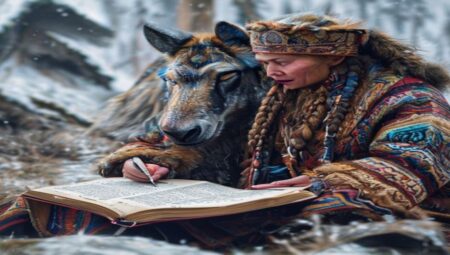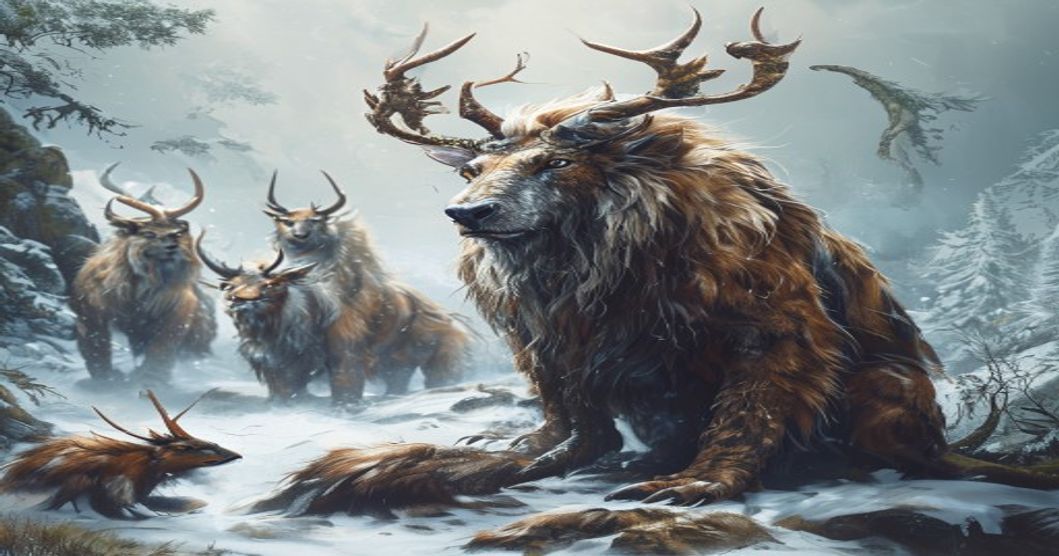
Tapio: The Sovereign of the Forest and Master of Game
In Finnic mythology, Tapio stands as the paramount deity governing wild territories, serving as the divine arbiter of hunting rituals and forest boundaries. Revered across Baltic Finnic tribes, this lord of the woods is traditionally depicted wearing an antlered crown and a cloak woven from bear fur, symbolizing his absolute dominion over fauna and flora. Ancient oral traditions emphasize that Tapio does not merely control animal populations; he enforces sacred ecological contracts. Hunters who violated unspoken forest codes or trespassed into consecrated groves faced his wrath through misfortune, broken equipment, or sudden disorientation in dense woodlands.
Mythological Appearances and Ritual Significance
Tapio features prominently in the Kalevala epic, particularly during Väinämöinen’s quest for the magical Sampo. His dwelling, known as Tapiontupa, is described as a luminous forest palace where game animals gather under his guidance. Pre-Christian Finnic communities performed appeasement offerings before hunts, leaving bread, honey, or copper tokens at ancient stone altars to request safe passage and abundant catch. This practice underscores the animistic framework of Finnic spirituality, where nature deities demand reciprocal respect rather than blind devotion.
Mielikki: The Mother of the Woods and Guardian of Wildlife
Parallel to Tapio’s authoritative presence, Mielikki emerges as the compassionate yet formidable goddess of forests, fertility, and medicinal plants. She is consistently portrayed in folk narratives as Tapio’s consort or spiritual counterpart, governing the reproductive cycles of wild animals and the proliferation of edible flora. Her iconography typically includes a green mantle embroidered with leaf motifs and a staff topped with flowering branches, representing her role in sustaining ecological balance.
Ethical Hunting Codes and Healing Traditions
Mielikki’s domain extends beyond wildlife protection into the realm of herbal medicine and seasonal fertility. Rural Finnic communities believed that she guided lost foragers to safe paths and revealed healing herbs during times of famine or illness. Hunters were instructed to speak respectfully when entering her woods, acknowledging her authority before harvesting game. This ethical hunting tradition reflects a sophisticated understanding of sustainable resource management, embedded within mythological doctrine. Her worship also involved springtime gatherings where participants honored the renewal of plant life through song and ritual purification.
Vuokko: The Bringer of Spring and Patroness of Berries
While less documented in canonical epic poetry, Vuokko holds a vital position in regional Finnic folklore as the deity of spring blossoms, berry harvests, and agricultural renewal. Depicted wearing a white dress adorned with wildflowers and carrying a slender wand capable of awakening dormant seeds, she personifies the cyclical transition from winter dormancy to vegetative abundance.
Folkloric Practices and Seasonal Markers
Vuokko’s influence permeates rural calendars and foraging customs across eastern and northern Finland. Communities celebrated her arrival through dawn rituals where participants gathered the first spring greens, believing that consuming foods blessed by her wand ensured prosperity and health throughout the growing season. Her association with berries is not merely agricultural but symbolic; wild strawberries, cloudberries, and bilberries were considered earthly manifestations of her divine energy. Folk tales frequently depict Vuokko transforming barren landscapes into lush meadows through rhythmic dance, reinforcing her role as a seasonal catalyst in Finnic nature worship.
Interconnected Deities and the Finnic Ecological Paradigm
The triad of Tapio, Mielikki, and Vuokko operates within a cohesive mythological system that mirrors pre-Christian Baltic Finnic environmental philosophy. Tapio establishes territorial boundaries, Mielikki maintains biological equilibrium, and Vuokko initiates temporal renewal. This functional division reveals a highly structured approach to nature reverence, where deities embody specific ecological processes rather than abstract cosmic forces.
Sami Mythical Creatures Explained
Origins of Sámi Spiritual Traditions
Sámi cosmology emerged from Arctic survival strategies. Early communities mapped their environment through spiritual frameworks. Sieidi stones served as physical anchors for ritual practice. These sites functioned as communication points between human and non-human realms.
Core Cosmological Framework
The Sámi universe divides into three vertical layers. The upper world hosts celestial deities and seasonal regulators. The middle layer contains human settlements and terrestrial animals. The lower realm houses subterranean spirits and agricultural deities.
Tapio: Forest Sovereign
Tapio governs boreal forest ecosystems and ungulate populations. Hunters performed blood sacrifices at Tapio’s sacred groves. The deity controlled prey migration patterns and hunting success. Ritual songs directed specific animal spirits toward waiting traps.
Mielikki: Wilderness Regulator
Mielikki operates as the forest’s regulatory force. She monitors hunting quotas and enforces ecological limits. Traders left iron tools and copper coins at her altars. Her jurisdiction extends to berry patches and medicinal herbs.
Vuokko: Marshland Guardian
Vuokko inhabits peatlands and shallow wetlands. This deity governs waterfowl migration and marsh vegetation. Seasonal flooding required specific appeasement rituals. Offerings included birch branches and dried reindeer antlers.
Jätteet: Geological Primordials
Jätteet represent primordial geological forces. These beings shaped mountains, valleys, and coastal formations. Their movements triggered seismic activity and glacial shifts. Rituals targeted specific burial mounds associated with giant ancestors.
Aquatic Spirits and Water Deities
Aquatic spirits govern rivers, lakes, and coastal waters. The Näkki variant manifests as a water horse or serpent. Fishermen avoided casting nets during specific lunar phases. Drowning incidents attributed to aquatic spirits required immediate purification rites.
Integration in Duodji Art and Ritual Objects
Sámi craftsmanship encodes mythological frameworks into functional objects. Duodji tools feature carved sieidi motifs and protective symbols. Drum handles depict cosmic axes and creature hierarchies. Amulets combine reindeer antler, copper, and silver in geometric patterns.
Transmission Through Yoik and Oral History
Yoik melodies encode ecological data and mythological narratives. Each creature receives a distinct phonetic signature. Vocal techniques replicate animal calls and environmental acoustics. Elders transmitted knowledge through structured seasonal recitations.
Etymological Breakdown of Creature Names
Sámi creature names reflect precise ecological classifications. Tapio derives from roots meaning forest boundary or game path. Mielikki connects to terms describing wilderness and protection. Vuokko originates from words indicating marshland and seasonal flooding.
Cross-Referencing Lappish Manuscripts and Field Notes
Eighteenth-century missionary records contain fragmented mythological accounts. Swedish and Russian scholars compiled early Lappish ethnographies. These texts require critical verification due to colonial biases. Field notes from 19th-century researchers document regional variations.
Distinguishing Sámi Lore from Finnish Kalevala Mythology
Sámi narratives operate outside the Kalevala poetic meter. Finnish epic poetry centralized deities around national identity. Sámi traditions emphasize ecological reciprocity and localized spirits. Väinämöinen lacks direct parallels in Sámi cosmological frameworks.
Modern Adaptations vs. Historical Accuracy
Contemporary media frequently commercializes Sámi mythological elements. Fantasy adaptations detach creatures from their ecological contexts. Academic research prioritizes primary source verification over popular interpretations. Indigenous communities reclaim narrative authority through digital archives.
Frequently Asked Questions
What is Sami Mythical Creatures Explained?
Sami Mythical Creatures Explained is a comprehensive guide dedicated to uncovering the legendary beings, spirits, and supernatural entities central to Sámi folklore and mythology. It provides cultural context, historical background, and detailed descriptions of how these creatures are portrayed in traditional Sámi stories, beliefs, and artistic traditions.
Key facts about Sami Mythical Creatures Explained
Key facts include the profound connection between Sámi mythical creatures and the natural environment, their traditional roles as guardians, omens, or tests of character, and the vital importance of oral storytelling in preserving these legends. These beings deeply reflect the Sámi worldview, emphasizing harmony, respect for nature, and the presence of unseen spiritual forces in the wilderness.