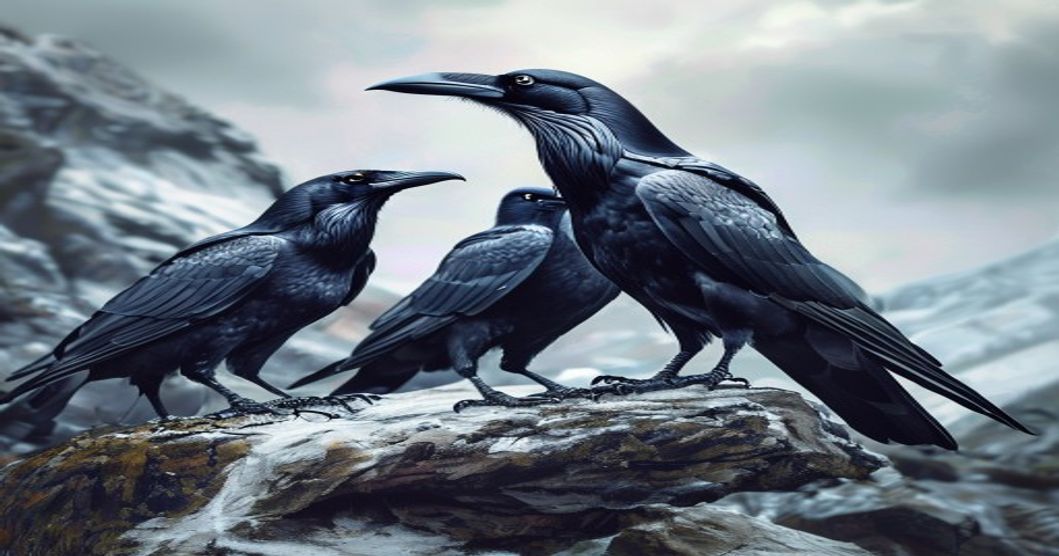
The Role of Ravens in Sami Stories and Beliefs: A Comprehensive Overview
The raven occupies a specialized niche within Sámi cosmological systems, operating as both a spiritual intermediary and a cultural archetype across distinct regional communities. Known as rávdná in Northern Sámi, this avian figure appears consistently in oral narratives, drum divination practices, and ethnographic records spanning the Arctic tundra. Unlike the predatory or ominous associations found in other Nordic folklore traditions, the Sámi raven functions primarily as a boundary-crossing entity that navigates between the human domain, the spirit world, and the natural environment. Its presence in traditional goahti storytelling typically marks moments of transformation, concealed knowledge revelation, or ecological warning.
Sámi ethnographic documentation frequently links the raven to shamanic drum imagery, where its stylized form appears alongside reindeer motifs and celestial markers. The bird serves as a psychopomp in several Sámi territories, guiding departed souls toward ancestral hunting grounds while simultaneously delivering messages from upper-world deities. This dual functionality aligns with broader Uralic mythological structures yet maintains distinct regional variations across Sápmi. Hunters historically analyzed raven flight trajectories and vocal patterns to anticipate game movement, atmospheric shifts, and optimal travel routes across frozen landscapes.
- Divination Symbol: Raven behavior during sieidi rituals provided practitioners with indicators for hunting success, seasonal transitions, and community safety.
- Trickster Archetype: Folklore consistently portrays the raven as a cunning figure who outwits giants and spirits, transmitting survival techniques through calculated deception.
- Spiritual Messenger: Shamanic practitioners invoked raven imagery during drum ceremonies to establish communication between physical and metaphysical realms during healing or prophecy sessions.
- Cosmological Anchor: The bird’s dark plumage represents the liminal space between daylight and polar night, reflecting Sámi comprehension of Arctic seasonal extremes.
Contemporary Sámi cultural initiatives have reintegrated raven symbolism into linguistic preservation programs, ecological education curricula, and modern artistic expressions. Academic research continues to analyze how traditional raven narratives encode practical knowledge regarding Arctic survival strategies, animal behavior observation, and sustainable land management techniques. The persistent presence of this avian figure illustrates how indigenous cosmologies maintain environmental expertise through metaphorical narrative structures rather than explicit instructional formats.
Foundational Concepts of Sámi Cosmology and Avian Symbolism
The Sámi understanding of the cosmos operates on a continuous exchange between visible landscapes and invisible spiritual currents. Traditional cosmology maps existence across interconnected planes where natural phenomena function as active participants rather than passive background elements. Mountains, water bodies, wind patterns, and seasonal shifts all carry intentional meaning within this framework. Within this system, avian beings occupy a unique structural position because their movement transcends terrestrial boundaries. Flight itself functions as a cosmological mechanism, allowing spiritual navigation between the earthly plane and higher or lower spirit domains.
Sámi oral traditions consistently describe birds as intermediaries who translate environmental signals into actionable guidance. The architecture of this symbolic network relies on precise ecological observation recorded across generations. Feathers collected during specific lunar phases retain documented ritual value because they capture atmospheric resonance tied to seasonal transitions. Wing movements correspond with weather shifts, migration patterns align with solar cycles, and avian vocalizations mark temporal thresholds within the annual calendar. These observable behaviors transformed into metaphysical frameworks where birds operate as living instruments of cosmic alignment.
- Feather placement in sacred spaces establishes spatial orientation linked to cardinal directions and ancestral pathways
- Avian migration routes map invisible energy corridors that guide ritual timing and hunting permissions
- Nesting behaviors indicate fertile ground zones where human activity intersects with spirit territory boundaries
- Wing span measurements in traditional crafts encode proportional relationships between physical and spiritual dimensions
This symbolic infrastructure requires careful distinction from later Christian or pan-European bird mythology. Sámi avian symbolism emerges directly from lived ecological relationship rather than imported allegorical systems. The cosmological framework demands that every observed behavior receives contextual interpretation within specific regional traditions. Knowledge transmission occurs through demonstrated practice, seasonal rituals, and drum iconography where avian figures mark portal locations, protective boundaries, and navigational waypoints across the spiritual landscape.
The structural foundation of Sámi bird symbolism rests upon reciprocal observation between human communities and environmental cycles. Every feather, call, and flight path carries documented cosmological weight within regional knowledge systems that prioritize precise ecological literacy over generalized metaphorical interpretation.
Historical Documentation of Raven Encounters in Northern Scandinavia
Early accounts of raven sightings across Northern Scandinavia emerge primarily from missionary logs, ethnographic field notes, and colonial-era manuscripts dating between the seventeenth and nineteenth centuries. Jesuit priests operating in Finnmark and Tromsø documented ritual gatherings where ravens appeared near sacrificial sites, interpreting them as omens tied to seasonal transitions and hunting success. These records, though filtered through a Christian framework, preserved indigenous terminology for large corvids and referenced behavioral patterns that align with modern ornithological observations of Corvus corax in subarctic environments.
The eighteenth century brought systematic documentation when naturalists like Pehr Kalm and Carl Linnaeus recorded native encounters during expeditions across Lapland. Their field journals note recurring motifs where ravens guided travelers to reindeer herds or warned of sudden weather shifts, details later cross-referenced with traditional vocal recordings preserved in the Royal Archives of Sweden. Nineteenth-century ethnographers compiled oral testimonies that explicitly linked raven behavior to spiritual intermediaries. The 1910 ethn
The Role of Ravens in Sami Stories and Beliefs: Mythological Frameworks
Within Sami cosmology, the raven functions as a structural pillar in mythological frameworks that map the tripartite universe: alläbma (the upper realm), bealjealläbma (the earthly plane), and riehtibáhkka (the subterranean domain). Unlike neighboring Norse traditions that subordinate avian figures to war deities, Sami theology treats the beavddu as an autonomous spiritual architect. Rock petroglyphs from Varanger and Karasjok consistently position raven motifs alongside solar discs and antlered quadrupeds, indicating a formalized belief system where the bird mediated celestial cycles and terrestrial survival.
The mythological framework assigns three operational roles to the raven. First, it acts as a cosmic navigator, interpreting polar night conditions and guiding noaidi during trance states. Shamans historically recorded raven vocalizations as encoded data regarding atmospheric pressure changes and prey behavior. Second, the bird operates as a threshold guardian, controlling access between living communities and the spirit world. Funeral yoiks frequently incorporate raven mimicry to dissolve boundary restrictions, allowing ancestral spirits to return temporarily for guidance before permanent departure. Third, ravens serve as ritual accountability markers. Traditional siida governance codes prohibited killing these birds during breeding seasons, not merely as ecological practice but as mythological compliance. Violating this norm disrupted the perceived favor of wind deities and triggered prolonged hunting failures.
Material culture from the 12th century onward reinforces this framework. Iron hearth hooks, drum frames, and reindeer antler tools display carved raven heads oriented toward cardinal directions, reflecting a systematic theological mapping. Modern ethnographic studies confirm that these mythological constructs never operated in isolation. They integrated with seasonal calendar systems, resource allocation protocols, and conflict resolution mechanisms across Sápmi territories. The enduring presence of raven symbolism demonstrates how Sami communities historically encoded environmental observation into narrative structures, ensuring knowledge transmission remained tied to spiritual obligation rather than arbitrary custom.
Raven Deities and Spirit Guides in Traditional Narratives
In traditional Sámi cosmology, the raven operates far beyond a mere animal symbol, functioning as a sacred intermediary between the physical realm and the unseen spiritual domains. Sámi narratives consistently depict the raven as a creator figure who shaped the primordial landscape, scattered stones across the tundra, and delivered life-giving fire to early humans. These origin accounts are not metaphorical embellishments but foundational theological concepts that establish the bird’s authority over survival, foresight, and cosmic balance.
Sámi shamans, known as noaidi, relied on raven spirits during sieidi rituals and trance journeys. The raven’s flight patterns were interpreted as divination tools; sudden directional shifts signaled spiritual warnings or the presence of malevolent forces. Hunters tracked raven behavior to locate reindeer herds across frozen expanses, believing the birds possessed ancestral memory of migration routes. This practical guidance merged seamlessly with metaphysical roles, reinforcing the Sámi worldview where ecological knowledge and spiritual insight are inseparable.
- Creator and World-Shaper: Folktales describe the raven dropping earth from the sky to form mountains and valleys, establishing sacred geography.
- Spiritual Messenger: The bird carries prayers to the upper world and returns with omens regarding health, harvest, and seasonal shifts.
- Death Guide: Ravens escort wandering souls to Eadni, the Sámi underworld, ensuring proper transition and preventing spiritual stagnation.
- Shamanic Familiar: Noaidi invoked raven spirits during sieidi offerings, using their presence to navigate between the living world and ancestral realms.
The reverence for raven deities reflects a deeply integrated ecological spirituality. Unlike later mythologies that separate nature from divinity, Sámi tradition embeds the sacred within observable natural behavior. Tracking raven movements, interpreting their vocalizations, and preserving their feathers in ritual pouches were daily practices that sustained cultural continuity across generations.
Divination Practices and Avian Omens in Spiritual Rituals
Avian observation formed a critical layer of Sámi spiritual practice, with ravens functioning as atmospheric interpreters and intercessors between human communities and the unseen realms. Shamans, known as noaidi, monitored raven movements across tundra landscapes, interpreting flight trajectories, vocalizations, and landing behaviors as structured omens rather than random occurrences. The direction a raven took at dawn, the frequency of its calls during storm fronts, or its preference for perching near sacred sieidi stones carried specific diagnostic weight. These observations were never isolated; they were cross-referenced with drum rhythms, seasonal shifts, and ancestral dream cycles to determine whether a sign indicated favorable hunting conditions, impending illness, or spiritual intervention.
Divination through avian behavior relied on precise ecological literacy. A raven circling clockwise around a reindeer herd signaled protective oversight, while erratic diving patterns near frozen waterways warned of unstable ice or disrupted spirit pathways. Noaidi trained apprentices to recognize subtle distinctions: the guttural croak preceding snowfall versus the sharper click used during territorial disputes. When ravens gathered at ritual sites, their numbers and posture dictated the intensity of the reading. Three birds aligned along a ridge suggested imminent change, whereas solitary movement toward the south indicated prolonged stability. These interpretations required years of field experience and were never reduced to rigid formulas; context always determined meaning.
- Flight Direction & Timing: Northward movement at sunrise demanded caution in travel plans; westward glides aligned with successful fishing seasons.
- Vocal Patterns: Repeated low calls near drum circles amplified spiritual resonance, while abrupt silences required immediate ritual cleansing.
- Perch Selection: Choice of dead birch or wind-sculpted rock revealed whether the omen pertained to land-based or weather-related matters.
Ritual integration elevated avian signs from passive observation to active spiritual dialogue. During seasonal transition ceremonies, noaidi would place raw reindeer fat and dried lichen near drum drums while chanting joiks that mimicked raven calls. The bird’s response—or absence—confirmed whether ancestral spirits had accepted the offering. In healing rites, a raven landing on a patient’s roof during a trance state marked successful spirit retrieval. These practices demonstrate how Sámi cosmology embedded natural behavior within structured spiritual frameworks, transforming ecological awareness into actionable ceremonial knowledge.
The Role of Ravens in Sami Stories and Beliefs: Ecological and Cultural Intersections
Ravens occupy a central position within Sámi cosmology, functioning not merely as mythological symbols but as active participants in the ecological and spiritual landscapes of northern Fennoscandia. The Sámi term rávddis refers to the common raven, a species whose survival strategies mirror the harsh conditions of the Arctic tundra and boreal forests. Historical ethnographic records from the 18th and 19th centuries document how Sámi hunters observed raven behavior to locate game, track weather shifts, and navigate frozen landscapes. This practical knowledge became deeply woven into oral narratives, where ravens served as messengers between the human realm and the spirit world (Noaidi).
Ecologically, the raven’s opportunistic foraging habits align with Sámi reindeer herding cycles. During winter months, when carrion from wolf kills or weakened livestock provided critical food sources, ravens acted as natural indicators of herd health and predator activity. Sámi communities interpreted these observations through a relational worldview rather than a hierarchical one.
Sámi Folklore Interpretations of Raven Behavior and Hunting Patterns
Sámi communities historically observed ravens as vital indicators of environmental shifts and prey availability across Arctic landscapes. The bird’s relentless scavenging habits were systematically integrated into seasonal survival strategies. When flocks descended upon frozen tundra or coastal ice edges, hunters interpreted the movement patterns as direct signals of underlying wildlife activity. Caribou herds frequently left bone fragments after predator attacks, and raven congregations highlighted these exact locations. Elders taught younger generations to track avian flight corridors rather than follow ground tracks directly, recognizing that bird navigation compensated for obscured terrain during blizzards or spring thaws.
- Rapid vertical dives indicated fresh kills suitable for immediate pursuit.
- Prolonged circling above dense forests signaled larger game struggling beneath heavy snowpacks.
- Seasonal roosting shifts near river valleys correlated with muskox breeding cycles and ptarmigan molting periods.
Traditional narratives frame the raven as a tactical scout rather than a mere scavenger. Oral histories describe hunters following silent aerial patrols to locate reindeer herds hidden from ground view. The species’ preference for high carcass sites aligned with known migration bottlenecks, allowing communities to anticipate animal movements weeks before visible signs emerged. This observational knowledge transformed folklore into a functional hunting manual.
Spiritual interpretations reinforced practical applications. Shamans regarded raven vocalizations during twilight hours as communicative signals requiring ritual acknowledgment before expeditions. The bird’s extreme cold tolerance was mythologized as inherited wind magic, granting hunters permission to utilize aerial tracking methods traditionally reserved for sacred contexts. Archaeological findings at ancient dwelling sites show raven bones positioned near hearths and hunting gear, confirming the species occupied both ecological and cosmological frameworks simultaneously. Modern Sámi researchers continue cross-referencing these historical behavioral accounts with contemporary ornithological data, revealing remarkably accurate predictions of prey density and terrain accessibility that predated scientific mapping by centuries.
The Role of Ravens in Sami Stories and Beliefs: Regional Dialects and Oral Transmission
Ravens occupy a distinct position within Sámi cosmology, functioning as intermediaries between the mortal realm and the spiritual domain governed by Beaivi, the sun deity. Their narrative functions shift noticeably across Sámi territories, reflecting localized ecological pressures and dialectal evolution. In Northern Sámi communities, the raven appears as goaskin, a figure tied to winter survival strategies and atmospheric reading. Southern Sámi accounts render the bird as gohkka, embedding it within boreal forest ecology and reindeer migration corridors rather than arctic extremes. Lule Sámi oral traditions describe the raven’s flight trajectories as navigational markers across coastal fjords, while Inari Sámi narratives frequently pair the bird with noaidi (shamanic practitioners) during seasonal transitions. Skolt Sámi folklore emphasizes the raven’s role in boundary maintenance, particularly around sacred groves and historical mining zones tied to Lapland’s resource extraction periods.
- Dialectal vocabulary dictates behavioral attribution: Northern terms emphasize foresight and meteorological guidance, Southern variants stress adaptability and territorial vigilance, and Eastern branches link avian movements to seasonal resource availability.
- Oral transmission mechanics adapted narrative cadence to phonological structures unique to each language branch, ensuring ecological knowledge remained encoded in rhythmic storytelling patterns rather than fixed textual forms.
- Regional performance contexts altered the raven’s moral alignment depending on listener demographics, shifting its role from weather predictor for reindeer herders to territorial guardian for coastal and inland communities.
Elders traditionally transmitted these narratives during extended winter months, using spatial gestures and tonal variation to map ecological relationships onto mythic frameworks. The historical absence of standardized orthography in Sámi oral culture allowed each dialect group to preserve distinct narrative branches, ensuring regional biodiversity remained embedded in cultural memory. Twentieth-century field recordings document how consonant clusters influenced syllable stress, directly shaping rhythmic pacing during communal gatherings. Contemporary ethnographers note that dialect-specific epithets correlate with historical land-use patterns, indicating that avian mythology functioned as an operational ecological knowledge system rather than decorative folklore.
Preservation efforts now prioritize community-led documentation over external archival extraction. Digital repositories record elder storytellers using native phonetic markers to maintain linguistic integrity during performance. Academic collaborations focus on cross-referencing raven motifs across Sámi linguistic branches, revealing shared structural patterns beneath surface variations. Sustained relevance depends on maintaining living transmission channels, as static textual records cannot capture the performative adaptability required to preserve dialect-specific mythic frameworks.
Norwegian Sámi Tales Versus Finnish and Karelian Lore
The portrayal of ravens diverges significantly when examining Norwegian Sámi narratives alongside the broader Finnish and Karelian mythological frameworks. In southern Sápmi and coastal Norway, raven motifs frequently emerge within shamanic drum patterns and oral transmission cycles, where the bird operates primarily as a psychopomp and a mediator between the human realm and the invisible forces governing reindeer migrations. These accounts emphasize ecological observation rather than anthropomorphic deity structures.
Core Distinctions in Regional Lore
- Functional Role: Norwegian Sámi traditions frame the raven as a survival indicator and weather tracker, integrating its behavior into practical reindeer husbandry and seasonal navigation.
- Narrative Integration: Finnish and Karelian texts anchor the raven within epic storytelling, linking it to Väinämöinen’s quests or Louhi’s supernatural trials through structured poetic meters.
- Semantic Evolution: Sámi lexicon preserves polysemous meanings tied to wind patterns and spiritual thresholds, whereas Finnic languages codify the bird as a fixed mythic archetype with standardized attributes.
Karelian variants further complicate this distinction by blending Finno-Ugric shamanic elements with Orthodox Christian apocrypha, producing layered motifs where the raven simultaneously embodies ancestral wisdom and ambiguous moral alignment. Linguistic analysis confirms that these regional frameworks evolved independently due to geographic isolation and distinct oral transmission networks. Field recordings from the 19th century demonstrate that Sámi informants consistently distinguished their raven lore from neighboring traditions, prioritizing empirical observation over allegorical storytelling. This historical split underscores how localized ecological pressures and linguistic boundaries forged fundamentally different approaches to avian symbolism across northern Eurasia.
Linguistic Variations in Naming the Raven Across Territories
The nomenclature applied to the raven across Sami territories reveals a complex tapestry of phonological divergence and historical isolation. As indigenous communities dispersed across Fennoscandia and the Kola Peninsula, each linguistic branch developed distinct lexical forms while preserving a recognizable Proto-Sami root. In North Sami regions, the term ravot or radno dominates, reflecting the retention of the uvular stop characteristic of western Uralic branches. Southern Sami speakers utilize raavoe, where nasal vowel harmony and gemination signal a southern dialectal shift. Inari Sami preserves ravut, demonstrating consonant assimilation patterns typical of eastern linguistic contact zones with Finnish substrates. Skolt Sami employs raavve, showcasing palatalization
The Role of Ravens in Sami Stories and Beliefs: Contemporary Cultural Significance
Modern Sámi communities actively reinterpret raven symbolism to reinforce cultural continuity and assert indigenous sovereignty across the Arctic region. Ravens appear frequently in contemporary Sámi visual arts, literature, and digital media, functioning as layered metaphors for ecological resilience, ancestral memory, and political assertion. Artists and filmmakers integrate raven motifs into installations, graphic novels, and documentary scores, transforming historical narratives into active tools for cultural revitalization. These creative outputs address pressing issues such as language endangerment, territorial disputes over mining concessions, and the accelerating pace of climate change in subarctic ecosystems.
Raven symbolism operates as a structural reference for modern Sámi governance and environmental advocacy. Traditional accounts describing ravens as witnesses to hidden landscapes directly inform contemporary community-led monitoring initiatives that track wetland degradation and reindeer grazing disruption. Cultural institutions in Tromsø, Kautokeino, and Karasjok curate rotating exhibitions where raven imagery functions simultaneously as archaeological reference and living emblem of resistance against industrial land appropriation.
- Digital archives preserve recorded joik performances linked to raven tales, enabling diaspora creators to distribute animated adaptations and scholarly commentaries worldwide
- University programs in Sápmi integrate raven-derived narratives into interdisciplinary courses on indigenous epistemologies, cross-border cooperation, and sustainable resource management
- Contemporary festivals and media campaigns utilize raven iconography to mobilize youth participation in language revitalization and climate justice movements
Academic publications now examine how raven narratives shape modern policy advocacy, particularly in negotiations regarding land rights and biodiversity protection. The bird’s historical association with strategic foresight aligns directly with current Sámi environmental campaigns opposing pipeline expansions and commercial forestry operations that fragment migration corridors. This contemporary relevance extends well beyond folklore preservation; it functions as an operational framework for cultural autonomy, ecological stewardship, and intergenerational knowledge transmission in rapidly transforming Arctic societies.
Educational Integration of Traditional Avian Narratives in Modern Curriculum
Integrating Sami raven narratives into contemporary educational frameworks requires a deliberate shift from standardized pedagogical models to culturally responsive teaching practices. Traditional avian folklore operates as a sophisticated ecological knowledge system encoded through oral transmission rather than mere mythological entertainment. When educators embed these stories within science, literature, and social studies modules, students encounter indigenous epistemologies that emphasize environmental reciprocity over resource extraction. Curriculum architects can structure interdisciplinary units around raven symbolism to bridge historical anthropology with modern conservation biology, creating academic pathways that validate non-Western knowledge structures.
Effective implementation begins with primary source analysis of Sami joik recordings alongside ecological field guides. This methodology enables learners to decode traditional land management practices and seasonal tracking techniques referenced in ancestral narratives. Digital archiving projects allow students to map migration patterns described in folklore against contemporary climate datasets, fostering critical analytical skills while preserving vulnerable cultural heritage. Assessment frameworks must measure cultural analysis, ecological reasoning, and cross-cultural communication rather than relying on rote memorization metrics.
- Interdisciplinary Module Design: Align raven folklore with biodiversity standards, tracking how traditional ecological knowledge predicts habitat shifts and species behavior.
- Community Partnership Models: Collaborate directly with Sami educators to co-create rubrics that honor oral transmission methods alongside academic writing conventions.
- Critical Media Literacy: Compare historical raven depictions in colonial archives with contemporary indigenous media representations to analyze narrative evolution and cultural resilience.
Implementation challenges typically stem from standardized testing pressures that marginalize place-based learning. Administrators can mitigate institutional resistance by developing competency-based evaluations that prioritize contextual understanding over uniform scoring. Professional development workshops must equip teachers with anthropological frameworks to navigate indigenous knowledge respectfully without appropriation or romanticization. Educational institutions prioritizing these integrations consistently report heightened student engagement across demographic groups, demonstrating how avian mythology shapes land stewardship ethics and directly connects historical belief systems to modern sustainability initiatives.
Digital Archiving and Revitalization of Indigenous Folktales
The transition from oral transmission to digital preservation has fundamentally altered how Sami folktales featuring the raven are documented and studied. Traditional knowledge, once carried across generations through joik performances and seasonal storytelling gatherings, now faces unprecedented risks due to climate change, language shift, and geographic dispersion of indigenous communities. Digital archiving initiatives address these threats by capturing high-fidelity audio recordings, video documentation of ritual contexts, and transcribed texts in multiple Sami dialects. Institutions such as the Saemien Sijte and the Nordic Sami Institute employ standardized metadata frameworks to ensure long-term accessibility while respecting intellectual property rights held by indigenous knowledge holders.
- Audio-Visual Documentation: Field researchers utilize spatial audio recording techniques to preserve environmental acoustics during storytelling sessions, capturing vocal nuances that convey cultural context and emotional weight.
- Dialect-Specific Metadata Tagging: Archives implement granular classification systems that distinguish between North Sami, Inari Sami, and Skolt Sami linguistic variants, preventing homogenization of indigenous narratives.
- Community-Governed Repositories: Digital collections operate under protocols requiring explicit consent from source communities, with access tiers that restrict sensitive ceremonial content while making educational materials publicly available.
Revitalization strategies extend beyond static storage into interactive platforms designed for younger generations. Mobile applications now integrate animated illustrations of raven motifs with phonetic pronunciation guides, enabling users to practice vocabulary in context. Educational institutions across Sápmi have adopted adaptive learning modules that align folklore content with national curriculum standards, fostering cross-generational dialogue. Virtual reality simulations reconstruct traditional winter storytelling circles, allowing remote participants to experience spatial relationships between narrator and audience. These technological interventions directly counteract language attrition by embedding indigenous narratives into daily digital routines.
Academic partnerships with technical developers have produced machine learning models trained exclusively on verified Sami corpora, improving automatic speech recognition accuracy for low-resource languages. The resulting datasets support linguistic research while remaining under community control. Cultural continuity depends on maintaining this balance between technological advancement and indigenous sovereignty, ensuring that digital preservation serves as a bridge rather than a replacement for lived cultural practice.
“`html
Frequently Asked Questions About The Role of Ravens in Sami Stories and Beliefs
What is The Role of Ravens in Sami Stories and Beliefs?
What are the key facts about The Role of Ravens in Sami Stories and Beliefs?
“`