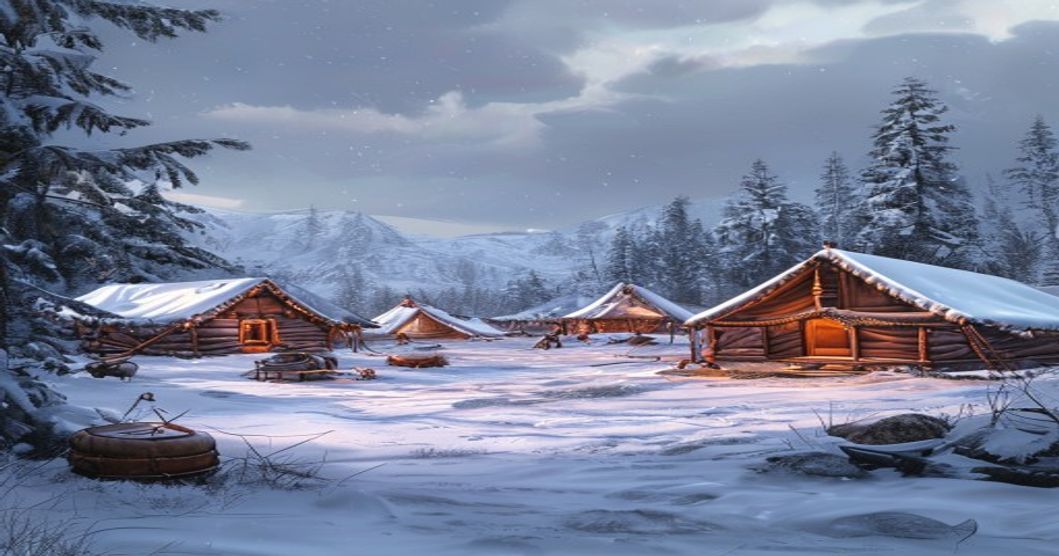
Understanding Traditional Sami Camps in Winter
Traditional Sami winter camps, historically established across the Arctic regions of Norway, Sweden, Finland, and Russia, functioned as highly adapted survival infrastructure rather than temporary shelters. These seasonal settlements emerged from centuries of reindeer pastoralism, requiring precise knowledge of snow conditions, wind patterns, and subarctic ecology. The camp layout followed strict environmental logic: elevated ground prevented moisture accumulation, dense spruce or pine branches formed windbreaks, and the central dwelling—typically a lavvu or goahti—utilized layered reindeer hides over a wooden frame to trap body heat while maintaining ventilation through a controlled roof aperture.
Sustenance during the polar night relied on systematic food preservation techniques passed through generational oral instruction. Dried reindeer meat (suovas), frozen fish, and rendered fat provided high-caloric intake essential for thermoregulation in temperatures frequently dropping below minus forty degrees Celsius. Snow walls surrounding the camp structure reduced wind chill by up to thirty percent, while the central hearth managed smoke extraction through strategic timber placement. Water procurement required digging through ice layers or melting snow in iron pots over sustained fires, a process demanding constant fuel management and precise airflow control.
- Spatial Organization: Camps divided functional zones for slaughtering, hide processing, tool maintenance, and ceremonial spaces, minimizing cross-contamination and maximizing workflow efficiency during extreme cold.
- Reindeer Management: Animals were tethered in designated areas with lichen-rich clearings to prevent overgrazing. Herders monitored herd health through track analysis and vocal commands adapted to whiteout conditions.
- Knowledge Transmission: Navigation relied on reading snow drifts, tree bark patterns, and celestial markers. Winter camps served as operational classrooms where youth learned ice thickness assessment, emergency shelter construction, and survival triage without written documentation.
Ecological balance dictated camp duration and relocation cycles. Prolonged occupancy depleted local lichen reserves, forcing seasonal migration along established routes that intersected with historical trade networks and spiritual landmarks. Contemporary preservation efforts document these sites through ethnographic mapping and climate-resilient archiving, recognizing that traditional winter camp architecture offers validated passive heating principles applicable to modern off-grid construction.
Historical Roots of Reindeer Herding Traditions
The origins of Sami reindeer herding trace back to the late medieval period, evolving from a mixed subsistence economy that combined hunting, fishing, and forest-based gathering with pastoralism. By the seventeenth century, climatic shifts and ecological pressures pushed northern communities toward specialized tundra pastures, where semi-domesticated Rangifer tarandus became the cornerstone of survival. This transition was not abrupt but rather a gradual adaptation to harsh Arctic conditions, requiring intimate knowledge of animal behavior, migration routes, and terrain navigation.
Seasonal rhythms dictated every aspect of camp life. Winter encampments relied on snow-covered grazing grounds where reindeer could access lichens beneath the crust. Herders followed ancient waypoints passed down through generations, mapping territories by landforms, river crossings, and wind patterns rather than modern coordinates. The relationship between handler and herd operated on mutual dependency; animals provided meat, hides for clothing and tents, antlers for tools, and milk for seasonal nutrition.
- Pastoral knowledge was transmitted orally, with elders teaching youth how to read reindeer tracks, identify breeding cycles, and construct temporary snow shelters during blizzards.
- Ritual practices reinforced ecological balance, including first-catch ceremonies that acknowledged animal spirits and prevented overharvesting.
- State interventions in the eighteenth century introduced taxation systems that forced herders to consolidate groups, inadvertently standardizing winter camp layouts across Finnmark and Lapland regions.
Archival records from Swedish and Norwegian parishes reveal how external authorities initially viewed mobile pastoralism as unregulated until administrative controls required written documentation. Despite colonial pressures, Sami communities preserved core herding techniques through pragmatic innovation, adapting sled designs, lasso knots, and communication whistles to maintain autonomy. Modern archaeological excavations of winter camps consistently uncover hearth placements aligned with prevailing winds, storage pits insulated by reindeer hides, and toolkits optimized for subzero maintenance.
The continuity of these traditions demonstrates how ecological necessity shaped cultural resilience. Winter herding was never merely an economic activity but a coordinated system of resource management, kinship organization, and environmental stewardship that sustained northern livelihoods for centuries.
Geographic Distribution Across Northern Scandinavia
Traditional Sami winter camps are strategically positioned across the Arctic and subarctic zones of northern Scandinavia, primarily within the counties of Troms og Finnmark, Nordland, Norrbotten, and Finnish Lapland. These settlements align with established reindeer migration corridors that traverse the Scandinavian Mountains and extend into coastal fjord systems. Winter grazing grounds require deep snowpack to support lichen availability, which dictates camp placement at elevations between 400 and 800 meters above sea level. The geographic distribution follows natural topographical barriers, including mountain ridges, frozen river valleys, and sheltered deforested zones where wind scouring exposes forage.
In Norway, camps cluster along the western fjord margins and inland plateaus near Alta, Tana, and Karasjok, where maritime moderation prevents extreme temperature fluctuations that would harden snow crusts. Swedish distribution concentrates in Norrbotten’s Abisko and Gällivare municipalities, where continental climate patterns create consistent sub-zero conditions ideal for preserving winter pastures. Finnish territories show a similar pattern around Inari, Utsjoki, and Kainuu, with settlements historically anchored to lake networks that facilitate ice-based transport during polar nights.
The spatial arrangement of these camps reflects centuries of ecological optimization. Herders select locations where prevailing winds do not deposit excessive snow drifts, ensuring reindeer can access ground lichen without exhausting energy reserves. Modern land-use regulations and infrastructure development have shifted some traditional sites toward higher elevations or protected conservation zones, yet the core geographic logic remains unchanged. Camps continue to follow historical migration routes that cross international borders, requiring coordinated management across Norway, Sweden, and Finland. The distribution also accounts for daylight availability during December through January, with settlements positioned to maximize solar exposure on southern slopes while maintaining proximity to water sources frozen into reliable storage systems.
- Elevation Range: 400–800 meters above sea level optimizes snow depth and lichen accessibility.
- Terrain Preference: Wind-scoured plateaus, frozen lake basins, and sheltered mountain valleys reduce reindeer energy expenditure.
- Cross-Border Corridors: Migration routes traverse Norway, Sweden, and Finland, necessitating shared grazing agreements.
- Microclimate Adaptation: Southern-facing slopes and fjord-proximate zones mitigate extreme cold snaps during polar night conditions.
Planning Your Journey to a Sami Winter Encampment
Securing a spot at an authentic Sami winter encampment requires precise timing and logistical foresight. These seasonal settlements typically operate between late January and early March, aligning with the deepest snow cover and established reindeer migration corridors. Bookings must be made six to nine months in advance through verified cultural tourism operators or direct contact with recognized duodji cooperatives. Relying on last-minute arrangements often results in limited availability or commercialized alternatives that lack indigenous oversight.
Transportation to remote encampments usually involves a combination of regional flights to Tromsø, Rovaniemi, or Kiruna, followed by specialized 4×4 transfers or tracked snowcoach rides. Some locations require helicopter access during peak winter months when road networks freeze over completely. Verify vehicle specifications with your host well before departure, as standard rental cars cannot navigate untracked Arctic terrain.
Essential gear preparation extends beyond heavy clothing. Insulated boots rated for -30°C, layered merino wool base layers, and windproof outer shells form the baseline. Bring moisture-wicking socks and spare thermal gloves, as perspiration accelerates heat loss in subzero conditions. Carry a portable power bank with at least 20,000mAh capacity; extreme cold rapidly drains lithium batteries. Pack hand warmers and a compact emergency blanket for unexpected delays during reindeer sleigh excursions or aurora viewing sessions.
- Confirm all-inclusive package details covering lavvu accommodation, guided activities, meals, and emergency evacuation insurance.
- Verify cancellation policies during polar night periods when sudden blizzards disrupt travel schedules.
- Ask permission before photographing individuals or documenting traditional reindeer herding practices.
- Follow guide instructions strictly during husky or reindeer team handling to prevent stress-induced flight responses.
Cultural participation requires adherence to established protocols. Avoid loud noises near working animals, respect designated fire zones, and engage respectfully with joik singing traditions and traditional food offerings like reindeer stew and cloudberries. Financial planning should account for equipment rental policies; many operators require guests to provide personal cold-weather gear rather than supplying it. Confirm whether guided cross-country skiing or snowshoeing trails are included in your itinerary before finalizing payment.
Cold Weather Gear and Thermal Layering Strategies
Traditional Sami winter survival hinges on precise thermal management rather than
Cultural Protocols for Respectful Cultural Exchange
Understanding the operational framework of a traditional Sami winter camp requires adherence to established indigenous protocols that prioritize ecological balance and community sovereignty.
- Permission and Access: Entry to active reindeer herding territories demands explicit consent from local siida (community) leaders. Unannounced visits disrupt grazing patterns and violate land stewardship agreements.
- Environmental Stewardship: Strict leave-no-trace principles apply beyond standard ecotourism guidelines. Visitors must remain on designated paths, avoid feeding wildlife, and respect seasonal boundaries marked by stone cairns or reindeer tracking signs.
- Social Interaction Norms: Direct engagement with herding families requires prior arrangement through certified cultural operators. Photography of individuals, livestock, or sacred sites without written consent is strictly prohibited. Silence during hearth gatherings and joik performances demonstrates cultural attunement rather than intrusion.
- Material Exchange Guidelines: Purchasing traditional duodji craftsmanship directly from artisans ensures economic reciprocity. Avoid mass-produced replicas that dilute heritage value. Gifts of tobacco, alcohol, or commercial food items are culturally inappropriate and may breach hospitality customs rooted in mutual sustenance.
Seasonal rhythm dictates daily protocols. Winter camps operate on solar and lunar cycles rather than institutional timekeeping. Arriving late, demanding structured itineraries, or requesting demonstrations of reindeer milking reflects a transactional mindset incompatible with indigenous knowledge systems. Pre-visit briefings provided by accredited Sami guides cover historical context, linguistic nuances, and behavioral expectations. These sessions establish baseline competence before physical entry into the camp environment. Visitors who internalize these guidelines contribute to sustainable cultural preservation while avoiding commodification of living traditions. The framework prioritizes relational accountability over tourist convenience, ensuring winter experiences remain educationally rigorous and culturally intact.
Reindeer Migration Routes and Seasonal Timing
Reindeer movement patterns dictate the precise establishment of traditional Sami winter camps, functioning as a living calendar synchronized with environmental shifts across northern Fennoscandia. Herders initiate autumn migrations between late September and early October, guiding herds away from summer coastal pastures toward inland forested zones where deep snow protects the primary winter food source: ground-dwelling lichen. The timing of this transition relies heavily on accumulated snowfall depth and temperature fluctuations. When temperatures drop below freezing for extended periods, a hard snow crust forms, forcing reindeer to seek sheltered valleys and leeward slopes where wind scouring exposes vegetation beneath.
Winter grazing grounds are selected based on lichen density, slope orientation, and predator avoidance corridors. Herders follow established ancestral routes that traverse elevation gradients ranging from sea level to two thousand meters. These pathways align with historical weather patterns, utilizing mountain passes that remain passable during storm events while avoiding avalanche-prone terrain. The duration of winter residency typically spans from November through March, ending when spring thaw triggers the northward return migration. During peak winter months, camp locations shift repeatedly to follow herd behavior and forage depletion rates.
- Snow Depth Monitoring: Herders measure snow accumulation daily, adjusting camp positions when depths exceed forty centimeters to prevent herd exhaustion.
- Lichen Stratigraphy Assessment: Experienced guides evaluate lichen layer thickness on exposed tree trunks and rocky outcrops to predict sustainable grazing duration at each site.
- Ice Formation Tracking: River ice thickness determines safe crossing points for both herders and reindeer, with routes rerouted when ice falls below fifteen centimeters.
- Temperature Inversion Mapping: Herders identify microclimates where cold air pools in valleys, creating firmer snow surfaces that facilitate easier movement during extreme cold spells.
Spring migration timing follows a strict biological deadline. Reindeer must reach calving grounds before the final spring thaw to ensure calf survival and avoid parasite exposure. Herders track budburst patterns in birch forests and monitor daylight duration using traditional observational techniques rather than modern calendars. Camp dismantling begins in late April when snowpack transitions from dry powder to wet granular consistency, signaling rapid environmental change across the tundra-forest ecotone.
Indigenous Food Preservation and Firecraft Techniques
Traditional Sámi winter camps operate as self-sustaining thermodynamic systems where food preservation and firecraft dictate operational continuity. The Arctic environment transforms from obstacle into tool, requiring precise resource allocation across multiple seasonal cycles. Reindeer meat serves as the primary caloric source, processed through elevated drying frames known as gáhkku. These wind-chamber structures utilize consistent airflow rather than artificial heat, preventing microbial proliferation while concentrating intramuscular proteins. Smoking follows immediately, employing birch and alder wood to deposit phenolic compounds that extend shelf life without refrigeration. Anaerobic fermentation occurs inside sealed reindeer stomach pouches or hollowed log containers, maintaining stable temperatures through biological activity during polar nights.
- Birch bark ignition matrices replace conventional fire starters. The resin-saturated inner cortex catches minimal friction sparks and sustains slow combustion long enough to transfer flame to dried reindeer lichen bundles.
- Compacted snow thermal barriers eliminate unnecessary fuel consumption. Excavated wind-scoured trenches receive layered snow packing around the fire pit. The crystalline structure reflects radiant heat inward while blocking ground conduction pathways.
- Rendered reindeer suet application supplies concentrated energy for cooking and illumination. Clean-burning fat reduces particulate accumulation inside canvas tents, preserving respiratory function during extended exposure periods.
Fire management extends beyond initial ignition into continuous ember regulation. Practitioners monitor ash layer density to adjust stick placement, maintaining consistent heat distribution across multiple cooking vessels. When temperatures fall below negative thirty degrees Celsius, moisture extraction becomes critical. Convection-driven dryer rooms positioned at tent entrances utilize temperature differentials to pull humid air away from stored provisions. This passive ventilation prevents frost crystallization on dried meat and preserves lichen spores used for natural tanning processes. Every structural element serves dual purposes: thermal regulation, food security, and camp stability converge within the spatial layout.
These methods represent optimized survival algorithms refined through continuous Arctic adaptation. Integration of preservation timelines with firecraft cycles establishes a predictable operational rhythm. Camp coordinators track freeze-thaw windows rather than celestial markers to determine when smoked provisions reach target moisture content. This applied thermodynamics remains actively deployed during winter reindeer migrations, where supply chain interruption carries immediate metabolic consequences and improvisation replaces manufactured equipment.
Navigating Arctic Survival Methods and Environmental Adaptations
Traditional Sami winter camps emerged from centuries of observed ecological patterns and iterative survival strategies tailored to subarctic conditions. Camp placement prioritized microclimatic advantages over open terrain. Hunters and herders selected sites shielded by natural windbreaks such as dense birch stands, ridgelines, or compacted snowdrifts that reduced wind chill by up to forty percent. Proximity to established reindeer migration corridors remained nonnegotiable, ensuring access to forage beneath ice layers during deep snow events.
Shelter construction relied on locally sourced materials engineered for thermal retention. The lavvu structure utilized a conical framework of birch poles lashed with reindeer sinew, then layered with thick caribou hides that naturally repelled moisture while trapping insulating air pockets. Interior layouts centered around a suspended iron cooking pot positioned above a central hearth. Smoke escaped through adjustable hide flaps at the apex, creating a draft system that maintained oxygen levels without compromising warmth. Floor surfaces were covered with dry moss and layered pine branches to isolate occupants from conductive ground freezing.
- Fire management: Dry birch bark served as immediate tinder, while compacted reindeer dung provided sustained lowgrade heat during polar nights. Camps maintained dedicated fuel caches stored in ventilated snow pits to prevent moisture absorption.
- Nutritional preservation: Reindeer meat underwent natural freeze drying through wind exposure on wooden racks. Fish were buried in permafrost trenches lined with spruce boughs, while rendered fat was stored in hollowed antlers to supply concentrated caloric reserves during blizzards.
- Navigation protocols: Experienced skiers read snow texture variations to locate hidden streams or unstable ice. Animal behavior patterns, particularly ptarmigan flushing and reindeer ear positioning, provided early warnings of approaching storms.
Garment systems operated on modular layering principles. Outer shells featured split reindeer hide with the hair facing outward to shed precipitation, while inner layers utilized fleece from younger calves for maximum loft. Boots incorporated layered fur socks sealed with pine resin and animal fat to prevent frostbite during extended traverses. Tools underwent daily maintenance using sharpening stones and sinew cordage treated with rendered fat to maintain flexibility below minus thirty degrees Celsius.
Community survival depended on strictly defined roles aligned with seasonal rhythms. Elders monitored weather indicators through bone divination practices and oral meteorological records, while younger members managed ice fishing operations and trapline maintenance. Emergency protocols required every household to maintain three days of dry fuel, spare leather bindings, and waterproofed document pouches containing navigation coordinates. These systematic adaptations transformed environmental hostility into predictable operational parameters, enabling sustained habitation across some of the planet’s most demanding latitudes.
Snow Reading and Wildlife Tracking Skills
Reading the snow surface in subarctic environments requires acute observation of micro-details that reveal animal movement, weather shifts, and safe travel routes. Sami herders historically interpreted track depth, stride length, and directional alignment to determine species, health, and recent passage time. Wind-scoured patches indicate exposed ground where reindeer forage beneath the crust, while undisturbed powder fields signal untracked territories or predator presence.
Wildlife tracking in winter camp settings relies on layered environmental cues rather than isolated signs. A single set of prints becomes meaningful when cross-referenced with broken branches at chest height, scattered birch bark fragments, or disturbed lichen beds. The Sami distinguish between reindeer gait patterns by analyzing the angle of hoof impressions and the presence of secondary drag marks from struggling animals. Fox trails appear as narrow, winding lines through deep powder, often leading to subnivean prey tunnels beneath the snowpack. Skiers historically adjusted wax blends based on snow temperature and humidity, a practice that complements visual tracking by maintaining consistent mobility across varying crust types.
- Track interpretation demands knowledge of seasonal crust formation and how temperature fluctuations alter surface hardness.
- Sky condition shifts are read through snow grain structure; wind-packed ripples indicate approaching storms, while faceted crystals suggest stable cold fronts.
- Animal behavior patterns inform camp placement; avoiding established migration corridors prevents unnecessary encounters during calving or rutting seasons.
- Breath vapor direction and dispersion reveal micro-wind patterns that expose hidden animal paths through dense tree cover.
Navigation between seasonal grazing grounds historically depended on memorized snow landmarks rather than compass bearings. Herders identified safe passages by observing how snowdrifts accumulated around rock formations, tree lines, and elevation changes. Ice thickness along frozen lakes determined crossing points, with clear blue ice indicating structural integrity while cloudy white layers revealed trapped air pockets prone to collapse. These techniques remain embedded in modern reindeer husbandry practices across Finnmark and Troms regions.
Ice Fishing Nets and Traditional Trapping Systems
The frozen landscapes of Sápmi demand precise resource management during the extended winter months. Sami fishers historically developed specialized ice fishing techniques that rely on carefully monitored current patterns and seasonal ice conditions. Traditional nets are woven from hemp or pine bark fibers, designed to withstand subzero temperatures without becoming brittle. These mesh structures are lowered through drilled holes in thick lake ice, anchored at precise depths where Arctic char and pike congregate near thermal layers.
- Net Construction: Hand-woven cords treated with animal fat preserve flexibility during freezing conditions.
- Placement Strategy: Fishers identify underwater ridges and submerged vegetation where fish seek shelter from strong winter currents.
- Maintenance Routines: Regular ice clearing and net repositioning prevent entanglement with shifting ice plates.
Trapping systems complement fishing efforts across the tundra. Hunters construct linear snare networks along animal trails, using bent saplings tensioned by braided reindeer sinew. Each snare features a trigger mechanism calibrated to release when an animal reaches a specific weight threshold. Deadfall traps utilize heavy stone slabs balanced on precision-cut wooden wedges, requiring minimal bait but maximum structural accuracy. Fur snares operate independently during extreme cold spells when visibility drops below fifty meters, relying instead on wind direction analysis and fresh track interpretation.
These methods reflect generations of ecological observation. Trappers monitor snow density variations to predict predator movement patterns, while fishers correlate ice thickness with oxygen levels in submerged water columns. The entire system operates without synthetic materials, ensuring complete biodegradability and minimal environmental disruption. Knowledge transmission occurs through direct field instruction rather than written documentation, preserving adaptive techniques that respond dynamically to microclimate fluctuations across different Sámi territories.
Documenting Indigenous Knowledge and Cultural Heritage
The preservation of Sami indigenous knowledge relies heavily on direct observation and hands-on participation within winter camp environments. Elders transmit practical survival skills through continuous demonstration rather than formal instruction. Youth learn to read snow conditions, track reindeer movements, and interpret wind patterns essential for navigation across frozen landscapes. Traditional craftsmanship remains a vital component of cultural continuity. Crafting tools from reindeer antler, stitching waterproof clothing from cured hides, and constructing lavvu shelters require precise seasonal timing and material selection passed down through family lineages. Language preservation operates simultaneously with skill transmission. Dialects like North Sami and Inari Sami carry specialized vocabulary for snow types, animal behavior, and weather phenomena that lack direct translations in dominant regional languages.
Digital archiving projects now complement physical camps by recording audio interviews, mapping historical grazing routes, and cataloging textile patterns. These initiatives prevent knowledge erosion caused by climate shifts and urbanization. Community-led documentation centers prioritize ethical data collection, ensuring indigenous communities retain ownership of their cultural assets. Ritual practices tied to solstice cycles reinforce collective memory while providing frameworks for ecological observation. Winter camp documentation strategies emphasize intergenerational dialogue, material culture preservation, and linguistic accuracy to maintain the integrity of Sami heritage against external commercialization pressures.
Practical knowledge extends beyond survival techniques into sustainable land management. Reindeer herding families adjust migration schedules based on lichen growth rates, frost layer depth, and predator activity patterns documented across decades. Modern researchers collaborate with camp guardians to digitize handwritten journal entries, record vocal chants used for livestock coordination, and create interactive maps linking historical grazing grounds to current climate data. This hybrid documentation model safeguards intangible cultural expressions while supporting academic and policy decisions that impact northern livelihoods.
- Elder-led navigation sessions map star positions relative to terrain features
- Youth participation in hide tanning processes preserves chemical treatment methods using natural plant extracts
- Vocal coordination chants maintain livestock group cohesion during whiteout conditions
- Historical campsite layouts reveal long-term environmental monitoring practices
These documented elements form a living archive that functions independently of institutional frameworks. Indigenous researchers prioritize context over isolation, ensuring each recorded practice remains connected to its ecological and social origin. Winter camps continue operating as active knowledge laboratories where theoretical concepts meet practical application. Documentation outcomes directly support language revitalization programs, sustainable grazing policies, and cultural education curricula designed for northern youth.
Capturing Aurora Borealis and Extreme Light Conditions
Capturing the Aurora Borealis at traditional Sami winter camps demands precise technical execution and strict environmental awareness. Sub-zero temperatures immediately degrade lithium battery performance, with capacity dropping below sixty percent once ambient temperature falls past minus fifteen degrees Celsius. Insulate spare power cells inside thermal sleeves and maintain them against body heat until deployment. Disable autofocus routines entirely; optical sensors cannot lock focus in near-total darkness. Switch to manual focus, magnify live view on distant ridgelines, and set infinity marks precisely before the first exposure begins.
Exposure configuration hinges on real-time auroral intensity. During pale green displays, push ISO between 3200 and 6400 while maintaining shutter speeds of four to eight seconds to avoid star trailing. Open apertures to f/2.8 or wider to maximize photon capture. Utilize bulb mode for sequences above minus twenty degrees, where mechanical shutters often hesitate in freezing conditions. Trigger exposures via wired intervalometers rather than direct button contact to eliminate camera shake.
Light management determines foreground retention and sky clarity. Traditional reindeer-herding settlements emit continuous tungsten and LED illumination that easily crushes shadow detail. Position tripods at least thirty meters from lavvu structures to allow natural darkness to recover in the lower frame. Rely on graduated neutral density filters exclusively when blending illuminated snowfields with dark horizons. Omit circular polarizers completely; they reduce overall light transmission without influencing polarized auroral emissions.
- Track geomagnetic forecasts through NOAA Kp index updates and real-time polar cap absorption data.
- Limit long exposure noise reduction operations; dual-frame subtraction generates excessive sensor heat in frozen environments.
- Anchoring tripods requires specialized snow stakes or weighted straps to prevent shifting on compacted tundra.
- Set custom white balance to 4000K, allowing natural auroral greens and magentas to dominate without artificial warmth.
Respecting Sami land management protocols remains mandatory during all documentation sessions. Photography operations must avoid reindeer migration pathways, designated grazing zones, sacred seida formations, and established sled corridors. Coordinate shooting windows directly with camp overseers to guarantee livestock movement proceeds without interference. Meticulous technical preparation combined with cultural awareness ensures both photographic success and preservation of indigenous winter practices.
Ethical Tourism and Conservation of Reindeer Pastures
The expansion of winter tourism across Sápmi demands precise management protocols to protect both indigenous livelihoods and fragile tundra ecosystems. Reindeer pastures undergo extreme seasonal stress, particularly during frozen months when vegetation recovery cycles stall. Unregulated visitor traffic accelerates soil compaction, disrupts lichen beds, and fragments migration corridors essential for herd survival. Sustainable frameworks require strict zoning systems that isolate tourist routes from active herding grounds while maintaining cultural accessibility through designated observation zones.
Community-led certification programs now dictate operational standards for all winter activities in reindeer territory. Operators must implement low-impact transportation methods, enforce group size limitations, and schedule visits outside critical calving and migration windows. Revenue models increasingly allocate direct percentages to pasture restoration initiatives, funding snowmobile trail repositioning, invasive species removal, and acoustic monitoring networks that track herd movement patterns without human interference.
Educational components form the foundation of responsible engagement. Visitors receive mandatory briefings on grazing ecology, historical land use rights, and seasonal behavioral indicators of reindeer herds. Guided experiences prioritize silent observation techniques, minimize artificial lighting after dusk, and prohibit drone operations near active pastures. Local Sámi guides interpret landscape changes, explain traditional resource management practices, and clarify restrictions rooted in generations of ecological adaptation.
Long-term pasture viability depends on continuous data sharing between tourism authorities, herding cooperatives, and environmental agencies. Winter snowpack quality, lichen biomass measurements, and herd density tracking inform adaptive management strategies that adjust visitation quotas annually. Compliance verification includes independent audits, GPS route validation, and transparent reporting mechanisms accessible to public stakeholders. Sustainable winter tourism in Sápmi functions not as an alternative to conservation but as a funded extension of indigenous land stewardship.
Supporting Community Managed Winter Tourism Programs
Community managed winter tourism programs transform traditional Sami camps from passive cultural sites into self sustaining economic ecosystems. When indigenous groups retain operational control, revenue flows directly to local households rather than external tour operators. This financial autonomy enables reinvestment in snow clearing infrastructure, reindeer herding logistics, and digital reservation systems that bypass third party commissions.
- Revenue Retention: Direct booking platforms eliminate intermediary fees, allowing communities to allocate funds toward winter road maintenance and emergency supply chains.
- Cultural Authenticity: Local elders design itineraries that align with seasonal reindeer migration patterns, ensuring tourism activities never disrupt grazing routes or sacred sites.
- Skill Development: Structured training modules in first aid, glacier navigation, and cross cultural communication prepare residents to manage visitor flow without compromising safety standards.
Implementing these programs requires precise coordination between municipal authorities and indigenous councils. Grant applications must prioritize infrastructure upgrades that withstand extreme Arctic conditions, such as geothermal heated lavvu structures and satellite internet relays for real time booking management. Digital marketing strategies should focus on long tail keywords like sustainable northern Lapland experiences and ethical winter cultural immersion to attract visitors who value responsible travel metrics.
Monitoring visitor impact remains critical. Communities establish carrying capacity limits based on snow load thresholds and wildlife activity cycles. Automated feedback systems collect post trip data on accommodation comfort, guide expertise, and environmental preservation efforts. This intelligence directly informs seasonal adjustments, ensuring winter tourism operations remain adaptive rather than static. Financial transparency reports published quarterly build trust with international travel agencies seeking verified sustainable partnerships.
Long term viability depends on intergenerational knowledge transfer. Younger residents learn traditional ice fishing techniques alongside modern hospitality management software. Elder practitioners document oral histories that enrich guided campfire sessions, creating layered experiences that commercial operators cannot replicate. This combination of ancestral expertise and contemporary business infrastructure positions community managed winter tourism as a resilient model for Arctic destination development.
Logistics and Seasonal Access for Modern Travelers
Winter visits to traditional Sámi camps require precise logistical coordination due to remote Arctic locations and extreme environmental conditions. The optimal travel window spans from late November through early March, balancing darkness for Northern Lights visibility with manageable daylight hours for outdoor activities. December offers minimal sunlight, while January and February provide extended twilight periods ideal for snowmobile expeditions and reindeer sleigh transfers. Booking infrastructure should commence at least six to eight months in advance, as limited lodging capacity and strict seasonal permits govern access to protected Sámi territories. Commercial airports serving the region include Tromsø, Kirkenes, Rovaniemi, and Inari, followed by regional ground transport via 4×4 vehicles or coordinated shuttle services. Independent travel demands verified winter driving experience, equipped vehicles with studded tires, and reliable satellite communication devices due to frequent snowdrift closures and intermittent mobile coverage.
Access protocols strictly follow Sámi land rights frameworks established under the Finnmark Act and Nordic indigenous agreements. Visitors must secure guided arrangements through certified local operators holding reindeer herding permits or cultural tourism licenses. Unauthorized entry into grazing zones violates environmental protection statutes and disrupts seasonal migration patterns. Logistics chains rely on pre-arranged supply drops for fuel, emergency rations, and medical kits, as winter road networks dissolve beyond municipal boundaries. Temperature fluctuations regularly drop below minus thirty Celsius, requiring layered thermal clothing, insulated boots rated for extreme cold, and portable heating systems for overnight stays. Weather monitoring via specialized Arctic forecasting services remains mandatory before departure.
- Transportation: Pre-book winter shuttles from Tromsø or Rovaniemi to designated base camps; private vehicles require verified 4×4 certification and emergency recovery gear.
- Permits & Regulations: Secure cultural tourism licenses through accredited Sámi guides; unauthorized access to reindeer pastures triggers environmental fines under Nordic conservation laws.
- Safety Protocols: Carry satellite communicators, avalanche beacons, and temperature-rated sleeping bags rated for minus forty Celsius conditions.
- Booking Timeline: Reserve accommodations and guided excursions six to eight months ahead; peak December dates sell out by early autumn.
Tour operators typically provide comprehensive briefings covering avalanche safety, wildlife encounters, and protocol around sacred sites. All itineraries must align with daylight constraints, limiting daytime excursions to six hours in peak winter months. Emergency evacuation routes depend on helipad availability at designated base camps, necessitating travel insurance covering high-latitude rescue operations. Cultural engagement requires advance consent from local Sámi councils, ensuring activities support indigenous economic initiatives rather than exploiting ceremonial practices. Sustainable access models prioritize small-group visits, carbon-neutral transport options, and waste management systems designed for frozen ecosystems.
Optimal Visit Windows for Polar Night Experiences
The polar night phase in northern Lapland runs from late November through mid-January, but the most reliable window for immersive traditional Sami camp experiences falls between December 10 and January 5. During this period, solar elevation remains below zero degrees, delivering complete darkness after 2 PM local time. This extended nocturnal span maximizes aurora visibility while aligning with indigenous reindeer husbandry cycles. Camp operators structure their seasonal programming around the mid-winter solstice, when daylight hours shrink to approximately four hours and temperature averages stabilize between -15°C and -25°C.
- Early December (1–10): Pre-solstice setup phase with stable snowpack formation; ideal for guided reindeer sledding routes and traditional duodji craft workshops.
- Mid-December to Early January (12–5): Peak darkness period with maximum geomagnetic activity correlation; campfires remain lit continuously, and Sámi joihku vocal performances follow lunar calendar traditions.
- Late January (6–15): Transition window where solar return begins; suitable for photography enthusiasts seeking twilight gradients while maintaining deep winter trail conditions.
Booking logistics dictate a strict reservation timeline. Reputable camp networks open capacity allocations six months in advance, with December slots typically filling within four weeks of publication. Weather volatility requires flexible itineraries; operators maintain backup indoor structures heated by traditional birch wood stoves and offer itinerary adjustments without penalty if wind chill exceeds -30°C or snowfall surpasses 15 cm daily. Travelers should verify camp registration under the Finnish Sámi Parliament guidelines to ensure authentic cultural programming rather than commercialized winter displays.
Practical preparation involves layering systems rated for static activity in sub-zero conditions, thermal boot liners rated to -40°C, and polarized eyewear to prevent snow blindness during daytime intervals. Camp kitchens operate on renewable biomass fuels, serving traditional game stews and cloudberries preserved through ancestral fermentation methods. Vehicle access requires four-wheel drive chains; public transport connections terminate at regional hubs like Inari or Utsjoki, where camp shuttles provide door-to-door transit using tracked winter buses.
Transportation Networks and Border Documentation Requirements
Winter mobility across Sápmi demands precise coordination between historical migration corridors and contemporary border controls. Traditional reindeer herding routes, mapped through generations of seasonal movement, form the operational backbone for accessing remote winter camps. These pathways intersect international boundaries between Norway, Sweden, Finland, and Russia, requiring herders and expedition organizers to navigate layered administrative frameworks. Modern transportation networks overlay these ancient trails with maintained snowmobile tracks, designated wildlife crossings, and municipal plowing schedules that must align with ecological preservation mandates.
Documenting legal entry procedures remains mandatory for any winter operation targeting traditional Sámi settlements. Travelers and logistics coordinators must secure Schengen visas or national transit permits well in advance, particularly when approaching controlled border zones near Kåfjord, Enontekiö, or the Russian Karelian frontier. Indigenous mobility protections under regional wildlife transit statutes provide limited exemptions for reindeer movement, but these legal frameworks do not automatically extend to commercial operators or tourist groups. Customs declarations are strictly enforced when transporting fuel caches, veterinary equipment, or specialized winter gear across municipal jurisdictions.
Border authorities routinely request verified documentation before granting passage:
- Accommodation confirmations and itinerary maps that respect protected migration corridors
- Environmental compliance reports for motorized transport on fragile snowpack
- Livestock health certificates and veterinary transit permits coordinated through local siida cooperatives
- Municipal snowmobile registration stamps and seasonal border opening window verifications
Administrative coordination also requires synchronization with winter road maintenance crews and emergency response teams stationed at remote checkpoints. Failure to comply with documentation protocols triggers immediate route suspensions, equipment impoundment, or financial penalties under cross-border conservation statutes. Logistical planners must integrate permit acquisition into their initial phase, securing multi-day transit authorizations before initiating departure sequences.
“`html
Frequently Asked Questions
What is Traditional Sami Camps in Winter?
Traditional Samí camps in winter are seasonal settlements used by the Sámi people in northern Scandinavia and Russia. These camps serve as hubs for reindeer herding, allowing families to manage their livestock during the harsh cold months when the animals migrate to forested areas for lichen grazing.
Key facts about Traditional Sami Camps in Winter?
- Reindeer Herding: The primary purpose is managing reindeer herds that seek shelter and food (lichen) under snow-covered forests.
- Lavvu Tents: Families live in traditional cone-shaped tents called lavvu, made of wood poles and reindeer hides.
- Nomadic Lifestyle: Camps are mobile; they move frequently based on weather, reindeer movement, and grazing needs.
- Geography: Located primarily within Sápmi, across northern Norway, Sweden, Finland, and the Kola Peninsula in Russia.
- Cultural Significance: These camps preserve ancient traditions, including oral storytelling, joik singing, and craftsmanship, passed down through generations.
“`