The Accelerating Arctic Climate Crisis and Environmental Instability
The Arctic region is warming at approximately four times the global average, triggering unprecedented ecological disruptions across tundra and boreal landscapes. Rising temperatures have altered precipitation patterns, accelerated permafrost thaw, and destabilized seasonal ice formations that historically defined northern ecosystems. These compounding environmental shifts create a volatile climate baseline that directly undermines traditional pastoral systems, particularly those reliant on precise meteorological forecasting and stable grazing corridors.
Climate models project continued temperature escalation throughout the twenty-first century, with winter warming outpacing summer trends. This asymmetrical heating increases the frequency of extreme weather events, including unseasonal thaws, heavy rainfall during freezing periods, and shortened snowpack duration. For high-latitude ecosystems, these changes do not represent gradual transitions but rather abrupt regime shifts that exceed the adaptive capacity of many native species.
Sámi Reindeer Herding: A Livelihood Dependent on Ecological Precision
The Sámi people, indigenous to the Fennoscandian and Russian Arctic, have practiced transhumant reindeer herding for centuries. This pastoral system is not merely an economic activity but a culturally embedded practice that requires intimate knowledge of snow depth, ice formation, lichen growth cycles, and animal behavior. Reindeer herders navigate vast seasonal ranges, moving herds between summer highland pastures and winter coastal or forested grazing grounds based on environmental cues passed down through generations.
The sustainability of Sámi herding depends on predictable seasonal rhythms. Lichens, the primary winter forage, require undisturbed snow cover to insulate them from freezing temperatures and prevent ice sealing. When climate stability breaks down, the entire pastoral calendar collapses, forcing herders to adjust migration routes, reduce herd sizes, or abandon grazing grounds entirely.
Rain-on-Snow Events and the Formation of Ice Crusts
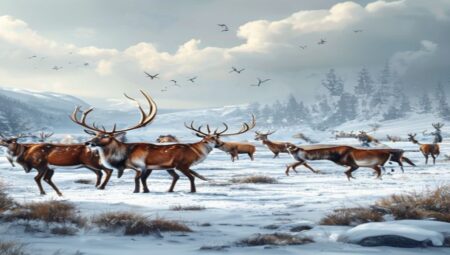
Frequent winter rainfall followed by rapid freezing creates dense ice layers that reindeer cannot penetrate with their hooves. These rain-on-snow events trap lichen beneath impenetrable crusts, leading to mass starvation and herd mortality. Ice formation also increases the energy expenditure required for reindeer to dig for food, resulting in weakened immune systems, lower calf survival rates, and reduced breeding success. Herders report that historical ice patterns no longer align with contemporary weather data, making traditional forecasting methods increasingly unreliable.
Disrupted Migration Corridors and Habitat Fragmentation
Changing snowmelt timing forces herders to alter established migration routes, often crossing industrial zones, protected areas, or private lands. Infrastructure development, including wind farms, mining operations, and expanded road networks, further fragments grazing landscapes. The loss of contiguous tundra habitats reduces forage availability and increases human-wildlife conflicts, particularly with expanding predator populations that thrive in warmer conditions.
Socioeconomic Vulnerability and Cultural Erosion
The climate crisis exacerbates existing economic precarity within Sámi pastoral communities. Herding is a labor-intensive enterprise requiring significant capital investment in equipment, veterinary care, and transportation. When herd losses accelerate due to weather extremes, financial resilience diminishes rapidly. Many herders face mounting debt, forced land sales, or migration to urban centers, accelerating demographic decline in rural Arctic regions.
Cultural transmission suffers alongside economic instability. The intergenerational transfer of grazing knowledge, language use, and traditional governance structures relies on active participation in herd management. When younger generations cannot sustain viable livelihoods, cultural practices atrophy, leading to a gradual loss of indigenous ecological expertise that has maintained Arctic landscapes for millennia.
Legal Marginalization and Territorial Restrictions
Sámi herders operate within complex legal frameworks that often prioritize state conservation goals or industrial development over pastoral land rights. Grazing permits are frequently contested, and traditional migration paths lack formal protection under national legislation. This regulatory gap leaves herders vulnerable to sudden land-use changes, restricted access to historical pastures, and limited participation in regional climate adaptation planning.
Adaptive Strategies and Indigenous Climate Resilience
Sámi communities are implementing innovative adaptation measures to counter climate-driven pastoral instability. Herders combine traditional ecological knowledge with modern meteorological data, GPS tracking, and satellite imagery to monitor grazing conditions in real time. Some groups have shifted to smaller, more mobile herd structures, diversified income sources through ecotourism and handicraft enterprises, and established community-led weather monitoring networks.
Collaborative research initiatives between Sámi institutions and climate scientists are developing predictive models that integrate indigenous forecasting with empirical data. These hybrid approaches improve early warning systems for ice formation events and optimize seasonal grazing allocations. Cross-border cooperation among Sámi organizations in Norway, Sweden, Finland, and Russia facilitates knowledge exchange and strengthens collective advocacy for land tenure security.
Policy Integration and Sustainable Pastoral Governance
Effective climate adaptation requires recognizing pastoral herding as a form of sustainable land management rather than a relic of the past. Integrating Sámi grazing practices into regional biodiversity conservation plans enhances ecosystem
Frequently Asked Questions
What is Arctic Climate Challenges for Sami Herders?
Arctic climate challenges for Sami herders refer to the severe environmental changes in the Arctic region, such as rising temperatures, unpredictable snowfall, ice formation, and altered vegetation patterns, which disrupt traditional reindeer herding practices and threaten the cultural and economic livelihood of the Sami people.
Key facts about Arctic Climate Challenges for Sami Herders
Key facts include: rapid Arctic warming is occurring at twice the global average, leading to more frequent rain-on-snow events that create ice layers reindeer cannot penetrate; traditional migration routes are being fragmented by industrial development and climate shifts; and the Sami herders are adapting through modern technology while advocating for indigenous land rights and climate resilience policies.