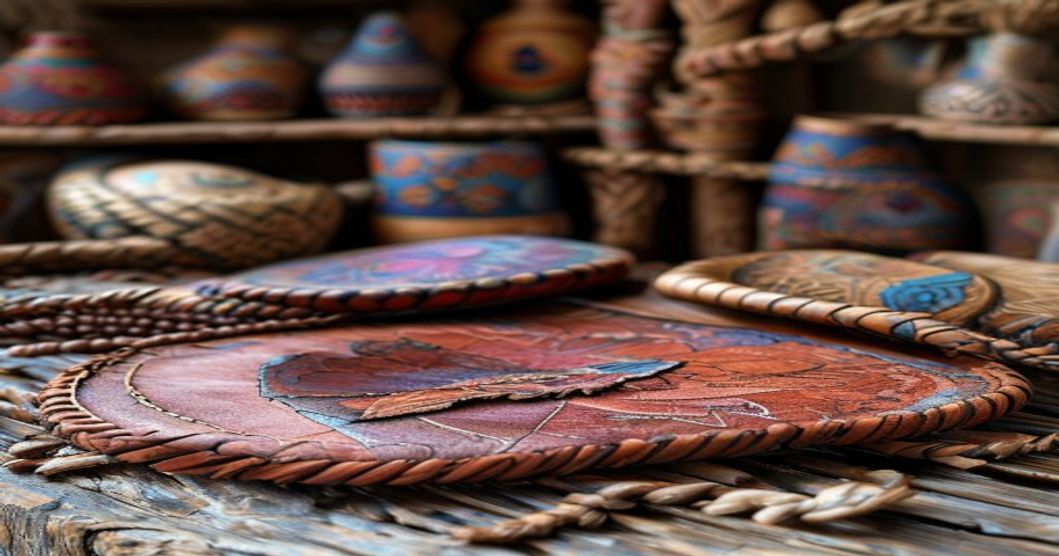
Historical Roots of Sami Leatherwork
The tradition of handmade Sami leather crafts traces back over a millennium to the indigenous Sámi people across Fennoscandia. Unlike mass-produced Nordic textiles, authentic Sámi leatherwork was never merely decorative; it served as essential survival gear in subarctic climates. Early artisans utilized reindeer antler needles, sinew thread, and bone awls to construct garments that regulated body temperature while resisting moisture. Archaeological findings from 10th-century burial sites in Lapland confirm the presence of intricately stitched leather footwear and belt systems, demonstrating that traditional Scandinavian craftsmanship evolved alongside reindeer domestication.
Reindeer as the Foundation
The selection of raw materials dictated every stage of production. Sámi herders prioritized hides from spring-calved calves, whose fine grain and supple texture required minimal processing. The belly leather offered exceptional flexibility for hand-stitching techniques, while shoulder and thigh sections provided durable reinforcement for load-bearing gear. Each animal yielded approximately 12 to 15 distinct hide components, carefully cataloged by thickness and pore structure. This systematic resource management ensured zero waste, establishing a sustainable model that predates modern circular economy principles.
Ancient Techniques and Tools
Pre-industrial Sámi leathercraft relied on friction-based tools rather than metal implements. Artisans carved wooden stretching frames to tension hides during scraping, while polished river stones removed residual epidermal layers. The signature double-needle lacing method—where a single thread passes through opposite holes without knotting—created seamless joints that flexed with movement. Heat-molding techniques involved pressing damp leather against heated stone slabs, allowing precise contouring for knee guards and saddle components. These methods required years of tactile apprenticeship, preserving oral transmission of mechanical knowledge.
Materials and Preparation Process
Authentic Nordic heritage leatherwork demands rigorous preparation before any design application begins. Modern commercial tanning replaces historical practices that relied entirely on biological and chemical processes native to the region. Sámi processors traditionally employed brain-tanning, where crushed reindeer brains containing natural enzymes broke down collagen fibers. This method yielded exceptionally breathable material that stiffened upon drying but softened through immediate manual manipulation.
Tanning and Softening Methods
The curing phase involved smoking hides over bog-wood fires for 48 to 72 hours, introducing phenolic compounds that prevented microbial degradation. Artisans then subjected the material to rigorous stretching cycles using wooden clamps and weighted ropes. Chemical softening occurred through repeated application of fermented lichen extracts and seal oil, which penetrated deep into the dermal matrix. Each batch underwent a 14-day conditioning period where temperature fluctuations naturally aligned fiber orientation, producing leather that resisted cracking at -30°C temperatures.
Natural Dyes and Pigments
Historical Sámi coloration techniques excluded synthetic compounds entirely. Blue hues derived from fermented bilberry leaves and copper-rich soil extracts, while yellow tones came from birch bark tannins concentrated through slow evaporation. Red pigments required mixing dried cloudberry roots with alum mordants fixed in reindeer urine. The resulting color palette remained earth-bound, shifting subtly with humidity levels. Modern authentic workshops still harvest these botanicals seasonally, maintaining chromatographic consistency across generations of handmade Sami leather crafts.
Iconic Designs and Symbolism
The visual language of indigenous Nordic art operates through strict geometric protocols rather than freeform expression. Sámi designers mapped patterns onto grids derived from reindeer antler measurements, ensuring mathematical precision across all components. Symmetrical motifs radiate from central axes, representing celestial navigation routes used during seasonal migrations. The absence of representational imagery aligns with traditional spiritual frameworks that avoided depicting living forms.
Geometric Patterns and Spiritual Meaning
The concentric circle motif signifies the sun’s annual trajectory, while zigzag sequences encode avalanche paths and river drainage systems across northern landscapes. Cross-hatched fields denote reindeer migration corridors, with stitch density indicating historical grazing intensity. Triangular formations represent mountain peaks
Frequently Asked Questions
What is Handmade Sami Leather Crafts?
Handmade Sami Leather Crafts refers to traditional leather goods created by the indigenous Sami people of northern Scandinavia, known for their distinctive stitching, durable quality, and culturally significant designs passed down through generations.
Key facts about Handmade Sami Leather Crafts
Key facts include their use of locally sourced reindeer or cowhide, traditional vegetable-tanning methods, intricate hand-stitching techniques, cultural symbolism in patterns, and their recognition as authentic, sustainable artisan work from Nordic regions.