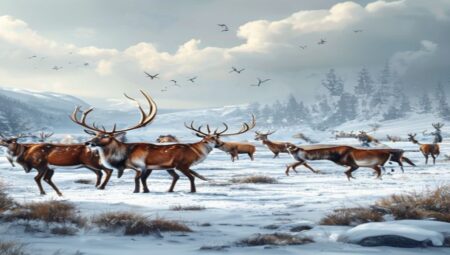
Arctic Reindeer Economy Explained
The Arctic reindeer economy operates as a highly specialized pastoral system deeply intertwined with indigenous livelihoods, ecological constraints, and regional trade networks. Historically sustained by the Sami in Scandinavia, Nenets in Siberia, and Ch
Historical Foundations of Indigenous Reindeer Herding
Reindeer domestication emerged millennia ago across the tundra and taiga zones of northern Eurasia, driven by indigenous communities adapting to some of the most extreme environments on Earth. Archaeological excavations in Finland and Siberia confirm that selective breeding began approximately two thousand years ago, gradually transforming wild Rangifer tarandus into manageable livestock. The Sámi people of Fennoscandia, the Nenets of western Siberia, and the Evenki and Chukchi across the Russian Far East developed distinct yet interconnected herding systems. These societies relied on reindeer not merely as a resource but as a foundational pillar of survival. Daily life revolved around precise seasonal migrations, guided by generations of observed ecological cues rather than written records. Herders tracked lichen growth patterns, snow depth, and insect activity to determine optimal grazing routes. Calf branding, antler marking, and vocal herding techniques formed the core of traditional management practices.
The reindeer provided meat, nutrient-rich blood, and marrow; hides were crafted into waterproof clothing, tents, and boots; antlers and bones served as tools and trade commodities. Economic exchange historically operated through barter networks stretching across vast distances, with reindeer products reaching markets in Scandinavia, Russia, and Central Asia. During the seventeenth to nineteenth centuries, state-chartered trading companies monopolized pelts and horns, integrating indigenous herders into global commodity chains while preserving traditional herd management protocols. Governance within herding communities followed kinship-based councils that regulated grazing territories, resolved disputes, and enforced seasonal movement schedules.
Colonial administration and later Soviet policies fundamentally disrupted these systems. Forced collectivization in the twentieth century imposed state-controlled herding quotas, restricted migration corridors, and mandated sedentary settlements. Despite these pressures, indigenous knowledge persisted through informal transmission and adaptive resilience. Modern reindeer economies still draw directly from these historical frameworks, where grazing rights, herd composition rules, and seasonal movement patterns remain rooted in centuries-old ecological understanding.
Core Economic Structures and Livelihood Networks
The Arctic reindeer economy operates on a foundation of seasonal pastoralism, where ecological rhythms dictate financial cycles. Herding communities do not treat reindeer as isolated livestock but as mobile capital that migrates across tundra and taiga biomes in response to forage availability and predator pressure. This movement generates a continuous flow of resources: fresh meat during autumn slaughter periods, winter pelts processed through cooperative tanneries, and antler harvests that feed regional craft markets and pharmacopeia industries. The economic architecture relies on decentralized decision-making, where family units manage herd composition while sharing grazing rights through customary land tenure systems.
- Direct extraction sectors include controlled culling programs aligned with population dynamics, ensuring sustainable yield without degrading pastureland carrying capacity.
- Processing and distribution networks connect remote herding camps to urban markets via cold-chain logistics, often coordinated through indigenous-owned cooperatives that retain profit margins within local economies.
- Service-based livelihoods emerge alongside primary production, encompassing reindeer-drawn transport for research expeditions, guided cultural tourism, and traditional skill transmission programs funded by regional development grants.
Livelihood networks extend beyond transactional exchanges to encompass reciprocal labor pooling, emergency herd-sharing during extreme weather events, and intergenerational knowledge transfer. Modern economic integration introduces commodity pricing volatility and regulatory compliance requirements, yet communities mitigate disruption through adaptive strategies like diversified income streams, blockchain-tracked supply chains for traceability, and cross-border trade agreements with neighboring pastoral regions. Policy frameworks increasingly recognize these structures as climate-resilient models, offering subsidies for carbon-sequestering grazing practices while preserving customary governance mechanisms that prevent corporate enclosure of migratory corridors.
Financial liquidity circulates through seasonal market peaks, winter fairs, and digital auction platforms that bypass traditional middlemen. Herders utilize micro-credit facilities calibrated to calving cycles rather than calendar years, reducing debt exposure during lean periods. The economic system remains tightly coupled with environmental indicators; snow depth measurements, lichen biomass assessments, and predator population counts directly inform production quotas and pricing strategies. This feedback loop ensures that livelihood networks adapt in real time, maintaining operational viability without externalized ecological costs.
Cultural Capital Versus Commercial Market Dynamics
Reindeer herding across Arctic regions functions as a foundational form of cultural capital, embedding generations of ecological knowledge, spiritual cosmology, and communal reciprocity into daily practice. Indigenous communities such as the Sámi, Nenets, and Evenki view reindeer not merely as livestock but as kin networks that sustain social identity, seasonal rhythms, and intergenerational transmission of pastoral skills. This cultural valuation operates outside conventional pricing mechanisms, relying instead on non-monetary exchange, shared labor, and ritual obligations that reinforce territorial stewardship and collective resilience against environmental volatility.
Commercial market dynamics introduce competing logics rooted in global commodity chains, profit maximization, and standardized production metrics. International demand for reindeer meat, leather, antler derivatives, and eco-tourism has driven the sector toward industrial scaling, mechanized transport, and contract farming models. Market integration demands predictable supply volumes, health certifications, and logistical efficiency, which frequently conflict with traditional migration routes, herd rotation schedules, and decentralized decision-making structures. External capital inflows often prioritize yield optimization over ecological carrying capacity, accelerating pasture degradation and fragmenting ancestral grazing corridors.
- Pastoralist Rationality vs. Capital Accumulation: Traditional herding prioritizes herd health, biodiversity maintenance, and risk dispersion across vast territories. Commercial models concentrate capital to maximize output per unit of labor, often leading to overgrazing and loss of adaptive grazing diversity.
- Value Chain Capture: Indigenous cooperatives increasingly leverage cultural authenticity to secure premium pricing through organic certification, geographic indication labels, and direct-to-consumer channels. These strategies retain economic value within herding communities while marginalizing middlemen and export-focused aggregators.
- Policy Mediation: Co-management frameworks in Scandinavia and Siberia attempt to align state subsidies with cultural continuity, yet funding mechanisms frequently favor commercial scalability over small-scale traditional operations, creating structural disincentives for heritage-based practices.
The intersection of cultural capital and market forces produces hybrid economic arrangements where tradition is strategically mobilized as a competitive advantage rather than passively preserved. Communities that successfully navigate this terrain utilize cultural branding to access niche markets, reinvest profits into youth training programs, and lobby for land-use protections that recognize customary grazing rights. Conversely, regions dominated by extractive contracting lose pastoral autonomy, converting herders into wage laborers within corporate supply chains. Sustaining Arctic reindeer economies requires recognizing cultural capital as an economic asset in its own right, structuring market access to reinforce rather than erode the ecological and social foundations of traditional herding.
Valuation Chains for Meat, Antlers, Fur, and Dairy Products
The economic framework surrounding arctic reindeer relies on a highly segmented valuation chain that transforms raw biological assets into specialized commercial goods. Meat valuation begins with strict grading protocols focusing on age, fat distribution, and lean-to-fat ratio. Traditional herding communities prioritize older bulls for their dense muscle fiber, which commands premium pricing in high-end culinary markets, while younger animals are processed for ground meat or smoked products where shelf-life extension increases margin. Processing facilities apply cold-chain logistics to preserve marbling quality, directly influencing wholesale contracts with European and North American distributors.
Antlers represent the most lucrative secondary asset due to their regenerative nature and specific biomedical demand. Valuation hinges on velvet stage timing, symmetry, and bone density. Harvesters monitor growth cycles to cut during peak vascular activity, ensuring maximum glycosaminoglycan concentration. Buyers assess quality through weight per inch and structural integrity, with specialized extractors converting raw velvet into tinctures and joint supplements. The price differential between unprocessed antlers and refined peptide isolates demonstrates a clear value-add trajectory along the supply chain.
- Fur Valuation: Pelt grading depends on winter coat density, underwool thickness, and absence of seasonal wear. Artisan textile manufacturers pay premiums for intact hides, while furriers discount pieces with natural abrasion marks. Traditional tanning methods preserve insulating properties, maintaining resale value in cold-weather apparel markets.
- Dairy Products: Reindeer milk commands exceptional pricing due to its 22–25% fat content, which exceeds cow and goat milk by triple digits. Producers isolate colostrum-rich first lactations for infant nutrition markets, while standard milk undergoes microfiltration to retain bioactive proteins. Processing yields directly impact wholesale rates, with concentrated butter and specialized cheeses fetching premium margins in functional food sectors.
Each commodity follows distinct pricing matrices shaped by extraction timing, processing complexity, and regulatory compliance. Supply chain transparency, including genetic tracking and sustainable harvest certification, increasingly dictates final valuation tiers across global procurement networks.
Climate Shifts and Pasture Degradation Pressures
The Arctic reindeer economy operates within a highly specialized ecological framework that depends entirely on seasonal tundra vegetation cycles. Climate-driven alterations to these cycles trigger cascading effects across grazing lands, food security, and regional livelihood structures. Rising temperatures accelerate permafrost thaw, which destabilizes soil composition and shifts plant community dominance from nutrient-dense lichens to shrub-dominated or waterlogged grasslands. This botanical transition directly reduces forage quality available during critical winter months.
Rain-on-snow events have intensified across northern latitudes, forming impermeable ice layers that seal access to lichen pastures. Reindeer cannot break through these crusts without expending lethal amounts of energy, leading to mass starvation during prolonged cold snaps. Historical herding calendars no longer align with current phenological shifts, forcing migration routes into ecologically fragile zones where predator density and human infrastructure create additional mortality risks.
- Lichen biomass decline reduces winter survival rates by up to 40% in vulnerable herds
- Altered precipitation patterns disrupt grazing windows and increase calf mortality during calving seasons
- Infrastructure encroachment fragments traditional pastures, limiting genetic diversity and herd resilience
Economic sustainability for indigenous pastoral communities now requires continuous adaptation. Traditional knowledge systems are being integrated with satellite monitoring and weather forecasting to optimize grazing rotations. However, market volatility combined with declining pasture carrying capacity creates compounding financial stress.
Government Subsidies, Quota Systems, and Sustainable Management
State interventions form the structural foundation of Arctic reindeer husbandry across Fennoscandia and Svalbard. Direct financial mechanisms stabilize herding operations against volatile market conditions and extreme environmental variables. Targeted grants cover critical infrastructure maintenance, including winter pasture development, migration corridor fencing, and veterinary supply chains. Operational subsidies offset emergency feed procurement during prolonged snowpack events that disrupt natural lichen accessibility. Tax relief programs reduce administrative overhead for cross-border cooperatives managing traditional grazing routes. These fiscal instruments prevent economic collapse in remote settlements where commercial viability rarely aligns with ecological carrying capacity.
Population control operates through strictly enforced quota frameworks. Annual harvest limits derive from satellite telemetry, aerial biomass surveys, and multi-generational mortality records. Regional management councils allocate specific extraction numbers to individual herders based on pasture degradation indices and herd demographic projections.
- Internal quota trading mechanisms enable efficient resource redistribution without breaching biological thresholds.
- Unauthorized harvesting triggers immediate license suspension and progressive financial penalties.
- The quota architecture directly correlates with lichen regeneration cycles and overwinter survival rates, prioritizing long-term ecological stability over short-term yield maximization.
Digital ledger systems now verify compliance through secure transaction logs, eliminating manual reporting errors and accelerating subsidy disbursement timelines.
Long-term viability demands integrating indigenous monitoring practices with contemporary ecological modeling. Experienced herders interpret snow crust formation, wind exposure gradients, and predator movement patterns to adjust grazing schedules dynamically. Modern policy frameworks incorporate climate adaptation protocols that progressively shift pasture allocations toward higher latitudes as thermal zones migrate northward. Collaborative tracking networks monitor parasite loads, nutritional deficits, and habitat fragmentation using real-time biological indicators. Regulatory adjustments respond to multi-decade data series rather than seasonal market fluctuations. This integrated management approach preserves cultural continuity while maintaining herd health above critical metabolic thresholds. Economic resilience emerges from balancing direct fiscal support, precise biological limits, and adaptive ecological stewardship across fragile Arctic ecosystems.
Digital Tracking Technologies and Herder Data Ecosystems
Modern reindeer pastoralism relies on satellite-linked GPS collars and IoT-enabled bio-sensors to map herd movements across subarctic terrain. These devices transmit geospatial coordinates at intervals calibrated for battery efficiency and signal penetration through dense boreal canopies or snowpack. Herders access incoming telemetry via mobile dashboards that render heat maps, elevation profiles, and behavioral indicators such as rumination frequency and step count. The continuous data stream replaces seasonal visual surveys with millimeter-level precision, enabling real-time intervention when animals deviate from designated grazing corridors.
- Edge computing modules preprocess raw accelerometer and temperature readings before cloud ingestion, reducing bandwidth requirements in regions with intermittent cellular coverage.
- API integrations connect tracking platforms to municipal land-use registries, allowing automatic conflict resolution between pastoral routes and resource extraction permits.
- Predictive grazing models analyze historical migration corridors alongside satellite vegetation indices to forecast forage availability weeks ahead of seasonal shifts.
Data aggregation transforms isolated telemetry streams into structured herder ecosystems. Pastoral cooperatives normalize location timestamps, health metrics, and calving records into standardized schemas that feed municipal agricultural databases and cross-border reindeer management authorities. This interoperability streamlines subsidy verification, insurance risk assessment, and carbon credit calculations tied to traditional grazing practices. Herders leverage exported datasets to model pasture regeneration rates, optimize rotational strategies, and negotiate premium pricing for traceable, ethically managed meat products.
- Cloud storage architectures employ geofenced data retention policies that comply with indigenous knowledge sovereignty frameworks while maintaining audit trails for regulatory bodies.
- Machine learning models cross-reference animal biometrics with meteorological forecasts to predict frostbite risks and adjust feeding schedules during polar night periods.
- Digital twin simulations replicate entire herd dynamics, allowing herders to test grazing interventions virtually before deploying physical resources across fragile tundra ecosystems.
Infrastructure gaps remain a critical bottleneck. Cold-resistant hardware requires specialized maintenance protocols, and remote base stations depend on solar microgrids or wind turbines to sustain continuous operation. Herder training programs now integrate GIS literacy, data validation techniques, and cybersecurity practices to prevent unauthorized access to location streams. Open-data initiatives encourage cross-regional benchmarking, where successful tracking methodologies from Sápmi inform scalable deployments across Nordic and Siberian pastoral communities. The convergence of precision telemetry and indigenous ecological knowledge establishes a resilient economic foundation that adapts to accelerating climate volatility while preserving centuries-old husbandry traditions.
Emerging Export Markets and Global Demand Shifts
International trade patterns surrounding reindeer-derived commodities have fundamentally restructured over the past decade, driven by evolving consumer preferences and strategic market positioning. Traditional regional consumption has expanded into high-value European, East Asian, and North American sectors, where premium positioning relies heavily on ecological authenticity and traceable supply chains. Northern European exporters now prioritize certified organic meat lines and ethically harvested antler products, aligning with stringent import regulations in the European Union and Japan. Simultaneously, Scandinavian and Sámi cooperatives have established direct distribution networks bypassing conventional agricultural intermediaries, enabling faster margin retention and stronger brand control.
Product diversification serves as a primary catalyst for market expansion. Reindeer meat commands premium pricing in gourmet and health-focused retail segments due to its naturally low fat content, high iron concentration, and absence of antibiotic residues. Antler velvet has gained traction within the wellness and cosmetic industries, supplying raw materials for peptide extraction and anti-aging formulations. Hides processed through traditional tanning methods now meet luxury fashion house specifications, while reindeer dairy products—though niche—appear in specialized functional food markets across Scandinavia and parts of North America. Each category requires distinct export documentation, cold-chain logistics, and compliance with veterinary health standards, creating a highly specialized trade ecosystem.
Consumer behavior shifts underpin these commercial developments. Ethical procurement guidelines, carbon footprint transparency, and indigenous rights alignment now dictate purchasing decisions among B2B buyers and conscious retail consumers. Export markets increasingly demand verifiable sustainability metrics, prompting Arctic producers to adopt blockchain-enabled traceability platforms and third-party audits. This structural transition has redistributed economic benefits toward remote communities, reducing reliance on state subsidies while fostering regional entrepreneurship in processing, certification consulting, and cross-border logistics. Supply chain resilience remains critical, as climate variability and shifting migration routes necessitate adaptive harvesting schedules and flexible inventory management. Long-term market stability will depend on continued investment in cold-storage infrastructure, digital export platforms, and international trade agreements that recognize indigenous knowledge systems as legitimate commercial assets.
Economic Resilience Strategies for Future Arctic Pastoralism
Arctic pastoral communities confront compounding pressures from shifting permafrost boundaries, fragmented migration corridors, and unpredictable livestock pricing. Sustainable economic frameworks demand a departure from isolated subsistence models toward integrated, climate-adaptive systems. Diversification serves as the primary defense mechanism. Herding households must systematically combine reindeer meat and hide production with on-site processing facilities, low-impact eco-tourism operations, and direct digital sales channels that eliminate traditional middlemen. Cooperative ownership models amplify collective bargaining strength, enabling pooled investments for veterinary infrastructure, mechanized transport fleets, and winter emergency feed reserves.
Operational efficiency relies heavily on precision monitoring tools. GPS tracking collars, aerial drone surveillance, and satellite vegetation mapping optimize grazing rotations while preventing soil degradation across sensitive tundra zones. Transparent supply chain protocols using distributed ledger technology verify product origin, ensuring compliance with rigorous food safety regulations in premium international markets. These systems convert ancestral ecological knowledge into auditable data, attracting institutional investment and strategic partnerships.
- Land tenure security unlocks access to climate adaptation grants, biodiversity credits, and regenerative agriculture subsidies.
- Seasonal financial instruments prevent debt accumulation during low-calving years through tailored micro-loans and cash flow smoothing mechanisms.
- Cross-regional knowledge networks facilitate rapid dissemination of veterinary breakthroughs and pasture recovery techniques among indigenous herding groups.
- Geographical indication protections expand export margins while enforcing strict ecological carrying limits on grazing territories.
Cultural preservation operates as a direct economic multiplier when structured through community-led enterprises. Artisanal manufacturing, language revitalization workshops, and heritage-driven tourism generate stable off-season revenues that buffer against veterinary losses or market volatility. Long-term viability depends on aligning traditional ecological principles with modern financial architecture, ensuring pastoral economies thrive without exceeding environmental thresholds.
“`html
Frequently Asked Questions
What is Arctic Reindeer Economy Explained?
The Arctic Reindeer Economy refers to the unique economic system sustained by indigenous communities in Arctic regions, primarily centered around reindeer herding. This livelihood supports not only food security and clothing but also trade networks across northern Russia, Scandinavia, Mongolia, and parts of North America. Reindeer provide meat, milk, hides, antlers, and transportation, forming the backbone of subsistence and commercial economies in some of the world’s most remote and harsh environments.
Key facts about Arctic Reindeer Economy Explained
- There are approximately 3 million reindeer and caribou worldwide, with the majority managed by indigenous peoples in the Arctic and sub-Arctic regions.
- The Nenets people of Siberia manage the largest semi-nomadic reindeer herds on Earth, numbering over half a million animals.
- In Norway, Sweden, and Finland, Saami reindeer herders receive government subsidies and operate under regulated grazing districts.
- Reindeer meat is low in fat and high in protein, making it a prized export commodity from Arctic regions to global markets.
- The value of the Arctic reindeer economy extends beyond direct sales to include ecotourism, cultural heritage preservation, and sustainable land management practices.
- Climate change poses a severe threat to the Arctic Reindeer Economy through unpredictable ice layers that block reindeer from accessing lichen, their primary winter food source.
“`