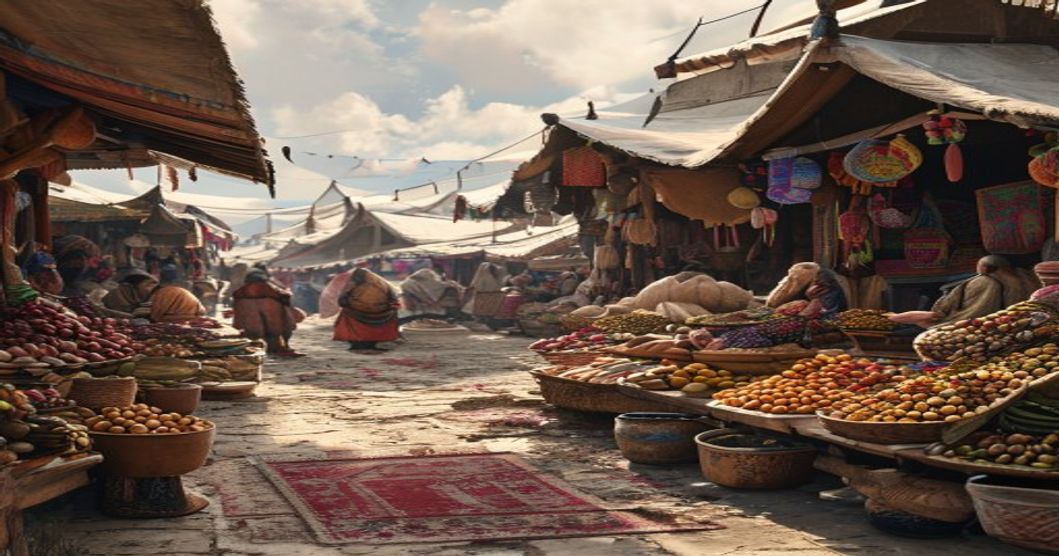
Geographic Foundations of Ancient Semitic Commerce
Crossroads of Continents and Arid Corridors
The traditional Semitic trade networks originated at the geographic intersection of Africa, Asia, and Europe, where desert plateaus and seasonal rain belts dictated commercial viability. Ancient merchants exploited the predictable migration of nomadic pastoralists to establish fixed caravan stops along the Arabian Desert and Syrian steppe. These arid transit zones required specialized logistical planning, including water well maintenance, camel breeding programs, and tribal alliance contracts that guaranteed safe passage across sovereign territories.
River Valleys and Coastal Entrepôts
Semitic commercial expansion relied heavily on the Tigris-Euphrates fluvial system and the Mediterranean littoral, where riverine barges merged with maritime vessels to move bulk commodities. Coastal cities such as Ugarit, Byblos, and Dhofar functioned as critical transshipment hubs, enabling Indian Ocean spice carriers to interface with inland desert traders. The synchronization of monsoon wind patterns and seasonal river flooding allowed merchants to minimize transit times and maximize cargo turnover across Bronze Age economies.
Caravan Networks and the Incense Route Dynasty
Qedarite and Nabatean Trading Empires
The Qedarite confederation dominated early first-millennium caravan commerce, controlling vast stretches of the Syrian Desert and securing tribute from pastoral clans. Later, the Nabateans engineered a sophisticated commercial dynasty by capitalizing on Petra’s strategic position between the Red Sea and Dead Sea routes. These empires monopolized high-margin luxury goods through centralized warehousing, toll collection systems, and diplomatic marriages that cemented cross-cultural trade agreements.
Logistics of Desert Commerce
Desert merchant caravans operated on strict seasonal calendars, departing during cooler months to avoid thermal exhaustion and sandstorms. Guides utilized celestial navigation, dune topography, and subterranean aquifer markers to maintain directional accuracy across featureless terrain. Caravan leadership required mastery of animal husbandry, supply rationing, and emergency water extraction techniques, ensuring that hundreds of camels could sustain multi-month expeditions without catastrophic loss ratios.
Commodities that Shaped Ancient Economies
Frankincense, Myrrh, and Luxury Resins
The incense trade formed the economic backbone of Semitic commerce, with Boswellia and Commiphora resins harvested from southern Arabian highlands commanding prices equivalent to silver in Mediterranean markets. Religious institutions across Egypt, Greece, and Rome depended on consistent resin supply for temple rituals, embalming processes, and aromatic medicine. Harvesting required precise tapping techniques, seasonal resin flow monitoring, and controlled combustion protocols to preserve chemical potency during long-distance transport.
Spices, Textiles, and Precious Metals
Semitic merchants facilitated the exchange of black pepper, cinnamon, frankincense derivatives, and Arabian horses alongside Levantine purple-dyed wool and Mesopotamian copper ingots. Trade caravans carried standardized luxury textiles treated with natron and mineral pigments, which functioned as both consumer goods and de facto currency in barter economies. Precious metal flows moved in the opposite direction, with Arabian gold and Ethiopian silver financing temple construction and royal treasuries across Near Eastern polities.
Cultural Exchange Through Mercantile Networks
Linguistic Diffusion and Script Development
Commercial necessity accelerated the standardization of Aramaic and Phoenician scripts, transforming regional dialects into administrative languages that crossed tribal boundaries. Merchants required uniform writing systems for contract documentation, tariff records, and correspondence across distant trading posts. The adaptation of cuneiform accounting methods to linear alphabetic notation enabled faster transaction processing and reduced disputes over cargo quantities or delivery terms.
Religious Syncretism and Trade Patronage
Semitic merchant guilds frequently sponsored localized deities associated with crossroads, wealth, and safe passage, embedding commercial practices within religious frameworks. Pilgrimage routes overlapped with trade corridors, allowing merchants to operate under divine protection while collecting tolls from pilgrim caravans. Temple economies managed surplus grain, oil, and incense, functioning as early financial institutions that extended credit to traveling traders and insured high-value shipments against desert hazards.
Economic Systems and Commercial Innovations
Barter Mechanisms and Early Credit Instruments
Before widespread coinage, Semitic commercial transactions relied on weighed commodity exchange, where silver shekels served as standardized value benchmarks. Merchants utilized clay accounting tablets to track deferred payments, partnership profits, and livestock leases. The development of written credit ledgers enabled distant trading partners to settle accounts through temple intermediaries or designated market agents, reducing the need for heavy metal transport across hostile territories.
Standardization of Weights, Measures, and Currency
Trade reliability depended on uniform measurement systems, with royal administrations enforcing standardized scales, volume containers, and distance markers along major highways. Temple treasuries and palace granaries calibrated merchant weights to official standards, penalizing tampering with severe commercial penalties. The gradual transition from weighed bullion to struck coinage accelerated under Hellenistic influence, but Semitic merchants retained barter flexibility for bulk agricultural exports and pastoral livestock exchanges.
Archaeological Evidence and Historical Records
Ugaritic Archives and Clay Tablet Ledgers
The Ugaritic commercial archives provide definitive documentation of first-millennium trade operations, revealing detailed inventories of textile shipments, copper ingots, and resin exports. Administrative scribes recorded vessel manifests, customs duties, and diplomatic gift exchanges using bilingual cuneiform and alphabetic scripts. These clay tablets demonstrate complex supply chain management, including insurance clauses, force majeure provisions, and multi-port routing strategies.
Rock Inscriptions and Nabatean Trail Markers
Desert trade routes remain visible through Nabatean petroglyphs, waystation foundations, and carved water cisterns that guided caravans across hyper-arid zones. Trade markers indicated safe passage windows, tribal jurisdiction boundaries, and toll collection points for merchant guilds. Epigraphic evidence confirms the existence of regulated caravan stops equipped with storage granaries, animal stables, and secure vaults for high-value merchandise.
Legacy of Semitic Commerce in Modern Trade Heritage
Preserved Market Architectures and Caravanserais
Historic Semitic trading settlements evolved into permanent urban centers where souq layouts, vaulted merchant quarters, and central courtyard warehouses reflect ancient commercial zoning. Caravanserai foundations demonstrate standardized architectural templates designed for seasonal merchant gatherings, animal rest periods, and secure cargo storage. Modern restoration projects preserve these structures as tangible records of transregional exchange networks.
Continuity of Regional Economic Traditions
Contemporary Middle Eastern market practices retain operational principles established by traditional Semitic merchants, including negotiated pricing models, guild-based quality certification, and seasonal festival commerce. The cultural emphasis on trust-based contracts, verbal agreements reinforced by communal witness, and merchant hospitality norms persists in regional business etiquette. Heritage preservation initiatives document these living traditions as integral components of global commercial history.
“`html
Frequently Asked Questions About Traditional Sami Markets and Trade
What is Traditional Sami Markets and Trade?
Traditional Sami Markets and Trade refer to the indigenous exchange systems historically practiced by the Sámi people across the northern regions of Norway, Sweden, Finland, and Russia. These markets were central to Sámi economic life, enabling the trade of reindeer products, handicrafts known as duodji, furs, and other goods. Trade routes connected Sámi communities with neighboring Norwegian, Swedish, Finnish, and Russian settlers, creating a unique cross-cultural commercial network that persisted for centuries. The Sami relied on seasonal migrations and established trading fairs where they exchanged reindeer meat, antlers, skins, and handmade items for grain, metal tools, and other essentials.
Key facts about Traditional Sami Markets and Trade
Here are the key facts about Traditional Sami Markets and Trade:
1. The Sámi people have practiced trade for thousands of years, long before the establishment of modern nation-states in Scandinavia.
2. Reindeer herding was the economic backbone of Sámi trade, with reindeer products forming the primary commodities exchanged at markets.
3. Seasonal trading fairs, such as the Kautokeino Fair in Norway, became iconic gathering points where Sámi and non-Sámi traders met.
4. The Sámi developed a distinct handicraft tradition called duodji, which remains a vital part of their cultural and commercial identity today.
5. Cross-border trade routes connected the Sámi across what are now four countries, demonstrating a sophisticated understanding of regional geography and commerce.
6. Historical trade was conducted through barter systems before currency became widespread, with reindeer skins and antlers often serving as a de facto currency.
7. Colonial policies in the 18th and 19th centuries increasingly restricted Sámi trade rights, though the Sámi have worked to preserve and revive these traditions.
8. Today, traditional Sámi markets continue to operate, blending cultural heritage with modern tourism and craft economies.
“`