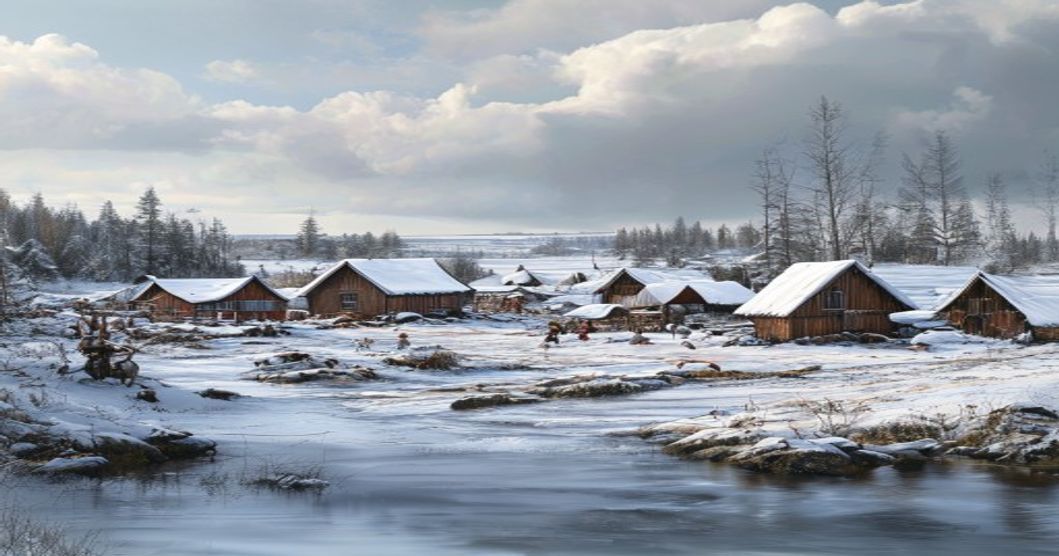
Historical Origins and Geographic Distribution
The Sami people represent the only indigenous population officially recognized within Sweden, with ancestral ties tracing back over ten millennia across the Fennoscandian tundra and boreal forest regions. Historically classified as a single ethnic group, anthropological research confirms the existence of multiple distinct Sami communities, each maintaining unique dialects and subsistence strategies adapted to northern latitudes.
Ancient Roots and Reindeer Nomadism
Archaeological excavations in Lapland reveal that early Sami societies developed sophisticated reindeer herding systems alongside hunting, trapping, and inland fishing. The domestication of Rangifer tarandus enabled seasonal migration patterns that optimized resource extraction across vast ecological zones. Historical records from the 13th century document Sami tribute obligations to Norwegian, Swedish, and Russian monarchies, establishing early frameworks for indigenous taxation and territorial boundaries.
Modern Settlement Patterns Across Lapland
Contemporary Sami communities concentrate in four primary regions of northern Sweden: Norrbotten County, Jämtland Province, Västerbotten District, and the mountainous border zones with Norway. Municipalities such as Jokkmokk, Gällivare, Kiruna, and Arjeplog host active Sami administrative centers, cultural institutions, and educational facilities. The demographic composition reflects centuries of assimilation policies, migration, and recent revitalization movements that have stabilized indigenous population estimates at approximately 50,000 individuals within Swedish borders.
Core Cultural Elements and Artistic Expression
Sami cultural identity operates through interconnected linguistic, musical, and material traditions that distinguish it from surrounding Scandinavian populations. The preservation of these elements requires continuous community transmission rather than institutional conservation.
Language Families and Oral Traditions
The Sami language family comprises twelve recognized dialects, with Northern Sami serving as the primary literary and administrative standard in Sweden. Grammatical structures utilize extensive case systems and agglutinative morphology to describe environmental conditions, reindeer behavior, and seasonal transformations. Oral literature preserves genealogical records, ecological knowledge, and cosmological narratives through structured storytelling formats that prioritize mnemonic precision over written documentation.
Traditional Joik Music and Duodji Craftsmanship
Joik represents a foundational musical tradition characterized by melodic contouring rather than lyrical narration. Each traditional joik functions as an auditory representation of a person, landscape, or animal species, requiring precise vocal technique and emotional authenticity. Complementing this auditory art form is Duodji, the regulated craft system encompassing knitting, weaving, leatherworking, and silver smithing. Traditional garments utilize specific color symbolism, geometric patterns, and regional stitching techniques that communicate tribal affiliation, marital status, and economic standing.
Livelihoods and Ecological Knowledge
Traditional Sami economies operate on principles of rotational resource management and intergenerational ecological monitoring. Modern legal frameworks now recognize these practices as professional agricultural systems rather than historical curiosities.
Reindeer Herding as a Regulated Profession
Sweden recognizes approximately 2,500 active reindeer herders organized into 162 Sami herding districts (Samebyar). Each district operates under the Reindeer Herding Act of 1971, which grants exclusive grazing rights to registered herding communities. Management protocols dictate seasonal migration routes, calf branding schedules, and slaughter quotas based on carrying capacity assessments. Herders utilize advanced GPS tracking combined with centuries-old snow reading techniques to monitor herd health across alpine and forest terrain.
Sustainable Forestry, Fishing, and Foraging Practices
Beyond pastoralism, Sami communities maintain licensed rights for blueberry harvesting, cloud berry collection, medicinal plant gathering, and regulated fishing in northern river systems. These activities follow strict seasonal calendars that prevent soil compaction, protect spawning grounds, and maintain my
Frequently Asked Questions
What is Sami Communities in Northern Sweden Explained?
This topic explores the indigenous Sami people, their traditional territories, cultural practices, and contemporary life within the northern regions of Sweden. It covers their historical reindeer herding traditions, language preservation efforts, political representation, and how modern Swedish policies intersect with their indigenous rights.
Key facts about Sami Communities in Northern Sweden Explained
The Sami are the only officially recognized indigenous people in the European Union, with a population of approximately 80,000 worldwide, a significant portion residing in northern Sweden. They are divided into several distinct groups, including the Lule Sami and Southern Sami, each with unique dialects and customs. Reindeer herding remains a central economic and cultural activity, protected by the Swedish Reindeer Herding Act. The Sami Parliament in Sweden plays a crucial role in advising the government on Sami-related matters, and their culture is increasingly visible in modern Swedish media, education, and tourism.