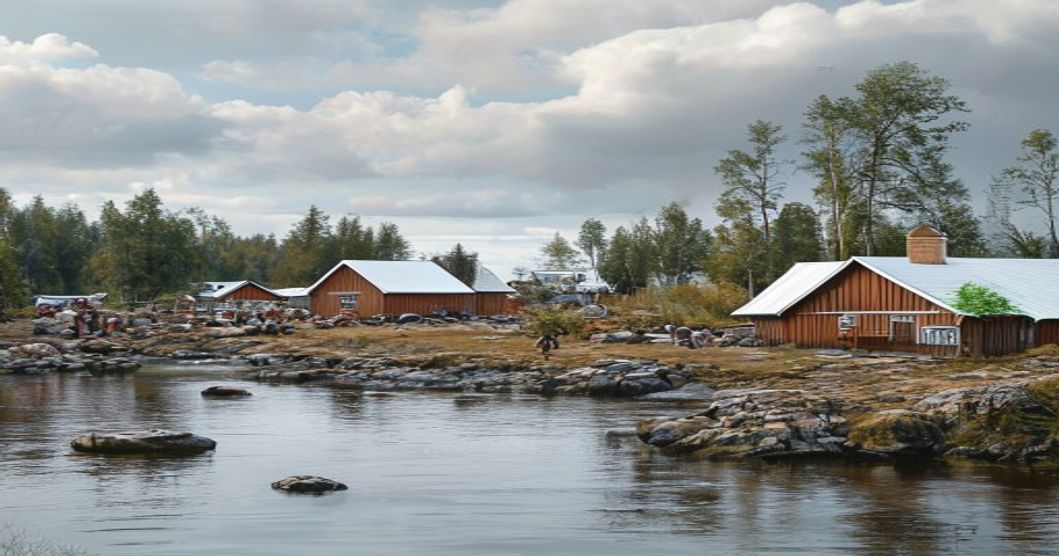
Sami Communities in Sweden and Finland: Geographic and Historical Foundations
The Sámi homeland, recognized as Sápmi, spans the northern territories of Sweden and Finland, characterized by boreal forests, alpine tundra, and extensive river systems that function as natural migration corridors. In Sweden, indigenous settlements concentrate within Norrbotten County, particularly across Kiruna, Gällivare, Jokkmokk, and Arjeplog municipalities. Finnish Sámi populations reside primarily in Lapland, including Enontekiö, Utsjoki, Inari, and Sodankylä. These regions experience subarctic climate patterns with extreme photoperiod variations, conditions that historically dictated seasonal resource utilization and ecological monitoring practices.
Historical frameworks governing Sámi territories emerged through a series of state interventions beginning in the 17th century. Sweden’s Lapp Code of 1673 initially formalized grazing boundaries while establishing taxation mechanisms that gradually restricted mobility. Finland adopted comparable administrative structures following independence, integrating Sámi communities into national forestry and mining regulations. The late 19th and early 20th centuries introduced aggressive assimilation policies, including residential schools that prohibited Sami language instruction and discouraged reindeer husbandry in favor of sedentary agriculture. These measures disrupted intergenerational knowledge transfer and fragmented traditional land management systems.
- Geographic distribution aligns with the Scandinavian Mountains and northern boreal zones, where topography determines seasonal grazing routes and fishing locations.
- Historical governance transitioned from customary pastoral rights to state-controlled land allocation, creating legal precedents that continue influencing modern resource extraction disputes.
- Institutional recognition began accelerating during the 1970s through language preservation initiatives and the eventual establishment of representative bodies in both countries.
Legal and political structures underwent significant restructuring during the late 20th century. Sweden established the Sami Parliament in 1993, while Finland created its counterpart in 1996. These institutions coordinate bilingual education programs, cultural heritage documentation, and mandatory consultation protocols for infrastructure and mining projects on ancestral lands. Contemporary land tenure debates center on reconciling private property rights with customary grazing permissions, with national judiciaries increasingly referencing international indigenous standards during resource allocation hearings. Geographic isolation has historically limited economic diversification, though digital infrastructure development and transnational Sámi networks have expanded political leverage beyond traditional boundaries.
Traditional Settlement Areas Across Northern Lapland
The traditional settlement zones of the Sami across Northern Lapland extend over a vast, ecologically distinct region that spans the northern reaches of Sweden and Finland, following historical migration corridors shaped by reindeer husbandry and harsh subarctic conditions. These territories are not defined by fixed municipal boundaries but by centuries-old grazing routes, winter pastures located in the dense boreal forests of the south, and summer ranges in the open alpine tundra near the Scandinavian Mountains. Settlement clusters historically formed around accessible waterways, river valleys, and coastal fjords where natural resources supported seasonal survival strategies.
Within these areas, communities organized themselves around extended kinship networks that coordinated seasonal movements between established winter villages and summer encampments. The landscape functioned as an integrated cultural system where land tenure was managed collectively through the siida structure, a traditional Sami socio-economic unit responsible for managing grazing rights, hunting grounds, and fishing sites. Archaeological evidence, including thousands of rock carvings near Lake Inari and the Torne River valley, confirms continuous human presence dating back over four millennia. Sacred natural formations, known as sieidi, were strategically placed along travel routes to mark spiritual boundaries and maintain ecological balance.
- Historical core territories align with modern Sami Parliament electoral districts in Sweden and Finland, preserving linguistic and cultural continuity across municipal lines.
- Traditional winter settlements concentrated in sheltered forest basins where reindeer could forage on ground lichens during deep snow periods.
- Summer grazing zones shifted toward mountainous plateaus and coastal archipelagos, enabling cattle herding alongside reindeer operations and supporting berry harvesting economies.
- Cross-border ecological corridors remain vital for migratory herds, requiring coordinated land-use agreements between Swedish and Finnish indigenous authorities.
Modern administrative divisions frequently fragment these ancestral landscapes, yet the legal recognition of Sami traditional grazing lands continues to influence regional planning, forestry regulations, and infrastructure development. Conservation efforts increasingly integrate Indigenous knowledge systems with scientific monitoring to protect lichen-rich pastures from mining concessions and wind energy projects. The persistence of these settlement areas demonstrates how ecological adaptation, cultural transmission, and territorial sovereignty remain interdependent in contemporary Sami governance.
Historical Migration Routes and Border Divisions
The traditional territories of the Sami people spanned the entire Fennoscandian peninsula long before modern nation-states established fixed boundaries. For centuries, Sami communities practiced transhumant reindeer herding, following precise seasonal migration corridors that aligned with lichen availability, calving grounds, and winter pastures. These routes traversed mountain ranges, taiga forests, and coastal zones across what are now Sweden, Finland, Norway, and Russia. Movement was governed by ecological cycles and inter-community agreements rather than political boundaries.
The formalization of international borders in the eighteenth and nineteenth centuries fundamentally fractured these continuous grazing landscapes. The 1751 Strömstad Convention between Sweden and Denmark-Norway introduced a defined frontier along the Scandinavian Mountains, yet it explicitly recognized Sami herders’ right to cross for seasonal pastures under strict regulatory frameworks. Decades later, the 1826 treaty between Sweden and Russia established the eastern boundary of Swedish Lapland, effectively splitting Finnish Sami territories from their western counterparts. Subsequent cadastral surveys and state land allocation policies in both Sweden and Finland during the late nineteenth century prioritized agricultural colonization and resource extraction over indigenous mobility rights.
- Spring migrations historically followed river valleys toward high-altitude birch forests for calving, while autumn movements directed herds toward sheltered coastal lowlands to avoid deep snow accumulation.
- Border checkpoints required pass permits and grazing licenses, forcing herders to negotiate complex administrative procedures that frequently delayed critical seasonal transitions.
- State-imposed fixed settlement policies in the early twentieth century attempted to sedentarize nomadic populations, directly conflicting with centuries-old ecological knowledge systems.
The fragmentation of traditional routes reduced viable pasture areas by an estimated sixty percent across both regions. Modern reindeer husbandry still operates within legally defined grazing districts that echo historical border constraints rather than natural ecological zones. Contemporary cross-border cooperation frameworks have gradually replaced restrictive permit systems, yet the legacy of colonial boundary drawing continues to influence land use planning, cultural preservation efforts, and indigenous policy development in contemporary Sweden and Finland.
Cultural Practices and Indigenous Knowledge Systems
Reindeer husbandry remains the cornerstone of Sámi cultural continuity across northern Sweden and Finland, operating as both an economic system and a living repository of ecological knowledge. Herders track seasonal grazing patterns through generations of observation, reading snow depth, lichen availability, and weather shifts with precision. This practice is codified in national livestock laws that define exclusive herding rights within designated siida districts. The relationship between animals and landscape demands intimate understanding of microclimates, predator behavior, and vegetation cycles, knowledge transmitted orally rather than through formal education.
Material culture centers on duodji, a traditional craft system producing tools, clothing, and ceremonial objects from reindeer antler, bone, leather, and birch wood. Each region displays distinct motifs that signal family lineage, spiritual beliefs, and territorial affiliation. Master artisans teach younger generations through apprenticeship models embedded in daily household routines rather than institutional settings. The production process inherently encodes sustainability principles, requiring zero-waste utilization of raw materials and seasonal harvesting limits aligned with animal welfare standards.
Oral traditions sustain Sámi identity through joik performance styles that vary significantly between Swedish Tornedalian communities and Finnish Lapland groups. Unlike Western musical frameworks, joik functions as a direct sonic representation of people, places, or animals rather than a narrative song structure. Language revitalization initiatives now integrate these vocal techniques into early childhood programs, countering historical assimilation policies that suppressed indigenous expression for over two centuries. Digital archives preserve dialectal variations while community-led schools maintain immersion curricula focused on traditional ecological terminology.
Contemporary legal frameworks in both nations recognize Sámi self-governance through reindeer herding associations and cultural councils, yet land rights disputes persist regarding mining concessions and renewable energy projects. Indigenous knowledge systems increasingly inform modern conservation strategies, with herder observations contributing to climate change monitoring networks. Educational institutions now incorporate Sámi pedagogical approaches that emphasize experiential learning, kinship-based mentorship, and landscape-connected cognition as valid academic methodologies.
Reindeer Husbandry and Seasonal Pasture Cycles
The foundation of Sami reindeer husbandry rests on a precise understanding of Fennoscandian ecological rhythms, where herd movement directly mirrors the availability of winter lichen pastures and summer grazing corridors. Herders manage flocks across vast transhumance territories, typically spanning two hundred to four hundred kilometers between seasonal ranges. Winter herds migrate toward boreal forest edges and sheltered valleys where wind-scoured snow exposes Cladonia species, the primary dietary source during months when temperatures drop below thirty degrees Celsius. As spring thaw initiates, the herd shifts northward across tundra plateaus and alpine ridges to calving grounds characterized by higher elevation drainage patterns and reduced parasite loads. These summer pastures provide protein-rich forage essential for lactating females and growing calves.
Seasonal pasture cycles require continuous monitoring of snow density, ice crust formation, and lichen regrowth rates. Herders utilize multi-generational knowledge of wind exposure zones to predict where sastrugi formations will reveal underlying forage. Modern GPS tracking collars complement traditional route navigation, yet herd management still depends on interpreting subtle environmental indicators such as moss coloration, permafrost thaw depth, and migratory bird arrival patterns that signal pasture readiness.
- Winter ranges prioritize wind-exposed forest clearings where lichen biomass remains accessible beneath compacted snow layers
- Spring migration corridors follow historical river valleys that provide natural defrosting zones and early vegetation emergence
- Summer grazing territories avoid low-lying wetlands to minimize tick exposure while targeting nutrient-dense alpine meadows
- Autumn gathering operations consolidate dispersed flocks across mountain passes before the first major snowfall seals remote pastures
Contemporary pasture utilization faces structural constraints from forestry concessions, wind farm installations, and national park boundaries that fragment traditional migration routes. Climate instability further disrupts historical cycles through alternating freeze-thaw events that create impassable ice layers over lichen beds. Herding cooperatives now implement adaptive grazing schedules, rotating pasture access points and adjusting herd sizes to match reduced forage recovery rates. The integration of satellite vegetation indexing with ground-level snow pit analysis enables more precise pasture allocation, though the system remains fundamentally dependent on human observation and rapid response to microclimate shifts across the Arctic periphery.
Sami Language Variants and Dialect Boundaries
The Sami language family comprises a complex dialect continuum rather than a single uniform system. Linguists classify approximately ten distinct Sami languages, each containing multiple regional dialects that shift gradually across geographical space. In Sweden and Finland, the primary variants include Northern Sami, Lule Sami, Pite Sami, Ume Sami, South Sami, Inari Sami, and Skolt Sami. Northern Sami serves as the most widely spoken variant in both countries, functioning as a de facto standard for education, media, and administrative communication. Its dialectal boundaries historically followed reindeer migration corridors and watershed divisions rather than modern political frontiers.
Lule Sami occupies a transitional zone between Northern and South Sami, exhibiting distinct phonological traits such as consonant gradation patterns and vowel harmony rules that differentiate it from neighboring varieties. Pite Sami and Ume Sami represent critically endangered branches within the Western Sami group. Their dialect boundaries align closely with historical parish borders established during the eighteenth century, yet contemporary speaker networks now transcend these artificial lines due to urbanization and digital communication. South Sami, spoken across a fragmented territory spanning northern Sweden and southern Norway, maintains grammatical features including a three-case system for noun declension that diverges significantly from Northern Sami’s fourteen-case structure.
In Finland, Inari Sami and Skolt Sami developed in relative isolation following the nineteenth-century border treaties that split traditional settlement areas. These variants preserve archaic lexical items lost in other branches while incorporating loanwords from Finnish and Russian. Dialect boundaries within these communities frequently correspond to lake systems, forest ridges, and historical trade routes. Cross-border linguistic continuity remains fragile due to divergent language policies, yet revitalization initiatives have fostered standardized orthographies that bridge geographical divides. Mutual intelligibility decreases sharply beyond immediate regional clusters, requiring targeted learning resources for speakers of distant variants. Contemporary documentation projects prioritize mapping phonetic shifts, grammatical paradigms, and lexical distributions to preserve dialectal diversity against homogenizing forces.
Duodji Craftsmanship and Traditional Music Traditions
Duodji Craftsmanship operates as a highly specialized knowledge system rather than simple folk art. Artisans across Swedish and Finnish Lapland utilize region-specific techniques that directly correlate with reindeer migration corridors and microclimates. Northern workshops prioritize silver buckle construction, birch root braiding, and cold-tanning methods that preserve leather flexibility below minus twenty degrees Celsius. Southern practitioners focus on wool felting, copper wire embroidery, and geometric pattern coding derived from ancient shamanic cosmology. Each tool serves a precise function: bone awls prevent fiber splitting during stitching, antler combs regulate thread tension, and specialized knives maintain consistent bevel angles for durability. Modern master crafters transmit this technical vocabulary through structured apprenticeship cycles, emphasizing material sourcing ethics and seasonal harvesting windows that prevent ecological depletion.
- Regional Stylistic Divergence: Northern Sami designs feature high-contrast silverwork and reindeer hide appliqué, while southern variants emphasize layered textile weaving and symbolic color gradients representing glacial formations.
- Material Procurement Protocols: Artisans follow strict seasonal calendars for antler collection, bark stripping, and wool harvesting, ensuring compliance with indigenous land management regulations.
- Tool Fabrication Standards: Hand-forged implements require precise heat treatment cycles, with blade tempering adjusted according to ambient humidity and working temperature.
Traditional musical practices employ a fundamentally different acoustic architecture. The joik structure bypasses descriptive narration entirely, functioning as an auditory embodiment of specific landscapes, animals, or ancestral lineages. Vocalists manipulate breath pressure and vocal tract resonance to replicate wind currents, reindeer hoof rhythms, and glacial ice fractures. Drum ceremonies utilize stretched moose hide mounted on willow frames, with painted pigment patterns mapping celestial navigation routes and seasonal hunting grounds. Contemporary
Governance Structures and Legal Recognition Frameworks
The administrative architecture governing Sami populations in Sweden and Finland operates through a dual system of elected representative bodies and statutory legislation. In Finland, the Sami Parliament functions as the primary consultative institution, established under the 1996 Act on the Sami Parliament. Its members are elected by registered voters who meet linguistic or descent criteria defined by municipal authorities. The Swedish equivalent emerged later, following the 1993 Sami Parliament Act, which outlines electoral qualifications and funding mechanisms administered through the Swedish government’s Ministry of Rural Affairs and Fisheries.
Legal recognition diverges significantly across both jurisdictions. Finland incorporates indigenous rights directly into its Constitution, specifically Section 20, which mandates state authorities to safeguard Sami language and cultural institutions while preserving reindeer herding as a livelihood. Sweden lacks constitutional entrenchment for indigenous status, relying instead on government propositions and administrative directives that reference the ILO Convention No. 169, despite Finland not ratifying it either. Both nations apply national reindeer husbandry acts that restrict pastoral activities to designated grazing zones, creating jurisdictional friction with forestry and mining permits.
- Finnish Framework: The Language Act guarantees Sami official status in Kainuu and Lapland municipalities, enabling bilingual public services. The 2023 amendment to the Sami Parliament Act expanded voter eligibility thresholds and clarified dispute resolution procedures for electoral rolls.
- Swedish Framework: Governance relies on the Reindeer Husbandry Act of 1971, which classifies herding rights as customary law recognized by state courts. Municipal advisory councils operate under county administrative boards, coordinating land-use planning with Sami representatives through formal consultation protocols.
- International Overlays: Both countries align domestic policies with UNDRIP principles and the European Charter for Regional or Minority Languages, though enforcement remains administrative rather than judicial. Cross-border coordination occurs through the Sámi Council, which monitors legislative implementation and advises on resource extraction impacts.
Judicial interpretation of land tenure continues to shape governance outcomes. Finnish courts regularly reference historical use patterns when adjudicating compensation claims for state-owned forest concessions, while Swedish appellate tribunals emphasize statutory grazing boundaries over ancestral territory mappings. Funding allocations for cultural preservation, language revitalization, and educational infrastructure are distributed through parliamentary grants subject to annual audits by national audit institutions.
Elected Sami Parliaments and Policy Advisory Roles
The Sámi Parliaments in Sweden and Finland operate as democratically elected institutions specifically representing Indigenous Sámi populations, yet they function exclusively within advisory frameworks rather than possessing independent legislative authority. Established in Sweden in 1993 and in Finland in 1996, these bodies were created following decades of grassroots activism and international pressure for Indigenous recognition. Their electoral systems require voters to meet specific criteria, typically demonstrating Sámi ancestry combined with fluency in a Sámi language, current or historical reindeer herding affiliation, or documented familial ties to the Sámi community. This eligibility framework ensures representation remains culturally grounded while navigating complex demographic realities across Scandinavia.
Policy advisory responsibilities span critical domains including linguistic revitalization, cultural heritage protection, land and water resource management, and sustainable reindeer husbandry regulations. In Sweden, the Sametinget consults directly with the Ministry of Culture and the Parliament on matters affecting Sámi rights, particularly regarding mining concessions, forestry operations, and protected area expansions that intersect with traditional grazing lands. Finland’s Saamelaiskäräjät follows a parallel structure, maintaining formal consultation protocols with the Finnish Ministry of Economic Affairs and Employment as well as regional authorities in Lapland. Both institutions receive annual state funding but lack budgetary autonomy, requiring continuous negotiation for program implementation.
- Parliamentary committee testimonies during legislative drafting phases
- Cross-border coordination through the Nordic Council Indigenous Affairs working groups
- Binding consultation requirements for resource extraction projects near traditional territories
Advisory mechanisms include published position papers, ministerial consultations, and direct participation in drafting environmental impact assessments. Representatives regularly shape cross-border frameworks for Sámi language education and transboundary wildlife management. Despite structural limitations, these parliaments have successfully influenced court rulings regarding grazing rights, secured funding for mother-tongue preschool programs, and established cultural mapping initiatives that document historical settlement patterns. Ongoing debates center on expanding electoral eligibility criteria, enhancing binding consultation requirements, and addressing jurisdictional overlaps with municipal and national environmental agencies. The institutions continue evolving as vital conduits between Indigenous governance models and contemporary Nordic policy ecosystems.
Land Tenure Agreements and Resource Extraction Regulations
Land tenure frameworks in northern Sweden and Finland operate through distinct legal mechanisms that directly impact Sami livelihoods and traditional resource use. In Sweden, the Reindeer Herding Act of 1971 establishes exclusive herding rights within designated sameby areas, yet it does not confer land ownership. The underlying property structure remains divided between private estates, state forestry holdings, and municipal lands, creating overlapping claims that frequently intersect with commercial development. Finnish legislation approaches the issue through the Constitution of 1999 and the Reindeer Herding Act of 1990, which recognize Sami cultural rights and mandate consultation procedures before administrative decisions affecting traditional territories. Both jurisdictions require environmental impact assessments for mining permits, timber harvesting licenses, and renewable energy installations that encroach upon reindeer migration corridors or winter grazing zones.
Negotiation protocols between Sami parishes, municipal authorities, and corporate developers follow standardized consultation models, though implementation varies significantly across regions. Swedish municipalities utilize the Environmental Code to evaluate project viability against indigenous land use patterns, while Finnish county administrations coordinate through the Ministry of Justice and the Sámi Parliament to review concession applications. Resource extraction companies must submit detailed land-use plans that map seasonal grazing routes, forest reindeer hunting grounds, and berry-picking areas before receiving operational approvals.
- Swedish mining concessions require documented consultation with affected sameby associations under the Mining Act of 2013.
- Finnish forestry licenses mandate spatial mapping of reindeer herding boundaries within managed forest districts.
- Hydropower and wind farm developers must compensate for infrastructure disruption through direct agreements or regional development funds.
Judicial precedents continue to shape these regulatory environments. The Swedish Supreme Court ruling in the Skattefjäll case established that historical reindeer herding practices retain legal weight even when documented ownership records are incomplete. Finnish administrative courts consistently require developers to demonstrate how proposed infrastructure will avoid fragmenting critical grazing landscapes. Modern tenure negotiations increasingly incorporate digital mapping technologies, traditional ecological knowledge documentation, and cross-border coordination frameworks to align commercial extraction timelines with seasonal pastoral cycles.
Contemporary Pressures and Community-Led Preservation Strategies
Sami populations across Swedish Lapland and Finnish Finnmark encounter overlapping environmental and economic stressors that directly compromise traditional subsistence practices. Accelerated warming disrupts ice formation on grazing pastures, forcing reindeer herders to alter migratory corridors that have functioned for generations. Concurrently, commercial forestry operations, wind turbine installations, and open-pit mining projects expand across northern landscapes, frequently proceeding without adequate consultation from indigenous councils. Existing land tenure systems in both jurisdictions historically favor state development priorities, generating persistent legal disputes when grazing permits intersect with industrial lease agreements. These structural pressures accelerate cultural fragmentation, as economic migration draws younger demographics toward southern urban centers, reducing daily interaction with North Sami, Lule Sami, and South Sami linguistic frameworks.
Sami organizations implement self-directed preservation frameworks that prioritize indigenous governance over external policy mandates. Language revitalization initiatives operate independently of national education systems, utilizing immersion settlements, dialect-specific mobile platforms, and elder-led oral history recordings to accelerate fluency among youth cohorts. Geospatial mapping projects enable herders to digitize historical grazing boundaries, combining satellite imagery with documented seasonal patterns to substantiate land rights during environmental impact reviews. Indigenous representative bodies increasingly negotiate co-management agreements for resource extraction zones, establishing binding consultation requirements before municipal zoning approvals. Youth engagement programs integrate traditional reindeer husbandry techniques, joik performance methods, and fur-working crafts into structured mentorship networks, ensuring practical knowledge transfer alongside academic instruction. Community-controlled tourism enterprises enforce strict visitor caps, route profits directly to cultural infrastructure, and mandate certified indigenous heritage training for all guides. These localized interventions demonstrate how autonomous adaptation models maintain ecological sustainability while reinforcing linguistic continuity across demographic shifts.
- Linguistic Infrastructure: Mobile applications and community radio networks broadcast daily programming in endangered Sami dialects, replacing standardized national curricula with context-specific vocabulary.
- Land Documentation: Digital archives combine historical cartography with GPS-tracked migration data to create legally admissible evidence for territorial claims.
- Economic Sovereignty: Indigenous-owned enterprises regulate resource distribution, prioritizing cultural funding over external market expansion.
Environmental Shifts Affecting Pastoral Livelihoods
Climate volatility directly disrupts reindeer grazing patterns across northern Fennoscandia. Unseasonal thaws followed by rapid refreezing create impenetrable ice crusts that block access to Cladonia species, the primary winter forage. Herders must expend excessive energy breaking through these layers, leading to higher mortality rates among weaker animals and reduced calf survival. Soil moisture fluctuations alter vegetation composition, diminishing lichen density and forcing herds to migrate further from traditional boundaries. Permafrost degradation accelerates ground subsidence in lowland areas, creating waterlogged terrain that traps hooves during spring calving.
Infrastructure expansion compounds these ecological pressures. Wind farm foundations fragment grazing corridors, while mining operations contaminate water sources with heavy metals and disrupt moss beds essential for supplementary feeding. Logging activities remove shelterbelts that historically buffered herds against extreme winds during critical reproductive periods. These cumulative stressors demand adaptive strategies that strain indigenous knowledge systems. Herders now monitor satellite telemetry alongside ancestral weather signs, yet algorithmic forecasting frequently misreads microclimatic variations specific to reindeer terrain.
Economic viability declines as veterinary costs rise and market prices for meat fluctuate with global supply chains. Municipal zoning laws often prioritize resource extraction over migration route protection, creating jurisdictional conflicts that delay emergency feed deliveries during harsh winters. Sustainable land management requires integrating traditional rotational grazing with modern ecological monitoring to preserve both biodiversity and cultural continuity. Regulatory frameworks must recognize seasonal movement rights as critical infrastructure rather than temporary permits. Cross-border coordination between Swedish and Finnish authorities ensures genetic diversity through unrestricted passage across historical territories.
Long-term resilience depends on funding independent research that quantifies pasture recovery rates under changing precipitation regimes while protecting sacred landscapes from industrial encroachment. Community-led mapping initiatives document degraded zones, enabling targeted restoration of native forage species before irreversible ecological thresholds are crossed. Emergency feeding protocols now utilize drone technology to distribute supplemental hay across inaccessible zones, reducing labor intensity while minimizing soil compaction on fragile tundra surfaces.
School Curriculum Integration and Mother Tongue Education
Swedish educational policy mandates structured mother tongue instruction for Sami students through the Sami Education Act and the national Language Act of 1992. Schools operating in designated Sami areas must offer daily language classes aligned with the National Agency for Education’s framework. The curriculum emphasizes reindeer herding terminology, traditional ecological knowledge, and contemporary Sami literature. Instructional hours scale according to student enrollment thresholds, typically requiring a minimum cohort of ten learners per municipality to activate state-funded programming. Teacher certification demands demonstrated proficiency in at least one Sami dialect alongside pedagogical training from institutions like the Sami University of Applied Sciences.
Finland implements parallel mechanisms under the Sámi Language Act and core curriculum directives established by the Finnish National Agency for Education. Mother tongue education follows a credit-based structure where linguistic competence maps directly to graduation requirements. Bilingual teaching models integrate Sami history, geography, and arts into mainstream subjects rather than isolating them as supplementary modules. Municipalities coordinate with regional Sámi Parliaments to develop localized syllabi that reflect dialectal variations across Inari, Skolt, and North Sámi speakers. The integration process requires continuous assessment through digital portfolios and oral defense examinations that validate cultural fluency alongside academic metrics.
- Curriculum Alignment: National standards require cross-referencing Sami linguistic milestones with European language competency frameworks to ensure transferable educational credits.
- Resource Allocation: State funding prioritizes dialect-specific materials, including archived oral histories and interactive mapping tools that document traditional reindeer migration routes.
- Teacher Development: Mandatory residency programs place educators in rural Sami municipalities for extended field placements, reinforcing community-based pedagogy and reducing urban-centric instructional bias.
Cross-border cooperation between Swedish and Finnish academic institutions addresses dialect fragmentation through joint digital libraries and synchronized teacher certification pathways. Assessment protocols now incorporate oral narrative analysis and collaborative project evaluations that measure linguistic retention alongside ecological literacy. This structural approach sustains intergenerational knowledge transfer while meeting modern accreditation standards.
Cultural Tourism Models and Heritage Documentation Projects
The cultural tourism landscape among Sami communities in Sweden and Finland operates through community-led frameworks that prioritize ecological stewardship, linguistic preservation, and intergenerational knowledge transfer. Tourism development is structured around certified guided experiences where local practitioners control narrative authority, route design, and pricing mechanisms. These models integrate traditional reindeer husbandry cycles, seasonal migration patterns, and duodji craftsmanship into immersive itineraries that align with biocultural conservation targets.
- Sámi Parliament-endorsed certification programs establish baseline standards for cultural accuracy, environmental impact thresholds, and revenue redistribution to indigenous governance bodies.
- Co-governance tourism cooperatives operate across Kiruna, Jokkmokk, Enontekiö, and Utsjoki, leveraging shared infrastructure while maintaining distinct dialectal and craft traditions.
- Digital heritage mapping initiatives coordinate with the Nordic Museum and Sámi University of Applied Sciences to geotrace historical siida boundaries, winter grazing corridors, and sacred site coordinates using participatory GIS methodologies.
Documentation projects emphasize data sovereignty protocols that prevent external commercial exploitation of ancestral knowledge. Field researchers collaborate with community archivists to record joik performance repertoires, snow and ice reading techniques, and plant-based material processing methods. Field documentation teams utilize standardized oral history transcription protocols aligned with international endangered language frameworks, while material culture artifacts undergo multispectral imaging to preserve degradation patterns before conservation treatment. These archives feed into interactive exhibition systems deployed at regional cultural centers, ensuring that tourism visitors engage with primary-source documentation rather than curated stereotypes.
Cross-border research networks between Swedish and Finnish institutions standardize metadata classification, enabling searchable repositories that track linguistic variation across dialect clusters and map historical trade routes. Economic models within these frameworks allocate direct percentages of tourism revenue to language revitalization grants, traditional skills apprenticeships, and seasonal festival operations. Visitor management systems enforce carrying capacity limits to protect fragile tundra ecosystems while maintaining authentic encounter quality. The integration of heritage documentation into tourism planning creates a feedback loop where field data informs exhibit development, which in turn funds further archival work and community-led research.
Economic Adaptation and Modern Livelihood Development
Traditional reindeer husbandry has long served as the economic backbone for many Sami households across northern Sweden and Finland, yet contemporary livelihoods require a strategic blend of heritage preservation and market integration. Modern Sami entrepreneurs increasingly operate within a mixed economy where seasonal herding cycles intersect with wage labor, higher education, and service-based enterprises. Regulatory frameworks in both countries recognize reindeer herding as a protected profession, granting exclusive grazing rights to certified herders while simultaneously encouraging supplementary income streams through vocational training and regional development grants.
- Educational Advancement: Universities in Kiruna, Jokkmokk, and Rovaniemi offer specialized programs in indigenous law, sustainable land management, and Sami language technology, directly feeding into professional sectors like environmental consulting, cultural heritage management, and public administration.
- Craft and Cultural Tourism: Authentic duodji handicrafts now reach global markets through certified e-commerce platforms and cooperative marketing networks. Heritage tourism operators collaborate with local communities to design low-impact experiences that generate revenue while reinforcing traditional ecological knowledge.
- Agricultural Diversification: Climate shifts have altered pasture availability, prompting herders to adopt precision mapping tools, alternative livestock management, and cross-border grazing agreements with Norwegian counterparts to maintain herd viability.
Government subsidies administered through the Sami Parliaments in Sweden and Finland prioritize cooperative development over individual welfare, fostering business incubators that support startups in renewable energy, digital media, and sustainable forestry. Financial institutions specializing in indigenous enterprise provide low-interest loans tailored to seasonal cash flow patterns inherent to pastoral economies. Digital connectivity improvements across Lapland have reduced geographic isolation, enabling remote work opportunities and direct-to-consumer sales without relying on intermediaries. Despite these structural advantages, land-use conflicts with mining operations and wind farm expansions continue to pressure traditional grazing corridors, requiring continuous legal advocacy and adaptive business planning. Successful livelihood strategies now emphasize resilience through diversified income portfolios, formalized cultural intellectual property rights, and cross-regional alliances that leverage both indigenous sovereignty frameworks and European rural development funding.
Indigenous Entrepreneurship and Regional Business Networks
Indigenous business development within Sami territories in Sweden and Finland operates through a distinct framework that balances cultural preservation with modern economic integration. Reindeer herding cooperatives remain the foundational economic structure, generating revenue through sustainable livestock management, meat distribution networks, and specialized leather goods. These traditional operations have evolved into certified supply chains that meet Nordic food safety standards while maintaining ancestral grazing rights protected under national indigenous legislation.
Craft production represents another critical commercial pillar. The duodji tradition functions as both an artisanal practice and a regulated market sector. Verified Sami artisans utilize geographic indication protocols to authenticate products, preventing cultural appropriation in international markets. Regional workshops in counties like Lappland and Lappi coordinate supply chains for wool textiles, silver jewelry, and carved wooden artifacts. Distribution channels include dedicated online platforms, Nordic design expos, and museum retail partnerships that prioritize ethical sourcing verification.
- Government-backed incubators provide seed capital through the Sami Parliaments of Sweden and Finland, allocating grants for business plan development, export certification, and digital infrastructure upgrades.
- Cross-border trade agreements facilitate seamless movement of indigenous goods across national borders, reducing customs friction for certified cultural merchandise.
- University-affiliated research centers conduct market analysis on sustainable tourism models, tracking consumer demand for authentic cultural experiences while monitoring ecological carrying capacity thresholds.
Regional networking structures operate through formalized cooperatives and digital marketplaces. The Nordic Sami Council coordinates policy alignment between Swedish and Finnish jurisdictions, standardizing business registration procedures and intellectual property protections. Local chambers of commerce integrate indigenous economic development into regional growth strategies, securing municipal zoning approvals for cultural enterprise zones. Financial institutions specializing in minority-owned businesses offer low-interest lending programs tied to employment targets within reindeer herding districts.
Market expansion relies on strategic partnerships with Nordic retail chains and international heritage organizations. Certification bodies verify traditional production methods, enabling premium positioning in ethical consumer segments. Digital commerce platforms aggregate regional producers, implementing blockchain traceability for supply chain transparency. Educational initiatives train next-generation entrepreneurs in financial management, cross-cultural marketing, and regulatory compliance across Scandinavian jurisdictions.
Cross-Border Trade Dynamics and Supply Chain Coordination
The Sami people have historically navigated the porous border between Sweden and Finland through reindeer herding routes that predate modern nation-state boundaries. These seasonal migrations established foundational trade networks centered on livestock exchange, handcrafted goods, and knowledge sharing. Contemporary cross-border commerce retains this legacy while adapting to regulatory frameworks and digital infrastructure. Reindeer meat, antler products, and traditional duodji move across borders through coordinated cooperative models that leverage EU free movement provisions for indigenous livelihoods.
Supply chain coordination relies heavily on regional Sami organizations and cross-border herding associations. These entities standardize veterinary certifications, weight tracking, and quality grading to meet both Swedish and Finnish food safety standards. Digital platforms now facilitate real-time inventory management for seasonal markets in Kiruna, Jokkmokk, Utsjoki, and Inari. Logistics providers specialized in Arctic conditions manage temperature-controlled transport during winter months, ensuring product integrity across rugged terrain.
Regulatory alignment remains critical. The Nordic Passport Union eliminates routine border checks for people and goods, yet agricultural inspections still require synchronized documentation. Sami cooperatives utilize shared digital portals to submit export declarations, veterinary certificates, and origin verification simultaneously to both national authorities. This reduces processing delays that historically disrupted market access during peak sales periods.
Infrastructure investments in northern Sweden and Finland have prioritized winter roads and all-weather freight corridors specifically supporting indigenous economic activities. These routes enable reliable movement of reindeer-derived products, tourism services, and cultural exports while minimizing environmental impact through designated ecological pathways. Cross-border pricing strategies account for currency fluctuations between the Swedish krona and euro, with many transactions settled in digital currencies or fixed exchange agreements to stabilize supplier margins.
- Market intelligence integration: Continuous tracking of consumer demand across Nordic retail networks and international specialty stores guides production cycles.
- Geographic indication protocols: Sami brands leverage protected status frameworks to maintain authenticity while expanding distribution through consolidated warehousing near Luleå and Rovaniemi.
- Blockchain traceability: Supply chain transparency initiatives enable buyers to verify origin, herding practices, and carbon footprint compliance for meat products.
Strategic partnerships between Sami entrepreneurs, regional development agencies, and logistics operators create resilient networks that withstand seasonal disruptions and policy shifts. Continuous data sharing on herd movements, market prices, and transport capacity ensures synchronized decision-making across both jurisdictions. This integrated approach transforms geographical borders from obstacles into functional nodes within a cohesive indigenous economic ecosystem.
Future Pathways and Intergenerational Community Visioning
The long-term viability of Sami communities across Sweden and Finland depends on structural shifts that align territorial sovereignty, linguistic continuity, and institutional autonomy. Securing legally recognized grazing corridors and traditional land rights remains the foundational prerequisite for cultural reproduction. When reindeer husbandry operates within protected seasonal migration routes, ecological knowledge passes directly to younger generations through practical stewardship rather than theoretical instruction.
Intergenerational transmission requires formalized mentorship frameworks embedded in municipal education systems. Language nests must transition from pilot programs to state-funded curricula with certified Sami-medium teaching positions. Digital archiving initiatives should prioritize raw ethnographic recordings, oral histories, and place-name databases under community-controlled servers. Youth cooperatives managing cultural tourism or sustainable forestry generate revenue streams that fund elder stipends and language immersion camps.
- Establish cross-municipal Sami education councils with binding authority over curriculum design and teacher certification
- Mandate bilingual land-use planning documents in all municipalities exceeding 500 permanent Sami residents
- Create a Nordic Sami digital sovereignty fund to host open-access archives on community-owned infrastructure
- Implement profit-sharing models where extractive industries operating near traditional territories finance intergenerational mentorship programs
- Develop certified cultural continuity metrics tracked by independent auditors rather than political appointees
Institutional alignment between the Swedish Sami Parliament and Finland’s Sami Assembly requires harmonized land court precedents and unified lobbying on EU agricultural subsidies. Grant allocation formulas must weight demographic continuity over superficial participation counts. Research institutions operating in these regions should adopt co-authorship mandates that guarantee Sami scholars lead methodological design. Economic indicators measuring community resilience need to incorporate seasonal migration stability, language proficiency rates among under-twenty cohorts, and elder-to-youth knowledge transfer frequency.
Long-term visioning depends on decentralized governance structures that distribute decision-making power to district-level assemblies. Digital literacy programs must teach data sovereignty protocols alongside traditional craft techniques. Municipal budgeting should allocate fixed percentages to intergenerational housing projects that physically cluster elders and young families. Cross-border research networks require standardized ethical review boards with veto authority over external academic extraction. Cultural continuity survives when funding mechanisms reward sustained practice rather than event-driven displays.
Digital Media Campaigns and Youth-Led Cultural Revival
Young Sami creators across northern Scandinavia are leveraging digital platforms to dismantle historical marginalization and establish autonomous cultural narratives. Social media channels like Instagram, TikTok, and YouTube serve as primary distribution networks for language revitalization efforts, traditional joik performances, and contemporary indigenous art. Digital campaigns frequently utilize geotagged content and interactive storytelling to connect dispersed diaspora populations with ancestral territories in Sápmi. Youth organizations coordinate hashtag movements that amplify indigenous visibility during global environmental debates and cultural heritage days. Mobile applications developed by Sami programmers preserve dialectal variations through crowdsourced audio libraries, while virtual reality projects reconstruct seasonal reindeer migration routes for educational purposes. Independent podcast networks broadcast interviews with elders and activists, bypassing mainstream editorial filters to deliver unfiltered perspectives on land rights and policy reforms. Algorithmic optimization strategies focus on long-tail keywords related to indigenous sustainability, Arctic ecology, and cultural preservation, ensuring content reaches academic institutions and international NGOs. Collaborative digital archives partner with Scandinavian universities to digitize historical photographs and oral recordings, granting communities full intellectual property control over their heritage assets.
E-commerce platforms hosted by youth cooperatives sell traditional duodji crafts directly to global audiences, eliminating intermediary markups and funding further cultural programming. Live-streamed workshops teach reindeer herding techniques, snowshoe crafting, and lichen identification, transforming passive viewership into active skill acquisition. Data analytics dashboards track engagement metrics across platforms, allowing campaign managers to adjust visual aesthetics and posting schedules based on demographic insights. These coordinated digital strategies have shifted cultural representation from institutional gatekeepers to community-driven content ecosystems, establishing sustainable frameworks for intergenerational knowledge transfer and transnational indigenous solidarity.
- Hashtag aggregation models increase discoverability by linking regional Sámi dialects with broader indigenous rights terminology
- Cross-platform syndication ensures consistent messaging across TikTok, Instagram Reels, and YouTube Shorts while adapting aspect ratios and caption lengths for each algorithm
- Open-source digital toolkits provide step-by-step guidance for setting up multilingual content calendars and tracking conversion rates from cultural storytelling to heritage tourism bookings
Legislative Updates and Long-Term Sustainability Planning
Recent legislative developments in Sweden and Finland have fundamentally altered the regulatory landscape governing Sami territories, particularly concerning land tenure, resource extraction, and cultural preservation. Both nations have amended their national frameworks to align with international standards, including ILO Convention 169 and the United Nations Declaration on the Rights of Indigenous Peoples. In Sweden, the revised Mining Act now mandates comprehensive impact assessments that explicitly require consultation with Sami reindeer herding districts before granting exploration licenses. Finland has introduced parallel amendments to its Forestry Act and Land Use Planning legislation, establishing statutory thresholds for lichen pasture disruption and requiring joint evaluation committees for projects intersecting traditional grazing routes.
These regulatory shifts directly inform long-term sustainability planning at the regional and municipal levels. Local authorities in Lapland counties now integrate Sami land-use maps into spatial development strategies, ensuring that infrastructure expansion, wind farm installations, and tourism zoning avoid critical calving grounds and migration corridors. Sustainability frameworks increasingly incorporate traditional ecological monitoring data alongside satellite imagery and climate models. Co-management agreements between state environmental agencies and Sami parliaments have formalized decision-making protocols for biodiversity conservation, carbon sequestration projects, and reindeer population management under shifting climatic conditions.
- Sami Act Amendments (Sweden): Expanded recognition of duodji craftsmanship rights and mandatory Sami representation in regional planning boards.
- Reindeer Husbandry Coordination Law (Finland): Legal requirements for cross-border grazing agreements and winter pasture protection zones.
- National Climate Adaptation Strategies: Integration of indigenous land stewardship practices into boreal forest carbon sink management plans.
- EU Rural Development Funding Mechanisms: Targeted grants for Sami-led sustainable tourism and renewable energy cooperatives operating within traditional territories.
Implementation challenges persist regarding enforcement mechanisms and dispute resolution timelines. Judicial reviews of mining concessions continue to delay project approvals while legal boundaries between private property rights and ancestral usage rights remain contested. Despite jurisdictional friction, the structural integration of Sami governance into national sustainability architectures has created measurable improvements in environmental monitoring accuracy and intergenerational resource allocation. Municipal sustainability reports now routinely include indicators tracking Sami participation rates, traditional land restoration progress, and economic diversification metrics tied to indigenous enterprise development.
Frequently Asked Questions
What is Sami Communities in Sweden and Finland?
The Sámi communities in Sweden and Finland refer to the indigenous people of northern Scandinavia who maintain distinct cultural traditions, languages, and livelihoods, such as reindeer herding, particularly in regions like Lapland.
Key facts about Sami Communities in Sweden and Finland?
The Sámi are divided into Eastern and Western groups; they have their own parliaments in both countries to protect their rights; their traditional reindeer herding is a UNESCO-recognized cultural practice; and they continue to advocate for land rights and cultural preservation across the Arctic region.