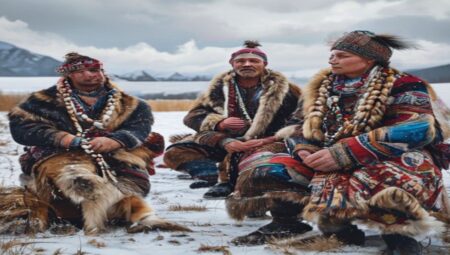
The Foundations of Sami Ecological Knowledge
The Sami ecological framework emerges from centuries of adaptive coexistence with Arctic and subarctic biomes. Indigenous herders have historically mapped terrain not through fixed boundaries, but through fluid seasonal indicators. This knowledge system prioritizes reciprocal relationships between human activity and landscape resilience. Modern conservation science increasingly validates these observations, particularly regarding microclimate variation and vegetation recovery cycles.
Indigenous Land Stewardship and Seasonal Cycles
Seasonal migration dictates land use patterns across Sápmi. Herders track snow depth, lichen availability, and predator movement to adjust grazing routes. This dynamic approach prevents overgrazing and maintains nutrient distribution. Traditional stewardship relies on continuous monitoring rather than static conservation zones, ensuring that ecological thresholds remain intact.
Core Principles of Nature Observation
Ecological literacy within Sami culture emphasizes reading natural signals. Wind direction, bird behavior, and soil moisture levels guide decision-making for pasture rotation. These observational metrics form a living database that adapts to environmental fluctuations. The cumulative effect of these practices sustains biodiversity while supporting pastoral livelihoods.
Deer Migration Patterns in Sámi Terrains
Reindeer migration represents one of the last large-scale terrestrial movements in Europe. Herds traverse hundreds of kilometers between summer highlands and winter lowlands, navigating valleys, rivers, and frozen tundra. These routes have been maintained through generations, shaped by topographical constraints and forage availability.
Historical Routes and Environmental Triggers
Migration corridors respond to photoperiod changes, temperature gradients, and snow compaction rates. Herders utilize historical waypoints alongside real-time weather data to guide movements. The synchronization between animal physiology and seasonal transitions ensures optimal body condition for calving and winter survival.
Climate Shifts and
Sami Relationship With Nature Explained
Geographic Boundaries of Sami Territory
The Sámi inhabit **Sápmi**, a transnational region spanning **northern Norway**, **Sweden**, **Finland**, and the **Kola Peninsula** of Russia. This territory crosses the **Arctic Circle** and extends into **subarctic taiga** zones. Historical boundaries shifted during the **19th century** through the **Nöteborg Treaty** and **colonial border policies**. Modern mapping relies on **topographic surveys** and **indigenous land registries**.
Reindeer Migration Patterns and Terrain Mapping
Herds follow **fixed seasonal corridors** dictated by **snow depth** and **lichen availability**. Migration routes avoid **steep escarpments** and prioritize **windward slopes** for snow crust formation. Rangers use **traditional sightlines** alongside **GPS telemetry** to track herd movement. Terrain analysis focuses on **microclimate variations** and **frost heave patterns**.
Ecological Practices and Resource Management
Rotational Grazing and Lichen Restoration
Herders implement **strict grazing rotations** to prevent **lichen overharvesting**. Each pasture receives **four to six years** of rest before reoccupation. **Cladonia rangiferina** requires undisturbed soil to regenerate. **Selective culling** maintains herd density below **carrying capacity thresholds**.
Seasonal Harvest Protocols
Harvesting begins only after **lake ice reaches twenty centimeters** of thickness. Hunters follow **moon phase cycles** to ensure optimal meat preservation. **Air-drying techniques** utilize subzero winds for rapid moisture extraction. **Fermentation pits** maintain **consistent temperature ranges** during winter storage.
Spiritual and Cultural Landmark Systems
Sacred Groves and Geological Markers
**Sieidi stones** function as boundary markers rather than objects of worship. Communities leave **bronze coins** or **dried fish** at specific rock formations. These sites mark **historical hunting grounds** and **water crossing points**. Geological features like **glacial erratics** dictate spiritual navigation routes.
Language Structure and Environmental Terminology
Sámi languages encode **precise meteorological data** within single words. **Twenty distinct terms** describe snow density and ice formation. **Reindeer behavior vocabulary** includes over **five hundred unique classifications**. This linguistic structure enables **accurate terrain reading** without external instruments.
Historical Shifts and External Pressures
Industrial Development and Territory Fragmentation
**Mining concessions** and **hydroelectric dams** severed traditional migration routes. **Forestry clearcuts** disrupted **lichen growth cycles** across **boreal forests**. **Road networks** increased **human-wildlife conflict** near pasture boundaries. **Fosen wind farm** construction triggered **court injunctions** over habitat loss.
Legal Precedents in Nordic Land Governance
**ILO Convention 169** established **free prior informed consent** requirements for resource extraction. **Nordic land courts** recognized **customary grazing rights** over **state ownership claims**. The **Sámi Reindeer Herding Case** ruled that **indigenous land use** supersedes **mineral exploration permits**. Legal frameworks now require **ecological impact assessments** for all industrial projects.
Modern Adaptation and Knowledge Preservation
Traditional Ecological Knowledge Digitization
Researchers map **historical pasture boundaries** using **GIS overlay techniques**. **Audio archives** preserve **elder narration** of seasonal weather patterns. **AI translation tools** accelerate **Sámi language revitalization** programs. **Controlled database access** protects **sensitive ecological coordinates** from commercial exploitation.
Intergenerational Training Programs
Youth participants complete **structured mentorship cycles** under **master herders**. **School curricula** integrate **field navigation** and **livestock health monitoring**. **Certification systems** validate **traditional skill proficiency** across age groups. **Community-led workshops** maintain **practical knowledge transfer** outside academic institutions.
Frequently Asked Questions: Sami Relationship With Nature Explained
What is Sami Relationship With Nature Explained?
The Sami relationship with nature explained refers to the profound spiritual, cultural, and practical bond that the indigenous Sami people maintain with their Arctic and sub-Arctic environment. This connection is foundational to their identity, governance, and survival, historically expressed through reindeer herding, hunting, fishing, and gathering. For the Sami, nature is not a commodity but a kinship network where humans are equal participants bound by reciprocity, respect, and ecological balance.
Key facts about Sami Relationship With Nature Explained
Key facts include: (1) The Sami have inhabited Fennoscandia and the Kola Peninsula for millennia, developing a nomadic and semi-nomadic lifestyle entirely dependent on seasonal ecological cycles. (2) Reindeer herding is the most visible manifestation of this relationship, requiring intricate knowledge of animal behavior, weather patterns, and lichen growth. (3) Traditional Sami cosmology and shamanic practices historically revered natural features like mountains, forests, and waterways as sacred dwelling places of spirits. (4) Contemporary Sami communities actively advocate for land rights and environmental protection to preserve this relationship against industrialization, climate change, and restrictive state policies.