The Historical Origins of the Sami Sun Symbol
The Sami sun symbol meaning is deeply rooted in the ancient cosmology of Sápmi, the transboundary homeland of the indigenous Sami people across northern Norway, Sweden, Finland, and Russia. Archaeological findings and oral traditions reveal that solar motifs were not merely decorative but served as vital spiritual anchors. Early depictions emerged on reindeer antler carvings, bone tools, and ritual drums dating back to at least the first millennium CE, reflecting a sophisticated understanding of celestial cycles long before written records.
Ancient Solar Worship in Arctic Traditions
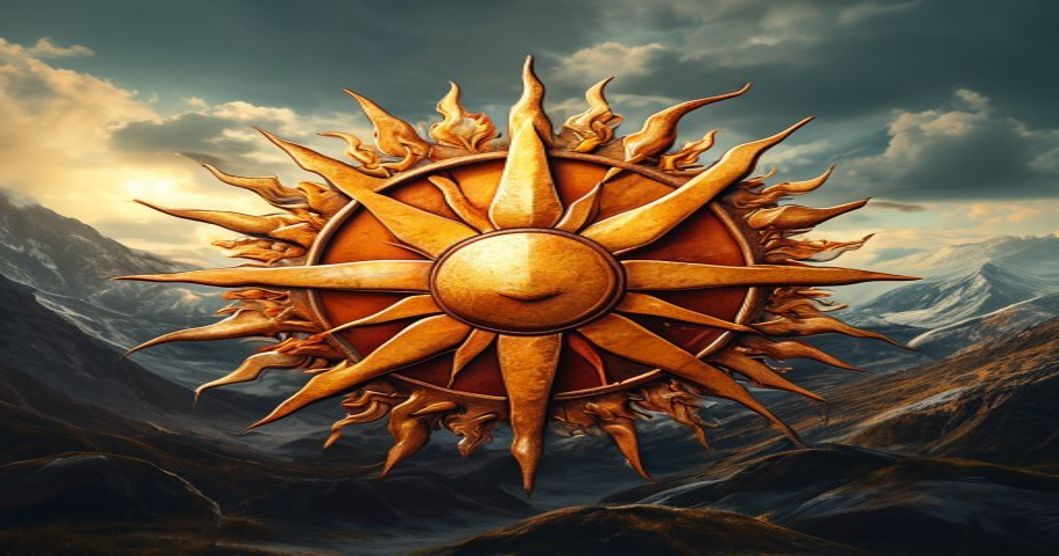
In pre-Christian Sámi cosmology, the sun was personified as Bievca or Beaivi, a radiant female deity who governed fertility, warmth, and the rhythm of life. The solar wheel motif—typically a central circle intersected by eight or twelve radiating lines—symbolized the continuous journey of the sun across the sky. This geometric representation functioned as both a calendar marker and a protective emblem, embedded in daily objects to ensure cosmic harmony.
The Role of Beaivi in Sami Spirituality
Spiritual practices surrounding the sun were conducted at sacred sites known as sieidi, where offerings of reindeer antlers, iron tools, and woven textiles were left to honor celestial forces. The symbol’s concentric design mirrored the Sami belief in interconnected realms: the visible world, the spirit world, and the underworld. Ritual specialists, or noaidis, used solar imagery during yoik ceremonies to channel energy, mark solstices, and maintain balance between human activity and environmental forces.
Natural Significance and Ecological Connections
The Sami sun symbol nature association extends beyond metaphor into practical survival strategies in one of Earth’s most extreme climates. In the Arctic Circle, solar orientation dictated migration patterns, hunting schedules, and reindeer herding routes. The symbol’s geometry directly correlated with astronomical observations used to predict seasonal shifts.
Seasonal Cycles and Survival in Sápmi
During the polar night, communities relied on solar calendars carved into wood and stone to track time. The radiating lines of the sun symbol corresponded to key solar events: the spring equinox signaling reindeer calving season, the summer solstice marking peak foraging opportunities, and the autumn equinox guiding winter preparations. Ecological knowledge was encoded in these symbols, transforming abstract astronomy into actionable survival data.
Astronomical Navigation and Solar Alignment
Sami navigators historically aligned tents, boat hulls, and ceremonial structures with solar azimuth points. The symbol’s eight-fold symmetry often matched the cardinal and intercardinal directions used in wayfinding across fjords and tundra. This alignment ensured that communal movements followed optimal daylight exposure, minimizing energy expenditure during harsh winters and maximizing resource gathering during brief summers.
Cultural Expressions and Contemporary Interpretations
Modern craftsmanship preserves the Sami sun symbol culture through adaptive traditions that honor ancestral knowledge while responding to contemporary identity movements. The motif appears in duodji (handicraft), jewelry, textiles, and digital media, serving as a visual language of resilience.
Traditional Crafts, Drum Patterns, and Symbolic Artistry
Historical drum layouts frequently placed the sun symbol at the center or along the eastern axis, denoting creation cycles and spiritual ascent. Artisans used lye-treated leather, silver wire, and reindeer hide to render the motif with precise geometric accuracy. Each intersection and curve carried mnemonic value, encoding genealogies, trade routes, and ecological wisdom within a single composition.
Modern Resurgence and Indigenous Identity
In recent decades, the symbol has been reclaimed as a marker of Sámi sovereignty and cultural revival. Educational programs, museum exhibitions, and legal advocacy efforts utilize the imagery to assert land rights and linguistic preservation. Contemporary designers integrate solar geometry into sustainable fashion and architectural motifs, demonstrating how ancient symbolism adapts to global contexts while retaining its core semantic weight.
Unraveling the Mysteries Behind the Radiant Motif
The enduring enigma of the Sami sun symbol mystery lies in its cross-cultural resonance and layered symbolism that defies singular interpretation. Scholars continue to analyze its geometric precision, ritual applications, and mythological embeddings to reconstruct pre-colonial worldviews.
Cross-Cultural Parallels and Shared Solar Archetypes
Comparative mythology reveals striking similarities between the Sami solar wheel and other circumpolar traditions, including Norse sun cross variants, Baltic fire rituals, and Siberian shamanic disc motifs. These parallels suggest shared Indo-European and Uralic cosmological frameworks that prioritized solar cyclicity as a universal organizing principle. The absence of hierarchical iconography in the symbol underscores its egalitarian function within communal life.
Decoding Hidden Geometries and Ritual Functions
Mathematical analysis of historical artifacts shows consistent use of golden ratio proportions and compass-drawn arcs, indicating advanced geometric literacy. Ritual contexts required the symbol to be drawn in snow, painted on bark, or woven into clothing during transitional phases like birth, initiation, or seasonal changes. Its transient nature reinforced the philosophical concept of imperman
Frequently Asked Questions
What is Sami Sun Symbol Meaning Explained?
The Sami sun symbol represents the sun, life, warmth, and the cyclical passage of time in traditional Sami culture. It is a sacred geometric motif historically used on reindeer-hide clothing, ceremonial drums, and tools to symbolize guidance, protection, and the deep spiritual connection between the Sami people and the natural environment.
Key facts about Sami Sun Symbol Meaning Explained
Key facts include: the symbol typically features radial or eight-pointed geometry reflecting solar movement; it was central to pre-Christian Sami spiritual practices and shamanic rituals; it serves as a marker of cultural identity and resilience in contemporary Sami art; and its designs are traditionally passed down through generations of duodji (handicraft) artisans.