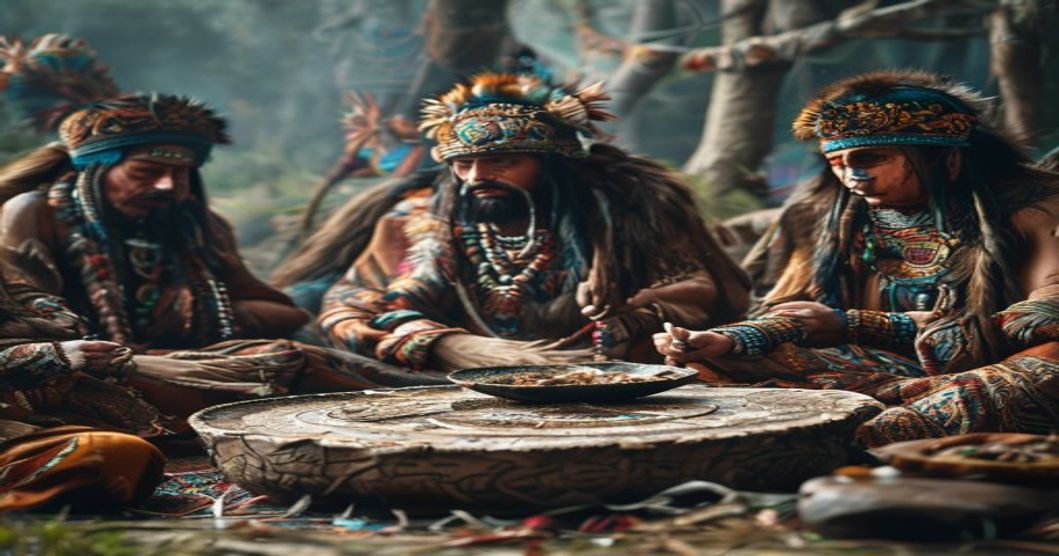
Core Framework of Ancient Sami Rituals & Sacred Ceremonies
The spiritual architecture of the Sami people operates on animistic principles where terrain, weather patterns, and wildlife are governed by sentient forces. Ancient Sami rituals & sacred ceremonies functioned as ecological and cosmological balancing mechanisms rather than isolated cultural performances. Each practice reinforced resource sustainability, intergenerational knowledge transfer, and communal resilience across Arctic and subarctic environments.
The Noaidi: Mediator Between Visible and Invisible Realms
At the center of Sami shamanism stood the Noaidi, a spiritually initiated specialist who navigated altered states through rhythmic drumming, controlled fasting, and breath regulation. The Noaidi did not merely forecast outcomes but actively negotiated with nature spirits to secure herd survival, successful reindeer migrations, and community healing. Authority was inherited through matrilineal or patrilineal spiritual lineages and validated by rigorous endurance trials that tested perceptual clarity under extreme environmental stress.
Divination Mechanics and Drum Symbolism
The Sami drum, constructed from stretched reindeer hide over carved birchwood, served as a three-dimensional cosmological map rather than a musical instrument. Painted pigments represented celestial bodies, ancestral guides, and sacred geography. During ceremonies, the Noaidi struck the drum with an antler mallet while interpreting the trajectory of a divination piece to decode spirit messages. The drum’s surface was divided into concentric zones representing upper, middle, and lower worlds, each governed by distinct elemental deities.
Geographic Sanctuaries and Ritual Topography
Sacred Groves and Mountain Altars
Ancient Sami communities designated specific natural formations as sami spiritual practices focal points. Rocky outcrops, ancient pine stands, and glacial lakes functioned as open-air temples where offerings of reindeer fat, copper coins, and carved wooden figurines were deposited to honor the land spirits known as Sijh and Várjjat. These sites dictated seasonal migration corridors and enforced strict ecological taboos that prevented overharvesting.
Seasonal Rites and Livestock Blessings
Spring Purification and Autumn Herd Consecration
The Sami calendar revolved around astronomical markers and reindeer behavioral cycles. During the spring thaw, communities performed purification rites to cleanse pastures from winter stagnation using smoke from juniper branches and vocal invocations. In autumn, before the great migration, elders conducted consecration ceremonies where newborn lambs were marked with symbolic patterns while melodic chants ensured safe passage through mountain passes. These rituals standardized resource distribution protocols and reinforced territorial boundaries.
Vocal Dynamics and Ancestral Resonance
The Structural Function of Joik in Ritual Contexts
Far from entertainment, joik singing operated as a sonic technology for spiritual alignment. Each joik was structured to mirror the essence of a person, animal, or landscape through microtonal variations and repetitive phrasing. During ceremonies, polyphonic chanting synchronized with drum rhythms to induce trance states, facilitating direct communion with ancestral guides. The melodic patterns were memorized orally and adapted regionally, preserving linguistic data and ecological knowledge across centuries.
Frequently Asked Questions about Sami Ancient Rituals and Ceremonies
What is Sami Ancient Rituals and Ceremonies?
Sami Ancient Rituals and Ceremonies refer to the traditional spiritual and cultural practices of the Sámi people, indigenous to the northern regions of Norway, Sweden, Finland, and Russia. These rituals often involve drumming, joik singing, shamanic journeys, and seasonal celebrations to honor nature, ancestors, and the spiritual world.
Key facts about Sami Ancient Rituals and Ceremonies
Key facts include the central role of the noaidi (shaman) who used a sacred drum to communicate with spirits, the importance of joik (traditional chanting) in rituals, the reverence for reindeer and natural landscapes, and the fact that many ancient practices were suppressed during Christianization but have seen a cultural revival in modern times.