Historical Foundations and Geographic Distribution
The Sami people, indigenous to the northern reaches of Scandinavia, Russia, and Finland, have inhabited the vast region known as Sápmi for millennia. Historical archaeology and genetic studies confirm that Sami communities trace their lineage to prehistoric populations that adapted to subarctic ecosystems long before modern nation-states drew borders across their ancestral lands. Traditional seasonal boundaries were not arbitrary; they followed reindeer migration corridors, fish spawning grounds, and berry-rich tundra zones. Colonial expansion during the eighteenth and nineteenth centuries systematically fragmented these territories, yet Arctic traditions persisted through resilient community networks and intergenerational knowledge transfer.
Traditional Livelihoods and Reindeer Husbandry
Reindeer herding remains the cornerstone of many Sami livelihoods, functioning as both an economic foundation and a cultural anchor. Unlike conventional livestock management, this practice requires deep ecological literacy, including snow condition assessment, lichen growth cycles, and predator behavior tracking.
The Symbiosis of Herding and Ecology
Sami herders employ sustainable grazing patterns that prevent overgrazing and preserve fragile Arctic vegetation. The relationship between herder and herd is governed by strict ethical codes emphasizing reciprocity, respect for animal welfare, and ecological balance. Modern herding integrates satellite GPS tracking with ancestral route knowledge, demonstrating how Sami culture adapts without abandoning core principles.
Linguistic Diversity and Oral Heritage
The Sámi languages belong to the Uralic language family, distinct from surrounding Indo-European tongues. With approximately ten recognized dialects, linguistic preservation remains a critical priority for cultural continuity.
Preserving the Sámi Languages
Language revitalization initiatives focus on immersion schooling, digital documentation, and media production in native tongues. The joik, a traditional form of vocal expression, functions as both musical heritage and linguistic archive. Each joik encapsulates specific places, animals, or individuals, serving as an auditory map of Arctic traditions that resist written documentation.
Artisanal Crafts and Symbolic Aesthetics
Duodji, the Sami term for traditional handicrafts, encompasses woodworking, bone carving, tin thread embroidery, and reindeer leatherwork. These objects are never purely decorative; they encode clan affiliations, regional identity, and functional necessity.
The Significance of Duodji and Gákti
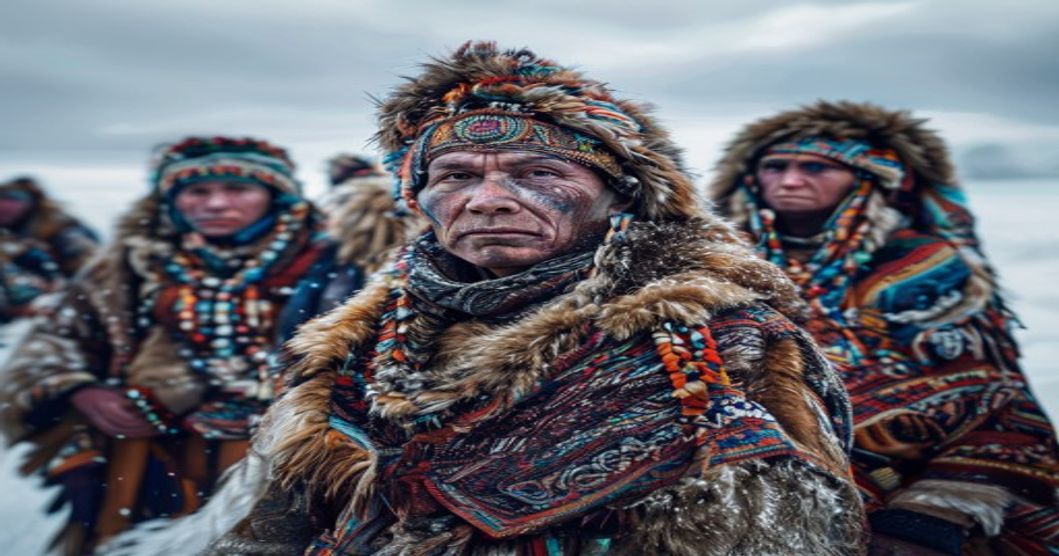
The gákti, a tailored traditional garment, operates as a visual dialect. Color combinations, cut patterns, and belt designs communicate the wearer’s specific community, marital status, and economic background. Contemporary designers integrate duodji techniques into modern fashion while maintaining cultural authenticity, ensuring that Sami people craftsmanship remains economically viable and culturally sovereign.
Modern Cultural Revival and Contemporary Challenges
Despite centuries of assimilation policies, the twenty-first century has witnessed a robust Sami cultural revival. Political representation through the Sámi Parliaments in Norway, Sweden, and Finland has strengthened land rights advocacy and educational autonomy.
Navigating Colonial Legacies and Climate Change
Indigenous governance structures now actively combat historical marginalization while addressing urgent environmental threats. Permafrost degradation, shifting reindeer forage cycles, and industrial extraction projects directly impact Arctic traditions. Community-led conservation models combine traditional ecological knowledge with scientific monitoring, proving that cultural preservation and environmental stewardship are inseparable in the modern era.
Frequently Asked Questions
What is The Complete Guide to Sami People, Culture and Arctic Traditions?
The Complete Guide to Sami People, Culture and Arctic Traditions is a comprehensive resource that explores the history, language, reindeer herding practices, duodji (handicrafts), joik singing, and spiritual beliefs of the indigenous Sami people who inhabit the Arctic regions of Norway, Sweden, Finland, and Russia.
Key facts about The Complete Guide to Sami People, Culture and Arctic Traditions
Key facts include that the Sami are the only recognized indigenous people in the European Union, their traditional livelihood heavily relies on reindeer husbandry, they possess a rich oral tradition known as joik, and their cultural heritage is actively preserved through the Sami Parliament and UNESCO-recognized intangible cultural heritage practices.