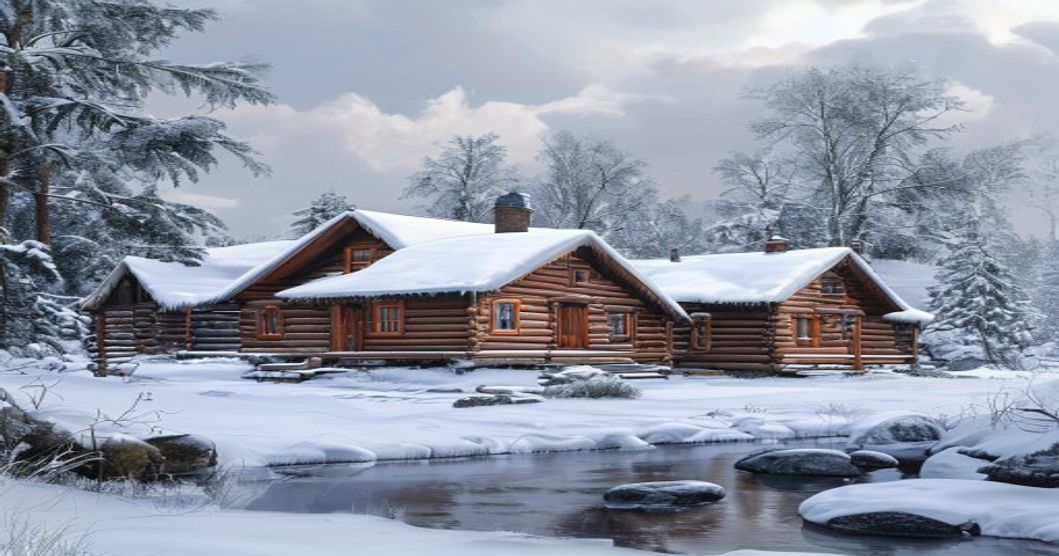
The Architecture of Sámi Winter Houses
The Sámi winter house, historically documented as a goahti in Lapland or lavvu across northern Fennoscandia, represents a sophisticated system of Arctic engineering. Designed for extreme cold, high winds, and prolonged snow cover, these Indigenous dwellings utilized passive thermoregulation and geometric precision to maintain habitable conditions without modern insulation.
Structural Design and Geometric Precision
Traditional frameworks relied on seasoned pine trunks, birch saplings, and reindeer antlers lashed together with braided leather or hemp cord. The central hearth functioned as a thermal engine, generating upward convection currents that circulated warm air along the curved walls while drawing fresh oxygen from ground-level vents. This airflow management prevented condensation buildup and reduced fire hazards during months of continuous occupancy.
Traditional Materials and Sustainable Sourcing
Wall insulation combined tundra peat moss, dried birch bark, and layered caribou pelts treated with rendered fat for moisture resistance. Flooring consisted of packed earth overlaid with insulating grass mats, while roof coverings utilized tightly woven reindeer hide strips that expanded and contracted naturally with temperature fluctuations. Every material was harvested following rotational land-use practices, ensuring zero long-term ecological disruption across the Boreal zone.
Cultural Significance and Daily Life Inside the Dwelling
Beyond structural utility, the Sámi Arctic dwelling operated as a spatial manifestation of Indigenous cosmology. Interior zoning reflected strict cultural protocols, with designated areas for tool maintenance, food preservation, spiritual practice, and communal storytelling.
Spatial Organization and Sacred Elements
The hearth marked the architectural axis mundi, symbolizing ancestral continuity and seasonal renewal. Opposite the entrance, a raised wooden platform housed Sieidi offerings, copper ritual wires, and dried botanicals used in Sámi shamanic traditions. Sleeping berms elevated on timber frames kept inhabitants above cold drafts while maximizing proximity to radiant heat, demonstrating advanced environmental adaptation.
Seasonal Rituals and Community Gatherings
During the polar night, winter houses transformed into intergenerational knowledge centers. Elders transmitted Sámi joik singing, reindeer migration navigation techniques, and textile crafting methods through structured oral sessions. These gatherings reinforced clan solidarity, resolved resource disputes, and maintained linguistic continuity in regions facing systematic cultural assimilation.
Historical Evolution and Regional Variations
The architectural footprint of Sámi traditional dwellings diversified across ecological zones, reflecting localized subsistence strategies and climate adaptation. Analyzing these variations reveals the adaptive resilience of Arctic Indigenous communities over centuries.
Migration Patterns and Architectural Adaptation
Coastal Fishing Sámi communities constructed reinforced log cabins with stone foundations to combat maritime humidity and gale-force winds. Inland Reindeer herding groups prioritized lightweight, collapsible goahti frames that could be dismantled and transported across seasonal pastures. Each regional variant optimized thermal retention for microclimates ranging from frozen tundra plateaus to dense boreal taiga forests.
Pre-Modern Encounters and Colonial Impacts
17th-century state expansion introduced taxation systems and land demarcation policies that restricted traditional Sámi mobility. Government housing mandates in the 18th and 19th centuries promoted permanent timber construction, accelerating the decline of authentic winter house building. Despite institutional suppression, Indigenous builders preserved core design principles through oral blueprints, clandestine reconstruction, and cross-border cultural exchange.
Preservation Efforts and Contemporary Relevance
Modern conservation initiatives have revitalized interest in Sámi heritage architecture, bridging historical building wisdom with contemporary sustainable design. Academic institutions, Sámi cultural centers, and Indigenous architect collectives collaborate to document, reconstruct, and teach traditional methods.
Museum Exhibitions and Academic Research
Institutions including the Sámi Museum Siida, the Norwegian Sami Parliament archives, and Finnish Lapland heritage centers maintain detailed structural schematics, material samples, and thermal performance studies. Ethnographic analyses demonstrate that traditional insulating techniques outperform synthetic alternatives in extreme cold scenarios, validating centuries of Indigenous environmental science.
Modern Sámi Architecture and Cultural Revival
Contemporary Indigenous builders integrate historical Sámi winter house principles into climate-resilient housing projects. Cross-laminated timber framing, recycled reindeer hair insulation, and optimized smoke ventilation systems directly adapt traditional design logic to modern building codes. This architectural renaissance strengthens cultural identity, supports eco-construction standards, and provides scalable solutions for sustainable Arctic living.
“`html
Frequently Asked Questions About Sami Winter Homes in Northern Europe
What is Sami Winter Homes in Northern Europe?
Sami Winter Homes in Northern Europe are traditional winter dwellings used by the indigenous Sami people across the Arctic regions of Norway, Sweden, Finland, and Russia. These homes were designed to withstand extreme sub-zero temperatures and harsh polar conditions. Typically constructed from natural materials such as birch wood, reindeer hides, turf, and snow, they provided shelter for reindeer herders during the long, dark winters. Modern interpretations of Sami winter homes are also used today as eco-friendly tourist accommodations that offer an authentic cultural and immersive experience in the Arctic landscape.
Key facts about Sami Winter Homes in Northern Europe
- Sami winter homes, known as goahti or lavvu, have been used for thousands of years by the Sami people for reindeer herding and survival.
- Traditional structures are conical or dome-shaped, built from a wooden frame covered with birch bark, reindeer skins, and layers of turf for insulation.
- A central fire pit is used for heating and cooking, with smoke escaping through a small opening at the top of the structure.
- These homes can maintain internal temperatures well above freezing even when external temperatures drop below -40°C (-40°F).
- Today, many Sami winter homes are preserved as cultural heritage sites and are offered as unique, sustainable tourism experiences in Lapland and other Arctic regions.
- The Sami people are the only indigenous people of the European Union, and their winter homes are a symbol of their deep connection to the land and reindeer herding traditions.
“`