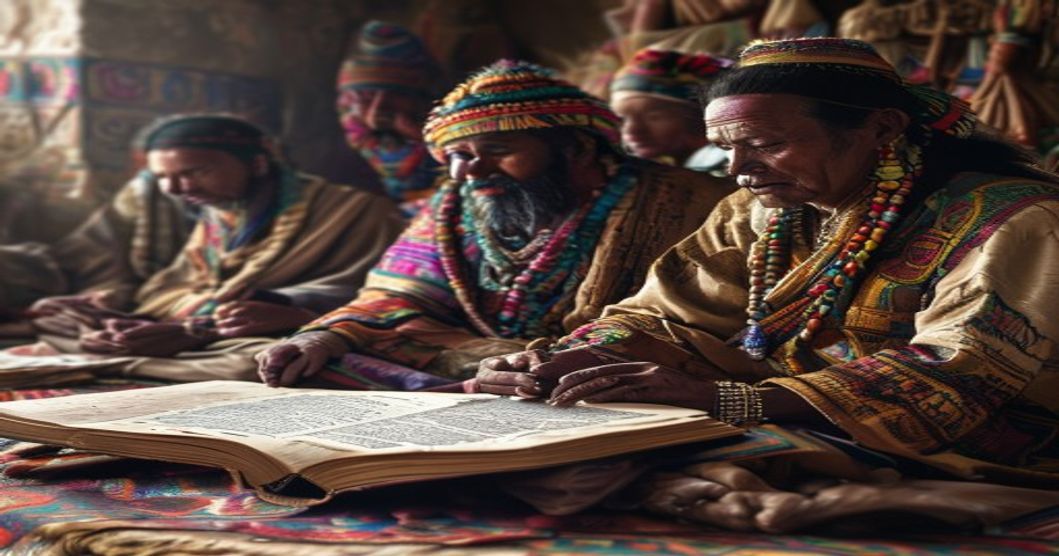
The Origins and Evolution of Sámi Oral Traditions
The foundational framework of Sámi oral literature developed across the Scandinavian Peninsula and Kola Peninsula, where extreme climatic conditions necessitated highly specialized environmental literacy. Pre-colonial communities encoded ecological observations, reindeer migration routes, and weather prediction methods into rhythmic vocal patterns that functioned as living archives. The yoik operates as the primary structural element, functioning simultaneously as musical composition, historical record, and topographical reference. Each performance maps specific ridges, waterways, or hunting grounds through melodic contours rather than descriptive prose, enabling navigational accuracy across featureless tundra terrain.
- Historical transformation occurred during systematic missionary campaigns of the seventeenth and eighteenth centuries. Church authorities classified indigenous narratives as heretical, prompting communities to fragment their storytelling into domestic contexts and seasonal market exchanges.
- Elders preserved genealogical data, land tenure agreements, and conflict resolutions through layered narrative cycles that required active listener participation for full comprehension. This adaptive strategy prevented cultural erasure while maintaining functional knowledge transmission across generations living under linguistic suppression policies.
Modern evolution integrates archival documentation with performance-based revitalization initiatives. Contemporary practitioners utilize multimedia recording to capture regional dialect variations, polyphonic singing techniques, and ceremonial drum patterns that once accompanied narrative recitations. Educational programs now teach traditional syntax structures alongside digital preservation methods, ensuring younger speakers comprehend recursive storytelling frameworks where chronological events interweave with ecological cycles. The narrative architecture retains distinct phonetic markers, nature-derived metaphors, and call-and-response mechanisms that differentiate Sámi oral literature from neighboring Scandinavian traditions. Each performance cycle adapts contextual references to contemporary land rights discussions while preserving core mnemonic devices that sustained cultural continuity for centuries without written documentation. Community elders functioned as active knowledge curators, selecting narrative segments based on seasonal requirements and listener age groups. This dynamic selection process ensured that ecological information remained relevant while spiritual teachings reinforced social cohesion. The oral system operated without centralized archives, relying instead on distributed memory networks where each participant carried partial fragments that only merged during specific ceremonial gatherings.
Pre-Christian Beliefs and Mythological Foundations
The pre-Christian Sami worldview operated as a living ecosystem of spiritual practice, where every mountain pass, frozen lake, and ancient pine held tangible sacredness. Communities understood the environment not as a resource to be managed, but as an active network of sentient forces governed by intricate cosmological rules. Sacred stones known as sieidi functioned as focal points for offerings, ritual communication, and territorial marking. These landmarks were never arbitrary; they mapped ancestral journeys, marked hunting territories, and served as meeting places between the human realm and the invisible world. Oral transmission ensured that geographical knowledge and spiritual protocol remained inseparable across generations.
Noaidi, the traditional shamanic figures, navigated these spiritual landscapes through rhythmic drumming and trance states. Their role extended beyond divination into ecological stewardship, seasonal forecasting, and community mediation. Mythological narratives encoded survival strategies: tales of forest spirits dictated sustainable harvesting practices, while stories about mountain deities reinforced strict taboos around weather patterns and animal migration routes. The concept of Sijá, a vital life force distributed across humans, animals, and landscapes, demanded reciprocal respect rather than domination.
- Seasonal rituals aligned with reindeer calving cycles and salmon runs maintained ecological balance
- Journey narratives mapped safe passage through treacherous terrain using celestial markers
- Ancestral veneration reinforced clan territories and intergenerational responsibility
Mythological frameworks functioned as decentralized archives. Before written documentation, complex genealogies, trade routes, and resource management protocols lived within structured verse and rhythmic recitation. The integration of spiritual law with daily survival created a self-regulating cultural system. Violations of sacred boundaries triggered mythological consequences that reinforced compliance more effectively than external enforcement. This cosmological architecture allowed Sami communities to adapt to harsh climatic shifts while maintaining distinct identity markers across centuries of external pressure.
Joik Music and Narrative Synchronization
Joik operates as a sonic archive where melody and oral history merge into a single expressive medium. Unlike conventional musical frameworks that separate lyrics from instrumentation, joik weaves voice, breath control, and percussive body movements into an uninterrupted flow mirroring the cadence of traditional Sami life. The rhythmic patterns align directly with seasonal migrations, reindeer herding cycles, and landscape navigation routes. Each vocal inflection carries geographic markers, ecological knowledge, and ancestral lineages.
The synchronization between musical structure and narrative delivery functions as an acoustic mapping system. When elders perform, the tempo shifts to reflect environmental conditions—steady pulses during calm weather, irregular rhythms mirroring storm patterns or animal movements. This alignment ensures that survival techniques, spiritual beliefs, and community values transmit across generations without written documentation. The improvisational nature of joik allows performers to adapt narratives to contemporary contexts while maintaining core cultural syntax.
- Vocal techniques such as throat resonance and microtonal variations replicate wind currents, water flows, and wildlife calls, creating an audible terrain model.
- Listeners internalize these patterns through repeated exposure, embedding historical data into collective memory without conscious study.
- The absence of fixed lyrics prevents rigid interpretation, allowing each performance to serve as a living repository rather than a static recording.
Community gatherings amplify this function, as synchronized clapping and footwork establish temporal markers that anchor stories to specific seasons or events. Modern ethnographers recognize this acoustic narrative structure as a sophisticated mnemonic system. The vocal timbre functions as both historical record and pedagogical tool, ensuring ecological awareness, kinship networks, and spiritual frameworks remain accessible. Researchers note that the narrative synchronization operates through call-and-response patterns between lead vocalists and supporting participants, establishing a dynamic information network. Preservation efforts now document these performances not as isolated artistic expressions but as integrated knowledge transmission systems where sound, movement, and landscape operate as interdependent variables in cultural continuity.
Seasonal Cycles and Ecological Knowledge Encoding
The Sami oral tradition functions as a dynamic environmental database where seasonal transitions dictate narrative architecture. Reindeer herders, coastal fishers, and forest hunters embedded precise ecological parameters within myths, toponyms, and performance schedules. Spring narratives map calving territories by tracking snowmelt progression, predator movement corridors, and early vegetation emergence. Summer accounts record insect migration waves, moss hydration levels, and berry ripening windows, directing communities toward sustainable harvesting zones. Autumn stories document the exact timing of reindeer migrations, correlating herd behavior with atmospheric pressure shifts and lichen biomass cycles. Winter tales encode navigation protocols through wind scour patterns, ice transparency indicators, and celestial visibility thresholds. Each narrative operates as a predictive survival model rather than decorative folklore.
Ecological encoding depends on metaphorical precision anchored to observable natural phenomena. Elders utilize specific botanical references to signal soil saturation states, while animal behavior descriptions serve as early warning mechanisms for sudden weather fronts. Place names function as geographic coordinates, preserving centuries of documented trial and error regarding safe passage routes, avalanche-prone slopes, and seasonal water reservoirs. When a storyteller describes a particular ridge or valley, listeners instantly recognize the underlying survival criteria without explicit explanation. This linguistic compression allows intricate environmental relationships to transfer across generations with minimal data degradation.
Knowledge transmission requires active cognitive engagement rather than passive reception. Young herders internalize route descriptions through repeated performance during extended winter nights, aligning auditory patterns with physical terrain features. Joik melodies mirror topographical contours, reinforcing spatial memory through rhythmic variation and pitch modulation. Community gatherings operate as calibration sessions where experienced practitioners validate or adjust stored information based on current environmental conditions. The system remains adaptive because each retelling incorporates observed changes in vegetation cycles, wildlife populations, and microclimate patterns. Long-term cultural survival depends on this continuous verification process, ensuring that encoded ecological data stays aligned with actual landscape behavior rather than fossilizing into static tradition.
Historical Pressures and Cultural Resilience
For centuries, the Sami people navigated intense geopolitical and institutional pressures that systematically targeted indigenous identity. Beginning in the eighteenth century, Scandinavian monarchies implemented territorial expansion policies that restricted traditional reindeer migration routes, while missionary organizations actively suppressed animistic beliefs and sacred landscapes. By the late nineteenth and early twentieth centuries, state-sponsored assimilation campaigns escalated across Norway, Sweden, and Finland. Educational authorities banned Sami languages in schools, enforced punitive measures against linguistic practice, and mandated cultural conversion as a prerequisite for citizenship and economic participation. These coordinated efforts aimed to erase ancestral knowledge systems, disrupt kinship networks, and replace indigenous governance with centralized administrative control.
Storytelling functioned as an adaptive preservation mechanism under these conditions. Oral narratives encoded ecological data, navigation techniques, and resource management strategies that sustained communities through environmental shifts and political marginalization. Elders structured seasonal tales to transmit hunting rhythms, reindeer husbandry principles, and weather prediction methods without relying on written documentation. Metaphorical language and indirect references allowed speakers to discuss restricted topics, spiritual practices, and territorial claims while evading surveillance. The narrative cadence itself mirrored ecological cycles, reinforcing interdependence between land, fauna, and human settlement patterns.
- Land dispossession policies disrupted grazing territories, prompting storytellers to map historical boundaries through place-based legends and ancestral migration routes.
- Linguistic suppression in educational institutions accelerated the reliance on auditory transmission, strengthening mnemonic devices, rhythmic repetition, and interactive call-and-response formats.
- Religious conversion mandates led to the integration of traditional cosmology into secular folklore, allowing spiritual concepts to persist within culturally acceptable frameworks.
- Administrative border divisions fragmented political authority, yet cross-regional narrative exchange maintained a cohesive cultural identity across dispersed communities.
The durability of this oral archive depended on intergenerational apprenticeship and contextual performance. Knowledge holders adjusted narrative emphasis based on audience age, seasonal activity, and ecological conditions, ensuring practical relevance alongside cultural continuity. Ritual performances, communal gatherings, and domestic storytelling sessions operated as decentralized preservation networks that bypassed institutional censorship. This adaptive oral infrastructure enabled the Sami to maintain linguistic vitality, territorial awareness, and cosmological frameworks despite sustained external pressure. The narrative tradition did not merely record history; it actively sustained functional knowledge systems that later supported cultural revitalization initiatives and contemporary land rights advocacy.
Assimilation Policies and Underground Storytelling Networks
Throughout the late nineteenth and twentieth centuries, Scandinavian governments implemented systematic assimilation policies explicitly designed to eradicate Sámi linguistic and cultural autonomy. Legislation mandated Swedish, Norwegian, and Finnish as the sole permitted languages in schools, administration, and public life. Residential institutions separated children from their families, punishing verbal use of Sámi dialects with physical discipline and psychological conditioning. Concurrently, land dispossession laws dismantled traditional reindeer herding territories, severing communities from the geographic anchors that structured seasonal narratives and ecological memory. The state apparatus treated oral transmission not merely as a cultural practice but as an active threat to national homogeneity, resulting in decades of institutionalized silence around indigenous heritage.
Communities responded through clandestine operational frameworks that operated entirely outside state surveillance. Elders coordinated secret gatherings during off-season periods, utilizing remote wilderness locations inaccessible to authorities. Communication relied on contextual dialects, regional idioms, and deliberate phonetic shifts that rendered conversations unintelligible to outsiders. Transmission protocols prioritized mnemonic density over linear narration, embedding historical treaties, boundary negotiations, and spiritual cosmology within rhythmic structures that resisted fragmentation during forced dispersal.
- Seasonal Route Repurposing: Traditional migration corridors transformed into covert knowledge-sharing pathways, with storytelling sessions synchronized around reindeer movements and hunting cycles.
- Mnemonic Code Utilization: Joik performances functioned as encrypted archives, where melodic intervals and lyrical fragments mapped territorial boundaries, kinship networks, and resource management protocols.
- Elder Council Networks: Decentralized leadership structures distributed transmission responsibilities across multiple family units, ensuring cultural continuity even if individual nodes were compromised.
- Domestic Artifact Integration: Historical narratives encoded into textile patterns, woodcarving motifs, and tool engravings created physical repositories that survived confiscation raids.
This underground infrastructure generated compounding resilience. By maintaining continuous linguistic practice despite punitive measures, communities preserved grammatical structures that later enabled standardized Sámi language revival initiatives. The archival density of these networks also retained ecological knowledge critical for sustainable resource management, which modern indigenous governance frameworks now reference in land rights litigation. The strategic compartmentalization and adaptive transmission methods established during this period directly facilitated contemporary Sámi institutional autonomy, proving that decentralized cultural preservation mechanisms can withstand centralized erasure campaigns when operationally disciplined and geographically dispersed.
Revitalization Efforts in the Late Twentieth Century
The resurgence of indigenous oral traditions across northern Europe required coordinated institutional intervention after decades of forced assimilation policies. By the mid-1970s, grassroots cultural committees in Finnmark, Lapland, and Norrbotten initiated systematic field recordings to capture aging joikers before generational transmission collapsed. Academic partnerships with universities in Tromsø, Umeå, and Oulu established ethnographic archives that prioritized community consent over academic extraction. These repositories preserved not only melodic structures but also ecological annotations tied to reindeer migration routes, coastal fishing cycles, and seasonal hunting grounds.
Political mobilization accelerated preservation timelines. The formation of transnational advocacy networks enabled standardized notation systems for traditional modal scales, preventing commercial homogenization. State-sponsored radio programming gradually incorporated authentic performances, bypassing mainstream music industry filters that had historically marginalized indigenous vocal techniques. Independent distributors began releasing albums where elder practitioners performed alongside emerging artists, maintaining strict adherence to linguistic purity and acoustic authenticity.
- Cross-border cultural councils funded documentation projects targeting isolated dialect clusters
- Festival circuits enforced performance guidelines that prohibited electronic instrumentation or lyrical adaptation
- University curricula integrated oral methodology into formal pedagogy, training educators to transmit narrative frameworks rather than static repertoires
Educational reform during the 1980s transformed marginalized knowledge into institutionalized practice. Teachers developed assessment models that evaluated contextual understanding over technical replication, ensuring pedagogical continuity across urban and rural demographics. Funding allocations from Nordic cultural ministries directed resources toward mobile recording units that traversed remote pastures, guaranteeing geographic coverage previously neglected by centralized institutions. Late-decade digitization initiatives converted deteriorating cassette archives into searchable databases accessible to dispersed communities. Community-controlled repositories linked audio files with geotagged ecological data, spiritual cosmology annotations, and historical land-use records. This technological infrastructure shifted preservation from academic curation to indigenous stewardship, establishing a self-sustaining framework that converted endangered oral practices into recognized cultural infrastructure.
Modern Applications and Digital Archiving
Contemporary digital infrastructure has transformed how Sámi oral traditions are documented, accessed, and transmitted across generations. High-fidelity audio recording systems capture the nuanced vocal techniques of joik performances alongside narrative pacing that traditional transcription methods historically flattened. Mobile applications developed in collaboration with Sámi cultural institutions now offer geotagged story maps, linking specific recitations to ancestral landscapes such as reindeer migration routes and seasonal hunting grounds. These spatial databases enable users to navigate folklore through environmental context rather than isolated text.
- Cloud-based repositories utilize standardized metadata schemas aligned with UNESCO digital preservation frameworks, ensuring long-term accessibility while respecting community sovereignty over cultural assets.
- Machine learning models trained exclusively on Uralic phonetics assist in transcribing dialect variations across Inari, Skolt, and Northern Sámi regions, reducing linguistic drift during archival processing.
- Interactive educational platforms integrate motion-captured ritual movements with narrative audio, allowing younger learners to experience storytelling as a multisensory practice rather than a static performance.
Ethical curation remains central to these digital initiatives. Community-led review boards verify contextual accuracy before any recording enters public archives, preventing extractive data collection practices. Decentralized storage networks further secure cultural materials against institutional dependency, while open-source translation modules enable cross-generational comprehension without compromising original semantic structures. When folklore intersects with ecological documentation, researchers now pair historical accounts of climate adaptation with real-time environmental sensors, creating living archives that reflect both ancestral knowledge and contemporary landscape shifts.
Implementation challenges include dialect fragmentation and inconsistent naming conventions across Sámi territories. Standardized vocabularies developed by indigenous linguists mitigate these gaps, while tiered access protocols ensure sensitive ceremonial narratives remain restricted to authorized community members. Mobile synchronization algorithms continuously update regional story collections as field researchers document new recitations, maintaining dynamic relevance rather than static preservation. Digital literacy programs embedded in northern education systems teach metadata tagging and consent documentation, transforming youth participants from passive consumers into active archivists.
Contemporary Sámi Authors and Oral History Projects
Contemporary Sámi literature has undergone a profound transformation since the late twentieth century, driven by writers who consciously revived oral traditions while adapting them to modern literary forms. Authors such as Nils-Aslak Valkeapää, Ailo Gaup, and Kirsten Pifri have woven yoik melodies, reindeer herding narratives, and shamanic motifs into poetry, prose, and essays that circulate globally yet remain rooted in Sápmi’s ecological and spiritual landscape. Their work does not merely document history; it actively reconstructs cultural memory through linguistic precision and narrative structure that mirrors traditional oral pacing. Contemporary contributors frequently employ code-switching between North Sámi, Lule Sámi, and Southern Sámi to reflect authentic regional speech patterns, while exploring themes of land rights, climate impact, and cultural resilience.
Parallel to literary output, institutional and grassroots oral history initiatives have accelerated the documentation of endangered dialects and lived experiences. Projects like the Sámi Parliament’s digital archive, the University of Tromsø’s yoik preservation database, and community-led recording campaigns collect firsthand accounts from elders across Finnmark, Norrbotten, Lapland, and Kola Peninsula regions. These recordings capture not only vocabulary but also prosody, gesture, and contextual knowledge tied to seasonal migration routes, duodji craftsmanship, and land rights advocacy. Researchers apply phonetic transcription standards and metadata tagging protocols to ensure long-term accessibility, while ethical guidelines prioritize informed consent and community ownership of recorded materials.
- Digital repositories now function as dynamic archives where audio files, transcriptions, and geographic metadata intersect with academic research and youth engagement programs.
- Translators and editors work directly with native speakers to verify linguistic authenticity, ensuring that published works maintain grammatical integrity while reaching broader audiences.
- The synergy between published authors and archival collectives creates a continuous feedback loop: contemporary writers draw from recorded testimonies, and newly released narratives inspire further documentation efforts across generations.
This ongoing exchange sustains Sámi storytelling as a living practice rather than a static artifact, ensuring that cultural transmission adapts to technological shifts without compromising core epistemological values or territorial sovereignty claims. Educational institutions increasingly integrate these digital and literary resources into curricula, allowing students to engage with primary sources alongside scholarly analysis. The result is a resilient framework where oral history and contemporary authorship reinforce each other, preserving linguistic diversity, ecological knowledge, and historical continuity for future generations.
Educational Integration and Youth Engagement Strategies
Formal education systems across Norway, Sweden, and Finland have systematically incorporated Sámi oral traditions into standardized curricula, transforming ancestral narratives from marginalized folklore into core academic subjects. Regional educational authorities now mandate the inclusion of joik performance, reindeer herding chronicles, and land-based ecological knowledge within language arts, social studies, and indigenous history modules. Teachers undergo specialized certification programs that emphasize pedagogical frameworks rooted in Sámi epistemology, ensuring narratives are taught with contextual accuracy rather than as historical artifacts.
Youth engagement initiatives leverage interactive digital platforms to bridge generational divides. Schools deploy mobile recording applications that enable students to document elder testimonies in real time, creating localized archives accessible through encrypted school networks. These digital repositories feed into university-led research projects where adolescent participants co-author peer-reviewed studies on linguistic preservation and cross-cultural communication. Youth councils in Tromsø, Kiruna, and Inari coordinate annual storytelling symposiums that require participants to adapt traditional tales for multimedia formats, including podcast series, animated short films, and interactive web documents.
- Curriculum Alignment: National education ministries have mapped Sámi narrative frameworks against international competency standards, ensuring credit eligibility and pathway integration into secondary and tertiary institutions.
- Teacher Development: Dedicated training modules focus on phonetic accuracy in Northern Sámi, Dano-Sámi bilingual instruction techniques, and trauma-informed approaches to sharing historical displacement narratives.
- Community Partnerships: Municipal cultural centers fund mobile teaching units that rotate through remote schools, providing hands-on workshops in duodji craftsmanship alongside oral history mapping exercises.
- Digital Literacy Integration: Students learn metadata tagging, audio restoration software, and geospatial storytelling tools to archive narratives with academic-grade preservation standards.
Evaluation metrics from longitudinal studies demonstrate measurable improvements in student retention rates, bilingual proficiency scores, and cultural identity markers among participants. Schools implementing these frameworks report reduced dropout percentages and increased enrollment in indigenous studies programs at the university level. The structural integration of Sámi storytelling into youth education has shifted from preservation efforts to active knowledge production, positioning adolescent learners as co-archivists rather than passive recipients of heritage.
Long-Term Impact on Indigenous Identity and Global Heritage
Sami storytelling operates as a continuous knowledge transmission system, preserving ecological data, spiritual cosmologies, and customary law across generations through oral architecture. The joik tradition functions as a structured mnemonic framework encoding precise topographical coordinates, seasonal animal migration routes, and survival techniques adapted to subarctic environments. Colonial education mandates and language suppression policies of the nineteenth and twentieth centuries attempted to sever these narrative chains, yet the underlying structural integrity of the storytelling methods enabled rapid cultural recalibration during contemporary identity reconstruction phases.
Community-led documentation initiatives now operate under strict protocols that separate publicly accessible narratives from restricted ceremonial knowledge. These projects utilize synchronized audio recording, linguistic annotation, and GPS-mapped location tagging to create multidimensional archives that respect traditional ownership hierarchies. The preservation methodology deliberately avoids static museum curation in favor of living transmission models that integrate seasonal gatherings, reindeer herding calendars, and intergenerational apprenticeship structures.
- Modern adaptation strategies embed ancestral narrative patterns into climate monitoring networks, enabling elders to document shifting permafrost boundaries and altered migration corridors through traditional descriptive frameworks.
- Litigation processes concerning land tenure and resource extraction rights increasingly rely on orally transmitted historical accounts as admissible evidence, forcing judicial systems to recognize non-written epistemologies as legally valid.
- Digital repatriation programs return colonial-era field recordings to source communities, who then apply cultural filters to determine appropriate access levels before redistributing materials through indigenous-controlled platforms.
The structural longevity of these practices demonstrates that cultural continuity depends less on institutional preservation and more on maintaining narrative sovereignty. Global heritage assessments now prioritize native governance over external curation, acknowledging that oral traditions function as active legal instruments rather than historical relics. Younger practitioners merge traditional syntactic structures with contemporary media formats while preserving semantic precision, ensuring that knowledge transmission remains functionally identical to ancestral methods despite technological mediation. Cross-cultural academic exchanges now require indigenous co-authorship protocols, fundamentally altering research methodologies and dismantling extractive knowledge frameworks that previously dominated ethnographic studies.
Comparative Analysis with Other Arctic Narratives
Sami oral traditions operate through a distinct acoustic and structural framework that diverges sharply from neighboring Arctic narrative systems. Where Inuit qilaat and Siberian Nenets epics typically follow linear plot progression to document survival techniques or mythological genealogies, Sami joik employs non-linear vocal modeling. The performance does not describe an external subject; it embodies the essential nature of a person, place, or animal through melodic contour, breath control, and rhythmic repetition. This acoustic mapping technique functions as an auditory territorial marker, encoding ecological knowledge directly into vocal patterns rather than narrative exposition.
- Structural Divergence: Arctic narratives across the circumpolar region generally prioritize didactic storytelling for resource navigation. Sami transmission circles integrate seasonal migration schedules into melodic phrasing, allowing listeners to reconstruct grazing routes and ice conditions through pitch variation and tempo shifts.
- Epidemiological vs. Ecological Encoding: Inuit drum narratives and Yupik chant traditions frequently center on supernatural intervention and individual heroism. Sami frameworks anchor identity within reciprocal land relationships, where the narrative voice dissolves into environmental acoustics, reinforcing collective stewardship rather than individual conquest.
- Transmission Architecture: Siberian reindeer cultures rely heavily on shamanic meditative states for knowledge transfer. Sami practitioners utilize polyphonic overlapping and overtone singing to simulate tundra wind patterns and water flow, creating a living acoustic archive that requires physical vocal training rather than textual memorization.
This structural independence preserved Sami cosmology during prolonged colonial documentation periods. While external anthropologists recorded Arctic myths as static folklore, the internal mechanics of joik remained functionally autonomous. The narrative system resists literal translation because its meaning resides in vocal technique and environmental resonance rather than lexical content. Modern comparative studies confirm that this acoustic encoding mechanism operated as a continuous cultural repository, maintaining linguistic continuity across generations without reliance on written codification.
Comparative fieldwork demonstrates that Arctic storytelling systems universally adapt to extreme climate constraints, yet Sami methodology achieves preservation through sonic abstraction rather than visual or textual symbolism. Other circumpolar groups utilize carved wood reliefs, bone inscriptions, or drum paintings to anchor narrative memory. Sami practitioners bypass material dependency entirely, storing historical data within vocal cord modulation and breath timing. This immaterial storage method prevented cultural fragmentation during forced assimilation policies, as the knowledge could not be confiscated, burned, or translated into colonial textbooks. The comparative advantage of this system lies in its operational invisibility to external authorities while remaining fully accessible to internal community members.
UNESCO Recognition and Sustainable Preservation Frameworks
The 2019 inscription of Sami yoik and oral narrative traditions on UNESCO’s Representative List of the Intangible Cultural Heritage of Humanity triggered immediate institutional realignments across Norway, Sweden, and Finland. National heritage agencies replaced extractive archival practices with participatory safeguarding models that require direct governance by Sámediggis and local cultural councils. Funding mechanisms now mandate co-creation agreements, ensuring that metadata standards, digitization protocols, and exhibition rights remain under indigenous control. This structural shift transformed preservation from a conservation exercise into a living rights-based framework aligned with ILO Convention 169 and UNDRIP principles.
Sustainable implementation relies on a tripartite architecture combining digital infrastructure, academic partnerships, and intergenerational transmission programs. Regional repositories have adopted FAIR-compliant data standards that store high-fidelity audio recordings, contextual annotations, and ecological metadata linked to seasonal storytelling cycles. These databases interface with university linguistics departments to develop standardized orthographic systems for yoik transcription while preserving phonetic variations essential to oral tradition accuracy. Educational integration follows a parallel trajectory, with national curricula embedding yoik pedagogy within music, history, and indigenous studies modules. Teacher certification programs now require demonstrated competency in Sami narrative structures to prevent pedagogical dilution.
- Cross-border heritage commissions coordinate monitoring reports aligned with UNESCO’s safeguarding guidelines, tracking youth engagement metrics and elder-to-youth transmission rates.
- Digital rights frameworks establish explicit consent protocols for commercial usage, preventing cultural appropriation while enabling ethical media collaborations.
- Climate adaptation strategies map traditional storytelling locations to shifting reindeer migration routes, adjusting archival documentation to reflect environmental transformations.
Evaluation mechanisms prioritize quantifiable indicators over symbolic recognition. UNESCO’s periodic review process tracks baseline data through community surveys, archive utilization statistics, and language revitalization benchmarks. Schools implementing structured yoik instruction report measurable improvements in Sami proficiency among secondary students. Independent audits verify that preservation funding directly supports practitioner stipends, workshop facilitation, and archival maintenance rather than administrative overhead. This evidence-based approach ensures long-term viability without reducing living traditions to static museum artifacts.
Frequently Asked Questions
What is How Sami Storytelling Preserved a Culture for Centuries?
“How Sami Storytelling Preserved a Culture for Centuries” refers to the historical and anthropological exploration of how the indigenous Sami people of Northern Europe used oral traditions, joik singing, and narrative practices to maintain their language, spiritual beliefs, ecological knowledge, and social structures across generations without relying on written records.
Key facts about How Sami Storytelling Preserved a Culture for Centuries
The Sami people relied exclusively on oral transmission, making storytelling a vital survival mechanism in the Arctic environment. Their narratives encoded precise knowledge of reindeer migration, weather patterns, and landscape navigation. The practice of joik (traditional chanting) functioned as both a memory aid and a marker of cultural identity. Despite centuries of colonization, religious suppression, and forced assimilation policies, these resilient oral traditions successfully sustained Sami worldview, community cohesion, and intergenerational knowledge transfer.