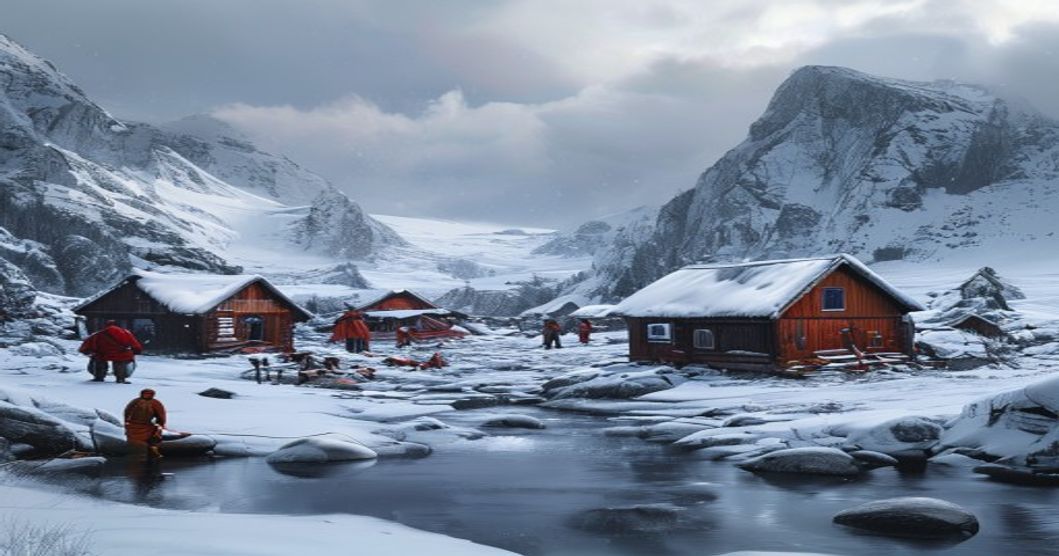
Inside the Hidden World of Arctic Sami Communities
The Arctic region spanning northern Norway, Sweden, Finland, and Russia houses the Sámi people, Europe’s only indigenous population with a continuous presence dating back millennia. Their traditional territory, known as Sápmi, stretches across subarctic landscapes defined by taiga forests, tundra plateaus, and fragmented coastlines. Survival in this environment historically required deep ecological knowledge, adaptive mobility, and a complex relationship with reindeer domestication. Reindeer herding remains the most recognized aspect of Sámi life, yet it represents only one pillar of a diversified subsistence system that includes seasonal fishing, wild berry harvesting, fur trapping, and small-scale agriculture in southern zones.
Linguistic diversity forms another critical layer of Sámi identity. The community historically spoke over twenty distinct dialects, which modern scholarship categorizes into three primary branches: North Sámi, South Sámi, and East Sámi. North Sámi currently holds the largest speaker base, while South Sámi exists in critically endangered status according to UNESCO assessments. Language revitalization programs across Nordic municipalities now integrate digital dictionaries, immersion schools, and broadcast media to counteract centuries of assimilation policies. These efforts directly influence cultural continuity, as traditional knowledge regarding animal behavior, weather patterns, and medicinal plant usage is encoded within specific lexical structures.
- Cultural expression relies on oral traditions, particularly the joik, a vocal technique that conveys emotional landscapes rather than narrative storytelling. Duodji, the regulated craft system governing tools, textiles, and decorative objects, operates under strict ethical guidelines regarding material sourcing and functional design.
- Land tenure conflicts dominate contemporary political discourse. Grazing rights, mining concessions, and wind farm developments frequently intersect with ancestral territories, prompting legal challenges that test international indigenous rights frameworks like ILO Convention 169.
Modern Sámi communities navigate dual realities: maintaining centuries-old ecological practices while engaging with digital infrastructure, cross-border trade networks, and academic research. Climate acceleration alters reindeer migration routes and destabilizes winter grazing conditions, forcing adaptive management strategies that blend satellite tracking data with generational observational records. Educational initiatives now emphasize intergenerational knowledge transfer through mobile learning platforms and community archives, ensuring that ecological literacy and linguistic competence remain viable assets for future generations.
Geographical Roots and Historical Foundations Across Sápmi
The territory known as Sápmi stretches across the northern reaches of Scandinavia and the Kola Peninsula, encompassing parts of four sovereign states: Norway, Sweden, Finland, and Russia. This vast Arctic and subarctic landscape defies modern political borders, tracing instead along traditional reindeer migration corridors, river basins, coastal fjords, and mountain passes. The geography dictates a climate characterized by extreme seasonal shifts, polar nights, and midnight sun periods that have shaped indigenous settlement patterns for millennia.
Historical records confirm Sami presence in this region dating back thousands of years, long before the establishment of contemporary nation-states or border treaties. Communities adapted to diverse ecological zones, developing specialized knowledge systems for survival. Coastal groups relied on marine resources and seasonal fishing routes, while inland populations mastered pastoral reindeer husbandry across boreal forests and alpine tundra. These livelihoods were not merely economic but formed the foundation of social organization, spiritual practices, and intergenerational land stewardship.
- Reindeer migration routes span over 1,500 kilometers between summer grazing pastures in high altitudes and winter feeding grounds in sheltered valleys
- Sámi languages, belonging to the Uralic language family, diverged significantly from Finnish and Estonian due to centuries of geographic isolation and cultural exchange with Norse and Slavic populations
- Historical border divisions during the 17th and 19th centuries fractured traditional grazing territories, forcing communities to navigate overlapping legal jurisdictions and restricted movement rights
Colonial expansion triggered systematic assimilation campaigns that suppressed indigenous governance structures and land claims. The 1751 Treaty of Stockholm attempted to formalize borders but failed to recognize customary grazing rights, while subsequent missionary settlements and state-sponsored education policies actively dismantled nomadic practices. Despite these pressures, Sámi cultural continuity persisted through oral transmission, seasonal festivals, and resilient kinship networks. Modern territorial disputes involving hydroelectric dams, mining concessions, and wind energy infrastructure continue to intersect with historical land rights, underscoring the enduring relevance of geographical memory in contemporary indigenous advocacy.
Traditional Livelihoods and Reindeer Herding Practices
Reindeer pastoralism forms the economic and cultural backbone of many Sami communities across Fennoscandia. Far from a simple agricultural activity, this practice operates as a complex indigenous knowledge system finely tuned to Arctic conditions. Each siida—a self-governing herding district—manages specific grazing territories through centuries-old navigation techniques and ecological forecasting. Herders track subtle shifts in snow crust depth, lichen availability, and predator movement to optimize herd distribution across vast tundra landscapes.
- Spring calving grounds require careful protection from wolves and ravens, with herders positioning temporary shelters near sheltered valleys.
- Summer pastures shift toward coastal fells where biting insects diminish, allowing lactating females to recover fat reserves before autumn.
- Autumn roundups involve corraling herds using specialized snow fences and vocal commands, followed by selective culling that ensures herd health and meat distribution.
- Winter grazing zones focus on sparse terrain where reindeer dig through snowpack to access reindeer lichen, a critical carbohydrate source during extreme cold snaps.
Essential tools reflect adaptive engineering: the guksi wooden vessel preserves warmth for dairy processing, while layered gákti garments provide moisture regulation without synthetic insulation. Herders utilize traditional sleds called päiva and hand-forged iron hooks to manage animals across frozen river crossings. Modern GPS tracking collars now supplement ancestral wayfinding, yet core decision-making remains rooted in intergenerational observation of wind patterns, aurora activity, and ice thickness.
Contemporary pressures including mining expansion, infrastructure fragmentation, and accelerating climate shifts threaten traditional grazing corridors. Despite these challenges, reindeer herding persists as a living archive of Arctic resilience. Community-led land rights litigation and cross-border herding agreements continue to safeguard migratory routes, proving that indigenous pastoralism adapts without surrendering its ecological foundations. The integration of traditional ecological knowledge with satellite vegetation monitoring now enables dynamic pasture rotation, reducing overgrazing while maintaining herd mobility across politically divided territories.
Meat preservation relies on time-tested methods such as drying strips into suovas smoke-cured ribs and fermenting reindeer blood in wooden barrels. These techniques eliminate refrigeration dependency while maximizing
Seasonal Cycles and Winter Survival Strategies
The Sámi relationship with the Arctic landscape is fundamentally dictated by cyclical environmental shifts that demand precise ecological literacy. Winter survival hinges on deep familiarity with microclimates, snowpack stability, and reindeer foraging zones across the taiga and tundra ecotones. Herding groups relocate to forested winter pastures where reindeer can dig through crust layers to access ground lichen (Cladonia species). These migrations follow established transhumance routes that have been maintained for centuries, with route selection dictated by wind exposure, ice formation on water bodies, and the availability of sheltered valleys.
Daily survival protocols require rigorous preparation before temperatures drop below freezing. Traditional dwellings utilize a double-layered construction method: an outer canvas or reindeer hide shell reinforced with wooden poles, paired with an inner insulation layer of dried grass, moss, and packed snow blocks. Smoke ventilation is managed through adjustable roof flaps that maintain internal warmth while preventing carbon monoxide accumulation. Water procurement relies on melting compacted snow from specific elevation zones, where lower density and reduced mineral content yield cleaner hydration.
Food preservation techniques form the backbone of winter sustenance. Meat undergoes natural freeze-drying through exposure to subzero air circulation, while reindeer fat is rendered and stored in hollowed bone containers for high-calorie winter diets. Fish are preserved through controlled fermentation in sealed birch bark vessels or frozen solid on elevated wooden racks. Traditional duodji craftsmen produce layered garments using split reindeer hide for the inner layer and rough-skinned outer panels that deflect wind and moisture. Footwear incorporates dual-layered fur construction with specialized tread patterns designed to grip ice while preventing snow ingress.
- Snow Condition Assessment: Experienced herders evaluate crust hardness, wind slab formation, and depth hoar development using wooden probes and visual light refraction analysis.
- Route Navigation: Landmark orientation combines glacial erratics, river bends, and historical marker stones with contemporary GPS coordinates to maintain herd direction.
- Thermal Regulation: Body heat is preserved through strategic layering, frequent movement intervals, and consumption of warm bone broth infused with dried cloudberry leaves.
- Community Resource Allocation: Winter camps operate on decentralized food sharing networks where surplus meat, fish, and fuel are distributed based on family size and herd capacity.
Modern adaptations integrate snowmobiles for rapid terrain traversal and digital weather monitoring, yet core decision-making remains rooted in empirical observation. Younger generations undergo rigorous apprenticeship cycles where trail reading, reindeer behavior interpretation, and emergency shelter construction are practiced across multiple winter seasons. This continuity ensures that ecological knowledge adapts to shifting climate patterns without abandoning foundational survival architecture.
Contemporary Challenges Facing Arctic Indigenous Popations
The Arctic Sami confront a complex matrix of systemic pressures that directly threaten the viability of their ancestral livelihoods and cultural continuity. Climate acceleration has fundamentally destabilized tundra ecosystems, disrupting migration corridors that herders have navigated for generations. Recurring rain-on-snow events create dense ice formations over lichen pastures, trapping reindeer from accessing forage and causing severe population declines during winter months. Shifting vegetation zones simultaneously force herders to adjust grazing routes across national boundaries in Norway, Sweden, Finland, and Russia, complicating cross-border administrative coordination. Industrial expansion compounds these ecological stresses. Commercial mining concessions in northern Scandinavia fragment critical calving grounds, while utility-scale wind developments consume extensive summer pastures without securing free, prior, or informed consent from local herding districts. These projects frequently advance under state-driven resource policies that subordinate indigenous land tenure to national energy and extraction targets.
- Economic Marginalization: Remote settlements lack reliable broadband infrastructure, specialized healthcare access, and affordable housing markets, forcing youth migration to urban centers where traditional knowledge networks dissolve.
- Linguistic Erosion: Despite constitutional recognition, intergenerational fluency declines as education systems historically standardized around majority-language curricula marginalize indigenous pedagogical methods. Revitalization initiatives face persistent funding gaps and digital content scarcity.
- Legal Implementation Deficits: International frameworks like UNDRIP offer theoretical protections, yet domestic enforcement remains fragmented. Land claim negotiations stay protracted while state authorities routinely prioritize industrial permitting over community consultation protocols.
Sustainable mitigation requires integrated policy models that legally recognize traditional land use, guarantee infrastructure equity, and fund community-directed cultural preservation initiatives. Cross-border herding cooperatives must establish adaptive grazing calendars aligned with rapid ecological shifts, while national governments need to formalize indigenous co-management agreements for renewable energy projects located on ancestral territories.
Language Revitalization and Educational Initiatives
The Sámi linguistic landscape has undergone centuries of systematic suppression under Nordic assimilation policies, yet contemporary revitalization efforts demonstrate remarkable structural resilience. Modern pedagogical frameworks now prioritize mother-tongue instruction across multiple dialect zones, directly counteracting historical marginalization. Educational institutions in Tromsø, Umeå, and Rovaniemi have integrated Sámi language modules into formal curricula, moving beyond symbolic representation toward functional academic proficiency. Immersion preschools operate on a critical mass model, where children aged three to six receive daily instruction exclusively in their local Sámi variant, establishing cognitive foundations before primary schooling begins. Administrative bodies monitor enrollment data quarterly to ensure program sustainability and allocate resources toward underserved linguistic zones.
Institutional strategies address systemic gaps through coordinated regional networks. University partnerships between the Sámi University of Applied Sciences and Nordic pedagogical faculties have standardized teacher certification programs. These initiatives eliminate chronic instructor shortages by combining advanced linguistic coursework with indigenous methodology training. Digital infrastructure now supports real-time language acquisition through open-source platforms hosting interactive grammar exercises, voice recognition modules, and community-contributed lexicons. The Sámi Language Centre coordinates cross-border documentation projects, ensuring phonetic variations in North Sámi, Inari Sámi, and Skolt Sámi receive equal archival priority within national heritage databases. Curriculum developers continuously update pedagogical materials to reflect contemporary urban dialects alongside traditional rural speech patterns.
- Community-driven workshops led by elders focusing on reindeer herding terminology and ecological vocabulary
- Regional broadcasting mandates requiring daily Sámi language programming across public networks
- Geolocation-based mobile applications delivering context-specific linguistic lessons tied to local landscapes
Academic institutions track proficiency metrics through standardized assessment tools, revealing measurable gains in youth fluency rates over the past decade. Government funding mechanisms now require educational grants to demonstrate concrete language retention outcomes rather than superficial cultural inclusion. Sustainable preservation depends on continuous community participation, technological adaptation, and strict policy enforcement across Scandinavian borders. Long-term viability requires dedicated funding streams that prioritize native speaker employment within educational administration and media production sectors.
Ethical Tourism and Responsible Travel Guidelines
Visiting Sámi territories requires a deliberate shift from conventional sightseeing to participatory cultural engagement. Travelers must prioritize consent-based interactions, particularly when approaching reindeer herding camps or sacred sieidi sites. Always seek explicit permission before photographing individuals, documenting traditional practices, or entering private grazing lands. The Sámi Parliament has established clear frameworks for tourism operators, mandating that guides hold indigenous heritage certifications and that tour routes avoid ecologically fragile tundra zones during the spring calving season.
Economic leakage remains a critical concern in Arctic destinations. Direct revenue should flow through Sámi-owned enterprises, family-run guesthouses, and certified artisans selling authentic duodji crafts. Avoid mass-produced souvenirs that appropriate indigenous symbols; genuine items require specific carving techniques passed through generations. When booking accommodations, verify ownership structures and ensure employment practices align with regional labor standards. Fair compensation models prevent cultural commodification while sustaining intergenerational knowledge transfer.
- Cultural Protocols: Request guidance from local Sámi councils before planning itineraries; follow designated reindeer crossing routes to prevent livestock stress and traffic disruptions.
- Environmental Boundaries: Adhere strictly to marked trails in national parks; pack out all waste, including biodegradable materials, as decomposition rates in subarctic climates exceed twelve months.
- Economic Verification: Cross-reference tour operators with the Sámi Tourism Association database; confirm that at least sixty percent of staff are indigenous and profit-sharing agreements are publicly documented.
- Seasonal Awareness: Avoid winter expeditions during the siida migration periods (November to January); summer visits should respect berry-picking rights protected under customary land use laws.
Sustainable engagement extends beyond compliance. Travelers who invest in language preservation workshops, fund reindeer welfare initiatives, or collaborate with Sámi researchers on oral history archives contribute directly to cultural resilience. Regulatory bodies now require tourism licenses to demonstrate environmental impact assessments and indigenous consultation records. By aligning itineraries with ecological carrying capacities and respecting territorial sovereignty, visitors transform transient consumption into long-term partnership.
Community Governance and Modern Political Representation
Traditional Sami decision-making operated through decentralized assemblies where reindeer herding districts, fishing territories, and seasonal migration routes dictated jurisdictional boundaries. Elders and experienced herders mediated disputes, while local councils managed resource allocation without centralized bureaucracy. This organic structure relied on customary law, oral agreements, and mutual accountability across kinship networks. The dissolution of these systems during the nineteenth and twentieth centuries triggered deliberate efforts to rebuild representative frameworks. Contemporary Sami governance now functions through statutory institutions established across four sovereign states. Norway founded the Sámediggi in 1989, followed by Sweden in 1993 and Finland in 1996. Each parliament operates under distinct national legislation yet shares a unified mandate: safeguarding language rights, subsidizing reindeer husbandry, and negotiating land-use agreements with municipal and federal authorities. Electoral participation remains selective, restricted to voters meeting specific ancestry and livelihood criteria tied to Sami cultural practice. This threshold ensures representation aligns with those directly impacted by territorial policy shifts.
- Sámediggi Legislative Frameworks: Each national parliament holds advisory authority over education, culture, and reindeer management, while lacking direct veto power over extractive industries or infrastructure projects.
- ILO Convention 169 Implementation: Norway and Sweden ratified the treaty, granting Sami institutions formal consultation rights before state approvals for mining, wind farms, or highway expansions within Sápmi.
- Cross-Border Coordination: The Sami Council operates as a non-governmental advisory body, translating parliamentary resolutions into unified policy positions presented to Nordic ministers and Arctic Council working groups.
Modern political representation faces structural friction. Municipal zoning laws frequently override traditional grazing corridors, forcing herders to petition regional tribunals for seasonal access. Youth engagement remains inconsistent due to urban migration and language erosion in northern territories. Nevertheless, institutional footholds have expanded through judicial precedent. Supreme courts in Oslo, Stockholm, and Helsinki have progressively recognized customary land tenure, compelling governments to negotiate impact assessments before approving commercial ventures. Political fragmentation persists across borders, yet digital archiving and transnational funding streams have strengthened parliamentary coordination. Representation now extends beyond legislative chambers into environmental monitoring committees, cultural heritage registries, and educational curriculum boards. The evolution from oral councils to statutory bodies demonstrates adaptive resilience rather than assimilation.
Preserving Ancestral Knowledge in the Digital Age
The transmission of Sámi ancestral knowledge has historically relied on oral tradition, seasonal migration patterns, and intergenerational mentorship within family units. Digital infrastructure now serves as a critical archive for these fragile systems. Community-driven platforms integrate audio recordings of joik melodies with geotagged ecological data, creating multidimensional records that traditional libraries cannot replicate. Researchers partner directly with reindeer herding cooperatives to map historical grazing routes using GIS technology, cross-referencing satellite imagery with elder interviews. This spatial documentation preserves migration logic that climate shifts are rapidly altering.
Language revitalization programs utilize adaptive learning algorithms tailored to Northern Sámi grammar structures. Machine translation models trained on verified linguistic corpora reduce dependency on external dictionaries while maintaining dialectal accuracy. Elders record contextual storytelling sessions, which are then tagged with metadata describing seasonal phenomena, animal behavior, and terrain navigation techniques. These datasets feed into open-access educational portals used by schools across Finnmark, Troms, and Sápmi regions.
- Ethical frameworks govern digital asset circulation through indigenous data sovereignty protocols that specify access tiers for sacred practices versus publicly shareable crafts.
- Blockchain-based provenance tracking ensures commercial exploitation of patterns or melodies requires explicit consent from originating clans.
- Virtual reality simulations allow younger generations to practice ice navigation and lasso techniques in controlled environments before applying them on actual tundra.
Technical preservation extends beyond storage. Metadata standards align with Dublin Core extensions for cultural heritage, enabling cross-institutional searchability without fragmenting ownership rights. Community curators maintain version control over digital artifacts, updating descriptions as ecological conditions shift. Automated transcription tools trained on Sámi phonetics convert handwritten field notes into searchable text while preserving original orthography. These systems operate under localized server infrastructure to prevent data extraction by external entities.
Integration of environmental sensors with ancestral calendars creates hybrid monitoring networks. Temperature gauges placed near traditional salt pans transmit data alongside recordings of wind patterns that historically signaled safe passage routes. These combined datasets inform both academic research and municipal climate adaptation policies. Digital archives also host interactive maps where users can layer historical hunting grounds over current vegetation indices, revealing long-term ecological shifts. Community moderators enforce usage guidelines that prioritize educational continuity over commercial metrics.
Frequently Asked Questions
What is Inside the Hidden World of Arctic Sami Communities?
The hidden world of Arctic Sami communities encompasses centuries-old traditions, reindeer herding practices, intricate duodji crafts, and a deep spiritual connection to the tundra landscape. These indigenous groups maintain a unique language, seasonal migrations, and oral storytelling that preserve their identity despite modern challenges.
Key facts about Inside the Hidden World of Arctic Sami Communities
The Sami are the only recognized indigenous people of Europe, primarily residing in Norway, Sweden, Finland, and Russia’s Kola Peninsula. Their culture revolves around reindeer herding, which is not just an economic activity but a way of life tied to seasonal rhythms. The Sami Parliament systems advocate for their rights, and their traditional joik music was inscribed on UNESCO’s Representative List of the Intangible Cultural Heritage of Humanity in 2019.