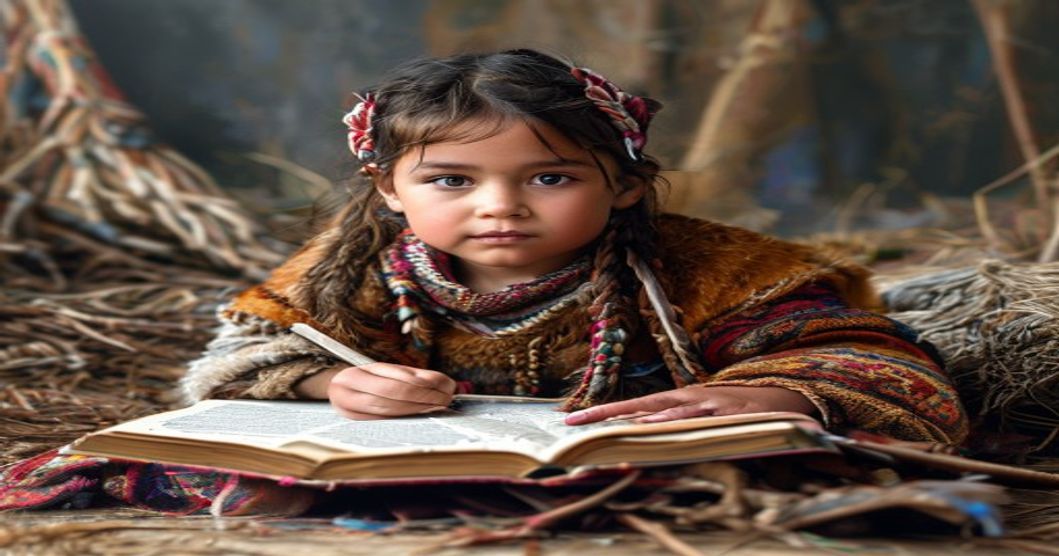
The Role of Family Structure and Kinship Networks in Early Learning
Kinship networks dictated every developmental milestone. Children assumed **age-graded responsibilities** by age four. Elders assigned specific tasks based on observed aptitude. This early autonomy forced rapid motor skill acquisition.
Multi-generational households functioned as continuous learning labs. Grandparents transmitted genealogical data through structured recitation. Parents modeled resource allocation during daily routines. Children internalized economic patterns without formal instruction.
The Influence of Local Community and Seasonal Gatherings
Communal learning circles replaced isolated study sessions. Seasonal gatherings concentrated knowledge transfer into concentrated weeks. **Ecological storytelling** embedded survival data into memorable narratives. Listeners memorized weather patterns through rhythmic repetition.
**Mnemonic frameworks** relied on environmental landmarks. Children navigated vast territories using natural compass points. Oral archives preserved migration routes across centuries. Community elders corrected geographical errors in real time.
The Structure of Curriculum and Seasonal Pedagogy
**Seasonal pedagogy** dictated the entire academic calendar. Migration cycles replaced semester breaks. **Imitative practice** formed the core instructional method. Instructors demonstrated techniques while learners replicated actions.
**Environmental feedback loops** provided immediate performance metrics. Failed traps signaled necessary technique adjustments. Successful hunts validated instructional accuracy. Textbooks remained entirely unnecessary in this system.
Teacher-Student Dynamics and Mentorship Models
**Mentorship by observation** governed all instructional exchanges. Elders corrected posture through physical guidance. Learners absorbed corrections without verbal explanation. **Reciprocal teaching** emerged when advanced students guided novices.
Authority structures operated laterally rather than hierarchically. Instructors evaluated progress through daily utility. **Failure as data** replaced punitive grading systems. Students mastered complex tasks through incremental repetition.
Language Preservation and Indigenous Knowledge Transfer
**Diglossic immersion** established simultaneous linguistic fluency. Children acquired **phonemic mapping** through environmental labeling. Contextual vocabulary acquisition eliminated rote memorization. **Linguistic continuity** survived deliberate assimilation policies.
**Sami dialect variations** functioned as regional identifiers. Elders enforced strict grammatical standards during gatherings. Written translations emerged only after oral mastery. Language preservation required active daily usage.
Practical Skill Development and Vocational Training
**Duodji craftsmanship** demanded precise material selection. Apprentices learned tool maintenance before fabrication. **Reindeer husbandry** required seasonal movement tracking. **Snow-reading** techniques enabled safe winter navigation.
**Weather prediction** relied on atmospheric observation. Students memorized animal migration triggers across decades. **Tool maintenance** protocols extended equipment lifespan. Vocational training integrated seamlessly into daily survival.
Cognitive and Social Development Outcomes
**Ecological cognition** developed through constant environmental interaction. Spatial memory capacity expanded beyond standard benchmarks. **Collective problem-solving** replaced competitive academic structures. **Resilience training** prepared youth for extreme climate shifts.
Cross-cultural adaptability emerged from continuous boundary navigation. Children processed multiple economic systems simultaneously. Emotional regulation improved through shared hardship. **Kinship ethics** formed the foundation of social cohesion.
Modern Adaptations and Educational Legacy
**Digital archiving** preserved vanishing instructional techniques. **Mobile learning platforms** delivered nomadic curricula to remote settlements. **Indigenous pedagogy integration** influenced national education policies. **Intergenerational transfer** mechanisms adapted to urban migration.
Government funding now supports **traditional knowledge documentation**. Researchers validate historical methods through empirical studies. **Policy shifts** recognize nomadic learning as academically rigorous. Legacy preservation requires continuous community funding.
Frequently Asked Questions
What philosophical and ecological principles defined Sami education?
**Non-anthropocentric ecology** defined the core philosophical framework. Humans operated as participants within natural systems. **Temporal flexibility** replaced rigid scheduling requirements. **Resource stewardship** governed all economic decisions.
**Kinship ethics** dictated social responsibility boundaries. Survival depended on collective rather than individual success. **Adaptive resilience** became the primary educational metric. Worldview formation occurred through direct environmental feedback.
How does Sami’s early education differ from standard systems?
**Decentralized instruction** replaced standardized classroom layouts. **Nature-based assessment** measured competency through practical application. **Holistic skill acquisition** integrated academic and survival training. **Absence of standardized testing** eliminated performance anxiety.
**Contextual literacy** emerged before formal alphabet instruction. Children mastered complex ecological vocabulary early. Assessment occurred through daily utility rather than exams. Educational outcomes prioritized community survival over individual achievement.
Frequently Asked Questions: Sami Childhood and Traditional Education
What is Sami Childhood and Traditional Education?
Sami childhood and traditional education refer to the indigenous cultural practices, learning methods, and socialization processes of the Sámi people across northern Scandinavia and Russia. Historically, Sámi children learned through observation, storytelling, and hands-on participation in reindeer herding, fishing, hunting, and crafting, with knowledge passed down intergenerationally by elders and community members rather than through formal schooling.
Key facts about Sami Childhood and Traditional Education
Key facts include: (1) Education was primarily informal and experiential, deeply tied to nature and seasonal cycles; (2) Sámi children learned essential survival skills, language (Sámi dialects), and spiritual beliefs through oral tradition and apprenticeship; (3) Traditional education emphasized community cooperation, respect for the environment, and self-reliance; (4) The introduction of state-run schooling in the 18th and 19th centuries initially suppressed Sámi language and cultural practices, leading to a modern revival of indigenous educational models; (5) Today, many Sámi communities integrate traditional knowledge with contemporary education to preserve their heritage.