The Historical Foundations of Semitic Artistic Traditions
Traditional Semitic patterns and art emerged across the ancient Near East as a direct reflection of linguistic, religious, and commercial networks spanning millennia. Archaeological evidence from Ugarit, Babylon, and early Arabian kingdoms reveals that decorative motifs were never merely ornamental but served as visual archives of trade routes, dynastic alliances, and cosmological beliefs. The geographic corridor stretching from the Levant through Mesopotamia to the Red Sea facilitated continuous artistic exchange, allowing ancient Near Eastern motifs to evolve while retaining distinct regional identities.
Ancient Mesopotamian and Levantine Motifs
Early Sumerian and Akkadian artisans established foundational designs including rosettes, spirals, and interlocking bands that later informed Levantine decorative arts. Cylinder seals, palace reliefs, and temple architecture utilized repetitive geometric frameworks to denote royal authority and divine protection. As urban centers expanded, pottery and metalwork incorporated stylized flora and fauna, demonstrating how historical textile patterns and surface decoration shared a common visual vocabulary across civilizations.
Arabian Peninsula and South Semitic Influences
South Arabian kingdoms such as Saba, Himyar, and Ma’in developed highly refined ornamental systems characterized by bold linear borders, incised geometric grids, and symbolic animal figures. These designs frequently appeared on limestone architecture, bronze artifacts, and woven textiles, where Semitic calligraphy began intersecting with visual patterning. The migration of tribal confederations and the expansion of incense trade routes enabled South Semitic motifs to diffuse northward, permanently altering the decorative landscape of the broader Arabian and Levantine regions.
Core Elements of Traditional Semitic Patterns
The structural integrity of Semitic art relies on three interlocking visual systems: mathematical geometry, botanical abstraction, and typographic ornamentation. Each element operates according to strict compositional rules that prioritize repetition, balance, and symbolic resonance over naturalistic representation.
Geometric Symmetry and Mathematical Precision
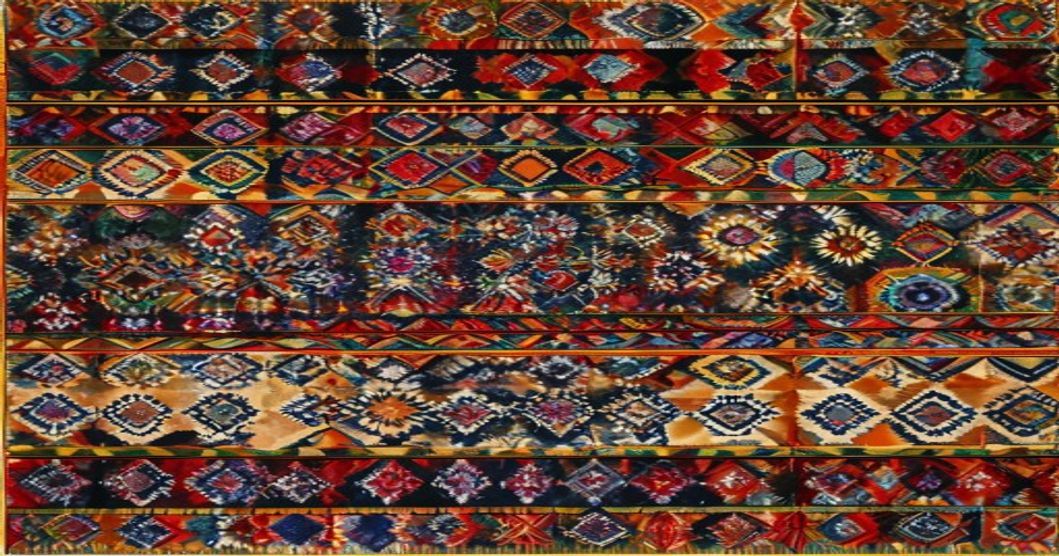
Traditional Islamic geometric design and pre-Islamic Semitic patterning both depend on compass-and-straightedge construction methods. Artisans generated complex tessellations by rotating squares, hexagons, and octagons around central points, producing interlaced stars and polygons that symbolized cosmic order. This mathematical rigor ensured scalability across mediums, allowing craftsmen to replicate identical frameworks on miniature manuscript borders, architectural tilework, and large-scale facade structures without structural distortion.
Floral and Organic Motifs in Semitic Decorative Arts
Botanical abstraction in Semitic craftsmanship avoids direct botanical accuracy in favor of highly stylized representations. The palmette, arabesque, and lotus variants were systematically distorted into continuous scrolling vines that filled negative space while maintaining rhythmic repetition. These organic frameworks frequently bordered textual panels or framed architectural niches, functioning as visual transitions between sacred geometry and terrestrial imagery.
Calligraphic Integration and Script-Based Design
When Semitic scripts such as Aramaic, Syriac, and early Arabic evolved into ornamental mediums, letterforms were stretched, interlocked, and transformed into structural components of larger patterns. Calligraphic bands operated as both readable text and decorative framework, with vowel marks and diacritics sometimes repurposed as geometric anchors. This fusion established a unique design paradigm where typography and ornamentation became functionally indistinguishable.
Cultural Significance and Symbolism Across Regions
Every recurring element within traditional cultural heritage patterns carries layered meanings tied to environmental conditions, theological frameworks, and socioeconomic structures. Decoding these symbols requires contextual analysis rather than isolated visual interpretation.
Religious and Spiritual Representations
Geometric repetition in Semitic sacred art consistently symbolizes infinity, divine unity, and the unbroken nature of cosmic law. Floral scrolls frequently reference fertility cycles, agricultural abundance, and paradisiacal gardens described in regional religious texts. Protective symbols such as the hand motif, eye configurations, and knotwork arrangements were deliberately embedded into domestic architecture and personal adornments to ward off environmental and spiritual threats.
Daily Life, Architecture, and Craftsmanship
Urban and rural communities utilized patterned surfaces to regulate temperature, direct airflow, and define spatial boundaries. Woven carpets, embroidered garments, and carved wooden screens incorporated dense patterning that doubled as insulation and privacy filters. Artisans calibrated motif density according to climate and function, with coastal regions favoring fluid linear designs and desert populations utilizing high-contrast geometric grids optimized for visual clarity under harsh sunlight.
Interregional Exchange and Artistic Evolution
Trade networks spanning the Silk Road, Indian Ocean maritime routes, and trans-Arabian caravan paths facilitated continuous motif transplantation. Persian interlace techniques merged with Levantine floral frameworks, while North African geometric traditions influenced Arabian textile production. This cross-pollination prevented cultural isolation, ensuring that Semitic patterns remained dynamic rather than static historical artifacts.
Preservation Techniques and Contemporary Adaptations
The survival of traditional Semitic artistic knowledge depends on rigorous documentation, material conservation, and adaptive reintegration into modern design ecosystems. Without systematic intervention, centuries of accumulated visual intelligence risk irreversible erosion.
Frequently Asked Questions
What is Traditional Sami Patterns and Art?
Traditional Sami patterns and art refer to the distinctive visual culture of the Sámi people, indigenous to the northern regions of Norway, Sweden, Finland, and Russia. Characterized by bold geometric shapes, vibrant colors (primarily red, blue, green, and yellow), and symbolic motifs inspired by nature, reindeer, and the northern lights, this art form is traditionally applied to clothing (gákti), textiles, woodwork, and jewelry.
Key facts about Traditional Sami Patterns and Art
Key facts include: (1) The patterns are deeply symbolic, often representing clan identity, spiritual beliefs, and the natural environment. (2) Traditional techniques involve hand-weaving, knitting, and embroidery using natural dyes. (3) The geometric designs are strictly governed by regional rules and are not randomly created. (4) Modern Sámi artists continue to preserve and innovate upon these patterns while maintaining their cultural significance. (5) UNESCO and indigenous cultural heritage initiatives actively support the preservation of Sámi artistic traditions.
Frequently Asked Questions
What is Traditional Sami Patterns and Art?
Traditional Sami patterns and art refer to the distinctive visual culture of the Sámi people, indigenous to the northern regions of Norway, Sweden, Finland, and Russia. Characterized by bold geometric shapes, vibrant colors (primarily red, blue, green, and yellow), and symbolic motifs inspired by nature, reindeer, and the northern lights, this art form is traditionally applied to clothing (gákti), textiles, woodwork, and jewelry.
Key facts about Traditional Sami Patterns and Art
Key facts include: (1) The patterns are deeply symbolic, often representing clan identity, spiritual beliefs, and the natural environment. (2) Traditional techniques involve hand-weaving, knitting, and embroidery using natural dyes. (3) The geometric designs are strictly governed by regional rules and are not randomly created. (4) Modern Sámi artists continue to preserve and innovate upon these patterns while maintaining their cultural significance. (5) UNESCO and indigenous cultural heritage initiatives actively support the preservation of Sámi artistic traditions.