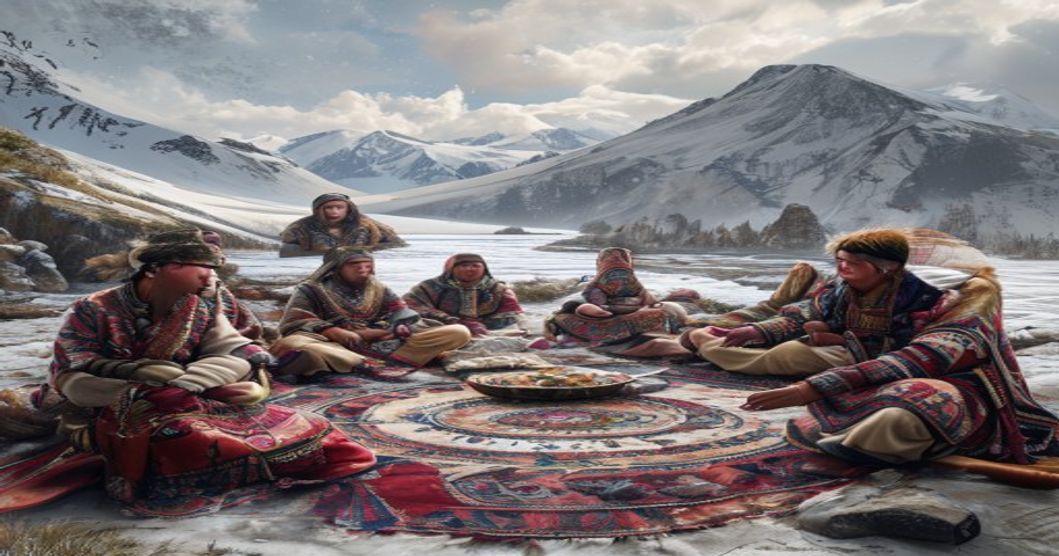
Traditional Sami Cosmology Explained
The indigenous cosmological framework of the Sámi people maps existence across three distinct realms: the Upper World governed by celestial deities, the Middle World inhabited by humans and terrestrial animals, and the Lower World ruled by subterranean spirits. This tripartite structure reflects a deeply animistic understanding of the Arctic environment, where every natural element possesses spiritual agency. Central to this system is Radien, the sun deity who governs light and seasonal renewal, alongside Beaivi, his feminine counterpart associated with solar cycles and ecological timing. The thunder god Horagalles controls weather patterns and hunting success, while Mátta-Máhtte presides over the underworld, mediating between human offerings and subterranean forces.
Sámi spiritual practice revolves around sieidi stones, sacred natural formations shaped by glacial erosion, which function as ritual focal points rather than carved idols. Communities deposited reindeer antlers, copper coins, or dried fish at these sites to maintain equilibrium with ecological and supernatural forces. Divination through the goavddis drum served as a primary method of communication with the spirit world. The drum’s painted symbols—representing mountains, waterways, reindeer herds, and celestial bodies—enabled noaidi practitioners to diagnose illnesses, predict weather shifts, and locate game during seasonal migrations.
- Cosmological boundaries were maintained through strict taboos regarding hunting routes, fishing grounds, and sacred groves.
- Ritual calendars aligned with the midnight sun, polar nights, and reindeer calving seasons rather than fixed liturgical dates.
- Spiritual authority rested with noaidi practitioners who inherited drum knowledge through oral transmission across generations.
The systematic dismantling of traditional Sámi cosmology began during the 17th-century Christianization campaigns, which destroyed sieidi sites and criminalized drum ceremonies. Despite centuries of institutional suppression, the underlying ecological philosophy persists in contemporary Sámi land rights movements and cultural revitalization efforts. Modern practitioners reconstruct ritual knowledge through archaeological evidence, historical archives, and intergenerational storytelling, reinforcing the original premise that human survival depends on reciprocal relationships with the natural world.
The Three Realms of the Sami Universe
The foundational structure of traditional Sami cosmology divides existence into three vertically aligned dimensions that dictate spiritual practice, ecological management, and human settlement patterns. At the highest tier operates Bajddu, the celestial sphere governed by Beaivi (the sun deity) and Mánnu (the moon). This upper domain regulates seasonal transitions, agricultural fertility, and migratory animal behavior. Ritual drummers mapped planetary alignments onto copper plates to forecast reindeer movements and hunting conditions, treating astronomical phenomena as direct communications from divine forces.
The intermediate tier encompasses Eana, the terrestrial plane where human communities establish livelihoods through reindeer herding, fishing, and foraging. This middle world is not merely physical terrain but a network of animated landscapes containing sieidi stones, sacred waterfalls, and mountain peaks. Each geographical feature functions as a spiritual node requiring regular appeasement through fat offerings, behavioral taboos, and seasonal sacrifice cycles to maintain ecological equilibrium.
The lowest dimension consists of Aibmu, the subterranean realm overseeing mortality, ancestral memory, and cyclical regeneration. Inhabited by figures such as Beaivi’s brother or the underworld serpent, this domain dictates the journey of departed souls during winter months when daylight recedes. Death operates within a continuous cosmic loop rather than a terminal state. Practitioners utilized bone divination, vocal joik techniques, and drum percussion to navigate boundary zones between all three spheres. Maintaining cross-realm harmony demanded strict ritual protocols, resource rotation systems, and seasonal festivals that reinforced the interdependence of celestial guidance, terrestrial sustainability, and ancestral continuity.
- Bajddu dictates astronomical cycles and divine intervention through drum mapping and star observation.
- Eana governs daily survival, requiring ecological reciprocity via sieidi veneration and seasonal offerings.
- Aibmu manages ancestral transition, necessitating winter solstice rituals and bone divination for spiritual navigation.
Sacred Animals and Mythical Entities in Sami Beliefs
Within traditional Sami cosmology, the natural world operates as an interconnected spiritual network where animals and unseen forces dictate daily survival, seasonal cycles, and ritual practice. Reverence for specific creatures stems from their ecological dominance and perceived ability to bridge the physical and spirit realms. The reindeer remains the central sacred figure, symbolizing sustenance, migration patterns, and the rhythmic flow of time across Arctic landscapes. Ritual offerings often targeted reindeer bones or antlers to maintain harmony between herders and the animals.
- Bear (Oinná) holds profound spiritual weight. Traditional taboos prohibited direct mention of the word, replaced by honorific titles to avoid offending the creature’s protective spirit. Post-hunt ceremonies involved symbolic reconciliation rituals to ensure the bear’s soul would return to the underworld and facilitate future hunts.
- Fox (Gálllu) functions as a cunning trickster and messenger between worlds. Its seasonal coat changes marked spiritual transitions, while its tracks were interpreted as omens guiding hunters toward game or warning of impending weather shifts.
- Wolverine (Guovža) represents endurance and untamed wildness. Skins and claws were incorporated into protective amulets, believed to transfer the animal’s resilience to warriors and travelers navigating treacherous terrain.
Mythical entities operate alongside fauna as active participants in Sami cosmological frameworks. Sieidi formations—natural rock pillars, caves, or unusually shaped stones—served as focal points for spirit communication. Offerings of food, metal, or carved figures were deposited to negotiate favors with resident deities governing local territories. The Noaidi, functioning as ritual specialists and spiritual intermediaries, utilized drum patterns and trance states to navigate between the upper, middle, and lower worlds. Mythological narratives frequently describe journeys through these realms to retrieve lost souls or secure hunting success.
- Dvergar inhabit subterranean spaces and mineral deposits, granting knowledge of ore formation and metallurgy in exchange for respectful conduct near mining sites.
- Nissar oversee domestic hearths and livestock shelters. Disrupting their space through improper waste disposal or loud nocturnal activity triggered documented supernatural retribution, reinforcing communal norms around household discipline.
- Vájjár guard forest boundaries and regulate access to hunting grounds. Violating territorial protocols resulted in misdirection, equipment failure, or sudden storm manifestations, emphasizing the necessity of ritual consent before resource extraction.
This cosmological architecture demands continuous negotiation rather than passive observation. Human activities required explicit spiritual clearance, with animal spirits and mythical guardians operating as autonomous authorities rather than symbolic metaphors. Ecological knowledge and mythic practice merged into a single operational system where survival depended on recognizing non-human agency.
The Noaidi Shaman and Ritual Drum Symbolism
The Noaidi functioned as the central spiritual conduit within Sami cosmological frameworks, bridging the tangible landscape and the invisible realms inhabited by spirits, ancestors, and natural forces. This role demanded rigorous initiation, often involving years of mentorship under an elder practitioner and transformative dream experiences that confirmed spiritual authority. The ritual drum, known locally as the goavddis or boat drum, served as the Noaidi’s primary instrument for navigating these layered realities. Carved from pine or birch wood and stretched with reindeer hide, the drum’s surface was meticulously painted with symbolic representations of the tripartite cosmos: the upper world governed by celestial deities like Bieggolmai, the middle world where human communities and animal spirits coexisted, and the lower world associated with death, fertility, and subterranean forces.
Each painted motif carried precise cosmological weight. Circular symbols denoted the sun or moon, while wavy lines mapped river systems and seasonal migration routes. Animal figures—reindeer, bears, foxes, and birds—were not mere decorative elements but represented spirit helpers that accompanied the Noaidi during journeys. The drum’s rhythmic patterns induced altered states of consciousness through repetitive acoustic vibration, allowing the practitioner to read divine messages in the stick’s trajectory as it struck specific painted figures. Divination outcomes dictated hunting expeditions, livestock management, and conflict resolution, directly linking spiritual insight to community survival.
- Vertical divisions marked thresholds between physical and spiritual geography
- Intersecting lines illustrated pathways for soul travel and ancestral communication
- Sieidi markers identified sacred natural sites requiring ritual offerings
Symbolic boundaries on the drum were never arbitrary. The Noaidi’s ability to interpret these configurations required encyclopedic knowledge of regional dialects, meteorological patterns, and ancestral lineages. Modern ethnographic studies confirm that drum symbolism operated as a dynamic cartography of ecological and spiritual relationships rather than static iconography. The instrument’s preservation through oral transmission and material craftsmanship underscores how Sami cosmology encoded environmental stewardship within ritual practice. Contemporary scholars recognize the goavddis as a sophisticated epistemological tool that structured human interaction with unpredictable Arctic ecosystems long before written documentation emerged in Northern Fennoscandia.
Seasonal Cycles and Land-Based Worship Practices
The Sami worldview divides the year into distinct seasonal phases dictated by reindeer migrations, daylight duration, and ecological shifts rather than fixed astronomical dates. Each transition demands specific spiritual attention because the land functions as a living entity governed by invisible forces. During the spring rutting season, herders perform boundary rituals at sacred stones known as sieidi to ensure herd safety and successful calving. These sites operate as thresholds where the physical and spiritual realms intersect, requiring silent offerings of dried reindeer meat or birch bark to maintain equilibrium with local land spirits.
Summer brings prolonged daylight and intensive fishing campaigns along coastal fjords. Ritual focus shifts toward water deities and wind guardians who control fish runs and storm severity. Historically, community leaders navigated these cycles using drum patterns that mapped celestial movements onto animal hides, tracking the sun’s trajectory to time communal gatherings and reindeer roundups. Offerings cast into swift currents or elevated mountain passes acknowledge reciprocity between human survival and ecological abundance.
- Spring rituals prioritize herd protection and boundary establishment at natural rock formations.
- Summer observances target aquatic spirits through water-based offerings and solar alignment ceremonies.
- Autumn rites focus on fat reserves, antler harvesting, and ancestral thanksgiving before winter migration.
- Winter protocols emphasize fire maintenance, shadow avoidance, and strict adherence to sacred geography during solstice periods.
Autumn marks the critical pre-winter preparation window. Reindeer are branded, fat reserves built, and antlers harvested for tool production. Spiritual obligations intensify as communities conduct thanksgiving rites at ancestral gathering grounds. Burning juniper smoke clears negative energy from wintering camps while sealing agreements with territorial spirits who oversee hunting success. The equinox period triggers specific drum ceremonies that realign communal focus toward survival rather than expansion.
Winter transforms the landscape into a domain of darkness and extreme cold, demanding strict adherence to ritual protocol. Solstice observances center on continuous fire rites where reindeer fat lamps burn through camp thresholds to ward off malevolent entities attracted by prolonged shadow. Every movement across snow becomes choreographed around sacred geography; crossing unmarked ridges or disturbing ancient burial mounds without proper acknowledgment risks spiritual imbalance. Land worship remains embedded in daily labor, not separate from it. Survival depends on reading micro-environmental signs and responding through prescribed offerings, ensuring the cosmological order sustains both community and territory across generational cycles.
Preservation and Modern Interpretations of Sami Cosmology
The safeguarding of Sámi cosmological frameworks relies on coordinated institutional support alongside grassroots cultural movements. International bodies like UNESCO have classified Sámi joik traditions and oral histories as intangible cultural heritage, triggering systematic documentation protocols across Norway, Sweden, Finland, and Russia. These efforts prioritize linguistic accuracy, ensuring that sacred terminology surrounding Noaidi, Sieidi stones, and seasonal reindeer migration patterns remains intact within academic repositories.
Community-driven preservation operates through Sámi parliaments and regional cultural institutes. Digital archives now host high-resolution recordings of elder storytellers, paired with geospatial mapping of ritual landscapes. Universities collaborate with indigenous knowledge keepers to validate ethnographic data against archaeological findings, creating peer-reviewed resources that resist colonial misinterpretation. Schools in Sápmi integrate cosmological concepts into environmental science curricula, teaching students how traditional sky navigation and animal behavior observations align with modern ecological monitoring.
Contemporary creators reinterpret these ancient frameworks through multidisciplinary mediums. Visual artists utilize symbolic motifs from duodji craftsmanship to explore themes of spiritual geography. Musicians blend electronic production techniques with polyphonic joik structures, while filmmakers document ritual cycles using drone cinematography to capture vast tundra ecosystems. Literary works by Sámi authors reframe mythological narratives as allegories for climate resilience and land rights advocacy.
- Institutional Archiving: Digitized manuscripts, audio recordings, and 3D-scanned ritual objects are stored in encrypted databases accessible to certified researchers.
- Educational Integration: University programs combine archaeoastronomy data with indigenous calendars, fostering cross-cultural scientific dialogue.
- Artistic Innovation: Contemporary installations and performances adapt cosmological principles to address urbanization and biodiversity loss.
Ethical documentation standards now require explicit consent from knowledge holders before any public release. This shift prevents commodification while enabling authentic representation in global forums. Modern interpretations do not dilute original teachings; they function as adaptive mechanisms that sustain relevance across generations. Digital platforms facilitate real-time exchange between remote herding communities and diaspora youth, ensuring cosmological continuity remains dynamic rather than static.
Colonial Suppression and Cultural Revival Movements
Colonial authorities across Norway, Sweden, and Finland implemented systematic assimilation policies that directly targeted Sámi spiritual frameworks. Missionary campaigns during the eighteenth and nineteenth centuries labeled indigenous cosmological practices as pagan superstition, leading to the confiscation of drum artifacts and the criminalization of joik performances. Educational systems enforced language suppression, removing Sámi children from their communities and prohibiting ancestral knowledge transmission. These measures fractured intergenerational continuity, forcing many spiritual practitioners into secrecy or abandonment of traditional ecological and cosmological frameworks tied to sieidi stones, noaidi rituals, and seasonal celestial markers.
Resistance emerged through organized political mobilization starting in the mid-twentieth century. The establishment of the Sámi Council in 1956 unified cross-border advocacy efforts, while land rights campaigns highlighted the inseparable link between territorial sovereignty and cosmological worldviews. High-profile actions, such as the Alta Dam protests of the late 1970s, demonstrated how environmental defense inherently protected sacred landscapes and seasonal migration routes central to Sámi cosmology. Legal victories followed, including constitutional amendments in Nordic countries recognizing indigenous status and linguistic rights.
- University programs now integrate Sámi epistemology into curriculum design, while community-led archives document oral histories previously suppressed by state institutions.
- Digital platforms enable younger generations to access recorded joik traditions, drum-making techniques, and seasonal calendar systems without geographic barriers.
- Cultural practitioners emphasize that revitalization extends beyond performance; it requires restoring relational frameworks between humans, reindeer, forests, and celestial cycles.
- Academic collaborations increasingly validate indigenous research methodologies, ensuring cosmological concepts are interpreted through Sámi analytical lenses rather than external anthropological categories.
Institutional support from Nordic governments now funds language nests, radio broadcasting networks, and heritage documentation projects. These structural investments complement grassroots efforts to reconnect sacred geography with contemporary land management practices, reinforcing the foundation of traditional Sámi cosmology for future generations.
Contemporary Art, Literature, and Educational Resources
Modern creative fields serve as vital conduits for preserving and revitalizing traditional Sami cosmological frameworks. Contemporary Sami artists frequently reinterpret ancestral worldviews through visual media, sound installations, and performance art. Paintings and sculptures often depict the interconnectedness of humans, reindeer, and the Arctic landscape, reflecting the cosmological belief that all entities possess spiritual agency. Musicians integrate traditional yoik techniques with modern production methods, embedding cosmological narratives about celestial navigation, seasonal cycles, and sacred geography into contemporary compositions.
- Visual Arts and Installations: Creators such as Nils-Aslak Valkeapää and Silje Myrene utilize duodji craftsmanship and mixed media to map cosmological territories, transforming traditional symbolic patterns into large-scale gallery works that challenge conventional Western art categorization.
- Literary Expressions: Modern Sami authors weave cosmological motifs into novels and poetry, exploring themes of shamanic heritage, oral transmission, and ecological balance. Published works frequently reference the duodji aesthetic and the spiritual significance of reindeer herding routes, bridging pre-contact mythologies with contemporary identity politics.
- Digital Archives and Publications: Academic institutions across Scandinavia and Northern Europe have digitized historical manuscripts, audio recordings, and ethnographic field notes. These repositories provide researchers and students with primary sources that document cosmological rituals, seasonal calendars, and mythic ecosystems without relying on colonial interpretations.
Educational frameworks increasingly incorporate indigenous-led pedagogy to teach Sami cosmology outside traditional Western academic structures. University programs in Sápmi integrate community knowledge keepers as faculty members, ensuring that cosmological concepts are transmitted through experiential learning rather than abstract theory. Digital platforms host interactive maps of sacred sites, virtual reality reconstructions of historical gathering grounds, and language revitalization tools that embed cosmological vocabulary into everyday curriculum. Museum exhibits now prioritize artifact contextualization over static display, using augmented reality to demonstrate how traditional astronomical observations guided hunting practices and seasonal migrations. This multidisciplinary approach ensures that Sami cosmological knowledge remains a living system rather than a historical artifact.
Key Questions About Traditional Sami Belief Systems
Traditional Sami cosmology operates on a foundation of animism and reciprocal relationship with the natural environment. Practitioners historically viewed all elements of the landscape as possessing spiritual agency. The core inquiry often centers on how indigenous communities maintained ecological balance through ritual practice. Understanding this requires examining the function of sacred objects, particularly sieidi stones, which served as focal points for offerings and communication with supernatural forces. These sites were not merely physical landmarks but active nodes within a living cosmological network that connected terrestrial, aquatic, and aerial domains.
Another frequent question involves the spiritual mediator known as the noaidi. This individual underwent rigorous training to enter trance states using the sáhpun, or shamanic drum, along with rhythmic chanting and breath control techniques. The drum’s painted panels mapped cosmic realms, guiding the practitioner through upper, middle, and lower worlds during divination and healing ceremonies. The noaidi negotiated between human communities and spirit beings responsible for weather patterns, animal migrations, and resource fertility. Ritual specialists also interpreted natural omens, including bird flight paths and ice formations, to adjust hunting schedules and prevent ecological disruption.
Questions regarding life cycles reveal distinct cosmological frameworks. Traditional Sami thought did not separate the living from the ancestral realm completely. Deceased individuals were believed to transition into saivo, a semi-divine state where they continued influencing daily affairs. Ritual feasts centered around boazu and fish reinforced communal bonds while acknowledging the spiritual debt owed to nature’s providers. Colonial restrictions and religious conversion campaigns systematically suppressed these practices, yet oral transmission preserved foundational concepts across generations. Modern archaeological and ethnographic research continues to clarify how environmental stewardship was encoded within spiritual law rather than secular governance.
- How did sacred geography shape ritual behavior? Terrain features dictated pilgrimage routes, seasonal ceremonies, and resource management protocols.
- What mechanisms ensured cosmic equilibrium? Offerings, silence practices, and environmental taboos prevented spiritual contamination during hunting and fishing expeditions.
- How was knowledge preserved without written records? Drum imagery, joik melodies, and kinship-based apprenticeship created resilient transmission networks across Arctic ecosystems.
What Happened to the Original Sacred Sites?
The original sacred sites of the Sami, historically referred to as sieidi and ritual landscapes, operated within a cosmological system that mapped spiritual agency onto specific geological and ecological features. These locations—typically glacial erratics, steep rock faces, or isolated lake shores—functioned as active interfaces between human communities and noaidie spirits responsible for weather patterns, reindeer herd behavior, and hunting success. Ritual practices required precise seasonal alignment, with offerings of animal fat, copper coins, and dried fish deposited to maintain reciprocity rather than petition for intervention. The physical markers were not static monuments but living nodes in a migratory and ceremonial network that dictated annual movement cycles.
Systematic erasure began with coordinated Lutheran missionary campaigns during the seventeenth century, which classified sieidi worship as heretical idolatry requiring removal. Rock formations were shattered or buried beneath wooden crosses, while oral transmission of site-specific prayers faced criminal penalties under ecclesiastical courts. Norwegian, Swedish, and Finnish state administrations accelerated this disruption through land appropriation statutes that prioritized timber extraction, agricultural settlement, and mineral exploitation over customary use rights. Logging operations cleared sacred groves that regulated microclimates for reindeer lichen pastures, mining concessions fractured geologically significant terrain, and hydroelectric dams flooded valley floors where seasonal gathering rituals had occurred for generations.
Legal frameworks historically classified these territories as state vacua, ignoring indigenous tenure systems based on continuous seasonal occupation rather than written titles. Twentieth-century national park designations further restricted community access without consulting local knowledge holders, while boarding school policies actively suppressed place-based memory transmission. Modern jurisdictional shifts emerged only after sustained legal challenges documented historical usage patterns and ecological dependencies. Contemporary preservation relies on Sami parliamentary mapping initiatives, cultural heritage registries, and binding land rights rulings that recognize sacred geography as integral to intellectual property and environmental stewardship.
- Ecclesiastical suppression: Targeted demolition of rock shrines and ritual artifacts between 1650 and 1850, accompanied by forced baptism mandates
- Resource extraction policies: State-granted forestry concessions, mining licenses, and taxation-driven settlement laws overriding customary movement corridors
- Infrastructure fragmentation: Highway construction, ski resort development, and dam projects altering drainage patterns and blocking seasonal migration routes
- Legal and archival recovery: Indigenous land claims, UNESCO intangible heritage documentation, and community-led GPS mapping preserving remaining sacred coordinates
Frequently Asked Questions
What is Traditional Sami Cosmology Explained?
Traditional Sami cosmology explained refers to the indigenous spiritual and worldview framework of the Sámi people, who inhabit the northern regions of Norway, Sweden, Finland, and Russia’s Kola Peninsula. It centers on a deep reverence for nature, viewing the world as interconnected through sacred landscapes, animals, and celestial bodies. The cosmos is traditionally divided into three realms: the upper world (luovat), the middle world (eana), and the lower world (ájna), all governed by spiritual forces and maintained through rituals led by the noaidi (shaman).
Key facts about Traditional Sami Cosmology Explained
Key facts include: 1) The concept of Sijá as the creator deity and supreme spirit. 2) The sacred drum (goavddis) used historically for divination and spiritual journeys. 3) A strong emphasis on animism, where every natural element possesses a soul or spirit. 4) The importance of seasonal rituals tied to reindeer migration, fishing, and hunting cycles. 5) Oral tradition as the primary method of transmitting cosmological knowledge across generations.