The Historical Roots of Traditional Sami Jewelry
Traditional Sami jewelry emerged from the nomadic and reindeer-herding lifestyles of the Sámi people, indigenous to the northern reaches of Norway, Sweden, Finland, and Russia’s Kola Peninsula. Unlike mainstream Nordic metalwork, Sámi craftsmanship prioritized functionality, cultural identity, and spiritual protection over ornamental excess. For centuries, these pieces served as portable archives of lineage, regional affiliation, and seasonal survival strategies. The evolution of traditional Sami jewelry reflects centuries of adaptation to harsh Arctic climates, trade networks with European merchants, and deliberate preservation of indigenous aesthetics against colonial assimilation policies.
Historical records indicate that early Sámi adornments were crafted from locally sourced materials, including reindeer antler, bone, and raw silver. As trans-Scandinavian trade routes expanded during the Middle Ages, imported silver coins and European metalworking tools gradually integrated into Sámi workshops. Despite external influences, core design philosophies remained intact: jewelry functioned as both economic security and spiritual armor, with each component carrying documented cultural weight.
Decoding the Symbols and Their Meanings
The Sun Cross and Solar Motifs
The sun cross, or biegga-gáddi, stands as the most recognized emblem in Sami jewelry symbols. Representing solar cycles, agricultural renewal, and the eternal return of light after polar nights, this geometric motif appears prominently on breast plates, belt buckles, and pendant mounts. Sámi artisans typically render the sun cross using symmetrical crossbars intersecting a central circle, ensuring mathematical precision that aligns with traditional measuring techniques. The symbol also functions as a navigational marker in seasonal migration patterns, reinforcing its dual spiritual and practical utility.
Reindeer, Mountains, and Nature-Inspired Designs
Natural topography directly dictates the compositional structure of Sami silver craftsmanship. Reindeer antler fragments, curved horns, and herd migration routes are abstracted into flowing silver lines that mirror landscape contours. Mountain ranges are frequently represented through stepped or terraced metalwork patterns, while waterways appear as continuous, interlocking loops. These motifs are not decorative abstractions but encoded geographical records, allowing wearers to communicate territorial knowledge, hunting grounds, and seasonal calving zones without spoken language.
Protective Talismans and Ancestral Markings
Functional symbolism dominates meaningful Sami jewelry design. Cowrie shells, historically acquired through Nordic trade networks, are riveted onto leather backing to ward off the evil eye and attract hunting fortune. Silver coins from Swedish, Norwegian, and Russian mints are flattened and repurposed as protective medallions, their original mint marks deliberately obscured to neutralize foreign authority while retaining metallic sanctity. Family crests appear as distinct stamp patterns along strap edges, serving as hereditary signatures that authenticate lineage and resolve inheritance disputes across generations.
Materials and Masterful Craftsmanship Techniques
Silver Alloys and Traditional Metalworking Methods
Authentic Sámi silverwork relies on high-purity silver alloys, typically 800 to 950 fine, chosen for malleability and resistance to Arctic corrosion. Artisans utilize hand-forging techniques passed through oral instruction, including annealing cycles controlled by visual flame coloration rather than thermometers. Stamping tools are carved from hardened steel or reindeer antler, allowing precise impression of geometric patterns without modern machinery. The resulting pieces exhibit consistent weight distribution and structural integrity, critical for heavy ceremonial loads carried during winter migrations.
Filigree, Riveting, and Intricate Pattern Creation
Sami filigree techniques involve twisting fine silver wires into spiral or zigzag configurations before soldering them onto base plates. Unlike European filigree, Sámi versions prioritize durability over delicacy, with thicker gauge wires and reinforced anchor points preventing breakage during physical labor. Riveting remains the primary assembly method, utilizing copper or silver pins hammered through pre-drilled channels to secure overlapping metal layers. This mechanical fastening allows components to flex independently, reducing stress fractures when jewelry is subjected to movement and temperature fluctuations.
Incorporation of Leather, Beads, and Historical Elements
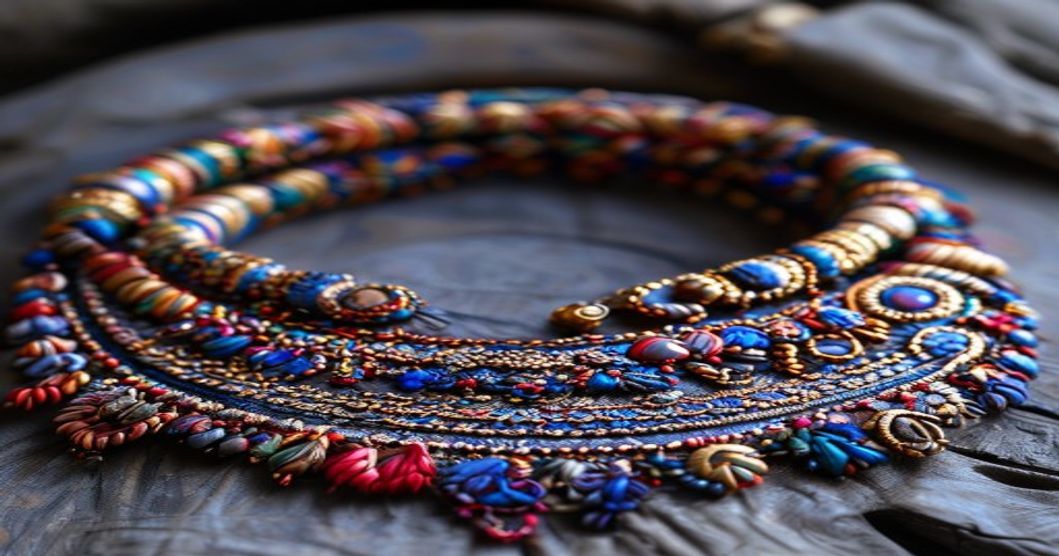
Leather bases, typically crafted from cured reindeer hide or moose skin, provide foundational support for metal components. The leather is stiffened through traditional tanning processes involving pine resin, brain solutions, and controlled air drying, ensuring rigidity without brittleness. Colored glass beads, historically imported via Finnish trading posts, are threaded onto silver wires to create chromatic boundaries that separate symbolic zones. Historical trade artifacts, including Danish thalers and Russian rubles, continue to be integrated into contemporary reproductions as documented heritage markers rather than monetary substitutes.
Cultural Significance and Contemporary Adaptations
Jewelry as Identity and Social Status Markers
Sami cultural accessories operate as precise social indicators. Regional variations in buckle geometry, strap width, and shell placement directly correspond to specific Sámi groups, such as the coastal Sea Sami or inland Mountain Sami. Marital status is communicated through silver quantity and necklace layering, while age progression dictates the gradual addition of new components rather than replacement. During ritual ceremonies, jewelry weight and acoustic properties (the rhythmic clinking of metal against leather) are intentionally calibrated to align with traditional drumming tempos and vocal chants.
Modern Sámi Artisans and Sustainable Heritage Practices
Contemporary traditional Sami jewelry production balances ethical sourcing with historical accuracy. Modern workshops utilize recycled silver, fair-trade cowrie shells, and sustainably harvested reindeer leather to maintain cultural integrity without ecological degradation. Digital documentation projects preserve original tooling templates and stamp impressions, ensuring that mechanical reproduction does not dilute handcrafted nuances. International recognition of Sámi design has spurred protective certification systems, preventing cultural appropriation while enabling indigenous artisans to control pricing, distribution, and educational narratives surrounding their craft.
Frequently Asked Questions
What is Traditional Sami Jewelry and Designs?
Traditional Sami jewelry and designs refer to the distinctive handicrafts created by the Sami people, the indigenous inhabitants of the northern regions of Norway, Sweden, Finland, and Russia. These pieces typically feature intricate silverwork, vibrant enamel colors (especially red, blue, yellow, and green), reindeer antler, bone, and beadwork, reflecting centuries of cultural heritage, nature-inspired motifs, and tribal identity.
Key facts about Traditional Sami Jewelry and Designs
Key facts include: (1) Silver has been the primary metal used since the Viking Age, often stamped with geometric or nature-inspired patterns. (2) The iconic red enamel beads and “gákti” (traditional dress) accessories denote specific regional origins and marital status. (3) Designs are deeply symbolic, drawing from reindeer, sun, and seasonal cycles. (4) Each piece is traditionally handcrafted using techniques passed down through generations, making authentic Sami jewelry a protected cultural artifact.