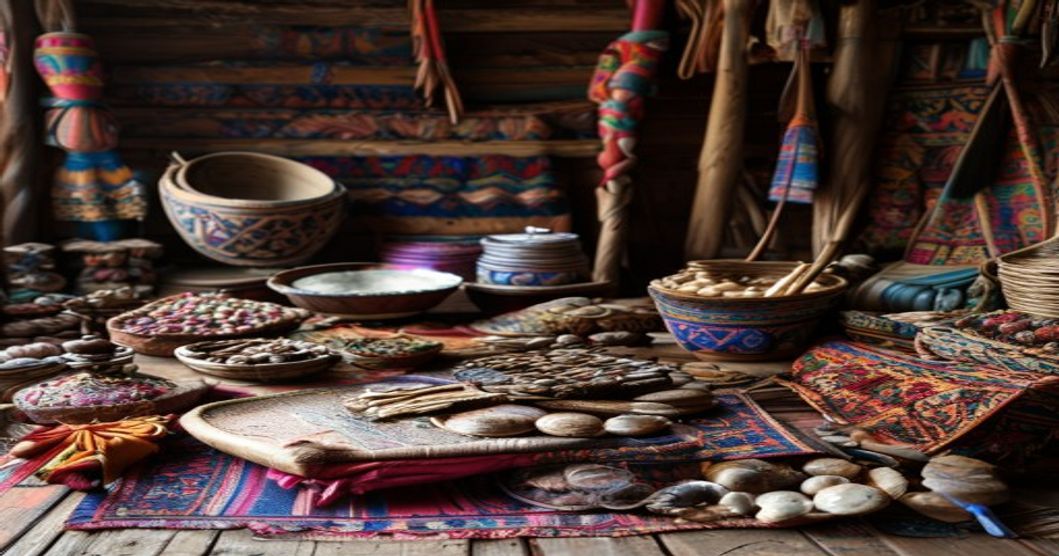
Traditional Sami Trade Goods Explained
The economic foundation of Sámi communities historically revolved around the sustainable exploitation of reindeer resources, which formed the core of regional exchange networks across Fennoscandia and into Russian markets. Reindeer provided meat preserved through smoking and salting, durable hides processed with traditional fat-tanning methods, and antlers carved into tools, decorative objects, and structural components for winter dwellings. These materials were not merely subsistence items but standardized commodities that held consistent value across cultural boundaries.
Sámi artisans developed specialized craftsmanship known as duodji, which transformed raw natural materials into high-demand trade articles. Antler carving required precise knowledge of seasonal growth cycles and heat-shaping techniques to produce knife handles, combs, and gaming pieces. Copper wire jewelry emerged from controlled melting and hammering processes, creating intricate spiral patterns that signaled regional identity while functioning as portable wealth. Birch bark weaving and flexible willow rod construction yielded waterproof containers, birks, and storage vessels essential for long-distance travel.
- Preserved Reindeer Meat: Stripped of moisture through wind-drying and fat preservation, these provisions sustained traders during multi-week journeys to coastal ports and inland settlements.
- Processed Hides & Fur: Tanned using brain and liver enzymes, the leather maintained flexibility in subzero temperatures, making it highly valued by Scandinavian trappers and Russian fur merchants.
- Copper & Silver Ornaments: Wrought through repoussé and wire-twisting techniques, these items served dual purposes as cultural markers and liquid assets during seasonal market exchanges.
- Birch Bark Containers: Seamlessly joined without nails or glue, these lightweight vessels transported dried fish, berries, and medicinal lichen across trade routes stretching to Kirkenes and Murmansk.
Exchange mechanisms operated through established seasonal markets where Sámi traders bartered reindeer-derived products for iron tools, grain, tea, and salt. These transactions occurred at designated trading posts near river crossings and coastal inlets, creating predictable commercial rhythms that synchronized with animal migration patterns. The goods facilitated access to essential imports unavailable in Arctic ecosystems, reinforcing interdependent economic relationships between nomadic pastoralists and agrarian or urban populations. Preservation of these material traditions continues through documented carving methods, controlled tanning protocols, and regulated copper-working practices that maintain historical accuracy while supporting contemporary cultural economies.
Essential Categories of Traditional Sami Trade Items
The historical commerce of the Sami people revolved around distinct resource categories shaped by Arctic ecology and generational craftsmanship. Reindeer-derived materials formed the economic backbone, encompassing cured hides, antler tools, and dried meat products that circulated across northern European markets. These items sustained both local subsistence networks and external trading routes extending into Scandinavia and Russia.
- Reindeer Byproducts: Antlers served as raw material for knife handles, needles, and decorative carvings, while cured reindeer skin provided durable footwear, winter clothing, and tent coverings. Salted and dried meat functioned as long-lasting provisions traded with coastal communities.
Handcrafted implements represented another critical trade sector. Sami artisans produced precision tools adapted to extreme climates, including recurve bows, fishing hooks carved from bone or wood, and reinforced snowshoes designed for deep powder traversal. These utilitarian objects held consistent demand among neighboring indigenous groups and European settlers.
- Tool & Weaponry Sets: Knives with birch-bark sheaths, spear tips, and trap mechanisms were exchanged widely. Each component reflected specialized knowledge passed through apprenticeships rather than commercial manufacturing.
Textile commerce centered on dyed wool bands, patterned mittens, and woven sashes that functioned as both currency and cultural markers. Natural dyes extracted from lichens, berries, and roots created durable pigments resistant to fading in harsh sunlight. These textiles traveled alongside leather goods along established merchant paths.
- Woven & Dyed Textiles: Striped belts indicated clan affiliation, while reinforced mittens with integrated thumb loops enabled year-round labor. Dyeing techniques remained closely guarded, limiting supply and elevating market value.
Forest foraged goods completed the trade matrix. Medicinal lichens, birch sap resin, juniper branches, and wild herbs moved into regional apothecary networks. Sami knowledge of botanical properties created consistent demand among herbalists and early pharmacologists. Ornamental silverwork and ritual drums appeared in limited quantities, primarily exchanged through specialized intermediaries rather than open markets.
- Botanical & Ceremonial Goods: Birch resin functioned as waterproof sealant and fuel, while specific lichen species treated wounds and digestive ailments. Carved wooden figurines and painted drum frames circulated among collectors and religious observers outside indigenous territories.
Reindeer-Derived Materials and Traditional Craftsmanship
Reindeer hide constitutes the primary raw material in traditional Sami commerce, prized for its exceptional insulating properties and structural resilience across subarctic climates. Fresh pelts undergo meticulous preparation through brain tanning or smoking over controlled birch fires, a process that yields supple leather resistant to moisture and extreme temperature fluctuations. The outer guard hairs remain intact during curing to enhance windproofing, while the dense underwool provides natural thermal regulation without synthetic additives. Artisans carefully split thicker sections into multiple layers, producing distinct grades for footwear, tents, and protective gear.
- Fur-lined clothing systems: Inner reindeer fur garments feature reversed pelts where hair faces the skin, maximizing heat retention during prolonged outdoor labor.
- Waterproof boot construction: Traditional winter boots utilize two-layer hide assemblies with dense underfur inward and smoked exterior leather outward, preventing ice accumulation along seams.
- Tent and shelter fabrication: Thick hide panels are laced together using reinforced sinew threads to create wind-resistant lavvu coverings that withstand coastal storms and inland blizzards alike.
Antler and bone fragments serve as secondary trade commodities, valued for their workability and durability. Master carvers employ stone saws and abrasive river sand to shape antlers into harpoon heads, sled runners, and sewing needles that maintain sharpness through extended use. The natural curvature of shed antlers allows craftsmen to produce ergonomic handles for knives and ice augers without additional shaping. Bone marrow fats function as preservatives during leather processing, while polished fragments are traded across regional networks as decorative elements or currency substitutes.
Sinew harvested from the backstrap muscle operates as the critical binding medium in all reindeer-based craftsmanship. Dried tendons are pounded into fibrous threads that expand when exposed to moisture, creating self-sealing joints in stitching applications. This natural expansion prevents seam failure during rapid weather changes, making sinew-reinforced products highly sought after in historical exchange networks. The entire utilization cycle reflects a closed-loop resource management system where every anatomical component generates distinct tradeable goods without waste.
Metalwork, Woodcraft, and Agricultural Exchanges
The exchange of metalwork, woodcraft, and agricultural products formed the economic backbone of traditional Sami communities across Fennoscandia and northern Russia. Metalworking capabilities expanded significantly through cross-border trade routes that connected Arctic settlements with Scandinavian forges and Russian merchant hubs. Copper, bronze, and later iron arrived as raw ingots or finished blades, which Sami artisans reshaped into functional tools, knife handles, belt plates, and ceremonial jewelry. The distinctive spiral motifs and reinforced edges of these metal pieces were not merely decorative; they optimized grip, durability, and weight distribution for hunting and butchering tasks. Traders prioritized high-carbon steel knives and copper wire, which held steady value across regional markets.
- Metalwork: Imported iron was forged into knife blades, awls, and reindeer harness components. Artisans combined locally sourced antler with traded brass to create durable fastenings and decorative accents, while copper wire enabled intricate lacing patterns on winter garments.
- Woodcraft: Timber scarcity dictated a highly efficient utilization strategy. Driftwood, pine roots, and birch bark were processed into containers, sled runners, and clothing needles. Carving techniques focused on moisture resistance and structural integrity, ensuring longevity in subzero conditions. Resin treatments and smoke curing preserved wooden artifacts against rapid degradation.
Agricultural exchanges operated alongside pastoral and hunting economies, particularly in southern coastal zones where microclimates permitted limited cultivation. Communities grew hardy barley, potatoes, and root vegetables to supplement protein-heavy diets reliant on reindeer, fish, and game. Livestock such as goats and sheep contributed wool and dairy products, which were woven into trade-ready textiles. Barter networks facilitated the exchange of dried cod, cured reindeer meat, and processed hides for grain, salt, and manufactured goods from neighboring Norwegian, Swedish, Finnish, and Russian settlements. Antler fragments and polished bone served as standardized weight units during transactions, stabilizing pricing across fluctuating seasonal harvests. These interconnected supply chains ensured resource distribution while preserving indigenous craftsmanship standards.
Trading Networks and Cross-Border Commerce Routes
The historical commerce networks of the Sámi people operated across a vast Arctic and subarctic corridor, linking coastal settlements with inland fells and extending into neighboring Norwegian, Swedish, Finnish, and Russian territories. Long before modern borders divided the region, these routes functioned as vital economic arteries. Norse merchants, Finnic traders, Russian Pomor communities, and later German and Danish trading companies all participated in this exchange system. The Sámi capitalized on their deep ecological knowledge to supply high-value Arctic commodities that were scarce or unavailable in southern markets.
- Sami Exports: Dried reindeer meat (bidos), cured fish, antler and bone carvings, woolen textiles, and specialized winter footwear.
- Inbound Goods: Grain, salt, iron tools, copper wire, tobacco, alcohol, and woven fabrics from temperate zones.
Trade mobility followed seasonal migration patterns rather than fixed commercial corridors. During winter months, frozen rivers and snow-covered tundra created natural highways that connected remote grazing areas with established market towns. Merchants established temporary trading posts at predictable convergence points, where Sámi groups would arrive during reindeer gathering seasons. Barter remained the primary exchange mechanism until the seventeenth century, after which silver coins and standardized weight measurements gradually replaced direct commodity swapping. Customs duties and toll collection heavily influenced route selection, prompting traders to utilize lesser-known mountain passes during peak taxation periods.
Cross-border commerce required navigating complex political jurisdictions. Royal decrees from Copenhagen, Stockholm, and St. Petersburg frequently restricted movement, yet merchants adapted by obtaining seasonal permits or operating through authorized border stations like Karesuando and Petsamo. The Pomor trade along the Kola Peninsula demonstrated particularly resilient cross-cultural cooperation, with Russian fur traders and Sámi hunters developing mutually beneficial supply chains that persisted well into the nineteenth century. These networks did not merely transfer physical goods; they facilitated continuous technological diffusion, linguistic interaction, and agricultural knowledge sharing between Arctic communities and southern European markets.
Cultural Symbolism and Artistic Techniques
The artistic traditions embedded in traditional Sami trade goods function as dense visual archives of ecological adaptation and spiritual cosmology. Reindeer antler and bone carving relied on controlled heat bending, progressive abrasion with pumice and sandstone, and fine chiseling to produce durable tools and ornaments. Motifs such as the spiral sun wheel, reindeer antler replicas, and interconnected zigzags were not decorative but encoded seasonal migration patterns, hunting rites, and shamanic journey maps. These carved items traded southward became cultural proxies; buyers recognized origin regions through groove depth, tool mark consistency, and enamel-like polishing achieved through centuries of friction with reindeer hide.
Woven textiles utilized tightly spun reindeer wool dyed with bog myrtle, lichen extracts, and cloudberries, yielding palette restrictions that forced deliberate pattern engineering. The characteristic red-black-white triad operated as a semiotic system: red denoted vitality and sacrificial fire, black represented tundra soil and ancestral memory, while white signaled winter survival strategies. Weavers employed the slit-tape technique to prevent fraying during long-distance barter, embedding geometric borders that functioned as clan signatures. Pattern density correlated with social standing; high-complexity pieces commanded premium exchange rates in southern markets.
Silverwork integrated repoussé and granulation methods adapted from Scandinavian and Russian metallurgical influences but filtered through indigenous design logic. Circular button clusters arranged in radial symmetry tracked seasonal round trips, while asymmetrical hook forms mapped individual hunting territories. Artisans hammered raw silver against hardened resin anvils to maintain malleability without cracking, then oxidized surfaces with fermented moss baths to accentuate engraved lines. Trade networks recognized these goods by tactile ridge patterns and oxidation depth, which served as authentication markers against counterfeit reproduction. The artistic execution directly dictated commercial viability; pieces with precise symmetry, deep motif carving, and chemically stable dyes retained exchange value across multiple generations of merchants.
- Material Processing: Bone was boiled in alkaline peat water to remove organic residue before grinding.
- Dye Chemistry: Iron-rich mud from bog edges acted as a mordant, locking natural pigments into wool fibers for centuries-long color retention.
- Metal Shaping: Silver was annealed over birch charcoal fires to prevent work-hardening during repetitive hammering.
Preservation Methods and Authentic Identification
Traditional Sami trade items relied on environmental adaptation and material science long before modern conservation protocols existed. Reindeer antlers and bones were routinely air-dried in well-ventilated cabins or suspended above smoking fires fueled by dried reindeer dung and birch wood. The smoke deposition created a natural preservative layer that inhibited bacterial growth while imparting a stable, darkened surface. Bone surfaces developed a characteristic matte patina through decades of handling and exposure to ambient humidity fluctuations. Birch bark containers required strict moisture control; collectors should verify that the original bark layers remain intact without delamination or warping, which indicates improper storage conditions. Authentic pieces show gradual color deepening in high-contact zones, whereas artificially aged items often display uniform staining or chemical burns along carved edges.
Verification of genuine Sami artifacts requires close examination of manufacturing traces and structural reinforcements. Hand-forged iron or copper knives left distinct micro-gouges and irregular bevels that differ markedly from modern rotary tool marks. Regional stylistic markers remain reliable authentication tools: Northern Sami carvings typically feature geometric reindeer motifs with deep, chisel-driven grooves, while Southern Sami works often incorporate braided lacing patterns and asymmetrical functional designs. Structural integrity should be assessed through hidden joinery points; original pieces utilize sinew threads, birch root bindings, or drilled mortise-and-tenon connections rather than adhesives or metal fasteners. Surface examination under raking light reveals natural tool wear progression along working edges, while artificial distressing produces inconsistent depth and repetitive mechanical patterns.
- Bone and antler stabilization requires controlled humidity environments between 45 and 55 percent to prevent cracking; exposure to rapid temperature shifts causes irreversible micro-fractures.
- Fur pelts traded historically were cured using brain-tanning and ash-lye processes; authentic specimens retain natural fiber flexibility and exhibit even hair distribution without synthetic backing layers.
- Birch bark containers should display original lashing holes along upper rims, with wear patterns aligned to traditional carrying methods involving shoulder straps or reindeer harness attachments.
Professional grading standards prioritize material authenticity over cosmetic perfection. Minor surface abrasions from historical use often increase provenance value, provided they align with documented Sami trading practices and regional craftsmanship conventions. Cross-referencing tool marks, binding materials, and stylistic evolution against verified museum collections remains the most reliable authentication pathway for contemporary researchers and collectors.
Modern Markets and Ethical Sourcing Practices
The commercial landscape for traditional Sami crafts has shifted dramatically over the past two decades. Contemporary sales channels now span specialized e-commerce platforms, curated boutique retailers, and direct-to-consumer digital storefronts operated by Sámi artisans themselves. This transition demands rigorous verification frameworks to distinguish authentic duodji from mass-produced imitations. The Sámi Duodji certification system remains the primary benchmark for legitimacy, requiring each piece to be crafted entirely by hand using traditional techniques and materials sourced within established reindeer herding territories. Retailers partnering with certified producers must maintain transparent supply chain documentation that traces every item back to its origin community.
- Fair Compensation Models: Modern ethical sourcing prioritizes direct revenue sharing between artisans and cooperatives, eliminating intermediary markups that historically diluted indigenous earnings. Many Sámi enterprises now utilize cooperative pricing structures where profit margins are reinvested into cultural education programs and sustainable material procurement.
- Supply Chain Transparency: Blockchain-enabled tracking platforms have emerged as industry standard for high-value Sami trade goods. These systems record every production stage, from raw antler or leather acquisition to final retail pricing, ensuring buyers can verify authenticity through immutable digital ledgers accessible via product QR codes.
- Cultural Stewardship Requirements: Ethical vendors now implement mandatory cultural competency training for their merchandising teams. This protocol prevents misrepresentation of symbolism, prohibits commercialization of sacred motifs, and requires accurate historical context in all product descriptions and marketing materials.
Consumer demand has directly influenced procurement standards across Scandinavian and international markets. Verified ethical retailers report a substantial increase in customer verification requests over the last five years, driving suppliers to adopt third-party auditing and open-book accounting practices. Cross-border e-commerce regulations within the European Union now mandate explicit indigenous craft labeling under the Geographical Indications framework, further protecting traditional production methods from dilution. Artisan collectives leverage digital storytelling platforms to demonstrate material sourcing, seasonal crafting cycles, and community impact metrics, transforming passive purchases into documented cultural support networks. These structural adjustments ensure commercial viability aligns with long-term preservation of Sámi heritage without commodifying living traditions.
Curating a Collection of Traditional Sami Trade Goods
Building a credible inventory of traditional Sami trade goods requires meticulous attention to regional variations, historical periods, and artisanal techniques. Collectors must distinguish between authentic duodji pieces created for functional or ceremonial use and modern reproductions designed for commercial markets. The curation process begins with understanding the geographic origins of each item. Northern Norway, Swedish Lapland, and Finnish Sápmi each developed distinct motifs, tool marks, and metallurgical signatures that reflect local resource availability and cultural exchange patterns.
Authentic pieces rely on materials sourced directly from the boreal ecosystem. Reindeer antler serves as the primary medium for knife handles, sewing awls, and decorative inlays, valued for its density and natural grain. Silverwork follows strict geometric conventions, often featuring stamped floral patterns or stylized reindeer silhouettes that denote family lineage or regional affiliation. Wool textiles utilize hand-spun yarn dyed with lichen and berries, producing earth tones that resist fading through proper storage. Birch bark containers display precise heat-bending techniques passed down through generations of master craftsmen.
- Cross-reference tool marks with documented historical carving methods from specific Sámi communities.
- Analyze silver alloy composition using non-invasive spectroscopy to identify pre-twentieth-century stamping patterns.
- Examine stitching tension and fiber alignment in textile components for evidence of handwork versus machine production.
- Request provenance records tracing ownership through established Nordic antique dealers or museum archives.
Long-term collection value depends on ethical acquisition practices and climate-controlled preservation. Items should remain away from direct sunlight, extreme humidity, and synthetic cleaning agents that degrade natural fibers and oxidize silver surfaces. Maintaining accurate condition reports alongside photographic documentation ensures transparency for future transactions. Engaging directly with contemporary Sámi artisans provides insight into evolving traditions while respecting cultural intellectual property rights. Strategic curation balances historical significance with aesthetic cohesion, creating a repository that honors centuries of Arctic craftsmanship rather than merely accumulating decorative objects.
“`html
Frequently Asked Questions
What is Traditional Sami Trade Goods Explained?
“Traditional Sami Trade Goods Explained” refers to the historical and cultural overview of the merchandise exchanged by the Sámi people, an indigenous group inhabiting the northern regions of Norway, Sweden, Finland, and Russia. These goods included reindeer antlers, fur pelts, woven baskets made from birch bark, dyed wool textiles, antler carvings, and dried fish products. The Sámi engaged in trade with neighboring Scandinavian and Russian communities for centuries, exchanging their handcrafted items for grain, metal tools, salt, and other essential supplies not readily available in the Arctic environment.
Key facts about Traditional Sami Trade Goods Explained
- The Sámi trade network extended across the Arctic and into central Europe, connecting indigenous communities with European merchants.
- Reindeer antlers and bones were among the most valuable trade items, used to create tools, weapons, and decorative art pieces.
- Sámi dyers produced distinctive red and black wool textiles using natural plant-based dyes, which were highly sought after in European markets.
- Birch bark baskets and woven goods demonstrated advanced Sámi craftsmanship and were traded far beyond the Arctic Circle.
- The fur trade played a crucial economic role for the Sámi, but overhunting and changing climate conditions gradually reduced the availability of certain furs.
- Trade was largely conducted through annual midwinter markets, such as those in Karasjok and Kautokeino, which became cultural and commercial hubs.
“`
“`json
{
“@context”: “https://schema.org”,
“@type”: “FAQPage”,
“mainEntity”: [
{
“@type”: “Question”,
“name”: “What is Traditional Sami Trade Goods Explained?”,
“acceptedAnswer”: {
“@type”: “Answer”,
“text”: “\”Traditional Sami Trade Goods Explained\” refers to the historical and cultural overview of the merchandise exchanged by the Sámi people, an indigenous group inhabiting the northern regions of Norway, Sweden, Finland, and Russia. These goods included reindeer antlers, fur pelts, woven baskets made from birch bark, dyed wool textiles, antler carvings, and dried fish products. The Sámi engaged in trade with neighboring Scandinavian and Russian communities for centuries, exchanging their handcrafted items for grain, metal tools, salt, and other essential supplies not readily available in the Arctic environment.”
}
},
{
“@type”: “Question”,
“name”: “Key facts about Traditional Sami Trade Goods Explained”,
“acceptedAnswer”: {
“@type”: “Answer”,
“text”: “
- The Sámi trade network extended across the Arctic and into central Europe, connecting indigenous communities with European merchants.
- Reindeer antlers and bones were among the most valuable trade items, used to create tools, weapons, and decorative art pieces.
- Sámi dyers produced distinctive red and black wool textiles using natural plant-based dyes, which were highly sought after in European markets.
- Birch bark baskets and woven goods demonstrated advanced Sámi craftsmanship and were traded far beyond the Arctic Circle.
- The fur trade played a crucial economic role for the Sámi, but overhunting and changing climate conditions gradually reduced the availability of certain furs.
- Trade was largely conducted through annual midwinter markets, such as those in Karasjok and Kautokeino, which became cultural and commercial hubs.
”
}
}
]
}
“`