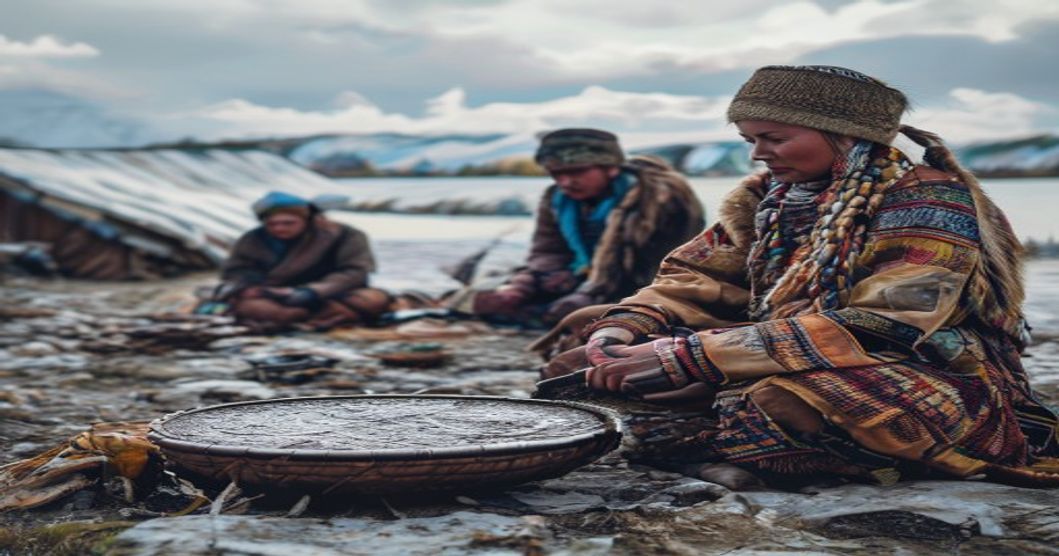
Traditional Travel Techniques in Sami Culture
Traditional Sami travel across the Arctic and subarctic landscapes relied on a sophisticated adaptation to extreme seasonal shifts, where mobility dictated survival and economic exchange.
During winter months, reindeer-drawn sleds served as the primary transport system for families and trading caravans. The kurkka, a lightweight wooden frame sled pulled by specially trained reindeer, glided over packed snow with minimal friction. Riders controlled direction through vocal commands and leather reins, while cargo was secured using woven willow baskets and antler toggles. Reindeer migrations followed established routes known as siida paths, which connected seasonal grazing grounds with coastal fishing villages.
Dog sleds complemented reindeer transport in areas where dense forests or deeper snowpack made reindeer travel impractical. Working dogs, often mixed breeds developed through generations of selective breeding, pulled loads across frozen lakes and river valleys. Trainers monitored gait patterns and harness tension to prevent muscle strain, adjusting strap lengths based on daily temperature fluctuations.
Foot travel required specialized equipment. Traditional Sami skis, carved from aged birch or pine, provided stability on steep slopes. Reindeer leg tendons bound the feet to wooden planks, while grip strips made of rough wool or fur prevented backward sliding during ascents.
- Snowshoe construction utilized split ash frames wrapped in rawhide lacing
- Navigation depended on reading wind-scoured snow drifts and lichen growth patterns
- Summer transport shifted to dugout canoes carved from fallen pine trunks
Each technique reflected centuries of empirical knowledge transfer. Travelers tracked animal migrations, interpreted cloud formations for upcoming storms, and marked waypoints using cairns built from flat slate. Modern GPS devices now supplement these methods, but the foundational principles remain rooted in environmental observation and resource efficiency.
The craftsmanship behind each travel tool demanded precise material selection. Birch bark provided waterproof containers, while cured reindeer hide reinforced harness joints against abrasion. Route planning incorporated microclimate variations, with travelers avoiding wind-exposed ridges during blizzards and utilizing leeward valleys for overnight shelters. Historical trade networks extended hundreds of kilometers, requiring multi-day expeditions where food preservation techniques like air-drying fish and smoking meat determined journey viability.
Historical Foundations of Northern Mobility
The mobility patterns of the Sámi people emerged from millennia of adaptation to the extreme environments of Fennoscandia, where survival depended on precise seasonal routing across taiga, tundra, and mountainous terrain. Historical movement was not random but governed by strict ecological calendars that synchronized with reindeer behavior, snow conditions, and astronomical markers. Early communities utilized a combination of land and water routes, selecting passages based on wind exposure, ice thickness, and the availability of lichen pastures. Winter travel favored narrow wooden skis crafted from spruce or pine, which distributed weight across deep snowdrifts, while summer expeditions relied on lightweight kayaks and open boats for navigating fjords, rivers, and coastal archipelagos.
Seasonal transhumance dictated the rhythm of northern mobility. During autumn, herds were driven inland toward dense forests to escape biting winds and insect swarms. Spring migrations followed the retreating snowline toward coastal grazing zones where nutrient-rich vegetation emerged first. Historical records from medieval Norwegian and Swedish tax registers confirm that these routes were well-established by the thirteenth century, with specific family groups maintaining exclusive rights to designated corridors. Boundary markers were often natural—rock formations, river bends, or ancient burial mounds—and enforced through customary law rather than written borders.
Navigational accuracy required generational knowledge transmission. Sámi guides read wind direction from snow crystal formation, identified hidden passes beneath ice cover by listening to water currents, and tracked daylight patterns using the position of the sun and moon against mountain silhouettes. These techniques minimized energy expenditure and prevented fatal disorientation during whiteout conditions or polar nights. Cross-cultural exchange with Norse traders and Orthodox Russians along the Kola Peninsula further refined route efficiency, introducing modified sled designs and seasonal trading stops that later evolved into permanent winter markets.
- Snow-dependent transit: Wide skis and padded boots reduced sinkage and enabled multi-day journeys across unbroken ice fields.
- Waterway utilization: Narrow watercraft allowed silent movement through archipelagos where overland travel was blocked by bogs or steep ridges.
- Territorial navigation: Oral route maps and landmark-based memory systems replaced cartographic records until the eighteenth century.
State-imposed border demarcations in the seventeenth and nineteenth centuries fragmented traditional corridors, forcing adaptive rerouting while preserving core mobility principles. Climate oscillations during the Little Ice Age further compressed seasonal windows, intensifying route optimization and collective decision-making among herding families. These historical foundations established a resilient framework of northern movement that prioritized ecological alignment over fixed geography, a principle that continues to inform contemporary Sámi land management strategies.
Geographic Constraints Shaping Migration Corridors
The Arctic and subarctic landscapes of Sápmi function as both navigational guides and physical barriers, forcing traditional migration routes to align strictly with topographic realities. Mountain ridges, deep river valleys, and expansive tundra plains dictate seasonal movement patterns rather than arbitrary human preference. Reindeer herds follow established vegetation belts that shift with temperature gradients, while herders track these animal trails across frozen waterways and wind-scoured plateaus.
Coastal fjords create natural migration funnels during summer months when ice retreats allows boat access to fishing grounds. Conversely, winter transforms inland rivers into reliable travel surfaces, provided snow depth remains consistent. Permafrost layers determine ground stability; routes are deliberately routed away from thermokarst zones where thawing subsurface ice causes sudden ground collapse. Historical wayfinding relies on reading subtle terrain markers—lichen patterns on leeward rock faces, wind-carved driftwood accumulations, and the distinct acoustic properties of snow over frozen versus thawed soil.
- Elevation Management: Routes avoid steep fells exceeding thirty-degree gradients to preserve reindeer stamina and prevent pack load displacement during blizzard conditions.
- Hydrological Navigation: River crossings are timed precisely with spring thaw cycles. Herders monitor ice thickness using traditional sounding poles before committing livestock to frozen channels.
- Vegetation Corridors: Dicot shrublands and reindeer lichen mats create natural highways that require minimal detouring, reducing caloric expenditure for both animals and herders.
These geographic limitations have generated highly optimized movement networks passed through oral transmission across generations. Each corridor represents centuries of empirical testing, where inefficient paths were abandoned after repeated livestock losses or equipment failures. Modern satellite mapping confirms these ancient routes align precisely with optimal energy-efficiency models, demonstrating how environmental constraints directly engineered sustainable migration architecture long before computational logistics existed.
Core Transportation Methods Across Seasons
Winter mobility in Sami communities relied on precision-engineered traction systems adapted to subarctic conditions. Flat-bottomed birch skis, bound with reindeer sinew and pine resin, distributed weight across deep powder while allowing silent gliding over frozen lakes and dense forest trails. Reindeer-drawn sleds, constructed from curved driftwood and reinforced with hide straps, carried families, firewood, and seasonal stores across distances exceeding fifty kilometers in single days. Canine teams supplemented this network during extreme cold snaps when reindeer herds migrated to winter pastures.
Spring thaw dictated a complete shift in logistics. Frozen river networks became impassable, requiring travelers to switch to narrow wooden skiffs lined with animal hides for river crossings and coastal navigation. Reindeer carts emerged as the primary land transport, their spoked wheels reinforced with iron bands scavenged from trading posts or forged by local artisans. Summer routes followed dry tundra paths and elevated ridges to avoid bog formation, with travelers utilizing lightweight walking poles carved from downy birch for stability on uneven ground.
- Winter skis featured forward-curled tips and heel straps woven from cured reindeer tendon, enabling rapid kicking turns on steep snowpack.
- Reindeer sleds utilized a drag-sled design with curved runners that prevented digging into crust ice during high winds.
- Summer skiffs were built from split pine planks sewn together with rawhide thread, then sealed with spruce resin for waterproofing.
Autumn marked the preparation phase; skis were resealed with pine pitch, sled runners were sharpened against glacial rock, and reindeer harnesses were rewoven using cured tendon fibers that regained flexibility in cold temperatures. Navigation across all seasons depended on reading terrain markers rather than fixed infrastructure. Sun position, wind direction, moss growth patterns, and distant mountain silhouettes replaced compass reliance during whiteout conditions. Each transport method functioned as a modular system, allowing rapid adaptation to shifting ice thickness, sudden thaw cycles, or unexpected herd movements. The Sami did not conquer the landscape; they moved through it using tools calibrated to seasonal microclimates, ensuring continuous access to grazing grounds, hunting zones, and trade routes without permanent infrastructure dependency.
Reindeer Harness Design and Sled Construction
The traditional reindeer harness crafted by the Sámi relies on precise anatomical mapping to distribute weight evenly across the animal’s shoulders and chest. Artisans shape yokes from green birch or pine, bending them through steam and securing joints with rawhide lashings rather than metal hardware. The breaststrap system integrates reinforced leather pads lined with reindeer hide to prevent chafing during long crossings over packed snow or icy tundra. Each strap is cut from split cowhide or reindeer skin, then treated with rendered fat and pine tar to resist moisture absorption and maintain flexibility in subzero conditions. The harness assembly includes adjustable buckles carved from antler, allowing riders to modify tension based on terrain difficulty or load requirements.
Sled construction follows a parallel philosophy of lightweight resilience. The running boards are laminated from multiple strips of spruce or pine, glued with hide adhesive and bound with sinew to absorb shock without fracturing. Crossbeams connect the runners at strategic intervals, creating a rigid yet slightly flexible platform that prevents twisting during sharp turns. Cargo nets are woven from braided reindeer hair or birch bark fibers, while passenger seats feature contoured wooden frames padded with thick moss or layered fur. Skis attached to the front of the sled pivot on a leather hinge, enabling precise steering through narrow forest trails or open fell landscapes.
- Weight Distribution: Harness straps align directly with the reindeer’s scapula to avoid respiratory restriction during steep ascents.
- Snow Clearance: Sled runners are beveled at a 15-degree angle to slice through powder without dragging.
- Material Resilience: All wooden components undergo seasonal air-drying for two years before shaping to prevent warping in humid summer months.
Seasonal modifications dictate structural variations throughout the year. Winter harnesses incorporate wider chest pads and additional reindeer fur lining to insulate against wind chill, while summer versions use thinner leather to allow airflow during high-exertion migrations. Sled designs shift from heavy cargo configurations used for hauling timber or hunting kills to streamlined passenger models optimized for rapid movement across frozen lakes. The integration of these techniques reflects centuries of iterative testing, where functional efficiency directly determined survival in extreme Arctic environments.
Traditional Ski Manufacturing for Snow Terrain
The craftsmanship behind traditional Sami skis emerges from centuries of environmental adaptation, where every material selection and carving technique directly responds to the demands of Arctic snow terrain. Artisans begin with young birch logs, harvested during late winter when sap concentration drops and wood density increases. The timber undergoes a controlled splitting process along the grain, ensuring structural integrity while preserving natural flexibility. Once divided, each blank receives precise shaping using iron adzes and sharpened blades to establish the foundational camber profile.
Fire plays a critical role in the forming stage. Skiers position split birch planks over low-temperature hearths, gradually bending the wood into a pronounced arch. This manual curvature generates elastic tension that translates into forward propulsion when weight shifts during movement. The tip geometry varies according to intended use: wider profiles for deep powder support, narrower extensions for agile trail navigation, and reinforced edges to prevent splitting on icy crusts.
- Material Selection: Seasonally harvested birch provides optimal moisture content, while cured reindeer antler supplies durable adhesive compounds for joint reinforcement.
- Binder Construction: Rawhide straps weave through drilled mounting holes, creating adjustable tension systems that secure to fur-lined boots without restricting ankle mobility.
- Surface Texture: Cross-hatched grooves along the ski base reduce friction during ascents, while wax-infused pine resin seals pores against moisture absorption.
Binding integration demands exact placement to balance weight distribution across uneven ground. Artisans drill perpendicular channels using bow drills and bone awls, then thread braided leather cords through each aperture. The resulting suspension system allows independent foot articulation while maintaining rigid connection points during descent maneuvers. Final finishing involves sanding with pumice stones, applying rendered fat mixtures for water resistance, and inspecting camber recovery under controlled pressure tests.
These construction methods reflect a precise understanding of snow mechanics and thermal expansion. Skis designed for frozen tundra differ fundamentally from those engineered for forested valleys, requiring tailored rocker angles and base widths. The entire manufacturing sequence operates without modern power tools, relying instead on generational knowledge passed through practical demonstration and material observation.
K9 Transport Systems and Breeding Selection
Indigenous Sami communities historically integrated canine transport networks into their winter mobility infrastructure, particularly in regions where deep snowfall compromised reindeer traction. These working dogs operated as specialized pull units, engineered for sustained load carriage across frozen tundra and dense boreal forests. The system relied on tightly coordinated pack dynamics, where each animal maintained a fixed position within the line to optimize weight distribution and minimize energy expenditure.
Breeding protocols prioritized hereditary traits directly linked to operational efficiency. Selectors evaluated candidates through multi-generational performance tracking, focusing on cardiovascular endurance, joint resilience in sub-zero temperatures, and natural pack alignment instincts. Coat density was systematically preserved to maintain thermal regulation during prolonged exposure. Mating decisions followed strict environmental matching, aligning parent lineages with specific terrain types where future teams would operate. Unfavorable temperaments, including excessive independence or poor load tolerance, eliminated candidates from the breeding pool regardless of physical size.
- Thermal Adaptation: Dense undercoat structure and compact muscle mass were preserved through selective pairing in extreme cold zones.
- Traction Optimization: Paw pad keratinization and stride synchronization reduced snow compaction resistance during long hauls.
- Load Distribution: Line positioning followed age and strength metrics, ensuring uniform pull mechanics across uneven terrain.
Maintenance routines included targeted fat accumulation strategies, raw protein supplementation, and structured rest cycles synchronized with reindeer migration schedules. Teams underwent seasonal conditioning periods, gradually increasing pull loads to strengthen connective tissue without inducing chronic strain. Historical records indicate that successful sled performance depended on continuous genetic refinement rather than temporary training interventions. The integration of canine units with reindeer logistics created a dual-transport framework that sustained Sami mobility across extreme Arctic conditions for centuries.
Navigational Strategies and Route Planning
The Sami navigational framework relies on an intricate reading of the Arctic landscape rather than cartographic tools. Practitioners interpret wind direction, snow hardness, and frost patterns to determine safe passage across frozen lakes or open tundra. Seasonal migration corridors follow ancient reindeer paths, where herders track subtle shifts in vegetation zones and animal movement to identify optimal routes. Celestial markers play a critical role during polar nights; the position of Orion’s belt and the seasonal arc of the sun guide travelers when daylight hours shrink dramatically.
Route planning operates on a dynamic model tied to microclimates and ground conditions. Sami herders memorize dozens of waypoints, each marked by distinctive rock formations, river bends, or historical campsite ruins. These landmarks form a mental grid that replaces written coordinates. Ice thickness assessments occur through listening to water currents beneath frozen surfaces and observing bird flight patterns over potential routes. Weather windows dictate departure times, with travelers monitoring cloud formations and wind shifts that signal approaching storms.
- Landscape Interpretation: Practitioners read snow drifts along ridge lines to identify safe travel corridors and avoid thin ice zones near river mouths or thermal springs.
- Celestial Orientation: Star positions, particularly the seasonal movement of constellations, provide reliable directional reference during extended periods of darkness or heavy overcast skies.
- Ecosystem Signaling: Reindeer herding groups move ahead to test ground stability, while travelers observe moss growth patterns on stones to confirm historical route usage.
Knowledge transmission occurs through guided field practice rather than theoretical instruction. Young herders learn to read snow drifts along ridge lines, identify safe crossing points on rivers by examining bank erosion, and predict weather changes through reindeer behavior. Traditional route networks adapt annually based on precipitation levels, temperature fluctuations, and grazing availability. This adaptive routing system ensures resource efficiency while maintaining ecological balance across fragile Arctic ecosystems.
Summer Fell Crossings and Pasture Mapping
The seasonal movement of reindeer herds across the Scandinavian fells during summer represents a highly structured navigation system rooted in centuries of ecological observation. Sámi herders traverse elevated terrain to escape persistent insect harassment and access nutrient-rich grazing zones that develop only under specific alpine conditions. These crossings follow established pathways known through generational oral transmission, where route selection depends entirely on real-time environmental assessment rather than fixed coordinates.
- Terrain Recognition: Herders identify safe passages by analyzing rock formations, wind-sculpted ridges, and drainage patterns. Steep scree slopes are avoided during wet periods, while dry granite outcrops provide reliable footing.
- Vegetation Indicators: The presence of specific lichen species, particularly reindeer moss (Cladonia rangiferina) and mountain avens, signals optimal grazing altitude. Changes in shrub density mark transition zones between lowland taiga and alpine tundra.
- Hydrological Markers: Meltwater streams dictate crossing points during early summer. Herds follow established fords where bedrock creates natural stepping stones, minimizing the risk of straying into unstable bog margins.
Pasture mapping relies on a multidimensional assessment of soil composition, microclimate exposure, and historical grazing pressure. Herders evaluate slope orientation to determine solar gain, which directly influences forage protein content during the short growing season. South-facing slopes in northern Sápmi retain heat longer, accelerating plant growth and providing critical early-season nutrition. West-facing ridges experience greater wind desiccation, requiring careful monitoring of moisture retention rates.
The mapping process operates through continuous field verification rather than static documentation. Herders record pasture quality by observing reindeer behavior, hoof prints in soft ground, and the distribution of trampled vegetation. Each family group maintains detailed mental topographies that account for historical weather patterns, predator activity zones, and inter-herd boundary agreements. This dynamic cartographic system adapts to annual variations in snowmelt timing and precipitation levels, ensuring sustainable resource allocation across fragmented mountain ecosystems.
Astronomical Markers and Landscape Wayfinding
Navigating the vast Arctic terrain required Sami travelers to read the night sky with precision. The North Star served as the primary reference point during winter expeditions when daylight hours contracted significantly. Observers tracked its fixed position relative to the horizon to maintain a steady bearing across frozen fjords and open tundra. Seasonal constellations provided additional orientation data, marking the onset of migration windows and indicating safe passage periods before heavy snowfall or polar night conditions intensified. Star positions were memorized through repeated observation cycles tied directly to reindeer breeding calendars and hunting seasons.
Celestial data merged seamlessly with terrestrial markers to create a layered navigation system. Ridges aligned with specific stellar positions guided travelers away from deep snow accumulations in valleys. Wind-exposed slopes, identified by crust formations and lichen distribution patterns, revealed prevailing storm directions that altered safe routing choices. The sun’s azimuth at solstice points dictated seasonal track adjustments, ensuring routes avoided unstable ice on lakes or traversed frozen rivers only when structural thickness reached established limits. Animal corridors, particularly reindeer trails and bird flight paths, reinforced these celestial-terrestrial alignments by following natural drainage lines and elevation changes.
- Polaris altitude corresponded directly to geographic latitude, allowing distance estimation between known waypoints.
- Big Dipper orientation indicated true north relative to local magnetic variations.
- Solstice sun angles determined optimal travel windows for cross-country movement.
- Wind-sculpted snow ridges aligned with stellar bearings provided real-time course correction markers.
Twilight periods offered critical navigation windows when stars remained visible yet terrain details emerged sufficiently for route planning. The moon’s phase and position supplemented stellar guidance during extended journeys, particularly during the spring thaw when night travel became necessary to avoid deep snow drifts. Lunar illumination levels determined travel pace, with bright nights enabling longer distances across featureless plateaus. Landscape features such as duottar mountain ranges provided elevated observation points where horizon lines aligned with specific star risings and settings. River ice patterns, frozen vegetation clusters, and wind-carved snow dunes functioned as ground-level verification tools for celestial bearings.
Generational knowledge transmission relied on practical demonstration rather than abstract instruction. Elders guided younger travelers through terrain features that matched celestial benchmarks, building mental topographical models adaptable to shifting weather patterns. This integrated approach minimized reliance on external instruments while maximizing environmental awareness during long-distance migration routes across Sápmi.
Essential Gear and Survival Equipment
Traditional Sami travel across the Arctic tundra and taiga demanded equipment engineered for extreme cold, deep snow, and rapid weather shifts. Every item served a dual purpose: mobility and survival. The foundation of any journey rested on reindeer-derived materials, chosen for their unmatched insulation properties and structural durability in sub-zero conditions.
- Insulated Footwear: Reindeer hide boots featured inward-facing fur that trapped warm air while repelling moisture. The soles were reinforced with dried caribou skin, and the upper sections were stuffed with dry reindeer moss (Cetraria islandica) to prevent heat loss through frozen ground.
- Wooden Skis and Snowshoes: Long, narrow skis carved from solid birch or pine allowed silent gliding over crust snow. Snowshoes featured a web of bra
Sled Binding Techniques and Load Distribution
The structural integrity of a traditional Sámi reindeer sled relies heavily on precise binding methods that accommodate extreme temperature fluctuations and continuous vibration during transit. Artisans primarily utilize cured reindeer sinew and braided leather strips as fastening materials due to their natural tension properties. Sinew contracts significantly when exposed to moisture, creating a self-tightening mechanism that maintains rigidity without external hardware. This biological characteristic eliminates the need for metal fasteners, which would corrode rapidly in subzero environments and compromise long-term durability.
- Primary frame joints are secured using interlocking timber hitches wrapped with sinew cordage, allowing controlled flexibility during sharp turns on ice-packed trails.
- Cross-binding patterns distribute lateral forces across the sled bed, preventing cargo shift when navigating uneven terrain or steep inclines.
- Tensioning rods made from flexible birch or willow are inserted into pre-drilled channels to maintain consistent pressure along longitudinal straps.
Load distribution follows strict ergonomic principles designed to maximize reindeer pulling efficiency. Heavy items such as firewood, game carcasses, or metal tools are positioned directly over the axle area to stabilize the center of gravity. Lighter supplies like dried meat, textiles, and cooking vessels occupy the forward and rear sections, creating a balanced weight gradient. Overloading one side shifts the traction point, increasing drag resistance and causing uneven wear on pulling reindeer joints. Skilled handlers use layered packing techniques, interlocking irregular shapes to eliminate voids that could collapse under vibration. The sled bed itself features a slightly concave profile, naturally funneling weight toward the central support beams while allowing snow accumulation to slide off the edges.
These binding and weight management strategies directly influence travel endurance and route selection. Properly tensioned lashings reduce structural fatigue by absorbing impact shocks through controlled micro-movements rather than rigid resistance. Balanced cargo placement minimizes reindeer muscle strain, enabling sustained distances across frozen lakes and dense taiga corridors. Historical tracking records indicate that sleds operated with optimized load distribution maintained consistent speed over variable snow densities, whereas poorly secured loads required frequent stops for readjustment, significantly reducing daily mileage. Preservation studies confirm that these traditional methods remain mechanically superior to synthetic alternatives in extreme Arctic conditions.
Insulated Footwear and Layered Travel Clothing
Traditional Sami travelers navigated subarctic and Arctic terrains through meticulously engineered footwear and adaptive clothing systems that prioritized thermal regulation, moisture management, and unrestricted mobility across frozen tundra and deep snowpacks.
- Reindeer Hide Construction: Leg hides provided superior flexibility for boots due to their thinner dermis, while body hides offered dense, naturally crimped insulation for outer garments. Untreated leather retained residual fat molecules that created a windproof barrier without relying on modern synthetic membranes.
- Fur Orientation and Density: Hair was deliberately aligned outward during transit to shed precipitation and inward during rest periods to trap radiant body heat. Traditional tanning utilized brain emulsions and beechwood smoke, which preserved collagen fiber integrity across extreme temperature fluctuations.
- Multilayer Textile Architecture: Inner layers consisted of tightly woven wool socks with reinforced heels and toes, while mid-layers incorporated quilted linen or raw wool blankets. Outer garments featured gusseted seams and articulated knee panels to accommodate snowshoeing, sled pulling, and prolonged reindeer herding movements.
Moisture displacement remained a critical engineering challenge in traditional Sami travel gear. Artisans positioned sweat-absorbing inner linings directly against the skin, while outer shells directed precipitation away from the core through angled lapels and overlapping leather closures. Ventilation occurred naturally through strategic gap placement at the shoulders and underarms during high-exertion travel phases, preventing condensation buildup within the insulation matrix.
Footwear soles combined dual-material construction: dense reindeer hooves provided consistent traction on ice crusts, while inner felted wool liners maintained microclimate stability around the metatarsal region. Laces threaded through reinforced leather eyelets prevented heat loss at the ankle junction. These systems operated without modern insulation foams or chemical treatments, relying entirely on biological material properties and generations of empirical optimization for sustained Arctic mobility.
Emergency Rations and Fire Starting Tools
Survival across the Arctic fells demanded meticulous preparation for unexpected delays or sudden weather shifts. Traditional Sami travelers relied on highly caloric, shelf-stable rations designed to sustain energy without adding unnecessary weight. Dried reindeer meat, known as susso, formed the cornerstone of these provisions. The meat was lean-cut, wind-dried on wooden racks, and stored in birch bark containers or hollowed bone tubes. Fat-rich components, including rendered reindeer suet and dried fish roe, were equally critical. These ingredients provided concentrated energy reserves essential for prolonged physical exertion in subzero temperatures. Blood mixed with crushed grains or ground meat created nutrient-dense cakes that hardened naturally during freezing conditions, ensuring they remained edible months after preparation.
Fire generation required specialized tools carried in dedicated pouches attached to travel belts or sled frames. Flint stones paired with steel strikers produced reliable sparks even during wet conditions, while pre-prepared tinder bundles guaranteed immediate ignition. Birch bark served as the primary ignition medium due to its natural oil content and rapid combustion properties. Travelers carefully layered dried grass, reindeer hair, and finely shaved wood shavings beneath the bark to extend flame duration before transferring heat to larger fuel sources. Fire boxes constructed from thin wooden slats or carved birch logs protected active embers from wind and moisture during transport.
- Dried Susso: Lean reindeer meat air-dried for months, providing protein without refrigeration.
- Fat-Rich Preserves: Rendered suet and dried fish roe engineered for maximum calorie density per gram.
- Flint and Steel Kits: Hardened stone and high-carbon steel optimized for consistent spark production in humid or frozen environments.
- Birch Bark Tinder Pouches: Oiled bark layered with dried grass and reindeer hair to maintain ignition readiness across seasonal temperature fluctuations.
These survival components operated as an integrated system rather than isolated items. When travelers encountered blizzard conditions, broken equipment, or extended route deviations, the ration supplies prevented metabolic collapse while fire tools restored core body temperature and enabled meal preparation. Material selection followed generations of observed efficiency. Birch bark harvested in late winter contained higher resin levels, improving burn reliability. Reindeer hair provided superior insulation when packed alongside dry tinder, preventing moisture absorption during transit. Each element underwent strict quality control before departure, reflecting a deeply ingrained cultural framework where preparedness directly dictated journey success and survival rates across unforgiving northern landscapes.
Cultural Transmission and Modern Adaptation
Traditional travel knowledge among the Sámi people operates through a tightly woven network of intergenerational mentorship, seasonal migration patterns, and communal storytelling. Elders transmit route-finding techniques, reindeer herding logistics, and winter survival skills through direct participation rather than formal instruction. Young members learn to read snow conditions, track animal movements, and interpret wind patterns by accompanying experienced hunters during long journeys across tundra and boreal forests. This experiential learning model ensures that practical navigation methods remain embedded in daily practice rather than existing as abstract historical records.
Modern adaptation of these travel traditions faces simultaneous pressures from environmental shifts and technological integration. Rapid climate change has altered snowpack consistency and disrupted established migration corridors, forcing communities to recalibrate ancestral routes while maintaining ecological balance. Rather than abandoning traditional knowledge, Sámi organizations now combine satellite tracking data with generational memory to map viable pathways. Digital archives record elder narratives, but these platforms serve as supplements to live demonstration rather than replacements for field-based teaching. Educational programs in northern Norway, Sweden, and Finland explicitly integrate reindeer herding logistics into school curricula, ensuring that spatial reasoning and environmental literacy remain active competencies.
Tourism and cultural preservation initiatives have also reshaped how travel techniques are shared publicly
Journey Narratives and Oral Knowledge Transfer
Within Sami communities, the transmission of travel expertise relies fundamentally on spoken tradition rather than written cartography. Elders and experienced wayfinders encode geographic data, seasonal patterns, and survival protocols into structured narratives that align with lived experience. Each journey account functions as a dynamic repository, mapping glacier edges, thawing river crossings, reindeer calving grounds, and wind-corridor routes through precise phonetic markers and rhythmic cadence. This verbal architecture ensures that navigational intelligence remains accessible across generations without physical dependency.
The mechanism of knowledge transfer operates through immersive apprenticeship combined with deliberate storytelling sessions. Young travelers accompany seasoned herders on multi-day treks, absorbing route selection logic while listening to detailed recitations of past expeditions. These accounts integrate meteorological observations, animal tracking methods, and emergency protocols into cohesive sequences. Critical waypoints are anchored to landscape features described through generational terminology, such as specific rock formations, birch grove densities, or historical camp locations tied to familial lineages.
- Route Encoding: Directions utilize topographical landmarks referenced in ancestral dialects, with distance measured in travel time rather than linear units.
- Environmental Signposting: Knowledge of ice thickness, snow drift patterns, and wildlife movement corridors is preserved through standardized descriptive phrases passed down orally.
- Ritual Reinforcement: Seasonal gatherings feature structured recitations where navigation sequences are rehearsed alongside ecological indicators, reinforcing memory retention through repetition and contextual association.
This oral framework adapts continuously while preserving core navigational principles. Modern environmental shifts prompt recalibration of traditional routes, yet the underlying methodology remains intact. Younger practitioners now document these narratives using audio recordings and digital archives, ensuring that the original verbal structures survive alongside contemporary mapping technologies. The system demonstrates how cognitive geography can thrive without written documentation, relying instead on mnemonic devices, communal verification, and direct environmental feedback loops.
Preservation of Ancestral Path Networks
The ancestral path networks maintained by Sámi communities function as dynamic ecological corridors rather than static routes. These pathways emerged from centuries of reindeer herding, seasonal hunting, and inter-community trade, requiring precise environmental literacy. Navigation relied on reading wind direction through snow drift patterns, identifying terrain features beneath ice layers, and tracking animal movement across frozen tundra. Elders transmitted this knowledge through direct mentorship, ensuring younger generations learned to interpret subtle landscape cues that modern mapping systems often overlook, such as lichen growth angles and permafrost thaw indicators.
- Physical Markers: Stone cairns, carved pine trees, and strategically placed wooden posts guided travelers during polar nights and whiteout conditions. Each marker carried specific meanings understood only by those trained in the tradition.
- Oral Cartography: Place names encoded directional instructions, resource locations, and historical events. Pronouncing a traditional toponym activated spatial memory, allowing herders to reconstruct routes without visual landmarks.
- Seasonal Adaptation: Path networks shifted annually based on ice thickness, snow compaction, and reindeer migration patterns. Preservation meant maintaining the flexibility to modify routes while keeping core corridors intact.
Contemporary preservation faces compounding pressures from industrial development, climate-driven landscape alteration, and standardized infrastructure projects. Digital documentation initiatives led by Sámi organizations now combine GPS tracking with audio recordings of elder navigators to create living archives. These efforts prioritize community ownership over external academic extraction, ensuring that path knowledge remains governed by traditional protocols. Legal frameworks in Norway, Sweden, and Finland increasingly recognize ancestral corridors as protected cultural landscapes, granting herding rights priority over commercial land use. The survival of these networks depends on integrating indigenous spatial practices with contemporary conservation science, creating adaptive management models that respect both ecological thresholds and cultural continuity.
Contemporary Integration with Arctic Logistics
The intersection of indigenous mobility patterns and modern Arctic supply chains requires precise coordination between historical land use and contemporary infrastructure planning. Sami reindeer herding routes, established over centuries, now serve as foundational data for seasonal logistics networks across northern Scandinavia and Siberia. Transport operators align freight schedules with migration corridors to avoid ecological disruption while maintaining delivery reliability in remote settlements.
Modern adaptations prioritize hybrid mobility systems that preserve traditional route knowledge while upgrading cargo capacity. Snowmobiles replace dog sleds for medium-distance freight, yet navigational decisions still rely on ancestral indicators such as snowdrift formations, wind exposure patterns, and historical camping sites. GPS tracking collars deployed on reindeer herds generate real-time spatial data that logistics coordinators use to adjust winter road closures and reroute supply convoys during extreme weather events.
Infrastructure development in permafrost zones incorporates indigenous environmental assessments to prevent ground thawing and maintain structural integrity. Traditional knowledge of ice thickness variation across frozen lakes directly informs safe passage windows for heavy transport vehicles. Logistics companies operating in these regions employ local Sami consultants to validate route feasibility, reducing fuel consumption by optimizing path selection and minimizing detours around ecologically sensitive grazing lands.
- Seasonal infrastructure alignment: Winter roads constructed along historical migration corridors reduce construction costs by up to forty percent while preserving cultural landscape continuity.
- Real-time herd monitoring integration: Digital tracking systems merge with generational route mapping to predict congestion points and adjust delivery timelines autonomously.
- Permafrost navigation protocols: Indigenous ice assessment techniques supplement satellite imagery, enabling precise load distribution calculations for heavy logistics vehicles.
Economic resilience in Arctic communities depends on this symbiotic relationship between traditional mobility frameworks and engineered transport solutions. Supply chain operators who incorporate ancestral spatial intelligence achieve higher fuel efficiency, lower maintenance costs, and improved community trust. The continuous exchange of observational data between herders and logistics coordinators establishes a dynamic routing model that adapts to climate variability without compromising ecological balance or cultural heritage.
“`html
Frequently Asked Questions
What is Traditional Travel Techniques in Sami Culture?
Traditional travel techniques in Sami culture refer to the ancient and sustainable methods used by the indigenous Sámi people of northern Scandinavia—primarily reindeer herding migrations, skiing across frozen landscapes, and navigating vast tundra regions using natural landmarks. These techniques have been passed down through generations and are deeply tied to the Sámi’s close relationship with nature, seasonal changes, and their reliance on reindeer for transportation, food, and materials.
Key facts about Traditional Travel Techniques in Sami Culture
- The Sámi historically used reindeer-drawn sledges and skis to traverse snow-covered terrain across Fennoscandia.
- Reindeer herding migrations can cover hundreds of kilometers annually, following time-honored seasonal routes.
- Natural navigation techniques rely on reading the land—wind direction, animal behavior, vegetation patterns, and celestial cues.
- Traditional knowledge includes building snow shelters, ice fishing spots, and identifying safe passage through mountainous terrain.
- These practices are recognized as intangible cultural heritage by UNESCO and remain central to Sámi identity today.
“`
“`json
{
“@context”: “https://schema.org”,
“@type”: “FAQPage”,
“mainEntity”: [
{
“@type”: “Question”,
“name”: “What is Traditional Travel Techniques in Sami Culture?”,
“acceptedAnswer”: {
“@type”: “Answer”,
“text”: “Traditional travel techniques in Sami culture refer to the ancient and sustainable methods used by the indigenous Sámi people of northern Scandinavia—primarily reindeer herding migrations, skiing across frozen landscapes, and navigating vast tundra regions using natural landmarks. These techniques have been passed down through generations and are deeply tied to the Sámi’s close relationship with nature, seasonal changes, and their reliance on reindeer for transportation, food, and materials.”
}
},
{
“@type”: “Question”,
“name”: “Key facts about Traditional Travel Techniques in Sami Culture”,
“acceptedAnswer”: {
“@type”: “Answer”,
“text”: “- The Sámi historically used reindeer-drawn sledges and skis to traverse snow-covered terrain across Fennoscandia.
- Reindeer herding migrations can cover hundreds of kilometers annually, following time-honored seasonal routes.
- Natural navigation techniques rely on reading the land—wind direction, animal behavior, vegetation patterns, and celestial cues.
- Traditional knowledge includes building snow shelters, ice fishing spots, and identifying safe passage through mountainous terrain.
- These practices are recognized as intangible cultural heritage by UNESCO and remain central to Sámi identity today.
”
}
}
]
}
“`