The Unseen Frontlines: Animals as Military Assets in World War I
Cavalry Horses and Mules: The Backbone of Mobility and Logistics
World War I relied heavily on equine power, with approximately eight million horses, mules, and donkeys deployed across Allied and Central Powers forces. Despite rapid mechanization, the Western Front’s waterlogged terrain and entrenched fortifications rendered early armored vehicles unreliable, making animal-drawn artillery indispensable for mobility. Initial cavalry charges at Gallipoli and the Somme proved highly vulnerable to machine-gun fire, forcing a strategic pivot toward artillery draft animals. British forces alone lost over 200,000 horses to shellblast trauma, respiratory diseases, and exhaustion. German military units utilized Arabian and Andalusian breeds for reconnaissance patrols, while Ottoman logistics corps deployed Anatolian donkeys across the Sinai Desert and Mesopotamian supply routes. Dedicated veterinary corps established field hospitals to treat equine injuries, though mortality rates remained critically high due to inadequate mass-casualty protocols.
Dogs in Combat and Support Roles
Kinetic warfare dogs served as dispatch carriers, sentry alarms, mine detectors, and medical assistants across multiple theaters. The United States deployed over 30,000 military working dogs, predominantly German Shepherds, following its 1917 entry into the conflict. British forces conditioned canines to navigate barbed wire entanglements carrying written orders, while German military units pioneered early mine-sniffing operations using specialized harnesses and scent-discrimination training. These animals demonstrated superior sensitivity to mustard gas and chlorine leaks, often alerting troops before human respiratory systems failed. Military veterinary divisions allocated specialized wards for canine injuries, formalizing their strategic value beyond traditional combat functions.
Carrier Pigeons and the Intelligence Network
Aerial communication infrastructure depended on approximately 40,000 homing pigeons operated by Allied command structures. Military breeders developed high-altitude flying strains engineered to withstand anti-aircraft flak and extreme weather conditions. Birds were equipped with lightweight brass canisters containing microfilm intelligence, enabling rapid battlefield updates when field telephones failed or command lines were severed by artillery barrages. The Belgian Red Cross established forward-operating pigeon lofts near trench systems, training handlers to release carriers within minutes of receiving critical tactical reports. Numerous birds returned with micro-attached message tubes, proving operationally decisive during the Battle of Verdun and the Meuse-Argonne Offensive.
Mascots, Companions, and Morale Boosters Across the Trenches
Monkeys and Cats: Living Amulets in No Man’s Land
Regimental mascots provided psychological stability for soldiers enduring prolonged artillery bombardments and isolation. Royal Navy vessels frequently maintained macaques and capuchin monkeys, believed to protect
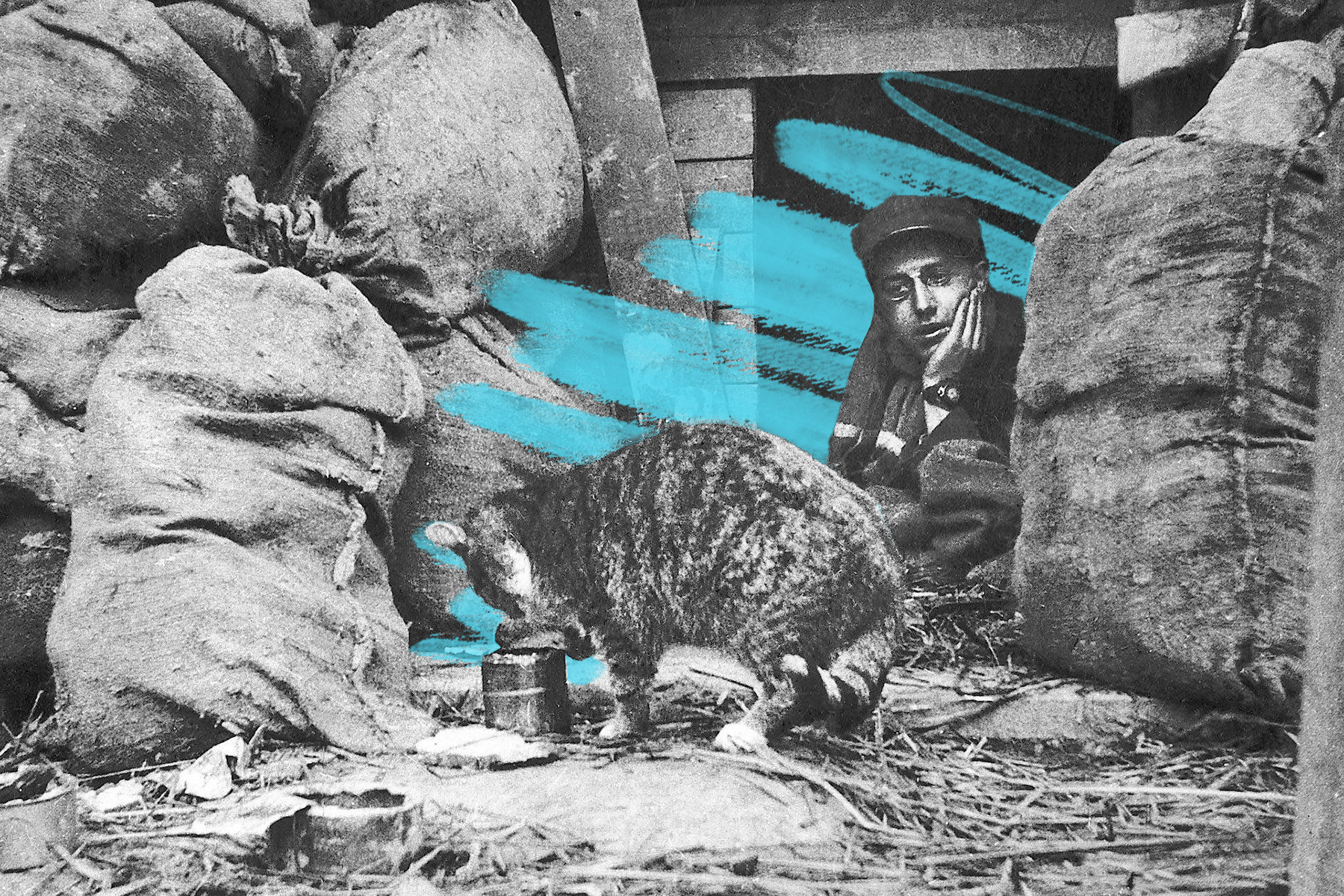
During the tumult of the Great War, many soldiers found companionship and support in an unlikely group of helpers: animals. Among them, cats offered morale-boosting companionship, helped ward off rats, and even demonstrated a keen sense of danger by detecting potential bombs before they exploded. Other animals also served valiantly in various roles, from dogs and homing pigeons to foxes, goats, and even lion cubs and raccoons, acting as mascots and performing official duties for their nations.
Some feline warriors earned recognition for their bravery. While most cats provided comfort and discreet aid, a few contributed in more extraordinary ways. One notable example is a cat named Simon, who served aboard the HMS Amethyst from 1948 to 1949. Simon was awarded the PDSA Dickin Medal for disposing of numerous rats and for displaying exemplary conduct under perilous circumstances when a shell blast tore through a steel plate nearby. His courageous actions were highlighted in a newsreel that celebrated him as a hero in his own right.