1: Sámi Mythology and Supernatural Belief Systems
1.1: Supernatural Hierarchy and Cosmic Geography
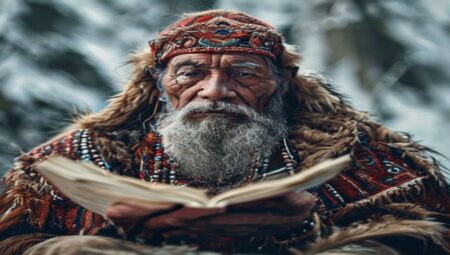
The **Noaidi** functions as the primary mediator between human settlements and volatile spirit realms. These shamanic practitioners utilize carved drums to navigate three distinct cosmic layers during trance states. The upper world contains benevolent sky deities who govern weather patterns and seasonal shifts. The middle world houses territorial spirits that demand strict adherence to ancient hunting protocols. The lower world contains chaotic forces that threaten livestock and disrupt established community boundaries.
1.2: Noaidi and Shamanic Drum Practices
The **goavddis** drum serves as a vital navigational instrument for tracking spirit migrations across frozen landscapes. Painted symbols on the drumhead map specific migration routes and sacred territorial boundaries for each season. Practitioners strike the drum with precise rhythmic patterns to induce altered states of consciousness during critical ceremonies. These rhythmic sequences synchronize with reindeer herd movements and facilitate successful negotiations with territorial entities. Modern researchers analyze drum layouts to reconstruct pre-colonial Sámi cosmological frameworks.
1.3: Sieidi Offerings and Sacred Sites
**Sieidi** formations represent natural rock outcrops that function as permanent shrines for ongoing spiritual negotiations. Communities deposit copper coins, dried fish, and reindeer bones at these sites to maintain favorable ecological balances. These offerings establish reciprocal relationships with local spirits who control game availability and weather stability. Historical records document extensive sieidi networks that once spanned the entire Scandinavian mountain ranges. Contemporary Sámi groups continue to recognize these sites as vital components of their ancestral heritage.
1.4: Hábme and Shape-Shifting Entities
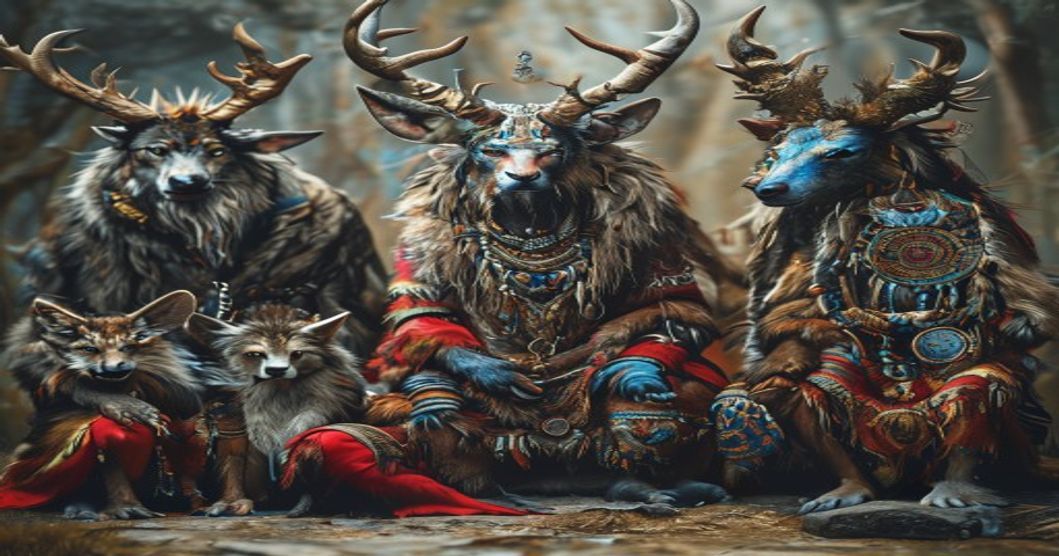
**Hábme** entities possess the ability to alter their physical form and mimic human appearances for deceptive purposes. These shape-shifters frequently target isolated travelers by replicating familiar voices to lure victims into dangerous terrain. Hunters employ specific counter-rhythms and verbal challenges to expose disguised entities before they can cause harm. The spirits demand precise ritual responses to maintain their hidden identities while avoiding direct confrontation. Communities document these encounters through generational storytelling to warn younger generations about deceptive tactics.
2: Key Supernatural Entities and Their Roles
2.1: Stallo and Antagonistic Forces
**Stallo** giants represent chaotic mountain forces that hoard resources outside standard human control mechanisms. These territorial entities frequently steal livestock and distort navigation landmarks to disorient approaching travelers. Defensive drum counter-rhythms provide the only effective method for communities to repel Stallo attacks. Residents strictly avoid their designated territories during polar night periods to prevent unwanted confrontations. Modern folklore reinterprets these giants as symbolic representations of climate displacement and ecological imbalance.
2.2: Ráhkkes and Forest Dwellers
**Ráhkkes** spirits inhabit dense pine canopies and utilize vocal mimicry to disorient human travelers in forested regions. These entities demand highly specific route descriptions before granting safe passage through their controlled territories. Incorrect replies trap victims within recursive navigational loops that prevent escape without external intervention. Hunters wear specialized reindeer antler masks to bypass detection protocols and maintain hunting access. The spirits respect structured hunting protocols and reward communities that follow traditional territorial boundaries.
2.3: Water Spirits and Lake Demons
**Čáhci** entities govern fjord systems and freshwater basins while dictating fishing success and drowning risks for coastal residents. Boat launches require salt offerings and explicit verbal acknowledgments to establish temporary safe passage agreements. Violations of these protocols result in immediate net destruction and widespread equipment loss across local communities. **Jávrregáhttu** demons actively sink unmarked vessels that attempt to cross their territorial waters without permission. Modern navigation charts frequently ignore these historical territorial claims despite ongoing community warnings.
2.4: Biekkoláš and Wind Entities
**Biekkoláš** forces control storm fronts and snow drift patterns that dictate winter travel viability across mountainous regions. These wind spirits demand drum beats that precisely match atmospheric pressure changes to ensure safe passage. Ignored warnings trigger sudden whiteout conditions that trap travelers without shelter or communication capabilities. **Biegga** entities reshape dunes and block mountain passes to enforce territorial boundaries during seasonal shifts. Communities track their movements through aurora patterns and adjust expedition schedules accordingly.
3: Belief Systems and Cultural Practices
3.1: Oral Transmission and Seasonal Rituals
**Joik** melodies encode detailed territorial maps that mark specific spirit territories across vast landscapes. Each vocal pattern corresponds to distinct ecological zones and requires precise tonal variations for accurate navigation. Seasonal shifts trigger mandatory ritual cycles that reinforce community bonds and maintain spiritual equilibrium. Spring festivals align with reindeer calving periods to honor territorial spirits who control migration routes. Autumn ceremonies honor harvest spirits through structured offerings and communal drumming sessions.
3.2: Reindeer Herding and Spiritual Ecology
**Boazodoallu** operations rely on reciprocal resource management principles dictated by territorial spirit agreements. Herders track **duottar** migration routes that shift according to seasonal spirit movements and ecological pressures. Each designated pasture holds distinct territorial contracts that prohibit unauthorized grazing during sensitive periods. Overgrazing violates established boundaries and triggers immediate ecological consequences for the entire community. Drum rhythms synchronize with herd movements to maintain spiritual alignment during critical migration phases.
3.3: Impact of Christianization on Sámi Cosmology
Missionary campaigns systematically targeted **sieidi** destruction to dismantle indigenous spiritual frameworks across Scandinavia. Copper coins replaced blood offerings to maintain hidden practices while appearing compliant with colonial religious standards. Lutheran hymns absorbed **goavddis** drum frequencies to facilitate covert continuation of traditional ceremonial practices. Indigenous communities encoded ancestral spirits into biblical narratives to preserve core contractual obligations across generations. Modern revival movements actively reconstruct pre-colonial frameworks to restore ecological balance and cultural continuity.
4: Historical Documentation and Modern Context
4.1: 19th Century Ethnographic Records
Lappish accounts captured fragmented spirit classifications that European scholars frequently misinterpreted as primitive pagan demons. **Sieidi** offerings were documented as primitive sacrifices without recognizing their sophisticated territorial negotiation functions. Early catalogs ignored essential territorial contract nuances that defined community-spirit relationships across vast landscapes. Modern researchers cross-reference missionary archives with oral transcripts to reconstruct original classification systems accurately. These reconstructions reveal complex ecological management strategies embedded within traditional spiritual practices.
4.2: Contemporary Sámi Storytelling and Media
Digital platforms distribute **joik** archives globally while preserving essential territorial information for future generations. Animated films reinterpret **Stallo** conflicts as modern climate narratives that highlight ecological displacement challenges. Podcast networks archive elder interviews to prevent critical knowledge loss from disappearing cultural practitioners. **Noaidi** drum patterns appear in contemporary soundscapes that bridge traditional ceremonial music with modern compositions. Young creators adapt spirit classifications for interactive media to expand traditional boundaries through algorithmic distribution.
4.3: Academic Research and Indigenous Knowledge Preservation
University databases standardize **sieidi** coordinates while indigenous councils maintain strict access controls over ritual sites. **Hábme** classifications integrate with modern ecological conservation models to enhance habitat protection strategies. Academic publications require explicit community consent before publishing any data related to sacred territorial boundaries. Digital archives prioritize native language metadata to ensure accurate cultural context and prevent misinterpretation. Knowledge sovereignty dictates all research parameters while external validation follows internal verification processes.
Frequently Asked Questions
What is Sami Folklore Creatures and Spirits?
Sami folklore creatures and spirits refer to the mythological beings, deities, and supernatural entities found in the traditional oral stories, joik chants, and shamanistic beliefs of the Sami people, the indigenous inhabitants of Sápmi (northern Scandinavia and Russia).
Key facts about Sami Folklore Creatures and Spirits
Key facts include their deep connection to nature (forests, mountains, lakes, and reindeer), the role of the noaidi (shaman) as a mediator, the existence of both benevolent and malevolent spirits, and the historical influence of Christianity which gradually suppressed but did not erase these traditions. Many creatures, such as the Stallo (giants) and the Riehppe (trolls), are still referenced in modern Sami culture and literature.