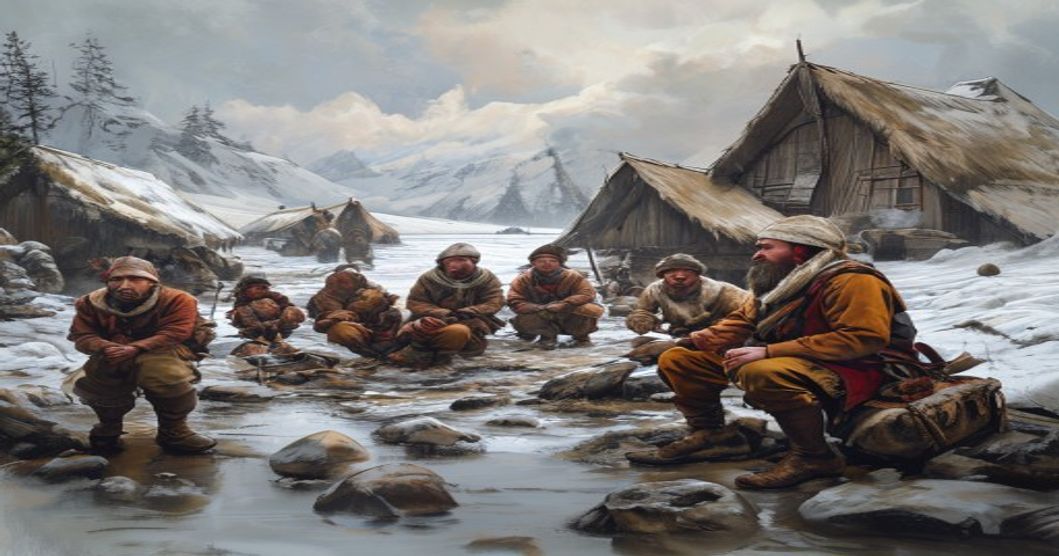
Early Explorers’ Accounts of Sami Communities
Seventeenth through nineteenth century European expeditions into Fennoscandian Lapland produced extensive written records that remain critical primary sources for understanding pre-industrial Sami society. Naturalists, clergy, and government surveyors traversed frozen taiga routes to document indigenous livelihoods, often viewing local customs through a lens of scientific classification or religious scrutiny. Early chroniclers meticulously recorded reindeer migration patterns, winter survival techniques, and seasonal trading networks that sustained communities across harsh subarctic climates.
Notable travelers such as Pehr Kalm during his 1732 Scandinavian journey, Carl Linnaeus in his 1732 Lappish expedition, and Olof Rudbeck later compiled detailed observations on Sami material culture. These accounts described the construction of lavvu dwellings, the crafting of antler tools, and the use of birch bark containers for food preservation. Religious missionaries like Hans Skanse and Lars Levi Laestadius also left extensive manuscripts that captured linguistic variations, oral traditions, and spiritual practices, though their interpretations frequently reflected contemporary theological frameworks rather than indigenous worldviews.
- Ecological documentation: Early travelers mapped reindeer grazing grounds, snow depth measurement methods, and wildlife tracking techniques that modern historians now cross-reference with archaeological findings.
- Linguistic records: Explorers transcribed joik melodies, place names, and grammatical structures, providing foundational material for comparative Uralic language studies.
- Cultural misinterpretations: Many accounts romanticized or pathologized Sami shamanic rituals, often labeling noaidi practices as superstition rather than sophisticated spiritual systems.
Modern researchers treat these historical narratives with methodological caution. The original texts contain geographical inaccuracies, translation gaps, and colonial biases that require contextual analysis. Nevertheless, they preserve invaluable snapshots of Sami adaptation strategies before state-imposed assimilation policies reshaped northern communities. Contemporary ethnographers rely on archival expeditions to reconstruct trade routes, seasonal settlement patterns, and intercommunity relations that shaped Sami resilience across centuries.
Defining the Historical Scope and Primary Sources
The historical timeframe under examination spans roughly from the late seventeenth century through the early nineteenth century, a period marking intensified Nordic and Germanic cartographic, botanical, and ethnographic penetration into Sápmi. During this era, state-sponsored expeditions and academic curiosity converged, producing documentation that remains foundational for reconstructing pre-assimilation Sami lifeways. Primary materials emerge from three distinct archival streams: royal commission reports, missionary field notes, and independent naturalist journals. These documents were rarely produced with ethnographic rigor by modern standards; instead, they functioned as administrative records, resource assessments, or taxonomic catalogs. Nevertheless, their raw observational data provides irreplaceable evidence of seasonal migration patterns, duodji craft techniques, and interregional trade routes prior to centralized Swedish-Norwegian-Finnish governance restructuring indigenous economies.
Researchers must navigate several critical source categories to establish chronological and geographical accuracy. Field journals authored by botanists such as Pehr Kalm and Carl Linnaeus’s academic successors contain systematic plant distribution records alongside incidental Sami linguistic fragments. Ecclesiastical archives in Tromsø, Umeå, and Oulu preserve baptismal registers, confessional transcripts, and parish correspondence that inadvertently document community demographics and spiritual practices. Military survey maps commissioned by crown authorities offer precise topographical annotations tied to reindeer grazing boundaries and taxation districts. Cross-referencing these materials requires rigorous provenance analysis, as many accounts underwent editorial sanitization before publication to align with state narratives or Enlightenment-era scientific conventions.
- Royal Commission Reports: Administrative documents detailing tax collection, land allocation, and resource extraction mandates imposed on northern territories.
- Missionary Field Notes: Personal correspondence and theological records capturing linguistic structures, household economies, and ritual observations before institutional assimilation protocols intensified.
- Naturalist Journals: Independent botanical and zoological surveys that frequently recorded Sami hunting techniques, snowshoe construction, and seasonal camp layouts alongside ecological data.
Modern historiography treats these sources as fragmented but indispensable. Historians apply source criticism to isolate observer bias, account for translation artifacts, and validate claims against archaeological findings and contemporary Sami oral genealogies. The resulting synthesis reveals a complex pre-modern society characterized by adaptive mobility, specialized ecological knowledge, and resilient cultural transmission mechanisms. Evaluating the reliability of early explorers’ documentation demands contextual awareness of eighteenth-century scientific paradigms, political incentives driving exploration funding, and the inherent limitations of outsider representation. Only through strict archival triangulation can researchers extract accurate historical data from these layered records.
Methodological Approaches in Colonial Documentation
Early colonial documentation of Sami communities relied heavily on observational field notes, missionary logs, and administrative correspondence that prioritized quantifiable data over cultural context. Researchers typically employed linear survey methodologies, recording demographics, subsistence patterns, and material culture through rigid classification systems derived from Enlightenment-era taxonomy. These frameworks treated indigenous knowledge as fragmented artifacts rather than integrated ecological practices, often isolating reindeer herding rituals, vocal traditions, and spiritual beliefs from their seasonal and territorial contexts.
Linguistic documentation formed a critical pillar of these methodological approaches. Explorers frequently depended on bilingual intermediaries or missionary translators who lacked formal training in Sami dialectal variation. Consequently, recorded vocabularies standardized complex phonetic structures into dominant Nordic or Germanic orthographies, erasing grammatical nuances and semantic depth. Lexical lists prioritized trade goods, hunting implements, and administrative terminology while neglecting kinship networks, oral historiography, and place-naming conventions that encoded ancestral land relationships.
Institutional directives heavily shaped data collection protocols. Colonial surveys operated under explicit state mandates to assess resource extraction potential, taxation capacity, and territorial control. Cartographic documentation emphasized fixed boundaries over migratory routes, mapping reindeer pastures as static agricultural zones rather than dynamic ecological corridors. Ethnographic questionnaires circulated among field agents featured predetermined categorical boxes that forced flexible cultural practices into rigid colonial taxonomies, generating records that reflected administrative convenience more than lived reality.
- Observation protocols prioritized visual documentation through sketching and early photography, frequently misinterpreting symbolic clothing patterns as decorative rather than clan-specific identifiers.
- Administrative categorization classified communities by settlement type (fixed vs. nomadic), establishing hierarchical distinctions that influenced subsequent policy frameworks and educational initiatives.
- Archival preservation practices centralized collected materials in metropolitan institutions, separating original field notes from contextual metadata and accelerating interpretive drift over decades of scholarly reuse.
Contemporary analysis requires rigorous source criticism to navigate these methodological constraints. Cross-referencing colonial records with oral testimonies, archaeological findings, and internal Sami archival materials reveals systematic gaps in cultural representation while preserving valuable baseline data on pre-industrial subsistence strategies and territorial adaptations.
Key Expeditions and Notable Documentarians
The systematic recording of Sami communities during the early modern period unfolded through state-sponsored scientific expeditions and ethnographic surveys conducted across Scandinavia between the eighteenth and nineteenth centuries. These missions emerged from imperial curiosity, resource mapping initiatives, and developing anthropological frameworks that attempted to classify indigenous populations within broader territorial administrations. Researchers frequently traveled with military escorts or government commissions, compiling field observations that merged empirical data collection with prevailing colonial interpretations of frontier societies.
- Carl Linnaeus’s Lapland Expedition (1732): The Swedish naturalist spent three months traversing northern territories, documenting reindeer husbandry cycles, winter clothing construction, and ritual practices. His annotated journals later evolved into Lapponia, establishing early taxonomic classifications for Sami material culture and settlement patterns.
- Pehr Kalm’s Northern Surveys (1740s): A direct
Scandinavian Journeys Through Lapland During the Seventeenth Century
The Swedish Crown initiated systematic penetrations into northern Fennoscandia during the early 1600s to consolidate territorial claims, map reindeer migration corridors, and establish tax districts known as skattelandar. Military officers, crown surveyors, and Lutheran clergy traveled along established river valleys such as the Torne, Muonio, and Kemijoki, relying heavily on Sámi guides for winter navigation across frozen tundra and summer portage routes. These expeditions produced detailed field notes that documented siida organization, seasonal pastures, and reindeer branding techniques long before formal ethnographic studies emerged.
Explorer journals from the period recorded precise observations of duodji craftsmanship, woven reindeer leather footwear, and lasso construction methods used for capturing young stock. Surveyors measured grazing territories using compass bearings and landmark markers, noting how communities divided winter camps near forest edges and summer highland pastures. Tax collectors documented payments in dried fish, antler tines, and wool, revealing a complex exchange network that predated state monopolies. Missionary records, though filtered through theological objectives, preserved phonetic transcriptions of South Sámi dialects and described noaidi drum rituals before systematic suppression campaigns intensified.
- Route Mapping: Crown geodesists charted 17th-century travel corridors by measuring daylight hours, sled drag resistance on snow crust, and river ice thickness across Troms and Finnmark provinces.
- Economic Documentation: Field agents recorded antler grading standards, reindeer hide curing techniques, and seasonal barter rates between coastal traders and inland herders.
- Linguistic Preservation: Clergy scribes compiled glossaries tracking kinship terms, weather indicators, and pastoral vocabulary that reflected centuries of ecological adaptation.
Archival fragments from Uppsala, Stockholm, and Oslo contain handwritten survey logs detailing camp layouts, snowshoe bindings, and communal meal preparations during extreme cold spells. These primary sources reveal how Scandinavian officials adapted to subarctic conditions while documenting Sámi land use patterns that influenced later boundary treaties. The manuscripts remain critical for reconstructing pre-colonial resource management strategies and tracking cultural continuity across generations.
German and Russian Field Research Throughout the Eighteenth Century
The eighteenth century marked a decisive shift in European scientific engagement with the Sami populations inhabiting northern Fennoscandia and the Kola Peninsula. German-speaking naturalists operating within the broader Enlightenment framework initiated systematic documentation that diverged from earlier missionary narratives. Carl Linnaeus’s 1732 Lapland expedition established the methodological baseline for subsequent field research, combining taxonomic classification with direct observation of indigenous livelihoods. His correspondence and published accounts detailed Sami reindeer husbandry practices, seasonal migration routes, and material culture, while simultaneously recording linguistic structures that would later inform Finno-Ugric comparative studies.
German academic networks extended these efforts through institutional funding from universities in Göttingen, Uppsala, and Berlin. Researchers prioritized botanical specimens, meteorological data, and ethnographic sketches, often relying on Sami guides for navigation and ecological knowledge. These field teams documented trade interactions with Norwegian and Swedish merchants, noting the economic integration of Sami communities into regional supply chains. Their reports frequently emphasized resource extraction potential, reflecting mercantilist priorities that coexisted with genuine scientific inquiry.
- Carl Linnaeus’s Lapponia (1737) provided the first comprehensive European inventory of Sami subsistence strategies, including snowshoe construction, fish trap designs, and seasonal dwelling types.
- Pehr Kalm’s correspondence (1740s) recorded linguistic variations across northern territories, distinguishing dialectal boundaries that aligned with ecological zones rather than political borders.
- Danish-German expeditions mapped reindeer herd movements and documented shamanic drum symbols, though interpretations often reflected Enlightenment biases regarding indigenous spirituality.
Russian field research emerged concurrently but followed distinct administrative and geopolitical trajectories. The Russian Academy of Sciences dispatched scholars to the Kola Peninsula and Murmansk coast primarily to consolidate territorial claims and catalog natural resources. Expeditions led by figures such as Gerhard Friedrich Müller and Stepan Krasheninnikov collected demographic data, recorded Orthodox missionary encounters, and compiled dictionaries that facilitated bureaucratic control. Russian observers noted the coexistence of Sami traditional practices with state-imposed taxation systems, highlighting how indigenous communities navigated dual economic pressures.
Both Germanic and Russian research traditions produced archives that remain foundational for historical ecology and anthropological linguistics. Field notes preserved in Uppsala, St. Petersburg, and Berlin contain detailed illustrations of clothing, tools, and seasonal campsites. Modern scholarship continues to cross-reference these eighteenth-century records with oral histories and archaeological findings, reconstructing pre-colonial Sami territorial organization. The empirical rigor of these early surveys established precedents for later Scandinavian ethnographic methodologies while exposing the limitations of external classification systems applied to autonomous indigenous societies.
British and French Ethnographic Missions in the Nineteenth Century
The nineteenth century witnessed a surge in British and French scholarly interest toward the indigenous populations of northern Fennoscandia, driven by expanding academic institutions and cross-border scientific exchange. British naturalists and merchants frequently traversed Finnmark and Swedish Lapland to document reindeer husbandry practices, textile techniques, and seasonal migration patterns that sustained Sami livelihoods across extreme latitudes. These travelers compiled detailed field notes, commissioned woodcut illustrations of traditional lavvu structures, and acquired functional artifacts for private collections destined for later museum displays in London and Edinburgh.
French academic circles approached the region through institutional channels, with researchers affiliated with the Académie des Inscriptions et Belles-Lettres and emerging geographic societies organizing targeted expeditions. Scholars prioritized linguistic documentation, systematically recording Sami dialects to establish comparative frameworks within Uralic language families. Academic correspondents exchanged manuscripts featuring transcribed folk narratives, taxonomic classifications of local flora, and precise cartographic surveys of winter grazing corridors. Museum curators in Paris secured extensive material culture holdings, including ceremonial drums, carved antler implements, and woven belts, which later informed structural analyses of northern European cosmology.
- British expeditions emphasized practical observation, focusing on survival strategies, trade networks with Scandinavian towns, and adaptive clothing technologies designed for subarctic conditions.
- French scholarly initiatives concentrated on philological research, archival preservation of oral traditions, and systematic cataloging of ethnographic specimens for institutional archives.
- Both national approaches contributed to early typological studies of Sami cosmology, though European frameworks frequently filtered indigenous knowledge through romanticized or hierarchical lenses.
Field researchers documented seasonal resource management with meticulous precision, noting how communities regulated reindeer herds across tundra and taiga ecosystems. Correspondence between London-based anatomical societies and Parisian linguists established early cross-continental networks that standardized recording methods for indigenous material culture. These archival efforts preserved linguistic variants and craft techniques that later generations of anthropologists would reference when analyzing cultural resilience, though contemporary scholars now critically examine the power dynamics embedded in nineteenth-century documentation practices.
Spiritual Practices and Shamanic Traditions Recorded by Foreign Observers
Eighteenth-century Scandinavian and Germanic travelers systematically documented Sami spiritual infrastructure during extended Arctic expeditions. The primary subject of these records remained the noaidi, a ritual specialist who navigated spirit realms through controlled drumming sessions. Foreign observers meticulously described the goavddis, a ceremonial membrane stretched over carved reindeer antler frames and painted with pigment derived from birch bark or iron ore. These drums functioned as cosmological maps rather than musical instruments, displaying concentric zones representing sky deities, human settlements, and subterranean hunting grounds. Divination required striking the surface with a gievrie hammer, then interpreting impact points where small iron rings or metal pendants landed. Expedition logs from 1732 detail how practitioners predicted reindeer migration routes by tracking ring trajectories across specific membrane sectors.
Missionary travelers frequently mischaracterized joik vocalization as chaotic chanting, yet ethnographic notes confirm its highly structured acoustic architecture. Each performance operated as an auditory signature linking communities to specific individuals, animal herds, or geographic formations. Field records from Norwegian fjord expeditions revealed that melodic contours shifted according to seasonal conditions, preserving ecological data across generations without written transcription. Foreign writers also documented sieidi worship ceremonies conducted at natural rock formations or carved wooden pillars. Participants deposited reindeer antlers, copper fragments, and dried fish while the noaidi channeled protective entities such as Biegga-Vuovna for wind control or Horagalles during storm seasons.
- Drum Divination Protocols: Observers noted distinct rhythmic sequences triggered trance states lasting three to four hours, with practitioners entering altered consciousness to diagnose illnesses or locate lost game.
- Sacred Object Placement: Expedition accounts describe offerings arranged in triangular formations around standing stones, mirroring celestial alignments visible during winter solstice nights.
- Vocal Transmission Methods: Ethnographers recorded how performers modulated breath control and throat resonance to replicate animal calls, wind patterns, and glacial movement sounds.
German researchers published detailed anatomical sketches of drum construction in 1760, emphasizing how antler curvature determined acoustic projection during outdoor rituals. These early records demonstrate that Sami spiritual practices operated as integrated survival systems rather than isolated superstitions, combining astronomical observation, ecological tracking, and community coordination into a single ceremonial framework.
Material Culture, Clothing Styles, and Artistic Motifs in Expedition Logs
Early nineteenth-century expedition logs provide a meticulous record of Sami material culture, capturing artifacts and sartorial traditions that modern archaeology continues to validate. Field researchers documented reindeer-hide garments constructed through precise stitching techniques designed for extreme subarctic conditions. Expedition accounts frequently noted the layered composition of winter attire, emphasizing how fur orientation directly influenced thermal regulation. The documentation extended beyond utilitarian descriptions, recording decorative elements that signaled regional identity and social status within nomadic settlements.
- Reindeer Skin Suits: Explorers recorded full-body garments featuring reinforced knees and elbows, with fur interior-facing construction noted for moisture management.
- Tundra Boots: Logs detailed the dual-layer boot system, combining cured hide soles with knitted wool inserts, often secured using sinew threading rather than metal fasteners.
- Sash and Belt Construction: Woven textile belts featuring copper wire inlays were consistently measured and sketched, revealing standardized widths that corresponded to specific kinship networks.
Artistic motifs appear repeatedly across these archival records, particularly in wood-carved tools and ceremonial regalia. Expedition naturalists frequently transcribed indigenous explanations for geometric patterns, linking spiral designs to solar cycles and zigzag sequences to reindeer migration routes. Beadwork documentation reveals a strict color-coding system: red threads denoted protective wards, blue indicated water sources, and white represented seasonal transitions. Cartographers and ethnographers working in Fennoscandia during the 1840s systematically cataloged these visual languages, recognizing that pattern placement on sleeves, collars, and chest panels functioned as a non-verbal communication network. Modern material analysis confirms that many expedition sketches accurately preserved pigment compositions derived from local lichen and mineral deposits. These archival descriptions remain foundational for reconstructing pre-industrial craftsmanship techniques without relying solely on surviving museum specimens.
Critical Analysis of Explorer Narratives
Early accounts of the Sami by Scandinavian, German, and Russian explorers between the 17th and 19th centuries functioned more as ethnographic projections than objective records. These narratives consistently framed indigenous reindeer herding, seasonal migration, and spiritual practices through a lens of primitivism and exoticism. Explorers like Carl Linnaeus and Peter Klengenberg documented Sami lifeways primarily to classify nature rather than understand cultural complexity, reducing dynamic social structures to static taxonomic entries. The reliance on missionary reports and state-sponsored surveys introduced systematic bias, where autonomous spiritual traditions were labeled as superstition and highly regulated ecological adaptation was misinterpreted as aimless wandering.
- Linguistic Distortion: Early writers frequently conflated distinct Sami dialects into a single primitive language family, ignoring regional phonetic variations and trade terminology that reflected complex economic networks.
- Economic Erasure: Explorer logs routinely omitted indigenous contributions to regional fur, tallow, and antler markets, attributing commercial success instead to Norwegian and Swedish settlers.
- Ritual Fabrication: The romanticized imagery of the noaidi emerged from fragmented secondhand testimonies, later amplified by academic circles seeking archaic spiritual models rather than documenting living ceremonies.
Modern historiography reveals that these accounts systematically erased local governance structures and seasonal land-use agreements. Cartographic errors and geographical misplacements further distorted spatial accuracy, while state expansion agendas dictated which territories received documentation and which were dismissed as uninhabited waste. Contemporary archival research demonstrates that many explorer claims about ceremonial sites contain fabricated details, often serving colonial administrative goals rather than ethnographic truth. Critical evaluation requires cross-referencing these narratives with Sami oral histories, archaeological findings, and parish records. When analyzed comparatively, the discrepancies between external observation and internal reality become structurally apparent. Early documentation served territorial consolidation and resource extraction objectives, framing indigenous presence as a temporary obstacle to state sovereignty. Recognizing these methodological flaws allows contemporary researchers to dismantle colonial epistemologies and reconstruct historical narratives through indigenous sourcing methodologies.
Colonial Bias and Misinterpretation in Early Accounts
Early European documentation of Sami societies emerged within rigid ethnographic frameworks that prioritized imperial categorization over cultural accuracy. Seventeenth- and eighteenth-century travelogues consistently filtered indigenous livelihoods through Scandinavian and Germanic moral lenses, framing seasonal reindeer management as primitive deviation from agrarian settlement patterns. Explorers routinely misread calculated pasture rotation as aimless wandering, overlooking the intricate ecological knowledge embedded in lichen harvesting cycles, frost-snow layer identification, and calving ground selection. Religious observers dismissed noaidi worship and joik vocal traditions as demonic superstition rather than recognizing them as complex cosmological frameworks governing community cohesion, resource distribution, and environmental adaptation.
Nineteenth-century scientific accounts introduced pseudo-empirical classifications that reduced Sami identity to measurable physical traits and linguistic fragments. Researchers isolated cultural elements—duodji craftsmanship, stringed instruments, medicinal plant processing—from their ritual and seasonal contexts, treating artifacts as static curiosities instead of living components of adaptive heritage. Administrative reports linked indigenous autonomy to societal decline, justifying territorial encroachment through narratives of inevitable cultural absorption. These distorted records established baseline assumptions that directly influenced land tenure policies, missionary mandates, and early anthropological methodologies across Nordic jurisdictions.
- Ecological Misclassification: Seasonal reindeer routes were recorded as chaotic movements rather than calculated responses to lichen availability, microclimate shifts, and calf-rearing requirements.
- Ritual Reductionism: Shamanic meditations and drum divination were catalogued as primitive magic instead of documented knowledge-transfer systems for navigation, weather prediction, and territorial marking.
- Linguistic Fragmentation: Dialectal variations across Finnmark, Troms, and Lapland provinces were standardized into monolithic categories, erasing regional governance structures, trade networks, and kinship obligations.
The archival legacy of these accounts requires continuous critical reevaluation. Modern historiography cross-references explorer marginalia with oral transmission records, archaeological settlement patterns, and early missionary correspondence to reconstruct pre-colonial Sami administrative and economic systems. Correcting foundational misreadings remains essential for accurate cultural preservation strategies and indigenous land rights jurisprudence across Scandinavia.
Cross-Cultural Translation Challenges and Linguistic Distortions
Early European travelers, missionaries, and naturalists who documented Sami societies between the sixteenth and nineteenth centuries routinely encountered severe obstacles when attempting to transcribe indigenous vocabulary. These observers lacked standardized orthographic frameworks for Uralic languages and frequently forced Sapmi phonology into Latin alphabetic conventions borrowed from German, Dutch, or Scandinavian models. The resulting transcriptions introduced systematic errors that obscured original grammatical structures and semantic ranges.
- Phonological Mismatch: Explorers routinely replaced uvular consonants and front-back vowel distinctions with alveolar or velar equivalents native to their own tongues. The Sami distinction between voiceless stops and fricatives frequently collapsed into single approximations.
- Semantic Drift: Spiritual terminology, particularly around sieidi (sacred stones) and noaidi (shamanic practitioners), was routinely mapped onto Christian or Norse equivalents. This conceptual overlay stripped ritual objects of their original cosmological context.
- Morphological Compression: Polysynthetic word formation and case inflection were flattened into isolated lexical items. Descriptive phrases denoting reindeer husbandry stages, snow conditions, and seasonal migration routes lost syntactic precision when rendered as direct noun translations.
Agenda-driven transcription practices further compounded these distortions. Clergy and colonial administrators prioritized records that supported conversion narratives or resource extraction frameworks. Words describing autonomous governance, land tenure, and ecological knowledge were frequently omitted or reclassified through a European legal lens. Manuscripts from the period exhibit inconsistent spelling conventions within single documents, reflecting individual scribes rather than linguistic reality.
Modern historians and linguists must treat early transcriptions as mediated artifacts rather than direct lexical records. Cross-referencing colonial notebooks with Sami oral archives, church baptismal registers, and comparative Uralic etymology remains essential for reconstructing accurate semantic boundaries. Critical source analysis separates phonetic approximation from intentional cultural erasure, preserving the structural integrity of indigenous knowledge systems.
Modern Scholarly Corrections and Decolonial Readings
Early explorers’ documentation of Sámi societies frequently operated within imperial frameworks that prioritized external observation over internal lived experience. Nineteenth-century travelogues and ethnographic reports systematically reduced complex kinship networks, seasonal migration patterns, and multilingual communication systems to static curiosities. Contemporary researchers analyze these primary sources through archival forensics, identifying how cartographic inaccuracies, linguistic misinterpretations, and romanticized tropes served administrative and missionary objectives rather than scholarly rigor.
Decolonial scholarship has fundamentally restructured how these historical records are processed. Researchers now cross-reference explorer manuscripts with Sámi oral traditions, church tax registers, and indigenous land-use surveys to reconstruct accurate socioeconomic models. This methodological pivot exposes how early accounts suppressed Sámi political autonomy, misrepresented reindeer husbandry as subsistence rather than sophisticated resource management, and pathologized joik vocal traditions as mystical anomalies. Critical geography and postcolonial theory provide the analytical infrastructure for dismantling these layered distortions.
- Archival triangulation: Scholars align explorer narratives with Sámi household inventories, trade ledgers, and missionary correspondence to verify demographic data and economic practices.
- Linguistic reconstruction: Historical place names and descriptive terms are decoded using modern Sámi dialectology, revealing how early writers imposed foreign grammatical structures onto indigenous syntax.
- Ethnographic bias mapping: Researchers catalog recurring exoticizing motifs to trace how colonial institutions standardized Sámi identity for bureaucratic control.
Current academic initiatives prioritize Sámi-led interpretation of historical materials, shifting authority from external academics to community knowledge holders. Digital humanities platforms now host annotated explorer manuscripts alongside indigenous commentaries, enabling direct epistemological dialogue. This corrective trajectory extends beyond historiography, informing contemporary land tenure negotiations, cultural heritage repatriation protocols, and curriculum development across Nordic educational institutions. The ongoing revision process demonstrates how critical engagement with flawed historical documentation strengthens archaeological validation, linguistic preservation, and sovereign governance frameworks.
Archival Preservation and Digital Access
Early explorers’ manuscripts, field notes, and ethnographic sketches documenting Sami communities have largely survived through institutional archives across Scandinavia, Russia, and Western Europe. These collections reside in national libraries, university special collections, and indigenous heritage centers. The physical preservation of brittle paper, ink deteriorations, and fragile binding requires climate-controlled storage environments that maintain stable humidity and temperature levels. Conservators apply specialized techniques to stabilize carbon-based pigments and prevent foxing without altering original annotations or marginalia.
Digitization initiatives have transformed access to these historical records. High-resolution multispectral imaging captures faded script and water-damaged sections that remain invisible to the naked eye. Libraries in Tromsø, Umeå, and Helsinki coordinate cross-border metadata standards to ensure consistent cataloging. Controlled vocabularies align with indigenous classification systems rather than colonial taxonomies. Researchers can now query digitized finding aids through linked open data frameworks that connect explorer logs with contemporary Sami oral histories.
- Climate-controlled vaults using inert gas atmosphere packaging to halt cellulose hydrolysis
- Multispectral scanning protocols calibrated for nineteenth-century iron gall ink degradation patterns
- TEI-compliant transcription workflows prioritizing linguistic accuracy over automated optical character recognition
- Tiered access frameworks distinguishing between culturally restricted materials and publicly available expedition logs
Access protocols vary across institutions. Some archives provide immediate public access to low-resolution scans, while requiring appointment-based viewing for fragile originals. Copyright disputes frequently arise when materials document unceded territories or contain culturally restricted knowledge. Repositories address these tensions by implementing tiered access models that balance academic research with community sovereignty. Digital platforms increasingly feature contextual annotations developed through collaboration with Sami elders and language specialists. These supplements clarify historical terminology, correct mistranslations, and map geographic references to current administrative boundaries.
Preservation funding relies on heritage grants and collaborative partnerships between academic institutions and indigenous organizations. Metadata enrichment projects prioritize descriptive accuracy over rapid processing timelines. Institutions recognize that digitizing explorer accounts without proper contextualization risks perpetuating outdated narratives. Current workflows integrate community review stages before publication. This approach ensures that digital repositories function as living archives rather than static historical collections. The ongoing integration of traditional ecological knowledge with archival metadata continues to reshape how researchers interpret early field documentation.
Digitizing Rare Manuscripts and Expedition Journals
The original expedition journals and field notes documenting early encounters with Sámi communities exist in a fragile physical state across municipal archives, university libraries, and private collections throughout Scandinavia and northern Russia. Paper degradation from acidic ink, leather binding decay, and centuries of Arctic humidity have accelerated the deterioration of these primary sources. High-resolution digitization workflows now preserve these documents through multispectral imaging capture at 600 dpi or higher, capturing faded marginalia, watercolor landscape sketches, and phonetic spellings that standard scanners miss. Metadata schemas such as TEI/XML encode structural elements like dates, place names, and ethnographic observations, enabling precise cross-referencing with modern Sámi oral archives and linguistic databases.
- Ink corrosion analysis: Spectroscopic mapping identifies iron gall ink degradation patterns, guiding conservation priorities before scanning begins.
- Paleographic transcription pipelines: Manual verification replaces unreliable automated OCR for archaic handwriting styles and non-standardized Sámi place names.
- Geospatial tagging: GPS coordinates extracted from explorer route maps align historical observations with contemporary Sámi reindeer migration corridors.
Digital repositories now apply controlled access frameworks developed in consultation with the Sámi Parliament and local cultural heritage councils. Original manuscripts remain restricted to academic researchers, while transcribed texts, translated excerpts, and contextual annotations are published under open licensing agreements. Machine learning models trained on verified historical handwriting datasets assist archivists in generating searchable text layers, reducing manual transcription time without compromising accuracy. Linked open data protocols connect explorer accounts with linguistic corpora, climate records, and archaeological findings, creating a multidimensional research ecosystem. Institutions funding these digitization initiatives prioritize long-term preservation through LOCKSS/CLOCKSS compliance and decentralized storage networks, ensuring that primary source material remains accessible regardless of institutional policy shifts or physical repository vulnerabilities. Conservation teams utilize non-invasive UV fluorescence techniques to recover erased survey routes, while parallel transcription projects cross-validate explorer terminology against contemporary Sámi dialectological records to eliminate historical misinterpretations.
Academic Databases and Open-Access Repositories for Historical Research
Historical research on early explorers’ accounts of Sámi communities relies heavily on structured academic databases and open-access repositories to locate, verify, and contextualize primary sources. Researchers consistently utilize multidisciplinary platforms such as JSTOR, Project MUSE, and the Directory of Open Access Journals (DOAJ) to identify peer-reviewed articles analyzing 17th through 19th-century Nordic expedition logs, missionary records, and colonial ethnographies. These databases index keywords like “Sámi”, “Lapland”, “Arctic exploration”, and “Nordic frontier studies”, enabling precise retrieval of scholarly analyses that examine how early travelers documented indigenous livelihoods, reindeer herding practices, and shamanic traditions.
- Institutional Archives: The National Library of Norway (Nasjonalbiblioteket) hosts digitized manuscript collections containing original expedition journals, cartographic sketches, and correspondence from figures like Pehr Klöcker and Carl Linnaeus. Similarly, the Sámi University of Applied Sciences digital repository provides open-access publications that critically examine explorer narratives through indigenous epistemologies.
- Cross-Regional Repositories: Europeana aggregates metadata from European cultural heritage institutions, offering searchable collections of historical maps, travelogues, and ethnographic illustrations. The Arctic Portal functions as a specialized gateway, aggregating peer-reviewed research, government reports, and archival datasets focused on northern indigenous history.
- Text Mining & Digitization Projects: HathiTrust and the Internet Archive host scanned editions of early printed accounts, while platforms like CORE aggregate open-access preprints and journal articles worldwide. Researchers employ Boolean search strings (e.g., “explorer” AND “Sámi” AND “18th century”) combined with date filters to isolate primary documentation from secondary interpretations.
Effective historical inquiry requires cross-referencing explorer accounts against Sámi oral archives, linguistic corpora, and archaeological publications. Metadata standards such as Dublin Core and MARC21 ensure that digitized manuscripts remain discoverable across institutional boundaries. Scholars also consult the World Digital Library and regional university repositories to access translated expedition logs, enabling direct comparison between external observations and indigenous historical records. Maintaining rigorous source validation prevents the perpetuation of colonial biases embedded in early travel literature.
Community-Led Archiving and Indigenous Verification Processes
Early European expeditions documented Sámi life through the lens of foreign observers, often reducing complex social structures to exoticized vignettes. Contemporary archival initiatives reverse this dynamic by centering Sámi governance over historical records. Indigenous verification processes now operate as mandatory checkpoints before any explorer manuscript enters public databases. Archivists collaborate with local Sámi councils to cross-reference field notes against oral traditions, reindeer migration patterns, and seasonal ritual calendars recorded in ancestral languages. This methodology filters colonial bias while preserving observational details that retain ethnographic value.
- Provenance reconstruction utilizes traditional kinship networks to validate source attribution and map historical travel routes against verified Sámi settlement records.
- Metadata standardization replaces Western categorical systems with indigenous taxonomy, embedding seasonal terminology, dialect variations, and ecological classifications directly into cataloging fields.
- Access governance mandates explicit consent from descendant communities before digitization proceeds, ensuring cultural protocols dictate publication timelines and usage restrictions.
Verification committees composed of elders, linguists, and reindeer herders evaluate each document for contextual accuracy. They flag misidentified place names, corrected animal husbandry descriptions, and restored ceremonial timelines that early travelers frequently distorted. Digital repositories now integrate these verification outputs directly into search indexing algorithms. When researchers query historical explorer journals, the system displays indigenous annotations alongside the original text. These annotations clarify ecological references, decode obsolete dialect terms, and correct geographic coordinates based on contemporary Sámi land surveys.
The process transforms static manuscripts into living archives where primary sources and indigenous expertise coexist without hierarchical ranking. Machine learning pipelines now process transcribed explorer accounts using training datasets curated exclusively by Sámi linguistic institutes. These models learn morphological patterns, reindeer husbandry terminology, and weather documentation conventions specific to northern dialects. Automated tagging systems flag discrepancies between colonial observations and verified indigenous records, prompting manual review by community archivists. Search relevance scores prioritize documents that pass full indigenous verification cycles, effectively demoting unverified colonial narratives in academic and public search results. This technical architecture ensures historical accuracy drives visibility rather than colonial provenance alone.
Institutional partnerships with Sámi parliaments ensure funding aligns with community priorities rather than external academic trends. Archival digitization follows specialized knowledge frameworks that embed community-specified usage rights directly into file headers. Cross-referencing protocols require at least three independent Sámi knowledge holders to approve each annotated entry before publication. This structural shift guarantees that archival preservation serves cultural continuity instead of historical extraction.
Contemporary Relevance and Academic Applications
The original field notes, cartographic sketches, and ethnographic observations recorded by nineteenth- and early twentieth-century explorers provide indispensable baseline data for modern scholarly inquiry into Sami history, ecology, and cultural continuity. Contemporary researchers leverage these documents not as definitive historical records, but as critical reference points that reveal shifting environmental conditions, linguistic evolution, and indigenous land-use patterns across Fennoscandia.
- Linguistic Reconstruction: Early transcriptions of Sami dialects enable comparative phonology studies and inform revitalization programs for endangered regional variants, particularly when aligned with recorded speech patterns from later ethnographic films.
- Ecological Baselines: Descriptions of reindeer migration routes, tundra vegetation zones, and coastal fishing practices establish pre-industrial environmental baselines essential for climate impact modeling and biodiversity conservation strategies.
- Decolonial Archival Practice: Academic institutions increasingly pair explorer manuscripts with Sami oral archives, creating bidirectional research frameworks that correct historical misrepresentations and restore indigenous epistemological authority.
Digital humanities initiatives have accelerated the integration of these primary sources into university curricula and peer-reviewed publications. Text-mining algorithms extract geographic coordinates, botanical nomenclature, and settlement terminology from scanned journals, allowing scholars to map historical territory claims against contemporary land-management policies. Collaborative projects between Northern Sámi research centers and European archival networks now prioritize contextual annotation, ensuring that observer bias is explicitly documented alongside empirical observations.
Policy development and heritage conservation benefit directly from this academic engagement. When legal disputes address indigenous resource rights, verified historical accounts supply chronological evidence of continuous cultural practice. Academic publications citing these sources routinely apply rigorous provenance verification, cross-referencing explorer claims with archaeological surveys, genealogical records, and community-led oral histories. This methodological rigor strengthens both scholarly credibility and the practical application of historical data in contemporary indigenous governance structures.
Curriculum design at tertiary institutions now incorporates these archival materials to teach source criticism, spatial analysis, and ethical research protocols. Students examine how explorer positioning influenced route documentation, compare multiple expedition reports describing identical settlements, and evaluate how colonial taxonomies distorted traditional social organization. The resulting analytical training produces researchers capable of navigating complex historical datasets while maintaining strict adherence to indigenous data sovereignty standards.
Utilizing Historical Accounts in Modern Sámi Studies
Early navigational logs, missionary field notes, and colonial tax registers provide critical chronological anchors for contemporary Sámi research. Modern scholars treat these documents not as definitive historical records but as fragmented data points requiring rigorous contextual analysis. Researchers cross-reference navigator observations with indigenous oral chronologies to reconstruct seasonal migration patterns, reindeer husbandry practices, and coastal fishing schedules that predate formal state documentation. This methodological approach exposes discrepancies between outsider perceptions and internal community knowledge, allowing academic teams to isolate factual ecological details from colonial bias.
Linguistic reconstruction forms a core component of this analytical framework. Early accounts frequently recorded Sámi place names, kinship terms, and technical vocabulary with inconsistent orthography. Contemporary philologists apply comparative linguistics to decode these entries, mapping phonetic variations across decades of expedition diaries. These linguistic traces reveal historical trade routes, resource extraction zones, and intercommunity alliances that modern administrative maps have obscured. When paired with dendrochronological data and pollen analysis from bog cores, textual references to specific flora and fauna establish precise timelines for environmental adaptation.
Archival digitization projects have accelerated the integration of these historical sources into academic databases. Researchers utilize geospatial mapping software to plot expedition coordinates against traditional Sámi territories, generating layered datasets that support both cultural preservation initiatives and legal land claims. The following analytical applications demonstrate how primary sources function within current scholarship:
- Chronological Calibration: Aligning explorer timestamps with indigenous seasonal calendars to verify historical climate shifts and resource availability.
- Linguistic Preservation: Extracting archaic dialectal forms from poorly documented expedition glossaries to support modern language revitalization programs.
- Ethnobotanical Verification: Cross-referencing recorded plant species and harvesting techniques with archaeological residue analysis to confirm traditional ecological knowledge.
- Territorial Mapping: Overlaying historical route descriptions with contemporary Sámi reindeer grazing corridors to identify legally recognized ancestral boundaries.
This structured methodology transforms fragmented historical observations into actionable academic resources. By applying forensic textual analysis and digital mapping techniques, modern Sámi studies convert colonial-era documentation into evidence-based cultural reconstruction. The process demands strict source criticism, yet yields unparalleled insights into pre-industrial community organization, resource management strategies, and linguistic evolution across northern Fennoscandia.
Policy Implications for Land Rights and Cultural Revitalization
Early explorers’ documentation of Sami territories provides critical baseline data for contemporary land rights negotiations. These nineteenth-century field notes, maps, and ethnographic sketches capture pre-industrial resource utilization patterns, seasonal migration routes, and traditional grazing boundaries that modern legal frameworks frequently overlook. When policymakers reference these archival sources, they establish a continuous historical presence that strengthens indigenous claims under international law. The geographical accuracy of early cartographic records directly informs current boundary disputes in Finnmark, Norrbotten, and Kola Peninsula regions, where state-owned land registries contradict documented Sami customary usage.
Modern policy initiatives must integrate these historical accounts into formal recognition processes. Nordic governments increasingly rely on archival evidence to validate Sámediggi petitions and cross-border reindeer herding agreements. Legal instruments such as the Norwegian Finnmark Act and Sweden’s Land Code amendments demonstrate how historical documentation transforms abstract cultural heritage into enforceable property rights. Policy frameworks that ignore early explorers’ observations risk perpetuating colonial land dispossession, whereas those that systematically archive and verify these accounts enable precise territorial restitution. Contemporary legislation must mandate collaborative interpretation between state historians and Sami knowledge holders to prevent misappropriation of indigenous spatial data.
- Establish independent archival verification committees comprising Sami elders and legal historians to cross-reference explorer manuscripts with oral traditions.
- Integrate verified historical land-use maps into national property registries to override state claims based on incomplete colonial surveys.
- Allocate dedicated funding for community-controlled digital preservation of place names, seasonal routes, and ecological classifications recorded in early field notes.
Land rights and cultural revitalization operate as interdependent policy objectives. Historical accounts reveal how traditional ecological knowledge shaped sustainable land management long before modern conservation models emerged. Policy implementation requires structural support for language preservation, as place names recorded by early researchers contain irreplaceable ecological classifications that guide contemporary environmental stewardship. Cross-jurisdictional cooperation between Norway, Sweden, Finland, and Russia remains essential to harmonize disparate land policies while respecting transboundary Sami heritage. Sustainable revitalization depends on treating historical documentation not as static records but as active policy instruments for territorial sovereignty and cultural continuity.
“`html
Frequently Asked Questions
What is Early Explorers’ Accounts of Sami Communities?
Early Explorers’ Accounts of Sami Communities refer to the historical narratives, journals, and observations documented by various European explorers and missionaries who visited or traveled through Sápmi (the traditional territory of the Sami people) during the 17th to 19th centuries. These accounts provide some of the earliest written records of Sami culture, livelihoods, reindeer herding practices, shamanistic beliefs, and interactions with neighboring Nordic populations, though they are often filtered through the explorers’ own cultural biases.Key facts about Early Explorers’ Accounts of Sami Communities
- These accounts were primarily written by Swedish, Norwegian, and Danish explorers, missionaries, and officials between the 1600s and 1800s.
- They often depicted Sami people as exotic or primitive, reflecting the colonial attitudes of the era rather than objective ethnographic study.
- Despite their biases, these texts remain valuable primary sources for understanding pre-modern Sami social structures, reindeer herding techniques, and spiritual practices such as Noaidi (shamanism).
- Notable early accounts include those by Pehr Klåeman (1742), Carl Linnaeus (1732 visit to Lapland), and Johan Tobias Bergman, who documented Sami language, geography, and customs.
- Modern Sami scholars and historians critically analyze these accounts to separate factual observations from colonial distortions and to reclaim Sami self-representation.
“`