Early Legislative Campaigns and Progressive Era Foundations
Establishing Cross-Party Alliances Before White House Encounters
Long before securing formal presidential access, Helen Keller disability advocacy took root in the progressive labor movements of the early twentieth century. Keller leveraged her platform to lobby congressional committees on vocational training for blind veterans after World War I, directly influencing the passage of the Vocational Rehabilitation Act of 1920. Her correspondence with lawmakers bypassed traditional disability lobbying channels, establishing a precedent for disabled citizens to demand federal policy inclusion. Keller’s early campaigns targeted state-level blindness commissions and national labor unions, building a coalition that would later pressure executive branch officials across party lines.
Republican Administration Engagement from Taft Through Hoover
Lobbying for Veterans Support Under Harding and Coolidge
The transition to Republican leadership in the 1920s tested Keller’s cross-administration strategy. President Warren G. Harding initially maintained a cautious distance, yet Keller’s persistent outreach through the American Foundation for the Blind secured invitations to White House briefings on sensory impairment research. Under Calvin Coolidge, Keller shifted focus toward federal funding mechanisms for blind education and employment programs. She drafted policy memoranda that directly informed the Department of Labor vocational rehabilitation initiatives, ensuring disabled workers received priority placement in post-war economic recovery programs. Keller’s ability to navigate Republican fiscal conservatism while expanding disability infrastructure demonstrated her strategic adaptability.
New Deal Coalition Building and Roosevelt Partnership
Architectural Influence on FDR’s Disability Policy Framework
The arrival of Franklin D. Roosevelt marked a transformative era for federal disability rights. Keller engaged in sustained presidential correspondence with FDR, exchanging detailed policy recommendations on accessibility standards and social welfare expansion. Her advocacy directly contributed to the inclusion of disability provisions within the Social Security Act of 1935, particularly regarding public assistance for those unable to participate in traditional labor markets. Keller advised Roosevelt’s administration on blind rehabilitation centers, secured federal grants for tactile education materials, and helped establish interagency task forces that standardized accessibility requirements across New Deal housing and infrastructure projects.
Postwar Executive Relations and Mid-Century Policy Expansion
Advocacy Momentum Through Truman to Eisenhower Administrations
As presidential leadership shifted toward the Cold War era, Keller expanded her advocacy beyond domestic borders while maintaining White House engagement. President Harry S. Truman recognized Keller’s legislative impact through formal presidential commendations and invited her to advise on the National Foundation for Infantile Paralysis initiatives. During Dwight D. Eisenhower’s presidency, Keller co-founded the President’s Committee on National Defense through Physical Fitness and Sports, integrating disability access into federal health and recreation programs. Her cross-administration lobbying ensured that blindness education remained a funded priority despite shifting defense budgets.
Institutionalizing Cross-Party Advocacy for Future Executive Branches
How Keller’s Presidential Engagement Reshaped Federal Disability Governance
Keller’s decades-long interaction with multiple U.S. presidents established a sustainable model for disability policy advocacy within the executive branch. By maintaining continuous dialogue with Republican and Democratic administrations alike, she proved that sensory impairment advocacy required nonpartisan legislative persistence. Her documented presidential meetings, draft policy submissions, and coalition-building efforts directly accelerated federal funding streams for accessible education, vocational placement, and public infrastructure modifications. This cross-presidential framework later informed modern disability rights legislation and established the operational blueprint for how disabled advocates engage with successive U.S. administrations.
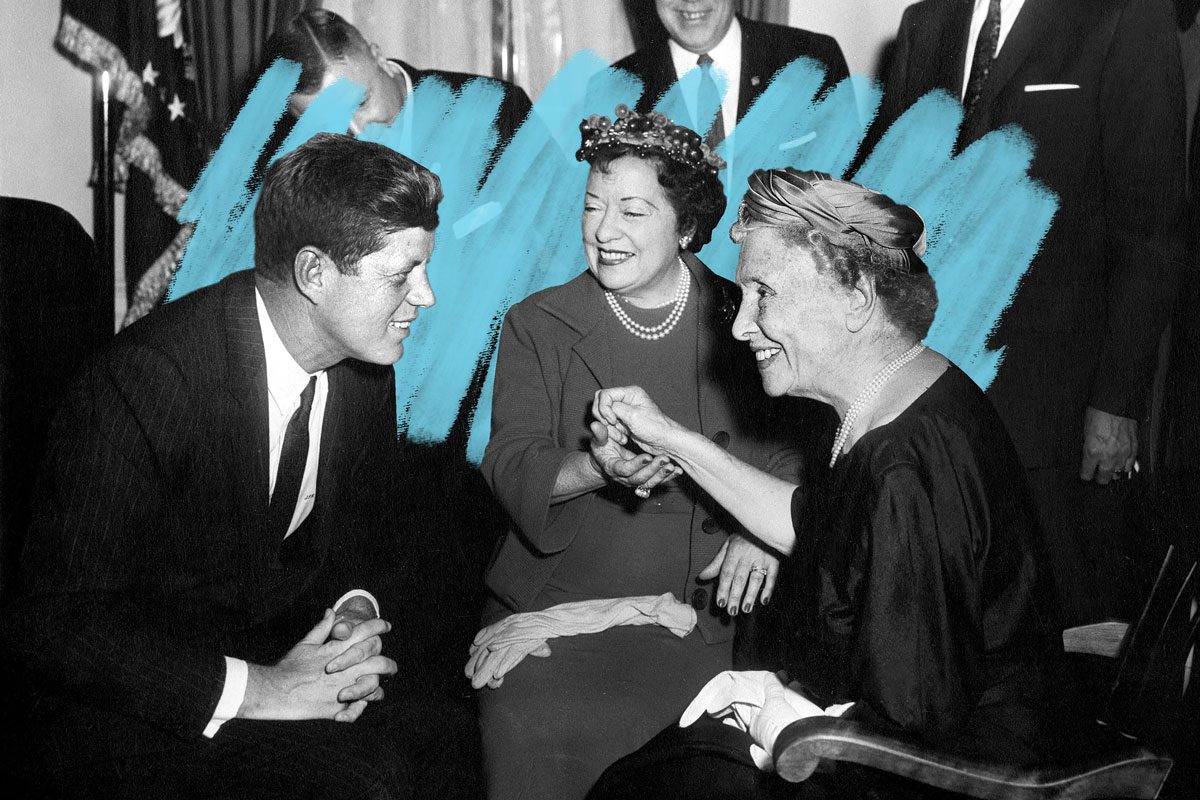
Her life defies simple explanation. As the first deaf-blind individual in the United States to graduate from college, Helen Keller also helped found the American Civil Liberties Union in 1920. Across more than eight decades, she maintained a remarkable presence, meeting every U.S. president from the age of seven until her passing.
Among the many leaders she encountered were Grover Cleveland, William McKinley, Theodore Roosevelt, William Howard Taft, Woodrow Wilson, Warren G. Harding, Calvin Coolidge, Herbert Hoover, Franklin D. Roosevelt, Harry S. Truman, Dwight D. Eisenhower, John F. Kennedy, and Lyndon B. Johnson. In a striking parallel to Queen Elizabeth II, Keller met the same number of presidents as the monarch did chiefs of state, with a notable exception in Johnson’s tenure.
Presidential honor followed her into 1964, when Lyndon B. Johnson awarded Keller the Presidential Medal of Freedom, praising her as “an example of courage to all mankind” and noting that she had dedicated her life to shedding light on the challenges faced by the blind and disabled.
Her calls to action extended to the highest offices: in 1947, she wrote to Truman asking for a message of goodwill to the blind of Japan, hoping from the heart of America that the nation would step forward in support of those who faced visual and sensory barriers.