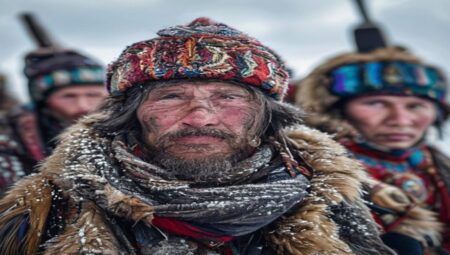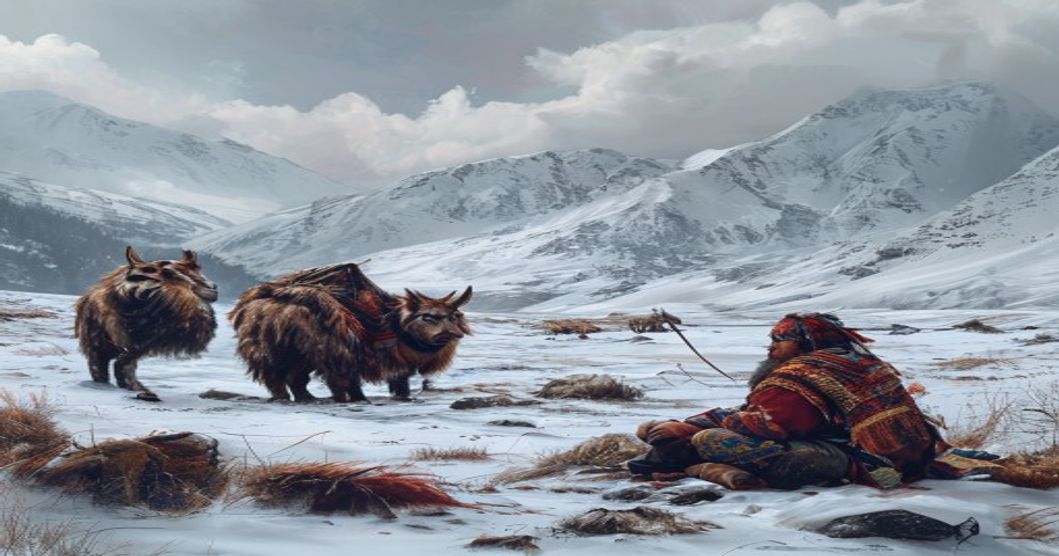
The Historical Foundation of Sámi Nomadism
The origins of Sámi nomadism trace back thousands of years across the Nordic Arctic, where indigenous communities developed a highly specialized form of pastoralism centered on reindeer domestication. Unlike sedentary agricultural societies, these early herders mastered seasonal mobility, navigating tundra, taiga, and coastal ecosystems to follow natural forage cycles. Reindeer culture emerged not merely as an economic system but as a comprehensive worldview that dictated settlement patterns, social organization, and ecological stewardship across Fennoscandia.
Origins and Evolution of Reindeer Pastoralism
Archaeological evidence confirms that reindeer herding evolved from hunting practices between the 10th and 16th centuries, gradually transforming into a structured nomadic livelihood. Herding families organized into siidas, autonomous kinship groups that managed grazing territories through collective decision-making. This social framework optimized resource distribution, minimized overgrazing, and ensured genetic diversity within reindeer herds. The transition from wild hunting to controlled breeding required precise knowledge of animal behavior, veterinary traditions, and migration timing.
Traditional Boundaries and Seasonal Migration Routes
Traditional boundaries in Sámi pastoralism were not fixed borders but dynamic grazing corridors defined by seasonal pastures. Spring calving grounds, summer coastal meadows, autumn highland plateaus, and winter forest shelters formed a circular migration route that could span hundreds of kilometers. These routes were maintained through oral cartography, marker stones, and intergenerational memory. Violating these established pathways disrupted ecological balance and triggered social sanctions within siida networks.
Ecological and Cultural Interdependence
The relationship between Sámi herders and their environment operates on principles of reciprocal stewardship rather than resource extraction. Modern ethnobiology validates what traditional knowledge systems have long practiced: sustainable land management through rotational grazing directly correlates with biodiversity preservation in fragile Arctic ecosystems.
Sustainable Land Management Practices
Reindeer grazing patterns naturally regulate vegetation growth, prevent shrub encroachment on tundra, and maintain soil aeration across vast landscapes. Herders monitor forage quality through lichen density, moss regeneration rates, and insect activity levels. When pastures show signs of degradation, siida councils restrict access until recovery occurs. This adaptive management model prevents the ecological collapse often associated with industrial livestock farming.
Spiritual Connections to Reindeer and Landscape
Cultural identity remains inseparable from pastoral practice. Sámi cosmology views reindeer as kin rather than commodities, governing interactions through respect rituals and seasonal ceremonies. Drum traditions, yoik vocalizations, and craftsmanship techniques encode migration knowledge, weather prediction methods, and ethical hunting protocols. These intangible heritage elements function as living archives that sustain indigenous mobility across generations.
Modern Pressures on Traditional Boundaries
Contemporary expansion of extractive industries, infrastructure development, and climate shifts has fractured historical grazing corridors. Land use conflicts between pastoral communities and corporate stakeholders highlight systemic challenges in recognizing indigenous territorial sovereignty.
Industrialization, Resource Extraction, and Habitat Fragmentation
Railway networks, wind farms, logging operations, and mining concessions repeatedly bisect critical migration pathways. Heavy machinery traffic disturbs reindeer herds during calving seasons, while noise pollution alters natural movement patterns. Forest clearing eliminates winter forage sources, forcing herders to supplement diets with commercial feed that undermines economic viability. These cumulative impacts accelerate habitat fragmentation across Nordic grazing lands.
Legal Frameworks and Indigenous Land Rights
National governments have historically restricted grazing rights through state-owned land policies that prioritize commercial development over pastoral continuity. International human rights instruments, including ILO Convention 169 and the UN Declaration on the Rights of Indigenous Peoples, recognize Sámi territorial claims but face inconsistent enforcement. Land tribunals increasingly require herders to prove continuous use across decades, a burden that ignores historical displacement and forced assimilation policies.
Preservation Strategies and Future Trajectories
Sámi communities employ multifaceted approaches to defend grazing territories while adapting pastoral practices to environmental and socioeconomic transformations. Collaborative governance models and technology integration offer pathways for sustaining nomadic traditions under contemporary conditions.
Community-Led Conservation and Revitalization Initiatives
Grassroots organizations establish buffer zones around historical pastures, monitor herd health
The Origins and Geographic Scope of Sami Nomadism
Historical Migration Routes Across Fennoscandia
The **Sami people** established **seasonal migration routes** across the **Fennoscandian peninsula** long before modern borders divided their territory. **Archaeological evidence** reveals **caribou hunting camps** dating back **10,000 years** in the **northern tundra**. **Reindeer domestication** transformed these **mobile foraging groups** into **specialized pastoral societies**. **Oral genealogies** preserve **precise geographic coordinates** for each **seasonal grazing zone**.
Defining the Boundaries of Traditional Sapmi
**Historical cartography** maps **winter pastures** along the **Barents Sea coast** and **summer ranges** across the **Scandinavian Mountains**. **Boundary markers** relied on **natural landmarks** like **glacial erratics** and **birch line elevations**. **Cross-border negotiations** between **Sweden, Norway, and Finland** formalized **shared grazing rights** in the **twentieth century**. **Modern GPS tracking** confirms these **ancient pathways** remain **ecologically optimal**.
Seasonal Rhythms and Reindeer Husbandry
Winter Calving and Pasture Management
**Traditional Sapmi** encompasses the **northern reaches** of **Fennoscandia** where **lichen ecosystems** dominate the **subarctic landscape**. **Cultural boundaries** align with **reindeer forage availability** rather than **political jurisdictions**. **Sacred sites** feature **rock carvings** that document **centuries of human-animal interaction**. **Contemporary land claims** assert **indigenous sovereignty** over these **historical territories**.
Spring Fjord Crossings and Coastal Grazing
**Winter calving grounds** require **deep snowpacks** that **insulate lichen pastures** from **extreme cold waves**. **Herders construct snow walls** to **shield newborn calves** from **polar windstorms**. **Veterinary interventions** occur **only during severe weather events** to **minimize herd stress**. **Calving success rates** directly determine **annual herd viability**.
Summer Migrations and Fjord Navigation
**Summer fjord crossings** demand **precise tidal calculations** to **prevent drowning among** **younger reindeer**. **Coastal grazing zones** provide **nitrogen-rich forage** that **accelerate antler growth**. **Herders deploy traditional rowboats** to **transport livestock** across **narrow straits**. **Saltwater exposure** naturally **controls internal parasites** during **peak breeding months**.
Autumn Gatherings and Herd Consolidation
**Autumn migrations** utilize **steep mountain passes** that **force herds into** **narrow corridors** for **efficient gathering**. **Spring roundup procedures** involve **systematic branding** and **health screenings** across **designated corrals**. **Herd leaders use** **distinctive whistles** to **coordinate movement** through **dense spruce forests**. **Selective culling** ensures **optimal herd density** for **overwinter survival**.
Traditional Infrastructure and Material Culture
The Lavvu and Arctic Architecture
**The lavvu structure** utilizes **birch saplings** lashed with **reindeer sinew** to **create conical frameworks**. **Caribou hide coverings** provide **windproof insulation** against **Arctic temperature drops**. **Central fire pits** maintain **internal temperatures** above **freezing during** **blizzard conditions**. **Portable designs** allow **rapid dismantling** during **emergency relocations**.
Food Preservation and Thermal Clothing
**Traditional food preservation** relies on **air-drying reindeer meat** and **fermenting lichen** for **winter caloric reserves**. **Clothing techniques** incorporate **hollow hair shafts** that **trap air for** **superior thermal retention**. **Leather tanning processes** use **brain solutions** to **soften hides** without **chemical additives**. **Layered garments** enable **precise temperature regulation** during **prolonged outdoor labor**.
Oral Knowledge Systems and Duodji Craftsmanship
**Oral storytelling** transmits **navigation knowledge** through **rhythmic yoik chants** that **encode topographic features**. **Duodji craft traditions** produce **functional tools** from **recovered antlers** and **woven grasses**. **Elder mentors** demonstrate **knife sharpening techniques** alongside **hide preparation methods**. **Cultural continuity** depends on **intergenerational skill transfer** rather than **written documentation**.
Legal Frameworks and Administrative Governance
Reindeer Husbandry Acts and Pastoral Rights
**Grazing districts** operate under national **reindeer husbandry acts** that restrict membership to **registered Sami lineages**. **Each district maintains** a **livestock census** to **prevent pasture degradation**. **Boundary disputes** require **arbitration through** **Sami Parliaments** and **ministry panels**. **Winter feeding permits** override **traditional migration routes** during **severe snow conditions**.
Commercialization and Veterinary Standards
**GPS collars** track **herd movement** across **digital pasture maps** updated by **satellite imagery**. **Slaughter quotas** align with **European Union meat grading standards** for **export markets**. **Veterinary antibiotics** require **strict withdrawal periods** before **meat enters commercial channels**. **Cooperative processing plants** standardize **carcass weights** and **fat content** calculations.
Environmental Pressures and Climate Change
Weather Anomalies and Forage Disruption
**Rain-on-snow events** create **impenetrable ice layers** that **block access** to **lichen substrates**. **Thawing permafrost** destabilizes **trail markers** and **historical camp sites**. **Insect swarms** migrate **northward**, forcing **herds onto** **higher elevations** with **thinner forage**. **Unpredictable freeze-thaw cycles** compromise **snow bridge safety** for **sled transport**.
Industrial Encroachment and Legal Precedents
**Lithium mining** operations fragment **migratory corridors** in **northern Fennoscandian shield** regions. **Wind farm foundations** displace **calving grounds** near **coastal plateaus**. **Legal precedents** like the **Nobel case** affirm **Sami grazing rights** under **international indigenous law frameworks**. **Environmental impact assessments** now require **Sami consultation** before **project approval**.
Contemporary Cultural Revitalization
Educational Integration and Digital Archiving
**Sami language immersion schools** integrate **herding terminology** into **standard curricula**. **Digital archives** record **elder yoiks** and **navigation charts** for **future generations**. **Youth mentorship programs** pair **apprentice herders** with **veteran district managers**. **Cultural festivals** showcase **traditional duodji exhibitions** alongside **modern reindeer meat cookery**.
Frequently Asked Questions
What is Nomadic Sami Lifestyle Explained?
The Nomadic Sami Lifestyle Explained refers to the traditional way of life of the Sami people, indigenous to the northern regions of Norway, Sweden, Finland, and Russia. This lifestyle is fundamentally built around seasonal reindeer herding, deep ecological knowledge, and a sustainable relationship with the Arctic tundra and boreal forest environments.
Key facts about Nomadic Sami Lifestyle Explained
Key facts about Nomadic Sami Lifestyle Explained include their extensive seasonal migration routes tracked by reindeer herds, the use of traditional portable shelters like the lavvu and goahti, complete reliance on reindeer for food, clothing, tools, and transportation, and the preservation of their cultural identity through the Sami language, joik singing, and intricate duodji craftsmanship, all adapted to survive extreme subarctic climates.