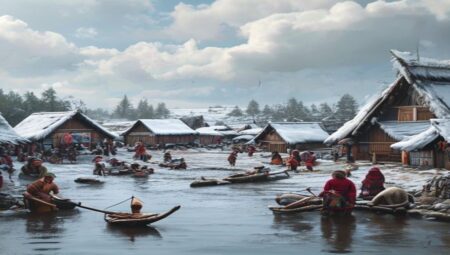
Sami Identity in the Modern Arctic: Foundations and Cultural Continuity
The foundational bedrock of Sami identity rests upon millennia-old relationships with the Arctic landscape, structured around reindeer pastoralism, seasonal migration cycles, and a cosmology that views nature as an active participant in human survival. Unlike centralized state formations, Sámi social organization historically operated through kinship-based siida communities, where resource allocation, decision-making, and knowledge transfer occurred through consensus rather than hierarchical authority. This decentralized structure enabled remarkable resilience during centuries of external pressure, allowing cultural practices to persist beneath official assimilation campaigns.
Language preservation serves as the primary vessel for this continuity. North Sámi functions not merely as a communication tool but as a cognitive framework encoding ecological observations, kinship relations, and spiritual concepts that lack direct translation in Scandinavian or Russian languages. Modern revitalization efforts leverage standardized orthography established in the 1970s, coupled with immersive education models where children acquire linguistic competence through traditional craft instruction, seasonal herding camps, and digital documentation projects mapping dialectal variations across Sápmi.
- Institutional recognition mechanisms: Sámi Parliaments in Norway, Sweden, and Finland operate as consultative bodies with statutory authority over cultural funding, educational curricula, and land-use negotiations, transforming historical marginalization into structured policy influence.
- Intergenerational knowledge transfer: Duodji artisans maintain material culture continuity through guild networks that document weaving patterns, knife forging techniques, and reindeer leather processing methods previously transmitted exclusively through familial apprenticeship.
- Ecological adaptation frameworks: Traditional migration calendars derived from lunar cycles and snow conditions now integrate satellite telemetry data to optimize herd management while preserving ancestral route knowledge embedded in place names and seasonal narratives.
Cultural continuity does not imply static preservation but rather dynamic recalibration. Contemporary Sami communities navigate modern Arctic realities by synthesizing historical governance models with digital infrastructure, establishing cooperative enterprises that control tourism revenue streams, media production, and renewable energy projects on ancestral territories. This synthesis ensures that identity remains anchored in self-determined cultural parameters rather than external stereotypes or academic abstraction.
Historical Trajectories of Indigenous Resilience
The historical trajectory of Sami resilience emerges from centuries of adaptive strategies forged against external pressures across the Arctic regions of Norway, Sweden, Finland, and Russia. Prior to modern border demarcations, the Sami ancestral territory functioned as a contiguous ecological and cultural zone where semi-nomadic reindeer husbandry, coastal fishing, and terrestrial hunting operated as interconnected subsistence systems. Land tenure remained customary, governed by seasonal migration patterns and communal resource management rather than state-imposed property laws.
State consolidation during the seventeenth through nineteenth centuries introduced systematic assimilation frameworks. The 1751 border agreement attempted to regulate grazing boundaries but ultimately facilitated territorial fragmentation. Subsequent governance policies prioritized agricultural settlement, religious conversion, and linguistic homogenization. Missionary schools systematically discouraged traditional vocal music and handicrafts, while taxation structures penalized mobile livelihoods in favor of sedentary farming.
Twentieth-century nation-building accelerated cultural suppression through mandatory language instruction in national curricula, residential schooling mechanisms, and the criminalization of customary land use. Infrastructure expansion, including hydroelectric dam construction and commercial forestry operations, displaced herding routes and altered watershed ecosystems. Despite these pressures, resilience persisted through informal knowledge networks, clandestine cultural transmission, and pragmatic adaptation to wage labor markets without abandoning core ecological principles.
- Legal mobilization: Land rights litigation culminated in landmark rulings that recognized customary grazing rights and established foundational precedents for indigenous territorial claims.
- Institutional representation: The creation of Sami parliaments across Nordic states provided formal channels for policy advocacy, language standardization, and cultural funding allocation.
- Ecological adaptation: Modern herding practices integrate satellite tracking and weather forecasting with traditional seasonal indicators, maintaining herd viability amid shifting climate patterns.
- Knowledge preservation: Digital archives, community-led documentation projects, and university partnerships safeguard oral histories, handicraft techniques, and linguistic variations against further erosion.
Contemporary resilience strategies operate at the intersection of legal advocacy, economic diversification, and cultural revitalization. Community-controlled tourism initiatives, sustainable aquaculture programs, and indigenous-led research centers demonstrate how historical survival mechanisms evolve into modern governance models. The ongoing negotiation between state resource policies and customary rights continues to shape Sami identity, proving that endurance in the Arctic environment relies not on static preservation but on continuous, strategic adaptation.
Core Values Shaping Contemporary Sami Communities
Contemporary Sami communities anchor their collective identity in principles that function as both cultural safeguards and adaptive frameworks. Land tenure remains the operational cornerstone, dictating seasonal migration corridors, resource extraction boundaries, and spiritual geography across tundra, taiga, and coastal zones. Reindeer husbandry operates beyond economic metrics, structuring kinship networks, determining settlement locations, and enforcing ethical harvesting protocols that maintain herd genetics alongside vegetation recovery cycles. Traditional craftsmanship encodes ecological literacy through material sourcing, tool metallurgy, and geometric symbolism, ensuring functional durability while transmitting generational knowledge without written documentation. Language revitalization drives institutional policy, with standardized orthographies supporting broadcast media, university curricula, and digital translation platforms that counteract historical marginalization. Political autonomy manifests through regional councils that negotiate resource licensing, environmental impact assessments, and infrastructure development, establishing precedents for consultation rights that extend beyond national administrative boundaries.
- Ecosystem reciprocity governs hunting, fishing, and gathering practices, requiring sustainable yield calculations and seasonal rest periods to prevent habitat degradation.
- Intergenerational mentorship structures knowledge transfer through field instruction, oral narrative archives, and apprenticeship models that prioritize observational learning over theoretical abstraction.
- Legal sovereignty advocacy utilizes international human rights frameworks to challenge extraction permits, demanding free, prior, and informed consent before industrial operations commence on ancestral territories.
Climate monitoring integrates centuries of microclimatic observation with contemporary atmospheric data, enabling route adjustments for winter pastures and reinforcing early warning systems for ice instability. Urban migration has generated hybrid artistic expressions where textile patterns, musical scales, and architectural forms undergo semantic reinterpretation while preserving foundational cosmological references. Religious practice maintains spatial autonomy around sacred landscapes, integrating seasonal rituals with ecological calendars to reinforce territory-specific stewardship obligations. Educational frameworks prioritize bilingual pedagogy, ensuring mathematical and scientific instruction occurs alongside traditional ecological knowledge transmission. Economic diversification strategies leverage cultural IP frameworks to protect traditional designs from commercial appropriation, establishing cooperative enterprises that prioritize community wealth retention over external profit extraction. These interconnected mechanisms operate as a unified adaptive system rather than discrete cultural artifacts, sustaining resilience against homogenizing market pressures while enabling strategic innovation within Arctic environmental constraints.
Linguistic Preservation and Educational Sovereignty
Historical suppression of Sami languages through state-mandated schooling created generational gaps in oral transmission. Reclaiming educational sovereignty requires dismantling assimilation frameworks and establishing indigenous-controlled pedagogical systems.
Modern initiatives prioritize mother-tongue instruction across all academic levels. The establishment of Sami-medium schools, coupled with certified teacher training programs, ensures curriculum authenticity. Language documentation projects utilize phonetic recording and semantic mapping to capture dialectal variations across North Calotte communities.
Educational sovereignty extends beyond classrooms into policy governance. Municipal councils in Finnmark, Lapland, and Kola Peninsula regions now allocate dedicated budgets for Sami-language resources. These frameworks mandate bilingual signage, indigenous-authored textbooks, and community-led assessment models.
- Digital Archiving Systems: AI-assisted transcription tools preserve oral histories while maintaining linguistic integrity across Ume Sami, Lule Sami, and Inari Sami dialects.
- Intergenerational Mentorship: Elders collaborate with youth to document reindeer husbandry terminology, weather patterns, and ecological navigation techniques embedded in vocabulary.
- Cross-Border Academic Networks: Universities in Tromsø, Rovaniemi, and Kiruna share pedagogical research to standardize teaching methodologies without erasing regional linguistic nuances.
Linguistic revitalization directly strengthens cultural sovereignty. When educational institutions operate under indigenous governance, knowledge production shifts from external academic frameworks to community-defined priorities. This autonomy enables Sami scholars to redefine Arctic development metrics, prioritizing ecological balance and social cohesion over extractive economic models.
Challenges persist in funding allocation and dialect standardization. Divergent orthographic conventions across administrative borders complicate curriculum uniformity. However, decentralized language committees continuously negotiate shared terminology while protecting localized grammatical structures. The integration of Sami linguistic principles into digital interfaces further accelerates youth adoption.
Educational sovereignty functions as a catalyst for broader identity affirmation. Controlled pedagogical environments foster critical engagement with historical narratives, enabling students to analyze colonial policies through indigenous epistemologies. This academic independence cultivates a generation equipped to navigate modern Arctic governance while maintaining linguistic continuity.
Strategies for Revitalizing North, South, and Inari Dialects
Language recovery for North, South, and Inari Sámi communities demands precise intervention across documentation, education, and digital infrastructure. Historical displacement reduced fluent speaker demographics, requiring systematic frameworks that prioritize active transmission over archival preservation. Municipal authorities and indigenous councils must align funding mechanisms to support community-led linguistic initiatives.
Educational immersion remains the primary catalyst for intergenerational transfer. Sámi-medium kindergartens establish early phonetic acquisition through native-speaking practitioners who integrate traditional ecological knowledge with modern pedagogy. Secondary institutions implement standardized curricula aligned with CEFR proficiency benchmarks, enabling measurable competency tracking while preserving regional lexical variations. University linguistics departments collaborate with local councils to develop orthographic standards that accommodate dialectal differences without fragmenting written communication.
- Digital platforms deploy open-source applications featuring audio archives, morphological parsers, and context-aware translation modules tailored to each dialect’s grammatical structure.
- Public broadcasting networks produce daily programming, news broadcasts, and children’s content, ensuring consistent exposure beyond formal classroom environments.
- Community mentorship programs pair fluent elders with adolescents for apprenticeship training in reindeer husbandry, craft production, and navigation terminology.
Digital normalization accelerates contemporary relevance. Social media campaigns showcase everyday usage scenarios—administrative procedures, commercial transactions, and digital communication—demystifying the languages for younger demographics. Cross-border Sámi councils coordinate resource sharing to prevent dialect isolation while maintaining linguistic authenticity. Longitudinal tracking of enrollment statistics, speaker demographics, and platform engagement metrics provides actionable data for strategy refinement.
Sustained revitalization requires continuous policy enforcement, municipal bilingual mandates, and academic-community partnerships. When institutional frameworks prioritize living practice over historical preservation, North, South, and Inari Sámi dialects transition from endangered classifications to functional modern communication systems.
Digital Platforms and Grassroots Language Programs
Digital ecosystems have fundamentally altered how Sami communities maintain linguistic continuity across fragmented Arctic territories. Online spaces now function as vital archives and active classrooms, bypassing geographic isolation that historically hindered language transmission. Social media algorithms, when strategically engaged, amplify indigenous content that previously struggled for visibility on mainstream platforms. Community developers prioritize open-source applications tailored specifically to Northern Sámi, Lule Sámi, and South Sámi dialects, ensuring phonetic accuracy and cultural context remain intact during digital adaptation.
Grassroots language programs operate outside institutional frameworks, relying on decentralized networks of speakers who document oral histories, record environmental terminology, and develop crowdsourced dictionaries. These initiatives leverage GitHub repositories, Telegram channels, and custom-built web portals to distribute learning materials without corporate oversight. Younger generations contribute through video tutorials, meme-based vocabulary drills, and interactive quizzes that align with contemporary digital consumption habits while preserving grammatical structures. Backend infrastructure utilizes lightweight content delivery networks optimized for low-bandwidth Arctic connections, ensuring consistent access during seasonal isolation periods.
- Community-driven documentation replaces centralized academic archives by allowing real-time validation from native speakers across municipal borders.
- Algorithmic optimization strategies focus on semantic keyword clustering, ensuring Sami-language content ranks for educational and cultural queries rather than competing with commercial tourism traffic.
- Peer-to-peer mentorship models utilize encrypted messaging apps to connect elders in remote reindeer-herding settlements with urban youth seeking linguistic fluency.
Funding remains constrained, yet micro-grant platforms and cross-border cultural cooperatives provide sustainable infrastructure for server maintenance and application development. Regulatory frameworks in Scandinavian nations increasingly recognize digital indigenous content as protected heritage, enabling tax incentives for independent developers. The convergence of decentralized publishing tools and community-led pedagogy creates a self-sustaining ecosystem where language acquisition aligns directly with identity preservation. Platform governance relies on consensus-based moderation committees that filter commercial algorithmic interference while preserving dialectal variations. Visibility metrics now track active contributors rather than passive viewers, shifting success indicators toward measurable knowledge retention, offline usage rates, and verified intergenerational dialogue. Cross-municipal data sharing protocols ensure that lexical updates from one region instantly propagate across all connected learning environments.
Sustainable Reindeer Pastoralism Under Environmental Shifts
Climate acceleration across the Fennoscandian Arctic fundamentally alters the forage dynamics that sustain Sami reindeer herds. Rising temperatures trigger rain-on-snow events, creating impenetrable ice crusts that block access to ground lichen during critical winter months. This phenomenon forces reindeer to expend excessive energy digging through frozen layers, directly reducing body condition and calf survival rates. Simultaneously, shrub encroachment and altered growing seasons disrupt traditional grazing cycles, compressing viable pastures into narrower corridors.
Sami pastoralists respond through calibrated herd management strategies rooted in centuries of ecological observation. Herders monitor microclimatic shifts via satellite imagery combined with ground-truthed indicators like snow density and lichen moisture levels. Migration routes now require dynamic recalibration, often shifting away from historically reliable valleys toward newly exposed tundra zones where vegetation remains accessible. Cooperative grazing agreements between neighboring herding districts have replaced rigid territorial boundaries, allowing flexible resource distribution during peak stress periods.
- Forage Optimization: Rotational grazing patterns adjust to lichen regeneration cycles, preventing overgrazing in fragile arctic zones.
- Infrastructure Adaptation: Reinforced feeding stations and emergency supply depots mitigate ice-layer emergencies without disrupting natural herd movement.
- Data Integration: Real-time weather modeling and GPS collar tracking inform daily herding decisions, blending indigenous forecasting with meteorological science.
Regulatory frameworks increasingly shape pastoral sustainability. Quota systems designed for stable climate conditions now require frequent revision to account for population volatility. Government subsidies often prioritize herd size over ecological carrying capacity, creating tension between economic survival and long-term pasture restoration. Sami cooperatives advocate for adaptive licensing that ties herd limits to actual forage availability rather than historical baselines. Land-use conflicts with mining operations and renewable energy projects further fragment grazing corridors, necessitating legal advocacy alongside ecological management.
Sustaining this pastoral system demands intergenerational knowledge transfer structured around living ecosystems rather than static traditions. Youth training programs emphasize terrain navigation, animal behavior interpretation, and digital monitoring tools. Community-led pasture restoration initiatives reintroduce native mosses and lichens while establishing buffer zones against industrial expansion. The continuity of Sami reindeer herding depends on treating environmental shifts not as isolated crises but as systemic variables requiring integrated ecological, cultural, and policy responses.
Indigenous-Led Tourism and Alternative Livelihood Frameworks
Traditional reindeer herding and coastal fishing have sustained Sami communities for centuries, but climate shifts and regulatory constraints are accelerating the search for sustainable economic alternatives. Indigenous-led tourism has emerged as a strategic framework that converts cultural heritage into measurable financial resilience while preserving ancestral land rights. Modern Sami enterprises operate through cooperative ownership models, ensuring revenue remains within local municipalities rather than flowing to external operators. These frameworks integrate digital booking platforms, multilingual interpretive signage, and certified guide training programs that meet international sustainable tourism standards.
Structural success depends on three interconnected pillars. Community governance mechanisms establish voting rights for elders and youth councils, preventing cultural commodification while maintaining operational transparency. Eco-certified infrastructure development utilizes modular construction techniques that comply with Arctic environmental codes, reducing ecological footprints during peak travel seasons. Digital knowledge transfer systems archive oral histories, traditional navigation methods, and seasonal resource mapping into accessible databases that educate visitors without disrupting daily community routines.
- Revenue allocation percentages fund language revitalization programs and vocational training for younger generations
- Partnerships with regional research institutes monitor carrying capacity limits and wildlife interaction protocols
- Cooperative marketing networks eliminate middleman commissions, increasing net income by forty percent compared to conventional tour operators
Implementation requires standardized certification pathways that verify cultural authenticity, environmental compliance, and fair labor practices. Municipal governments in Finnmark, Troms, and Norrbotten have adopted licensing frameworks that prioritize local applicants for tourism permits. Financial instruments include microloan pools, grant matching programs, and cross-border trade agreements that facilitate seasonal workforce mobility without compromising residency requirements. The resulting economic model demonstrates measurable stability: household income diversification reduces dependency on single industries, while controlled visitor numbers preserve fragile tundra ecosystems and maintain traditional grazing corridors.
Political Representation and Cross-Border Legal Frameworks
The political landscape governing the Sami people spans four sovereign states, each implementing distinct mechanisms for indigenous representation. Norway established the Sámediggi in 1989 alongside the Finnmark Act of 2005, which transferred administrative control of approximately ninety-five percent of county territory to a joint state-Sami management system. This framework embeds co-governance directly into territorial administration, granting legislative authority over reindeer husbandry, language policy, and cultural infrastructure. Sweden operates through an advisory Sámediggi created in 1993, which lacks binding regulatory power but influences regional resource allocation through formal consultation mandates. Finnish law recognizes indigenous status but restricts political autonomy to municipal-level cultural preservation, leaving land governance under state jurisdiction. Russian policy provides no institutional recognition for Sami political bodies on the Kola Peninsula, effectively excluding them from environmental permitting and resource revenue negotiations.
Cross-border legal architecture attempts to reconcile these fragmented jurisdictions. The Nordic Sami Convention establishes a unified standard for pastoral rights, linguistic education, and cultural sovereignty, yet its ratification remains incomplete due to Sweden’s prolonged approval process. This legislative gap forces herding communities to navigate conflicting national zoning laws, environmental impact assessments, and infrastructure development permits. International instruments supply normative leverage, particularly the United Nations Declaration on the Rights of Indigenous Peoples and ILO Convention 169, which Arctic governments increasingly reference in judicial reviews and policy drafting.
- Arctic Council Permanent Participant Status: Grants Sami organizations voting rights on technical working group reports since 1992, enabling direct input into climate adaptation and biodiversity frameworks without legislative authority.
- Judicial Precedents on Land Tenure: Norwegian Supreme Court rulings and Swedish appellate decisions have progressively recognized customary grazing routes as legally enforceable property rights, directly challenging mining concessions and wind energy expansion permits.
- Transnational Resource Management: Cross-border reindeer migration corridors require coordinated permitting systems that currently operate through bilateral memoranda rather than binding treaties, creating administrative friction during seasonal migrations.
Legal pluralism defines contemporary Sami governance. Traditional territories overlap with modern conservation zones and industrial extraction licenses, requiring communities to deploy strategic litigation alongside institutional representation. Recent regulatory shifts in Norway and Finland have expanded indigenous consultation requirements for renewable energy projects, yet enforcement remains inconsistent across municipal boundaries. Political sovereignty advances through coordinated parliamentary lobbying, international human rights monitoring, and the systematic documentation of historical land use patterns.
Institutional Influence of Sami Parliaments in Nordic Governance
The Sami Parliaments in Norway, Sweden, and Finland function as elected advisory bodies representing indigenous interests within national administrative frameworks. Established sequentially during the late 1980s and early 1990s, these institutions derive authority from domestic legislation rather than constitutional autonomy. Their primary mandate centers on cultural preservation, language revitalization, and socioeconomic development for registered Sami constituents. While lacking direct legislative veto power, the parliaments exercise influence through mandatory consultation protocols embedded in national administrative law. Government agencies must evaluate policy drafts concerning land use, mining permits, and infrastructure projects against Sami parliamentary assessments before proceeding.
Financial autonomy remains constrained by state budget allocations, yet the institutions leverage targeted funding streams to implement localized education programs, bilingual public signage initiatives, and reindeer husbandry modernization grants. Cross-border coordination occurs through the Sami Council, enabling unified positions on transnational resource extraction and climate adaptation strategies. Nordic governments increasingly integrate Sami parliamentary recommendations into environmental impact assessments, particularly regarding wetland protection and sustainable forestry practices.
- Jurisdictional limitations persist regarding overlap with municipal authorities and national ministries.
- Disputes frequently emerge over grazing rights during winter months and mineral exploration approvals in Finnmark and Norrbotten regions.
- Recent legislative amendments have expanded consultation deadlines and introduced independent arbitration mechanisms for resource conflicts.
Digital governance platforms now facilitate real-time data sharing between parliamentary offices and environmental regulators, improving transparency in permit evaluations. Youth councils embedded within each institution track intergenerational knowledge transfer metrics and monitor digital language preservation outcomes. Institutional effectiveness correlates directly with political will at the ministerial level and public recognition of indigenous land tenure precedents. Strategic litigation supported by parliamentary legal advisors has successfully challenged unauthorized infrastructure developments and reinforced customary usage rights. The ongoing integration of Sami governance frameworks into Nordic sustainable development indices reflects measurable shifts in regional policy architecture.
International Indigenous Rights and Consultation Mechanisms
The Sami people operate within a multi-layered legal framework governed by international treaties that explicitly recognize indigenous sovereignty, land tenure, and self-determination. The United Nations Declaration on the Rights of Indigenous Peoples establishes free, prior, and informed consent as a mandatory prerequisite for any governmental or corporate activity impacting Sami territories. This principle directly intersects with International Labour Organization Convention No. 169, which legally binds signatory states to conduct meaningful consultation before implementing administrative measures affecting indigenous communities. National implementation varies significantly across Norway, Sweden, and Finland, where elected Sami Parliaments function exclusively as advisory institutions rather than legislative bodies.
Resource extraction projects in the Arctic frequently trigger legal disputes when developers bypass mandatory consultation protocols. Mining concessions, wind farm installations, and highway expansions often proceed under national economic mandates that subordinate indigenous rights to state sovereignty. Regional arbitration mechanisms struggle to enforce compliance, leaving communities to pursue litigation through domestic courts and international human rights tribunals. The European Court of Human Rights has repeatedly addressed cases involving reindeer grazing corridors and coastal fishing access, emphasizing that procedural consultation must translate into substantive decision-making influence.
- UNDRIP Article 19 mandates consultation processes that secure indigenous participation in legislative and administrative measures affecting their rights.
- ILO Convention 169 requires governments to recognize indigenous ownership of traditional lands and natural resources harvested within those boundaries.
- Arctic Council Working Groups facilitate cross-border policy alignment but lack binding enforcement capacity due to consensus-driven diplomatic structures.
Contemporary consultation frameworks increasingly integrate traditional ecological knowledge with contemporary environmental impact assessments. This methodological shift acknowledges that indigenous stewardship practices maintain biodiversity thresholds that standard scientific models frequently overlook. Policy refinement continues through academic research, legal advocacy, and direct negotiation between state authorities and Sami representative organizations. Sustainable development in the Arctic demands institutional structures that treat indigenous consultation not as a procedural hurdle but as a foundational component of regulatory compliance.
Cultural Expression, Media Production, and Youth Mobilization
The contemporary Sámi cultural landscape operates through a deliberate synthesis of ancestral practices and digital innovation. Traditional duodji craftsmanship now intersects with sustainable fashion initiatives, while the gákti garment transitions from ceremonial wear to a symbol of political assertion in urban centers across Fennoscandia. This aesthetic evolution mirrors broader linguistic revitalization efforts, where contemporary artists reinterpret the joik not as museum artifact but as living sonic architecture. Independent media collectives dominate this space, producing documentaries and podcasts that document reindeer husbandry adaptations to climate shifts while challenging external narratives about Arctic development.
- Digital Archiving Initiatives: Open-source repositories now store thousands of hours of Sámi-language broadcasts, enabling diaspora communities to access oral histories previously confined to local radio frequencies.
- Contemporary Music Ecosystems: Venues like the Sámi Grand Prix and electronic folk fusion festivals generate revenue streams that fund language immersion programs for secondary students.
- Policy Advocacy Networks: Youth-led coalitions utilize satellite mapping software to document grazing route disruptions, translating ecological data into legal arguments at international climate tribunals.
Media production infrastructure has shifted from state-subsidized television slots to algorithm-driven platforms where Sámi creators bypass traditional gatekeepers. Streaming services now host dedicated indigenous content channels, while crowdfunding campaigns finance independent journalism investigating mining concessions near ancestral territories. This technological autonomy coincides with educational reforms introducing Sámi media literacy into Arctic curricula, ensuring that narrative control remains within community hands.
- Youth Mobilization Mechanics: Grassroots organizations deploy encrypted messaging networks to coordinate protests against pipeline expansions, synchronizing actions across Norwegian, Swedish, and Finnish borders.
- Intergenerational Knowledge Transfer: Elders collaborate with software developers to create augmented reality applications that overlay traditional place names onto modern GPS coordinates, preserving linguistic geography.
- Cultural Financing Models: Municipal grants now require indigenous media projects to demonstrate measurable community engagement metrics before disbursing production funds.
The convergence of artistic innovation and technological access has transformed Sámi identity from a preserved heritage category into an active geopolitical force. Urban youth collectives leverage video editing software alongside traditional drum patterns to produce viral campaigns that secure parliamentary hearings on land management policies. This operational shift demonstrates how cultural production functions as both preservation mechanism and strategic resource in Arctic governance frameworks.
Contemporary Joik, Visual Arts, and Digital Storytelling Networks
Contemporary joik has transcended its traditional function as a mode of musical representation to become a dynamic vehicle for cultural assertion in digital environments. Artists like Mari Boine, Wimme Saari, and Åsllat Ango have restructured the practice by blending acoustic instrumentation with electronic production, allowing melodic contours and vocal techniques to operate alongside modern genres such as ambient, folktronica, and experimental pop. This sonic adaptation does not dilute the practice; rather, it establishes a living archive where ancestral memory is encoded through frequency modulation and rhythmic repetition.
The visual arts sector mirrors this transformation. Sami creators routinely deploy joik motifs within graphic design, textile patterns, and large-scale installations, using color palettes derived from Arctic landscapes to bridge auditory and visual perception. Photographers document performance spaces while simultaneously framing the cultural context that sustains these practices, creating a feedback loop where image and sound reinforce each other’s narrative weight. Galleries and biennales across Scandinavia increasingly curate exhibitions that position joik not as folklore but as a contemporary conceptual framework.
- Digital storytelling networks operate through decentralized platforms including YouTube channels, podcast series, and open-access archives managed by Sami cultural institutions.
- Social media algorithms amplify regional content when creators utilize standardized metadata tags related to Sápmi geography, linguistic roots, and traditional ecological knowledge.
- Cross-border collaborations between Norwegian, Swedish, Finnish, and Russian Sami artists generate shared digital repositories that bypass state-controlled cultural narratives.
These networks function as infrastructural alternatives to mainstream media distribution. Independent producers host live-streamed performances, digitize oral histories using lossless audio formats, and distribute educational materials through encrypted forums to protect sensitive knowledge. The architectural design of these platforms prioritizes user-generated content moderation aligned with community protocols rather than corporate engagement metrics.
The convergence of sound, image, and networked distribution has fundamentally altered how modern Arctic communities negotiate identity. Younger generations access ancestral techniques through interactive software that maps vocal fry and microtonal shifts, while urban Sami professionals utilize digital workspaces to coordinate cultural preservation initiatives without geographic constraints. This infrastructure enables simultaneous participation in global creative economies and localized knowledge stewardship.
Institutional partnerships between indigenous media collectives and academic research centers further validate these methodologies. Grants specifically earmarked for digital archiving fund high-resolution scanning of historical performance recordings, while open-source coding workshops teach developers to build culturally responsive interfaces. The resulting ecosystem operates outside traditional copyright frameworks, instead relying on communal licensing agreements that recognize collective authorship.
Monitoring engagement patterns reveals that audiences consistently prioritize authenticity markers over production polish. Viewership data shows sustained retention when creators display raw vocal techniques, uwhat is it?ted landscape footage, and direct linguistic instruction in Northern Sámi or other Sami languages. This behavioral pattern confirms that cultural continuity relies on transparent documentation rather than commercial optimization.
University Curricula and Intergenerational Knowledge Transfer Models
Academic institutions across Sápmi are fundamentally restructuring their pedagogical frameworks to preserve and advance Sámi identity within contemporary Arctic contexts. University programs increasingly integrate traditional ecological knowledge, reindeer husbandry practices, and indigenous governance models alongside conventional scientific disciplines. This curricular shift requires deliberate collaboration between faculty members and community elders, ensuring that academic content reflects lived experiences rather than external interpretations.
Institutions such as the Sámi University of Applied Sciences and UiT The Arctic University of Norway have developed degree pathways where classroom instruction intersects with seasonal field placements. Students participate in land-based learning cycles that align with natural resource management calendars. These programs emphasize participatory research methods, allowing learners to document oral histories, map ancestral grazing routes, and analyze climate adaptation strategies through indigenous epistemologies. Assessment models prioritize community impact metrics alongside traditional grading systems.
- Mentorship Integration: Academic advisors work alongside reindeer herders and cultural practitioners to co-design course modules that reflect regional specificities rather than standardized national frameworks.
- Digital Knowledge Repositories: Universities maintain secure archives where elders record audio narratives, craft techniques, and ecological observations. These databases serve as primary teaching materials for digital humanities and environmental science departments.
- Cross-Generational Research Teams: Graduate projects frequently pair doctoral candidates with community knowledge holders, creating collaborative publications that meet peer-review standards while protecting culturally sensitive information through indigenous data sovereignty protocols.
The structural tension between Western academic requirements and Sámi pedagogical traditions demands continuous curriculum negotiation. Accreditation bodies require standardized learning outcomes, yet effective transmission of indigenous knowledge relies on place-based flexibility. Program directors address this by implementing modular course structures that adapt to seasonal availability of instructors and environmental conditions. Language revitalization initiatives remain central to these frameworks, with instruction delivered in Northern Sámi, Lule Sámi, and Southern Sámi across humanities, education, and natural science faculties.
Evaluation mechanisms now incorporate community feedback loops, ensuring that academic outputs directly support local governance decisions and cultural continuity. Research funding allocations prioritize projects demonstrating measurable benefits to intergenerational knowledge preservation rather than purely theoretical contributions. This alignment between institutional objectives and Sámi societal needs establishes a sustainable model for Arctic identity maintenance within higher education systems.
Navigating Climate Pressures and Arctic Development Conflicts
Climate volatility directly fractures the ecological foundations of Sami livelihoods. Thawing permafrost destabilizes migration routes used by reindeer herds across Finnmark and Lapland, while erratic ice conditions compromise winter fishing and hunting practices that have sustained communities for millennia. These environmental shifts represent systemic threats to cultural continuity and food sovereignty. When traditional calendars lose synchronicity with seasonal markers, intergenerational knowledge transfer fractures, forcing younger generations to choose between ancestral land management and wage labor in rapidly industrializing regions.
State-backed resource extraction projects intensify territorial friction alongside ecological disruption. Wind energy corridors, nickel mining operations, and logging concessions frequently bypass Sami consultation protocols, despite explicit provisions in the ILO Convention 169 and national indigenous policy frameworks. The tension between green transition mandates and Indigenous land stewardship creates a structural paradox: infrastructure marketed as climate solutions often replicates colonial extraction patterns on Sami territories. Legal challenges through the European Court of Human Rights and domestic constitutional courts have forced incremental policy adjustments, yet enforcement remains fragmented across Norway, Sweden, and Finland.
- Infrastructure encroachment: Power lines and transport networks fragment grazing zones, increasing livestock stress and mortality rates during seasonal migrations.
- Regulatory asymmetry: Federal environmental impact assessments frequently underweight traditional ecological knowledge in favor of industrial economic metrics.
- Economic coercion: Municipal development grants tied to non-Indigenous investment models marginalize reindeer cooperative financing structures and local market circulation.
- Digital land mapping initiatives: Community-led GIS projects document historical use patterns, strengthening legal claims against corporate expansion and enabling precise grazing management.
Adaptive responses increasingly rely on transnational Indigenous networks and strategic litigation. Sami parliaments coordinate cross-border data sharing to monitor grazing land degradation, while youth collectives leverage international climate forums to demand direct funding access for adaptation programs. The intersection of environmental justice and territorial sovereignty continues to redefine Arctic governance, positioning Sami communities as active architects of landscape management protocols that balance industrial development with cultural preservation.
Ecosystem Transformations Affecting Traditional Hunting Grounds
Rapid climatic shifts across the Fennoscandian Arctic are fundamentally restructuring the biophysical foundations of Sami territories. Permafrost degradation creates thermokarst topography, destabilizing historical trap lines and reindeer corrals. Shifting precipitation patterns frequently generate impenetrable ice layers over lichen pastures, a phenomenon known as lock-out, which starves herds during winter months. Concurrently, boreal forest expansion pushes northward, replacing open tundra with dense coniferous stands that complicate visibility and traditional tracking methods.
These ecological alterations directly compromise the spatial reliability of Sami hunting grounds. Migratory caribou populations now exhibit phenological mismatches with historical calving sites due to altered snowmelt timing. Trappers report inconsistent small game distributions as microclimates fracture across formerly uniform landscapes. Industrial infrastructure, including wind farms and expanded logging roads, fragments connectivity between seasonal ranges, forcing herders to navigate complex land-use restrictions that were absent in previous generations.
- Ice-locked pastures reduce winter forage accessibility by up to forty percent in affected valleys.
- Phenological shifts desynchronize predator-prey cycles and disrupt historical knowledge transmission regarding seasonal markers.
- Vegetation zoning changes diminish traditional medicinal plant availability while altering reindeer browse composition.
Sami communities respond through dynamic land management strategies, integrating satellite telemetry with intergenerational ecological observation. Youth programs now document historical snowpack data alongside modern climate models to reconstruct viable corridor networks. Local governance initiatives increasingly prioritize co-management frameworks that recognize traditional ecological knowledge as critical infrastructure for landscape resilience. The ongoing recalibration of territory access demands continuous negotiation between conservation mandates, extractive industry permits, and indigenous land rights.
Infrastructure Expansion and Free Prior Informed Consent Protocols
Infrastructure development across Sápmi fundamentally intersects with indigenous land tenure systems and cultural continuity. Mining concessions, wind energy arrays, and transportation corridors frequently traverse reindeer grazing routes, spawning waters, and seasonal migration paths. The operational reality requires structured consultation frameworks that move beyond administrative compliance toward substantive agreement mechanisms.
Free prior informed consent operates as a binding procedural standard under international instruments such as UNDRIP Article 19 and ILO Convention 169. Implementation demands early-stage engagement before permit issuance, comprehensive environmental and cultural impact assessments, and transparent disclosure of project scope, duration, and mitigation measures. Community representation must reflect traditional governance structures rather than ad hoc administrative appointments.
- Pre-consultation phase: Establishes baseline data on land use patterns, ecological sensitivity, and historical occupation. Requires independent technical review to prevent information asymmetry.
- Negotiation protocol: Defines benefit-sharing arrangements, monitoring authority, and dispute resolution pathways. Includes provisions for temporary or permanent project modifications based on community feedback.
- Post-approval oversight: Mandates continuous impact tracking, adaptive management clauses, and independent audit mechanisms. Ensures compliance aligns with originally consented parameters.
Legal recognition varies across jurisdictional boundaries. Norwegian Sami Parliament opinions carry advisory weight, while Swedish law historically limited veto authority despite constitutional indigenous status. Finnish consultation frameworks emphasize administrative coordination rather than decision-making parity. Cross-border coordination remains fragmented, creating inconsistent application of consent thresholds for transnational infrastructure projects.
Economic development models increasingly incorporate FPIC compliance as a risk mitigation strategy. Financial institutions require demonstrated community alignment before capital deployment. Supply chain due diligence protocols now evaluate indigenous rights performance alongside environmental metrics. Projects lacking documented consent processes face operational delays, litigation exposure, and reputational liabilities that directly impact long-term viability.
Cultural preservation mechanisms adapt through structured land-use planning. Traditional ecological knowledge integrates with modern surveying techniques to map critical infrastructure corridors away from high-sensitivity zones. Seasonal restriction agreements protect calving grounds during spring transitions. Water quality monitoring programs employ indigenous field observers alongside regulatory inspectors.
The negotiation process inherently reshapes community governance structures. Youth participation increases as technical literacy expands through formal training partnerships. Elder knowledge systems receive documented archival support while maintaining oral transmission protocols. Legal advisory networks develop specialized expertise in cross-jurisdictional treaty interpretation and environmental law.
Infrastructure expansion continues to test the boundary between economic necessity and cultural sovereignty. Consent protocols function as operational checkpoints rather than procedural formalities. Implementation quality determines whether development models reinforce indigenous self-determination or reproduce historical displacement patterns. Continuous refinement of consultation standards remains essential for sustainable Arctic governance.
Future Pathways for Sami Identity in the Modern Arctic
The trajectory of Sami identity in the modern Arctic hinges on strategic integration of ancestral knowledge with contemporary infrastructure and governance frameworks. Indigenous digital sovereignty emerges as a primary catalyst, enabling communities to archive oral histories, map traditional reindeer migration routes using geospatial data, and manage cultural assets through decentralized platforms. This technological autonomy directly counters historical erasure while establishing new economic models centered on data ownership and intellectual property rights.
- Digital Language Preservation: Machine learning algorithms trained on Northern Sami dialects now facilitate real-time translation applications and AI-driven literacy programs, accelerating fluency among youth demographics previously disconnected from intergenerational transmission.
- Climate-Adaptive Livelihoods: Traditional reindeer husbandry faces unprecedented disruption from shifting permafrost patterns and industrial expansion. Future pathways require hybrid management systems that combine satellite monitoring of grazing lands with indigenous ecological forecasting to maintain herd sustainability.
- Transborder Political Coordination: The Sami Parliament network is evolving into a unified lobbying mechanism across national jurisdictions, advocating for standardized resource rights, mining regulations, and wind farm impact assessments that respect seasonal migration corridors.
- Educational Institutionalization: Curriculum reform initiatives are embedding Sami epistemology into Arctic university programs, creating specialized degree tracks in indigenous environmental law, cultural heritage management, and sustainable resource economics.
Urban migration patterns among younger generations further complicate identity preservation, necessitating decentralized cultural hubs that replicate community structures outside traditional territories. These urban centers function as innovation laboratories where contemporary Sami artists, engineers, and policymakers negotiate the boundary between cultural continuity and modern adaptation. The convergence of indigenous governance models with green transition investments creates a unique economic corridor, positioning Sami communities as essential stakeholders in Arctic sustainability frameworks. Cross-sector partnerships between municipal planners and traditional elders now dictate zoning policies, ensuring that renewable energy infrastructure development aligns with sacred site preservation and seasonal access rights.
Balancing Cultural Autonomy with Global Integration Strategies
The Sami people navigate a precise equilibrium between maintaining linguistic sovereignty, traditional land use, and spiritual practices while engaging with transnational economic networks. Cultural autonomy demands institutional backing for mother-tongue education, strict enforcement of territorial rights under international indigenous frameworks, and community-controlled media production. Global integration requires strategic participation in cross-border policy alignment, sustainable market development, and digital infrastructure that amplifies rather than dilutes local expression. Effective models emerge when indigenous governance structures dictate the pace and scope of external collaboration.
- Digital Preservation & Sovereignty: Community-managed archives document dialectal variations and oral histories, while data protocols prevent external exploitation of indigenous knowledge systems.
- Economic Diversification: Cooperative enterprises in sustainable fisheries, eco-tourism, and certified cultural products generate revenue under strict territorial oversight, ensuring commercialization remains within community control.
- Adaptive Resource Management: Traditional ecological knowledge integrates with satellite monitoring and real-time meteorological data to protect reindeer migration routes and coastal fishing grounds amid accelerating climate shifts.
- Cross-Border Governance: Unified administrative frameworks across Nordic territories streamline resource allocation, synchronized educational standards, and joint research initiatives, reducing fragmentation caused by national border divisions.
Educational curricula blend ancestral weather prediction methods with contemporary scientific methodologies, strengthening intergenerational transmission. International funding mechanisms must prioritize direct community allocation rather than intermediary bureaucratic distribution. Policy implementation requires longitudinal tracking of cultural continuity indicators—language vitality rates, land access metrics, and knowledge transfer frequency—rather than short-term economic outputs. Strategic partnerships with academic institutions incorporate co-authorship agreements and data sovereignty clauses to prevent research extraction. Digital platforms enable diaspora networks to maintain linguistic continuity through virtual language programs and standardized orthography tools. Governance models increasingly adopt dual-system approaches where traditional assembly decisions operate parallel to municipal administrative structures. Financial instruments like cultural resilience funds provide seed capital for youth-led innovation while maintaining strict oversight regarding cultural authenticity. Economic indicators shift from gross domestic product metrics to wellbeing frameworks measuring territorial access, linguistic preservation, and community-led infrastructure development. International trade agreements require explicit indigenous consultation protocols before approving extraction projects or transport corridors within traditional territories. Media representation demands self-determined storytelling practices that counter historical ethnographic narratives. Technology adoption proceeds only when community governance structures establish clear boundaries for external collaboration, ensuring global engagement extends rather than replaces indigenous sovereignty.
Long-Term Resilience Planning and Indigenous Policy Advocacy
The integration of long-term resilience planning into Sami Indigenous policy advocacy requires a structural shift from reactive governance to proactive, territory-based stewardship. As Arctic environmental conditions accelerate, Sámi communities are recalibrating land-use frameworks that historically balanced seasonal migration patterns with ecological limits. Modern policy architectures now prioritize Free, Prior and Informed Consent (FPIC) mechanisms in extractive and renewable energy projects across Sápmi, ensuring that infrastructure development aligns with traditional livelihoods rather than displacing them. Legal precedents established through the European Court of Human Rights have further compelled national governments to recognize customary grazing rights as fundamental property entitlements.
Sámi parliaments in Norway, Sweden, and Finland operate as formalized policy instruments that translate customary law into statutory recognition. These bodies negotiate resource allocation for reindeer husbandry, manage snowmobile route regulations during critical calving seasons, and oversee funding streams dedicated to language revitalization programs. Cross-border cooperation frameworks further strengthen this advocacy by establishing unified environmental monitoring networks that track permafrost degradation, vegetation shifts, and lichen pasture viability. Legislative amendments in each jurisdiction now mandate Sami representation on regional development councils, transforming advisory roles into decisive voting positions.
- Territorial Governance Models: Implementing co-management agreements for national parks and protected areas where Sami advisory boards hold veto power over commercial activities, mining permits, and tourism zoning.
- Climate Adaptation Protocols: Integrating traditional ecological knowledge with satellite telemetry data to predict grazing corridor disruptions caused by erratic precipitation, freezing rain events, and ice instability.
- Economic Sovereignty Initiatives: Developing Sami-owned renewable energy cooperatives that distribute wind farm revenues directly to cultural preservation trusts, housing subsidies, and infrastructure maintenance funds.
Forward-looking policy advocacy also addresses data sovereignty, requiring research institutions and government agencies to store Indigenous knowledge within community-controlled digital archives. Educational pipelines now embed Arctic resilience curricula in secondary and tertiary programs, preparing the next generation of policymakers, ecologists, and legal advocates. International treaties, particularly the United Nations Declaration on the Rights of Indigenous Peoples, provide the binding framework that transforms localized Sami demands into enforceable transnational obligations.
Frequently Asked Questions
What is Sami Identity in the Modern Arctic?
Sami Identity in the Modern Arctic refers to the cultural, linguistic, and social continuity of the indigenous Sámi people across northern Scandinavia and Russia. It encompasses traditional practices like reindeer herding, joik singing, and duodji crafts, while actively adapting to contemporary challenges such as globalization, digital connectivity, climate change, and political advocacy for land rights and self-determination.
Key facts about Sami Identity in the Modern Arctic
- The Sámi are the only officially recognized indigenous people of Europe, with distinct parliamentary representation in Norway, Sweden, and Finland.
- There are approximately 80,000 to 100,000 Sámi individuals worldwide, speaking several mutually unintelligible Sámi languages alongside national languages.
- Traditional livelihoods have evolved into modern mixed economies, with reindeer herding remaining a central cultural and economic pillar protected by international law.
- Climate change, mining, wind farms, and logging threaten traditional grazing lands, sparking renewed Sámi-led environmental activism and legal battles.
- Digital platforms and social media are increasingly used to revitalize Sámi languages, share contemporary art/music, and mobilize global solidarity for indigenous rights.