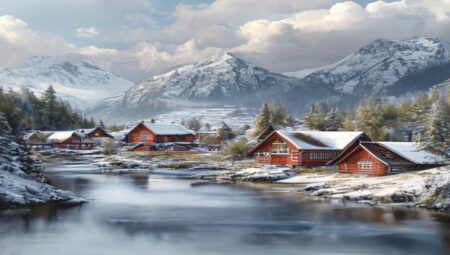
The Hidden Wisdom of Sami Indigenous Knowledge
The Sami people, indigenous to the Arctic regions spanning Norway, Sweden, Finland, and Russia, have cultivated a sophisticated system of ecological knowledge over millennia. This traditional wisdom operates on principles of deep environmental reciprocity, where survival depends on reading subtle shifts in weather patterns, animal migration routes, and tundra vegetation cycles.
Reindeer husbandry remains the cornerstone of Sami culture, requiring an intricate understanding of lichen growth rates, snow stability, and seasonal pasture rotation. Herders navigate vast landscapes using oral maps passed through generations, identifying safe crossing points, calving grounds, and emergency shelters without reliance on modern technology. This knowledge system is not static; it adapts continuously to climate fluctuations while preserving core ecological balances.
The Sami also developed specialized linguistic frameworks where hundreds of distinct terms describe reindeer behavior, snow conditions, and wind directions, enabling precise communication essential for survival in extreme environments. Their spiritual practices intertwine with natural elements, viewing forests, mountains, and waterways as living entities requiring respect and ritual maintenance rather than exploitation.
- Traditional Land Management: Controlled burning of specific mosses to encourage lichen regeneration, seasonal grazing patterns that prevent overgrazing, and sustainable harvesting of berries and medicinal plants.
- Linguistic Precision: Over 300 distinct words for snow types, reindeer ages, and migration stages, eliminating ambiguity during critical survival decisions.
- Ecosystem Monitoring: Generational tracking of glacier retreat, permafrost thaw rates, and predator-prey dynamics to adjust grazing routes proactively.
Modern conservation science increasingly validates these indigenous methods, recognizing their effectiveness in maintaining biodiversity and soil health in fragile Arctic ecosystems. The transmission of this knowledge occurs through hands-on apprenticeship, storytelling, and participatory learning rather than formal documentation, ensuring practical mastery alongside cultural continuity. Contemporary challenges including industrial extraction, infrastructure development, and climate change threaten these practices, yet Sami communities continue adapting traditional frameworks to address modern environmental shifts while preserving the foundational principles that sustained their ancestors for centuries.
Origins and Historical Context of Sami Traditions
The Sami people represent one of the oldest continuous cultures in Northern Europe, with archaeological and genetic evidence confirming their presence across Fennoscandia for over ten thousand years. Following the retreat of the last Ice Age, early hunter-gatherer communities adapted to rapidly changing boreal and tundra ecosystems. These populations developed sophisticated survival strategies rooted in deep ecological observation, seasonal tracking, and sustainable resource management long before written records existed.
Historical development accelerated during the late medieval period when climate cooling forced a shift from mixed subsistence economies toward specialized reindeer husbandry. By the thirteenth century, large-scale semi-nomadic reindeer herding emerged as a dominant livelihood, particularly in the interior highlands of Norway, Sweden, and Finland. This transformation was not an isolated cultural choice but a direct response to shifting trade networks, agricultural expansion by neighboring societies, and environmental pressures that made pastoral mobility economically advantageous.
- Prehistoric Foundations: Rock carvings across Alta, Karasjok, and Enontekiö date back to 4200 BCE, illustrating early spiritual connections with wildlife, celestial cycles, and natural landmarks.
- Border Fragmentation: The gradual establishment of modern state boundaries between 1682 and 1826 divided traditional grazing territories, forcing communities to adapt migration routes across political lines rather than ecological zones.
- Cultural Transmission Mechanisms: Knowledge was preserved through joik (traditional vocal music), duodji (handicraft systems), and intergenerational storytelling, creating a resilient oral archive that survived centuries of external documentation attempts.
External powers systematically documented Sami practices only when administrative control or economic extraction became necessary. Swedish and Norwegian crown authorities initially relied on Sami intermediaries for tax collection and border patrol before implementing assimilation policies during the nineteenth century. These measures restricted language use in schools, discouraged traditional dress, and imposed sedentary agricultural models that directly conflicted with seasonal mobility requirements.
Despite these pressures, core ecological knowledge remained intact through community-led adaptation. Modern ethnographic studies confirm that traditional land management techniques, including controlled burning, wetland conservation, and predator coexistence strategies, align closely with contemporary biodiversity preservation standards. The continuity of this knowledge system demonstrates how indigenous frameworks operated as functional governance models long before state institutions formalized environmental regulation.
Environmental Stewardship and Ecological Practices
The Sami peoples have cultivated a sophisticated relationship with boreal and arctic ecosystems across Fennoscandia for millennia, embedding ecological awareness into daily survival and cultural continuity. Central to this system is reindeer pastoralism, which operates not as isolated livestock management but as a dynamic land-use strategy that maintains tundra and taiga balance. Herders read subtle environmental indicators—snow density, lichen growth patterns, wind direction, and animal behavior—to adjust grazing routes without depleting forage resources. This adaptive mobility prevents overgrazing in fragile permafrost zones and promotes plant regeneration cycles essential for regional biodiversity.
Traditional land management techniques include controlled burning of specific vegetation patches to stimulate nutrient cycling, deliberate selection of breeding grounds based on historical microclimates, and the preservation of wetland corridors that function as natural carbon sinks. These practices emerge from generational observation rather than centralized policy, creating a decentralized conservation model that responds rapidly to environmental shifts. When climate patterns alter migration windows or shift vegetation zones, Sami communities adjust herd sizes and grazing pressure accordingly, demonstrating a built-in feedback mechanism absent in conventional industrial agriculture.
Beyond pastoralism, Sami ecological knowledge encompasses precise botanical taxonomy for medicinal plants, sustainable forestry methods that protect root systems during timber collection, and water management protocols that maintain riverine health across changing precipitation regimes. The concept of eatnamielá reflects a worldview where human activity must operate within ecological thresholds rather than attempting to dominate them. Modern conservation science increasingly validates these approaches, noting that Sami-managed territories often exhibit higher species richness and soil stability compared to adjacent state-controlled or commercial zones.
- Seasonal grazing rotations preserve lichen beds and prevent permafrost degradation
- Micro-habitat monitoring allows real-time adjustment of herd movements
- Traditional botanical knowledge supports medicinal plant conservation and sustainable harvesting
- Community-led land stewardship reduces carbon emissions through low-impact mobility patterns
Integrating this indigenous framework into contemporary environmental policy requires recognizing that ecological resilience is not solely a technological challenge but a cultural practice. The Sami model demonstrates how long-term sustainability emerges from reciprocal relationships between people, animals, and landscape rather than extraction-driven efficiency metrics.
Sustainable Reindeer Herding Techniques
The Sami approach to reindeer husbandry operates on centuries of accumulated ecological observation, treating the tundra and boreal forest not as resources to extract but as a living network requiring rhythmic reciprocity. Central to this system is the siida, a cooperative grazing district where herd movement follows precise seasonal corridors. These routes are not arbitrary; they align with microclimates, lichen regeneration cycles, and predator territories. Reindeer rely heavily on ground and tree lichens during winter months, and Sami herders monitor snow depth through specialized poles known as luhtahkka. When snow exceeds 80 centimeters, the animals struggle to dig for forage, prompting immediate route adjustments or supplementary feeding with preserved vegetation. This real-time environmental calculus prevents overgrazing and maintains soil integrity across vast pastures.
Sustainable management extends beyond migration timing. Herd composition is carefully regulated to match pasture carrying capacity. Older bulls are culled before winter to reduce nutritional demand, while cow-calf pairs are prioritized for spring calving grounds rich in mineral deposits. Sami herders track body condition through gait analysis and coat density, identifying malnutrition weeks before visible weight loss occurs. Grazing pressure is distributed using natural topography—ridges, valleys, and frozen waterways act as invisible fences that guide animals without mechanical barriers. This spatial distribution allows lichen beds to recover during off-season periods, preserving the symbiotic relationship between fungi, mosses, and ungulate digestion.
- Snowpack assessment: Herders interpret ice layers within snow drifts to predict thaw dates and forage accessibility, adjusting herd density accordingly.
- Predator coexistence protocols: Wolves and wolverines are monitored through scat analysis and track mapping; herds are repositioned only when predation risk exceeds natural thresholds.
- Dietary supplementation: During extreme freeze events, preserved birch branches and aquatic mosses replace traditional lichen, preventing metabolic collapse without disrupting grazing cycles.
Climate volatility has intensified the precision required in these practices. Thaw-freeze cycles create impassable ice crusts that block forage access, a phenomenon Sami communities now document alongside satellite telemetry data. Rather than abandoning traditional routes, herders layer indigenous forecasting with modern meteorology, identifying micro-refugia where lichen survives beneath wind-scoured snow patches. This hybrid model maintains genetic diversity within herds while reducing dependency on commercial feed. Land-use decisions remain community-driven, ensuring that grazing quotas adapt to ecological feedback rather than external market pressures. The result is a self-regulating system where reindeer health, pasture resilience, and cultural continuity operate as interdependent variables.
Traditional Land Management and Biodiversity Conservation
The Sami approach to land stewardship operates through a highly calibrated seasonal migration framework known as the siida system. This cooperative unit coordinates reindeer herding movements across tundra and boreal landscapes, preventing localized overgrazing while allowing vegetation recovery cycles. Rotational grazing patterns align with natural growth periods, ensuring lichen beds, moss layers, and alpine flora retain their regenerative capacity. The continuous movement of large herbivore populations mimics historical wild ungulate dynamics, maintaining soil aeration, nutrient cycling, and microtopographical diversity that supports specialized invertebrate and avian species.
Indigenous monitoring protocols track snow depth, ice crust formation, forage quality, and predator activity to adjust grazing pressure dynamically. Herders interpret wind patterns, frost progression, and vegetation phenology to identify safe passage routes and seasonal pastures. This observational data accumulates across generations, forming a living repository of ecological indicators that predict landscape stress before visible degradation occurs. The system inherently prioritizes ecosystem thresholds over maximum yield, recognizing that pastoral sustainability depends on long-term habitat integrity rather than short-term extraction.
- Soil microbiome preservation: Light grazing pressure maintains fungal networks essential for nutrient uptake and carbon sequestration in acidic tundra soils.
- Keystone species protection: Uninterrupted migration corridors enable arctic fox denning, ptarmigan nesting, and caribou-lichen trophic balance.
- Hydrological stability: Avoidance of concentrated trampling preserves peatland hydrology and prevents permafrost degradation across vulnerable slopes.
- Genetic diversity maintenance: Seasonal pasture rotation prevents pathogen buildup and supports wild plant pollination networks native to subarctic biomes.
Biodiversity outcomes emerge directly from this low-impact management model. Grazing intensity remains below ecological carrying capacity in most zones, allowing rare alpine plants, ground-nesting birds, and soil microbial communities to thrive. Waterways retain natural meandering patterns and riparian buffers because grazing pressure avoids concentrated runoff zones. Traditional wetland protection norms further preserve carbon-storing peatlands and prevent invasive species establishment. Modern conservation frameworks increasingly validate these methods, demonstrating that indigenous-led land use reduces habitat fragmentation, maintains genetic diversity in native flora, and enhances climate adaptation capacity across northern ecosystems.
Language, Oral Tradition, and Cultural Transmission
The Sami linguistic ecosystem operates as a dynamic archive of Arctic and sub-Arctic environmental data, where phonological structures directly map onto ecological realities. Each dialect preserves granular terminology for snow conditions, reindeer behavior, and topographical features, enabling precise resource management across vast territories. Linguistic variation within these languages reflects centuries of localized adaptation, with case systems and agglutination patterns encoding spatial relationships and kinship networks essential to communal survival.
Oral transmission functions through structured mnemonic frameworks rather than casual recitation. The joik tradition exemplifies this mechanism, utilizing melodic contour and rhythmic repetition to anchor historical events, ecological knowledge, and spiritual concepts within auditory memory. Performers do not merely narrate; they embed data into sonic patterns that facilitate recall across generations. This method ensures that navigation routes, seasonal migration schedules, and medicinal plant locations remain accessible without written documentation.
Intergenerational transfer occurs within the siida community structure, where knowledge distribution aligns with practical application. Elders transmit hunting techniques, weather forecasting methods, and textile crafting processes during seasonal migrations, embedding instruction within daily labor. Children acquire vocabulary and behavioral norms through immersive participation rather than formal instruction. This experiential learning model maintains contextual accuracy, as theoretical concepts are immediately validated through environmental feedback.
- Dialectal variations preserve region-specific ecological data that standard linguistic surveys often overlook
- Melodic anchoring in joik performances creates durable auditory memory traces for complex survival information
- Seasonal migration cycles structure knowledge delivery around practical application and immediate environmental validation
- Community-led digital archives map phonetic recordings onto historical settlement patterns to preserve spatial context
- Language revitalization programs prioritize functional fluency through immersive, labor-integrated teaching methods
Contemporary preservation strategies integrate traditional oral frameworks with systematic documentation. Community-led initiatives record elder narratives using geotagged audio archives, mapping linguistic data onto historical settlement patterns. Academic partnerships focus on phonetic preservation and grammatical standardization while respecting dialectal autonomy. Language revitalization programs utilize immersive teaching methods that replicate historical transmission pathways, prioritizing functional fluency over isolated vocabulary acquisition. These approaches sustain the epistemological continuity required for indigenous knowledge systems to remain operational within modern ecological and social frameworks.
The Role of Joik in Preserving Ancestral Narratives
Joik functions as a dynamic archival system within Sami culture, encoding ecological data, historical events, and spiritual frameworks into vocal patterns that transcend written documentation. Unlike Western musical composition, which typically describes an object or person from an external perspective, traditional Joik embodies the subject itself. This ontological approach ensures that ancestral narratives remain embedded in phonetic structures, tonal shifts, and rhythmic cycles specific to individual territories, reindeer migration routes, and seasonal landscapes.
The preservation mechanism relies on intergenerational transmission through direct auditory replication rather than textual transcription. Elders teach younger generations how to match the acoustic signature of a mountain range, a river system, or a specific family line using microtonal variations and controlled breath modulation. These vocal techniques require years of practice to master, creating a rigorous knowledge-filtering process that naturally curates which narratives survive cultural shifts. Each Joik operates as a mnemonic device, where melody dictates memory retention more effectively than linear storytelling.
- Ecological Mapping Through Sound: Vocal inflections replicate terrain features, weather patterns, and animal behaviors, transforming acoustic data into navigational and survival knowledge.
- Lineage Documentation: Family Joiks contain phonetic markers that identify kinship ties, land rights, and historical settlements without requiring written genealogies.
- Ritual Continuity: Performance contexts during seasonal transitions and communal gatherings reinforce collective memory, preventing narrative fragmentation across diaspora communities.
Contemporary preservation efforts face structural challenges from linguistic assimilation policies and digital media fragmentation. However, academic collaborations with Sami vocal practitioners have revealed that Joik preserves pre-colonial cosmologies through non-linear temporal framing. The vocal technique bypasses alphabetic constraints, maintaining semantic layers that standard transcription inevitably strips away. Modern ethnomusicological analysis confirms that the harmonic intervals used in traditional performance correspond directly to historical trade routes and territorial boundaries established centuries before written records existed in northern Fennoscandia.
Digital archiving projects now utilize spectrographic analysis to document these acoustic patterns, but practitioners emphasize that technical preservation cannot replace embodied learning. The survival of ancestral narratives depends on maintaining the physical practice of vocal training, where breath resonance and environmental attunement remain inseparable from cultural transmission. Without active performance cycles, the acoustic encoding system degrades, rendering historical knowledge inaccessible to future generations.
Indigenous Education Systems and Knowledge Transfer
Traditional Sami pedagogy operates outside standardized curricula, relying instead on immersive, place-based learning embedded in daily survival and cultural practice. Knowledge transmission follows a strict intergenerational framework where elders serve as primary instructors. Children acquire literacy not through written texts but through ecological observation, seasonal migration patterns, and hands-on apprenticeship. Reindeer herding techniques, weather reading, and terrain navigation are taught incrementally across years rather than semesters. Competency is measured by functional mastery in real environments, not examinations. Instruction follows ecological calendars rather than academic terms, aligning learning cycles with reindeer calving, snow formation, and plant phenology.
Knowledge preservation relies on specialized mnemonic architectures that encode complex data through sensory repetition and contextual reinforcement.
- Duodji (traditional craft) serves as both economic foundation and pedagogical tool, embedding geometry, material science, and ethical resource management into tactile practice.
- Joik functions as an oral archive. Melodic structures encode genealogies, migration routes, and botanical knowledge, enabling precise recall without written documentation.
- Mentorship follows a reciprocal model. Youth contribute labor initially, then gradually assume instructional roles as competency expands, ensuring continuous pedagogical renewal.
Colonial schooling systems historically disrupted this continuum by imposing foreign languages and compartmentalized subjects. Contemporary Sámi educational initiatives actively reconstruct the original framework through land-based curricula, mother-tongue instruction, and community-controlled pedagogy. Universities in Sápmi now integrate traditional ecological knowledge with formal academic disciplines, creating hybrid models that preserve epistemological integrity while meeting modern accreditation standards. Digital repositories and open-access language platforms further extend reach beyond geographic boundaries.
This educational architecture treats knowledge as relational rather than transactional. Mastery requires prolonged presence in specific landscapes, where environmental feedback replaces standardized testing. The system prioritizes adaptive competence over static information retention, producing practitioners capable of navigating unpredictable ecological and social shifts across generations.
Contemporary Applications and Global Relevance
Sami indigenous knowledge operates beyond historical documentation; it actively shapes modern environmental and cultural frameworks across Scandinavia and international research sectors. Contemporary implementations prioritize ecological monitoring through traditional reindeer herding routes, which map seasonal vegetation shifts and permafrost degradation with precision that complements satellite telemetry. Environmental agencies in Norway, Sweden, and Finland integrate Sámi land-use patterns into national biodiversity strategies, recognizing that centuries of observational tracking provide baseline metrics for ecosystem resilience. Academic institutions have established collaborative research protocols where Sámi elders and youth co-author peer-reviewed studies on Arctic climate adaptation, ensuring indigenous epistemologies remain central to scientific discourse rather than relegated to supplementary sections.
- Ecosystem Restoration: Traditional grazing rotation schedules and controlled burning techniques restore degraded tundra soil structures without synthetic inputs.
- Predictive Climate Modeling: Granular Sámi terminology for snow density, wind direction, and animal migration patterns fills critical data gaps in meteorological forecasting systems.
- Sustainable Resource Governance: Municipal planning committees utilize Sámi water management principles to mitigate rapid permafrost thaw and prevent agricultural soil erosion across northern jurisdictions.
Global policy frameworks increasingly reference Sámi resource management models when drafting sustainable development guidelines. The concept of duodji influences circular economy initiatives by demonstrating closed-loop material usage and zero-waste production techniques. Educational curricula in Nordic universities now embed Sámi pedagogical approaches, emphasizing place-based learning and intergenerational knowledge transfer to counteract standardized teaching models that often marginalize regional contexts. International conservation organizations partner with Sámi communities to restore degraded wetlands and lichen pastures, applying historical fire management practices that have maintained ecological balance for millennia.
The integration of indigenous linguistic elements into environmental governance strengthens cross-cultural policy implementation. Research institutions utilize this specialized lexicon to refine predictive climate models, particularly regarding microclimate variations in subarctic regions. Commercial sectors adopt Sámi ethical harvesting guidelines for sustainable forestry and fisheries, aligning corporate sustainability reports with established stewardship principles. These applications demonstrate how ancient observational systems function as dynamic frameworks for modern ecological challenges, offering scalable solutions that prioritize long-term environmental stability over short-term extraction metrics.
Integrating Sami Wisdom into Modern Sustainability Models
Modern sustainability frameworks increasingly recognize that technological innovation alone cannot resolve complex ecological crises. Indigenous knowledge systems, particularly those developed by the Sami people across northern Fennoscandia and the Kola Peninsula over millennia, offer proven methodologies for ecosystem stewardship. Central to this integration is the concept of siida, a traditional socio-economic unit that organizes land use, resource extraction, and community decision-making around seasonal migration patterns and ecological carrying capacity. When mapped against contemporary circular economy principles, siida demonstrates a closed-loop approach to material flows, waste reduction, and adaptive resource management long before industrial systems disrupted natural cycles.
Sami land management practices provide actionable blueprints for climate resilience planning. Reindeer grazing patterns naturally prevent forest overgrowth, maintain biodiversity corridors, and sequester carbon through sustainable pasture rotation. These techniques directly inform modern agroforestry models and landscape restoration projects. Furthermore, Sami ecological monitoring relies on multi-sensory observation networks tracking ice thickness, lichen growth cycles, and animal behavior shifts. This qualitative data collection complements quantitative satellite imagery and IoT sensors, creating hybrid assessment tools that improve early warning systems for permafrost degradation and vegetation zone migration.
- Governance Integration: Co-management agreements between municipal authorities and Sami parliaments establish joint oversight for protected areas, ensuring traditional knowledge holders participate in environmental impact assessments.
- Educational Frameworks: University sustainability programs now incorporate indigenous epistemologies, teaching students how seasonal calendars and non-extractive harvesting protocols reduce ecological overshoot.
- Corporate Adoption: Nordic supply chain companies implement Sami-informed sourcing guidelines that prohibit clear-cutting in reindeer migration corridors and mandate biodiversity offset requirements aligned with local carrying capacity thresholds.
Translating indigenous wisdom into scalable sustainability metrics requires moving beyond symbolic recognition toward structural policy reform. Researchers developing ecological valuation models now assign economic weight to Sami land-use principles that prioritize intergenerational equity over quarterly extraction targets. When urban planning departments adopt these frameworks, they replace linear consumption infrastructure with decentralized, culturally grounded resilience networks that maintain soil microbiome health, protect aquatic spawning grounds, and preserve cultural biodiversity alongside ecological systems.
Legal Recognition and Cultural Preservation Initiatives
The legal architecture safeguarding
Preserving Indigenous Heritage for Future Generations
The preservation of Sami indigenous heritage requires systematic intervention across linguistic, ecological, and institutional frameworks. Centuries of cultural erosion have accelerated due to rapid climate shifts altering reindeer migration routes, alongside standardized education systems that historically marginalized native dialects. Current preservation strategies prioritize direct knowledge transmission from elders to youth through structured apprenticeship models. These programs document traditional reindeer husbandry techniques, seasonal resource management, and medicinal plant identification using audio-visual archives maintained by community cooperatives.
- Linguistic Revitalization: Digital dictionaries, interactive mobile applications, and immersive classroom modules now integrate Northern Sami, Lule Sami, and Southern Sami phonetics. Machine learning algorithms assist in natural language processing tasks, enabling automated translation tools that maintain contextual accuracy for specialized terminology.
- Ecosystem Documentation: Traditional ecological knowledge maps align historical land use patterns with contemporary satellite imagery. This hybrid approach tracks vegetation changes, wetland degradation, and alpine tundra shifts while preserving oral histories tied to specific geographic coordinates.
- Institutional Policy Alignment: Municipal zoning regulations now restrict commercial development in culturally significant grazing corridors. Legal frameworks recognize ancestral land tenure rights, ensuring that infrastructure projects undergo mandatory cultural impact assessments before approval.
Funding mechanisms rely on diversified revenue streams including certified ethical tourism operations, academic research partnerships, and digital artifact licensing. Educational institutions embed Sami cosmology and sustainable resource practices into environmental science curricula. Young practitioners utilize geographic information systems to catalog historical settlement locations, while community elders validate GPS data through oral verification protocols. Cross-border collaboration between Norway, Sweden, Finland, and Russia facilitates unified preservation standards and shared archival databases. Long-term viability depends on continuous adaptation of traditional practices to modern regulatory environments without compromising core cultural values. Digital archiving initiatives now employ lossless compression formats for fragile manuscript preservation, while blockchain ledgers track the provenance of reconstructed duodji artifacts. Community governance councils manage access permissions for restricted cultural sites, ensuring that external researchers adhere to strict data sovereignty protocols.
“`html
Frequently Asked Questions
What is The Hidden Wisdom of Sami Indigenous Knowledge?
The Hidden Wisdom of Sami Indigenous Knowledge refers to the centuries-old, deeply interconnected ecological, spiritual, and cultural practices of the Sami people — the only indigenous peoples of Europe. Passed down orally through generations, this knowledge encompasses sustainable reindeer herding, Arctic survival techniques, traditional herbal medicine, yoik vocal storytelling, and a profound reverence for nature. It represents a unique worldview that emphasizes harmony between humans and the environment, offering invaluable insights into sustainability, biodiversity conservation, and holistic well-being.
Key facts about The Hidden Wisdom of Sami Indigenous Knowledge
- The Sami people inhabit the Sápmi region, spanning northern parts of Norway, Sweden, Finland, and Russia’s Kola Peninsula.
- Sami indigenous knowledge is primarily transmitted through oral traditions, including yoiks (traditional songs), duodji (handicrafts), and seasonal storytelling.
- Their reindeer herding practices are recognized by UNESCO as an Intangible Cultural Heritage of Humanity.
- Sami traditional medicine utilizes over 100 species of Arctic plants, including lichens, mosses, and berries, for healing purposes.
- Their ecological knowledge has enabled sustainable land management in the Arctic for thousands of years without degrading the fragile ecosystem.
- The Sami Parliament system represents indigenous self-governance and cultural preservation across multiple countries.
- Sami cosmology views the natural world as spiritually alive, with mountains, rivers, and animals holding sacred significance.
“`