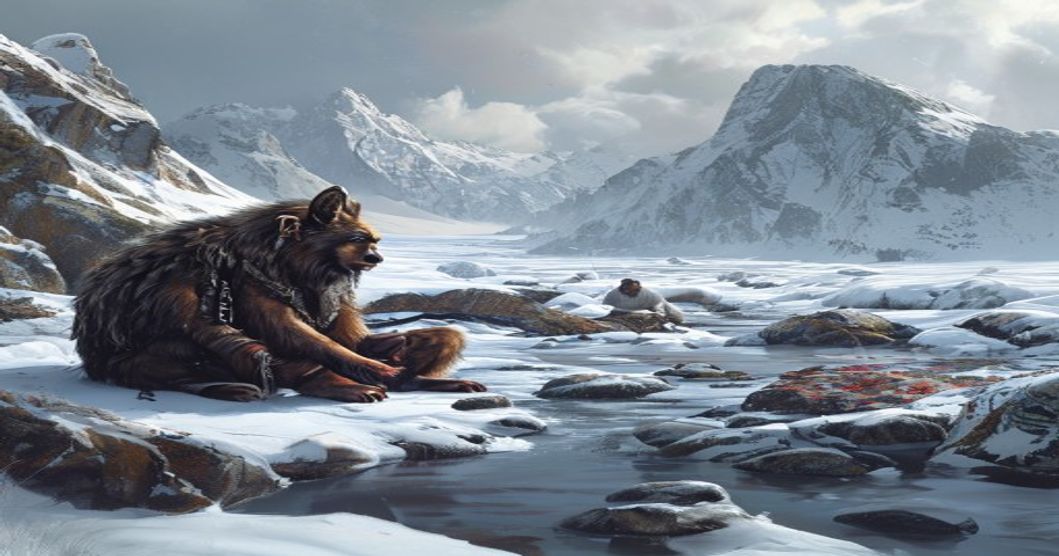
Understanding Sami Myths That Reflect Arctic Life
The Sami worldview emerges directly from the extreme Arctic landscape of Sápmi, spanning northern Norway, Sweden, Finland, and Russia. Their myths operate as functional knowledge systems rather than entertainment, encoding survival strategies, seasonal rhythms, and ecological ethics passed through generations of hunters, fishers, and reindeer herders. Central to this cosmology is reciprocal respect between humans and the environment. Spirits such as Haltia govern forests and mountains, while Sieidi stones serve as sacred altars for offerings that maintain natural balance. These narratives established sustainable hunting practices, seasonal migration routes, and strict taboos that prevented resource depletion centuries before modern conservation frameworks existed.
Shamanic mediation formed the operational core of Sami spiritual life. Noaidi practitioners utilized drums constructed from reindeer hide and ash wood to navigate spirit realms during crises involving failed hunts, illness, or environmental disruption. Ritual journeys reinforced the direct correlation between human conduct and ecological outcomes. Seasonal myths align precisely with Arctic phenomena: prolonged darkness inspires narratives about introspection and communal resilience, while the midnight sun triggers renewal cycles tied to calving seasons and reindeer movement. The transition periods between winter and summer dictate ritual calendars, ensuring that harvesting activities coincide with biological recovery phases.
- Joik tradition functions as a living mythological archive, embedding geographic coordinates, animal behavior patterns, and ancestral memory into melodic structures that guide navigation across snow-covered terrain.
- Unlike centralized Norse pantheons, Sami mythology relies on localized deities tied to specific valleys, lakes, or herding corridors, mirroring a nomadic social structure where territorial authority shifts with resource availability.
- Ethical boundaries around land use remain embedded in mythic warnings, ensuring that extraction never exceeds natural regeneration rates without triggering spiritual or environmental consequences.
Contemporary ethnobotanical and paleoclimatic research confirms these narratives preserve precise ecological data regarding caribou migration windows, ice stability indicators, and botanical harvesting cycles. The myths transform environmental observation into cultural practice while maintaining rigorous ethical frameworks for Arctic survival. These mechanisms demonstrate how indigenous epistemology adapts to polar extremes without relying on external intervention.
The Geographic and Cultural Origins of Sami Folklore
The Sami people inhabit a vast Arctic and subarctic expanse spanning northern Norway, Sweden, Finland, and the Russian Kola Peninsula. This rugged terrain, characterized by frozen tundra, dense boreal forests, glacial fjords, and extreme seasonal light variations, directly shaped the structural foundation of their folklore. Geographic isolation and harsh climatic conditions necessitated a worldview deeply intertwined with ecological observation. Myths did not emerge as abstract entertainment but as functional knowledge systems encoding survival strategies across generations.
Sami cosmology reflects a landscape where natural features function as active agents rather than passive scenery. Mountains, ancient stones, specific tree roots, and deep lakes were classified as sieidi sites, understood as dwelling places for nature spirits known as voress. These spiritual entities governed hunting yields, reindeer migration routes, weather patterns, and community prosperity. Folklore narratives consistently emphasize reciprocity: humans receive sustenance only through respectful interaction with the land, demanding precise ritual protocols and seasonal restrictions.
The cultural divergence between coastal Sami, mountain Sami, and forest Sami further diversified regional mythological frameworks. Coastal communities developed extensive maritime folklore detailing sea spirits, whale encounters, and storm navigation techniques passed through generational storytelling. Mountain groups focused on reindeer husbandry myths, tracking animal behavior through seasonal calendar tales that dictated grazing cycles. Forest-dwelling populations cultivated intricate taiga narratives involving lynx encounters, berry-gathering rituals, and winter survival tactics.
- Ancestral oral transmission relied on rhythmic joik singing, enabling complex ecological data to remain memorized across hundreds of miles of uninhabited wilderness.
- Shamanic drum journeys using painted goavddis membranes mapped spiritual geography, aligning mythological realms with actual topographical landmarks.
- Seasonal migration patterns dictated narrative cycles, with spring tales emphasizing calving grounds and autumn stories focusing on reindeer slaughter ceremonies tied to ancestral gratitude.
Geographic barriers historically preserved linguistic and mythological distinctiveness among Sami groups. Dialect variations correlated precisely with ecological zones, meaning each region developed unique spirit classifications, creation narratives, and taboo systems adapted to local microclimates. European colonial expansion later disrupted these localized knowledge networks, yet the foundational connection between Arctic geography and Sami narrative architecture remains documented across archaeological findings, historical missionary records, and contemporary ethnographic research.
Core Deities and Spirits in Traditional Sami Cosmology
Traditional Sámi cosmology operates on a deeply interconnected worldview where the natural environment functions as both physical habitat and spiritual infrastructure. At the center of this system stands Beaivi, the sun deity who governs fertility, seasonal cycles, and agricultural prosperity across the tundra. Her movements dictate hunting seasons, reindeer migrations, and community rituals, making her worship essential for survival in extreme latitudes. Opposing her is Maibolga, the goddess of winter, illness, and death, whose influence peaks during the polar nights when daylight vanishes for months. These dual forces illustrate a cosmological balance rather than a moral dichotomy; both are necessary for ecological renewal.
Beyond celestial figures, Horgagalles embodies thunder, fertility, and protective strength. Revered as a sky father figure, he wields a hammer that generates lightning to ward off malevolent entities and purify sacred spaces. Ritual offerings at sieidi stones—naturally formed rocks or boulders believed to house local spirits—form the practical core of Sámi spiritual practice. These sites function as conduits between the human realm and the invisible ecosystem, requiring specific chants, animal sacrifices, and drumming ceremonies led by the noaidi. The drum itself, known as a goavddis, serves as a cosmological map detailing nine distinct worlds arranged vertically and horizontally across the Arctic landscape.
Animal spirits hold equal prominence in Sámi belief systems. The reindeer operates as both economic foundation and spiritual teacher, guiding hunters through migration patterns while embodying resilience. Wolves, bears, and ravens appear frequently in oral traditions as messengers or shape-shifters who test human integrity. Each creature occupies a designated role within the ecological hierarchy, demanding respect through strict taboos and hunting protocols. Violating these customs historically triggered communal misfortune, reinforcing the belief that spiritual harmony directly correlates with environmental stability.
- Sieidi stones acted as primary altars for seasonal offerings and divination rituals.
- The noaidi utilized rhythmic drumming to navigate between physical and spiritual realms during healing ceremonies.
- Cosmological boundaries were maintained through strict dietary restrictions and hunting taboos that prevented ecological overexploitation.
Contemporary archaeological findings and ethnographic records confirm that Sámi cosmology never operated as isolated folklore. It functioned as a sophisticated ecological management system encoded in mythological narratives. The deities and spirits described in oral transmission provided practical frameworks for resource allocation, seasonal planning, and community governance across generations of Arctic survival. Understanding these figures requires abandoning Western theological binaries and recognizing their original purpose: maintaining equilibrium between human activity and the unforgiving northern environment.
How Arctic Environments Shape Sami Mythological Narratives
The extreme Arctic landscape functions as both a physical boundary and a narrative framework for Sami cosmology. Permafrost, glacial valleys, and ice-choked coastlines dictate the rhythm of survival, which directly translates into mythological structures. Spirits such as sieidi guardians inhabit specific geological formations, transforming static rock into active spiritual agents that demand respect and offerings. The polar night and midnight sun cycle governs ritual timing, embedding seasonal transitions into creation stories and ancestor veneration practices.
Reindeer migration patterns across the tundra establish a mobile ecological baseline. Mythological narratives frequently feature reindeer as mediators between human communities and the unseen world, reflecting their economic and spiritual centrality. Animal spirits like huliaih (forest dwellers) and vuelie (mountain ghosts) emerge from specific terrain types, mapping ecological zones onto supernatural hierarchies. Ice formations on frozen lakes generate distinct local legends, with each crack or pressure ridge serving as a narrative anchor for warnings about unstable grounds or spiritual encounters.
The aurora borealis operates as a mythological catalyst rather than a mere atmospheric phenomenon. Traditional accounts describe it as the breath of ancestral spirits, the clash of celestial beings, or the souls of hunters traversing the sky. This interpretation emerges directly from prolonged exposure to dark skies and rapid weather shifts, requiring constant environmental literacy. Oral transmission adapts to these conditions by embedding survival knowledge within supernatural frameworks. Stories about noaidi shamans navigating spirit worlds mirror actual guide techniques for crossing frozen rivers or reading snowdrifts.
- Sieidi stones function as physical anchors for cosmological beliefs, tying spiritual authority to specific topographical coordinates.
- Polar darkness structures narrative pacing, favoring layered tales that unfold across extended winter months rather than single-episode folklore.
- Reindeer domestication cycles dictate mythological timelines, aligning hunting rituals, seasonal festivals, and spirit appeasement with biological rhythms.
Environmental harshness eliminates abstract speculation in favor of functional mythology. Every supernatural entity serves an ecological purpose: warning against thin ice, explaining sudden wind shifts, or reinforcing taboos that protect fragile tundra ecosystems. The Arctic does not merely inspire Sami myths; it actively constructs their syntax, vocabulary, and moral architecture through relentless climatic feedback loops.
Legendary Figures and Their Symbolic Meanings
Sami mythology operates as a functional survival framework rather than decorative folklore. Legendary figures function as cognitive maps for Arctic adaptation, encoding ecological data into narrative structures that guide resource management. Beaivi, the sun deity, governs seasonal light cycles and reindeer migration timing, embodying the community’s dependence on predictable thermal windows. Mánnu, the moon god, regulates nocturnal hunting schedules and ice stability, reflecting an ancient observational calendar preserved through rhythmic oral transmission. The råådnakko represents terrain volatility and hidden crevasses, teaching spatial awareness and respectful distance from fragile highland ecosystems. Sarva, the reindeer spirit, operates as both provider and ethical boundary, reinforcing sustainable harvesting through stories of reciprocal obligation rather than territorial dominance. These beings do not exist outside human necessity; they structure it.
Skiermma’s gales encode wind shear patterns that determine safe travel corridors, while Jábmeáhkku’s frost narratives track temperature inversion events critical to snow shelter construction. The noaidi shaman bridges observable and invisible realms, with drum motifs mapping glacial routes, weather shifts, and clan genealogies simultaneously. Each figure carries symbolic weight because it translates environmental anxiety into actionable cultural knowledge. When Sami herders reference Vajárga’s thunder or Njávdás’ fog, they are accessing generational atmospheric data rather than consuming mythological entertainment. These narratives preserve microclimate indicators, predator avoidance strategies, and vegetation recovery cycles across centuries of oral documentation.
- Beaivi & Mánnu: Solar-lunar synchronization dictates grazing rotation and daylight harvesting windows
- Råådnakko: Terrain personification enforces ecological carrying capacity limits
- Sarva: Reciprocal hunting ethics prevent overexploitation of keystone species
- Noaidi: Ritual drum patterns function as navigational and meteorological archives
Modern Arctic communities still invoke these figures when negotiating grazing boundaries, interpreting sudden pressure ridges, or adjusting camp locations after storm systems. The symbolic architecture of Sami mythology remains operational because it was never designed as static legend; it was engineered as a living environmental database. Every narrative layer contains calibrated survival protocols that continue to inform climate adaptation strategies across Fennoscandian tundra regions.
Rituals, Joik Songs, and Oral Transmission Methods
Joik functions as a sonic bridge between the Sami worldview and the Arctic landscape. Rather than describing an external subject, joik embodies the essence of a person, animal, place, or phenomenon through melodic repetition and vocal modulation. Traditional practitioners alter pitch, rhythm, and timbre to mirror environmental shifts, wind patterns, or reindeer movement. This musical form operates as a living archive, encoding survival techniques, seasonal navigation cues, and spiritual protocols within auditory memory. Vocalists traditionally perform joik during twilight hours or in secluded natural settings, believing that resonance aligns human consciousness with land spirits and ancestral guides. The structural foundation relies on microtonal inflections and circular phrasing, which prevent linear narrative progression and sustain continuous spiritual engagement.
Oral transmission relies on immersive learning environments where knowledge transfers through direct observation and participatory practice. Elders guide younger generations by embedding ecological data within narrative frameworks, ensuring that migration routes, ice conditions, and wildlife behavior remain accessible across linguistic boundaries. Repetition serves as a mnemonic anchor; phrases recur with slight variations that adapt to contemporary contexts while preserving core structural elements. Transmission occurs during communal gatherings, hunting expeditions, and ceremonial cycles, where contextual cues dictate appropriate performance timing and vocal technique. Written documentation historically disrupted this continuum, yet community-led revitalization efforts now prioritize auditory immersion over textual analysis. Mentorship protocols emphasize embodied learning, requiring students to replicate breathing patterns, posture, and emotional resonance before mastering lyrical content.
- Ritual practices intersect with joik performance to reinforce cosmological balance.
- Drum divination involves rhythmic chanting while interpreting symbolic markings on reindeer hide instruments, mapping spiritual territories and forecasting weather patterns.
- Seasonal purification rites utilize specific vocal frequencies believed to cleanse grazing lands and restore ecological harmony before calving seasons or winter migrations.
Reindeer Herding and Mythical Beings in Daily Sami Life
Reindeer herding among the Sámi communities has never existed in a purely material vacuum. The practice intertwines ecological knowledge with a layered spiritual framework that treats the natural world as inhabited by active supernatural forces. Herders
Climate Change and the Erosion of Arctic Oral Traditions
The foundation of Sami mythology rests on a precise ecological rhythm that climate disruption is actively dismantling. Oral narratives traditionally functioned as environmental archives, encoding seasonal calendars, safe travel routes, and animal behavior patterns within mythic frameworks. When permafrost thaws, sea ice retreats prematurely, or reindeer migration corridors shift beyond historical boundaries, the contextual anchor of these stories dissolves. Elders who once recited tales tied to specific glacial formations or auroral displays now face landscapes where those reference points no longer exist.
Transmission relies on lived environmental continuity. Traditional knowledge holders historically validated myths through direct observation: tracking reindeer antler cycles, interpreting wind patterns through folklore metaphors, and navigating frozen fjords using star-aligned narratives. Modern temperature fluctuations disrupt these verification loops. Younger generations encounter fragmented ecological cues, making it increasingly difficult to reconcile ancestral descriptions with observable reality. The loss of intergenerational environmental calibration accelerates cultural attrition.
- Landscape-specific narratives lose accuracy when terrain features shift or vanish entirely due to accelerated thawing and coastal erosion.
- Seasonal storytelling cycles fracture as winter lengths compress and summer conditions arrive unpredictably, breaking the rhythmic structure of oral performance.
- Reindeer-dependent cosmologies face direct strain when herd mobility patterns diverge from mythic timelines, severing the practical-spiritual feedback loop.
- Elder-led knowledge transfer declines as communities relocate for economic survival, dispersing the very networks required to sustain oral continuity.
Recording traditions digitally preserves vocabulary but strips functional context. Myths cease operating as adaptive survival tools and become static historical artifacts. The erosion is not merely cultural; it represents a collapse of localized ecological literacy that sustained Arctic communities for millennia. Rebuilding resilience requires integrating contemporary climate data with living narrative practices rather than isolating folklore from its environmental substrate.
Preserving Sami Myths Through Modern Documentation
The digital transformation of indigenous heritage has placed Sami mythology at the forefront of contemporary archival practices. Contemporary institutions deploy high-fidelity audio recording, multi-spectral imaging, and geospatial mapping to capture oral traditions before generational transmission gaps widen. Field researchers utilize encrypted cloud repositories that comply with the CARE principles for Indigenous Data Governance, ensuring communities retain ownership over their narratives while enabling controlled academic access.
Technological integration extends beyond static storage. Machine learning models trained on verified Sami dialects assist in transcribing centuries-old joik recordings and handwritten folklore manuscripts. These algorithms undergo continuous refinement through community-led validation cycles, preventing algorithmic distortion of cultural context. Virtual reality environments reconstructed from ethnographic field notes allow younger generations to experience mythological landscapes in three-dimensional space, bridging geographical displacement caused by urbanization.
- Digital archives prioritize dynamic metadata tagging that links mythological entities to ecological markers, seasonal cycles, and traditional land-use patterns.
- Open-source platforms developed by Sami-led organizations enable direct community uploads of family recordings, reducing institutional gatekeeping.
- Cryptographic watermarking protects unpublished narratives from unauthorized commercial exploitation while preserving academic citation trails.
Ethical documentation frameworks now mandate informed consent protocols that extend beyond initial recording sessions. Communities negotiate access tiers for sensitive cosmological material, distinguishing between publicly shareable folklore and restricted ceremonial knowledge. Academic partnerships require co-authorship agreements and revenue-sharing models when commercial publications utilize archived mythological content. This structural shift transforms preservation from extraction to reciprocal stewardship, ensuring that digital repositories function as living cultural infrastructure rather than static museums.
Analyzing Symbolism in Sami Myths That Reflect Arctic Life
The symbolic architecture of Sami mythology operates as a direct cartography of Arctic survival, where every natural element functions as a coded instruction for endurance and spiritual alignment. Reindeer emerge not merely as livestock but as primary cosmological anchors, representing mobility, seasonal migration patterns, and the fragile equilibrium between human communities and tundra ecosystems. Their antlers map celestial navigation routes, while their blood symbolizes life force sustained through brutal winters.
- The aurora borealis functions as a dynamic dialogue between ancestral spirits and living hunters, with regional variations dictating distinct behavioral taboos during active displays.
- Sieidi stones operate as terrestrial anchors for spiritual energy, marking transitional zones where human activity intersects with supernatural jurisdiction.
- Wolves and bears embody dualistic forces; wolves represent strategic patience and pack coordination essential for survival, while bears demand ritualized respect due to their perceived shapeshifting capabilities and leadership within forest biomes.
Weather phenomena carry explicit symbolic weight beyond meteorological observation. Persistent snowstorms mirror spiritual trials that test communal cohesion, whereas sudden temperature shifts signal threshold moments requiring immediate adaptation of shelter strategies and clothing layers. The ancestral territory itself encodes territorial symbolism, where geographic boundaries are defined not by political lines but by acoustic markers, animal migration corridors, and seasonal resource availability.
Ritual objects such as drum skins translate environmental data into visual narratives. Drum circles map hydrological networks, while painted figures represent weather patterns that dictate hunting windows. This symbolic system eliminates the separation between mythological belief and practical Arctic ecology, establishing a continuous feedback loop where spiritual interpretation directly informs resource management, navigation techniques, and intergenerational knowledge transfer.
Animal Totems and Ecological Balance in Folklore
The Sami worldview embedded animal totems within a framework that merged spiritual reverence with pragmatic environmental observation. Rather than treating the tundra as a resource to dominate, traditional narratives positioned creatures like the reindeer, wolf, bear, and white-tailed eagle as active participants in a reciprocal relationship. These figures operated beyond mere symbolism; they functioned as living archives of seasonal migration patterns, predator-prey dynamics, and habitat thresholds. Elders transmitted ecological data through mythic structures because oral transmission ensured survival across generations where written records remained scarce.
Specific totems carried precise environmental directives. The reindeer represented mobility and resource rotation, teaching communities to follow grazing cycles rather than deplete pastures. The bear symbolized hibernation rhythms and territorial limits, reinforcing seasonal rest periods for hunting grounds. The arctic fox served as an indicator of snow density and wind patterns, guiding early meteorological forecasting. Each narrative encoded measurable observations: when caribou herds shifted, when ice thickness reached safe thresholds, or how lichen recovery correlated with grazing intensity.
- Seasonal Rotation Protocols: Myths dictated fallow periods aligned with animal breeding cycles and plant regrowth.
- Territorial Boundaries: Clan lands were defined by totemic markers that prevented overconcentration of human activity.
- Resource Reciprocity: Hunting rituals required offerings and restraint, ensuring population stability across trophic levels.
These belief systems operated as decentralized conservation frameworks. Before modern ecology formalized sustainability metrics, Sami communities maintained ecosystem equilibrium through narrative enforcement. Violating totemic boundaries triggered social sanctions and spiritual consequences, effectively regulating behavior without centralized authority. The myths did not romanticize nature; they mapped its mechanical constraints. Survival depended on reading animal behavior as environmental feedback, translating instinct into actionable land management strategy.
Seasonal Cycles and Mythological Calendar Systems
The Sámi seasonal calendar operates far beyond simple meteorological tracking, functioning as a deeply integrated mythological framework that dictated survival strategies across the Arctic tundra and taiga. Rather than relying on fixed numerical months, traditional timekeeping emerged from direct observation of ecological shifts, reindeer migration patterns, and celestial movements. Each phase of the year carried specific spiritual significance, with natural phenomena personified through ancestral narratives that guided resource management, hunting expeditions, and pastoral movements.
Mythological figures served as temporal anchors within this system. Spirits like Rauna governed the deep winter months, embodying the harsh conditions that demanded strict ritual observance and communal sharing of meat. As daylight returned, narratives shifted toward Bassi, a male deity associated with spring renewal, hunting success, and the thawing of frozen lakes. These mythological transitions were not abstract tales but functional markers that aligned with observable environmental cues such as ice thickness, bird migrations, and the appearance of specific constellations.
- Winter (Dálvi): Marked by the Čorgaš constellation, guiding reindeer herding routes through deep snow. Rituals focused on appeasing forest spirits to ensure game availability.
- Spring (Giđđa): Triggered by the return of geese and the melting of river ice. Myths emphasized renewal, with sacred sites called sieidi used for offerings to guarantee successful fishing and calving seasons.
- Summer (Geasse): Characterized by continuous daylight and reindeer birthing periods. Spiritual narratives centered on water deities and coastal spirits, regulating salmon runs and berry harvesting windows.
- Autumn (Čakča): Defined by animal fattening and pre-winter preparations. Myths of the underworld and ancestral hunters dictated timing for fur trapping and meat preservation.
Celestial observation formed the backbone of this mythological calendar system. The Sámi tracked lunar phases alongside star positions to synchronize pastoral activities with ecological readiness. Star lore, particularly the tracking of Čorgaš (often identified with the elk or Pleiades cluster), provided reliable seasonal indicators that predated modern astronomical surveys by centuries. Oral transmissions preserved precise timing knowledge across generations, ensuring that mythological narratives remained tightly coupled with environmental reality.
This integrated approach demonstrates a sophisticated indigenous epistemology where spirituality and practical survival were inseparable. Mythological calendar systems did not merely describe time; they structured human behavior in harmony with Arctic ecological rhythms. Contemporary research confirms that these traditional frameworks maintained high predictive accuracy, revealing how myth functioned as a dynamic, living archive of environmental science.
Shamanic Journeys and the Noaidi Role in Arctic Survival
The Sami concept of shamanic journeys was never a metaphorical exercise but a highly structured spiritual technology designed for survival in one of Earth’s most unforgiving ecosystems. Central to this practice was the noaidi, a specialized intermediary who navigated layered cosmological realms using a consecrated drum known as the goavddis. Unlike generalized mystical narratives, Sami shamanism operated on precise ritual protocols, requiring years of apprenticeship under an established elder. The noaidi did not simply “travel” to other worlds; they followed predetermined spiritual corridors mapped through ancestral knowledge, seasonal cycles, and territorial boundaries.
During trance states induced by rhythmic drumming and vocal chanting, the noaidi summoned luovttaš, or spirit helpers, which manifested as animals, natural forces, or ancestral figures. These entities provided critical intelligence: locating reindeer herds across frozen tundra, predicting sudden blizzards, diagnosing illnesses caused by spiritual imbalance, and negotiating with mountain spirits to ensure safe passage through mountain passes. The drum itself functioned as a navigational instrument. Painted symbols denoted directions, celestial markers, and ecological zones, allowing the noaidi to interpret environmental shifts before they became visible to ordinary hunters.
- Spiritual mediation: The noaidi resolved conflicts between human communities and natural forces by performing offerings at sacred stones or birch groves, maintaining ecological equilibrium essential for reindeer herding and hunting.
- Clinical applications: Illness was rarely attributed to physical causes alone. The noaidi extracted harmful spiritual intrusions through suction techniques, smoke cleansing, and targeted drum sequences that realigned the patient’s vital energy.
- Seasonal navigation: Pre-winter rituals determined migration routes based on lunar phases and auroral activity, directly impacting survival rates during polar nights when daylight hours dropped below four hours.
Colonial suppression under 18th-century Scandinavian missions systematically dismantled these practices, yet archaeological evidence from drum fragments across Fennoscandia confirms the geographic spread of noaidi networks. Modern Sami scholars document how survival strategies once reliant on shamanic guidance evolved into ecological management systems that modern researchers now recognize as sophisticated environmental forecasting models. The technical precision of these journeys remains embedded in contemporary reindeer husbandry practices, where traditional knowledge and GPS telemetry operate in parallel rather than opposition.
Cross-Cultural Parallels with Nordic and Siberian Legends
The mythological frameworks of the Sami people reveal striking structural and thematic overlaps with ancient Nordic and Siberian oral traditions, particularly in how each culture encoded ecological survival strategies into cosmological narratives. Both Sami and Norse mythologies center on liminal spirits that govern weather patterns, hunting success, and seasonal transitions. The Sami hávda beings, who reside in sacred mountains and demand ritual respect to prevent avalanches or sudden storms, mirror the Norse fjölkyngi and huldra entities that control forest boundaries and livestock fertility. These parallels are not coincidental but stem from shared Arctic survival imperatives where environmental unpredictability required spiritual negotiation rather than domination.
Siberian Indigenous groups, including the Evenki and Khanty, demonstrate even closer functional alignment with Sami cosmology through shamanic technology and animist worldviews. The Sami noaidi drum serves nearly identical ritual purposes as the Siberian shamanic frame drum: both function as navigational tools for spirit travel, celestial mapping, and ancestral communication during polar nights. Recurring motifs such as the World Tree or cosmic axis appear across all three traditions, representing a vertical connection between subterranean hunting grounds, human habitation, and celestial realms where aurora phenomena were interpreted as spiritual pathways or ancestral hunts.
- Reindeer and caribou symbolism occupy central roles in Sami creation narratives as providers of life and guides through frozen landscapes, paralleling Siberian elk deities that dictate migration routes and the Norse mythic boar Gullinbursti associated with fertility and winter survival.
- Seasonal synchronization across these regions aligns festivals with astronomical events, particularly the winter solstice and spring equinox, when communities performed coordinated rituals to restore balance between human activity and ecological limits.
- Resource management protocols embedded in these legends functioned as early environmental governance systems, encoding taboos against overhunting, sacred grove preservation, and strict seasonal migration windows into generational storytelling.
These shared narrative architectures demonstrate how Arctic populations independently developed analogous mythological systems to manage resource distribution, track climate cycles, and maintain social cohesion under extreme environmental constraints. The convergence of spirit geography, shamanic apparatus, and animal cosmology across Sami, Nordic, and Siberian traditions highlights a unified adaptive strategy where mythology operated as both cultural archive and practical survival manual.
Practical Applications and Contemporary Relevance of Sami Myths That Reflect Arctic Life
Samí oral traditions function as operational manuals for Arctic survival, encoding generations of ecological observation into narrative form. These stories detail seasonal migration patterns, ice safety protocols, and predator behavior long before modern meteorological instruments existed. Contemporary researchers extract this embedded data to model climate shifts and track ecosystem changes across Sápmi. The myths serve as baseline references for validating satellite imagery and ground-level environmental monitoring, bridging indigenous epistemology with peer-reviewed arctic science.
Practical integration spans multiple sectors:
- Environmental Management: Reindeer herding cooperatives utilize myth-derived seasonal markers to adjust grazing routes, reducing overgrazing and improving herd resilience against extreme weather.
- Climate Adaptation Policy: Municipal planners incorporate traditional flood and permafrost thaw narratives into infrastructure zoning, preventing costly construction failures in destabilizing ground.
- Educational Frameworks: Arctic schools embed these narratives into STEM curricula, teaching thermodynamics through ice-formation legends and ecology through animal spirit classifications.
Digital archiving initiatives preserve audio recordings, hand-drawn maps, and ritual contexts, ensuring that mythological frameworks remain accessible for academic citation and community reference. Cultural enterprises leverage these narratives to develop eco-tourism experiences that respect sacred sites while generating sustainable revenue streams. Media producers and game developers increasingly consult Sámi knowledge holders to avoid stereotypical portrayals, replacing inaccurate depictions with geographically and culturally precise storytelling. This shift strengthens indigenous representation in global entertainment markets while maintaining narrative authenticity.
Urban adaptation programs draw from these traditions to design community mental health interventions grounded in place-based belonging. The psychological framework embedded in creation tales offers structured coping mechanisms for climate anxiety, reinforcing intergenerational continuity. Legal advocates reference myth-anchored land stewardship records during territorial negotiations, strengthening claims against extractive industries. Scientific collaborations now treat these narratives as legitimate data repositories, accelerating the development of hybrid research models that prioritize both empirical measurement and indigenous validation. GIS mapping projects cross-reference traditional place names with satellite vegetation indices, optimizing carbon sequestration tracking across boreal transition zones. Cross-border governance bodies use shared mythological frameworks to coordinate wildlife corridor protection, aligning conservation targets with historical movement pathways.
Educational Integration in Scandinavian Curricula
The integration of Sami myths and Arctic ecological knowledge into Scandinavian educational frameworks represents a deliberate shift toward decolonizing curricula and honoring indigenous epistemologies. In Norway, the national curriculum mandates core Sami content across primary and secondary levels, requiring schools in designated Sámi areas to allocate dedicated instructional hours to traditional storytelling, reindeer husbandry practices, and seasonal migration patterns. These elements are not treated as isolated folklore but as living systems that connect mathematics, geography, and environmental science.
Sweden has implemented a regionalized approach, allowing municipalities within Sápmi to design localized modules where students analyze mythological narratives alongside climate data. Teachers utilize primary sources from the Arctic Culture Institute to map how seasonal myths align with glacial retreat records and wildlife behavior. Finland operates under the Sámi Curriculum Framework, which requires teacher training programs to include indigenous pedagogy. Classroom discussions frequently examine how oral traditions encode survival strategies, navigation techniques, and sustainable resource management.
- Cross-Disciplinary Application: Myths featuring figures like Beaivi or the Arctic fox are analyzed through literary structure, ecological symbolism, and linguistic evolution.
- Land-Based Pedagogy: Students participate in guided fieldwork where instructors correlate mythological landmarks with topographical features and historical settlement patterns.
- Evaluation Metrics: Assessment models measure cultural competency alongside standard academic benchmarks, ensuring indigenous knowledge carries equal scholarly weight.
Teacher preparation programs in all three nations now require certification modules focused on Sámi language acquisition, mythological taxonomy, and community partnership protocols. Educational authorities emphasize that accurate representation demands collaboration with local reindeer herders and cultural historians rather than reliance on archival texts alone. Research indicates that students exposed to this integrated framework demonstrate stronger critical thinking skills when analyzing historical narratives and improved retention rates in environmental science courses. The pedagogical model continues to evolve through annual curriculum reviews, ensuring contemporary Arctic challenges remain woven into traditional knowledge systems.
Eco-Tourism and Cultural Heritage Preservation Efforts
Eco-tourism initiatives in Sami territories operate as strategic frameworks that align visitor engagement with indigenous land stewardship and mythological continuity. Rather than treating cultural narratives as static exhibits, modern preservation models integrate seasonal reindeer migration patterns, ancestral storytelling circles, and traditional ecological knowledge into regulated tour pathways. These approaches ensure that economic activity directly funds habitat restoration, language revitalization programs, and intergenerational knowledge transfer.
- Community-led tour certifications require operators to employ local Sami guides who contextualize myths within active land-use practices, transforming folklore into actionable conservation awareness.
- Digital archiving projects capture oral histories, joik performances, and mythological maps using geospatial tagging, creating accessible repositories that remain controlled by indigenous councils.
- Regulatory zoning agreements restrict high-impact tourism to designated corridors, protecting sacred sites like sevdit (sacrificial stones) and critical calving grounds from ecological degradation.
Preservation efforts leverage mythological themes as pedagogical tools rather than decorative motifs. Guides reference creation narratives that encode sustainable harvesting limits, predator coexistence strategies, and climate adaptation techniques observed over centuries. This narrative-based education increases visitor compliance with leave-no-trace protocols while reducing reliance on conventional interpretive signage. Funding flows from eco-tourism revenue support youth apprenticeships in traditional craft production, snow-blindness prevention methods, and aurora-reading practices that historically dictated travel routes.
Collaborative governance structures between municipal tourism boards, Sami parliaments, and environmental NGOs establish dynamic monitoring systems. Visitor capacity limits adjust according to real-time ecological indicators paired with cultural calendar events. Research institutes analyze how myth-informed land management correlates with biodiversity retention rates, producing peer-reviewed data that strengthens funding applications for habitat connectivity projects. The integration of ancestral narratives into tourism infrastructure transforms cultural preservation from a reactive conservation measure into a proactive economic engine.
Digital Archives and Open-Source Mythology Collections
The digitization of Sami mythology has fundamentally altered how researchers, indigenous communities, and academic institutions access Arctic cosmological narratives. Major repositories such as the Finnish Literature Society’s SKS Archives, UiT The Arctic University of Norway’s Indigenous Knowledge Division, and the Sámi Allaid documentation project maintain extensive digital corpora comprising transcribed oral performances, ethnographic field recordings, and scanned manuscript folios. These collections rely on standardized metadata schemas to catalog materials across North, Inari, Skolt, and South Sami dialects, ensuring precise geographic and temporal indexing for comparative mythological analysis. Preservation protocols prioritize bit-level redundancy and OAIS-compliant storage architectures to safeguard fragile source materials against physical degradation.
- High-resolution scans of late nineteenth-century expedition journals are cross-referenced with modern phonetic transcriptions to preserve original narrative cadence.
- IIIF-compliant image servers enable granular examination of sieidi stone carvings and ritual implements without physical handling.
- Open-access portals integrate crowd-sourced transcription workflows developed alongside Sami language revitalization programs, accelerating the digitization of deteriorating paper archives and wax cylinder recordings.
Archival institutions enforce strict provenance tracking to distinguish between published ethnographic accounts and community-verified oral traditions. Digital curation teams prioritize contextual accuracy by embedding geographical coordinates tied to specific mythological sites, migration routes, and seasonal ceremonial cycles. Open-source mythology databases facilitate cross-institutional query capabilities, allowing scholars to trace recurring motifs such as the worship of Beaivi and Mánnu, shamanic noaidi journey sequences, and reindeer herd symbolism across circumpolar indigenous networks. These technical infrastructures maintain rigorous ethical guidelines regarding restricted ceremonial knowledge while maximizing academic utility through standardized APIs and machine-readable metadata exports.
Frequently Asked Questions
What is Sami Myths That Reflect Arctic Life?
Sami Myths That Reflect Arctic Life refers to the traditional folklore, legends, and spiritual narratives of the Sámi people, indigenous to the Arctic regions of Norway, Sweden, Finland, and Russia. These stories deeply intertwine with their harsh environment, seasonal wildlife, climate patterns, and shamanistic practices, serving as both cultural preservation and practical survival guides in the extreme northern landscape.
Key facts about Sami Myths That Reflect Arctic Life
- Sámi mythology emphasizes nature worship, particularly celestial bodies like the sun (Beaivi) and the earth.
- The supreme creator deity is traditionally known as Várddná or Hábme.
- Shamans utilized rhythm drums (goavddis) to enter trance states and communicate with spirits during long Arctic winters.
- Reindeer feature prominently in these tales, representing survival, spiritual guidance, and economic livelihood.
- The myths consistently stress ecological balance, respect for animal spirits, and adaptive strategies for subarctic living.