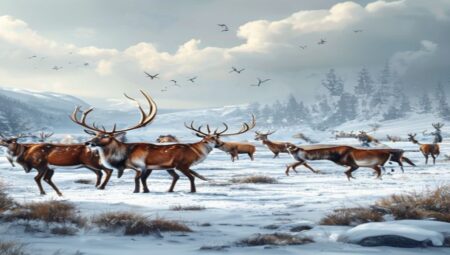
Understanding Sami Reindeer Herding and Family Life
The practice of Sami reindeer herding functions as a complex socio-ecological system rather than a conventional agricultural model. Seasonal migration patterns follow strict ecological rhythms, driven by pasture availability, snow depth, and the physiological requirements of the herd. Winter movements direct families toward boreal taiga zones where ground lichen remains accessible beneath frozen crusts. Summer transitions shift herds to coastal wetlands or alpine plateaus to exploit rapid vegetation growth following snowmelt. This continuous relocation demands precise environmental reading, including wind direction analysis, ice stability assessment, and predator tracking, all transmitted through direct mentorship rather than formal education.
Family structures within herding communities operate on collective resource management. Each household maintains a registered herd size, yet pasture allocation, veterinary interventions, and calf branding require synchronized decision-making across extended networks. Children acquire practical competencies—suture application, snow profiling, migration route memorization—through embedded daily participation rather than scheduled instruction. The North Sami language preserves specialized lexical categories exceeding two hundred distinct terms for reindeer coat variations, snow metamorphosis stages, and grazing behavior, reflecting an intimate ecological vocabulary.
- Economic viability now depends on diversified revenue streams including digital pasture mapping, duodji handicraft markets, and regulated wildlife tourism.
- Legal recognition of reindeer herding as a distinct land-use right exists across Norwegian, Swedish, and Finnish jurisdictions, yet overlapping zoning regulations frequently restrict traditional movement corridors.
- Youth retention strategies combine traditional knowledge systems with modern veterinary science, satellite telemetry, and climate adaptation modeling to ensure intergenerational continuity.
Infrastructure fragmentation from industrial extraction projects or renewable energy installations directly impacts herd mobility and household stability. Successful adaptation requires balancing ancestral land stewardship with contemporary agricultural data analysis, legal advocacy frameworks, and cooperative marketing structures. The sustainability of Sami family life ultimately rests on maintaining this equilibrium between cultural preservation and pragmatic ecological management.
The Historical Roots of Sámi Pastoralism
Reindeer domestication among the Sámi emerged through centuries of ecological adaptation and cultural evolution across the Fennoscandian archipelago. Archaeological evidence points to initial contact between humans and wild reindeer during the Mesolithic period, approximately 10,000 years ago, when hunter-gatherer communities in northern Scandinavia began tracking seasonal migrations. The transition from hunting to partial herding occurred gradually, with genetic studies indicating that true pastoralism solidified between the eighth and eleventh centuries CE. Early Sámi groups utilized natural topography, mountain ranges, coastal fjords, and taiga corridors to establish seasonal grazing routes that minimized environmental strain while maximizing nutritional yield for both animals and families.
Written documentation first appeared in medieval Norse sagas and ecclesiastical records, which described northern nomadic practices with a mixture of fascination and misunderstanding. These accounts reveal how Sámi pastoralism operated as a highly coordinated family enterprise rather than an individual pursuit. Household units managed distinct reindeer herds, tracked through intricate knowledge of lichen cycles, snow density, and predator behavior. The traditional siida system organized multiple families around shared grazing rights, water sources, and calving grounds, ensuring resource distribution remained balanced across harsh Arctic conditions.
Climate fluctuations during the Little Ice Age forced significant adjustments to migration patterns and herd composition. Herders shifted from larger mixed groups to smaller, more agile herds capable of navigating deeper snowpacks and prolonged winters. This period also cemented the integration of reindeer products into Sámi subsistence economies, with hides for clothing and shelter, antlers for toolmaking, milk for preservation, and meat as a primary protein source. State border demarcations in the nineteenth and twentieth centuries later fragmented traditional routes, yet historical pastoralism remains embedded in contemporary Sámi land management frameworks and cultural identity.
- Mesolithic Foundations: Early human-reindeer interactions began with seasonal tracking rather than controlled breeding.
- Medieval Consolidation: Norse chronicles document organized herding practices alongside early Sámi religious and economic structures.
- Environmental Adaptation: Lichen-dependent grazing cycles dictated annual movement corridors across Fennoscandian terrain.
Tax records from Swedish and Norwegian authorities further illustrate how pastoralism evolved into a regulated economic activity, with reindeer counts serving as the primary metric for tribute obligations. This administrative framework inadvertently preserved detailed lineage data, allowing modern historians to trace herd ownership through centuries of political upheaval. Traditional knowledge transmission relied on oral instruction, seasonal camps, and practical demonstration rather than written manuals, ensuring that herding techniques remained flexible enough to respond to rapid environmental shifts.
Core Principles of Traditional Reindeer Management
Traditional Sami reindeer husbandry functions as a highly adaptive ecological system rather than conventional livestock farming
How Seasons Shape the Herding Cycle
The Sámi reindeer herding cycle operates as a precise biological and cultural calendar, entirely dictated by the Arctic climate. Each seasonal shift demands specific management strategies, directly influencing household routines, labor distribution, and intergenerational knowledge transfer.
Spring marks the critical calving period, typically occurring between April and May. Herds migrate from inland winter pastures toward coastal or forested summer grounds. Families coordinate long-distance movements across snowmelt zones, requiring careful timing to avoid ice breakups. Calves are branded and tagged within days of birth for identification. Children participate in branding ceremonies, learning livestock tracking through direct observation.
Summer focuses on herd fattening and calf development. Loughing grounds provide nutrient-rich vegetation essential for milk production and weight gain. Herders conduct routine health checks, treat parasites, and manage stray animals. Supplemental feeding becomes necessary when natural pastures degrade. Haymaking operations involve entire households, with equipment maintenance and transport logistics handled by adults while older children assist in sorting and tagging.
- Autumn triggers the rutting season and winter preparation. Herds move toward sheltered forest pastures as temperatures drop. Slaughter operations begin, requiring coordinated family efforts for meat processing, hide preservation, and tool maintenance. Ice road construction and sled preparation dominate household tasks.
- Winter demands constant monitoring under polar night conditions. Extreme cold limits natural grazing, necessitating supplemental hay distribution across vast territories. Navigating frozen lakes and snow-covered terrain requires precise route planning. Family members rotate scouting duties, repair harnesses, and manage fuel supplies for heating shelters.
Seasonal transitions force continuous adaptation. Weather unpredictability, regulatory restrictions on pasture access, and modern land-use pressures complicate traditional patterns. Nevertheless, the herding calendar remains anchored to ecological cues rather than fixed dates. Household roles shift dynamically as seasonal demands change, ensuring survival through collective labor and accumulated Sámi environmental knowledge.
Daily Routines and Roles Within Sami Reindeer Herding and Family Life
Reindeer herding dictates a rigid daily rhythm shaped by climate, animal physiology, and terrain. Each morning begins with checking the herd’s location using topographical knowledge, satellite tracking devices, or drone surveillance. Herders assess weather conditions, snow depth, and pasture availability before mobilizing snowmobiles or quads equipped with veterinary first aid kits and emergency communication tools. Winter routines demand constant monitoring of lichen pastures, supplement distribution when natural forage is buried, and rapid response to predator threats or extreme cold snaps. Spring shifts focus to calving grounds, where families establish temporary camps near sheltered valleys. Herders work alongside mobile veterinarians to monitor newborns, while spouses manage camp logistics, including fuel supply, equipment maintenance, and meal rotation schedules. Autumn requires intensive processing operations: slaughtering, skinning, meat grading, and preparing hides for trade. Throughout all seasons, family members share labor based on expertise rather than rigid gender lines, with younger generations learning GPS navigation, veterinary protocols, and financial management alongside traditional herding techniques. Household duties rotate daily to prevent burnout, ensuring children assist with age-appropriate tasks like sorting tools or recording herd movements in digital registers. Economic sustainability relies on this collective structure, where each member’s contribution directly impacts herd survival and commercial output.
- Lead Herder: Directs daily movement, monitors animal health, coordinates with municipal officials during seasonal migrations, and manages digital mapping software for pasture rotation.
- Spousal Support & Camp Management: Maintains mobile infrastructure, processes meat and hides, handles bookkeeping, secures permits, and oversees youth education schedules around herding demands.
- Children & Apprentices: Learn equipment handling, animal behavior recognition, weather assessment, and basic veterinary care through supervised field practice rather than formal classroom instruction.
- Elder Consultants: Provide historical route knowledge, traditional forecasting methods, conflict resolution during herd disputes, and cultural continuity for seasonal rituals and resource allocation decisions.
Modern herding operations integrate this traditional framework with contemporary agricultural standards. Families operate as unified economic units, balancing subsistence needs with market requirements. Daily communication networks replace outdated radio systems with encrypted mobile applications that share real-time herd locations, veterinary records, and weather alerts across dispersed family members. Labor distribution adapts to seasonal pressure points, preventing physical exhaustion while maintaining herd welfare standards required by Nordic agricultural regulations. The structure ensures knowledge transfer remains practical, economically viable, and culturally intact despite industrial pressures.
Generational Knowledge Transfer and Youth Involvement
Traditional Sámi reindeer herding relies on continuous ecological observation and practical mastery that cannot be fully documented in textbooks.
Knowledge transmission occurs through daily immersion. Children learn animal behavior, weather patterns, and terrain navigation by accompanying elders across seasonal migration routes. This hands-on apprenticeship establishes spatial memory and intuitive decision-making under pressure.
- Spatial Mapping: Youth memorize grazing grounds, water sources, and predator zones through repeated seasonal cycles.
- Animal Handling: Skilled herders teach calving techniques, branding protocols, and health monitoring using both traditional methods and modern veterinary practices.
- Equipment Mastery: Reindeer handling tools, sled construction, and radio communication systems require precise technical understanding passed directly between generations.
Modern herding families integrate digital tracking devices and satellite mapping into ancestral routines. Young herders operate drones for herd counting while maintaining the cultural discipline required during roundups. This hybrid approach preserves ecological knowledge while adapting to regulatory environments that demand precise livestock documentation.
Youth engagement faces structural pressures including land-use restrictions, educational requirements, and economic volatility. Successful families establish structured learning phases where adolescents manage specific herd segments under supervision. They participate in winter gathering decisions, veterinary interventions, and market negotiations alongside experienced herders. This controlled responsibility builds operational confidence before full autonomy.
Community organizations supplement family instruction with formal training programs focused on sustainable grazing metrics, animal welfare standards, and business management. Young herders combine academic coursework with seasonal fieldwork to meet both certification requirements and traditional expectations. Mentorship networks connect novice operators with veteran herders across different municipalities, expanding resource sharing and risk mitigation strategies.
The continuity of reindeer husbandry depends on maintaining this dual education system. Families that prioritize direct experience alongside structured learning produce herders capable of navigating environmental uncertainty while honoring cultural protocols. Youth participation transforms passive observation into active stewardship, ensuring operational resilience for future seasonal cycles.
Gender Dynamics in Modern Sámi Communities
Traditional Sámi reindeer herding operated within a framework where visible decision-making and leadership were predominantly male-dominated, yet female contributions remained structurally essential to herd survival. Women historically managed financial records, processed reindeer hides for textiles and clothing, coordinated youth training programs, and maintained critical kinship networks that sustained cooperative labor during calving seasons. The physical demands of open-range herding often positioned men as primary drivers of snowmobiles and dog sled teams, while women controlled household economics, resource allocation, and intergenerational skill transmission within domestic spaces.
Contemporary Sámi communities have undergone measurable structural shifts driven by national policy reforms, European Union indigenous rights frameworks, and expanded educational access. Female herding participation has transitioned from informal support roles to officially recognized ownership and management positions. Norway, Sweden, and Finland have gradually adjusted reindeer husbandry legislation to permit women to register as independent herders without mandatory male sponsorship, directly increasing female herd registration rates across the Sámi Districts. Educational institutions now offer specialized curricula in pastoral economics, veterinary science, and digital land management, enabling younger generations to approach herding through technical and administrative pathways rather than purely physical labor.
- Legal recognition of women as primary herd owners has accelerated economic independence across rural Sámi municipalities.
- Digital mapping tools and satellite tracking systems have reduced reliance on traditional gendered division of fieldwork.
- Youth mentorship programs actively pair female herders with apprentices regardless of biological sex, normalizing equitable skill transfer.
Family structures have adapted accordingly, with household leadership increasingly distributed through consensus-based financial planning and shared rotational duties. Modern Sámi households frequently combine herding income with remote work, seasonal tourism, cultural education contracts, and cooperative retail enterprises. This diversification reduces dependency on single-income pastoral models while preserving ancestral land-use practices. Intergenerational knowledge exchange now emphasizes adaptive management strategies, including climate resilience protocols, veterinary intervention timing, and market compliance standards, rather than rigid role segregation.
Despite progress, structural barriers persist in regional governance bodies and large-scale cooperative boards, where male representation still dominates strategic planning committees. Young Sámi professionals navigate competing priorities between cultural continuity, ecological sustainability, and economic viability, often utilizing digital platforms to document herd migration patterns, negotiate grazing rights, and establish direct consumer networks. The ongoing recalibration of gender expectations within pastoral families reflects broader indigenous sovereignty movements, positioning equitable participation as a foundational element of long-term Sámi community resilience.
Home, Housing, and Mobile Living Arrangements
The traditional Sami dwelling, known as the lavvu or goahti, is engineered for rapid assembly and disassembly, mirroring the seasonal migration patterns essential to reindeer husbandry. Constructed from birch poles, reindeer hides, and tarred canvas, this conical structure provides critical insulation against extreme Arctic temperatures while allowing controlled ventilation during warmer months. Unlike permanent architectural frameworks, the lavvu embodies mobility as an economic and cultural necessity rather than a lifestyle preference.
During winter operations, herding families establish semi-permanent bases near forested zones where reindeer naturally seek shelter in snow-covered lichen pastures. These winter camps typically feature log cabins or prefabricated wooden houses equipped with wood-burning stoves, insulated storage facilities for hay, and dedicated workshops for equipment maintenance. The spatial organization of these settlements directly reflects kinship networks and cooperative labor divisions, with clearly designated zones allocated for slaughtering, hide processing, and livestock management.
Summer migrations completely transform living arrangements as families relocate to coastal or mountainous territories where reindeer graze on nutrient-rich vegetation. Temporary camps utilize lightweight materials, often combining traditional canvas frameworks with modern insulation panels to balance historical continuity with contemporary efficiency. Camp placement strictly follows grazing corridors and water sources, requiring continuous environmental assessment and real-time weather monitoring.
Modern infrastructure has introduced hybrid settlement models across Sami territories. Many herding communities maintain year-round fixed residences in municipal centers while commuting to pastures via snowmobiles or all-terrain vehicles. This dual-system approach reduces physical strain on family members but introduces complex logistical challenges regarding equipment transport, veterinary access, and emergency response coordination. Municipal zoning regulations and land-use restrictions further complicate settlement patterns, forcing continuous adaptation without compromising traditional grazing rights established under international indigenous frameworks.
The architectural design of Sami housing directly shapes family dynamics and operational efficiency. Shared living spaces facilitate collective decision-making during migration planning, livestock health monitoring, and resource allocation. Children acquire navigation skills, atmospheric reading, and animal behavior patterns through daily immersion in mobile encampments, ensuring intergenerational knowledge transfer remains intact despite rapid technological integration.
Navigating Challenges Facing Sami Reindeer Herding and Family Life Today
The sustainability of Sami reindeer herding depends on precise ecological timing and uninterrupted access to vast grazing territories. Modern pressures have fractured these traditional rhythms. Climate volatility has become a primary disruptor. Warmer winters produce rain-on-snow events that freeze into impenetrable ice layers, blocking reindeer from reaching ground lichen. This phenomenon reduces calf survival rates and forces herders to supplement feed at unsustainable costs. Simultaneously, shifting vegetation zones push migration corridors northward or to higher elevations, compressing grazing windows and intensifying competition for limited pastureland.
Land-use conflicts compound environmental stressors. Industrial expansion, including mining operations, commercial forestry, and large-scale wind energy projects, fragments historic migration routes. Regulatory frameworks often prioritize national economic development over indigenous land rights, creating bureaucratic bottlenecks for herd movement permits. Herders must navigate complex licensing systems while documenting ecological impacts to secure grazing concessions. These administrative demands divert time from active herd management and increase operational overhead.
- Economic instability stems from market volatility and rising production costs. Reindeer meat prices fluctuate with consumer demand and import competition, forcing families to rely heavily on state subsidies to maintain solvency.
- Youth migration accelerates knowledge loss. Younger generations increasingly pursue education and employment in urban centers, leaving aging herders to manage larger territories with fewer hands. Traditional navigation techniques, weather forecasting, and veterinary skills face transmission gaps.
- Regulatory compliance requirements have multiplied. Modern certification standards, animal welfare inspections, and environmental reporting obligations demand digital literacy and financial record-keeping that strain small-scale family operations.
Adaptation strategies now define operational survival. Many herding families integrate satellite tracking, drone monitoring, and collaborative data-sharing platforms to optimize pasture allocation and predict weather disruptions. Cooperative business structures enable shared equipment purchases, joint marketing channels, and collective lobbying for territorial rights. Some households diversify income through regulated eco-tourism, artisanal craft production, and indigenous food branding, reducing direct dependency on livestock sales alone. Policy advocacy groups continue pushing for legally binding consultation protocols that recognize historical grazing sovereignty before infrastructure approvals proceed.
Climate Change Impact on Pasture Lands
Rising temperatures across the Arctic tundra fundamentally alter the ecological baseline that sustains Sami reindeer herding operations. The most immediate threat stems from increased frequency of rain-on-snow events, which freeze into dense ice layers known as crusts. These formations seal off ground lichen, the primary winter forage source, forcing reindeer to expend critical energy reserves attempting to dig through hardened surfaces. Extended ice periods directly correlate with elevated calf mortality rates and reduced antler development in mature herds.
Vegetation shifts compound these challenges. Warmer growing seasons encourage shrub encroachment into traditional lichen pastures, gradually outcompeting low-growing species that reindeer depend upon. Research indicates a measurable decline in available forage biomass across northern Scandinavia and Sápmi regions, requiring herders to extend migration distances to locate viable grazing zones. This geographic expansion strains herd logistics and increases contact with industrial infrastructure, including wind farms and mining operations.
Traditional migration calendars no longer align with environmental realities. Unpredictable thaw cycles disrupt frozen ground stability, creating hazardous terrain for both animals and herders during seasonal movements. Herding families respond through adaptive management practices: real-time satellite monitoring of pasture conditions, dynamic herd splitting to reduce grazing pressure, and collaborative land-use negotiations with municipal authorities.
- Ice crust formation reduces accessible lichen by up to sixty percent during severe winter anomalies.
- Shrub expansion alters soil composition and diminishes long-term pasture regeneration capacity.
- Migration route fragmentation forces reliance on digital tracking systems and modified seasonal schedules.
The ecological disruption translates directly into household economics. Lower meat yields, increased veterinary costs for malnourished animals, and higher fuel expenditures for extended travel compress profit margins. Younger generations face difficult decisions between maintaining traditional livelihoods or pursuing alternative employment in urban centers. Community resilience depends on integrating indigenous ecological knowledge with climate adaptation funding, ensuring pasture restoration initiatives remain grounded in historical land management principles.
Legal Frameworks and Land Rights Disputes
The statutory foundations governing Sami reindeer herding operate within distinct national jurisdictions across Norway, Sweden, and Finland, yet all share a persistent tension between indigenous customary law and state property regimes. In Norway, the Reindeer Herding Act of 1978 establishes designated grazing districts where only registered herders may participate, directly tying legal access to family lineage and household registration. Sweden’s corresponding legislation restricts herding rights to specific husbandry zones, while Finland’s Reindeer Husbandry Act mandates exclusive economic areas for certified families. These frameworks historically prioritize collective herding units over individual land ownership, creating a unique legal structure where family membership dictates livelihood eligibility.
Land rights disputes frequently emerge where statutory grazing boundaries intersect with private estates, state-owned forestry concessions, and renewable energy installations. Wind farm developments in Finnmark and northern Sweden have triggered extensive litigation, as turbine foundations and access roads fragment traditional migration corridors essential for seasonal pasture rotation. Norwegian courts have repeatedly ruled that infrastructure projects require explicit consultation under the Sami Parliament’s mandate, yet enforcement remains inconsistent. Swedish administrative tribunals often defer to municipal land-use plans, marginalizing family herders who lack formal title deeds. Finnish cases reveal similar patterns, where mining licenses override historical grazing claims despite international obligations under ILO Convention 169.
- Registered herding households must renew annual membership through district assemblies, linking legal status to active family participation
- Boundary disputes frequently involve overlapping claims between state-allocated forestry zones and customary winter pastures
- Court precedents increasingly recognize reindeer migration as a protected cultural right rather than a private land interest
- Family-based herding units face economic precarity when legal restrictions limit pasture access during climate-shifted seasonal windows
The intersection of statutory regulation and land conflict directly shapes Sami family structures. Multi-generational households depend on uninterrupted access to calving grounds, summer grazing fields, and mineral licks for livestock survival. When legal boundaries shift without adaptive management provisions, herding families experience immediate income loss, forced labor migration, and cultural fragmentation. Recent judicial developments acknowledge that reindeer husbandry constitutes a continuous family enterprise rather than isolated agricultural activity, yet policy implementation still prioritizes resource extraction timelines over herding cycle requirements. Sustained legal advocacy now focuses on integrating indigenous knowledge into land-use planning, ensuring that statutory frameworks recognize family-based herding as a protected economic and cultural system.
Balancing Tradition with Contemporary Livelihoods
The Sami reindeer herding community operates within a complex intersection of ancestral practices and modern economic demands. Families manage seasonal migration routes that have persisted for centuries while simultaneously navigating digital infrastructure, formal education systems, and global market fluctuations. This dual reality requires strategic resource allocation, where traditional knowledge of pastures, animal behavior, and weather patterns is paired with contemporary business management techniques. Many households maintain active herding operations alongside part-time employment in municipal services, technology sectors, or educational institutions.
- Economic Diversification: Cash flow stability often depends on supplementary income sources such as handcrafted traditional textiles, eco-tourism guiding, and direct sales of reindeer products through certified cooperatives that meet international food safety standards.
- Technological Integration: GPS tracking collars, drone surveillance, and mobile herding management software have replaced many historical navigation methods, allowing smaller family units to monitor vast grazing territories with minimal personnel while reducing livestock losses.
- Intergenerational Knowledge Transfer: Elders document seasonal calving patterns and winter feeding protocols through digital archives and community workshops, ensuring that ecological wisdom remains accessible as formal schooling increasingly occupies youth schedules.
Legal frameworks governing land use and grazing rights directly influence livelihood sustainability. The Nordic countries recognize distinct Sami administrative bodies that negotiate pasture allocations with forestry, mining, and renewable energy developers. Herding families must constantly adapt to shifting regulations while preserving core cultural practices. Government grants for sustainable agriculture and rural entrepreneurship provide critical financial buffers during harsh winters or market downturns.
Climate variability introduces additional operational complexity. Warmer autumns delay snowfall, forcing herders to extend grazing seasons across marginal landscapes that were historically unusable. Simultaneously, fluctuating global meat prices and stringent export regulations require families to adopt quality certifications and traceability systems. Cooperative marketing structures mitigate individual risk by pooling resources for transportation, veterinary services, and administrative compliance.
Adaptation does not equate to cultural erosion. Modern Sami households actively reconstruct traditional rhythms by aligning herding cycles with contemporary work calendars, utilizing remote banking for livestock purchases, and leveraging social media networks to coordinate regional slaughter schedules. This pragmatic synthesis ensures that reindeer husbandry remains a viable family enterprise rather than a historical artifact.
Preserving Culture While Adapting to Modern Realities
The Sami reindeer herding tradition faces unprecedented pressure from shifting climate patterns, expanding infrastructure projects, and evolving land use regulations. Families who have guided migratory routes across Arctic landscapes for centuries now navigate complex bureaucratic frameworks while maintaining ancestral practices. Climate volatility disrupts seasonal grazing cycles, forcing herders to adjust migration timelines and modify traditional feeding strategies. Many communities integrate satellite GPS tracking and weather forecasting applications into daily operations, enabling real-time adjustments to herd movements without compromising cultural continuity.
Economic sustainability remains a critical concern. Commercial reindeer meat markets require strict hygiene certifications and traceability documentation, prompting families to adopt modern processing facilities alongside age-old butchering techniques. Younger generations increasingly pursue formal education in veterinary science, environmental law, and sustainable agriculture, returning with technical expertise that strengthens traditional livelihoods. Digital platforms facilitate direct-to-consumer sales of handcrafted Sami duodji items and processed meat products, reducing dependency on middlemen while preserving authentic craftsmanship standards.
- Skill Integration: Elders teach youth how to read snow conditions, interpret animal behavior, and construct protective gear using historically accurate materials.
- Knowledge Archiving: These sessions are recorded in local archives and shared across regional networks to ensure information survives geographic dispersion.
- Curriculum Development: Municipal partnerships with indigenous organizations support bilingual educational programs that integrate herding ethics into school frameworks.
Legal advocacy drives significant changes in territorial access. Collaborative mapping initiatives document historical grazing corridors, providing evidence for sovereignty claims against industrial development proposals. Government agencies increasingly recognize customary land use rights, though implementation varies across northern jurisdictions. Herding families participate in policy committees, ensuring that regulatory frameworks reflect ecological realities and cultural preservation goals. This active engagement transforms passive resistance into strategic adaptation, securing future viability for reindeer pastoralism while honoring ancestral obligations to the landscape.
Technology adoption continues reshaping daily routines without eroding core values. Automated weather stations monitor permafrost stability, while mobile applications track herd distribution across fragmented territories. Financial cooperatives pool resources to purchase modern veterinary equipment and secure long-term grazing leases. Community-led cultural festivals attract academic researchers and ethical tourists, generating revenue that funds language revitalization projects and youth mentorship programs. These interconnected efforts demonstrate how deliberate adaptation reinforces rather than replaces historical identity.
Education, Language Revitalization, and Community Initiatives
Formal education systems across Sápmi have increasingly integrated reindeer herding expertise into structured curricula, bridging academic requirements with ancestral practices. Bilingual schools operating in Finnmark, Troms, and northern Sweden offer specialized tracks where students study ecology, veterinary science, and land management alongside standard mathematics and literature. These programs recognize that sustainable herding demands rigorous scientific understanding, not just inherited intuition. Vocational colleges now provide certified courses in pasture zoning, herd health monitoring, and climate adaptation strategies tailored to subarctic environments. Family units benefit directly from these educational pathways, as younger generations acquire technical competencies while maintaining direct involvement in seasonal migrations.
- Sámi-medium instruction programs operate across multiple municipalities to preserve linguistic continuity
- Digital archives record oral histories, migration routes, and traditional animal husbandry techniques
- Youth cooperatives facilitate mentorship between veteran herders and emerging family practitioners
Language revitalization remains the cornerstone of cultural preservation within reindeer-herding households. Communities deploy immersive teaching methods that embed Sámi vocabulary into daily agricultural routines, livestock management, and seasonal planning documents. Municipal councils fund dialect-specific textbooks while universities develop standardized orthographies for Northern, Lule, and Southern Sámi variants. Digital platforms now host interactive grammar modules, audio recordings of elder narratives, and real-time translation tools designed specifically for herding terminology. Families utilize these resources to maintain fluency across generations, ensuring that linguistic competence directly supports ecological decision-making and legal land claims.
Community-driven organizations coordinate advocacy campaigns, resource sharing networks, and policy reforms that protect grazing rights while modernizing infrastructure. Regional cooperatives pool equipment maintenance costs, distribute veterinary supplies, and negotiate fair pricing for livestock products. Youth councils design cultural camps that combine traditional crafts with contemporary business training, creating sustainable economic models for next-generation herders. Municipal grants fund family relocation logistics, winter shelter construction, and digital connectivity upgrades essential for remote pastures. These coordinated efforts sustain both the ecological balance of reindeer populations and the socioeconomic stability of herding families across Scandinavian territories.
Eco-Tourism and Cultural Exchange Opportunities
Eco-tourism centered around Sami reindeer herding provides a structured pathway for visitors to engage directly with indigenous land management practices while generating sustainable income for herding families. The seasonal rhythm of the siida dictates visitor access, with winter migration routes and summer calving grounds operating under strict environmental protocols. Certified operators coordinate with local reindeer herders to design itineraries that align with grazing schedules, ensuring minimal disruption to livestock movement and tundra ecosystems.
Community-led tourism models prioritize direct economic benefits for indigenous households. Visitors participate in guided activities such as tracking reindeer using traditional knowledge, assisting with seasonal branding during summer camps, and learning duodji craft techniques that utilize antler, hide, and wool. These experiences are facilitated by herders who share technical expertise on saddle fitting, milking procedures, and weather prediction methods passed through generations.
- Winter programs focus on snowmobile and reindeer sleigh navigation across frozen landscapes, combined with overnight stays in lavvu tents equipped with traditional hearths.
- Summer offerings include calving season observation, medicinal plant foraging workshops, and live demonstrations of rope braiding and metalwork using indigenous tools.
- Cultural exchange components feature joik vocal performance sessions, Sami language terminology instruction, and collaborative meal preparation featuring cloudberries, reindeer meat, and fermented dairy products.
Ethical engagement requires adherence to established guidelines. Visitors must book through indigenous-certified tourism networks, maintain designated distances from livestock during grazing, and follow seasonal access restrictions imposed by the Sami Parliament. Revenue distribution follows transparent frameworks where hospitality fees, craft sales, and guide services directly support herding infrastructure, including animal healthcare, pasture restoration, and youth training programs.
Long-term sustainability depends on visitor compliance with carrying capacity limits and environmental monitoring protocols. Herding families implement waste management systems, utilize biodegradable materials for temporary shelters, and track vegetation recovery rates after group visits. This data-driven approach ensures that cultural tourism complements rather than compromises the ecological foundation of reindeer husbandry.
Supporting Indigenous Sámi Enterprises and Crafts
Authentic Sámi enterprises thrive when economic models align with centuries-old ecological knowledge and cultural continuity. Direct investment in duodji workshops, reindeer leather tanning facilities, and silver smithing cooperatives creates sustainable livelihoods that resist commercial dilution. Buyers should prioritize products certified by the Sámi Duodji mark, which legally restricts usage to indigenous artisans practicing traditional techniques across Norway, Sweden, Finland, and Russia.
- Fair Trade Pathways: Establish direct supply chains that bypass mass-market distributors. Commissioning custom gákti garments or carved reindeer antler tools through verified Sámi artisan networks ensures royalties remain within herding communities.
- Digital Market Infrastructure: Allocate resources toward multilingual e-commerce platforms featuring geotagged product origins, artisan biographies, and seasonal production cycles. Transparent supply chain documentation increases consumer trust and reduces counterfeit circulation.
- Intergenerational Skill Transfer: Fund apprenticeship programs where elder craftsmen mentor youth in traditional dyeing methods using lichens, bone carving, and reindeer sinew stitching. These initiatives preserve technical precision while adapting to contemporary design demands.
Legal frameworks like the Nordic Sámi Convention provide structural backing for enterprise development, yet grassroots implementation requires targeted grants for equipment modernization without compromising handcrafted integrity. Climate adaptation strategies must also integrate with traditional grazing calendars, as shifting snow conditions directly impact raw material availability for winter craft production. Collaborative branding initiatives that emphasize seasonal authenticity rather than exoticized imagery generate higher market retention and educational value. Financial institutions specializing in indigenous entrepreneurship offer low-interest capital for processing facilities, ensuring profit margins sustain entire family units engaged in herding and craft cycles. Verification protocols using blockchain traceability further protect intellectual property rights while meeting international compliance standards for ethical sourcing. Local tourism boards should embed artisan workshops into regional itineraries, creating experiential revenue streams that complement seasonal reindeer migration patterns. Municipal councils can facilitate cooperative licensing agreements that standardize quality metrics while protecting geographic indicators against unauthorized reproduction.
Frequently Asked Questions
What is Sami Reindeer Herding and Family Life?
Sami reindeer herding and family life refers to the traditional nomadic lifestyle of the Sámi people, an indigenous group primarily residing in northern Scandinavia. It centers around the seasonal migration of reindeer herds across vast Arctic landscapes, deeply intertwined with cultural heritage, ecological knowledge, and close-knit family bonds that sustain their unique way of life.
Key facts about Sami Reindeer Herding and Family Life
- The Sámi are the only officially recognized indigenous people within the European Union.
- Reindeer herding is governed by strict seasonal migration routes known as “siida.”
- Family roles are traditionally divided but highly cooperative, with children learning herding skills from a young age.
- The practice is officially protected under international indigenous rights and Nordic legislation.
- Modern challenges include climate change, land-use conflicts, and the need to balance tradition with contemporary economic opportunities.
{
“@context”: “https://schema.org”,
“@type”: “FAQPage”,
“mainEntity”: [
{
“@type”: “Question”,
“name”: “What is Sami Reindeer Herding and Family Life?”,
“acceptedAnswer”: {
“@type”: “Answer”,
“text”: “Sami reindeer herding and family life refers to the traditional nomadic lifestyle of the Sámi people, an indigenous group primarily residing in northern Scandinavia. It centers around the seasonal migration of reindeer herds across vast Arctic landscapes, deeply intertwined with cultural heritage, ecological knowledge, and close-knit family bonds that sustain their unique way of life.”
}
},
{
“@type”: “Question”,
“name”: “Key facts about Sami Reindeer Herding and Family Life”,
“acceptedAnswer”: {
“@type”: “Answer”,
“text”: “- The Sámi are the only officially recognized indigenous people within the European Union.\n- Reindeer herding is governed by strict seasonal migration routes known as \”siida.\”\n- Family roles are traditionally divided but highly cooperative, with children learning herding skills from a young age.\n- The practice is officially protected under international indigenous rights and Nordic legislation.\n- Modern challenges include climate change, land-use conflicts, and the need to balance tradition with contemporary economic opportunities.”
}
}
]
}