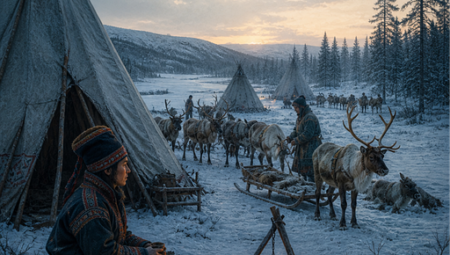
The Sami, indigenous to the northern parts of Norway, Sweden, Finland, and Russia, have a profound connection to the land and sky. Long before GPS existed, they turned to the heavens. They observed and named the stars, weaving them into their cultural tapestry. For the Sámi, each constellation tells a story, reflecting their history, traditions, and the rhythms of nature.

Picture standing on a snow-covered landscape under a blanket of twinkling stars. The North Star, or Polaris, shines brightly, serving as a reliable beacon. Sámi herders relied on this guiding light to lead their reindeer across daunting terrains. It’s like having a loyal friend who knows every shortcut in your neighborhood but on a cosmic scale!
Moreover, the Sami also believed that certain celestial events, like the aurora borealis—those stunning northern lights—were omens and signs. They deeply intertwined their navigation methods with their spiritual beliefs. It’s fascinating to think how the same sky that awes us today also played an intricate role in the daily lives of the Sámi.
Guided by the Cosmos: The Role of Stars in Sami Navigation Traditions
The Sami, the Indigenous people of the Nordic regions, have relied on celestial navigation for generations. It’s like they have an exclusive VIP pass to the universe’s greatest light show. When darkness falls, these stars transform into trusted companions. They’ve learned to read the sky much like a book, each constellation telling its own story—stories of migration, survival, and belonging.
Imagine being out on the tundra at night, using the North Star as your guiding beacon. For the Sami, navigating using the stars isn’t merely practical; it’s spiritual. Each star is a symbol, often representing ancestral spirits or telling tales of their history. It’s almost as if the universe is woven into their identity, making each journey a sacred dance between the heavens and the earth.
You might wonder how they remember all these star paths, right? Well, it’s a skill passed down from generation to generation, like an ancient art form. They observe, they tell stories, and they create a bond with the cosmos that few can comprehend. Just as a fisherman knows the best spots by the angle of the sun, the Sami know their world by the shimmer of the stars.
Celestial Pathways: How the Sami People Navigate by the Night Sky
For the Sami, the night sky isn’t just a backdrop; it’s like an ancient guidebook. They’ve honed their skills through generations, reading the stars like you might read a story. Picture this: each constellation tells a tale, each star a landmark. They use the North Star, Polaris, as a fixed point to help orient themselves. It’s their ever-reliable friend in a vast, dark wilderness.
But it’s not just about stars! The Sami also observe the moon’s phases and even the patterns of the auroras. These celestial bodies are like nature’s signposts, indicating seasons, weather changes, and the best times for reindeer herding—crucial for survival. Can you think of a more poetic navigation system? Instead of technology buzzing in your pocket, it’s the whispers of ancient wisdom guiding your steps.
Star Stories: The Intersection of Myth and Navigation in Sami Culture
Imagine venturing through the snowy expanse, with only the moon and stars to guide you. The Sami have done this for centuries, crafting a deep connection to the cosmos that goes beyond mere navigation. Each star represents a piece of their culture, a shimmering reminder of tales passed down through generations. Take, for instance, the North Star, known as “Áhkká” in Sami lore. This guiding star doesn’t just point north; it embodies the spirit of guidance and protection, much like a wise elder watching over a child.
Now, think about how stories shape our understanding of the world around us. In Sami culture, stars serve as both navigational aids and storytellers, reflecting a rich mythology that includes deities, animals, and landscapes. The patterns in the sky become constellations filled with life; they spark imagination and inspire travelers to venture forth with confidence. Have you ever felt the thrill of discovery? The Sami harness this excitement, using celestial navigation techniques to traverse the harsh Arctic terrain, ensuring they never lose their way.
From Polaris to the Midnight Sun: Sami Techniques for Stellar Wayfinding
The Sami people, indigenous to the Arctic regions, have been navigating the breathtaking landscapes of northern Scandinavia for generations. For them, the stars aren’t just beautiful pinpricks of light; they are vital signposts in the sky. Imagine standing on a snowy tundra beneath the shimmering aura of the Northern Lights, with Polaris, the North Star, guiding your way. It’s not just a star; it’s a beacon of safety and direction.

The Sami harness their understanding of the stars to navigate through treacherous terrains. They rely on an intricate system of star patterns and natural indicators. Picture this: you’re out in the wild, and instead of pulling out a compass, you look up. The arrangement of constellations helps you determine your path, just as the rings of a tree tell the tale of its age. This blend of nature and navigation is a dance, a rhythm that connects the Sami to their land.
But the magic doesn’t end with stars. The Midnight Sun, with its relentless glow during summer months, also plays a pivotal role. It’s as if the sun and sky conspire to guide travelers through the midnight hours. Sami navigators have mastered the art of reading the sun’s position, ensuring they don’t lose their way as daylight stretches into a canvas of endless light.
With each celestial body, there’s an unspoken bond between the Sami and the universe, weaving a narrative rich in culture and heritage. So, next time you’re lost in a starry night, remember: the heavens may just be whispering directions, waiting for you to listen.
Beyond the Earth: How Sami Ancestors Used Stars for Migration and Survival
The Sami understood that the stars weren’t just pretty twinkling dots; they were a lifeline. They’d use constellations like the Big Dipper as a compass, pointing them toward the best trails across the tundra. Think of it like having a celestial GPS that never falters—no signal loss, no battery drain, just pure cosmic wisdom lighting the way. This knowledge was passed down through generations, each story woven into the fabric of their culture, turning the night sky into a canvas where history met navigation.
But it wasn’t just about finding their way; it was deeply tied to their relationship with nature. The Sami were masters of reading the land and the skies, aligning their movements with the animals they followed and the seasonal changes. It’s as if the stars shared a secret language with the earth, one that the Sami fluently understood. When the nights grew long and dark in winter, they relied on the stars to track the best times for hunting or migrating with their reindeer herds.
Can you picture gathering around a fire, wrapped in furs, while an elder pointed out the constellations? Each star shining above was a guardian of their stories and survival tactics. The connection between the Sami and the cosmos runs deeper than mere navigation; it’s a testament to humanity’s instinct to seek guidance when alone in the wilderness.
Astronomy Meets Ancestry: The Sami’s Deep Connection with the Night Sky
Picture this: the Sami herders guiding their reindeer across vast, snowy landscapes, the night sky illuminating their path. For them, constellations were more than mere patterns; they served as vital navigational tools. The North Star, for instance, acted like a cosmic compass, guiding both the Sami and their reindeer migrations. Isn’t it fascinating how that radiant point in the sky has helped shape their everyday lives for centuries?
Furthermore, Sami folklore is rich with tales that intertwine celestial bodies with nature, spirituality, and seasonal changes. The traditional stories are like ancient maps etched in the stars, guiding the Sami through the cyclical rhythms of life. This blend of astronomy and ancestry is a beautiful reminder of how interconnected we are, isn’t it? Like a cosmic web, the Sami’s reverence for the night sky weaves together their cultural identity, traditions, and way of living.
Frequently Asked Questions
How Do Sami People Use Stars for Navigation?
Sami people utilize the night sky for navigation by observing constellations and celestial bodies. They have traditional knowledge of the stars’ positions, which assists them in determining directions during travel in their Arctic environment. This ancient skill is essential for traversing vast landscapes, especially during winter months when landmarks are obscured by snow.
What Role Do Stars Play in Sami Mythology?
In Sami mythology, stars are often seen as powerful celestial beings that influence the natural world and human affairs. They are associated with guidance, navigation, and the changing seasons, embodying the beliefs and traditions of the Sami people. Stars serve as symbols of spirituality, connecting the earthly realm with the cosmos, and are integral in storytelling and cultural practices.
What Are the Key Constellations in Sami Culture?
The key constellations in Sami culture are integral to understanding their navigation and gardening practices, as well as their mythology. These star formations are often tied to traditional stories and seasonal cycles, reflecting the Sami connection to nature and the significance of the Arctic sky in their daily lives.
How Has Modern Technology Changed Sami Star Navigation?
Modern technology has significantly transformed the traditional practices of Sami star navigation by integrating advanced tools such as GPS, digital compasses, and mapping software. These innovations allow for greater accuracy in navigation while still preserving the cultural significance of starlight guidance. This blend of ancient techniques with contemporary technology enhances the efficiency and safety of navigation in the vast Arctic landscapes.
What Traditional Techniques Do Sami Use for Stargazing?
The Sami people utilize a variety of traditional techniques for stargazing that are deeply rooted in their cultural heritage. They observe celestial patterns and use constellations for navigation and seasonal changes. Traditional stories and myths associated with stars serve to guide their understanding of the sky. The Sami also employ practical methods such as studying the movement of bodies of water and the behavior of animals in correlation with celestial events, enhancing their connection to the natural world.