The Meaning Behind Sami Symbols and Patterns: A Comprehensive Analysis
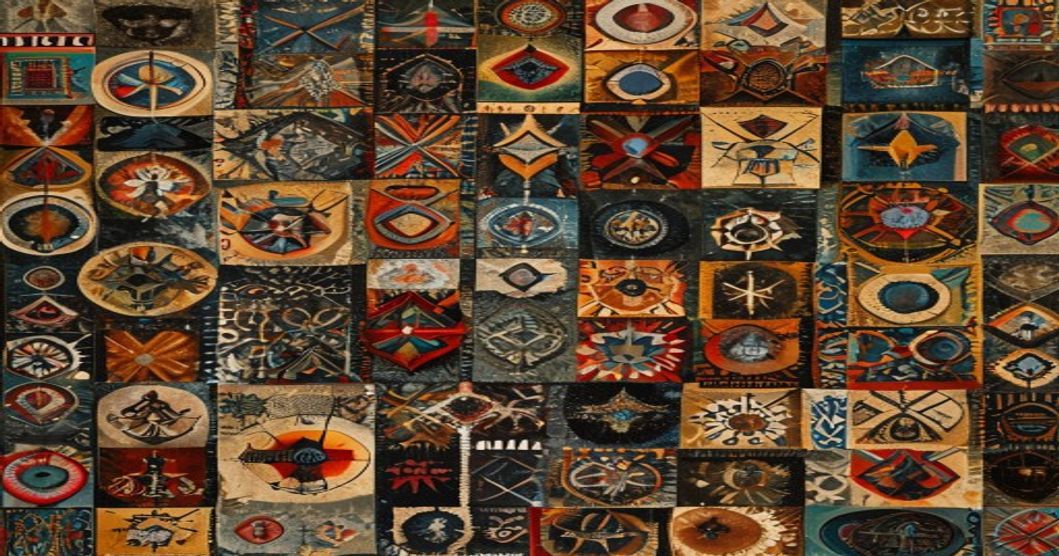
Samí symbolic systems operate as a structured visual language rather than decorative ornamentation. Each geometric configuration, linear progression, and chromatic selection encodes specific environmental data, kinship markers, and subsistence strategies developed across Fennoscandian microclimates. The foundational logic relies on documented binary oppositions: straight versus curved lines denote human infrastructure against natural topography, while interlocking triangles map seasonal migration corridors tied to reindeer calving grounds and lichen pastures.
Color symbolism follows strict ecological conventions rather than artistic preference. Deep indigo and black derive from traditional mordant dyes using bilberry juice and iron-rich bog sediment, signaling winter survival protocols and spiritual boundary markers. Red ochre sequences indicate proximity to sacred extraction sites or successful hunting territories, while unbleached wool bases denote ritual purity in ceremonial contexts. These chromatic choices reflect documented adaptations to Arctic light conditions, material scarcity, and preservation requirements.
- Geometric Motifs: Diamond grids track topographical elevation changes; zigzag sequences record glacial retreat paths and avalanche zones; concentric circles designate communal processing sites.
- Zoological Representations: Reindeer antler branching patterns correlate with herd management techniques; paw imprints function as territorial markers for resource denial rather than mythological references;
- Hydrographic Elements: Wavy parallel lines encode river crossing points, seasonal ice thickness thresholds, and spring thaw progression critical for safe passage.
Regional typology reveals distinct semantic clusters. Southern Samí embroidery utilizes dense cross-stitch networks to track clan lineages and grazing rights, whereas Lule Samí duodji incorporates asymmetrical wave patterns that mirror coastal wind dynamics and salmon run timing. Northern Samí drum membranes feature radial symmetry aligned with astronomical navigation markers, and Inari Samí textile borders employ fractal-like repetitions that document multi-generational resource allocation. These variations emerged from microclimatic adaptations rather than isolated artistic development.
Contemporary material analysis confirms that pattern density directly correlates with functional complexity in historical tool-making. High-frequency motif repetition on harness components indicates stress-point reinforcement requirements, while sparse configurations on ceremonial garments correspond to ritual mobility restrictions. Modern textile researchers have validated these correlations through structural stress testing and ethnographic cross-referencing, demonstrating that Samí symbolic architecture functions as a practical knowledge repository encoded in fiber and pigment.
Historical Origins of Traditional Sami Iconography
Traditional Sámi iconography emerged from a complex tapestry of Arctic survival, spiritual cosmology, and meticulous craftsmanship long before written records documented the culture. The earliest visual motifs trace back to pre-Christian animistic beliefs, where every natural element possessed a distinct spirit requiring ritual acknowledgment. Archaeological findings from rock carvings dating between 4000 BCE and 1500 CE reveal that geometric shapes, animal silhouettes, and solar representations formed the foundational grammar of Sámi visual communication. These early designs were not merely decorative; they functioned as mnemonic devices encoding knowledge about migration routes, seasonal hunting grounds, and celestial navigation across the Fennoscandian tundra.
The sacred drum, known as a goavddis or runebomme, served as the primary canvas for early iconographic expression. Drum skins painted with ochre, copper, or iron pigments displayed highly structured panels that mapped shamanic journeys between the upper, middle, and lower worlds. Central symbols like the sun wheel (Beaivváš), the reindeer, and the bear were arranged according to strict ritual protocols rather than artistic whim. Regional variations emerged naturally as Sámi groups adapted these core motifs to local ecologies. Mountain Sámi iconography emphasized steep angular patterns reflecting jagged terrain and eagle sightings, while coastal communities integrated wave-like curves and fish scales into their textile borders.
- Spiral and concentric circle patterns originated from shamanic trance visualization, representing the cyclical nature of life, death, and reindeer herd regeneration.
- Red cross-hatching and diamond grids functioned as protective warding marks woven into clothing (gákti) and tool handles to deflect negative spiritual forces during long expeditions.
- Stylized elk antlers and wolf tracks encoded territorial boundaries and clan lineages, passed down through maternal craft lines via direct apprenticeship rather than formal instruction.
Craft transmission relied entirely on tactile pedagogy. Mothers and master artisans taught pattern construction through repetitive stitching, lapping techniques, and reindeer hide preparation methods that standardized colorfastness in harsh subarctic conditions. The introduction of trade metals during the 13th century gradually altered pigment palettes but never disrupted the underlying structural logic of the motifs. Each geometric arrangement maintained mathematical precision, with border widths calibrated to specific garment zones indicating marital status, age grade, and regional affiliation. These visual codes operated as a silent language across linguistic dialects, allowing Sámi communities to maintain cultural continuity despite centuries of external political pressure and religious conversion campaigns.
Core Visual Components in Indigenous Design
Traditional Sámi visual language relies on a tightly structured system of geometric precision, symbolic color coding, and narrative repetition. The foundation rests upon interlocking diamond shapes, stepped triangles, and concentric circles that map onto seasonal cycles and territorial boundaries. These forms are not decorative accidents but calculated representations of reindeer migration routes, solar positioning, and ancestral navigation methods.
Color selection follows strict ecological and cultural parameters. Red derives from traditional bilberry and iron-rich lichens, signifying life force and winter resilience. Black originates from charred wood and mineral deposits, representing earth stability and protection against unseen forces. White mirrors snow cover and spiritual clarity, while deep blue traces glacial meltwater and celestial guidance. Modern synthetic dyes have expanded the palette, yet traditional artisans maintain historical ratios to preserve symbolic integrity.
- Border bands function as chronological markers, alternating between jagged zigzags for mountain terrain and smooth waveforms for coastal or riverine regions.
- Central medallions typically depict simplified reindeer antlers, sun discs, or berry clusters, each carrying generational knowledge about resource management and hunting cycles.
- Weaving techniques such as rölläknad (flat knitting) and lasso stitch create dimensional textures that catch light differently across seasons, mirroring the Arctic environment’s shifting illumination.
Structural composition avoids centralized focal points in favor of radial balance. Patterns extend continuously across garments, bags, and harnesses without hard terminations, reflecting Sámi cosmology where boundaries remain permeable between human activity and natural systems. Motif density correlates with wear frequency; high-contact zones receive denser knotting for durability, while peripheral areas utilize open spacing to accommodate movement during reindeer herding or fishing expeditions.
Contemporary designers reference these components through algorithmic pattern generation, yet authentic transmission requires manual calculation of stitch counts and dye saturation levels. The visual grammar remains intact because each element operates as both aesthetic marker and functional instruction, encoding survival strategies into everyday objects.
Cultural Significance and Spiritual Interpretations
The visual language woven into traditional Sami textiles, tools, and ceremonial objects operates as a comprehensive cultural archive. Each geometric arrangement and color placement functions as a documented record of seasonal migration routes, clan affiliations, and survival knowledge passed across generations. The deliberate repetition of motifs is not merely decorative; it encodes practical information about territory boundaries, resource locations, and inter-community agreements. Artisans traditionally aligned their weaving rhythms with natural cycles, embedding environmental awareness directly into the material culture.
Spiritual frameworks within Sami cosmology manifest through symbolic geometry that maps the relationship between human activity and ecological balance. Traditional drum patterns served as navigational charts for shamanic journeys, where concentric circles represented cosmic layers, intersecting lines denoted spiritual pathways, and specific animal silhouettes indicated guide spirits. The sun wheel motif, frequently rendered in contrasting reds and blacks on garments, functions as both a calendrical marker and a protective sigil. Reindeer antler patterns trace the creature’s annual journey, symbolizing resilience, renewal, and the reciprocal bond between herders and their livestock.
- Sun Wheel: Represents cyclical time, seasonal transitions, and the vital role of light in arctic survival.
- Mountain Triangles: Denote sacred geography, territorial markers, and the permanence of ancestral landscapes.
- Wave Lines: Encode water sources, fishing grounds, and the fluid nature of spiritual energy.
- Spiral Motifs: Illustrate growth patterns, seed dispersal, and the continuous movement of life force.
Contemporary artisans maintain these symbolic systems while adapting them to modern contexts. The preservation of traditional dye methods using lichen and berries reinforces ecological stewardship, while the continued use of ancestral patterns in ceremonial dress affirms cultural continuity. Each stitch carries documented knowledge that resists homogenization, ensuring that spiritual and historical references remain accessible to community members. The persistence of these visual codes demonstrates how material craftsmanship operates as an active repository of cosmology, identity, and environmental philosophy.
Geometric Motifs and Their Ritual Functions
Geometric patterns embedded in Sami textile work, traditional handicrafts, and ceremonial objects operate as structured visual languages rather than decorative afterthoughts. Each motif encodes cosmological principles, ecological awareness, and spiritual protocols that governed seasonal movements, hunting practices, and community rites. The diamond shape, frequently stitched onto ceremonial garments or carved into antler handles, functions as a directional anchor representing the sun path across the tundra sky. Its intersection points map the four cardinal winds, traditionally invoked during winter solstice ceremonies to stabilize communal energy and guide reindeer migrations. Zigzag arrangements mimic both reindeer hoof trails and atmospheric electrical phenomena, serving as protective boundaries that deflect malevolent forces while marking sacred travel routes between summer pastures and autumn slaughter grounds.
Ritual functionality becomes explicit when examining the sacred drum, where concentric rings, cross hatched fields, and stepped triangles delineate three cosmological layers: the surface world of humans, the middle realm of animal spirits, and the upper domain of ancestral deities. Practitioners traced these geometric sequences during specialist ceremonies to activate spiritual pathways, with each intersection point corresponding to specific invocations for healing, successful hunts, or weather stabilization. The repetition of interlocking squares and lozenge grids on ceremonial aprons and knife sheaths operates as a mnemonic framework, preserving genealogical ties and land use agreements across generations without written documentation.
- Diamond lattices align with solar azimuth markers used in solstice timing rituals
- Zigzag sequences simulate wind currents and spirit trajectories during binding ceremonies
- Concentric circles map drum cosmology and function as focal points for trance induction
- Cross hatched fields establish protective thresholds around hearths, hunting camps, and burial sites
Contemporary artisans maintain these geometric protocols through strict apprenticeship systems that emphasize contextual accuracy over aesthetic adaptation. The placement of each motif follows established proportional rules tied to material properties, seasonal availability, and ceremonial timing. Deviations from traditional sequencing are recognized within communities as disruptions to ritual efficacy, underscoring how spatial organization directly correlates with spiritual function. Modern archaeological analysis confirms that these patterns were never arbitrary; their mathematical precision reflects centuries of empirical observation merged with cosmological frameworks. The geometric vocabulary remains active in both sacred contexts and cultural preservation initiatives, operating as a living system of encoded knowledge that continues to mediate between material craft and spiritual practice.
Animal Imagery in Sami Mythological Contexts
Animal imagery in Sami mythological traditions functions as a direct conduit between the physical landscape and spiritual realms. The Sami worldview does not separate nature from divinity; instead, fauna embodies ancestral wisdom, survival strategies, and cosmological balance. Bears, reindeer, foxes, ravens, and elk appear repeatedly across drum paintings (goavddis), oral narratives, and ritual practices, each carrying layered symbolic weight that reflects seasonal cycles, hunting ethics, and shamanic journeying.
- Bear: Regarded as a sacred ancestor and primary healer, the bear represents strength, resurrection, and ecological reciprocity. Rituals surrounding bear encounters emphasized gratitude and spiritual return rather than conquest.
- Reindeer: More than an economic foundation, the reindeer operates as a psychopomp and seasonal marker. Its migration patterns dictated ritual calendars and informed divination methods used by noaidi (shamans) during winter solstice ceremonies.
- Fox & Raven: These figures occupy trickster-teacher roles. The fox navigates moral ambiguity and environmental adaptation, while the raven bridges underworld knowledge with celestial observation, frequently appearing in drum motifs that map spiritual geography across northern latitudes.
Traditional Sami drums frequently depict these animals within circular frameworks that mirror cosmic order. Concentric rings represent heaven, earth, and the lower world, with animal figures positioned to indicate directional guidance or mythological events. Contemporary textile patterns, embroidery, and metalwork continue to reference these compositions, translating ancient cosmograms into wearable art and cultural artifacts. The persistence of these motifs across centuries demonstrates how symbolic language adapts without losing foundational meaning. Researchers document recurring geometric arrangements that correlate with specific animal narratives, allowing modern artisans to reconstruct historically accurate designs while maintaining semantic integrity. Geometric precision in these designs mirrors astronomical alignments, reinforcing how Sami craftspeople encoded environmental data into visual grammar that survived centuries of cultural suppression. Understanding these visual codes requires examining both ethnographic records and living Sami artistic practice, where symbolism operates as continuous cultural transmission rather than static decoration.
Regional Variations Across Sami Territories
The visual language of Sámi crafts shifts dramatically across the four nations where the Sámi people reside. Geography, climate, and centuries of cross-cultural contact have shaped distinct regional dialects in duodji, or traditional handicraft. Northern Sámi artisans in Finnmark typically favor bold geometric borders and high-contrast color blocking. Red, black, and white dominate their woven belts and boot trims, while silvered reindeer antlers form the structural backbone of their ceremonial objects. These choices reflect both practical survival needs in harsh coastal environments and centuries-old cosmological frameworks tied to animal migration routes.
Moving inland toward Troms and Nordland, Southern Sámi weavers incorporate softer gradients and intricate floral medallions that emerged from contact with Norwegian farming communities during the seventeenth century. Their drum covers often display concentric circles representing seasonal cycles rather than directional quarters. Lule Sámi textile artists in Sweden historically utilized plant-based dyes to produce earthy ochres and deep blues, patterns that now appear exclusively on archival museum pieces and specialized heritage reproductions. The shift toward synthetic pigments in the twentieth century altered these palettes permanently.
- Inari Sámi regions of Finland emphasize precision geometry and repetitive snowflake-like lattices that mirror ice formation patterns. Their beadwork relies on small glass pearls arranged in symmetrical grids, often framing central motifs of the sun deity or storm spirits.
- Kild Sámi silverwork from the Kola Peninsula integrates Orthodox cross motifs alongside traditional reindeer antler carvings. Drum layouts here prioritize vertical axis symmetry, reflecting shamanic journey maps used by noaidi practitioners.
These territorial divergences do not fragment Sámi visual identity. Instead, they demonstrate how adaptive craftsmanship responds to ecological boundaries and historical trade networks. Modern artisans deliberately reference regional archives to preserve these distinctions while resisting homogenized cultural narratives. The persistence of localized pattern grammar ensures that each piece functions as both an aesthetic object and a geographic marker.
Distinguishing Features Between Northern, Lule, and Southern Styles
The geographic division of Sápmi has historically shaped distinct textile traditions, with each regional school developing unique visual languages through isolation, climate adaptation, and localized trade networks. Northern Sami embroidery relies heavily on high-contrast color blocking, typically employing deep crimson and navy blue against black wool backgrounds. Artisans in this zone favor rigid geometric compositions, incorporating angular zigzag lines, stepped diamonds, and stylized antler motifs that map reindeer migration routes and seasonal solstices. The cross-stitch technique dominates here, creating a structured, almost architectural surface that reflects the harsh tundra environment.
Lule Sami work shifts toward organic fluidity and ecological symbolism. Practitioners traditionally use dark indigo or charcoal bases, layering thin red silk threads with white accents to create flowing patterns that mimic river currents, fish scales, and avian flight paths. Unlike the rigid geometry of the north, Lule motifs employ curved seams and graduated shading achieved through meticulous thread tension control. The region’s historical reliance on fishing and inland waterways directly informs this textile vocabulary, where continuous loops represent communal resource sharing and uninterrupted seasonal cycles.
Southern Sami craftsmanship distinguishes itself through extensive silver embroidery and complex multi-layered appliqué. Artisans from this zone historically incorporated polished metal threads alongside wool, producing reflective surfaces that catch natural light during outdoor ceremonies. The palette leans toward forest greens, burgundy, and muted golds, with motifs featuring interlocking mountain ridges, reindeer hoof prints, and solar crosses arranged in radial symmetry. External folk art influences from neighboring Norwegian valleys introduced scalloped borders and floral hybrids, which were systematically adapted into indigenous cosmological frameworks rather than adopted wholesale.
- Stitch Architecture: Northern regions prioritize cross-stitch grid consistency, Lule zones utilize variable tension silk weaving techniques, while Southern artisans layer satin stitch with metallic overlay for dimensional depth.
- Symbolic Priority: Northern patterns emphasize astronomical navigation and herd tracking, Lule designs encode hydrological knowledge and species interdependence, and Southern compositions map territorial boundaries and clan lineage through nested geometric containment.
- Material Adaptation: Wool weight, thread twist direction, and dye extraction methods vary by altitude and available lichen or root sources, creating permanent visual signatures that prevent cross-regional misattribution.
Environmental Influence on Pattern Development
The visual language of Sámi textile art emerges directly from the ecological conditions of Sápmi, where survival mechanics and aesthetic expression remain fundamentally intertwined. The Arctic environment dictates material selection, structural integrity, and motif placement across every craft tradition. Reindeer hide forms the foundational substrate for many traditional garments, requiring specific cutting angles to preserve natural insulation properties while accommodating geometric symmetry. Wool weaving adapts to extreme temperature fluctuations through dense twill structures that trap air without adding unnecessary bulk, a functional constraint that naturally produces the characteristic stepped and angular motifs. Frost cycles further determine thread tension levels during production, as fibers behave differently under subzero handling conditions.
- Topographical Variation: Coastal Sámi communities historically utilized marine-derived pigments such as iron-rich sediments and kelp extracts, producing deep charcoal and oxidized rust palettes. Inland groups relied on specific lichen species for stable golden yellows, while mountainous regions developed high-contrast designs to maintain visibility during prolonged polar nights.
- Seasonal Resource Cycles: Pattern complexity increases during summer months when raw materials are abundant and processing time allows for intricate cross-stitching. Winter restrictions naturally favor simpler, repeatable geometric sequences that can be executed rapidly under low-light conditions without compromising structural accuracy.
- Material Limitations as Creative Constraints: The natural width of reindeer pelts prevents continuous wide fabric production, necessitating strategic seam placement that transforms into deliberate decorative borders. Antler and bone carving tools leave consistent groove patterns that influence the rhythmic spacing of applied embroidery.
Geographic isolation between Sámi dialect groups created distinct regional codes within shared structural frameworks. The presence of specific flora directly determines available pigment ranges, meaning a blue motif in one district represents entirely different botanical sources than an identical hue elsewhere. Weather patterns further influence design durability; wind-exposed areas receive reinforced stitching along high-friction zones, while these structural reinforcements double as visual anchors that stabilize larger compositional fields. Modern preservation efforts document how microclimates within traditional grazing routes correlate with subtle motif variations, proving that environmental adaptation operates as both practical necessity and unconscious artistic driver. The cumulative effect of terrain elevation, soil composition, and daylight duration establishes a measurable correlation between ecological zones and textile geometry.
Modern Revival and Contemporary Application
The resurgence of Sami symbols and geometric patterns in contemporary design reflects a deliberate shift toward culturally rooted aesthetics and sustainable creative practices. Traditional duodji motifs, historically confined to functional craftsmanship such as reindeer leather goods, wooden utensils, and textile weaving, now operate within global design frameworks while maintaining strict adherence to indigenous intellectual property standards. Contemporary designers integrate these elements through structured grid systems, where symmetrical diamond shapes, interlocking lines, and directional arrows are reconstructed using vector mathematics rather than direct replication. This methodological approach preserves the symbolic integrity of each form: the diamond represents reindeer antlers and spiritual balance, while zigzag sequences historically tracked seasonal migration routes and community boundaries.
- Fashion and Textile Industry: Nordic apparel manufacturers collaborate directly with Sámi artisans to license original patterns for limited-edition collections. These partnerships ensure royalty distribution back to indigenous communities while preventing unauthorized mass production. Modern weaving techniques combine traditional loom methods with organic wool sourcing, creating garments that meet international textile certifications.
- Architectural and Interior Applications: Building facades and commercial interiors in Scandinavia and northern Europe increasingly feature laser-cut wooden screens and concrete reliefs inspired by Sami cartographic symbols. These installations serve dual purposes: environmental shading mechanisms and visual narratives that document local ecological knowledge.
- Digital Branding and Graphic Systems: Tech startups, regional tourism boards, and cultural institutions deploy adapted Sami geometry for logo construction and interface design. The high-contrast color palettes derived from natural dyes—madder red, lichen yellow, and iron oxide black—provide accessible contrast ratios that satisfy WCAG 2.1 compliance standards while reinforcing cultural visibility.
Contemporary revival functions as an active preservation mechanism rather than a decorative trend. Design academies across Finland, Norway, and Sweden have integrated indigenous pattern analysis into their curricula, teaching students how to decode historical symbol placement and respect usage protocols. Municipal procurement policies now require cultural impact assessments before public art installations incorporate northern motifs. Commercial entities utilizing these designs must navigate the Sámi Patent Act frameworks, which mandate transparent attribution and profit-sharing agreements. The systematic documentation of pattern lineages through digital archives ensures that each geometric configuration remains traceable to its original clan origins and seasonal associations. This structured integration transforms historical craftsmanship into a living economic ecosystem, where design innovation directly funds language revitalization programs, traditional tool manufacturing, and intergenerational knowledge transfer.
Ethical Guidelines for Global Cultural Exchange
When integrating Sami symbols and textile motifs into international design or commercial projects, practitioners must navigate a complex landscape of cultural respect and legal compliance. The foundation of ethical engagement lies in direct partnership with indigenous Sami communities, particularly through recognized organizations such as the Sámi Duodji Association. These entities establish clear protocols for traditional craftsmanship, ensuring that reproductions do not dilute the original spiritual or functional significance embedded in each geometric pattern.
Adapting traditional duodji designs for global markets requires strict verification processes rather than speculative interpretation. Creators must consult primary historical sources, verify symbolic accuracy through regional experts, and acknowledge distinct variations across Sápmi territories. Stripping cultural context reduces sacred geometry to decorative abstraction, which actively erases living continuity and reinforces extractive design practices.
- Mutual Consent Protocols: Any adaptation of traditional motifs requires explicit written permission from designated community representatives. Direct collaboration replaces unauthorized appropriation and aligns with the United Nations Declaration on the Rights of Indigenous Peoples.
- Contextual Integrity Standards: Symbols tied to reindeer husbandry, seasonal migrations, or ceremonial heritage must retain their documented historical narrative. Independent cultural audits prevent misrepresentation before public release.
- Compensation & Verification Mechanisms: Financial benefits flow through structured royalty agreements and verified provenance documentation. Certification systems like the Sámi Mark provide legal protection against unauthorized reproductions while validating authentic craftsmanship.
Ethical frameworks demand transparent revenue models that direct royalties directly back to originating artisans and community development funds. Sustainable integration requires ongoing dialogue, adherence to intellectual property protections specific to indigenous crafts, and a commitment to preserving the authentic voice of Sámi practitioners in every commercial iteration. Cross-cultural exchange remains reciprocal only when legal compliance, financial equity, and historical accuracy guide every production decision.
Preserving Indigenous Knowledge Through Symbolic Study
The geometric motifs woven into traditional Sámi duodji function as a living archive, encoding centuries of ecological observation and territorial navigation. These patterns are not arbitrary decorations; they operate as mnemonic systems that map reindeer migration corridors, seasonal grazing boundaries, and microclimatic shifts across the Arctic tundra. When researchers analyze the intersection angles of diamond shapes or the frequency of zigzag lines in historical luleju and southsaami textiles, they uncover precise data regarding ice thickness, snow accumulation cycles, and predator movement patterns long before modern meteorological instruments existed.
- Traditional garment motifs encode directional markers that align with celestial events, allowing herders to navigate during polar nights without relying on artificial light sources.
- Digital archaeology initiatives cross-reference textile weave structures with historical climate records, revealing how color variations in madder and lichen dyes correlate with specific precipitation levels.
- Community-led documentation projects prioritize elder-led interpretation, ensuring that symbolic meanings remain anchored in lived experience rather than academic speculation.
Language loss accelerates the erosion of symbolic literacy. When dialects fade, the nuanced vocabulary describing weave techniques, natural dye preparation, and spiritual connotations disappears alongside them. Contemporary preservation strategies therefore mandate simultaneous documentation of textile patterns and oral lexicons. Academic institutions collaborating with Sámi cultural centers now employ participatory mapping methodologies, where elders guide researchers through physical landscapes while explaining how specific symbols correspond to actual terrain features. This ground-truthing process prevents misinterpretation and maintains cultural sovereignty over ancestral knowledge systems.
Modern archival frameworks utilize 3D scanning technology to capture the tactile dimensions of duodji artifacts, preserving not only visual geometry but also material composition and construction techniques. These digital repositories integrate with educational curricula across Sápmi, where students learn to decode symbolic sequences as mathematical progressions and ecological indicators. By treating traditional patterns as dynamic data storage rather than static art, preservation efforts ensure that indigenous knowledge architectures remain functional, adaptable, and legally protected against commercial exploitation.
Academic Resources for Deepening Understanding
Researching the semiotic and cultural frameworks of Sámi symbols requires engagement with peer-reviewed scholarship, institutional archives, and specialized academic networks. The foundational understanding of these patterns emerges from interdisciplinary studies spanning linguistics, material culture analysis, and Indigenous epistemologies. Scholars increasingly rely on digital repositories such as the Sámi National Library in Kárášjohka, which houses digitized joik transcriptions, duodji artifact catalogs, and historical manuscript collections. The University of Tromsø–Arctic University of Norway maintains an extensive research division dedicated to Sámi visual culture, offering open-access monographs that decode geometric motifs through historical context and clan-specific genealogies. Similarly, the Sámi University of Applied Sciences in Guovdageaidnu publishes annual academic volumes that analyze contemporary symbol usage alongside traditional reindeer husbandry iconography. Academic journals like Arctic Anthropology and Journal of Folklore Research regularly feature peer-reviewed articles examining pattern transmission across generations, emphasizing how spatial arrangement and color symbolism reflect ecological adaptation and cosmological beliefs. Researchers should prioritize ethnographic fieldwork reports published by the Scandinavian Institute for Comparative Vamberegningsforskning, which document ritual object craftsmanship with high-resolution imaging and linguistic annotations. Cross-institutional databases such as Finna.fi and Europeana provide searchable metadata linking museum artifacts to academic citations, enabling systematic tracing of motif evolution. Engaging with open educational platforms like Divvun and Sámi Giella provides linguistic context essential for interpreting symbolic terminology. Academic rigor demands verification through multiple institutional sources, particularly when analyzing pre-Christian cosmological symbols versus modern cultural revival patterns. Direct consultation with peer-reviewed dissertations from the University of Lapland further clarifies how geometric symmetry in traditional clothing reflects navigational knowledge and territorial mapping systems.
- Primary Archives: Sámi National Library (Kárášjohka), Tromsø Museum Collections, and the National Library of Norway offer digitized manuscripts with scholarly annotations.
- Peer-Reviewed Journals: Arctic Anthropology, Nordic Folklore Research, and Sami Journal of Humanities provide methodological frameworks for pattern analysis.
- Digital Databases: Europeana, Finna.fi, and Divvun enable cross-referencing of artifact metadata with linguistic and ethnographic records.
Supporting Authentic Heritage Preservation Initiatives
Authentic heritage preservation for Sami symbols and patterns requires structured, community-led frameworks that prioritize cultural integrity over commercial exposure.
Indigenous governance bodies, including the three Sami parliaments in Norway, Sweden, and Finland, have established certification protocols to distinguish genuine duodji from mass-produced replicas. These systems verify artisan lineage, traditional material sourcing, and adherence to documented symbolic codes. Museums and cultural institutions that partner directly with these bodies avoid extraction practices by compensating knowledge holders fairly and returning digital archives to originating communities.
- Ethical Documentation: Digital repositories now require explicit consent from Sami elders before recording motif histories or weaving sequences. Projects utilizing open-access databases must follow the CARE principles for Indigenous data governance, ensuring cultural intellectual property remains protected.
- Material Sourcing Standards: Traditional patterns rely on specific regional fibers, reindeer antler tools, and plant-based dyes. Preservation initiatives fund sustainable grazing corridors and maintain seed banks for native coloring flora to prevent ecological degradation that threatens craft authenticity.
- Intergenerational Transmission: Funding models now prioritize apprenticeship programs where master artisans teach pattern geometry, seasonal symbolism, and ethical harvesting techniques. These workshops are integrated into regional curricula to sustain linguistic terminology tied to each motif.
Financial support must target indigenous-led foundations rather than external cultural grants that impose Western categorization frameworks. Verified contributors can access transparent distribution channels through certified cooperatives, ensuring revenue directly sustains workshop infrastructure and elder stipends. Monitoring program outcomes requires tracking artisan retention rates, motif documentation accuracy, and community satisfaction metrics instead of superficial engagement statistics.
Frequently Asked Questions
What is The Meaning Behind Sami Symbols and Patterns?
The meaning behind Sami symbols and patterns lies in their deep cultural, spiritual, and practical significance to the indigenous Sámi people of Northern Europe. These traditional motifs, often found in duodji (handicrafts), clothing (gákti), and drum designs, represent elements of nature, celestial bodies, reindeer herding, clan identity, and protective beliefs. Each geometric shape, color, and line carries specific symbolism passed down through generations, serving as a visual language that preserves Sámi heritage and worldview.
Key facts about The Meaning Behind Sami Symbols and Patterns
Key facts include: 1) Traditional colors like red, blue, yellow, and green each hold specific symbolic meanings tied to nature and spirituality. 2) Reindeer horns, sun wheels, and zigzag lines are among the most common motifs, representing strength, life cycles, and movement. 3) These patterns were historically used on ceremonial drums for divination and storytelling. 4) Modern Sámi artisans continue to use these symbols to assert cultural identity and resist assimilation. 5) Authentic designs are often region-specific, varying between Northern, Southern, and Inari Sámi groups.