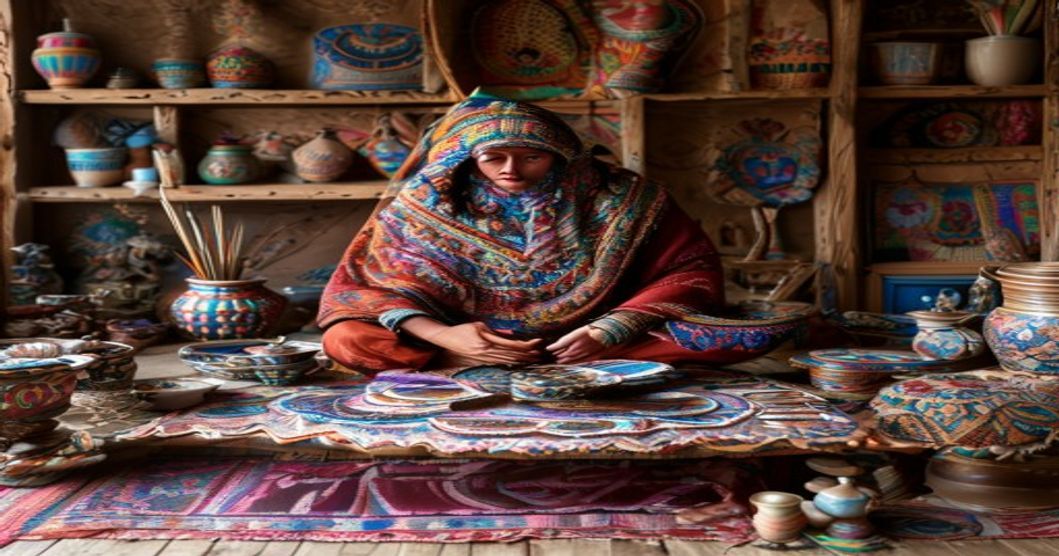
The Origins and Cultural Framework of Sámi Duodji
Sámi Duodji represents a centuries-old tradition of indigenous craftsmanship originating across Sápmi, the ancestral territory spanning northern Norway, Sweden, Finland, and Russia. Unlike mass-produced decorative items, authentic Duodji functions as both utilitarian art and cultural documentation. Each piece encodes seasonal knowledge, clan lineage, and ecological adaptation passed through generational apprenticeship.
Sacred Symbolism in Pattern Design
Traditional motifs derive from reindeer herding cycles, celestial navigation, and shamanic cosmology. Red symbolizes life force and spiritual protection, while black and yellow denote the midnight sun and winter darkness. Geometric arrangements follow strict regional grammars that artisans internalize through oral instruction and tactile repetition rather than formal design theory.
Material Sourcing and Traditional Preparation Methods
Sustainable harvesting dictates every Duodji project. Artisans prioritize reindeer antler, moose hide, birch bark, willow roots, and silver ore collected through ethical foraging and cooperative partnerships with pastoral communities.
Leather Tanning and Fiber Processing
Raw hides undergo brain-tanning or lichen-based curing to preserve flexibility without chemical degradation. Willow bark is harvested in spring, boiled until pliable, then sun-dried for weaving. Antler tools are shaped using stone abrasives and iron files, maintaining the material’s natural grain orientation for optimal durability and resistance to northern climate extremes.
Regional Variations Across Sápmi
Duodji practices diverge significantly based on geography, climate, and historical trade routes. Coastal Sámi communities emphasize shell inlay and driftwood carving, while inland herding groups specialize in leatherwork and silver smithing.
Western vs Eastern Stylistic Divisions
Norwegian and Swedish Duodji typically feature symmetrical cross-stitch embroidery with centralized medallions. Finnish Lapland artisans favor asymmetrical ribbon work and intricate knife scabbards adorned with brass wire. Russian Kola Peninsula pieces display heavier silver usage influenced by Orthodox metalworking traditions, utilizing repoussé techniques adapted from continental European guilds.
Contemporary Revival and Artisan Economics
Despite industrialization, Duodji maintains economic viability through certified authenticity programs and direct-to-consumer networks. The Sámi Duodji label guarantees handcrafted origin, traditional methods, and ethical material sourcing.
Certification Standards and Market Access
Authorized workshops must pass annual audits verifying handmade production ratios, indigenous craftsmanship verification, and fair compensation structures. Digital marketplaces now connect remote artisans with global collectors, reducing middleman dependency while preserving pricing integrity and cultural intellectual property rights.
Identifying Genuine Sámi Duodji in the Modern Market
Counterfeit production threatens cultural intellectual property. Buyers must examine tool marks, material consistency, and signature placement to verify authenticity.
Key Authentication Indicators
Legitimate pieces display microscopic variations from hand-filing, natural dye saturation gradients, and artisan signatures carved or stamped near functional joints. Machine-stitched seams, uniform synthetic coloring, and printed labels immediately disqualify an item from Duodji classification. Verification through official Sámi craft cooperatives remains the most reliable acquisition pathway.
Sami Art and Handicrafts Explained: Core Definitions
Defining Duodji and Cultural Boundaries
Duodji represents a functional craft system rooted in indigenous survival strategies rather than decorative art. The practice demands strict adherence to material sourcing protocols dictated by seasonal cycles. Artisans prioritize utility over aesthetic experimentation in traditional contexts. Modern commercial markets often misclassify these objects as generic Nordic crafts. This misclassification erases the cultural specificity required for accurate valuation.
Cultural boundaries restrict Duodji production to recognized Sami reindeer herding communities. External artisans may replicate forms but cannot legally claim the cultural designation. The craft operates under customary law rather than standard intellectual property frameworks. Verification requires documented lineage and community endorsement. This boundary protects against commodification and maintains historical accuracy.
Geographic Spread Across Fennoscandia
Traditional craft zones span the Fennoscandian tundra across four sovereign nations. Norwegian production centers cluster around Kautokeino and Kirkenes. Swedish workshops concentrate near Kiruna and Jukkasjärvi. Finnish activity peaks in the Inari municipality. Russian contributions remain concentrated on the Kola Peninsula. Each zone developed distinct tool geometries to match local terrain.
Topographical variations directly dictate material selection and construction methods. Coastal artisans utilize driftwood and marine fibers alongside reindeer components. Inland producers rely heavily on birch resin and dense forest hardwoods. Cross-border trade historically facilitated pattern exchange without compromising core techniques. Modern transportation has homogenized some regional distinctions. Collectors must recognize these geographic markers to assess authenticity.
Authenticity Verification and Market Dynamics
Handcrafted Versus Machine Replication Indicators
Hand-tool micro-markings provide the most reliable authentication metric for Duodji. Machine tools produce uniform depth and consistent pressure patterns across all surfaces. Hand-carved items exhibit stitch tension variance and irregular groove depths. Magnification reveals directional tool marks that automated CNC processes cannot replicate. This physical evidence remains the primary defense against factory counterfeits.
Natural material aging further distinguishes genuine pieces from artificial reproductions. Machine replicas often use chemically aged leather or dyed synthetic fibers. Authentic items show factory uniformity absence in their grain structure and color saturation. The patina develops through prolonged exposure to reindeer fat and smoke. Buyers should request detailed material provenance to verify natural aging processes.
Price Drivers and Artisan Certification
Labor-hour valuation forms the foundational pricing model for authentic Duodji. Complex garments require hundreds of hours of manual preparation and assembly. Material rarity, particularly for Sami Duodji certification items, significantly elevates base costs. Provenance documentation adds measurable value by linking the piece to a recognized lineage. Market premiums fluctuate based on global demand for indigenous art forms.
Official certification requires rigorous evaluation by established craft boards. The Sami Duodji mark guarantees adherence to traditional methods and ethical sourcing. Uncertified pieces trade at substantial discounts despite potential visual similarity. Collectors should verify certification numbers against official registries before purchase. This verification step prevents investment in unqualified replicas.
Direct Sourcing and Ethical Procurement Channels
Sami artisan cooperatives offer the most transparent procurement pathway for serious collectors. These organizations enforce strict quality control and fair compensation standards. Direct purchases bypass exploitative middlemen who often dilute traditional methods. Buyers gain access to provenance tracking systems that document each production stage. Ethical frameworks ensure cultural compensation reaches the originating communities.
Verification of cooperative status requires cross-referencing with ethical trade frameworks published by Nordic cultural ministries. Legitimate channels provide digital certificates of origin and artisan biographies. Avoid retail outlets that lack clear supply chain transparency. Supporting verified cooperatives sustains cultural compensation mechanisms vital for craft preservation. This approach aligns financial investment with cultural preservation goals.
Contemporary Challenges and Preservation
Climate Impact on Traditional Material Availability
Unpredictable winter thaw disrupts the traditional harvesting schedule for lichen and birch materials. Reindeer herds migrate earlier, altering access to prime lichen degradation zones. Birch harvest windows have shortened significantly due to shifting precipitation patterns. Material scarcity forces some artisans to substitute traditional components with synthetic alternatives. This shift compromises the functional integrity and historical accuracy of the craft.
Climate-induced stress affects the structural properties of reindeer antler and bone. Warmer temperatures increase bacterial activity in raw hides during processing. Artisans must accelerate drying techniques to prevent premature rotting. These environmental pressures necessitate adaptive strategies without abandoning core methodologies. Preservation efforts now include climate modeling to predict future material availability.
Intellectual Property Rights and Cultural Appropriation
Traditional design protection remains legally complex across multiple jurisdictions. Large corporations frequently register cultural IP frameworks to claim ownership of indigenous motifs. Design theft litigation has increased as demand for Sami aesthetics grows globally. Successful defense requires robust Sami trademark registration and continuous legal advocacy. The craft community must monitor digital marketplaces for unauthorized reproductions.
Cultural appropriation manifests through mass-produced items that mimic ceremonial symbols. These replicas strip designs of their contextual meaning and spiritual significance. Legal mechanisms struggle to address the intangible harm caused by commercial exploitation. Grassroots movements now utilize blockchain technology to timestamp original designs. This digital documentation strengthens claims against unauthorized commercial use.
Apprentice Programs and Knowledge Transfer
Intergenerational skill transfer faces disruption as younger generations migrate to urban centers. Formal Duodji academies attempt to standardize training but cannot fully replicate hands-on mentorship. The technique preservation of specialized lashing and carving methods requires prolonged physical practice. Curriculum integration in regional schools shows promise for sustaining foundational skills. Success depends on securing funding for master artisan stipends.
Modern apprenticeship models must balance traditional rigor with contemporary educational standards. Digital archiving of techniques provides supplementary resources for remote learners. However, tactile learning remains irreplaceable for mastering material sensitivity. Programs that combine classroom instruction with field expeditions yield the most competent artisans. Sustaining this pipeline is critical for the craft’s long-term survival.
Operational Guidelines for Collectors and Researchers
Long Term Storage and Condition Maintenance
Relative humidity control is the primary requirement for preserving UV light exclusion and acid-free housing components. Fluctuations above micro-climate storage parameters cause irreversible leather cracking and bone brittleness. Display environments must maintain stable temperatures below 20°C. Direct sunlight accelerates pigment fading in natural dyes derived from lichens and berries.
Handling protocols demand clean, dry hands and specialized support trays. Oils from human skin permanently stain untreated reindeer fur and hide. Storage containers must allow air circulation to prevent mold growth in dense textiles. Regular condition reports document any structural shifts in the artifact. Professional conservation treatments should only occur under indigenous craft supervision.
Legal Export Restrictions and Customs Documentation
Cultural heritage export laws strictly regulate the movement of pre-1950 Duodji items across borders. Customs declaration protocols require detailed material composition and age verification. Sami artifact permits must accompany all international shipments to prevent seizure. Failure to declare cultural origin can result in confiscation and legal penalties. Importers must navigate varying national laws regarding indigenous property rights.
Documentation must include provenance verification from recognized cultural institutions or cooperatives. Digital imaging of the item’s underside often reveals maker marks essential for clearance. Some nations require explicit consent from Sami governing bodies for export. Researchers should consult legal experts specializing in Nordic cultural property law. Compliance ensures the artifact remains accessible for future academic study.
Academic Resources and Verified Artisan Directories
The Sami University of Applied Sciences hosts the most comprehensive Duodji research archives globally. These collections provide peer-reviewed analysis of historical construction techniques. Verified craft registries offer searchable databases for authentic contemporary makers. Academic publication databases contain critical studies on material science and cultural context. Researchers should prioritize these sources over commercial retail platforms.
Directories maintained by Nordic cultural ministries list certified artisans and their specializations. These registries update annually to reflect current production capacity and material availability. Cross-referencing multiple directories minimizes the risk of engaging with fraudulent sellers. Academic institutions often partner with cooperatives for exclusive access to rare pieces. Utilizing these channels supports ethical acquisition and scholarly integrity.
Frequently Asked Questions
What is Sami Art and Handicrafts Explained?
Sami Art and Handicrafts Explained refers to the traditional creative practices of the Sámi people, indigenous to northern Scandinavia and Russia. It encompasses a wide range of disciplines, including clothing (gákti), silver jewelry, reindeer antler carvings, and woven textiles, all deeply rooted in their cultural heritage, spiritual beliefs, and close relationship with nature.
Key facts about Sami Art and Handicrafts Explained?
Key facts include the use of sustainable natural materials like reindeer leather, antlers, and birch roots; the symbolic use of colors and patterns representing nature and mythology; the designation of Sámi duodji as an intangible cultural heritage; and the contemporary fusion of traditional motifs with modern design to preserve cultural identity.