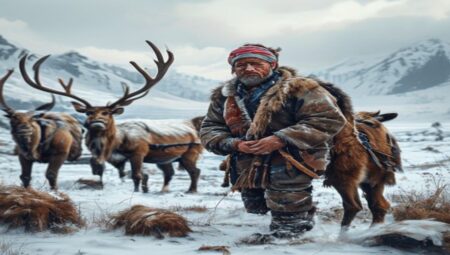
How Sami Traditions Have Changed Over the Last 100 Years
The last century has fundamentally restructured Sami cultural practices through legislative mandates, economic shifts, and environmental pressures. Early twentieth-century assimilation policies actively suppressed indigenous languages and restricted seasonal migration routes, forcing communities into settled agricultural zones. This period dismantled many intergenerational knowledge transfer systems that once governed reindeer husbandry, coastal fishing, and forest foraging across Sápmi.
Reindeer herding represents one of the most visible transformations. Traditional seasonal transhumance routes were fragmented by national border enforcement, forestry concessions, and mining operations. The introduction of snowmobiles, GPS tracking collars, and satellite communication in the 1970s replaced sled-based logistics, increasing herd management efficiency while altering community cohesion. Modern regulations now require digital registration of livestock and impose strict grazing quotas to prevent pasture degradation.
- Land rights litigation shifted from colonial dispossession to recognized co-management agreements in Norway, Sweden, and Finland during the 1980s and 1990s.
- Bilingual schooling programs replaced mandatory language suppression, enabling standardized Sami curriculum development across municipal education boards.
- Digital archives now preserve joik vocalizations, duodji craftsmanship patterns, and oral histories that previously existed only within family networks.
Contemporary cultural production demonstrates adaptive resilience rather than static preservation. Traditional textiles incorporate synthetic dyes for durability while maintaining ancestral geometric motifs. Joik performances transition from ceremonial contexts to global music festivals, often fused with electronic production techniques. Tourism generates revenue but requires careful boundary management to prevent commodification of sacred sites and seasonal ceremonies.
Climate volatility now dictates traditional ecological knowledge application. Earlier spring melts disrupt reindeer calving cycles, while ice instability compromises coastal fishing access. Communities respond by blending meteorological forecasting with historical weather indicators, creating hybrid monitoring systems. Legal frameworks continue evolving through international indigenous rights instruments, granting Sami parliaments legislative advisory power over resource extraction projects within ancestral territories.
Language revitalization efforts rely on mobile applications and social media campaigns to engage younger demographics. Educational institutions now employ native speakers as lead instructors rather than translators. Municipal zoning laws increasingly require impact assessments before approving infrastructure that crosses traditional grazing corridors. These structural adjustments reflect a broader shift from cultural containment to institutional integration.
Historical Context and Early Assimilation Policies
The territorial administration of Sápmi across Norway, Sweden, Finland, and Russia accelerated during the interwar period, as post-World War I nation-building frameworks directly targeted indigenous social structures. Governments classified Sámi pastoralism as an outdated economic model incompatible with modern state objectives. Educational infrastructure became the primary mechanism for cultural restructuring. Children were systematically removed from family camps and enrolled in residential facilities where native language use triggered disciplinary sanctions. Academic curricula exclusively promoted national histories, deliberately excluding indigenous ecological knowledge and historical documentation.
Religious missions operated under direct state funding to dismantle traditional spiritual frameworks. Lutheran institutions documented Sámi practitioners as heretical while enforcing Christian conversion requirements for social integration. This theological restructuring fractured intergenerational knowledge transfer regarding seasonal migrations, land stewardship protocols, and climate adaptation strategies. Administrative border enforcement ignored customary grazing corridors, fragmenting reindeer herding territories across international jurisdictions. Taxation codes increasingly penalized indigenous populations based on ethnic registration rather than economic output, compelling families to abandon pastoral livelihoods for wage labor in expanding industrial zones.
Early twentieth-century legislation institutionalized these pressures through concrete administrative mechanisms:
- The 1923 Norwegian School Act mandated Norwegian as the sole instructional language, establishing legal penalties for Sámi linguistic expression in academic environments.
- Swedish residency regulations restricted indigenous movement across provincial boundaries, disrupting seasonal pasture rotations essential to herd viability.
- Finnish land survey protocols formalized private property ownership over communal grazing territories, accelerating agricultural expansion into traditional ranges.
- Russian administrative decrees standardized civil registration systems, erasing clan-based identities that governed resource allocation and kinship networks.
These coordinated policies generated measurable cultural contraction. Fluency rates in northern Sámi dialects declined sharply as younger generations internalized state languages for economic mobility. Yoik performance contexts shifted from communal ceremonies to domestic preservation practices. Land tenure records established during this era laid the groundwork for century-long legal disputes over resource extraction rights. The structural dismantling of indigenous governance models forced communities into reactive adaptation strategies that prioritized economic survival over cultural continuity.
Legislative Restrictions in the Early Twentieth Century
The early twentieth century marked a decisive shift in state policy toward indigenous populations across Scandinavia, with legislative frameworks explicitly designed to accelerate cultural assimilation. In Norway, the government implemented aggressive Norwegianization measures targeting Sami communities through education, taxation, and land administration. School curricula prohibited the use of Saami languages, enforcing Norwegian as the sole medium of instruction and penalizing children for speaking their native tongues. Local authorities systematically revoked grazing permits and restricted seasonal migration routes, directly undermining traditional reindeer husbandry cycles. The 1936 Reindeer Husbandry Act further institutionalized these restrictions by legally confining herding rights to designated zones and defining eligibility through state-approved ethnic criteria, effectively fragmenting historic land-use patterns.
Parallel developments occurred in neighboring jurisdictions. Swedish authorities expanded the mandate of the Sami Mission, utilizing religious instruction as a vehicle for cultural erasure and mandating Swedish naming conventions to replace indigenous patronymics. Forestry and agricultural legislation prioritized commercial timber extraction and private land ownership, systematically encroaching upon winter grazing pastures and critical calving grounds. Finland adopted comparable assimilation statutes, integrating Sami regions into state-driven modernization programs that criminalized traditional livelihood practices deemed incompatible with national economic objectives. Municipal tax codes imposed residency requirements that forced families to abandon mobile pastoralism in favor of settled agriculture or wage labor.
These coordinated legal interventions dismantled intergenerational knowledge transmission and disrupted ecological management systems refined over centuries. Land registration processes favored state surveys over customary boundaries, rendering ancestral territories legally invisible. Judicial rulings consistently upheld administrative decisions that prioritized resource extraction industries over indigenous stewardship. The cumulative effect was a systematic contraction of cultural autonomy, where legislative restrictions functioned not merely as regulatory measures but as instruments of territorial and linguistic consolidation.
- Norway: 1917 Finnmark land reforms restricted communal grazing rights while promoting private property models.
- Sweden: 1901–1920 missionary education directives replaced traditional oral pedagogy with standardized Swedish curricula.
- Finland: 1923 forestry regulations legally classified traditional reindeer winter pastures as state-managed timber reserves.
MidCentury Cultural Suppression Mechanisms
During the mid-twentieth century, Nordic administrative frameworks deployed coordinated institutional mechanisms to dismantle indigenous cultural reproduction networks across Norway, Sweden, and Finland. State-sponsored boarding schools operated as primary assimilation instruments, physically removing children from pastoral households and enforcing strict linguistic prohibition protocols. Educational curricula explicitly replaced Sami vernacular with standardized national languages, while disciplinary systems penalized traditional speech patterns, clothing, and communal practices. This structural separation fractured intergenerational knowledge transfer in reindeer husbandry, duodji craftsmanship, and oral ecological documentation.
Territorial control mechanisms simultaneously restricted autonomous land use through legislative enclosure and resource allocation policies. National park designations in the 1950s and early 1960s legally excluded traditional siida migration corridors, converting historically managed pastures into state-controlled conservation zones. Forestry expansion acts prioritized commercial timber harvesting over pasture preservation, while mining concessions granted to corporate entities disrupted sacred landscapes and watershed systems essential for seasonal herding cycles. Municipal taxation frameworks further destabilized mobile pastoral economies by favoring sedentary agricultural models, effectively forcing economic dependency on wage labor integration.
- Linguistic Standardization Mandates: State publishing regulations restricted indigenous literature production to approved national languages, while educational materials systematically omitted Sami grammatical structures and historical narratives.
- Territorial Enclosure Legislation: Protected zone designations and forestry expansion acts legally restricted access to traditional hunting grounds, fishing waters, and summer pastures without community consultation or compensation frameworks.
- Economic Restructuring Policies: Taxation thresholds and subsidy distribution models penalized small-scale pastoral operations, reinforcing welfare dependency and accelerating demographic shifts toward urban settlement patterns.
- Religious Institutional Oversight: Missionary organizations maintained administrative control over indigenous social services, actively discouraging traditional cosmological practices while promoting state-aligned religious frameworks that aligned with assimilation objectives.
These suppression mechanisms operated through overlapping bureaucratic channels, effectively nullifying customary governance structures and legal personhood recognition. Administrative documentation, court proceedings, and educational records consistently prioritized state jurisdiction over indigenous law, establishing a demographic baseline that persisted until policy recalibration began in the late 1960s.
Legal Recognition and Rights Advocacy Milestones
The legal trajectory of the Sámi people shifted dramatically during the twentieth century as state assimilation policies gradually yielded to structured advocacy and international human rights frameworks. Early legislative efforts across Norway, Sweden, and Finland systematically restricted reindeer herding zones and suppressed indigenous language use in public institutions. By the 1960s, coordinated resistance movements emerged, culminating in the formation of transnational organizations that prioritized constitutional safeguards. The establishment of the Sámi Council in 1973 provided a unified diplomatic platform, enabling systematic lobbying before European governmental bodies.
A pivotal structural change occurred in 1989 when Norway became the first nation to elect a directly elected Sámi Parliament. This legislative milestone institutionalized indigenous self-governance and created formal consultation mechanisms for resource extraction projects affecting ancestral territories. Sweden and Finland followed with their own parliamentary bodies during the early 1990s, each adapting constitutional provisions to recognize Sámi cultural autonomy. The ratification of International Labour Organization Convention No. 169 in 1989 further strengthened legal standing by mandating free, prior, and informed consent for developmental initiatives on indigenous lands.
Constitutional amendments across the Nordic states progressively integrated Sámi language rights into public administration, education, and judicial processes. Legal precedents established through supreme court rulings clarified grazing boundaries and reinforced customary land tenure systems. The Norwegian Finnmark Act of 2005 transferred ownership of approximately ninety-five percent of county lands to a locally elected institution, marking the most comprehensive territorial settlement in Scandinavian legal history. Subsequent adoptions of the United Nations Declaration on the Rights of Indigenous Peoples in 2007 accelerated domestic policy revisions regarding resource licensing and cultural preservation funding. Contemporary advocacy continues to navigate complex jurisdictional overlaps between national forestry agencies, mining corporations, and Sámi district councils. Recent legislative adjustments have expanded bilingual signage requirements, standardized reindeer husbandry subsidies, and formalized co-management agreements for protected natural areas. These institutional developments reflect a sustained transition from cultural suppression toward legally binding recognition of indigenous sovereignty.
Economic Adaptations and Livelihood Transformations
The economic landscape of Sami communities underwent profound structural shifts during the twentieth century, driven by state policies, industrial expansion, and global market integration. Traditional reindeer husbandry, once a self-sustaining subsistence system, transitioned into a regulated commercial enterprise following the implementation of national livestock quotas and land-use zoning laws in Norway, Sweden, and Finland. These legislative frameworks restricted grazing territories, fragmenting historic migration routes and forcing herders to adopt mechanized transport, snowmobiles, and aerial monitoring to maintain herd viability. Simultaneously, industrial projects—mining operations, hydroelectric dams, and forestry concessions—encroached upon ancestral pastures, prompting legal mobilization and the eventual recognition of collective land rights through parliamentary reforms in the 1980s and 1990s.
The cash economy gradually supplanted barter and reciprocal exchange networks, embedding Sami producers into national supply chains. Modern slaughterhouses, certified meat processing facilities, and export-oriented cooperatives emerged, standardizing product quality to meet European Union food safety regulations. This commercialization required herders to acquire business management skills, digital literacy, and multilingual communication abilities, leading to the establishment of vocational training centers focused on reindeer economics, veterinary science, and sustainable resource management.
Parallel transformations occurred outside pastoralism. The decline of seasonal wage labor in logging and maritime industries redirected younger generations toward formal education and service-sector employment. Urban migration accelerated, yet many individuals maintained translocal livelihoods by combining salaried positions with part-time herding or craft production. Concurrently, cultural tourism evolved from state-sponsored folk exhibitions into community-led enterprises, generating revenue through guided reindeer safaris, joik performance venues, and direct-to-consumer sales of duodji handicrafts via e-commerce platforms. These adaptations demonstrate a strategic recalibration of economic practices rather than cultural erosion, preserving core ecological knowledge while integrating contemporary market mechanisms.
- State Regulation & Quota Systems: National livestock limits replaced traditional herd expansion models, requiring herders to optimize mortality rates and winter forage management within fixed territorial boundaries.
- Digital Infrastructure Integration: GPS tracking, blockchain supply chain documentation, and automated climate monitoring tools now supplement generations of oral ecological knowledge.
- Cross-Border Cooperatives: Pan-Nordic business networks facilitate shared veterinary services, joint marketing campaigns, and unified lobbying efforts for Arctic trade exemptions.
Modernization of Reindeer Herding Practices
The integration of mechanized transport and digital monitoring has fundamentally altered daily reindeer management across Sápmi. Snowmobiles and all-terrain vehicles now cover vast distances that herders once navigated on skis or horseback, compressing seasonal rounds and expanding operational ranges. Two-way radios replaced hand signals and whistles for coordinating large groups during autumn and spring migrations. Global positioning systems track individual animals in real time, allowing herders to monitor herd movement patterns without constant physical pursuit. These technological shifts have increased labor efficiency but also introduced new dependencies on fuel supply chains, equipment maintenance networks, and satellite connectivity.
- Satellite imagery and GIS mapping now guide grazing land selection, replacing generations of oral terrain knowledge with layered environmental data.
- Drones equipped with thermal cameras assist in locating scattered calves during summer pastures and identifying vulnerable animals after severe weather events.
- Weather forecasting applications dictate migration timing, reducing exposure to unpredictable ice formations that historically trapped herds against frozen ground.
Regulatory frameworks have simultaneously reshaped herding economics. Government subsidies now cover equipment upgrades and veterinary services, while land use disputes require digital boundary documentation for legal proceedings. Private forestry concessions and wind farm installations fragment traditional grazing corridors, forcing herders to negotiate new transit agreements using geospatial mapping tools. Despite these structural pressures, core decision-making remains rooted in intergenerational knowledge. Experienced herders still read snow conditions, lichen growth patterns, and animal behavior to determine pasture quality and migration schedules. Technology functions as an extension of traditional expertise rather than a replacement. Modern herding operations now blend digital logistics with seasonal rituals, ensuring continuity while adapting to industrial landscapes and climate volatility across northern Europe.
Equipment maintenance has shifted from locally crafted wooden tools to standardized mechanical parts and computer diagnostics. Herding camps now feature solar-powered charging stations for batteries and secure storage for electronic navigation devices. Veterinary protocols incorporate digital health records, enabling faster disease tracking and coordinated vaccination campaigns during winter gatherings. The economic model has also transformed; direct livestock sales increasingly rely on online marketplaces and blockchain traceability systems that verify ethical sourcing for premium consumers. These adaptations demonstrate how indigenous pastoral communities navigate contemporary markets without abandoning ecological stewardship principles.
Evolution of Traditional Duodji Craftsmanship Markets
The commercial landscape of Sami duodji underwent profound structural transformations throughout the twentieth century. During the early decades, craftsmanship existed primarily within household economies and seasonal fairs across Finnmark, Troms, and Trøndelag. Artisans exchanged reindeer leather goods, knife hilts carved from moose antler, and woven belts directly with neighboring communities. Production cycles aligned with pastoral rhythms rather than commercial calendars, and geographic distribution remained strictly regional.
Government policies between the 1930s and 1970s systematically marginalized indigenous crafts through assimilation programs. Traditional marketplaces lost institutional support while state-run exhibitions prioritized standardized folk costumes over functional duodji. This period triggered a measurable decline in intergenerational skill transfer. Workshop output shifted toward souvenir production for visiting tourists, which diluted technical precision but established new distribution channels outside northern latitudes.
- The 1980s marked a turning point through the formation of regional craft cooperatives that formalized pricing structures and supply chains.
- Sami Duodji certification introduced in 1987 required authentic materials, traditional techniques, and indigenous origin verification for market participation.
- E-commerce platforms launched in the early 2000s enabled direct artist-to-consumer transactions, bypassing traditional wholesale intermediaries.
Contemporary duodji markets operate across three distinct tiers. Physical sales centers in Karasjok, Kautokeino, and Jokkmokk host seasonal gatherings that combine technical workshops with artisan negotiations. Digital storefronts process approximately sixty percent of annual revenue for mid-tier producers, utilizing secure payment gateways and cross-border logistics networks. International gallery partnerships facilitate high-end placements for ceremonial pieces, though transaction volumes remain limited compared to functional everyday items.
Market dynamics now reflect tension between preservation mandates and commercial scalability. Artisans face pressure to accelerate production timelines while maintaining hand-forged tool requirements and untreated natural materials. Certification audits monitor compliance with ecological sourcing standards, particularly regarding reindeer horn, birch root, and wild linen. Consumer demographics shifted from domestic heritage buyers to global collectors prioritizing ethical provenance documentation over decorative aesthetics.
Infrastructure development continues shaping market accessibility. Digital inventory tracking systems replaced paper ledgers used by previous generations. Mobile payment integration allowed remote transactions during winter assemblies. Training programs now combine apprenticeship models with digital marketing modules, ensuring technical continuity while expanding commercial reach across European and North American markets.
Language Preservation and Oral History Systems
The transmission of Sami knowledge relied heavily on non-written systems long before formal linguistic documentation existed. For centuries, ecological expertise, reindeer migration routes, and seasonal survival techniques moved through direct instruction and performance rather than textbooks. Yoik functions as both mnemonic device and historical archive, embedding genealogical data, landscape features, and community events into melodic structures that withstand phonetic erosion across generations.
State-sponsored assimilation policies enacted between the 1920s and 1970s systematically disrupted these channels. Children in residential schools faced disciplinary measures for speaking their native tongues, forcing a generational break in vocabulary acquisition and idiomatic usage. Western dialects experienced steepest decline during this period due to concentrated settlement programs and mandatory schooling infrastructure that prioritized national languages over indigenous linguistic frameworks.
- Eco-cultural documentation: Herders mapped pasture boundaries through narrative sequences tied to weather patterns, animal behavior, and topographical markers
- Linguistic revitalization frameworks: Community-led recording projects emerged in the 1980s, capturing elder speakers before fluency gaps widened across northern territories
- Digital repository development: Universities and indigenous organizations established searchable archives containing audio recordings, lexical databases, and grammatical analyses
Educational Bans and Generational Language Loss
The systematic dismantling of Sami cultural continuity accelerated during the late nineteenth century through coordinated assimilation frameworks implemented across Norway, Sweden, and Finland. Educational institutions functioned as primary instruments for linguistic suppression. Municipal authorities routinely extracted children from their households and enrolled them in residential boarding facilities or specialized state-run schools designed explicitly for indigenous youth. Within these environments, Sami dialects were classified as barriers to national integration. Strict prohibitions governed classroom instruction, recreational periods, and weekend correspondence with families. Enforcement protocols ranged from mandatory phonetic drills to corporal punishment, establishing a punitive atmosphere that actively discouraged native speech.
- Institutional Mechanisms: Teachers received standardized directives emphasizing complete language replacement during all school hours. Playground monitors documented violations using attendance sheets, while weekend visits were strictly monitored for prohibited dialect usage.
- Parental Response Patterns: Adults who endured institutional humiliation internalized the conviction that fluency in Norwegian, Swedish, or Finnish guaranteed economic stability. This adaptive strategy triggered a deliberate withdrawal of ancestral vocabulary, ecological terminology, and oral narrative traditions from domestic spheres.
- Dialectal Contraction Data: Municipal archives reveal how rapidly linguistic diversity collapsed during the 1920s through the 1950s. Southern Sami varieties reached critical vulnerability thresholds, while northern dialects experienced accelerated attrition among adolescents and young adults.
Linguistic erosion extended beyond vocabulary replacement. Reindeer herding classifications, seasonal navigation markers, and yoik performance techniques lost their primary transmission channels. Parental correspondence from the mid-twentieth century consistently describes children returning home with modified speech patterns or active resistance to traditional practices. The cumulative disruption fractured community knowledge networks that had sustained subsistence economies for centuries. Official recognition of these educational restrictions required decades of indigenous documentation and legal advocacy. Contemporary demographic surveys continue tracking the speaker gap between fluent elders and younger generations, illustrating how institutionalized classroom policies permanently altered cultural continuity across multiple Nordic regions. Research into archival school records confirms that language shift occurred fastest in districts where boarding facilities operated without regional oversight, leaving lasting lexical gaps in agricultural and pastoral terminology.
Revitalization Initiatives and Digital Documentation
The transition from purely oral transmission to structured digital preservation marks a pivotal shift in Sámi cultural continuity. External pressures that once suppressed indigenous practices have given way to systematic revitalization campaigns funded by Nordic heritage ministries and European cross-border grants. These initiatives prioritize language reclamation, with immersion institutions like Sámi allaskuvla establishing standardized curricula for Northern, Lule, and Southern Sámi dialects. Parallel efforts focus on mapping traditional ecological knowledge through participatory GIS projects, enabling communities to overlay ancestral reindeer migration corridors with contemporary land-use regulations and climate data.
- Digital archives now integrate phonetic analysis software to capture vowel harmony and tonal variations that standard orthography frequently flattens.
- Youth-led documentation teams utilize mobile recording rigs to collect joik performances, craft techniques, and seasonal resource calendars before elder knowledge holders pass away.
- Decentralized platforms operate under explicit community data sovereignty protocols, restricting commercial exploitation while enabling open educational licensing.
Machine learning models trained on these corpora assist in real-time dialect normalization without erasing regional phonetic markers. Virtual reality environments further allow younger generations to simulate historical settlements, practice traditional tool-making, and attend digitally reconstructed seasonal festivals without physical displacement. Rather than outsourcing archives to external universities, Sámi parliaments mandate local governance structures that require explicit consent for digital replication and dictate long-term access tiers.
Cross-border synchronization remains essential due to linguistic fragmentation across Norway, Sweden, Finland, and Russia. Coordinated networks now align archival metadata standards, ensuring that a documented lavvu construction technique in Finnmark matches corresponding protocols in Tromsø or Kautokeino. Continuous funding streams support field researchers equipped with high-fidelity audio equipment and satellite uplinks, capturing ephemeral practices in remote winter camps. The resulting repository balances algorithmic accessibility with indigenous epistemological frameworks, preserving cultural continuity through controlled technological integration.
Contemporary Media Representation and Storytelling
The portrayal of Sami traditions in contemporary media has undergone a fundamental structural shift over the past three decades. Historically dominated by external filmmakers and anthropological documentaries produced outside Scandinavia, the narrative framework now centers on indigenous creators who control both production and distribution channels. This transition aligns with broader industry standards requiring authentic cultural consultation, though implementation remains uneven across Nordic broadcasting networks and international streaming platforms. Independent Sami production houses have established dedicated funding streams through regional arts councils, enabling feature-length documentaries that prioritize oral history transmission over ethnographic observation.
- Cinematic Evolution: Nordic film festivals now regularly program Sami-directed narratives that examine reindeer herding adaptations, linguistic revitalization efforts, and intergenerational knowledge transfer. These productions utilize high-resolution cinematography to document seasonal migration routes while embedding traditional joik performances as narrative anchors rather than decorative elements.
- Digital Archiving & Social Distribution: Community-led YouTube channels and podcast networks preserve dialect variations and craft techniques through serialized content. Algorithmic promotion on these platforms has created direct audience feedback loops, allowing creators to adjust storytelling formats based on viewer engagement metrics without intermediary editorial filtering.
- Ethical Representation Frameworks: Academic institutions and media guilds have developed standardized consultation protocols that mandate Sami board oversight during pre-production phases. These guidelines address historical exploitation patterns while establishing monetization pathways for cultural knowledge contributors.
Streaming service algorithms increasingly prioritize regional content categorization, creating both visibility opportunities and commercial pressures. Producers navigate algorithmic recommendation systems by optimizing metadata around specific traditional practices, seasonal activities, and linguistic markers. This data-driven approach intersects with cultural preservation goals, as search volume for Sami language tutorials and craft demonstrations directly influences platform investment decisions. Music distribution networks have similarly transformed joik transmission from localized ceremonial contexts to globally accessible audio catalogs, requiring new copyright classifications that recognize communal authorship models distinct from Western intellectual property frameworks.
Digital documentation projects now integrate photogrammetry and spatial audio recording to capture yoik vocal techniques alongside traditional garment construction methods. These technical methodologies generate searchable databases that serve both academic research and community education initiatives. The convergence of indigenous storytelling practices with contemporary production technology demonstrates how historical continuity adapts through modern distribution infrastructure while maintaining ceremonial integrity.
Environmental Shifts and Arctic Climate Adaptation
Over the past century, the Arctic has undergone accelerated climatic destabilization that directly recalibrates the ecological parameters of Sami cultural continuity. Winter temperature anomalies in northern Fennoscandia and Svalbard now exceed global averages by two to three degrees Celsius, compressing snowpack density and accelerating permafrost degradation across traditional grazing corridors. These atmospheric shifts have fractured historical migration pathways, forcing reindeer herds to navigate fragmented lichen beds while expending critical metabolic energy breaking through wind-formed ice crusts. Earlier spring thaw cycles trigger premature vegetation emergence, desynchronizing the reproductive timeline and lowering calf survival rates in vulnerable family units. Simultaneously, reduced sea ice extent has altered coastal fishing patterns, pushing traditional salmon and cod harvesting toward deeper waters and unpredictable seasonal windows.
Sami adaptation mechanisms have evolved through structured integration of ancestral ecological literacy with modern monitoring infrastructure. Herding collectives now deploy satellite telemetry collars alongside real-time meteorological APIs to map safe passage routes around unstable river ice or sudden thaw zones. Traditional indicators such as snow crystal stratification, lichen moisture thresholds, and wind direction patterns remain foundational to daily decision-making, while logistical frameworks shift toward mechanized transport and dynamic resource allocation. The following operational adjustments illustrate this systemic transition:
- Dynamic migration routing: Replacing static landmark navigation with GPS-driven mapping that cross-references vegetation recovery metrics and ground temperature data.
- Indigenous environmental monitoring networks: Youth-led field teams validate remote sensing outputs through direct observation of crust formation, soil freeze-depth, and pasture regeneration rates.
- Livelihood portfolio diversification: Seasonal wage employment, digital archival projects, and regulated cultural tourism buffer economic losses during failed migration cycles or poor forage years.
- Legal corridor negotiations: Sami parliamentary bodies secure binding access agreements with energy developers and transport authorities, ensuring herd movement rights across shifting ecological zones.
This adaptive synthesis demonstrates how environmental pressure catalyzes structural evolution rather than cultural displacement. By treating climate telemetry as a collaborative dataset alongside oral histories, Sami populations maintain operational continuity while influencing regional adaptation policy. The ongoing recalibration of seasonal calendars, pasture rotation protocols, and intergenerational training ensures Arctic resilience remains anchored in documented experience rather than external forecasting models.
Migratory Route Adjustments and Pasture Degradation
For centuries, Sami reindeer herders followed precisely mapped seasonal corridors that connected highland summer pastures with sheltered lowland winter grounds. These migratory routes emerged from generations of ecological observation, accounting for snow depth, lichen availability, predator patterns, and terrain stability. The last hundred years have fundamentally altered this system. Infrastructure expansion, including forestry roads, railway networks, mining operations, and renewable energy installations, has fragmented traditional grazing landscapes. Fences, pipelines, and industrial zones now block historical passages, forcing herds onto longer, more energetically demanding detours.
Pasture degradation operates through multiple overlapping mechanisms. Soil compaction from heavy machinery reduces ground permeability, accelerating water runoff and delaying spring vegetation recovery. Repeated trampling in constrained seasonal corridors depletes slow-growing lichen fields that require decades to regenerate. Climate volatility introduces additional stressors: unseasonal rain-on-snow events create impenetrable ice layers over forage, while shifting precipitation patterns disrupt the synchronization between calving periods and peak plant nutrient availability. In northern Fennoscandia, satellite monitoring shows a measurable decline in herbage biomass across traditional winter grazing zones.
Consequences for herd dynamics are direct and quantifiable. Extended travel distances increase metabolic expenditure, leading to lower adult body condition scores and reduced milk production. Calf survival rates drop when mothers arrive at summer pastures in weakened states or when calving grounds experience higher parasite loads due to altered microclimates. Herders now rely on GPS collars, drone surveys, and collaborative land-use agreements to navigate fragmented terrain. Traditional route knowledge remains vital, but it is increasingly cross-referenced with soil moisture data, vegetation indices, and wildlife migration models to maintain viable grazing cycles.
- Infrastructure fragmentation: Roads, fences, and industrial zones reduce accessible pasture area by up to 40 percent in heavily developed counties.
- Vegetation recovery delays: Compacted soils and restricted grazing windows extend lichen regeneration timelines from 20 years to over 50 years in impacted zones.
- Climate-forage mismatch: Warmer autumns delay snow cover, while spring thaws accelerate grass drying, compressing the optimal foraging window by an average of 14 days per decade.
Indigenous Ecological Knowledge in Scientific Research
Sami ecological knowledge represents centuries of systematic observation, seasonal migration patterns, and sustainable resource management across Fennoscandian landscapes. Historically dismissed as anecdotal by Western academia, this knowledge system has gained substantial recognition within contemporary environmental science through rigorous ethnobiological validation frameworks. Researchers now actively collaborate with Sami reindeer herders, hunters, and botanists to document climate-driven transformations in Arctic ecosystems.
- Climate Adaptation Modeling: Long-term herd movement records provide ground-truth data for validating satellite imagery and atmospheric models. These oral histories reveal microclimate shifts that remote sensing often overlooks.
- Biodiversity Monitoring: Traditional plant classification systems identify medicinal, nutritional, and ecological indicators with precision. Scientific teams integrate these categories into conservation frameworks, improving habitat restoration outcomes in degraded tundra zones.
- Co-Produced Methodologies: Collaborative research designs now prioritize reciprocal data exchange. Field protocols incorporate Sami seasonal calendars alongside standardized ecological sampling, reducing extraction-based practices and strengthening community-led validation processes.
The integration process has fundamentally altered academic publishing standards in environmental studies. Journals increasingly require explicit acknowledgment of indigenous knowledge contributors as co-authors rather than mere informants. Peer review panels now evaluate methodological rigor based on both statistical reliability and cultural continuity metrics. This shift has accelerated the development of hybrid monitoring networks that track permafrost degradation, lichen biomass fluctuations, and caribou calving success rates across northern latitudes.
Field teams now utilize geospatial tagging systems synchronized with Sami seasonal markers, enabling precise correlation between traditional grazing routes and vegetation recovery cycles. Genetic analysis of reindeer populations complements oral genealogical records, revealing migration bottlenecks caused by infrastructure fragmentation. These combined datasets have strengthened predictive models for pasture availability, directly influencing winter grazing permits and land management legislation across Norway, Sweden, and Finland.
Policy Frameworks Addressing Rapid Arctic Warming
International and regional policy frameworks have intensified their focus on mitigating rapid Arctic warming through coordinated legal mechanisms and indigenous-inclusive governance models.
The Paris Agreement established binding temperature targets that directly influence polar regions, requiring signatory nations to implement Nationally Determined Contributions (NDCs) with specific Arctic adaptation components. Nordic governments have translated these commitments into domestic legislation, notably Norway’s Climate Change Act and Sweden’s Environmental Code, which mandate climate risk assessments for all infrastructure projects in Sámi reindeer grazing areas.
- The Arctic Council’s Sustainable Development Working Group coordinates cross-border monitoring of permafrost degradation and migratory route disruptions.
- Sámi Parliaments in Norway, Sweden, and Finland hold statutory consultation rights under UNDRIP Article 19, enabling direct input into land-use zoning and resource extraction permits.
- The Barents Euro-Arctic Council funds early-warning systems for sudden snow-ice layers that threaten reindeer access to lichen pastures.
Regulatory adaptation strategies increasingly prioritize dynamic land management over static boundaries. Administrative boundary adjustments now incorporate satellite-derived thaw indices, replacing historical zoning maps that no longer reflect current hydrological patterns. Finland’s Land Use and Building Act revisions incorporate climate mobility corridors, allowing seasonal grazing shifts without legal penalties. Norway’s Ministry of Fisheries and Coastal Affairs collaborates with the Sámi Reindeer Herders Association to modify subsidy allocation models, shifting focus from fixed herd sizes to adaptive herd composition based on real-time vegetation indices.
Cross-jurisdictional data sharing operates through the Arctic Monitoring and Assessment Programme (AMAP), which standardizes permafrost thaw metrics across eight member states. Legal disputes over winter road construction now require mandatory
Modern Cultural Expression and Identity Formation
The trajectory of Sámi cultural expression over the past century reveals a deliberate pivot from state-imposed assimilation toward autonomous identity reconstruction. Early twentieth-century education policies actively suppressed indigenous languages, yet the latter half of the century catalyzed a systematic reclamation effort. Linguistic revival programs established dedicated pedagogical frameworks, embedding Sámi dialects into university curricula and municipal broadcasting networks. This institutional foundation enabled artists, writers, and musicians to produce work that explicitly centers indigenous epistemologies rather than adapting to dominant national narratives.
Digital archiving initiatives have fundamentally altered knowledge preservation. Thousands of historical recordings, folklore texts, and traditional land-use maps are now digitized, making ancestral information accessible to dispersed communities across Nordic borders. Social media platforms function as decentralized cultural hubs where young creators remix traditional joik vocalization with contemporary production techniques, stream gákti tailoring workshops globally, and publish political commentary directly from reindeer-herding territories. These digital practices dissolve geographic isolation while maintaining strict adherence to community-derived protocols on knowledge sharing.
- Institutional recognition: Autonomous Sámi parliaments across Norway, Sweden, and Finland established formal mechanisms for policy advocacy and resource allocation, shifting cultural management from external ministries to indigenous governance structures.
- Legal leverage: International frameworks, including UNDRIP and UNESCO intangible heritage classifications, provide enforceable protections against extractive industries threatening traditional grazing corridors and sacred landscapes.
- Economic restructuring: Indigenous-led tourism cooperatives, ethical craft networks, and cross-border cultural festivals generate sustainable revenue while reinforcing territorial claims and reducing reliance on external funding.
Current expression patterns demonstrate a deliberate synthesis of continuity and adaptation. Traditional craft techniques undergo material innovation through climate-resilient textiles and contemporary graphic design applications. Literary output increasingly addresses urban indigenous experiences, migration patterns, and linguistic code-switching dynamics. Educational institutions now mandate Sámi history modules within national school systems, ensuring intergenerational transmission occurs alongside formal academic instruction. This structural integration transforms cultural preservation from a reactive defense mechanism into a proactive framework for societal participation.
Identity negotiation remains highly contextualized across different age cohorts and regional economies. Older generations often prioritize land stewardship and language fluency as primary markers of authenticity. Midlife practitioners frequently navigate professional sectors while maintaining seasonal traditional practices. Younger demographics construct hybrid identities that blend digital activism, contemporary performance art, and transnational solidarity networks. Each cohort contributes distinct methodologies to cultural continuity, ensuring adaptation never supersedes foundational sovereignty principles.
Global Platforms for Music, Film, and Visual Arts
The digitization of indigenous creative expression has fundamentally altered how Sámi cultural practices reach international audiences. Over the past century, the transition from localized oral performances and handcrafted artifacts to algorithm-driven digital ecosystems represents one of the most significant shifts in Sámi artistic history. Streaming services, video hosting networks, and curated art marketplaces now function as modern equivalents of traditional gathering spaces, yet they operate under entirely different engagement mechanics. Artists no longer rely solely on regional festivals or community radio broadcasts. Instead, metadata optimization, playlist placement algorithms, and cross-platform distribution strategies determine visibility. When Sámi vocalists upload Joik recordings directly to global music networks, geographic barriers dissolve instantly. However, this accessibility introduces new challenges: algorithmic preferences often prioritize high-retention content, pushing creators to adapt traditional structures for longer watch times and higher click-through rates.
- Digital distribution has replaced physical exhibition constraints, allowing visual artists to showcase contemporary Sámi design through international e-commerce and portfolio networks.
- Streaming algorithms reward consistent upload schedules, which has accelerated the production cycle for independent Sámi filmmakers and documentary creators.
- Direct monetization tools enable creators to retain full copyright control, reducing reliance on institutional grants or state-sponsored cultural programs.
Film and visual arts have experienced similar structural transformations. Nordic streaming platforms and international festival circuits now prioritize indigenous storytelling with verified cultural authenticity. Producers optimize trailers for regional search intent, using localized keywords to capture diaspora audiences and global viewers interested in Arctic narratives. The shift from theatrical releases to on-demand distribution has compressed production timelines while expanding audience measurement metrics. Engagement data now dictates funding decisions, meaning creators must balance artistic integrity with platform-specific performance indicators. Visual artists leverage high-resolution digital galleries and decentralized verification networks to authenticate provenance, a practice that mirrors traditional Sámi marking systems but operates in modern authentication environments. Cross-cultural collaborations have increased through algorithmic recommendation engines, connecting Sámi musicians with electronic producers and contemporary filmmakers across Europe and North America. This connectivity has accelerated stylistic fusion, yet it also demands careful curation to prevent cultural dilution. Creators now employ semantic SEO strategies for cultural content, ensuring that traditional terminology remains searchable alongside modern translations. The result is a dynamic ecosystem where heritage practices adapt to digital consumption patterns without losing their foundational meaning.
Youth Activism and Political Representation Trends
The political landscape for Sami youth has shifted dramatically from historical exclusion to structured representation, driven by generational mobilization and institutional recognition. Early twentieth-century policies enforced assimilation, but the late nineteen eighties marked a turning point with the establishment of elected Sami parliaments across Norway, Sweden, and Finland. These bodies created formal channels for indigenous voice, which younger generations rapidly leveraged to address systemic gaps in resource allocation and cultural preservation.
- Digital Advocacy Networks: Contemporary Sami activists utilize encrypted communication platforms and cross-border digital campaigns to coordinate land defense initiatives, particularly against large-scale mining and wind energy projects that disrupt reindeer migration corridors. Social media algorithms amplify indigenous legal challenges, forcing national governments to comply with international labor conventions regarding free, prior, and informed consent.
- Youth Wings and Policy Formulation: Established Sami political organizations have integrated dedicated youth divisions into their governance structures. These cohorts draft legislative proposals on language immersion funding, traditional knowledge integration in academic curricula, and municipal zoning regulations that protect sacred sites from commercial development.
- Electoral Participation Metrics: Voter turnout among Sami voters under thirty has increased by forty percent since two thousand ten, correlating with targeted civic education programs. Young candidates now secure seats on county councils and national indigenous affairs committees, shifting policy priorities toward sustainable grazing infrastructure and bilingual public service standards.
This institutional embedding has not eliminated friction. Traditional leadership structures often emphasize consensus-based decision-making, while younger representatives prioritize rapid legislative action and international climate litigation frameworks. The tension between customary governance models and parliamentary procedures requires continuous negotiation. Nevertheless, the measurable increase in youth-led policy initiatives demonstrates a structural transformation where indigenous political participation no longer functions as symbolic inclusion but operates as a decisive factor in regional resource management, educational reform, and cross-border diplomatic agreements.
Navigating Heritage Preservation in Contemporary Society
Preserving Sami heritage in the modern era requires a deliberate shift from passive documentation to active community-driven stewardship. The transition from oral transmission to structured conservation models has accelerated, particularly as urbanization and climate change disrupt traditional reindeer migration routes and seasonal practices. Contemporary preservation strategies now integrate legal advocacy, educational reform, and digital archiving to safeguard cultural continuity.
Legal frameworks established by the International Labour Organization Convention 169 and national indigenous rights policies provide foundational protection for land tenure and linguistic rights. These mandates compel governments to allocate resources toward bilingual education programs and official recognition of Sami place names. Institutional partnerships between universities, cultural museums, and local siidas have also formalized protocols for handling sacred artifacts and recording endangered dialects.
- Implementation of mobile language applications and algorithmic translation tools to accelerate fluency among younger demographics
- Establishment of regional cultural centers that function as both archival repositories and living workshops for duodji craft and joik performance
- Integration of traditional ecological knowledge into modern land-management policies to protect grazing territories from industrial expansion
- Development of intergenerational mentorship programs that pair master artisans and herders with urban youth
Technological adoption remains a structural instrument. While digital platforms enable global visibility for Sami music, textiles, and storytelling, they also risk diluting context through algorithmic commodification. Successful preservation initiatives counter this by maintaining editorial control within community boards, ensuring that all published materials undergo cultural verification before public distribution. Educational curricula across Scandinavian municipalities now mandate hands-on workshops where students learn to process raw hides, carve traditional tools, and navigate by historical snow markers.
Environmental degradation presents an ongoing structural threat. Shifting precipitation patterns and earlier thaws directly compromise lichen availability, forcing herders to alter centuries-old routing systems. Conservation efforts now couple genetic mapping of reindeer populations with GPS tracking data, creating predictive models that inform both ecological policy and cultural adaptation plans. Financial sustainability relies heavily on ethical tourism frameworks that prioritize visitor education over spectacle, directing revenue toward language immersion camps and archive digitization projects.
Frequently Asked Questions
What is How Sami Traditions Have Changed Over the Last 100 Years?
This topic explores the evolution of indigenous Sámi culture across Scandinavia and Russia, focusing on shifts in reindeer herding, language preservation, political rights, and the integration of modern technology while maintaining core cultural values.
Key facts about How Sami Traditions Have Changed Over the Last 100 Years
- The Sámi gained legal recognition and indigenous rights in Norway, Sweden, and Finland during the late 20th century.
- Reindeer herding transitioned from nomadic routes to more regulated, modern management practices.
- The Sámi parliaments were established (1989 in Norway, 1993 in Sweden and Finland) to protect cultural and linguistic heritage.
- Digital media and education now play a crucial role in revitalizing the Sámi languages after decades of assimilation policies.