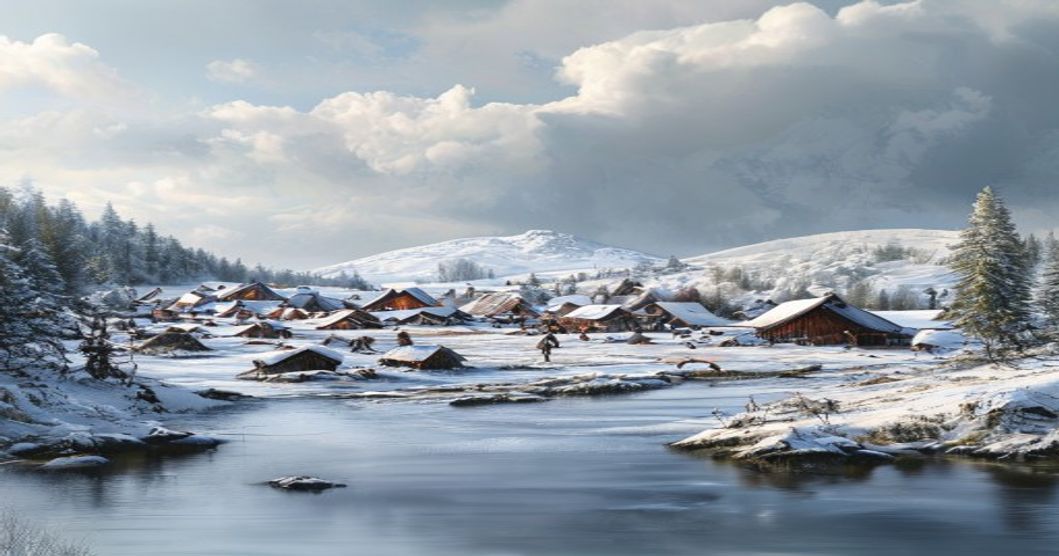
Understanding the Largest Sami Communities in Northern Europe
The Sámi population clusters primarily across four northern states, with Norway hosting the largest concentration followed by Sweden, Finland, and Russia. Norwegian municipalities such as Karasjok, Kautokeino, and Tana in Finnmark county maintain a Sámi demographic majority exceeding seventy percent of residents. Tromsø serves as the commercial and cultural hub for urban Sámi populations, while traditional reindeer husbandry zones span the highlands of Finnmark and Nordland. Swedish Sámi communities concentrate heavily in Kiruna and Gällivare municipalities within Norrbotten County, where the Sami Parliament operates a regional branch. Jokkmokk hosts an annual winter market that functions as a centralized gathering point for cultural exchange and economic activity across northern Sweden.
Finnish
Historical Migration Patterns and Traditional Territories
The ancestral lands of the Sámi people stretch across the northern reaches of Fennoscandia, encompassing distinct ecological zones that dictated seasonal movement long before modern borders existed. Prior to the seventeenth century, these communities operated within a continuous cultural landscape known as Sápmi, where boundaries were defined by reindeer calving grounds, coastal fishing sites, and boreal forest hunting routes rather than political demarcations. Migration followed a predictable transhumance cycle: spring movements pushed herds from sheltered coastal winter pastures toward inland summer grazing areas, while autumn returns navigated treacherous mountain passes to avoid deep snow accumulation. This rhythm relied on hyper-localized knowledge of microclimates, reindeer behavior, and topographical navigation, transmitted through generations without written documentation.
Historical shifts in population distribution emerged from three primary factors: climatic fluctuations during the Little Ice Age, resource depletion from overgrazing, and external pressure from expanding agrarian settlements. By the eighteenth century, the Treaty of Strömstad (1751) between Sweden and Norway formally recognized seasonal grazing corridors across newly established frontier lines, attempting to preserve cross-border mobility. Similar bilateral agreements followed with Finland in 1852. Despite these frameworks, nineteenth-century nation-building policies enforced sedentarization, restricted grazing rights, and fragmented traditional territories through land privatization and forestry concessions. The twentieth century intensified this disruption through forced assimilation programs and military exclusion zones along the Norwegian-Soviet border.
- North Sámi territories dominate inland Fennoscandia, centered around Tromsø, Finnmark, and northern Lapland, where winter pastures exceed two thousand meters elevation.
- Inland Sámi groups historically occupied forested zones in central Norway and Sweden, relying on semi-domesticated herds adapted to dense pine and spruce ecosystems.
- Sea Sámi communities maintained coastal mobility along the Lofoten archipelago and Kola Peninsula, integrating reindeer husbandry with marine resource extraction until industrialization altered migratory routes.
Modern legal recognition has partially restored access to historical grazing zones. Norway’s Finnmark Act (2005) transferred land management authority to the Finnmark Estate, while Sweden and Finland now operate reindeer husbandry districts that map directly onto pre-twentieth-century migration corridors. Contemporary Sámi institutions actively monitor permafrost thawing, lichen degradation, and tourism infrastructure as critical factors influencing traditional territory viability. The intersection of ancient movement logic and current land rights remains central to cultural continuity across Northern Europe.
Demographic Distribution Across Norway, Sweden, Finland, and Russia
The Sami people represent the only recognized indigenous population across Northern Europe, with their ancestral territories spanning the northern reaches of Norway, Sweden, Finland, and Russia. Demographic data reveals a pronounced concentration in Norway, which hosts approximately fifty to sixty thousand individuals officially registered as Sami. This figure stems from structured electoral rolls maintained by the Norwegian Saami Parliament, established in 1989. The majority reside within Troms og Finnmark, Nordland, and Trøndelag counties, where historical grazing routes and coastal fishing networks sustained multi-generational settlements. Sweden accounts for roughly twenty-five thousand Sami, primarily clustered in Norrbotten County. Swedish administrative records tie electoral eligibility to reindeer herding livelihoods or documented ancestry, creating a demographic profile heavily influenced by pastoral mobility and seasonal migration patterns.
Finland recognizes between eight and ten thousand Sami citizens, concentrated almost exclusively within the municipalities of Inari, Utsjoki, and Enontekiö. The Finnish Saami Parliament, founded in 1996, maintains voter eligibility through linguistic proficiency or direct lineage, resulting in a demographic distribution that aligns closely with traditional winter pastures and cross-border grazing corridors. Russia hosts the smallest documented Sami community, estimated at two thousand individuals residing on the Kola Peninsula. Historical census data indicates a severe population decline following mid-twentieth-century assimilation policies, with contemporary communities centered around Lovozero and rural Kildin-Sami enclaves. Russian demographic tracking lacks the formal electoral frameworks found in Nordic jurisdictions, relying instead on cultural organization registers and linguistic surveys.
- Norway: Electoral rolls document over fifty thousand registered voters, with actual cultural identification extending beyond official counts due to urban migration since the 1960s.
- Sweden: Approximately twenty-five thousand individuals qualify under hereditary or occupational criteria, with Norrbotten County containing seventy percent of the national Sami electorate.
- Finland: Municipal registries in Inari, Utsjoki, and Enontekiö capture roughly eight thousand residents, where language retention correlates strongly with intergenerational transmission.
- Russia: Lovozero municipality holds the highest concentration of Kildin-Sami speakers, though official demographic metrics remain fragmented due to limited state-sponsored indigenous tracking.
Modern demographic shifts reflect both urbanization and deliberate revitalization programs. Nordic governments have implemented targeted housing initiatives, education grants, and land-use agreements that influence settlement patterns. Cross-border mobility remains a defining characteristic, as traditional reindeer herding routes traverse four national jurisdictions without administrative interruption. Contemporary census methodologies increasingly combine electoral registration, linguistic assessment, and self-identification surveys to capture accurate population metrics. These layered data collection approaches reveal a demographic landscape shaped by historical displacement, legal recognition frameworks, and ongoing cultural consolidation across Northern Europe’s Arctic periphery.
Administrative Regions with Highest Sámi Population Density
Norway’s Finnmark county historically recorded the highest Sámi population concentration in Northern Europe, with municipalities such as Karasjok, Kautokeino, and Tana exceeding forty percent indigenous residents. Following the 2020 municipal merger and subsequent 2024 administrative reversal, Finnmark regained its standalone status, reinforcing its role as the primary governance hub for Sámi affairs. The Norwegian Sámi Parliament operates from Karasjok, while Kautokeino hosts regional reindeer husbandry training centers and traditional duodji certification programs. Troms county maintains significant density in northern municipalities like Tana and Porsanger, where coastal fishing economies intersect with inland pastoral livelihoods.
Sweden’s Norrbotten County encompasses the core of Swedish Sápmi, with administrative districts including Gällivare, Kiruna, Jokkmokk, and Arjeplog. These regions collectively account for approximately thirty percent of Sweden’s total Sámi population, concentrated in mountainous reindeer herding zones and boreal forest corridors. Jokkmokk hosts the oldest annual winter market, established in 1605, which functions as a cultural and economic nexus for cross-border Sámi trade. Municipal councils in these areas have integrated Sámi language rights into local planning documents, and county-level infrastructure projects require mandatory Sámi impact assessments under Swedish environmental legislation.
Finland’s Lapland region contains the highest administrative density of Finnish Sámi, particularly within Utsjoki, Inari, and Enontekiö. Utsjoki records nearly twenty percent Sámi residents, with official bilingual signage and Sámi-language education mandated across all municipal services. The Inari Sámi Parliament manages cultural preservation initiatives in this district, focusing on language revitalization through digital archives and traditional craft certification programs. Enontekiö’s administrative boundaries overlap extensively with Scandinavian mountain reindeer herding districts, requiring coordinated cross-municipal governance for grazing rights and land-use planning.
Russia’s Murmansk Oblast on the Kola Peninsula historically supported dense Sámi settlements, particularly in the Lovozero district. Soviet-era collectivization and forced relocation policies drastically reduced indigenous populations, yet administrative records from the 1920s indicate localized concentrations exceeding fifteen percent in coastal and inland districts. Contemporary administrative frameworks recognize the Lozovsky Sámi community as a distinct cultural group, though formal Sámi parliamentary representation remains absent under current Russian constitutional structure. Regional development grants currently target infrastructure maintenance in former Sámi villages, with limited recognition of traditional land-use claims.
Cultural and Linguistic Centers of the Sámi People
The Sámi cultural and linguistic landscape spans across the Arctic regions of Norway, Sweden, Finland, and Russia, with distinct urban and rural hubs serving as focal points for heritage preservation, education, and governance. Karasjok in Finnmark functions as Norway’s administrative heartland for Sámi affairs, hosting the Sámi Parliament alongside the Sámi University College, which delivers degree programs entirely in North Sámi and Lule Sámi. The surrounding municipality actively funds dialect documentation projects and supports traditional duodji artisans through cooperative networks that link rural workshops to international markets.
In Sweden, Jokkmokk operates as a seasonal gathering point where the annual winter market draws Sámi herders, musicians, and craftspeople from across Lapland. The town’s cultural infrastructure includes the Sámi School of Applied Sciences and regional archives that catalog Lule Sámi oral histories. Umeå hosts the Sami Academic Association and operates mobile language immersion units targeting urban youth populations. South Sámi revitalization initiatives concentrate around Røyrvik and Hattfjelldal, where bilingual signage programs and community-led recording projects document declining dialect variations.
Finland’s primary linguistic center resides in Inari, where the Siida Museum houses extensive archaeological collections alongside contemporary Sámi art installations. The Finnish Institute for the Languages of Finland maintains a dedicated field unit mapping North Sámi and Inari Sámi phonological patterns, while local schools implement heritage language tracks from early childhood through secondary education. Sevetti serves as the administrative base for Skolt Sámi communities, coordinating cross-border cultural exchanges with Russian Kildin Sámi groups.
- Kárášjohk / Karasjok: Primary hub for North Sámi standardization and Sámi Parliament operations
- Jokkmokk: Annual cultural marketplace and Lule Sámi research coordination center
- Inari: Inari Sámi documentation facility and bilingual education pilot region
- Kildin Peninsula: Russian Saami language revitalization network and elder testimony archive
Linguistic continuity relies heavily on these localized institutions, which deploy targeted methodologies for vocabulary standardization, dialect mapping, and intergenerational transmission. Mobile recording teams document herding terminology alongside joik melodic structures, while digital archives store phonetic variations across geographic boundaries. Funding mechanisms prioritize community-led documentation over top-down preservation, ensuring that lexical databases reflect authentic usage patterns rather than historical snapshots.
Educational pipelines integrate traditional ecological knowledge with modern curricula, producing graduates qualified for cultural management, language technology development, and heritage policy administration. Regional broadcasting networks transmit Sámi-language programming across municipal boundaries, while youth cooperatives establish digital content studios that produce podcasts, educational software, and interactive linguistic maps. These coordinated efforts maintain functional literacy rates above regional averages and sustain active speaker communities despite geographic dispersion.
Key Municipalities Preserving Sámi Heritage and Traditions
Karasjok operates as the administrative center of Norwegian Sámi governance, housing the Sámediggi and funding comprehensive language revitalization initiatives that integrate North Sámi into municipal services and public education. Kautokeino maintains cultural continuity through state-supported festivals celebrating joik traditions, reindeer husbandry techniques, and duodji craftsmanship. Tana municipalities facilitate cross-border ecological management by preserving documented grazing corridors and operating bilingual signage networks that standardize Sámi nomenclature across administrative boundaries.
Jokkmokk in Sweden functions as a living archive of Lule Sámi heritage, with its historic Easter Market serving as an annual gathering for indigenous artisans, herders, and policymakers. Arjeplog sustains Southern Sámi linguistic practices through community-driven oral history projects and winter cultural schools that document snow tracking methods and traditional ice-fishing techniques. Gällivare coordinates land-use negotiations to protect seasonal migration routes while integrating indigenous ecological monitoring into regional infrastructure planning.
Utsjoki represents the northernmost implementation of Sámi territorial governance in Finland, where municipal ordinances mandate Sámi language priority in official documentation and public transit announcements. Inari hosts the Siida National Museum of Sámi Culture, which partners with local herding cooperatives to archive climate adaptation strategies alongside traditional knowledge systems. Sodankylä operates dual-language educational facilities that embed indigenous environmental observation into standard academic curricula.
- Municipal funding allocations consistently prioritize elder-youth mentorship programs and language documentation archives across these regions.
- Traditional grazing permits remain legally protected through coordinated land-use agreements between local councils and national agricultural departments.
- Cultural festivals operate on municipal budgets rather than commercial tourism models, ensuring ritual authenticity in craft demonstrations and musical performances.
- Bilingual infrastructure development includes standardized Sámi place names on all public signage, road markers, and emergency service communications.
These municipalities maintain distinct dialectal frameworks while sharing coordinated governance structures that recognize indigenous self-determination. Local authorities collaborate annually through the Sámi Council to align preservation strategies with contemporary legal standards, ensuring heritage protection advances alongside sustainable economic development. Traditional ecological knowledge regarding snow conditions, reindeer behavior, and Arctic flora remains embedded in municipal emergency planning and educational materials.
Indigenous Language Schools and Cultural Institutions
Indigenous language education for the Sámi people operates through a network of specialized institutions that blend formal academic structures with traditional ecological knowledge. The Sámi University of Applied Sciences in Karasjok, Norway, serves as the primary higher education hub for all four living Sámi languages: North, Lule, Inari, and South Sámi. Its curriculum requires students to complete field studies alongside reindeer herding communities, ensuring linguistic preservation remains tied to land-based practices. Finland addresses similar needs through the Sámi Education Institute in Kárášjohka, which administers teacher certification programs specifically designed for bilingual classrooms across Finnmark and Lapland regions.
Sweden’s approach relies heavily on municipal cooperation, where institutions like the Ájtte Swedish Mountain and Sami Museum in Jokkmokk function as both research archives and active teaching centers for duodji craftsmanship and joik vocal traditions. These facilities do not merely archive artifacts; they facilitate intergenerational workshops where elders transmit phonetic nuances that standard textbooks cannot capture. Language revitalization efforts across these countries follow a community-governed model rather than top-down state mandates. Curriculum developers sit alongside Sámi Parliament representatives to update vocabulary lists with contemporary terminology related to environmental science, digital media, and maritime navigation.
- Pedagogical frameworks emphasize place-based literacy, where students learn grammar through tracking animal migration patterns or mapping traditional grazing routes.
- Funding structures vary by nation but consistently prioritize indigenous oversight. Norway’s national curriculum explicitly mandates Sámi language instruction at all educational levels, while Finland operates the Sámi Language Act to guarantee mother-tongue access from early childhood through tertiary research.
- Digital preservation initiatives now complement physical classrooms, with open-access archives hosting thousands of hours of recorded joik performances and historical duodji techniques. These repositories enable diaspora Sámi individuals to engage with linguistic roots regardless of geographic displacement.
Cross-border academic partnerships further strengthen these programs, as researchers from Umeå University in Sweden collaborate with the University of Lapland in Finland to standardize orthographic guidelines across dialect boundaries. Teacher training pipelines now incorporate immersive residency programs where prospective educators spend entire semesters embedded within seasonal migration camps. Modern challenges include urbanization and standardized testing pressures, which these institutions counter by integrating project-based assessments that evaluate cultural competency alongside academic metrics. The institutional ecosystem continues expanding as demographic studies reveal growing demand for certified bilingual educators and cultural heritage managers across Tromsø, Rovaniemi, Kiruna, and surrounding municipalities.
Traditional Reindeer Herding Zones and Modern Governance
The historical landscape of Sami reindeer husbandry spans a contiguous ecological corridor stretching from the Scandinavian Peninsula across the Kola Peninsula into Russian Arctic territories. Traditional herding zones operated on seasonal migration routes that followed lichen availability, snow depth, and predator movement patterns rather than political boundaries. Families managed distinct pasture districts classified by terrain type, with summer grazing concentrated in mountain birch forests and winter pastures located in sheltered boreal coniferous valleys. This territorial knowledge required precise intergenerational transmission of topographical markers, ice conditions, and forage quality indicators.
- Norway established the Reindeer Herding Act in 1978, delineating 51 reindeer husbandry districts across Finnmark, Troms, and Nordland counties, with legal recognition of customary land use rights under the Indigenous Peoples Convention.
- Sweden structured pasture management through sameby associations, where each cooperative holds exclusive grazing rights within mapped boundaries approved by county administrative boards.
- Finland integrated reindeer herding zones into the Saami Parliament Act framework, requiring environmental impact assessments for any infrastructure projects intersecting registered pastures.
Modern governance introduces complex jurisdictional overlaps between national forestry agencies, mining regulators, and renewable energy authorities. Cross-border coordination mechanisms remain fragmented despite the Nordic Sami Council facilitating annual pasture access negotiations. Climate-driven shifts in snowpack stability force herders to adapt migration timelines, triggering disputes over supplementary feeding permits and emergency grazing allocations. State compensation systems for lost pastures operate through rigid bureaucratic channels that often delay critical resource distribution during severe winters.
Legal recognition of traditional ecological knowledge continues evolving through judicial precedents and administrative reforms. Recent Supreme Court rulings in Norway and Sweden have expanded the scope of customary use rights, mandating co-management agreements for wind farm installations and logging concessions. Municipal planning departments now require Sami pasture impact statements before approving commercial developments. Governance structures increasingly incorporate digital mapping tools to monitor lichen biomass depletion and track herd movements via satellite collars, creating data-driven policy frameworks that bridge historical practice with contemporary regulatory demands.
Economic and Social Infrastructure in Sámi Heartlands
The economic foundation of Sámi heartlands rests on a dual model that merges traditional livelihoods with modernized industries. Reindeer husbandry remains the cornerstone, supported by state-subsidized grazing permits and cooperative slaughterhouses in Finnmark, Troms, and Lapland. Beyond pastoralism, municipalities leverage sustainable tourism frameworks centered on eco-lodges, winter sports infrastructure, and cultural heritage trails. The region has transitioned from extractive reliance toward green energy portfolios, with offshore wind farms along the Norwegian coast and hydropower expansions in Swedish and Finnish Lapland generating substantial municipal revenue. These projects operate under strict environmental impact assessments to protect migratory routes and permafrost stability.
- Digital broadband initiatives have reduced isolation for remote settlements, enabling e-commerce platforms for handcrafted duodji textiles and silverwork.
- Local cooperatives manage renewable energy grids, allowing Sámi-owned enterprises to retain profit margins rather than exporting surplus power.
- Aquaculture and wild-catch fisheries in coastal Sápmi utilize AI-driven stock monitoring to maintain certification under EU sustainability standards.
Social infrastructure development follows a parallel trajectory focused on linguistic preservation and cross-border service accessibility. Municipal councils operate bilingual administrative offices where Sámi languages hold equal legal standing in documentation, public signage, and judicial proceedings. Educational networks include full immersion kindergarten programs, secondary schools with standardized Sámi curricula, and university research centers dedicated to Arctic ecology and indigenous law. Telemedicine hubs now connect rural clinics in Kautokeino, Utsjoki, and Kiruna with specialist hospitals in Tromsø and Rovaniemi, drastically reducing emergency response times.
Financial mechanisms sustaining these systems rely heavily on targeted grants from the European Regional Development Fund and Nordic cultural preservation budgets. Cross-municipal task forces coordinate infrastructure upgrades that simultaneously modernize transport links and protect archaeological sites. Youth retention programs pair vocational training in renewable technology with mentorship networks tied to traditional knowledge holders. The integration of Sámi parliaments into regional planning committees ensures that infrastructure expansion aligns with land-use agreements, creating a resilient framework where economic growth and cultural continuity reinforce each other.
Educational Facilities Supporting Sámi Identity and Rights
The infrastructure dedicated to Sámi education has evolved from state-mandated assimilation policies into a decentralized network of self-governed institutions that actively sustain linguistic heritage and legal autonomy. Across Finnmark, Troms, the Kautokeino region, and adjacent territories in Sweden and Finland, municipalities operate bilingual school districts where instruction follows the Sámi Parliament’s curriculum guidelines rather than national standardized models alone.
Early childhood centers prioritize mother-tongue acquisition through play-based immersion, while primary schools integrate reindeer husbandry calendars, traditional ecological knowledge, and joik vocalization into standard subject modules. Upper secondary programs offer vocational tracks in reindeer management, duodji craft production, and media creation, alongside university-preparatory pathways that emphasize Indigenous law, environmental governance, and cross-border Sámi studies.
- Sámi University of Applied Sciences (Kárášjohka) delivers bachelor and master degrees in Sámi language pedagogy, journalism, reindeer herding technology, and cultural heritage management.
- University of Lapland (Rovaniemi) houses the Sámi Museum and Research Centre, coordinating field-based linguistics labs and doctoral fellowships focused on dialectal variation and digital archiving.
- UiT The Arctic University of Norway operates the Sámi Research Institute, funding community-led documentation projects and providing accredited teacher certification for bilingual educators across municipal networks.
Pedagogical frameworks rely on place-based instruction, where classroom learning aligns with seasonal land use patterns and community governance structures. Teacher preparation programs require fluency in at least one Sámi language variant, alongside training in decolonial curriculum design and digital content creation for youth audiences. Municipal education authorities collaborate directly with local Sámi councils to audit materials, ensuring terminology reflects current legal standards and regional usage.
Funding mechanisms combine national education budgets, Sámi Parliament grants, and Nordic cross-border cooperation programs to maintain facility operations and resource development. Challenges include recruiting certified bilingual instructors in remote municipalities and standardizing assessment criteria without compromising linguistic authenticity. Despite these constraints, the educational network functions as a recognized instrument of Indigenous rights implementation, directly supporting language transmission, land-based competency transfer, and youth participation in cultural decision-making processes.
Healthcare and Legal Services Tailored to Indigenous Needs
Healthcare delivery across Norwegian, Swedish, Finnish, and Russian territories requires structural adaptations to address distinct epidemiological patterns, linguistic barriers, and historical trauma experienced by Sámi populations. Standardized medical protocols frequently overlook climate-related occupational hazards tied to reindeer husbandry, traditional dietary patterns, and geographic isolation. Regional health authorities have established intercultural care units staffed with bilingual clinicians who integrate Sámi healing practices alongside evidence-based medicine. These facilities prioritize preventive screenings for respiratory conditions linked to harsh winter climates and deploy mobile outreach clinics that rotate through remote grazing districts. Mental health services specifically address intergenerational displacement and assimilation policies, utilizing trauma-informed frameworks that recognize collective memory as a clinical factor.
Legal infrastructure surrounding Sámi rights operates across fragmented jurisdictional boundaries, yet specialized advocacy networks have synchronized cross-border litigation strategies. Land tenure disputes dominate court filings, particularly concerning grazing permits, mineral extraction licenses, and renewable energy development on ancestral pastures. Indigenous legal clinics employ traditional ecological knowledge as documentary evidence during administrative hearings and constitutional challenges. Practitioners navigate the intersection of domestic property law, international instruments like UNDRIP, and Sámi parliamentary advisory mandates to protect collective resource access. When statutory interpretation conflicts with customary usage rights, specialized tribunals increasingly recognize oral histories and seasonal migration records as legally binding documentation.
- Cross-institutional data sharing agreements align medical registries with cultural competency training requirements for regional practitioners
- Linguistic mediation programs guarantee Sámi language access during psychiatric evaluations, pediatric consultations, and emergency admissions
- Legal aid cooperatives coordinate land-use appeals across municipal, national, and supranational courts to prevent jurisdictional fragmentation
- Cultural safety audits systematically evaluate clinical environments for historical bias, institutional discrimination, and procedural accessibility gaps
Continuous policy refinement depends on direct Sámi representation in service design committees. Funding mechanisms now tie municipal healthcare allocations to measurable outcomes in cultural safety certification and bilingual staffing ratios. Legal practitioners collaborate with indigenous governance bodies to draft binding agreements that preempt speculative development projects. This coordinated approach transforms historical exclusion into structured participation, ensuring that institutional frameworks recognize Sámi sovereignty as a foundational element of public service delivery rather than an administrative exception.
Sustainable Tourism Initiatives Managed by Local Communities
Indigenous-led tourism frameworks across Sápmi prioritize ecological balance and cultural continuity over mass visitation metrics. Local governance structures, including reindeer herding cooperatives and regional Sámi parliaments, establish strict operational guidelines for visitor access to fragile tundra and boreal forest ecosystems. These communities implement carrying capacity limits, seasonal rotation schedules for grazing lands, and mandatory educational briefings that center indigenous knowledge systems rather than commercial narratives. Management boards require majority indigenous representation, ensuring decision-making power remains within ancestral territories.
Revenue distribution follows transparent cooperative models where profits fund language revitalization programs, traditional craft workshops, and infrastructure upgrades in remote settlements. Tour operators must hold certified indigenous tourism credentials, ensuring guides possess documented fluency in North Sami, Lule Sami, or South Sami dialects alongside ecological certification. Visitor experiences focus on participatory learning: snowshoe tracking, traditional duodji craftsmanship sessions, and silent wildlife observation protocols that prevent disturbance during calving seasons. Digital booking platforms operate exclusively through community-owned servers, eliminating third-party commission extraction.
Environmental monitoring programs are integrated directly into tourism operations. Communities deploy soil compaction sensors, acoustic monitoring devices to track wildlife stress levels, and real-time digital dashboards accessible to local councils. Funding from eco-taxes on guided expeditions finances wetland restoration projects and reindeer corridor preservation initiatives. Regulatory compliance requires annual audits by independent indigenous environmental assessors who verify adherence to traditional land management principles rather than conventional sustainability benchmarks. Cross-border coordination between Norwegian, Swedish, Finnish, and Russian Sami organizations standardizes impact assessments while preserving distinct regional practices.
Preserving Sámi Heritage Amidst Modern Development
Traditional Sámi livelihoods face direct pressure from extractive industries, renewable energy infrastructure, and shifting climate patterns across the Arctic regions of Norway, Sweden, Finland, and Russia. Logging roads fragment reindeer migration routes, while wind farms and mining concessions often overlap with sacred sites and seasonal pastures. Communities respond by establishing monitoring networks that combine satellite tracking with ancestral knowledge of snow conditions and vegetation cycles. These hybrid systems allow herders to adjust grazing schedules and negotiate land-use agreements before large-scale projects break ground.
Language revitalization remains the core mechanism for cultural continuity. North Sámi, Lule Sámi, Inari Sámi, Skolt Sámi, and other dialects face varying degrees of endangerment depending on regional policy implementation. Municipal education departments now integrate mother-tongue instruction into primary curricula, supported by state-funded teacher training programs. Digital platforms have accelerated preservation efforts, with mobile applications teaching vocabulary through interactive maps, while public broadcasters maintain daily programming in multiple Sámi variants. University archives digitize oral recordings, ensuring that joik traditions and place-name etymologies remain accessible to younger generations.
- Institutional Representation: Elected Sámi Parliaments in Oslo, Kiruna, and Inari hold legislative advisory power, enabling communities to review environmental impact assessments and influence regional planning documents.
- Legal Precedents: The Finnmark Act transferred land management rights to local municipalities with mandatory Sámi consultation clauses, while ratified ILO Convention 169 establishes binding frameworks for free, prior, and informed consent.
- Economic Adaptation: Indigenous-led enterprises now operate sustainable tourism cooperatives, sell certified duodji crafts through international e-commerce channels, and manage community-owned forestry plots using low-impact harvesting techniques.
Cultural institutions function as living laboratories rather than static museums. Traditional craft workshops teach lasso weaving and silver filigree alongside modern design software, allowing artisans to meet contemporary market demands without compromising technique. Climate adaptation research integrates meteorological data with generational weather reading, producing early warning protocols for ice stability on reindeer pastures. Municipal zoning laws increasingly designate cultural landscape corridors, protecting archaeological sites and seasonal camps from commercial encroachment. Educational partnerships between universities and community centers produce bilingual technical manuals that translate engineering standards into Sámi terminology, preparing the next generation of indigenous engineers, environmental scientists, and legal advocates.
Challenges Facing Urban Sámi Populations in Northern Europe
Migration from traditional reindeer herding territories to metropolitan hubs across Norway, Sweden, Finland, and Russia has fundamentally altered the demographic landscape of the Sámi people. Urban centers like Tromsø, Oslo, Stockholm, and Helsinki now host significant Sámi populations, yet these communities encounter systemic obstacles that threaten cultural continuity and socioeconomic stability. Employment discrimination remains a persistent barrier. Many educated Sámi professionals report encountering subtle bias during recruitment processes, where traditional competencies are undervalued in favor of dominant Nordic corporate cultures. Wage disparities and limited upward mobility further compound economic insecurity for urban Sámi households.
Linguistic erosion accelerates when younger generations relocate to cities where Swedish, Norwegian, Finnish, or Russian dominate public and private spheres. Formal education systems rarely integrate Sámi language instruction beyond basic introductory courses, leaving working adults without institutional support to maintain fluency. The absence of standardized professional terminology in Northern Sámi, Lule Sámi, and Southern Sámi restricts workplace integration and limits access to specialized government services.
- Housing discrimination in competitive rental markets forces many families into segregated neighborhoods with limited cultural infrastructure.
- Healthcare providers frequently lack cross-cultural training, resulting in misdiagnoses or inadequate mental health support for individuals navigating dual identities.
- Bureaucratic eligibility requirements for Sámi Parliament funding and cultural grants demand proof of reindeer herding or documented rural residency, effectively excluding urban descendants.
- Digital divide limits access to online language revitalization platforms and virtual Sámi community networks that sustain diaspora connections.
Identity fragmentation emerges when urban Sámi individuals must constantly negotiate between traditional expectations and assimilation pressures. Community organizations struggle with fragmented membership bases, making coordinated advocacy difficult. Municipal governments rarely allocate dedicated budgets for Sámi cultural centers, language nests, or indigenous-led urban planning initiatives. Without targeted municipal policies and cross-border cooperation among Nordic Sámi institutions, urban populations face sustained marginalization despite constitutional protections in place.
Government Policies Protecting Indigenous Land Rights
Norway implements the most comprehensive statutory framework through the Finnmark Act of 2005. This legislation transferred ownership of ninety-five percent of Finnmark county to a regional trust administered by the Finnmark Estate Authority. The governing council maintains equal representation between state officials and the Sami Parliament, creating a joint administrative model for resource allocation and property rights. Norwegian courts apply established EEC Tribunal precedents to validate grazing territories based on continuous historical usage rather than formal land registration. The Reindeer Husbandry Act restricts commercial extraction within designated winter pastures, requiring mandatory impact assessments that prioritize traditional livelihood infrastructure over industrial development.
Sweden operates through constitutional protections and consultation mandates rather than direct ownership transfers. The national Mining Code requires operators to secure permits from the Sami Parliament before initiating exploration in reindeer herding zones. Recent regulatory amendments introduced compulsory environmental reviews for projects affecting Sami cultural landscapes. Although Sweden has not ratified ILO Convention 169, domestic courts increasingly reference international indigenous standards when evaluating territorial disputes. The government maintains a centralized registry of Sami villages that delineates exclusive grazing boundaries, though overlapping claims with state forests and mining concessions generate frequent administrative litigation.
Finland structures territorial recognition around the Land Claims process established by parliamentary legislation. Applicants submit documented evidence of historical reindeer routes and settlement patterns to an independent commission that evaluates boundary parameters. The Finnish Constitution recognizes Sami cultural autonomy, enabling regional councils to veto infrastructure projects threatening traditional ecological zones. National authorities restrict commercial fishing and logging within protected Sami municipalities, though enforcement varies across Lapland. Cross-border coordination through the Nordic Sami Council facilitates unified advocacy for transnational grazing corridors and wildlife migration pathways.
- Joint governance boards operate under Norwegian statutory mandates to allocate resource royalties equitably
- Mandatory consultation thresholds trigger legal injunctions when state permits bypass indigenous consent protocols
- Judicial precedents prioritize continuous cultural occupation over archival documentation in territorial disputes
Future Projections for Sámi Demographic Growth and Integration
Future demographic trends for Sámi populations indicate a gradual increase driven by improved birth rates, enhanced healthcare access, and strengthened ethnic identification policies across Norway, Sweden, and Finland. Historical undercounting has masked actual population growth; modern census methodologies now capture self-identified Sámi residents more accurately, revealing steady upward trajectories. Urbanization remains a key demographic shift, with growing numbers relocating to Tromsø, Oslo, Stockholm, and Rovaniemi for educational and employment opportunities, yet maintaining strong ties to ancestral lands through seasonal migration and digital connectivity.
Integration patterns show a dual trajectory: institutional inclusion within national frameworks alongside active cultural preservation initiatives. Educational reforms have expanded Sámi-language schooling at primary and secondary levels, while university programs in Sámi studies, reindeer husbandry management, and indigenous law attract younger cohorts. Economic development projects focusing on renewable energy, sustainable tourism, and digital infrastructure are creating localized employment, reducing outmigration to southern regions. Political representation has also expanded through Sámi parliaments in Norway and Finland, and advisory councils in Sweden, enabling direct participation in resource allocation, land-use planning, and cultural funding decisions.
- Demographic Tracking: Improved census classification and self-identification rates continue to reveal higher actual population figures than historical records suggest.
- Educational Expansion: Increased enrollment in Sámi-medium institutions correlates with stronger cultural retention and higher regional graduation rates.
- Economic Localization: Targeted grants for Sámi-owned enterprises are stabilizing rural economies and slowing urban outmigration.
- Policy Alignment: Cross-governmental cooperation on land-use rights directly influences housing development, infrastructure investment, and municipal budget distribution.
Long-term projections emphasize balancing demographic growth with environmental sustainability. Climate change impacts traditional reindeer grazing routes, prompting adaptive livelihood strategies and cross-border cooperation among Sámi organizations. Digital mapping initiatives and land-rights litigation continue to strengthen territorial claims, influencing municipal zoning policies. Youth engagement in media production, music, and digital activism ensures cultural continuity while fostering economic self-sufficiency. Future demographic stability will depend on sustained policy support, intergenerational knowledge transfer, and equitable access to healthcare, housing, and higher education across northern municipalities.
Frequently Asked Questions
What is Largest Sami Communities in Northern Europe?
The largest Sámi communities in Northern Europe are primarily located in the northern regions of Norway, Sweden, and Finland, with significant populations also residing on Russia’s Kola Peninsula. Key cultural and administrative hubs include Tromsø and Karasjok in Norway, along with Gällivare in Sweden.
Key facts about Largest Sami Communities in Northern Europe
The Sámi are the only recognized indigenous people within the European Union. Their traditional territory, Sápmi, spans across four nations: Norway, Sweden, Finland, and Russia. The Sámi languages belong to the Uralic language family. Each country maintains its own Sámi Parliament, which collectively coordinates cross-border cultural preservation, land rights, and reindeer herding traditions.