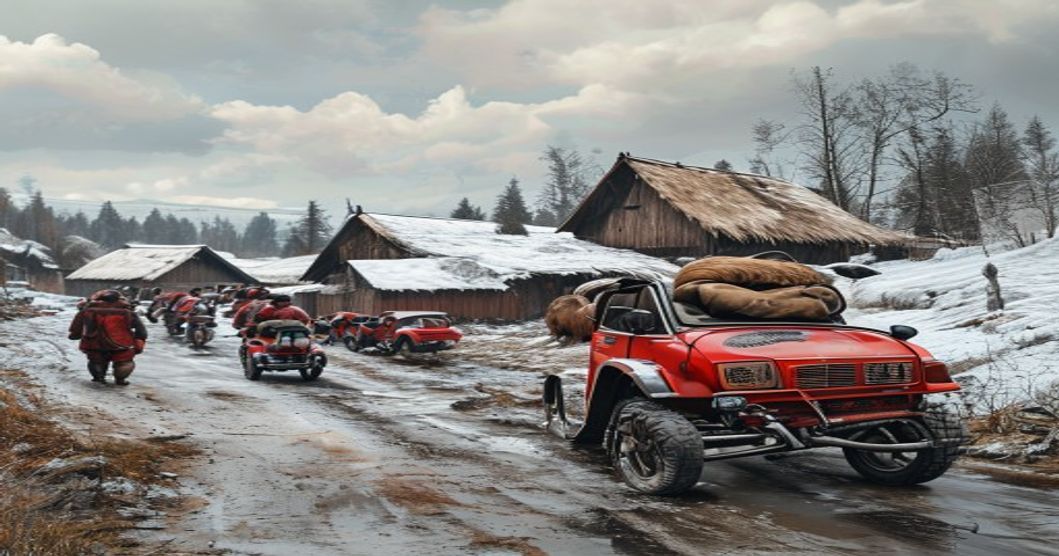
The Origins of Sami Nomadic Traditions
The foundational roots of Sami nomadic lifestyles emerge from the harsh Arctic and subarctic ecosystems spanning northern Fennoscandia. Archaeological excav
Prehistoric Migration Routes and Arctic Adaptation
Following the retreat of the Late Weichselian ice sheets, early hunter-gatherer populations gradually pushed northward across the Fennoscandian shield between twelve and eight thousand years ago. These ancestral groups navigated newly exposed coastal corridors along what is now northern Norway, Sweden, and Finland, exploiting marine resources while simultaneously tracking terrestrial game across emerging tundra landscapes. Paleoecological data and lithic artifact distributions reveal a dual-path mobility pattern: maritime routes sustained dense population clusters along fjord systems, while inland valleys facilitated seasonal transhumance toward reindeer calving grounds.
Arctic adaptation emerged through highly calibrated seasonal cycles rather than permanent settlement. Communities constructed semi-subterranean dwellings using turf, whalebone, and wooden frameworks, engineered to withstand wind shear and insulate against extreme thermal gradients. Toolkits shifted dynamically across ecological zones, incorporating pressure-flaked flint points, bone harpoons, and antler sled runners optimized for snow travel. Genetic studies of ancient remains indicate sustained gene flow between coastal foragers and interior reindeer specialists, demonstrating that mobility functioned as a primary survival mechanism rather than a temporary transitional phase.
- Coastal corridor utilization: Shell middens dating to the Ertebølle and Komsa cultures document systematic exploitation of marine mammals, fish, and seabirds along the Scandinavian shelf.
- Inland seasonal routing: Lithic scatters and hunting blinds align with modern reindeer migration pathways, confirming multi-century continuity in overland movement patterns.
- Climate resilience engineering: Radiocarbon-dressed timber structures and insulation layers reveal deliberate architectural responses to permafrost fluctuations and subzero wind exposure.
The integration of these migratory networks established the foundational framework for later pastoral mobility. As Holocene warming altered vegetation boundaries, early populations refined their capacity to track ecological shifts across altitudinal gradients. This prehistoric mobility infrastructure directly enabled the emergence of reindeer herding practices during the Iron Age, proving that Arctic adaptation was never a static survival tactic but a continuously optimized system of spatial planning and environmental negotiation.
Historical Shifts in Sami Movement Patterns
For centuries, Sami mobility followed intricate seasonal rhythms dictated by reindeer behavior, pasture quality, and climatic conditions. Coastal herders tracked fish runs and moved between winter forests and summer pastures, while inland groups navigated vast tundra corridors across what are now Norway, Sweden, Finland, and Russia. These routes were not arbitrary; they emerged from generations of ecological observation and required precise coordination with wildlife migrations, snow depth, and freeze-thaw cycles.
The eighteenth century introduced the first major fractures in these traditional pathways. State authorities began mapping territories for taxation and resource extraction, gradually imposing fixed boundaries that ignored ancestral grazing corridors. The 1852 Land Grant Act in Norway formalized state control over northern lands, legally restricting Sami movement to designated zones and penalizing unauthorized crossings. Similar legislative frameworks emerged across Scandinavian borders, transforming fluid mobility into regulated transit.
- Border demarcation (1751–1826): Treaties like the Hamina Convention divided traditional herding grounds without consulting local communities, forcing seasonal migrations to navigate new customs checkpoints and permit requirements.
- Sedentarization campaigns (1900s–1940s): Government schools relocated children to distant institutions, while forestry and mining concessions fragmented reindeer winter ranges, making continuous migration increasingly impossible for many families.
- Infrastructure expansion (1950s–1970s): Highways, hydroelectric dams, and railway networks physically severed historical corridors. Herders were required to secure crossing permits, leading to widespread abandonment of certain routes and localized herd decline.
The latter half of the twentieth century witnessed both systemic restriction and gradual resistance. International environmental movements and indigenous rights advocacy created pressure for policy revision. The 1980s introduced grazing area commissions in Norway, while the 1990s saw Finland recognize Sami herding as a constitutionally protected livelihood. Mobility did not simply return to pre-colonial patterns; it adapted. Snowmobiles replaced reindeer sleds for long-distance tracking, GPS collars enabled real-time herd monitoring, and digital mapping tools helped communities negotiate land-use agreements with state agencies. Contemporary movement remains legally bounded but strategically optimized, blending ancestral route knowledge with modern technology to sustain transnational herding practices.
National Border Impositions and Territory Fragmentation
The establishment of modern nation-state boundaries across northern Fennoscandia fundamentally dismantled the integrated geographical framework that had sustained Sami mobility for centuries. Prior to the late nineteenth century, reindeer herders, hunters, and traders navigated a continuous landscape defined by ecological zones rather than political lines. The demarcation treaties between Norway, Sweden, Finland, and Russia sliced directly through traditional grazing corridors, winter pastures, and seasonal hunting grounds. These arbitrary cartographic divisions transformed fluid movement patterns into restricted cross-border transit, forcing communities to navigate complex customs regulations, passport requirements, and state surveillance mechanisms.
Colonial administrations systematically prioritized agricultural settlement and resource extraction over indigenous land rights. Norway’s expansion into Finnmark, Sweden’s border delimitation acts, and Finland’s incorporation of Lapland resulted in the privatization of communal grazing lands and the imposition of fixed residence permits. Reindeer herding routes that once spanned hundreds of kilometers were severed by new fence lines, railway projects, and military exclusion zones. The fragmentation of Sápmi not only disrupted ecological management practices but also fractured kinship networks that coordinated seasonal migrations across what are now four separate national jurisdictions.
- Cartographic Division: Border treaties allocated traditional territories among multiple states without consulting indigenous stakeholders, creating overlapping and contradictory jurisdictional claims that invalidated ancestral land use agreements.
- Administrative Restrictions: Passport controls, grazing permits, and taxation systems were deployed to monitor and limit cross-border movement, directly undermining seasonal migration cycles and herd management efficiency.
- Economic Displacement: State-sponsored forestry operations, mining concessions, and hydroelectric dams occupied critical winter pastures, forcing herders onto marginal lands with significantly reduced carrying capacity.
The territorial fragmentation triggered a prolonged crisis of mobility resilience. Communities adapted by establishing parallel bureaucratic structures, negotiating bilateral grazing agreements, and ultimately lobbying for transboundary recognition frameworks. Despite persistent legal barriers, the historical reality remains clear: modern state borders operate as artificial constraints that directly contradict centuries of ecological adaptation and cultural continuity in Sápmi.
Colonial Policies and Forced Sedentarization Efforts
European nation-states initiated systematic campaigns to dismantle traditional Sámi mobility beginning in the seventeenth century, viewing nomadic livelihoods as economically inefficient and culturally obsolete.
- Norwegian legislative measures targeted reindeer herders through taxation structures that penalized seasonal migration, gradually restricting movement to designated settlement zones. Government-sponsored missionary schools enforced language suppression, severing intergenerational transmission of route knowledge essential for cross-border grazing patterns. The 1923 Reindeer Act further centralized control, mandating state-approved migration corridors that ignored ecological carrying capacity.
- Swedish land alienation policies prioritized resource extraction and agricultural colonization, allocating vast territories to non-indigenous settlers while marginalizing Sámi grazing rights. The state introduced residency requirements that legally bound mobile families to fixed municipal records, effectively criminalizing traditional transhumance practices. Forestry regulations subsequently prohibited seasonal fire management, degrading historic pasture quality across northern provinces.
- Finnish border restrictions following independence in 1917 fragmented historical migration corridors, forcing herders to navigate complex customs regulations and restricted access zones. Administrative controls prioritized timber harvesting and mining concessions over ecological grazing requirements, permanently altering pasture availability. Municipal zoning laws later classified mobile households as transient populations, stripping them from local welfare allocations.
- Russian and Soviet territorial expansions implemented collectivization programs that dissolved autonomous hunting and trading networks. Land registration systems replaced customary usage rights with state-controlled allocations, disrupting seasonal movement patterns established over millennia. Border fortification initiatives during the interwar period physically blocked traditional crossing points, isolating herding communities from historic grazing territories.
These coordinated interventions generated profound socioeconomic displacement. Mobile families lost access to critical winter pastures, spring calving grounds, and summer coastal foraging areas essential for herd survival. Settlement mandates concentrated populations in economically vulnerable locations, increasing dependency on state subsidies while eroding traditional governance structures. Despite administrative pressure, Sámi communities preserved route memory through oral documentation and clandestine seasonal adjustments, laying groundwork for contemporary land rights litigation. Modern legal frameworks now recognize historical mobility patterns as foundational to cultural continuity, though territorial fragmentation continues influencing resource management negotiations across Sápmi.
Seasonal Mobility and Ecological Knowledge Systems
The seasonal movement patterns of Sami reindeer herders represent one of the most refined examples of human adaptation to circumpolar environments. This mobility operates as a highly calculated ecological strategy synchronized with environmental cycles. Herders navigate precise corridors between winter, spring, summer, and autumn pastures, relying on centuries-old observational frameworks to track snow depth, lichen availability, insect pressure, and terrain stability. Each phase of the annual cycle demands specific pastoral interventions that maintain herd health while preserving fragile tundra and taiga ecosystems.
Core components of this ecological knowledge system include:
- Winter pasture utilization: Herders guide reindeer into boreal forests where snow conditions allow access to ground lichen, the primary winter food source. Knowledge of wind exposure, crust formation, and tree density determines route selection.
- Spring calving migration: Movements toward sheltered coastal or mountainous valleys coincide with birthing seasons. Herders monitor microclimates and predator activity to minimize lamb mortality while maintaining herd cohesion.
- Summer highland grazing: Reindeer are driven to exposed alpine zones where insect harassment decreases and nutrient-rich vegetation accelerates post-winter recovery. Traditional knowledge identifies optimal elevation thresholds and timing to prevent overgrazing.
- Autumn rutting coordination: Strategic driving routes funnel bulls into designated gathering areas before winter descent, utilizing natural topographical bottlenecks rather than artificial enclosures.
Navigational relies on topographical memory and oral mapping techniques that encode pasture boundaries, water crossings, and historical grazing intervals into generational teaching sequences. Young herders learn to read wind direction through lichen asymmetry, identify stable snow bridges by acoustic feedback, and predict insect migration using barometric shifts. This cognitive architecture transforms seasonal mobility into a precision management tool rather than a reactive survival tactic. Landscape modifications such as controlled burning of bog vegetation, strategic placement of reindeer feeding platforms during extreme winters, and the maintenance of natural corridor clearances further demonstrate active ecological stewardship. The rotational grazing model inherently prevents nutrient mining by allowing lichen beds and alpine meadows to regenerate across multi-year cycles. Historical records confirm that these mobility patterns sustained herd populations and ecosystem stability long before modern conservation frameworks emerged. Contemporary land fragmentation challenges test the system’s flexibility, yet the underlying principle remains consistent: mobility functions as an ecological regulator that synchronizes pastoral needs with environmental carrying capacity.
Summer Pastures and Winter Camp Relocation Cycles
The seasonal movement of Sami reindeer herders operates on a precisely calibrated ecological rhythm that has sustained livelihoods across Fennoscandia for centuries. Summer pastures occupy high-altitude plateaus and coastal tundra regions where reindeer access nutrient-rich lichens, fresh forage, and cooler temperatures essential for calving. During these months, the herd disperses to minimize overgrazing while adults recover physical condition after harsh winters. The landscape features naturally occurring mineral licks that support antler development and parasite resistance. Herders establish temporary camps near reliable water sources, utilizing wind patterns to monitor herd distribution across open terrain.
Winter relocation cycles demand strategic positioning in sheltered valleys and boreal forest margins where snow conditions remain manageable for reindeer mobility. Camp structures utilize layered birch bark, spruce boughs, and reindeer hides to maintain thermal stability during sub-zero temperatures. Resource allocation follows strict seasonal protocols: dried meat preserves protein reserves, while controlled burning of vegetation patches encourages early spring lichen regeneration. Reindeer naturally seek out leavttu (winter foraging grounds) where trampled snow layers protect ground lichen from extreme cold.
- Spring Migration Drivers: Thawing temperatures trigger movement toward coastal grazing zones where reindeer consume marine algae and early-growing vegetation, accelerating weight gain before summer calving periods.
- Autumn Transition Protocols: Herders utilize directional wind shifts and acoustic monitoring to guide animals through narrow mountain passes, preventing stampedes during rapid weather changes.
- Historical Route Optimization: Traditional knowledge encoded in place names maps ancient migration corridors that bypass unstable permafrost zones and identify natural crossing points over frozen rivers.
Modern infrastructure integration requires continuous adjustment to these cycles. Fenced grazing areas, wind farm installations, and road networks fragment traditional pathways, forcing herders to negotiate seasonal access permits with municipal authorities. Despite regulatory constraints, core migration principles remain intact because reindeer physiology dictates temporal boundaries. The animals cannot tolerate prolonged exposure to ice-crusted snow without natural trampling patterns established through generational route familiarity. Contemporary herding operations now combine satellite tracking with ancestral ecological indicators like bird migration timing and lichen bloom cycles to maintain herd viability across shifting climatic conditions.
Weather-Driven Navigation and Terrain Mapping Techniques
The Sami people developed a highly sophisticated mobility system grounded in continuous environmental observation. Rather than relying on fixed routes, their movement patterns shifted dynamically with meteorological conditions. Wind direction, cloud density, and barometric pressure changes functioned as primary navigational coordinates across vast tundra and boreal landscapes. Seasonal transitions required precise timing; early snowfall or sudden temperature drops could block traditional passes, forcing rapid route adjustments based on real-time atmospheric signals.
Terrain mapping operated through experiential cartography rather than drawn schematics. Knowledge was embedded in topographical memory, where specific landforms, water sources, and grazing zones were cataloged through generational practice. Migrants read snowpack structure to assess stability, identified wind-compacted ridges that offered safer travel corridors, and tracked meltwater flow patterns to locate hidden streams during thaws. Animal movement served as an additional indicator; reindeer herds frequently bypassed unstable ice or avalanche-prone slopes, providing reliable visual cues for human travelers.
- Snow condition analysis: Distinguishing between wind-packed crusts, depth hoar layers, and fresh powder to determine load-bearing capacity and travel efficiency.
- Microclimate routing: Utilizing valley air drainage patterns and sun-exposed slopes to maintain thermal comfort and prevent frostbite during extended journeys.
- Symbolic terrain markers: Carving directional notations into birch bark or reindeer antlers, encoding route information through standardized pictographic symbols.
- Astronomical-meteorological alignment: Cross-referencing star visibility windows with clear atmospheric periods to establish geographic orientation during polar nights.
- Topographic memory mapping: Memorizing elevation shifts, vegetation boundaries, and watercourse intersections through repeated seasonal traversals rather than written charts.
This adaptive framework ensured mobility resilience across extreme Arctic conditions. Knowledge transmission occurred through direct apprenticeship, where younger members accompanied elders during seasonal migrations. Each journey reinforced spatial memory, weather interpretation skills, and route optimization strategies. The system required no physical infrastructure beyond temporary shelters and portable markers, demonstrating an efficient integration of ecological literacy and geographic cognition that sustained Sami mobility for centuries.
Cultural Preservation Through Mobile Livelihoods
Mobile livelihoods function as the primary vessel for Sami cultural continuity across generations. Seasonal reindeer herding routes dictate not only economic survival but also the rhythm of linguistic and ritual practices. Herders navigate vast Arctic landscapes using ancestral wayfinding techniques that rely on subtle environmental cues: wind patterns, moss growth, animal behavior, and historical snow conditions. This knowledge transfers directly through lived experience, where elders demonstrate sled construction, calf branding, and emergency veterinary care while young participants observe and gradually assume responsibility. The daily vocabulary required for these tasks preserves archaic Sami dialects that would otherwise vanish under dominant national languages.
Material culture adapts dynamically to mobility demands. Reindeer hide garments incorporate region-specific embroidery patterns that signal clan affiliation, marital status, and migration zone. Tools like wooden milking pails, copper-tipped needles, and portable smokehouses are engineered for rapid disassembly and transport across frozen rivers. When state policies historically restricted grazing lands or imposed sedentary schooling, communities repurposed mobile practices as covert preservation strategies. Trade caravans maintained cross-border exchanges between Norway, Sweden, Finland, and Russia, ensuring that culinary traditions like ruovdát and muohtajáhká survived political fragmentation.
- Ecological transmission: Pasture rotation cycles align with lunar phases and predator migration, requiring precise mental mapping that resists digital standardization.
- Linguistic anchoring: Herding commands utilize grammatical cases and verb conjugations specific to reindeer husbandry, creating living dictionaries embedded in daily labor.
- Technological synthesis: Modern GPS collars feed into digital mapping systems, yet route decisions remain grounded in generational memory of frost depth and lichen availability.
Youth programs integrate satellite telemetry with oral history recording, creating interactive archives that bridge technological advancement and ancestral practice. Language revitalization initiatives leverage mobile work environments as immersive classrooms, where children learn grammatical structures through real-time herding commands rather than classroom exercises. The persistence of these livelihoods demonstrates that cultural resilience does not require static preservation; it thrives through continuous adaptation within mobile ecological and social systems.
Oral History Transmission During Long Journeys
The seasonal migrations of Sami communities transformed vast Arctic landscapes into dynamic archives of lived knowledge. Long journeys across tundra, boreal forests, and mountain passes functioned as structured pedagogical cycles where ecological data, clan lineages, and survival protocols moved alongside reindeer herds. Elders operated as primary navigators, encoding route intelligence into rhythmic vocalizations and place-based narratives that required no physical documentation.
Oral transmission operated through highly specific acoustic and environmental triggers. Joik sequences mapped terrain gradients, while work chants synchronized movement during river crossings or steep ascents. Each geographic feature carried a designated name containing historical events, resource indicators, or hazard warnings. Children memorized these sequences through contextual repetition rather than abstract instruction, linking vocal patterns directly to wind direction, snow density, and animal behavior.
- Navigation relied on cumulative observation of subtle environmental markers including lichen growth patterns, bird flight corridors, and glacial melt timing
- Seasonal darkness dictated transmission windows; polar night periods focused on genealogical recitation while summer months emphasized foraging routes and fishing site locations
- Route selection required real-time adaptation to weather shifts, with experienced herders demonstrating decision-making processes that younger travelers internalized through direct participation
The physical demands of extended travel enforced strict oral fidelity. Misremembered landmarks could result in resource depletion or exposure, making accuracy a survival imperative rather than a cultural preference. Knowledge clusters shifted continuously as herds moved, requiring constant verbal reinforcement to maintain route coherence across generations. This mobile pedagogy created a decentralized knowledge network that remained resilient against environmental disruption and external pressure. Territorial understanding persisted through continuous vocal practice, ensuring that geographic intelligence survived regardless of political boundaries or climatic shifts.
Material Culture and Portable Dwelling Architecture
The nomadic logistics of Sami communities necessitated architectural systems that reconciled rapid deployment with structural durability in subarctic environments. Portable dwellings operated as mobile infrastructure along established migration corridors, enabling seasonal repositioning between coastal overwintering sites, inland summer pastures, and reindeer calving zones. These structures functioned as highly calibrated environmental interfaces, engineered to dissipate wind pressure, shed heavy snow loads, and retain thermal mass while remaining fully disassemblable for transport across frozen tundra or dense boreal forest trails.
Material composition dictated both performance parameters and cultural continuity. Primary frameworks utilized young birch poles harvested during dormant seasons to maximize flexibility. Artisans applied controlled steam bending to create interlocking conical or dome geometries that distributed structural stress evenly across the foundation ring. Covering materials shifted according to microclimatic demands: cured reindeer pelts provided superior wind resistance and vapor permeability during winter, while summer configurations employed tightly woven grass mats, outer birch bark sheets, or processed nettle textiles. Assembly relied entirely on natural fastening systems, including braided root cords, cured sinew, and leather toggles, eliminating metal components that would corrode or add unnecessary weight.
- Thermal engineering: Off-center hearth placement generated convective air currents that circulated heat while channeling smoke through a regulated aperture. Elevated sleeping platforms layered with reindeer fat and dried moss prevented conductive heat loss to the ground.
- Storage optimization: Perimeter shelving units constructed from split wood maintained ventilation for preserved meat, fish, and hunting implements, ensuring resource accessibility during rapid relocations.
- Cultural encoding: Interior surfaces featured carved wooden brackets, hand-dyed textile hangings, and geometric pigment applications that documented clan territories, seasonal calendars, and cosmological narratives.
Each structural component operated as a mobile archive of ecological adaptation. Craftsmanship standards directly correlated with survival outcomes, requiring precise knowledge of timber grain orientation, hide tanning chemistry, and load distribution mechanics. Contemporary architectural research continues to analyze these traditional joinery techniques, recognizing how historical stress-testing methods inform modern lightweight building systems operating in extreme cold climates.
Modern Pressures on Traditional Movement Corridors
Traditional Sami reindeer herding relies on precisely calibrated seasonal corridors that have sustained livelihoods for centuries. Today, these pathways face unprecedented fragmentation from industrial expansion and state-led land development. High-voltage transmission lines, expanded road networks, and expanding wind energy installations cross historic transit routes without adequate ecological assessment or indigenous consultation. Each new barrier forces herds to detour, expending critical fat reserves during autumn and spring migrations. The cumulative effect reduces calving success rates and increases livestock mortality across multiple generations.
- Infrastructure Encroachment: Commercial forestry roads and mining access tracks disrupt snowpack stability, causing ice layers that prevent reindeer from accessing lichen pastures beneath.
- Climate-Driven Shifts: Warmer winters produce irregular freeze-thaw cycles, while earlier springs alter vegetation growth windows. Traditional movement schedules no longer align with ecological availability.
- Policy & Land Use Conflicts: National conservation designations frequently restrict access to core grazing zones, effectively privatizing ancestral territories without compensation or co-management frameworks.
Economic development agendas consistently prioritize resource extraction over pastoral continuity. Energy corporations securing long-term leases for wind farms overlap heavily with high-yield summer pastures and river crossing points. These installations operate continuously, generating noise and human activity that trigger herd stress responses. Reindeer avoid open terrain near infrastructure, compressing grazing pressure onto smaller available areas and accelerating soil degradation. Herders must now invest additional labor in guiding animals around active construction zones.
Legal recognition of migratory rights remains inconsistent across Norway, Sweden, and Finland. While indigenous land claims have advanced in some jurisdictions, enforcement mechanisms rarely protect seasonal corridors from commercial interference. Herding communities navigate complex permitting systems just to maintain historical movement patterns. The loss of corridor connectivity directly threatens language retention, craft traditions, and intergenerational knowledge transfer. Adaptive land-use planning that integrates reindeer ecology with modern development remains the only viable pathway toward preserving Sami mobility heritage.
Infrastructure Development and Land Access Restrictions
Traditional Sami mobility relied on intricate seasonal migration routes that connected winter forests, spring calving meadows, summer coastal grazing areas, and autumn pastures. These pathways developed over centuries through ecological observation and intergenerational knowledge transmission. The introduction of state-sponsored infrastructure fundamentally altered this system. Beginning in the late nineteenth century, national governments prioritized territorial integration through road networks, railway construction, and hydroelectric development. Each project required surveying, clearing, and fencing vast tracts of land that historically functioned as shared pastoral corridors.
State forestry operations established permanent access roads and clear-cut zones that blocked reindeer movement between critical seasonal grazing grounds. Railway lines acted as physical barriers, forcing herders to seek longer detours or obtain official crossing permits. Hydroelectric reservoirs flooded lowland pastures while transmission towers and service roads fragmented high-altitude winter forests. The cumulative effect was a progressive reduction in available grazing territory. Administrative permit systems required herders to apply for seasonal passage through restricted areas. Approval processes often ignored ecological timing, causing missed migration windows and weakened livestock conditions. Military exclusion zones further limited access to traditional calving grounds near border regions.
- Road and bridge construction: Eliminated natural ford crossings and created year-round traffic patterns that disrupted herd navigation cues.
- State forest management: Imposed logging schedules that synchronized with peak grazing seasons, removing lichen-rich winter forage.
- National park designation: Restricted human activity in core conservation zones without recognizing historical pastoral rights.
- Border security infrastructure: Established fence lines and surveillance routes that severed transboundary migration corridors.
Legal frameworks reinforced these physical constraints. National land codes classified vast northern territories as state-owned or protected conservation zones, effectively privatizing access for indigenous pastoralists despite historical usage rights. Economic consequences followed rapidly. Smaller herding families faced consolidation pressure as they could no longer sustain viable flock sizes on reduced territory. Larger operations adapted by purchasing grazing rights or shifting toward commercial livestock markets. Legal challenges eventually emerged, leading to negotiated grazing agreements and route modifications in the late twentieth century. Modern land-use planning now incorporates some traditional movement data, yet historical fragmentation remains a defining constraint on contemporary Sami pastoral mobility.
Climate Change Impact on Snow Conditions and Grazing Routes
Rising Arctic temperatures have fundamentally altered snowpack dynamics across northern Fennoscandia, directly destabilizing reindeer grazing ecosystems that Sami herders have managed for centuries. Winter precipitation increasingly falls as rain rather than snow, triggering rapid freeze-thaw cycles that form impermeable ice layers atop the ground. These crusts seal off the primary winter food source, terrestrial lichen, forcing reindeer to expend critical energy reserves attempting to dig through frozen substrates. Herd mortality spikes during severe icing events, with calf survival rates dropping significantly when mothers cannot meet daily caloric requirements.
Traditional grazing corridors rely on predictable seasonal snow depth and stability. Shifting thermal profiles disrupt these windows, compressing optimal migration periods and creating dangerous weather gaps. Reindeer herds now deviate from historical pathways to locate thaw patches or wind-scoured areas where lichen remains accessible. Such route deviations frequently intersect with modern infrastructure, including logging roads, renewable energy installations, and fenced agricultural zones, fragmenting continuous grazing territories.
- Rain-on-snow frequency has intensified across southern Sami districts since the late twentieth century, reducing forage availability during peak metabolic demand periods.
- Snowpack density variations alter pack ice formation timing, forcing herders to relocate camps prematurely or delay movements that jeopardize breeding cycles.
- Microclimate shifts create uneven vegetation recovery across pastures, concentrating grazing pressure on limited viable zones and accelerating soil degradation.
Sami communities respond through adaptive management protocols that blend meteorological monitoring with generational ecological knowledge. Herders now utilize real-time satellite imagery, drone surveys, and localized weather stations to map safe passage corridors. Financial strain intensifies as veterinary interventions, supplementary feeding programs, and legal challenges over land access consume operational budgets. Long-term resilience requires policy frameworks that protect migratory rights, fund climate-resilient infrastructure planning, and integrate traditional grazing metrics into regional environmental modeling.
Legal Recognition and Contemporary Mobility Rights
Legal frameworks governing Sami mobility have evolved through decades of legislative negotiation, court rulings, and international pressure. National policies across Norway, Sweden, Finland, and the Russian Kola Peninsula originally restricted seasonal migration corridors to consolidate state control over land and resource extraction. Contemporary recognition stems from binding instruments such as ILO Convention 169 and the United Nations Declaration on the Rights of Indigenous Peoples, which explicitly protect traditional movement patterns tied to reindeer husbandry, hunting, and fishing. Domestic implementation varies significantly. Norway’s Reindeer Husbandry Act mandates designated grazing districts and seasonal migration routes, while Sweden’s Forestry Act requires consultation when logging intersects with Sami pastures. Finland’s Land Use and Building Act incorporates heritage protection clauses that limit infrastructure expansion in historically used territories.
Cross-border mobility remains a critical legal dimension. The Finnmark region and the Scandinavian mountain range host migration paths that cross national frontiers without formal border controls for herders, yet each state applies separate permit systems for livestock transport, veterinary inspections, and seasonal grazing licenses. Legal disputes frequently center on infrastructure projects—highway constructions, wind farms, and ski resort expansions—that fragment ancestral corridors. Courts in all three Nordic countries now routinely apply the principle of free, prior, and informed consent when evaluating environmental impact assessments. Sami Parliaments in Oslo, Kiruna, and Inari serve as institutional advocates, translating traditional ecological knowledge into spatial mapping data that strengthens legal claims.
- National Legislation: Reindeer Husbandry Act (Norway, 1978), Forest Law amendments (Sweden, 2018), Sami Parliament Act provisions (Finland, 1995)
- International Instruments: ILO Convention 169 ratification status varies by state; UNDRIP articles 20 and 25 directly address movement and land-based rights
- Cross-Border Mechanisms: Bilateral grazing agreements, veterinary transit permits, seasonal passport exemptions for herders
- Enforcement Tools: Digital GIS mapping of migration routes, court injunctions against infrastructure projects, traditional knowledge documentation in land claims
Contemporary mobility rights now extend beyond reindeer husbandry to include cultural site access, sacred landscape protection, and sustainable resource harvesting. Legal recognition continues to expand through precedent-setting rulings that invalidate permits violating established migration corridors. The integration of Sami spatial data into national land registries has reduced unauthorized development conflicts, while ongoing legislative reviews address climate-driven route shifts and expanding renewable energy installations. State authorities increasingly coordinate with herding districts to adjust permit deadlines, modify fencing regulations, and allocate compensation for disrupted grazing cycles.
International Indigenous Frameworks and Sami Parliament Initiatives
The restoration of traditional Sami mobility patterns requires alignment with binding international instruments that recognize indigenous territorial rights and cross-border continuity. The United Nations Declaration on the Rights of Indigenous Peoples, adopted in 2007, established Article 36 as a direct legal reference for transboundary Sami communities, mandating state support for contacts and cooperation across political boundaries. This provision directly addresses historical fragmentation caused by nineteenth-century border demarcations that severed reindeer herding routes and seasonal grazing corridors. Complementing UNDRIP, International Labour Organization Convention No. 169 provides enforceable mechanisms for prior consultation and resource management, though its implementation in Norway, Sweden, and Finland remains constrained by domestic property law interpretations. The Sámi Parliamentary Council coordinates policy responses across three sovereign jurisdictions, translating international obligations into operational frameworks that govern movement rights, environmental monitoring, and resource allocation.
Cross-border institutional mechanisms have evolved through structured parliamentary collaboration and multilateral advocacy. Key operational components include:
- The establishment of joint management authorities for transboundary protected areas, enabling herders to maintain historical migration pathways without administrative penalties.
- Harmonized veterinary and disease control protocols that permit seasonal livestock movement while meeting national biosecurity standards.
- Digital geospatial mapping initiatives funded by the Sámi Parliament of Norway and Sweden, which document traditional route networks for inclusion in national land-use planning databases.
- Legal challenges against border infrastructure projects that obstruct wildlife corridors and reindeer grazing zones, utilizing European Court of Human Rights jurisprudence on Article 8 and Article 1 of Protocol No. 1.
- Coordinated EU-level advocacy through the Free Movement Forum to exempt pastoral mobility from standard trade restrictions, ensuring seamless seasonal transit across municipal borders.
Community-Led Conservation of Historic Migration Paths
Traditional reindeer herding routes across northern Fennoscandia rely on continuous stewardship rather than passive preservation. Sámi groups actively reclaim and manage these corridors through localized governance structures that prioritize indigenous land rights and ecological balance. The process begins with mapping historical pathways using a combination of oral archives, generational field notes, and modern geospatial technology. Herding families document seasonal stopovers, water sources, and critical winter pastures, creating dynamic datasets that inform contemporary land-use planning.
- Intergenerational Knowledge Transfer: Elders guide younger herders through route navigation, identifying microclimates and terrain shifts that alter grazing patterns over decades.
- Legal Advocacy & Land Claim Documentation: Communities file formal petitions to national heritage agencies, citing centuries of continuous use to secure legal protection against industrial development.
- Transboundary Coordination Networks: Herding cooperatives establish joint monitoring committees across Norway, Sweden, and Finland, ensuring migration routes remain unfragmented by modern infrastructure.
- Ecological Monitoring Protocols: Regular pasture assessments track vegetation recovery rates, snowpack depth, and wildlife interactions to adjust grazing schedules dynamically.
These conservation efforts yield measurable environmental benefits alongside cultural preservation. Uninterrupted migration corridors support biodiversity by maintaining natural predator-prey dynamics and preventing pasture degradation caused by concentrated overgrazing. When communities control route management, they implement rotational grazing systems that align with historical practices rather than commercial extraction models. National policymakers increasingly incorporate Sámi ecological data into regional climate adaptation strategies, recognizing that indigenous land management offers proven resilience against permafrost thaw and erratic weather patterns. The continued operation of these pathways sustains reindeer population stability while preserving linguistic terminology, seasonal festivals, and craft traditions intrinsically linked to the landscape. Modern monitoring stations placed along key waypoints transmit real-time GPS tracking data to community databases, enabling rapid response to unauthorized land encroachments or extreme weather events.
Frequently Asked Questions
What is The History of Mobility in Sami Communities?
The history of mobility in Sami communities refers to the traditional seasonal migrations and nomadic lifestyles of the indigenous Sami people across northern Scandinavia and Russia. Historically, their movement was driven by reindeer herding, hunting, fishing, and trading, adapting to harsh Arctic environments while maintaining deep cultural ties to specific landscapes.
Key facts about The History of Mobility in Sami Communities
Key facts include: the Sami’s millennia-old practice of semi-nomadic reindeer herding; the impact of colonial border divisions in the 17th–20th centuries that restricted traditional migration routes; the role of mobility in preserving language and cultural identity; modern efforts to reclaim grazing lands; and the recognition of Sami mobility as a vital part of Europe’s indigenous heritage.